How Racing Drivers Train Focus and Concentration
A lack of focus for just a fraction of a second can completely destroy your race. I really believe that focus is a skill that can be learned.

- A single moment of lost focus in racing can destroy your entire race, maintaining peak concentration is the difference between greatness and mediocrity
- Focus is trainable like a muscle; you can build, extend, and strengthen it through deliberate practice both on and off the track
- Remove screen time and social media to protect your focus, then rebuild it through reading, sports, reaction exercises, and sim racing
- Physical fitness directly enables mental focus, 80% of drivers aren’t fit enough to maintain peak concentration during races
- The biggest focus killers are looking in the back mirror, thinking about results, and worrying about the kart instead of driving
- Sim racing on platforms like iRacing builds focus effectively because conditions are consistent and you can’t make excuses
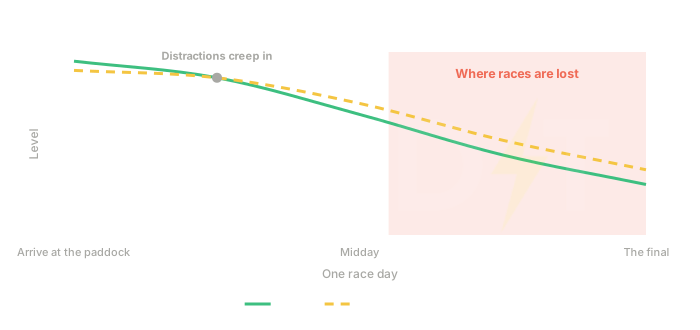
- On a race day the focus gradually gets smaller and smaller, and the track performance fades with it
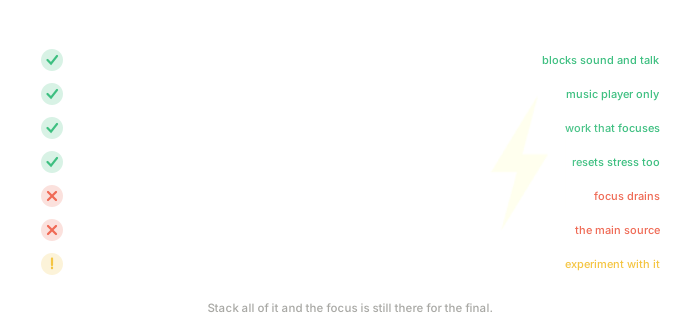
- Noise-cancelling headphones are an indication for all the people around you that you are there to focus
- Phone on airplane mode with only Bluetooth enabled, and a 30 minute nap at midday if you feel tired
- Teammates are the main reason for distraction in the paddock, you are the average of the five people you are most surrounded with
- Why is focus so important in racing?
- How long exactly do drivers need to maintain concentration?
- How long do you need to focus in karting?
- What actually causes drivers to lose focus during a race?
- Does looking behind you break your focus?
- What else breaks your focus besides looking behind?
- Why does focus fade during a race day?
- Does focus matter if racing is just a hobby for you?
- Why does a new track demand maximum focus?
- How do you build your focus bubble in the paddock?
- Should you have a nap during a race day?
- What music actually helps you focus?
- What does the driver who makes the difference know before the final?
- Are you born with focus, or can you learn it?
- How can drivers train their focus outside the track?
- Which sports and hobbies help you train focus?
- Can video analysis improve focus?
- How does physical fatigue affect concentration?
- Can sim racing actually help train focus?
- Is a karting simulator worth it for focus?
- What do drivers ask most about focus in racing?
Well, let’s be honest, there’s probably no other sport in the world where a lack of focus for just a fraction of a second can completely destroy your race. Think about, for example, F1 drivers driving around Monaco just the blink of an eye too late on brakes, and they’re in the wall, or even if they turn into early they’re going to be again in the wall.
So it’s a very, very cutthroat sport where focus is an unbelievable important factor. If you are losing focus multiple times during the race, you are not going to be able to have a perfect race. Even though I believe it’s there’s no such a thing as a perfect race, but I feel like you can get as close as possible to a perfect race.
And how do you do that? Well, by doing pretty much zero mistakes. And how do you not make any mistakes? Well, by simply having maximum focus and knowing exactly what to do. Of course, you need to have a lot of experience on the track, and overall, you need to know what you’re doing.
But knowing what you’re doing and having the experience is nothing if your focus level is very volatile, goes up and down, up and down. It’s easy, quote, unquote, to get a fast lap time once. But what’s difficult, and you’re probably aware of that, is being able to replicate that over and over and over again.
That’s really what sets apart the greats like Senna, Schumacher or Verstappen to other drivers, being able to set lap times at the absolute limit time and time again requires a superhuman level of focus.
The big question is always whether you are born with it or whether you develop it. You know, the nature versus nurture dilemma. But in this guide, you will hear about exactly what I think about it. I will answer to some of the most frequently asked questions about focus when it comes to racing. So let’s get into it. Shall we?
Why is focus so important in racing?
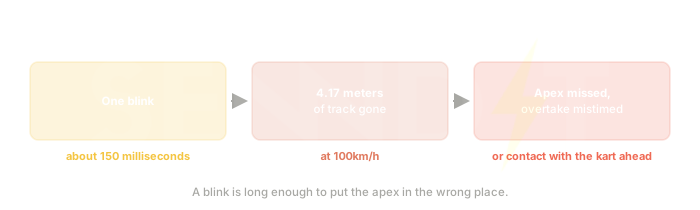
Well, think about it, because we are going at high speed, every fraction of a second matters. In fact, if you think about it, the average human blink of an eye is about 150 milliseconds. And in 150 milliseconds, you are going to travel a lot of distance on the track.
For example, if you’re going at 100km/h, you will actually travel 4.17 meters in just a blink of an eye. Well, that doesn’t seem a lot, but think about it: in four point 17 meters, you may have missed the apex, or you may have made the apex, but in the wrong place, or maybe you attempted an overtake, but you didn’t time it properly. And for just like a blink of an eye, you may have crashed into the driver in front.
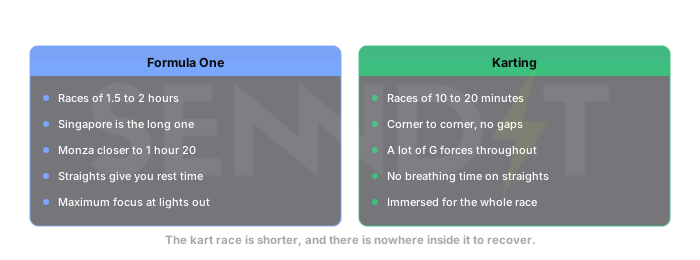
So you can see that focus is the major part of this sport. If you are not able to maintain focus at the peak level for most of the race distance, which in Formula One is like one hour and 30 minutes, whereas in karting could be 10-15, maximum 20 minutes, you need to develop your focus endurance.
Just like physical endurance, you need to work on developing focus endurance. You need to train your focus in order to maintain peak concentration for longer. You could be reading books, doing focus exercises, juggling exercises, or boxing reaction handball, which is quite popular now.
For example, I do juggling every day, four to five minutes a day, and also handball reaction exercises for about five minutes a day. I still read on a daily basis too. I sit myself on a chair and I literally read for about half an hour a day, and that helps me a lot to maintain higher levels of focus.
And I feel that it’s not only in my daily life, I feel like it helps a lot also with my driving.
How long exactly do drivers need to maintain concentration?
Well, it obviously depends on what races they are doing. If they are in Formula One, they would have to focus for between one and a half hours up to two hours. For example, races like in Singapore, where the races normally are very, very long, maybe in Monza it’s a bit less because you are traveling at faster speed, so maybe it’s one hour and 20 minutes. But still, it’s very, very much.
Having the ability to focus for that long at your maximum state, yes, well, you can argue that on the straight your mind is not going to be focused 100% like you are going to be focused in qualifying, in let’s say a fast corner in Spa or Francorchamps or Rouges. For sure, it’s not going to be like this in every single place on the track, in every single lap.
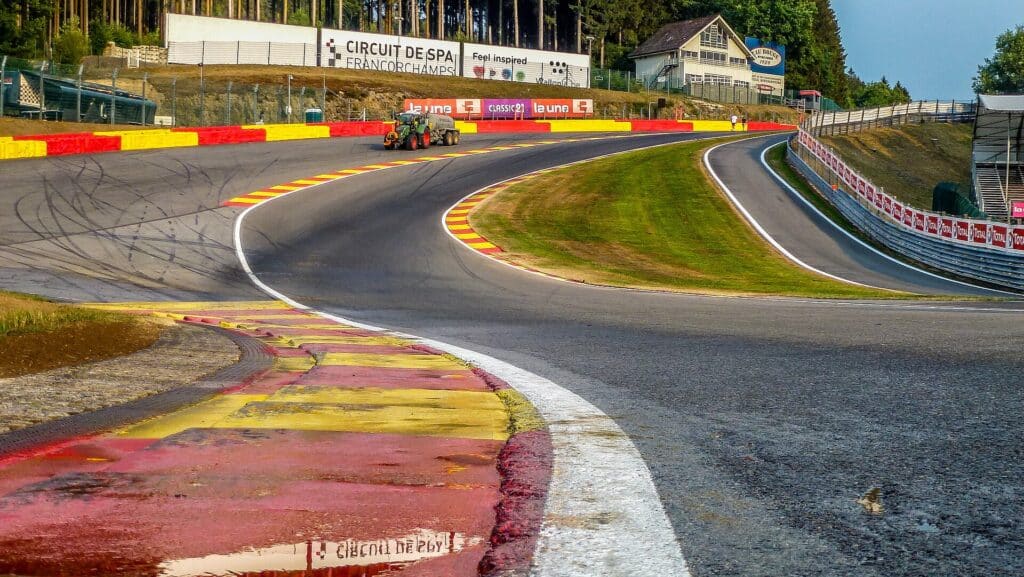
There’s going to be laps where you’re going to need to use more focus. For example, to make an undercut, or maybe you have to make an overtake, or maybe you have to defend position, or you’re going through the start. For sure, during the start, when there’s lights out and all the cars are around you, you need to have the maximum level of focus.
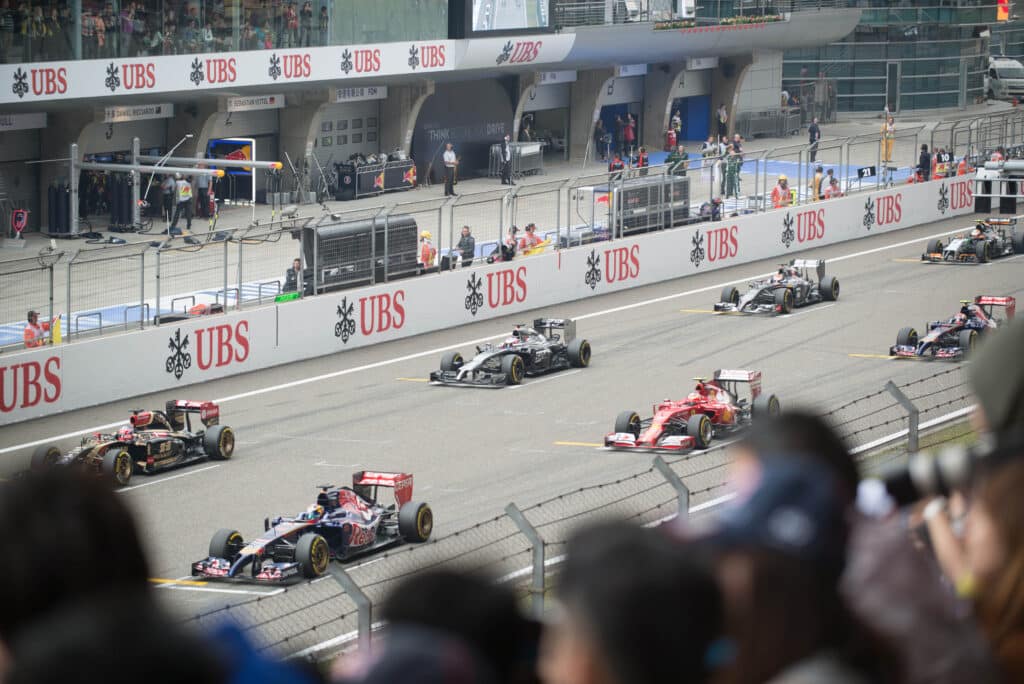
You will not have that same level, for example, halfway through the race when you may have like five seconds from the car in front and maybe like 10 seconds from the car behind. In that case, maybe the focus a bit less. But again, you do not want to relax in that moment, because if you do, then of course, you may start making mistakes.
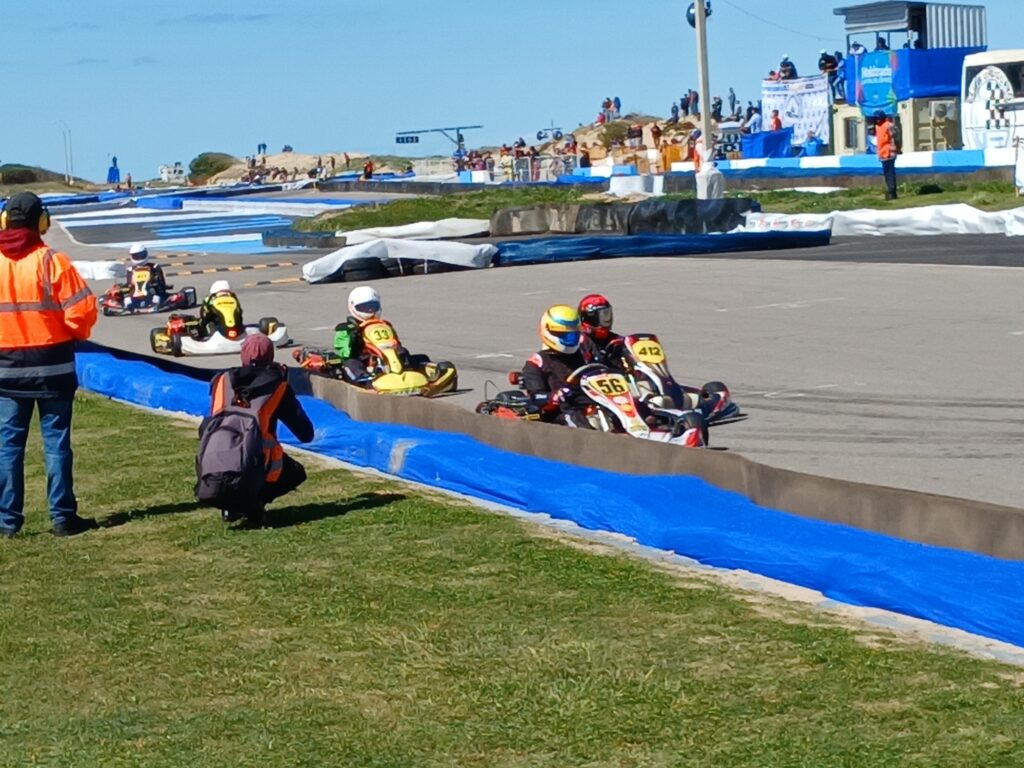
How long do you need to focus in karting?
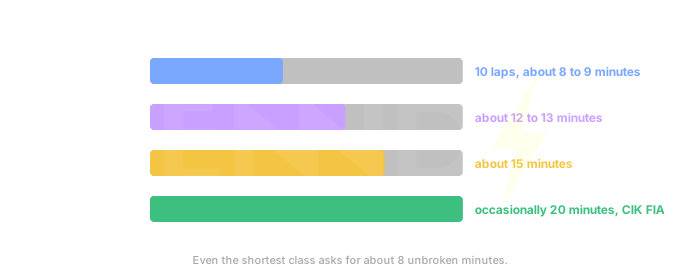
In karting, it’s for sure quite a bit easier because the race distance is a lot shorter. For example:
- 60 mini races are just like 10 laps (about eight to nine minutes)
- Juniors are about 12-13 minutes
- Seniors are about 15 minutes
- Shifter is occasionally like 20 minutes for CIK FIA races
But normally it’s just not that long. Still, it’s very, very intense. Why? Because karting drivers are going through a lot of G forces. Yes, F1 drivers too, but you still consume a lot of mental energy, and you have not much time to rest during the straights like you do in an F1 car or any other car series like GTS Formula Two or Formula Three.
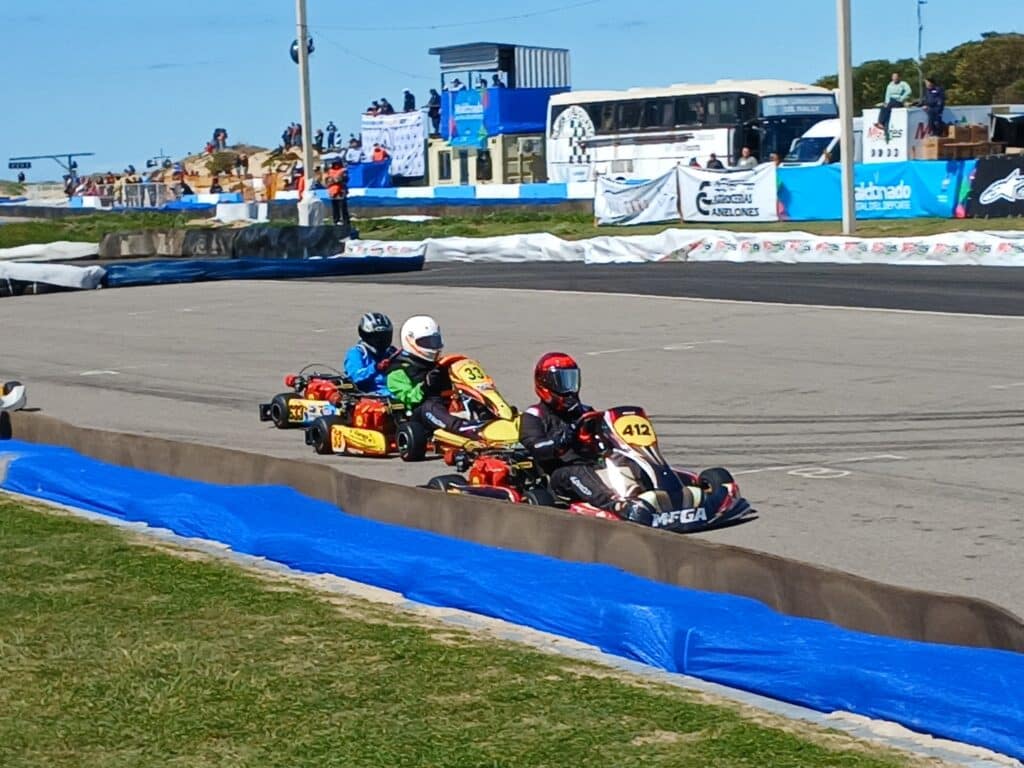
In karting, you don’t have those long distances. You have basically no breathing time from corner to corner. Especially in the twisty circuits, you’re going from corner to corner, so you just have to be completely immersed.
When you’re in the flow, the race is gonna go super fast if you’re leading, but if everybody’s closing up on you, those remaining laps are gonna feel like ages.
It’s very hard to tell exactly how long the driver needs to focus. But normally I feel that kids play a lot on the PlayStation, on their computers, playing Formula One, Minecraft, etc. The funny thing is that they can spend a lot of time focusing on their games, but then when they’re on the track, they almost feel like they are not going to be able to stay focused for even just like 10 minutes.
I think that being able to extend a driver’s focus threshold level, being able to increase the focus endurance, is going to be a massive, massive competitive advantage compared to other drivers. Some drivers can maybe get everything right for the qualifying lap, but then the difficult part is putting it all together for the race.
In a race, you basically need like 15 quality laps. That’s what I mean. But if you cannot do 15 quality laps, well, it’s something that you gotta fix.
What actually causes drivers to lose focus during a race?
I don’t think that there’s many things that can actually make you lose focus while driving during a race. I think it’s more that when you come to make mistakes, your focus muscle, basically, look at it as a muscle, is not trained enough and you’re a bit too weak.
As soon as maybe you try to push a little bit too hard and are not fully focused, then you’re going to start making mistakes. Or simply, maybe you’re pushing the same but you’re trying to repeat and repeat the repeat. But in the repetition, if you’re not able to maintain the same level of focus, you’re going to start making mistakes.
Does looking behind you break your focus?
But yeah, I have to say that one of the most iconic ways that drivers actually unconsciously destroy their focus is looking in the back. I am fighting this battle every day with my drivers at the BabyRace, and I feel like it’s just crazy to see. It’s hard for them to stay focused on the front and look only in the front.
It’s almost like so tempting to them to just keep an eye on who’s behind, check the gaps. But honestly, what the hell? Why do you need to do that? It makes no sense. Many times it’s just out of pure curiosity, pure boredom.
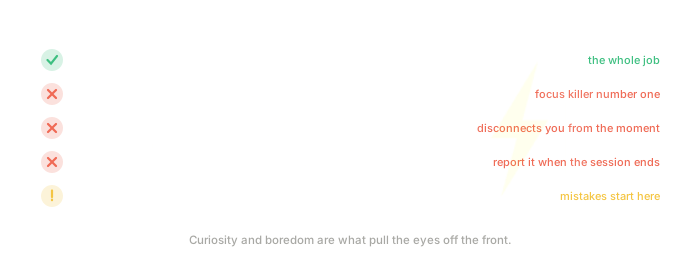
Looking in the back is probably the number one way drivers actually lose focus during races. Other major focus killers include:
- Thinking about the results, worrying about where you are in the standings
- Thinking about the kart, getting distracted by chassis, engine, or tire issues
- Mental disconnect from the present moment
What else breaks your focus besides looking behind?
Another way, of course, is just thinking about the results. You know, just looking at the result and like, “Oh shit, I’m doing too bad. I’m like, what, maybe P15, and I want it to be P1.” That’s obviously one of those things that is going to disconnect you from the moment and actually makes you lose the focus.
Another thing that could be negatively affecting your focus while driving is thinking about the kart. You do not want to think too much about the car when you drive. You just want to drive whatever you have. And as soon as the session ends, you just need to report your feedback to the mechanic, to your team and just tell them whatever happened on the car.
But during the session, you just need to give your everything and don’t get distracted by the car, even if the car is not performing to the best, whether the chassis, whether the engine, the tires, or whatever. You do not want to get influenced by that. You don’t want to be distracted by that.
Just keep your focus. Do your best, and people will notice that. But you’re not doing it for people. You’re doing it for yourself.
Whatever happens, just look forward. Don’t look back. Don’t think about the kart. Don’t think about the result. Just put your head down and think about the next corner, the next corner, the next corner.
Why does focus fade during a race day?
Most drivers start the day very focused. They arrive in the morning, they have their breakfast, they leave the hotel, they get into the car, they arrive at the paddock, they’re listening to music, they are focused and pumped.
But what I’ve noticed among many drivers I have worked with at Babyrace is that the focus unfortunately gradually gets smaller and smaller during the day.
Because distractions creep in. And their focus, that once was really good, starts to fade.
And I can see the track performance start to fade with it.
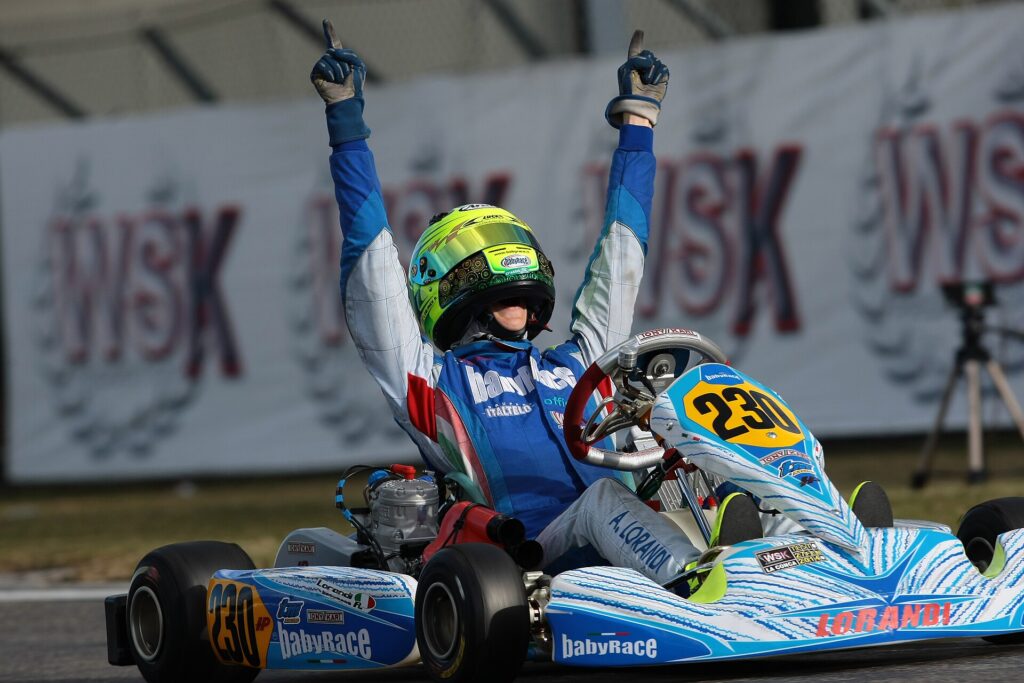
Especially during the paddock hours, when you’re waiting two to three hours for the race at WSK events for example, it’s very, very easy to lose the concentration and to just follow the distractions.
So my call is for drivers to acknowledge this as much as possible and try to maintain the focus throughout the day.
Does focus matter if racing is just a hobby for you?
Of course, if their ambition is to just treat racing as a hobby and have a good time, then there’s no real need to focus as much as possible.
But if your ambition is to become a race winner, a world champion, and ideally a professional paid racing driver, then your goal is to really build an unshakable focus. So you can really become the next Max Verstappen or Ayrton Senna.
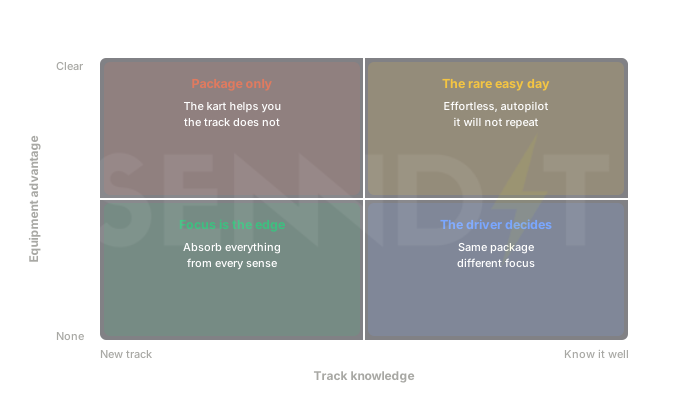
Yes, occasionally you can still get good results and fast lap times by not being super focused. Especially if it’s a track you know really well, if the kart is really dialled in, and everything just feels effortless.
But the reality is that it’s not that many times that you have such an advantage over your competitors, in terms of your track knowledge or your equipment.
So you can’t base yourself off a few occasions where you were just superior thanks to your extra track knowledge and your package. You need to base yourself on all the other occasions, where you will have a similar package to the others, or maybe sometimes even a slightly inferior one, or where you may not know the track that well and you have to play catch up.
Why does a new track demand maximum focus?
Think about it. We all have to drive at new tracks at some point.
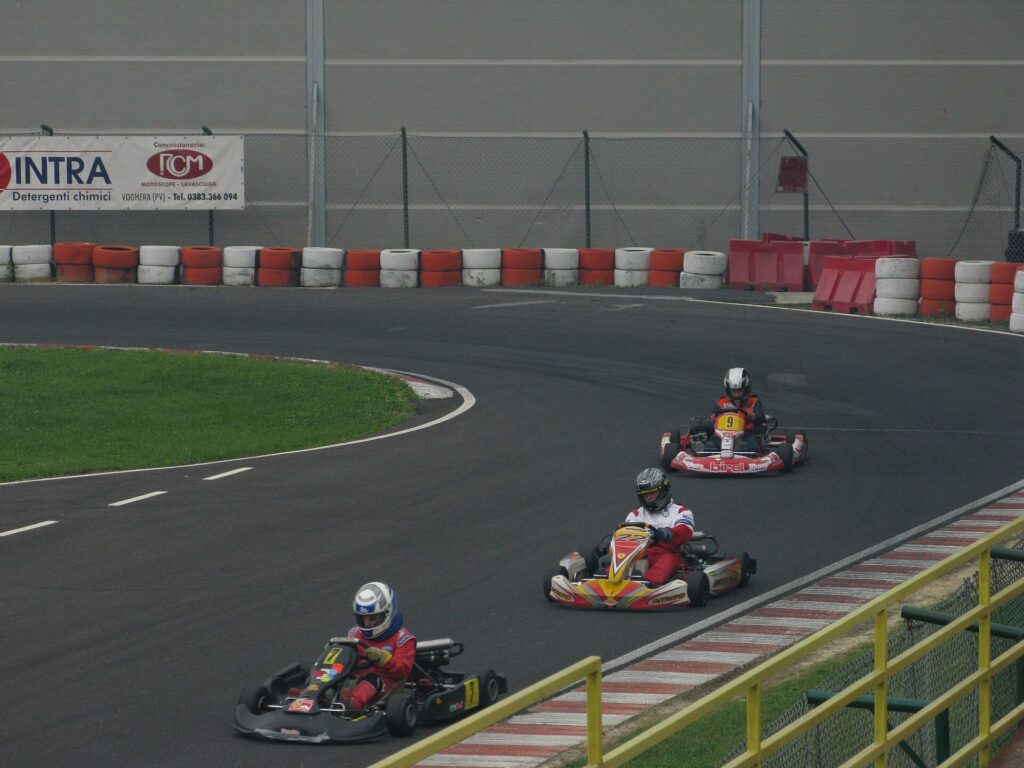
If you’re just used to driving always at the same track, you feel like it’s kind of happening automatically, and you drive in your subconscious. And yes, it’s okay to drive in your subconscious, you’re normally supposed to be driving on autopilot.
But once you get to a new track, you need to put in a bit more effort. You need to have the maximum focus in order to actually absorb all the information from your senses and receptors.
From your touch, from your hearing, from your vision, all of the sensorial information you get from anything. From your butt, from your hands on the steering, from your pedals on the floor tray.
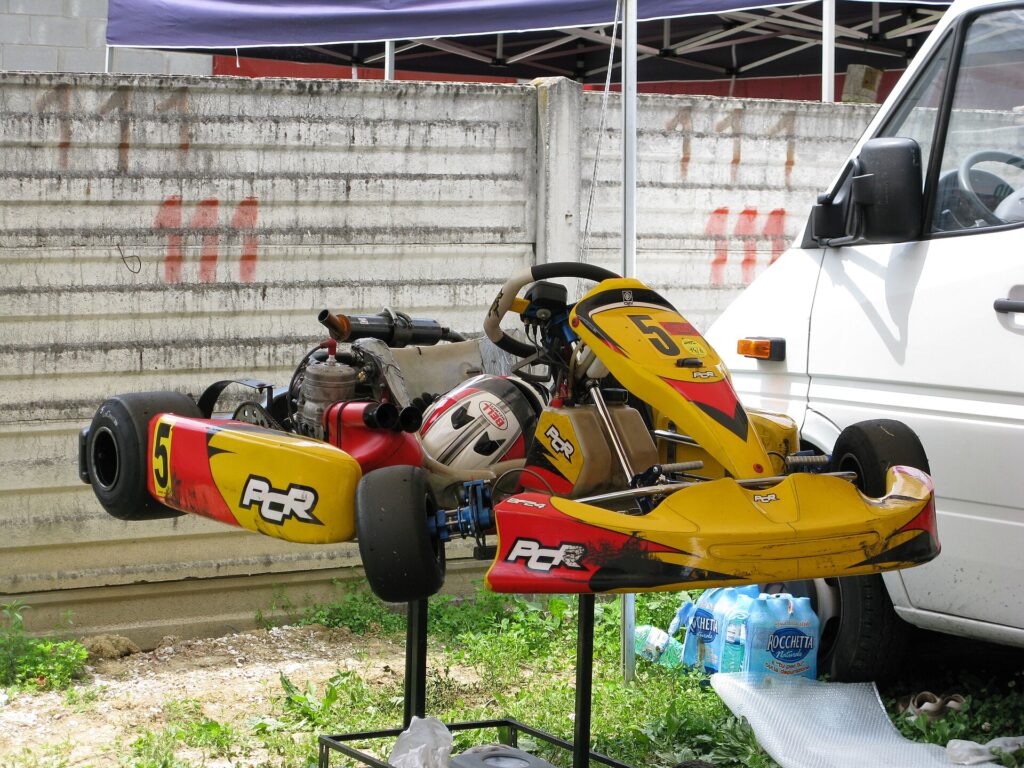
So it’s really about making sure you have the maximum focus to absorb all of this information, which in turn is going to skyrocket your performance.
I have never seen a WSK winning driver that wasn’t focused. Maybe occasionally he wasn’t, but in that moment, when he went out on track to win that race and championship, he was definitely focused.
How do you build your focus bubble in the paddock?
You really want to make sure you develop an environment where there are no distractions, where you can create your own bubble.
I really like to create that one myself. I try to get some noise-cancelling headphones, I have mine from Apple, and I just literally block out all distractions.
People want to talk to me, especially teammates. They want to just tell jokes. But anytime I put my headphones on, I’m like: no, you’re not going to distract me.
It’s literally an indication for all the people around me that what I’m here to do is to win. And in order to win, I’m here to focus. It always works.
The funny thing is that sometimes I put my noise-cancelling headphones on even without turning on the music, maybe they’re on empty battery or whatever. I just put them on simply to signal to the other people around me: just leave me alone.
So my recommendation is for all drivers to get themselves noise-cancelling headphones. But it’s not really just about that. It’s not “oh yeah, I’m gonna buy Bose, I’m gonna buy Beats, I’m gonna buy Apple.” No, it’s not just that.
You’ve got to make sure you use it, first of all. And on top of that, you stack up some habits that actually create your environment of focus.
What do you do with your phone on a race day?
Think about that. Instead of having your phone and being on social media and scrolling TikTok or Instagram, you can use your phone just to listen to music.
But you should put your phone on airplane mode, with only Bluetooth enabled for your headphones. You really need to try to detach yourself from the internet, because the internet has a lot of distractions.
Get back to staying next to your kart, next to your mechanic. Clean your kart, clean your helmet, do all the procedures that will inevitably get you into focus. Watch your onboard videos, read your telemetry, and come up with insights on how to get faster. Grab a chair, put it next to your kart, and just stay there reviewing where you lose time.
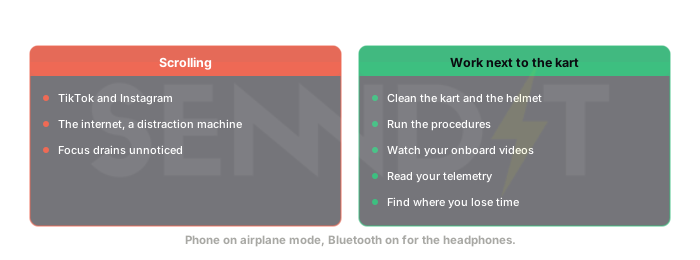
Listen to music and just be super locked in. You’ll see that by doing so, you’ll be able to maintain focus way more during the day.
Why are teammates the biggest distraction of all?
One of the reasons for distraction that I believe is the main one is just teammates. Being around teammates who are distracted themselves is going to make you distracted too.
Remember, we are the average of the five people we are most surrounded with. That plays in life for anything, but also in this case, for the focus level.
So you really want to make sure you isolate yourself. You create a mental bubble, so that no distractions can get inside your bubble, and in turn make your results way better.
I still remember those races where I was unfortunately with my teammates and they were distracted, and they distracted me too. But then after that I was like a complete wall against teammates and anybody who would try to talk to me.
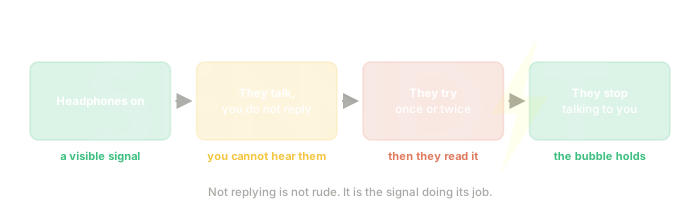
Anytime I put my headphones on it’s very visible, and people know that okay, Alessio is trying to focus and you shouldn’t distract him.
If they try to talk to you but you have headphones on, you don’t even have to reply. You just assume that they understand you are not listening, because you can’t listen. So you just forget about them, do not reply, just ignore them. And after they do it once or twice, they’ll stop talking to you at all.
Should you have a nap during a race day?
If you feel a bit tired at midday or so, find a quiet place and have a quick nap for like 30 minutes.
I promise you it’s going to be regenerating. I really like to have it when I have the time or the chance. It also helps me to reduce stress, and to block out distraction and anxiety.
What music actually helps you focus?
Your phone is one of the biggest sources of distraction, so you’ve got to make sure you keep your phone at bay. Ideally you just have your phone in the background, just for your music.
I like to listen to high beat songs like Eminem, that are good for pumping me up, or the Black Eyed Peas, or some other specific songs like the Gladiator soundtrack. But I also really enjoy listening to piano songs, because they calm me down.
So it’s a bit of a mix. You have to know yourself and kind of experiment with yourself. There is more on whether music before racing actually improves focus if you want to go deeper.
What does the driver who makes the difference know before the final?
Remember, when the final comes, or when the qualifying comes, the driver will make the difference. It’s the driver that has visualised the lap more than anybody else. The driver is ready to go and knows exactly what he needs to do in order to find lap time from the session before.
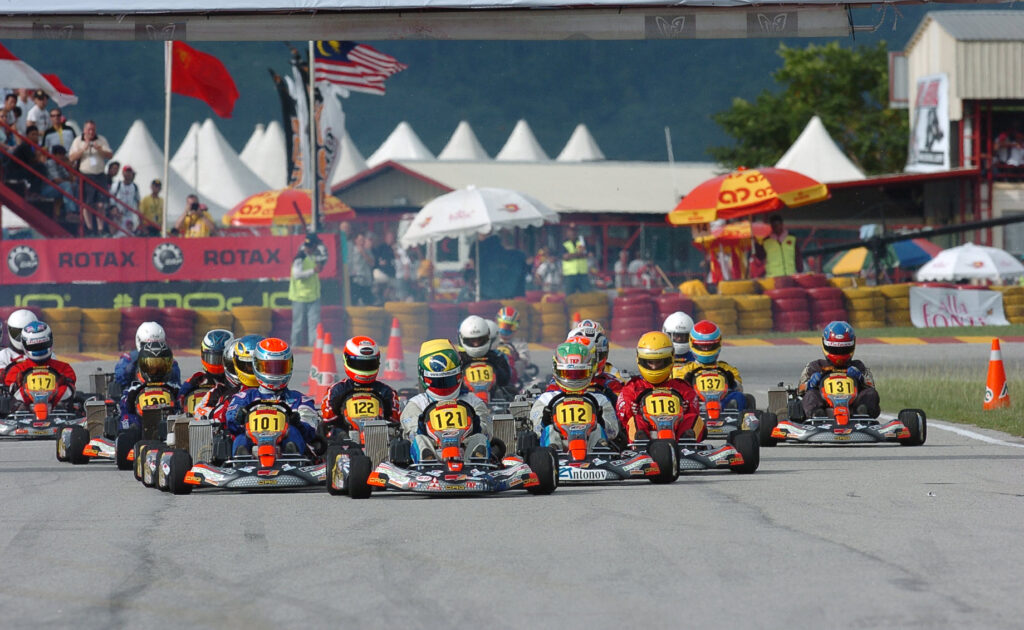
He knows exactly the session strategy. Maybe in qualifying he knows exactly what he’s got to do to pick up that pole position. He has followed the trends of the track evolution, so he knows: oh, the track is going to probably get faster by three tenths, and I know normally this kind of corner gets really fast when everybody goes on new tires, so I can probably go in with no brakes. Simple things that can make a big difference in results.
Losing a race because of a lack of focus is just the biggest crime that a driver can do to themselves and to their career, and something they will regret for sure.
I did regret the few occasions where I realised I wasn’t that focused.
But I promise you, if you do the combination of these things, you’ll become a monster. Please don’t become the next driver that’s going to lose a race, lose a championship, or lose the opportunity to become a professional racing driver because of an occasional lack of focus. That’s the biggest crime I see in racing.
Are you born with focus, or can you learn it?
And again, it’s not something you’re born with. It’s something that you’re going to develop over your racing career. I really believe that focus is a skill that can be learned.
I’ve read a bunch of books on the topic. One of those was called Stolen Focus, it’s really nice. The other one is called Deep Work, which is also highly related to the focus aspect.
How can drivers train their focus outside the track?
Well, I’m not gonna lie. I think there are so many ways driver can train their focus outside of the track. And by the way, they should be doing it outside of the track. I mean, they cannot expect to improve their focus on the track. Yes, the more driving you do, the more focus you build. But at the end of the day, where you really craft your focus is outside of the track.
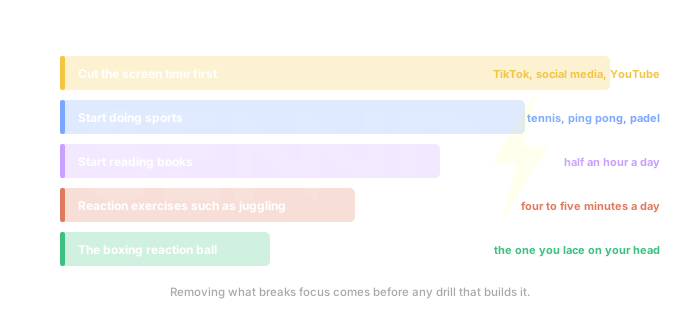
You want to remove all the things that break your focus and weaken your focus. Stop watching TikToks, social media, cartoons, or too much YouTube. All that stimuli is not going to be good for you. Staying away from screens overall is a great strategy to first of all, not hurt your focus and avoid destroying it.
Once you remove the screen time, once that time is being removed from all the social media and YouTube you may have been doing before, and the average driver has unfortunately a lot of that, here’s what I suggest you do:
- Start doing sports
- Start reading books
- Do reaction time exercises such as juggling
- Do the boxing reaction ball that you lace on your head
Which sports and hobbies help you train focus?
But again, if you do tennis, if you play ping pong, if you play padel, those kinds of sports are going to be great because they’re going to simulate your competition level, which is great. I mean, you need to have that if you want to be a competitive beast. But at the same time, they are going to stimulate your focus overall. They’re going to increase that muscle.
It’s not, of course, a muscle. I mean, let’s be honest. We can’t say focus is a muscle, but it kind of works like a muscle. It’s muscle memory at the end of the day, and being able to train your brain to stay at high peak performance for longer times means you’re gonna basically stretch your focus every time you do that.
If you’re playing padel, you’re not gonna play it for like five minutes. I hope you’re gonna play it for 20, 30, 40, 50, 60 minutes and even more. And you’ll see that you’re gonna spend more and more time, and you’re gonna get better and better. You’re gonna make less and less mistakes.
As well as reading books, at first, you’re gonna struggle to keep the focus for more than like 10 minutes. You’re gonna feel like distracted, you feel like bored, and you feel like you can’t read anymore. But again, that’s your focus giving up. And if your focus is giving up after five minutes of reading a book, imagine what’s happening when you’re driving. It’s gonna happen even earlier. So you need to be able to get to a point where you’re, like, able to read the book for, like, two hours straight in a row or so.
And I noticed on myself when I’m overly, like, present, for example, on social media, because maybe I have to do some work for Senndit or for Babyrace, and I maybe have to spend a bit of time on my phone, bit more than usual, which I hate spending time on my phone. If I could live without my phone, I would love it. But yeah, I noticed when I spend a bit more time on my phone, I’m spending less time on my books, for example, or doing some sports. I noticed that my focus decreases. And it’s not like permanently gone, it’s like temporarily gone, but it’s gonna come back as soon as I put the focus back.
So I just feel that, yeah, it’s something that you can create, you can build it, you can extend it. You can stretch it. You have to have a growth mindset and not think that everything is fixed and you’re not born with that.
Can video analysis improve focus?
Well, yeah, for sure. I mean doing video analysis and reviewing your race onboard videos, or even just like your free practice onboard videos, or even just like watching videos on YouTube from past races can help your focus, but again, you don’t want to spend too long on screens. I think that should be minimized. What you should do instead is really do something that is unrelated to racing, which is, again, reading books, playing sports, etc.
How does physical fatigue affect concentration?
It’s incredible how interconnected the physical side to the mental side is, and in racing, you can see it very clearly. That is the reason why I stress so much the importance of getting extremely fit, like super fit, that driving feels easy to you. Because the problem is that, I would say 80% of the drivers are not fit enough to race in a way that they can drive, of course.
I mean, you can put anybody in a kart and you can drive. I mean, I’m not saying about that regarding an F1 car. Of course, you can’t put anybody. But if you go, if you drive very, very slowly, you can put pretty much anybody.
But the point being is that you are not going to be able to maintain the peak performance if you’re gonna start feeling tired after like lap five and start feeling like out of breath and, like, you honestly feel like the kart is driving you, rather than you driving the kart.
I have experienced very few times in my life this kind of feeling, only, for example, when I was away from my kart for a long time, but, you know, not when I was regularly driving, but, like, a few years ago when I was not driving full time, but I was just, like, casually driving, just to get fit and just, like, because I wanted to, because it was my passion still. Like, okay, anyways, I was still driving, and I would not drive for a long time. And I remember the first time I would be like, holy cow, the kart is driving me.
And because I was not track specific fit, I was fit for the gym, I was fit for, you know, running, etc, but I wasn’t fit for the kart. That’s the reason why you need to have a lot of kart fitness. So you need to drive the kart actually. So it’s really sport specific fitness. And, yeah, I remember that I was, like, doing four or five laps, and then I would start to really feel the, yeah, the pain, not the pain, but yeah, really the physical difficulty. And that’s really reflected in reduced concentration.
Because think about it, like, when you are worried about your body not being fit in that moment, and you’re like, feeling, holy cow. It’s like, I feel pains here, or maybe I just feel like out of breath. In that moment, you’re gonna lose your peak concentration. I mean, in that moment, you will not be as focused as if you were fully, fully fit, as, for example, drivers like Michael Schumacher used to be, or like Ayrton Senna used to be.
And there’s a reason why they were the greatest, and there’s a reason why they were the most fit drivers of their age. Because think about it. I mean, like they realized early on that the fitter they were, the more time and energy they had available to think about, you know, the mental side of driving. So it’s like having the energies allocated to the mental side. Which is, you can agree, probably the most important part, you know, it’s the reaction times, the decision making, the hand-eye coordination.
If you’re fatigued and, like, feeling like, oh, I’m almost about to give up, because I’m just not feeling fit, you know, either in terms of endurance or in terms of strength, then of course, you’re not going to be able to clearly think about, you know, the braking point, apex. You’re going to be driving under the limit because, simply, you’re not fit enough to race. So you don’t ever want to get to that point, because otherwise you’re really wasting your time. You’re wasting your money, and that’s just essentially a place you would never want to be.
Can sim racing actually help train focus?
Yes, sim racing is a very good ally when it comes to building your focus, because at the end of the day, you’re kind of simulating the real race scenario, especially if you’re getting yourself in online races where there’s some sort of stakes that you have to kind of perform under pressure.
But when I talk about sim racing, I relate to, for example, iRacing or Assetto Corsa Competizione. I talk about those kind of sim racing from like GT cars or, you know, formula cars. Why? Because I feel like if you’re a karting driver, I think you’re still better off to drive these kind of simulators instead of driving the karting simulator from, like, KartSim, etc, because as good as they can be, they’re never going to be anywhere close to the realism that you will achieve by driving a kart, because conversely to a car, a kart is so much more difficult to just create a model around it that is realistic enough.
Is a karting simulator worth it for focus?
So I just would not recommend you to spend time doing, you know, karting simulator. Just would not even bother about buying it. And just like spending and wasting money from that side. I mean, that’s my personal experience.
I would instead, like buy a proper sim gear if you want to get into sim racing anyways, and if you want to do that also to train your focus, you could spend, like, up to 30 minutes or one hour a day, yeah, just, you know, doing some racing, iRacing, and playing, I don’t know, whatever car you want, like, a Formula 4, Formula 3, GT3s, etc.
And that’s gonna train your focus, because you’ll have to deal with, you know, shifting points, braking points, turning points, apexes, you know, trying to build a consistency. And the great thing is that, you know, when you’re in the simulators, the conditions are always the same. There’s no variables, you know. And so if you make mistakes, it’s just you. There’s no excuses, or the car was not good, or, you know, there was a difference in the temperature. No, you don’t have any excuses.
So it’s a clear reflection tool to know how focused you are and how much focus you have in that moment, and how you can train it using this kind of tool.
And I feel this is something that a lot of drivers should be doing, and that’s why, for example, drivers like Max Verstappen do, like, what, five hours of sim racing a day, because they feel, okay, besides loving it, besides just being purely addicted and obsessed about it, which is, of course, what makes them great. I mean, it also makes them extremely focused, and increase their focus to an insane level. And I mean, it trains them to drive those specific tracks, etc. So I mean, at the end of the day, I feel like it’s a very good tool to train your focus.
What do drivers ask most about focus in racing?
How long do you need to focus in a karting race?
In karting, it’s for sure quite a bit easier because the race distance is a lot shorter. Still, it’s very, very intense. You have basically no breathing time from corner to corner. In a race, you basically need like 15 quality laps.
What breaks a driver’s focus during a race?
Looking in the back is probably the number one way drivers actually lose focus during races. Thinking about the results and thinking about the kart are the other big ones. Just put your head down and think about the next corner, the next corner, the next corner.
Why does focus fade during a race day?
Because distractions creep in. Most drivers start the day very focused, but the focus unfortunately gradually gets smaller and smaller during the day, and the track performance fades with it. Your phone and your teammates are the biggest sources of distraction.
How do you stay focused between sessions in the paddock?
Get noise-cancelling headphones and use them, they’re an indication for all the people around you that you are there to focus. Put your phone on airplane mode, with only Bluetooth enabled for your headphones. Then stay next to your kart, clean your kart and your helmet, watch your onboard videos and read your telemetry.
Should a driver nap during a race day?
If you feel a bit tired at midday or so, find a quiet place and have a quick nap for like 30 minutes. It’s regenerating, and it also helps to reduce stress, and to block out distraction and anxiety.
Are you born with focus, or can you train it?
It’s not something you’re born with. It’s something that you’re going to develop over your racing career. First remove the screen time, then build it with sports like tennis, ping pong or padel, reading books, reaction time exercises and sim racing.
So I hope this guide was helpful enough. Let me know if you want to receive some one on one coaching on how I can help you find techniques to build your focus. You can apply to that service. Or if you want to improve your lap times, you can simply sign up to my onboard review analysis service from remote. You can just send me your onboard video, and I will reply with a proper video analysis giving you practical tips on how to get faster. If instead you want, like the full immersion program, you can sign up to the six-month training where I’ll take you from zero to hero.
Remember to keep sennding it!
Ciao ciao 🙂
Related guides: How Breathing Exercises Help Drivers Stay Calm Racing | 5 Ways I Get In The Zone Before Racing
Send your onboard footage. Alessio reviews it corner-by-corner and tells you exactly what's costing you time, and how to fix it. Back within 48 hours.
Get My Onboard Reviewed → Reviewed personally by a CIK FIA World Champion, never an assistant.I promise I'll not spam you with repurposed shitty AI content but real experiences that only I, Alessio Lorandi, experienced. Written in my funny English-Italian tone of voice 😂
Alessio Lorandi is the former CIK FIA World Junior Champion, winning against Lando Norris in 2013 & F3 multiple race winner. He's helped 200+ karting drivers worldwide get faster & win WSK titles with BabyRace Driver Academy & now through Senndit, his online karting coaching platform.