How To Prioritize Exits
Master corner exits and gain tenths every lap. Five elements separate winners from the rest, nail them.

- Corner exits are everything, especially before long straights, but you can’t sacrifice your entry to get there.
- A good exit is determined by five elements: breaking point, braking efficiency, turning point, mid-corner rotation, and throttle pickup point.
- Breaking too early or too late both destroy your exit, you must find the optimal braking point for current grip conditions.
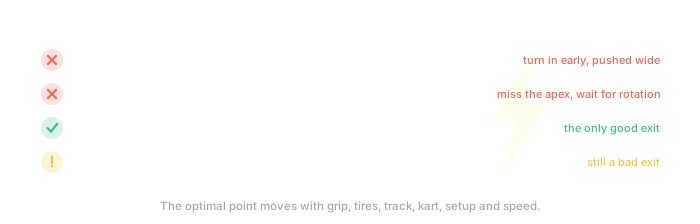
- Turning in too early gains you nothing on entry but costs you massively on exit through a wider line and slower speed.
- The exit is a consequence of everything before it, once you hit the gas, the exit is already decided.
- Why Exits Matter
- Let’s Define Entries
- You’re Gonna Take the Perfect Line
- So the Only Way to Get a Good Exit is to Break at the Optimal Place
- So Okay, Given That We Have a Good Breaking Point
- The Goal in the Mid Corner is to Get the Optimal Rotation
- So to Get a Good Exit, You Need to Really Work on the Braking Point
- And Now Have a Look at the Corner
We all know that corner exits are very important
Especially if they’re leading up to a long straight. If you’re in long tracks like Sarno, Zuera, Franciacorta, you know prioritizing the exit is going to be an important task, even though you will not have to sacrifice too much on the entries, because you still want to get good entries and good exits.
Sometimes what you have sacrifices the mid corner, but still, entries are important. Mid corners are important. Exits are important. They’re all important, but when you are leading up to a very long straight you need to prioritize the exit a little bit more than everything else.
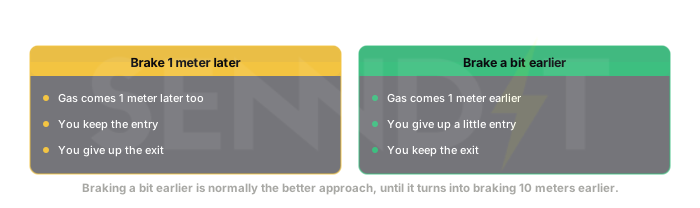
Now that doesn’t mean, as I said, that you have to brake 10 meters earlier for that, but it means that if you have to choose between braking one meter later and getting on the gas one meter later, or getting on the gas one meter earlier and brake a bit earlier, then normally that is the better approach, of course, unless you’re doing it too much and you start to brake too early and getting on the gas 30.
So you need to understand very well what I’m saying. And there’s not just it’s not just on the on your pedals, not just on your braking and throttle application. It’s a lot to do with your lines. So remember, if you want to get a good exit leading up to a long straight or, you know, a good exit in general, it’s all down to the entry.
If you mess up the entry, you mess up the exit period. You can’t get a bad entry and then still get a good exit. It’s impossible.
So we are at Lonato here. It’s the mechanics corner, if you if you know it right for the guys who knows Lonato very well, we have the same driver on two different sessions over the weekend. It was a four tenths difference at the end of the of the session, of the lap, 3.6 tenths difference. This driver was really fast in general, but in this session in particular, it was the red. So the red he is at the end of the lap, four tenths off, almost from the green. Again, same driver. But look in this specific corner, there’s one thing I don’t like from the red, and that is basically what I’m about to talk about in this lesson when we talk about corner exits.
Let’s first of all, define entries.
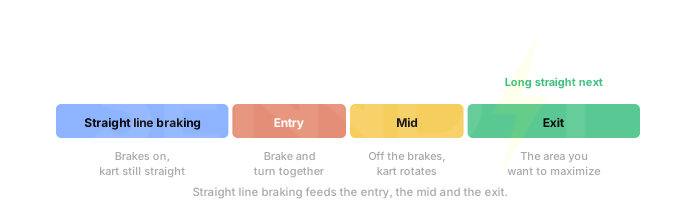
So there’s, first of all, what I like to call it, there’s three phases, but there’s a fourth that I like to call it, the braking straight line braking phase. So the straight, let’s say you hit the brakes from here, let’s say in the mechanics corner, that’s where you start to hit the brakes.
So you start to hit the brakes over here. So from this moment before you start to turn in, you got the straight line breaking. So from here to here, let’s say, because your straight line breaking, then you start to turn in. This is your straight line breaking, all right, as let’s call it SB, straight line breaking. We already talked about this. I’m reminding you. Anyways, this is your straight line breaking from here to here.
Then we have the entry phase. All right? Entry phase, basically, when you’re combining braking and turning until you get to the mid corner where you’re releasing the brakes.
So normally, I like to look it like this. You know, there’s people who like to look at the corners in a squared way, like in a very symmetric thing. But I don’t like it that way. I like to call this the entry phase, the mid phase, and then the exit.
- From here to here is the entry phase
- From here to here is the mid phase, just as you get on the gas by the apex
- From here to here is the exit
Now, if our goal in this specific lesson is to maximize our exit, and then, let’s say there’s going to be a long straight after that. So if we want to maximize all these big area at the exit, it all starts from the entry, and while the straight line breaking is also important, because imagine you want to brake at the up, like on limit, because if you brake at the limit, you gonna take, let’s say you have to use the curve.
You’re gonna take the perfect line, all right.
But if you brake over the limit, let’s say, and you just hit the try to do the same line, but you brake too late, you’re gonna just eventually miss the apex, all right. So again, the exit will be affected.
We need to brake at the optimal point. So the straight line breaking is also very important. The decision from when you start to hit the brakes, that’s very important and will affect a lot your exit.
Normally, people think, “Oh, the earlier I brake, the better the exit.” Not true, because you could brake here or brake here or brake here. What happens? Normally, most drivers, after they brake initially, they start to turn in too early, too early, and then they find themselves like too early at the apex, and they get pushed out on the exit.
So the myth that the earlier you brake, the better your exit, it’s bullshit. It’s really not true.
If you brake too late, what happens normally, you try to, you brake very late. Let’s say your optimal braking point is here. But you brake too late in this case. And of course, you’re going to try to make the corner, but you’re going to miss the apex, let’s say, and of course that is going to delay your throttle pickup, and because you have to wait for the rotation to stop the kart, and that’s going to affect the exit.
So remember that any anywhere from the optimal breaking point is going to make you lose time, either if you brake too early or if you brake too late, it’s going to make you lose time on the exit. Is that clear?
I repeat:
- If you brake too early, you’re going to turn early, and most of the time you’re gonna get on the gas too early and it’s going to push you out.
- The exit will suffer, you’ll actually have to lift the gas a bit on the exit, or you’ll have too much steering, which is going to scrub speed.
- If you brake too late, you’re going to miss the apex and you’re going to have to slow down, and again, you lose it.
A lot of drivers have this mistake, by the way.
So the only way to get a good exit is to break at the optimal place.
This is our optimal place at optimal point, which, as I said, it depends on the grip. It depends on the tires you have, the track conditions, the kart, the setup, brakes, whatever, depends on many factors. It changes from session to session with the grip level.
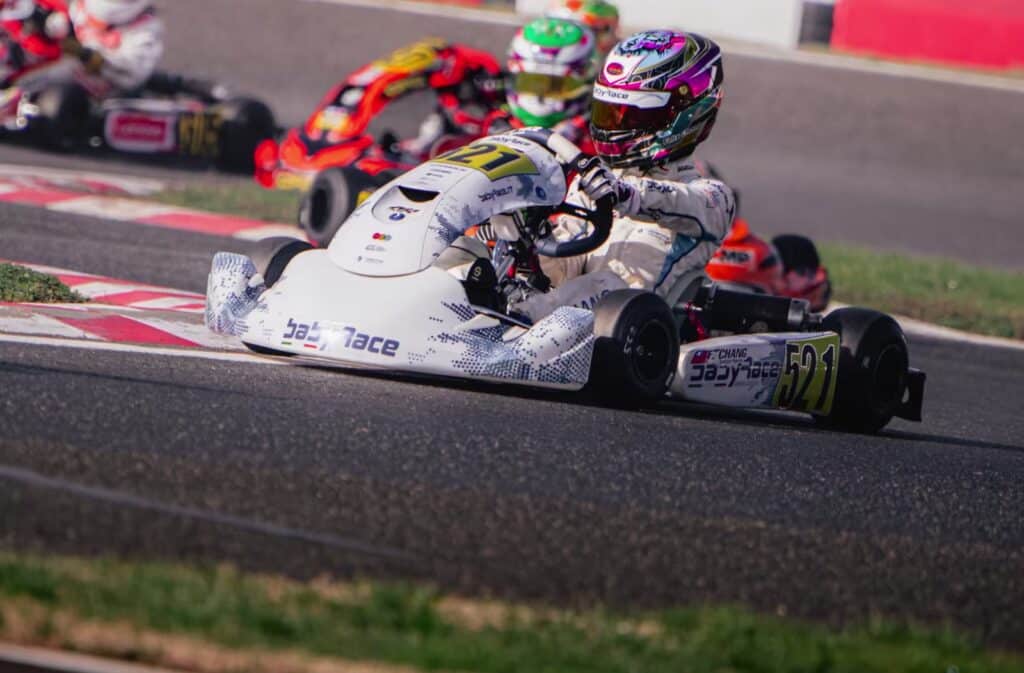
So it’s not going to be like “Alessio told me to brake there, let’s say at the beginning of the curb. So I will always brake there.” No, it’s not like that, because sometimes you’ll have to brake a bit later than the beginning, sometimes a bit earlier, depending on the grip conditions, depending also on the speed.
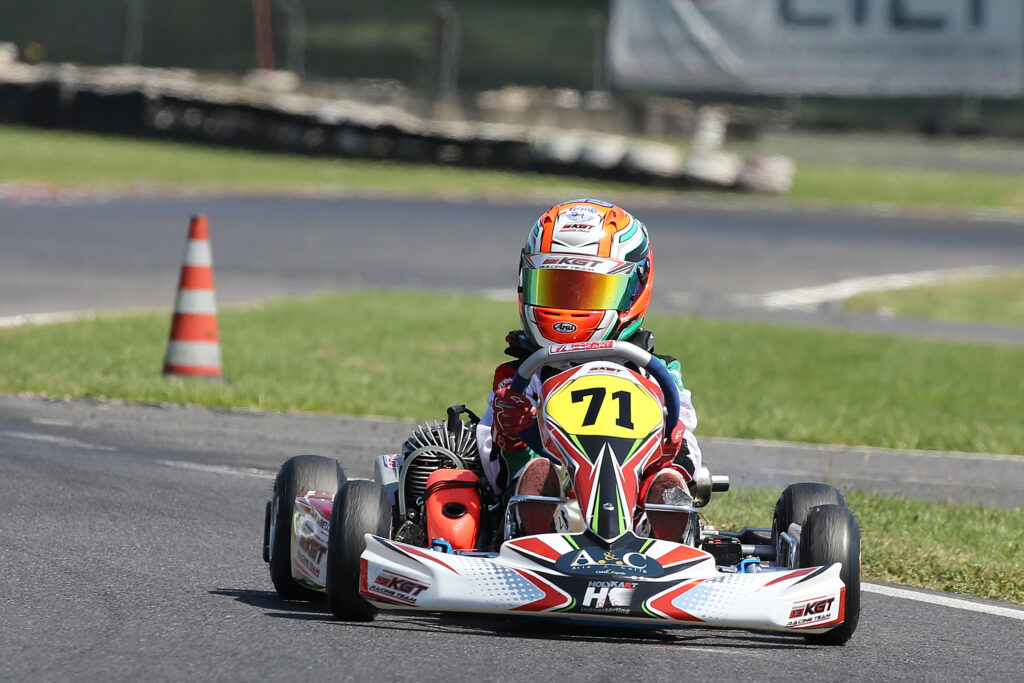
If you arrive at 110 kilometers an hour, because you have a very powerful engine and a lot of slipstream, you will brake a bit earlier than if you brake at if you arrive at 100 kilometers an hour, because if you arrive slower, you’re going to brake later, right? So there’s many reasons why you have to adjust your your breaking point.
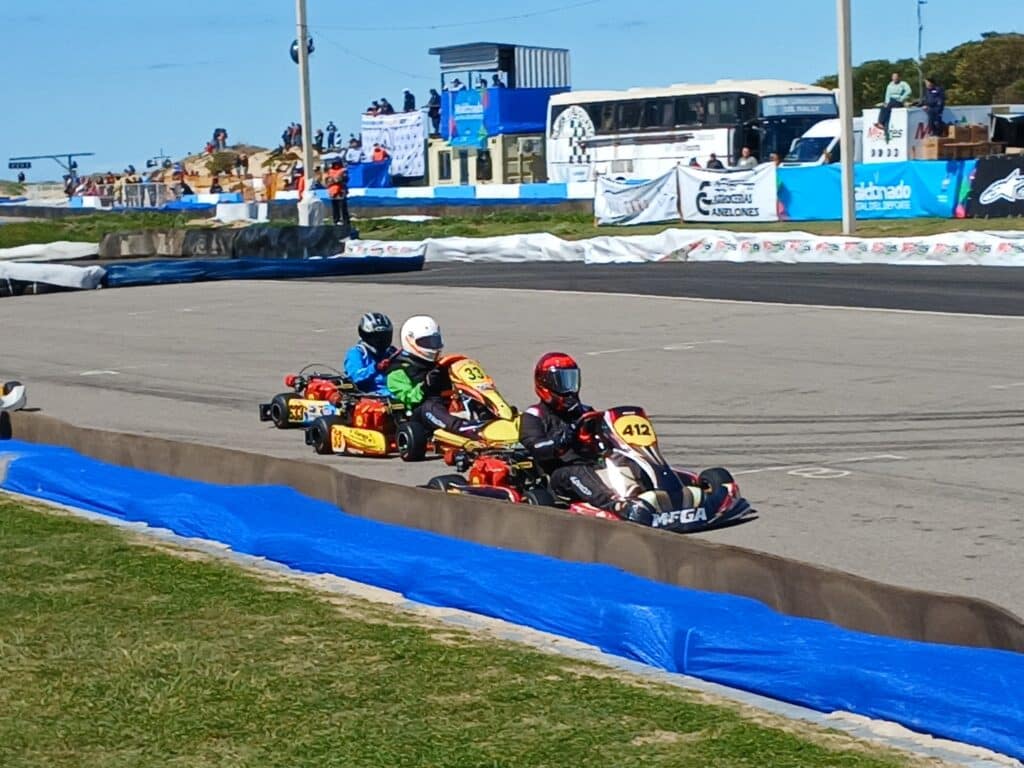
So anyways, you got to brake on the limit. That’s what the straight line breaking phase is. So the more efficient, and the later you brake, the better. Of course, remember, if you break at the right point but you don’t hold the brakes enough, it’s still gonna factor exit. Because if you brake at the right point but you still don’t hold the brakes enough, you’re gonna get the bad exit, all right.
So okay, if you brake very aggressively and you have very efficiently, that’s good. I mean, it’s almost gonna make you turn like, gonna stop you and turn early. But in that case, if you feel like you were too efficient, just brake a little bit later the next time, the next lap.
You can always brake a bit later than if it was too easy. If it was too easy to stop, you always have to feel like, “holy shit, I’m gonna miss the corner. Oh, I’m gonna miss the corner.” It’s pretty much like that.
So okay, given that we have a good breaking point,
good breaking efficiency in our straight line breaking. Then there’s our entry phase. And here’s the thing, okay, of course, the track usage is very important. So the racing line is key. So throughout the lap, throughout the whole corner, you have to keep the perfect racing line. Of course, that’s going to give you the biggest influence on your on your exit.
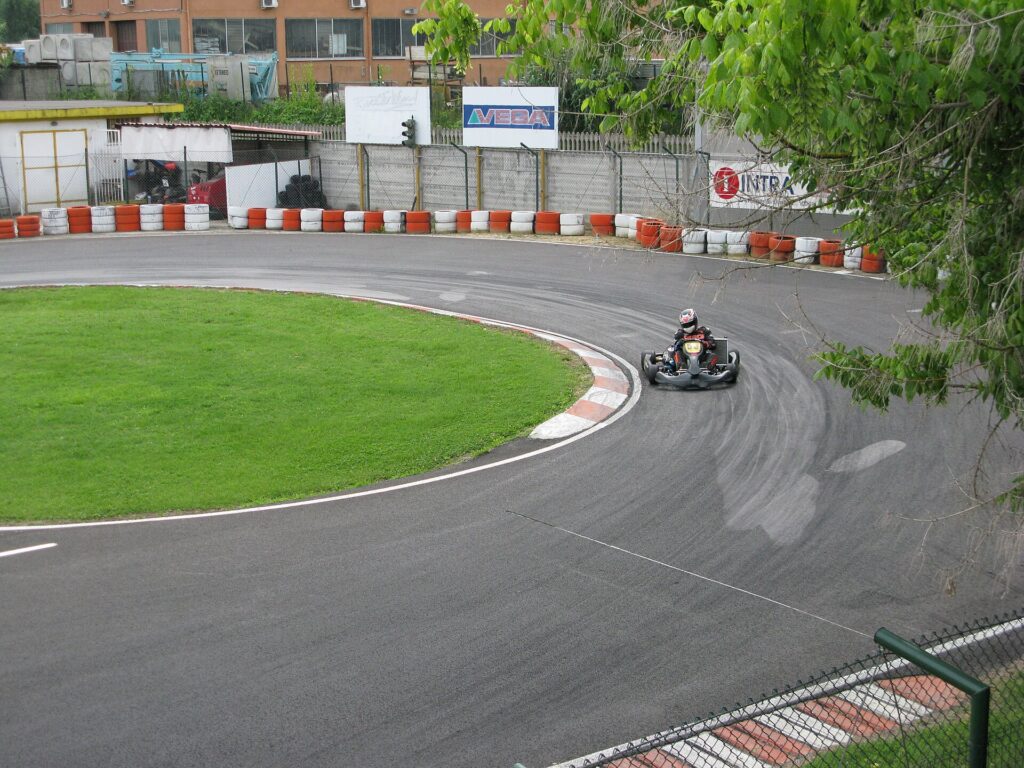
Let’s say we use off of the curve we start doing here. Gonna get something like this. So basically, that’s gonna be pretty good. So let’s say we have the optimal racing line. And from that, it’s going to give us our optimal exit, if we set for example, okay, let’s try to draw again the racing line.
Break straight line. Breaking. Remember, we start to turn in here. Ah, it’s about to be perfect. We hit the apex. We hit the apex, and then it’s just gonna let us run wide on the exit and we’re just gonna use the curve perfectly. All right, so let’s say that’s our optimal line.
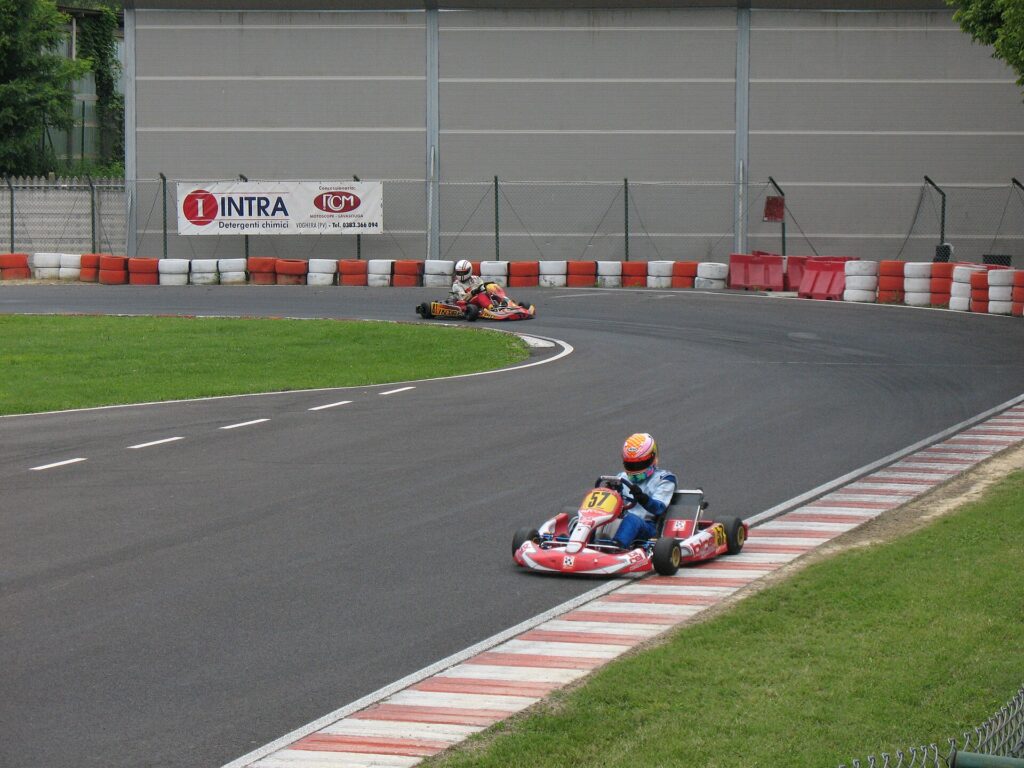
The entry phase is still gonna make you slow down so you are not off the brakes yet, I would suspect you’re off the brakes like here towards the end of the entry, just beginning of the mid, that’s when you’re off the brakes. So it’s still very, very important entry, in the in the entry phase, in the late entry, to hold the brakes and stop the car, because the speed is not the minimum speed, right? So you still have to hold the brakes, but at the same time, the turning point is key, because a lot of drivers are going to turn into early, and that’s what we’re going to do.
You tell me when you turn in too early, you’re going to automatically going to be pushed out wide on the exit. If I turn too early, I’m gonna get pushed out. If you turn in too early, you’re gonna get a bad exit, all right. Same is if you turn too late.
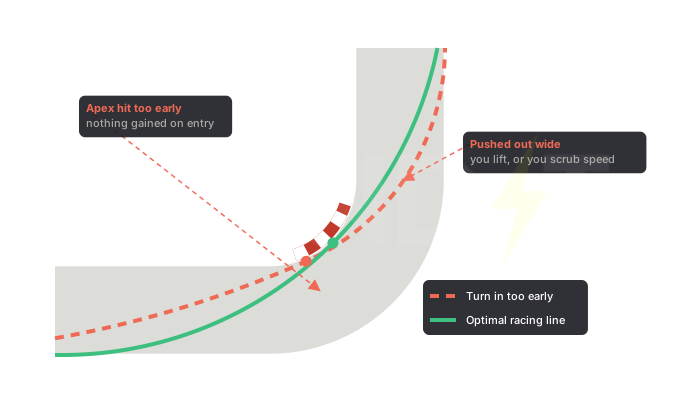
So again, there is no such a thing as the earlier the better or the later the better go, because if you turn in too early, you go, sorry, too late, you’re gonna sacrifice a lot of mid speed.
And yes, most of the time the exit will be good. To be honest, when you turn in late, you gotta get good exits. I’ll be honest with you, you’re gonna get good exits when you turn in late, but most of the time you will sacrifice so much the entry phase and the mid phase in, you know, for you to get a good exit, that is not going to be a good decision.
And now in the mid corner, when you are going to be, when given that, let’s say we we have an optimal racing line as the green, the optimal braking, optimal entry rate line on the entry, and optimal line on the entry. Then when we go in the mid corner, we still have the rotation to do right and that is a lot to do with the speed that you carry.
It’s not just the steering wheel. You know, in karting you’re driving the kart almost like like making the kart rotate with the speed that you carry. So the optimal speed and angle and rotation and footwork you do in the mid corner is going to affect the axis.
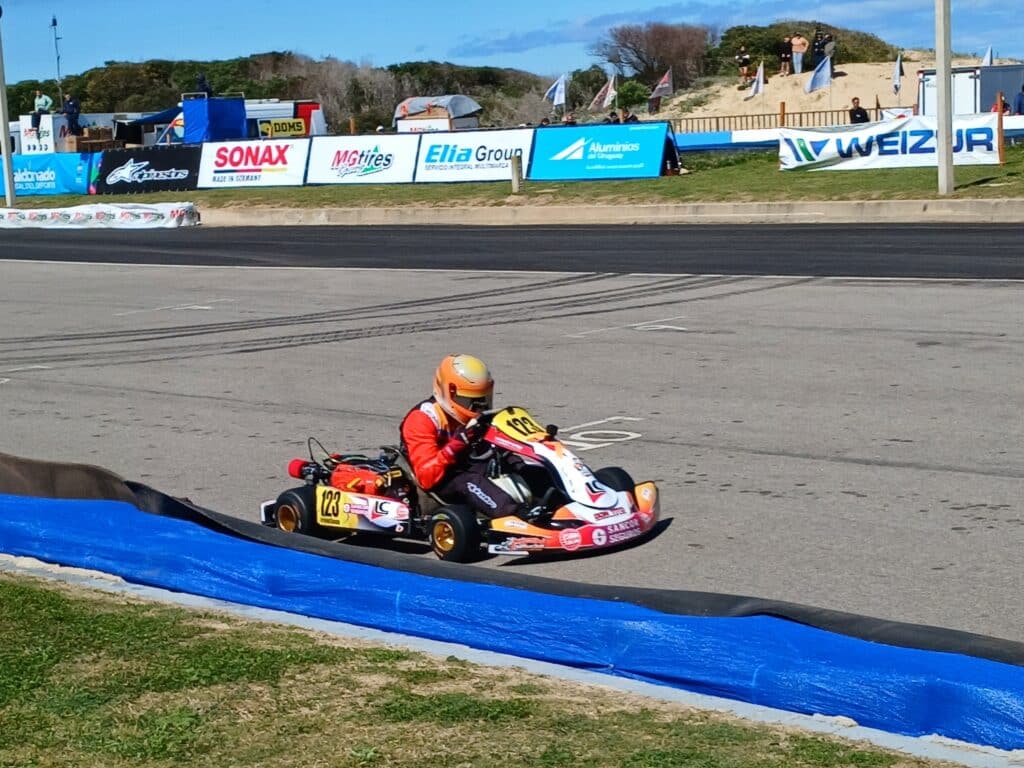
- If you have a good rotation, you’re going to get the perfect exit, just like the green.
- If you have too little rotation in this area, let’s say everything is good, but then you’re not stopping the kart, you’re not rotating with the pedals, everything in speed, and you try to go in the gas, even if you don’t have the good rotation, you’re gonna get pushed out wide.
- And again, your line will be affected, and your speed will be affected on the exit.
In case you have too much rotation, and you’re like, you’re like, you’re gonna be pointing towards the apex. Sometimes you’re gonna clip the curb, and that’s going to make you lose a lot of time, and that’s going to also affect a massively the exit. So yeah, that’s one of the things you want to avoid.
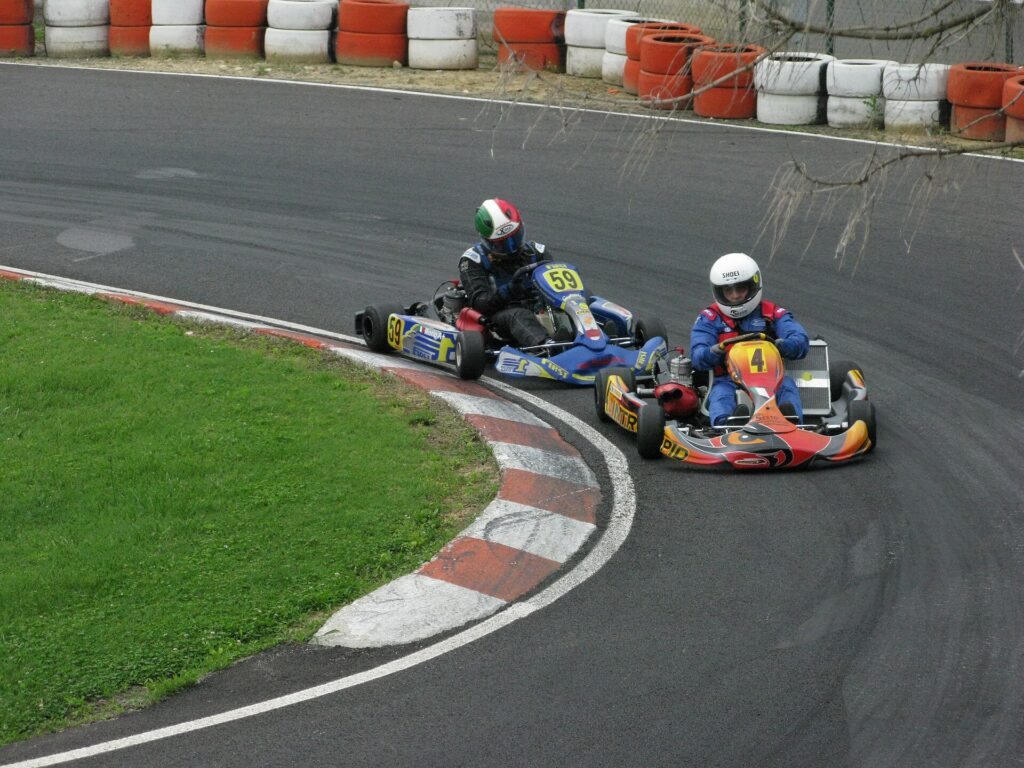
But most of the times, I see drivers losing most of the time in not rotating enough rather than rotating too much, under rotation versus over rotation.
The goal in the mid corner is to get the optimal rotation
and to go on the gas a little bit before the apex. So normally, you get on the gas right before the apex. Let’s say the apex is here you go on the gas a little bit before than that. And that’s going to affect, of course, if you go too early on the gas, given everything else being perfect.
So let’s say you go too early on the gas again, you’re going to get pushed out too wide, and your exit will be suffering, even though you got oil on the gas.
If you go on the gas too late, though, you’re just going to lose valuable time, and you will not be using enough track on the exit.
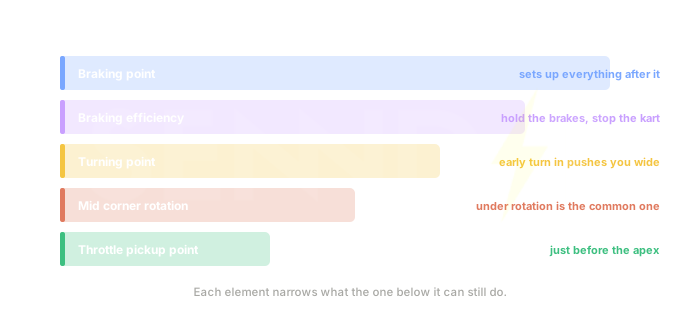
I guess that’s pretty clear for all of you, right? So that’s one of the things:
- If you go too early, you’re gonna get pushed out wide.
- If you go too late, you got to sacrifice a lot of speed in the end, in the in the mid corner phase
Send your onboard footage. Alessio reviews it corner-by-corner and tells you exactly what's costing you time, and how to fix it. Back within 48 hours.
Get My Onboard Reviewed → Reviewed personally by a CIK FIA World Champion, never an assistant.I promise I'll not spam you with repurposed shitty AI content but real experiences that only I, Alessio Lorandi, experienced. Written in my funny English-Italian tone of voice 😂
Alessio Lorandi is the former CIK FIA World Junior Champion, winning against Lando Norris in 2013 & F3 multiple race winner. He's helped 200+ karting drivers worldwide get faster & win WSK titles with BabyRace Driver Academy & now through Senndit, his online karting coaching platform.