
The Driver-Parents Relationship: What To Do & What To Stop Doing
The driver-parent relationship may not be as straightforward as it seems. In fact, in 21 years on the racetracks, I have noticed that, unfortunatel…


The driver-parent relationship may not be as straightforward as it seems. In fact, in 21 years on the racetracks, I have noticed that, unfortunately, most of the parents get this wrong. Most of them believe that the more supportive they are, the better, but the reality is that there is a fine limit between being too supportive and not enough. But the majority of the times I have noticed parents being a little bit too supportive, which turns into pressure for the kid that starts to feel the pressure, but besides that, there is also the fact that when they are too supportive, the kids become less independent, which turns also into less confidence, etc.
- There is a fine line between supportive and suffocating, and most parents cross it without noticing.
- A driver who is afraid of making mistakes cannot drive fast. Fear of letting you down produces more mistakes, not fewer.
- Do not copy the Verstappen story. It is one anecdote, repeated by people who do not know what surrounded it.
- Coach only if you have actually raced. Otherwise it is piano lessons from someone who has never touched a piano.
- Bad coaching is worse than no coaching. Left alone, a kid around fast drivers will work a lot of it out.
- Have the money conversation — without turning it into a debt. Guilt is a handbrake on performance.
- What parents should own: team choice, funding and the social media. Not setup, not data, not coaching.
- The most relaxed parents produce the most successful drivers. Every time.
- Helicopter parenting kills more careers than a lack of talent
- I do understand the parents’ side of it
- Why pressure makes a driver slower
- The Verstappen story everybody copies wrongly
- Why the parent should not be the coach
- The exception: a parent who has actually raced
- Jos Verstappen did not need to hire a coach
- Bad coaching is worse than none
- Would you take piano lessons from someone who has never played?
- The money conversation
- How my father handled it
- Most families run out of runway
- The relaxed parents get the successful kids
- Let the parent be the parent
- What parents should actually own: the team choice
- Be honest about the budget you really have
- And somebody has to run the social media
Helicopter parenting kills more careers than a lack of talent
So there really is a fine line between being supportive and, you know, turning into over control, let’s say, in the sort of helicopter parenting that we kind of know the reality is that yes, that term helicopter parenting may kill more karting careers than lack of talent, because I mean, I’ve seen or witnessed over the years fathers and mothers being way too careful, way too caregiving to the kids, but most of the times that’s actually hurting them, because again, the kids, you know, first of all, they start to feel more pressure, because when their parents are overly involved into the day to day activities of the paddock, which is perhaps you know, cleaning their helmet, cleaning their kart, being involved in setups, being involved in data analysis, being involved in onboard video analysis, you know, being involved in the coaching, doing even gestures and signs on the track when the kid is driving.
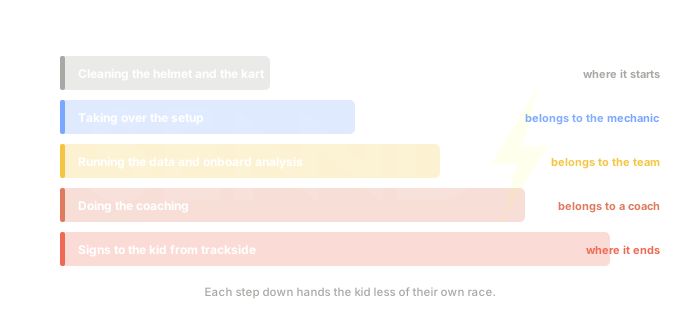
I mean, I’ve seen it all, and it’s quite crazy.
I do understand the parents’ side of it
I understand, to be honest, the point of view of the parents, you know, they are here on the track, they’re spending a lot of money, they’re, you know, spending their time with their child, and they want to get a return on their invested time and invested money, you know, the ROI, but the reality is that you can’t really treat your kid too much as an investment that you’re like, okay, since I’m investing x amount, I need to get the return, necessarily, so I feel
Why pressure makes a driver slower
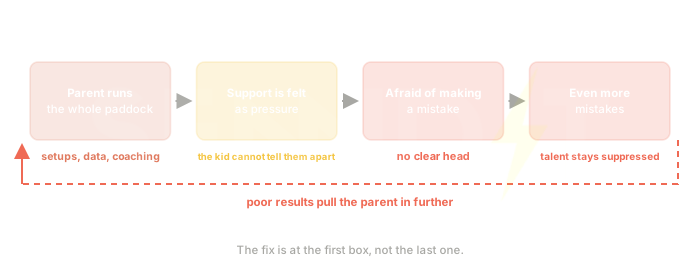
most of the kids do really feel the pressure from when the parents are overly involved, and they start to underperform because they start to be, let’s say, afraid of making mistakes, afraid of losing, and when you’re afraid of making mistakes, you can’t drive with a clear mentality, a clear head, but again, if you can’t drive with a clear head, because you’re always afraid of making mistakes, and let your parents down.
Then you are gonna do even more mistakes. So, there is really a fine line and small difference between being supportive and pressuring. And again, most of the kids struggle at figuring out the difference, and I feel, especially in young kids’ career, it’s really hard for them to differentiate support with pressure, and again, most of the times the pressure is going to suppress a lot of those talents, and the kids may not be able to drive as free-minded as they could, and yeah, that’s true, that
The Verstappen story everybody copies wrongly
the line that diamonds are made under pressure, and the fact that you may have heard quotes from, you know, Verstappen, and saying that his dad was very pressuring, and, you know, very strict on him, very hard on him. The reality is, yes, but at the same time, I believe that Jos early on, he was also very kind to Max, in a way that he supported him all the way through, and yes, I mean, that may have felt like pressure at some point, but it was good kind of pressure, so I believe that most of the parents watch what you know, the story about Verstappen and his dad, and they try to replicate the same, but they try to replicate the same without actually knowing really what was behind the story, you know, they all remember the story of the gas station after the world championship in 2012 where it was told that Max was left by Jos after he crashed in the final fighting for the win.
He was basically left at the gas station, and that was a story that has been spread around for ages, and I think lots of parents are trying to replicate the same approach, but realistically you can’t assume that it went like that all the time just because of a single event, that yes, may be true or not, but realistically it was just a single event, and I don’t think it was the case all the time.
So it’s important to also understand that
Why the parent should not be the coach
the parents should not be, in my opinion, the coaches, most of the times, I know that hiring a coach, especially a private coach, is an extra expense, and some of the parents will want to try to avoid that, but realistically, if you interfere too much with the kid, and especially, you know, there are some parents that have a great relationship with their kids, and the kids are very coachable, and it can be okay to give like very basic coaching advice.
I mean, my dad was like that, and I also, to be honest,
The exception: a parent who has actually raced
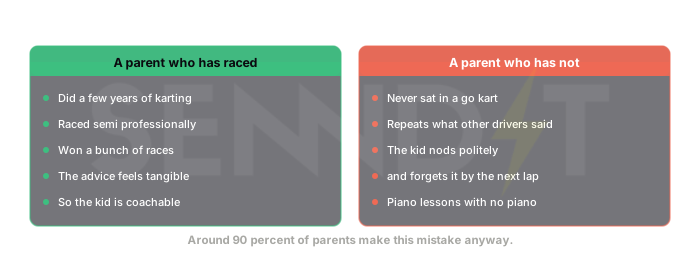
it depends a lot whether the parent, either the mom or the dad, has been involved in racing themselves before, because you know, I was willing to listen to my dad’s advice, because he did a few years of karting. He did it semi-professionally. He won a bunch of races, and while he didn’t go to Formula Cars, but I mean he was in karting quite solidly, and he did a great job.
So I could listen to him, because I could feel that the advice he gave me was real. I could feel it was tangible, and so it was inevitable for me to listen and to be coachable. At the same token, if my mom told something about racing, and she had never been in a go kart. I mean, I would probably have had a hard time to listen to her, and I would be, yeah, yeah, for sure.
I mean, I would probably have just nodded and just like forgotten what she said, because again, as long as she has never been on the kart, I feel like it would have been like crazy to listen to someone who has never had the experience, and so doesn’t have the knowledge and the skills to teach you, so I really feel that the coaching should be given by who has the experience and who has the knowledge.
Jos Verstappen did not need to hire a coach
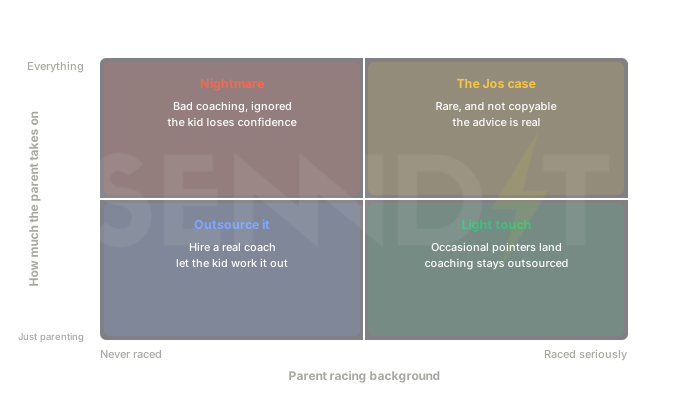
So, if the parents have had the experience, like in the case of Jos, I mean, Jos, the father of Max Verstappen, didn’t need to hire a coach because he was an ex-Formula One driver, who was a legendary driver, especially in karting, as well as in Formulas, and he was the teammate of Michael Schumacher when he was at Benetton. So I’m pretty sure he learned a lot, not only from his career, but also watching Schumacher’s career, and I’m pretty sure he knew exactly how to coach Max, so he didn’t need a coach himself.
Realistically, not all parents have the same background as the father of Verstappen, so Jos, the reality is that all of the parents are trying to replicate the same as Jos did without actually having their background, so you know, since nobody can change their past, you can’t go now and manufacture a racing career just so that your son can listen to you and that you can coach him, and so at least you have a point when you tell him something realistically, just leave the ego aside and make sure you hire a really good coach, unless you are driving in a top team, and in the top team, most of the times they already provide the coaching with data, video analysis, etc.
Now, there’s also the mechanic who’s most of the time experienced enough, well, not most of the times, but some of the times, experienced enough that he can provide good coaching, but again, coaching is key, and there’s all sorts of different types of coaching, you know, there’s good coaching, there’s bad coaching.
Bad coaching is worse than none
Bad coaching is worse than no coaching at all. I always like to say, I mean, the kids can figure it out themselves, rather than, you know, trying to tell them something which is actually not really real or actually wrong, most of the cases, so this is very, very important. I mean, I just feel this is one of the main aspects that the parents need to be aware of, that they can’t improvise themselves as the coach that knows it all about racing.
Yes, you may have heard something from other drivers about how to take the specific corners, or you may have heard something about other mechanics or other team managers, but realistically you can’t again manufacture coaching skills that are, I mean, racing skills that you can transmit to your child that you will not believe you, it will not listen to you, and you will wonder and be upset at your child for not listening to you, but come on, let’s swap the things around, what if you were the kids, and somebody you know, some maybe your dad or your mom tried to give you some coaching based on how to take a specific corner or how to take a start, and they have never done it themselves, you know, it’s gonna be like
Would you take piano lessons from someone who has never played?
listening to piano lessons by somebody has never touched the piano once in their life. I mean, it’s true, or even trying to learn how to play tennis by listening to somebody who has only watched tennis matches and has never played tennis once in his life, so this is really something that, unfortunately, I would say 90% of parents do as a mistake, and they need to really back this off and outsource their coaching skills and the coaching activity to who has actually had experience, otherwise, as I said, instead of giving bad coaching, which again, if you don’t have the experience, you may give some good coaching every once in a while, but realistically, most of the times will be just not accurate and good enough.
So instead of giving inaccurate coaching feedback, I’d prefer to just like leave them to the kids and they’ll figure them out by driving and being around fast drivers, and they will figure it out. Then also the results, so
The money conversation
the financial aspect of racing, which you know there’s always going to be the kind of conversation at some point between the dad and the kid, or you know, sometimes even the mom. Realistically, unless there is unlimited budget, like was the case for Lance Stroll, and those kind of drivers, where you know the budget constraints are inexistent, for 99% of the drivers are there.
I mean, the financial constraints are quite important and quite binding. So, realistically, there has to be a conversation, but it doesn’t have to make the kid feel guilty in a way.
How my father handled it
I think my dad was always quite good at that. He managed to make me realize how much sacrifice he was doing, especially when we moved out to Formula, I could really realize and feel that he was making huge sacrifices, you know. He was selling some of his real estate houses to fund my career, which, looking back then, I was quite shocked, and I mean it’s quite crazy to think about that, but and it’s not like we had so many houses to.

Sell, we only had a few apartments to sell, and that was it. Once they were sold, I was, I was, I was done. But realistically, it’s
Most families run out of runway
the same case, I guess, for 90% of the parents out there. They are gonna struggle financially when they go up and up and up into the ladder, and the sponsorships will be like oxygen to to the racing, so it’s going to be very hard for them to continue, and the kids will have to know this, and but the point is to make this conversation without making the kid feel guilty and making him feel pressured to perform.
Sometimes this kind of conversation can work in a way that, yes, the kid feel like, okay, I need to really become more serious and try to really give it everything, because I know I don’t have many seasons left to prove myself. Otherwise, I will have to give up on the dream of becoming a professional racing driver. So, it has to be treated properly.
This kind of conversation, we can have a proper one on one chat if you want about this. I can help you out, but realistically, yeah, it’s it’s something that has to be taken with with a lot of attention, because just a few wrong words are going to stuck in the subconscious of the kid, and that maybe is going to make them feel guilty, and actually they will, yeah, just probably push less and be even more afraid of making mistakes, because yeah, when you’re, when you know that your parents are making a lot of sacrifices, and they’re kind of begging you for results to go and seek for sponsorships, then you know that you have the pressure and you’re afraid to lose, afraid to make mistakes, but whenever that happens, it’s just a massive handbrake to your performance.
I mean, I’ve seen parents doing it terribly wrong, but I’ve also seen parents doing it amazingly well, not just the financial conversation, but in general, just the whole approach. And to be honest, I see that
The relaxed parents get the successful kids
the parents who are the most laid-back and the most relaxed about it are the ones who actually, in the end, manage to get the kids to be successful. Obviously, I understand that it’s directly correlated to the amount of funding and budget that the parents have. Most of the times, the parents that don’t have the necessary funding to even go into juniors or seniors, they are the ones who, to be honest, are going to be the most suppressive, the most pressuring, the most, you know, helicopter kind of parenting that tends to hurt the performances.
So, unfortunately, it’s directly correlated to, again, to the amount of financial resources available. So, and it’s a bit of a chicken and the egg problem, and the realistically, the ones who are the most laid-back and relaxed parents are the ones who are able to get the kids to be more self-confident, be more willing to make mistakes, be more willing to lose, and by being more willing to make mistakes, they end up becoming better drivers and get better results, compared to the ones who are afraid of making mistakes and are kind of like frozen in a state of perpetual alertness of, you know, trying to not make mistakes and not trying to not let your parents down, but by doing so, you would just have a mediocre career with mediocre results, because you could never push to your limits.
So, this is very, very important.
Let the parent be the parent
If I could give one piece of advice, it would be to make sure the parents do the parents, make sure the father does the father, the mother does the mother, if they need to go to the track, because you know there is nobody to look after the kids in terms of a nanny or whatever. Then I mean, fine, but they should try to stay and take a step aside and really outsource all the coaching and all the mentoring to whoever does this professionally, which is, I mean, a team with is professional coaches, professional data guys, as well as, you know, a professional mechanic, so the kids just need to feel like in a safe environment, and they need to know that they have a group of highly skilled people around them that can massively help them with, with their, yeah, with their results, but the parents, as I say, I mean, the moment they start to be coaches, they start to be mentors, they start to be set up mechanics, they start to be the data engineer, and things like that.
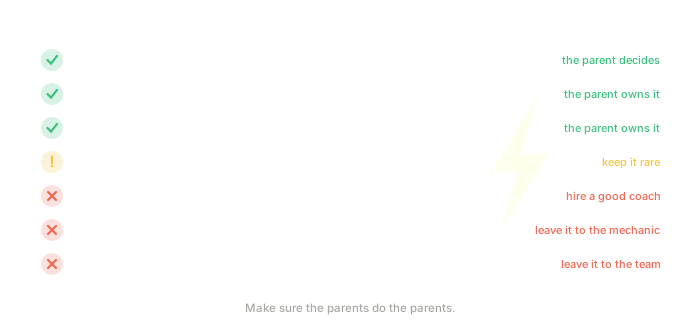
They turn into, you know, more of nightmares than dreams scenarios. And this is really what I can say with the bottom of my heart. You don’t want to be the parent that manages, micromanages everything and tries to get the kid to be perfect from all sides and making sure you’re involved in everything, because by doing so, again, you’re becoming that sort of helicopter parent I was referring to at the beginning, and that’s again very bad, because it creates insecurities in the driver, it creates a proper mental handbrake, and yeah, just lack of confidence, and the lack of independence.
So, even if that may work for some reason, again, that’s still something that the kid cannot, you know, replicate when they go up and up and up, because I mean, they need to become more self-independent and take care of their own destinies, and if that works or not, I mean, it’s going to be, it’s going to be okay.
What parents should actually own: the team choice
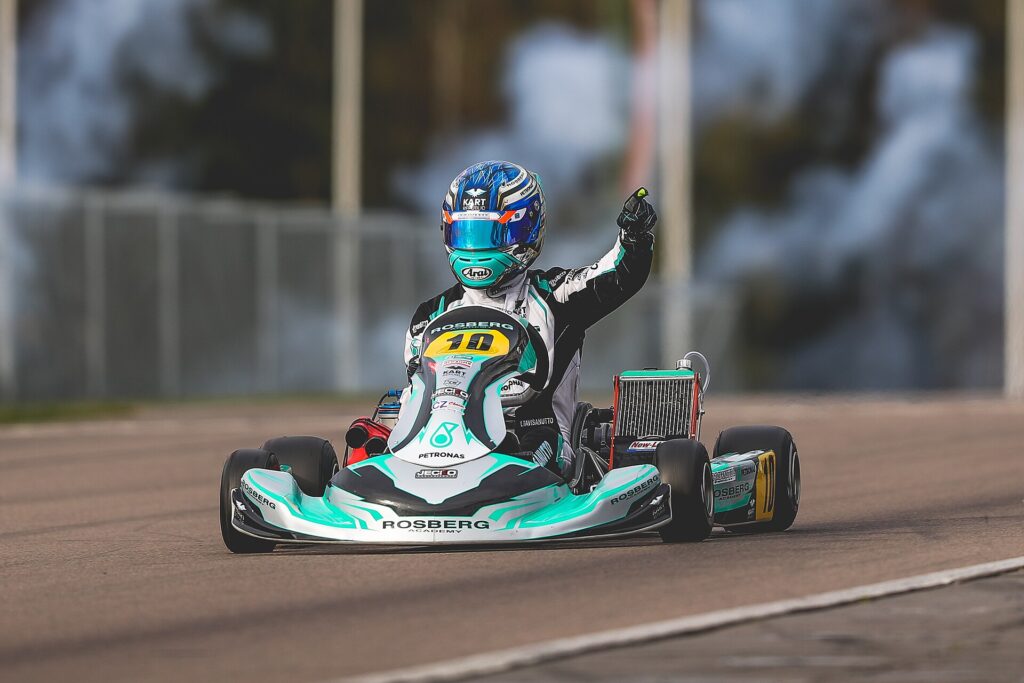
What the parents need to do is to make sure that the team selection is good. I mean, it shouldn’t be the driver who should choose a team. I mean, the parents need to have the knowledge and the intelligence and all the information available to them to take the right decision and select the top team, not just in terms of equipment, but also in terms of coaching.
That is very important. Thing, and then obviously
Be honest about the budget you really have
they need to take care about the funding, so make sure they have funding available, in terms of sponsorship, in terms of their own funding, they need to have their, you know, planning together, otherwise they shouldn’t even aim at Formula One, they should aim something much more tangible if they want to do it professionally, unless they just want to do it as a hobby, which is totally fine, also, I mean, not everybody has to be a professional, but if they want to do professionally, and they have, like, very little funding, which is, for example, less than $2 million available, then they need to, okay, just make everything way more cheap, way more affordable, and they should go into, like, categories like GT3, or, you know, prototypes like endurance racing in the WEC or IMSA, where, you know, they can get seats and at a much less rate than driving Formula 3 and Formula 2, which is about 2.
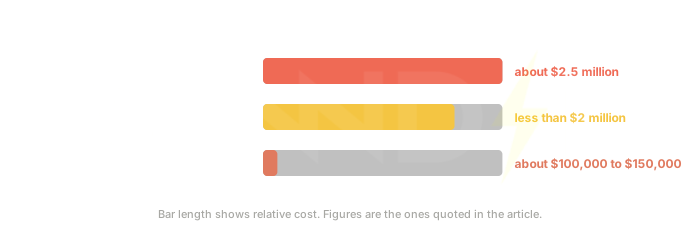
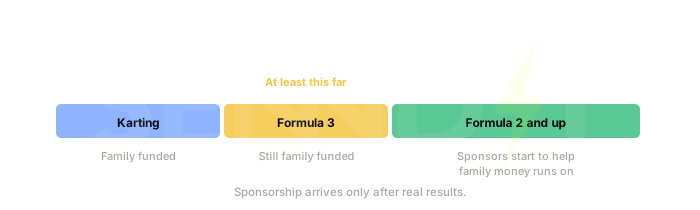
5 million for a Formula 2 season, you know. So you can understand that the kid can do anything about that if the parents don’t have the funding, for sure. Right now, I can’t even afford the not, not, not, not, not a season, but I can’t even afford a testing day in a Formula 2 car, which is about, like, what, 100, 150,000 you’re just the testing day, or something like that, but it’s crazy high, the price, so you know, if I don’t have those kind of funding, I wouldn’t go and try to make my son become a, which I don’t even have a son, by the way, I’m not even married yet, but you know, I’m just saying, I can’t even have the, the crazy, you know, goal of getting him to Formula 2 and Formula 1, I mean, yes, you can always find the sponsorships, but realistically, there always needs to be financial support from the family until Formula 3.
I mean, at least, and then, obviously, if you do a really good job in terms of results, you get sponsorship, you get the teams to kind of help you out, but realistically, it’s still going to be family-funded for a long time, and also one more thing:
And somebody has to run the social media
the parents need to take care of the social media. They need to have a good agency in place, either for the social media posting and for the social media content creation, so that they can ideally make the kids go viral and attract a lot of followers, a lot of audience, so that they can get, yeah, better sponsorship deals in the long term, so this is everything.
Honestly, I hope this was useful. Maybe this guide is going to upset some of the parents, but honestly, I’m just giving you my unfiltered opinion and view, so I’m totally fine receiving some negative comments about that. But honestly, it’s.. it’s just the way it is, and yeah, they just need to, my opinion, be reflecting on what I just said, and yeah, maybe for some things I may not be fully correct, maybe somebody may have different opinions, but realistically, this is what I’ve seen in 21 years of my career, and I hope that you can borrow this experience and knowledge to avoid making those mistakes that many parents do every single day.
If you need some lap time for the next race, well, sign up to my one-to-one onboard coaching analysis, and I’ll basically analyze your onboard video. Otherwise, hit me up on Instagram @alessiolorandi. I’ll see you.
Related reading for racing families: how parents should support a young driver, what a season actually costs, and the karting ladder from 6 to 16.
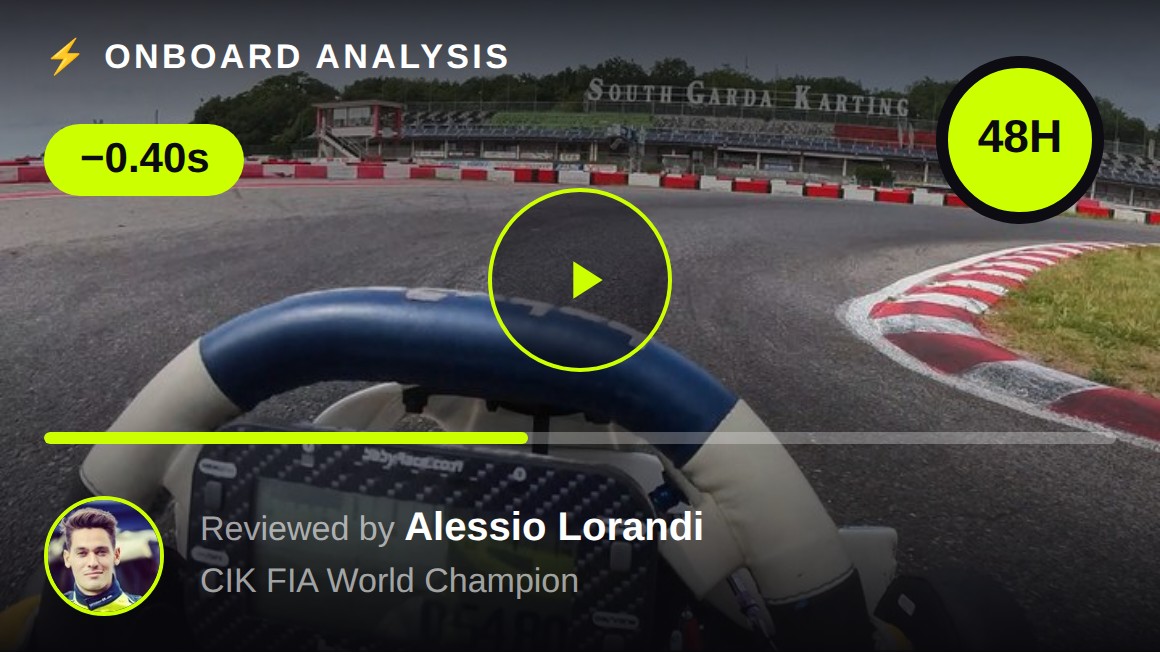
Send your onboard footage. Alessio reviews it corner-by-corner and tells you exactly what's costing you time, and how to fix it. Back within 48 hours.
Get My Onboard Reviewed → Reviewed personally by a CIK FIA World Champion, never an assistant.I promise I'll not spam you with repurposed shitty AI content but real experiences that only I, Alessio Lorandi, experienced. Written in my funny English-Italian tone of voice 😂
Alessio Lorandi is the former CIK FIA World Junior Champion, winning against Lando Norris in 2013 & F3 multiple race winner. He's helped 200+ karting drivers worldwide get faster & win WSK titles with BabyRace Driver Academy & now through Senndit, his online karting coaching platform.