
Cheapest Way To Start Kart Racing
Skip the fantasy. Here's what kart racing actually costs, and how to do it smart.

- Start with club-level races on a tight budget, spending around €24,000/year for 2 races per month plus maintenance
- Prioritize testing days (150+ per year) over races, they build muscle memory and cost as little as €100-150/day
- Never cheap out on your kart chassis; buy new at the start of season instead of used to avoid hidden damage and maintenance costs
- Use a practice engine for testing and rent a proper race engine only for actual races
- Build your brand and social media presence early, sponsorships are the oxygen that fuel a racing career
- Buy secondhand only for helmet and rib protector; invest in custom-fit suit, gloves, and boots for proper feel and aerodynamics
- What is the absolute lowest budget path into kart racing?
- What are the best championships for beginners, financially?
- Used kart versus new kart. What should beginners do?
- How can drivers get track time cheaply?
- How important is private testing early on?
- What equipment can be safely bought secondhand?
- What expenses should never be cheaped out on
- What are the biggest waste of money beginners make?
- How to progress without rich parents or unlimited budgets?
We all know karting is very expensive…
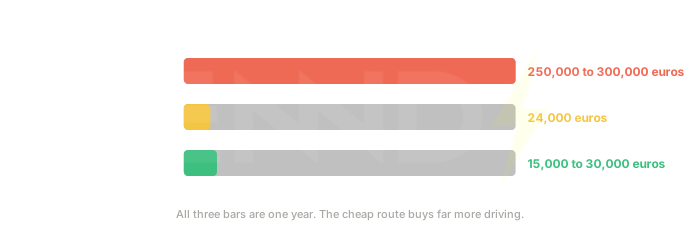
Especially if you want to do it professionally at the highest levels in the world, you will have to spend even up to 10,000 euros per race, which will add up to 250,000 to 300,000 euros per year if you wanted to do the full season.
But there’s also options to start karting, especially professional kart racing, on a shoestring, cheaply, in a way that you are going to stretch your budget for more seasons before you will have to actually start looking for sponsors, which, by the way, I suggest always to start looking for sponsors as early as possible, so that local companies or international brands are going to get to know you soon and will want to get you to promote and become the face of their brand on social media, etc.
So what are the major ways to save up and still manage to do professional karting without an unlimited budget, as the case of Lance Stroll?
What is the absolute lowest budget path into kart racing?
If you want to get started and just do some club level races and get really good at those before transitioning into professional international karting with a full season at the likes of WSK & CIK FIA races, the best way is to start in club level races with a super high performing, brand new go kart that’s going to cost about 2,500-3,000 euros just for the chassis.
Then, for the engine, I recommend renting a professional race engine. You can always save by buying your own engine, but I don’t think that’s a good decision, because you’ll have to maintain it anyway, and the performance won’t be good enough. I’d rather spend more on a professional race engine that’s going to give you the horsepower you need, rather than saving up there and then having to feel like a sitting duck on the straight.
You would sign up to these club races with a really good engine and a really good chassis at the beginning of the season. But be aware that you still have to spend quite a lot of money on maintenance, on tires, and entry fees.
You could get yourself started by doing two club races per month at about 500 euros per race, plus about 500 for engine rental, so about 1,000 euros per race. Two races per month is going to be 2,000 per month, which for a full year is 24,000 euros. That’s entry level just for the races.
But then I would add about 150 days of testing if you want to become extremely good and extremely fast. If you’re working with a limited budget for testing days, remember that you don’t really care about setting a track record. All you care about is driving laps and becoming faster, building muscle memory, learning tracks, learning driving techniques, and shaping your talent. The less you spend on testing, the better.
You won’t need a mechanic for testing. If you want to really save up and have a very limited budget, skip the mechanic, skip new tires, and skip the professional engine rental. Just show up with your own kart and your own engine, ideally an X30 or a Rotax. The maintenance cost is going to be super low. You can do so many hours of mileage without having to replace the engine.
Just pay for:
- Entry ticket fee for the track
- Fuel for a full day
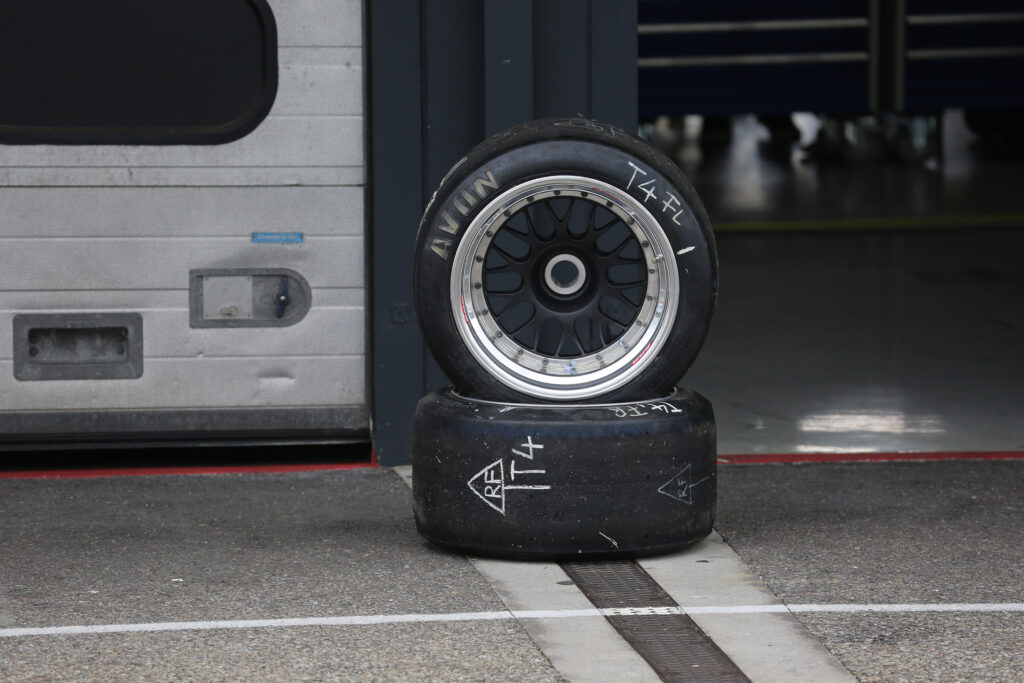
- One used set of tires per day (around 50 euros, or even less if you can find some in good condition)
With just 150 euros, you can get yourself a full day of driving at the local karting track. More importantly, you only get good by driving more. Every day you are not driving, you’re getting worse. If you’re not driving for 100 days, you won’t stay at the same level, you’ll be worse.
Every day you are not driving, you’re getting worse. If you’re not driving for 100 days, you won’t stay at the same level, you’ll be worse.
If you have a limited budget, I recommend doing more days with less performing tires than doing fewer days with more performing tires. Of course, it’s better to drive on tracks with much more grip. There’s a skill in driving in really high grip conditions. I highly suggest driving in the same grip level that you’re going to race at.
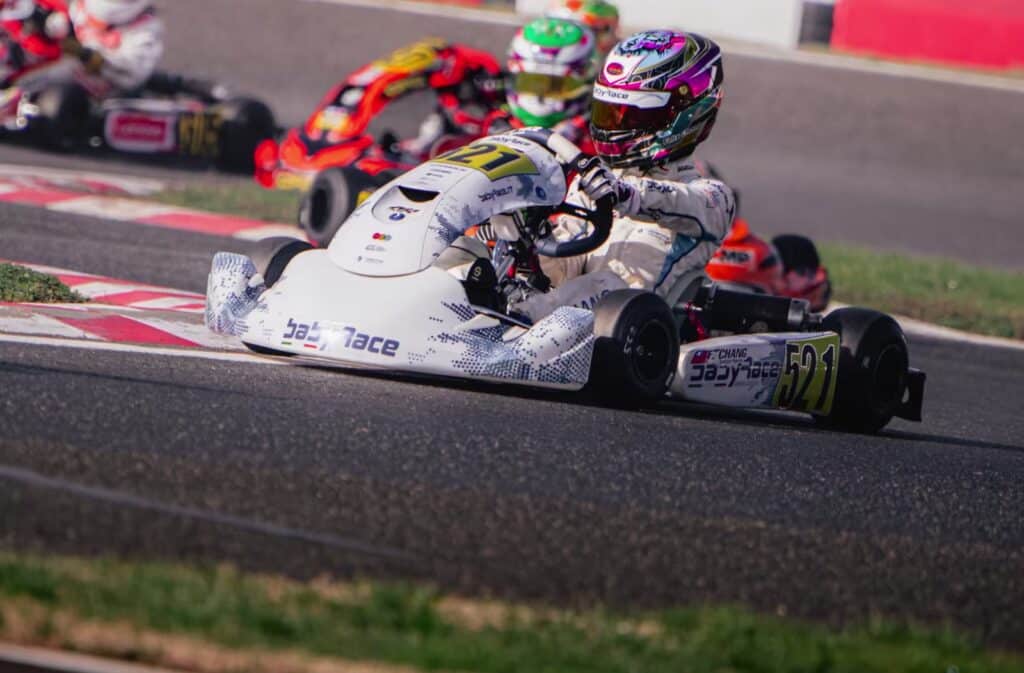
You can get yourself to spend only 100 euros per day, or even less, for testing days. If you can do 150 of those per year, basically driving almost every day, you can become very, very fast with limited money.
I lived only 20 minutes away from the track. As soon as I finished school at midday, I would go straight to the track and do four or five sessions in the afternoon, doing about 70-80 laps per day for five or six months like that. I really became a machine, I believe.
If you could do something like that, just arriving at the track with your kart, putting your helmet on, and driving, changing a set of tires every day, refilling the fuel tank, and driving some more, if you spend those 150 days at about 100-200 euros per day, that’s going to be about 15,000 to 30,000 euros per year. That is going to be a really good return on investment. I believe you can get yourself to become very, very fast with that limited money.
What are the best championships for beginners, financially?
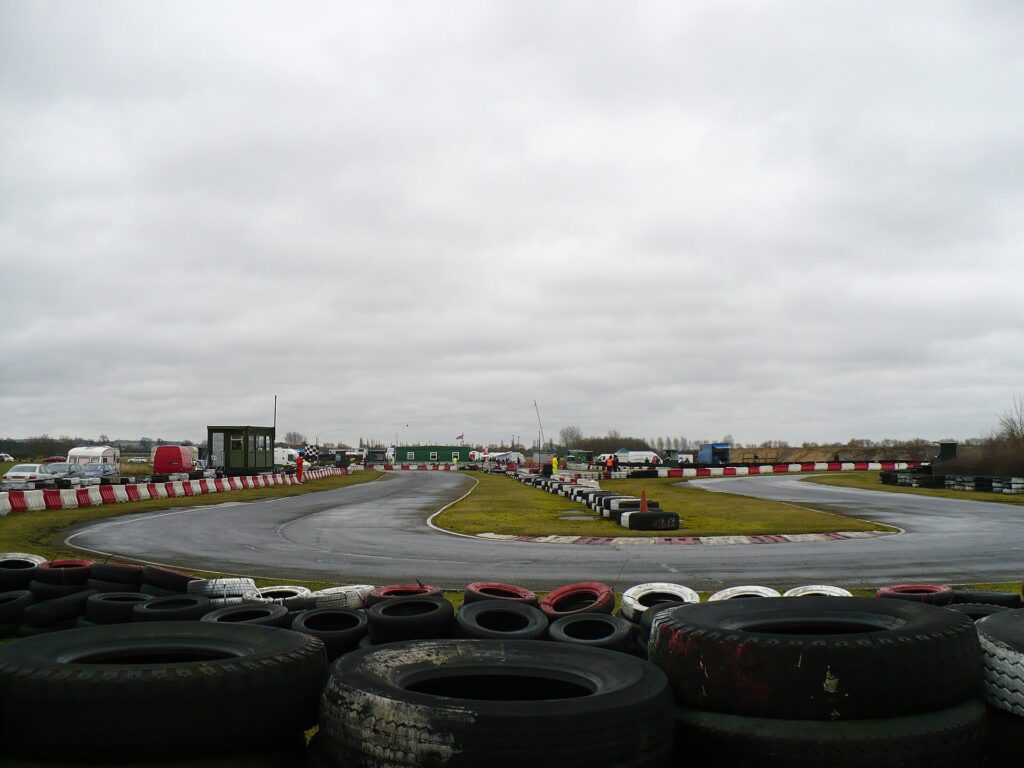
The best championships are club races that are just one or two days long. Normally, club races start on a Sunday, with testing on Saturday, just a two-day event. The level is not super high. Everybody is driving quite affordably, so you’re not competing against drivers spending much more than you.
Of course, even at club races, the level is getting quite high, so you need to expect to be fully performant on your kart to have a chance at winning. You cannot show up with a broken kart and a faulty engine and expect to win, even if you’re Ayrton Senna. You need everything: the proper chassis, the proper engine, and the proper driver to win the race.
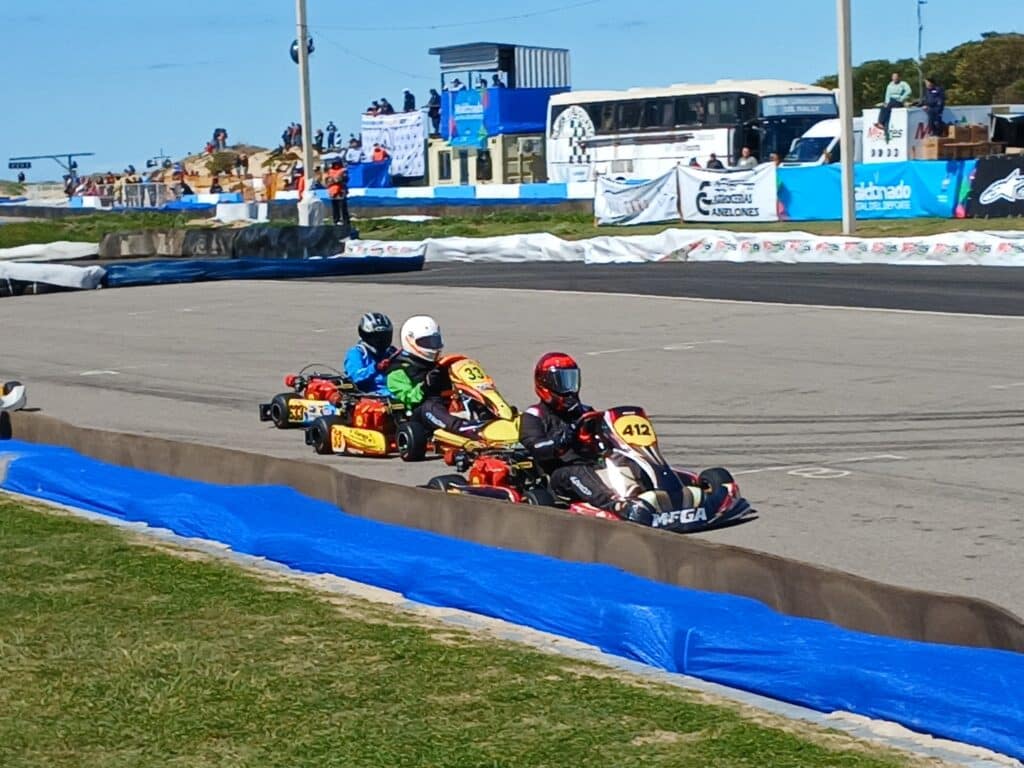
But yeah, local races and club races, that’s definitely what I would go for if you really want to just get started and not break the bank.
Used kart versus new kart. What should beginners do?
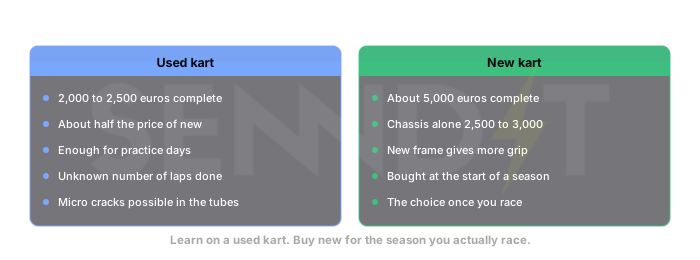
If you’re really caring about getting started and you just plan to do some practice days without racing, then used karts are the best decision. You will spend 50% or less than new karts. Instead of spending 5,000 euros for a full kart including engine, you could spend 2,000-2,500 euros. That’s going to get you started with much less commitment, and you can get your initial taste of kart racing.
However, new karts are the choice when you go into race mode. I suggest buying a new kart at the beginning of a new season and then using it for the whole season. When you get serious about it, you will need to spend the money on that.
New karts have a clear advantage, they come with a new frame and new components, which gives more grip overall. You will need it if you want to achieve better performance overall.
So you can start with a used one for practice and learning. But then, if you want to go into proper races or even club races, I at least suggest you get a brand new kart at the beginning of the season. I know it’s a big expense, but if you want to get the results, that’s what you have to spend. Otherwise you can just stick with what you have, but don’t expect the results.
How can drivers get track time cheaply?
The best way to get track time cheaply is simply by doing a lot of testing days with your own go kart and without a mechanic, without new tires, and without an engine rental fee. Just show up with your kart, pay for the entry ticket of about 60 euros, pay for fuel for a full day of 100 laps (about 50 euros), and spend about 30-50 euros for a used set of tires.
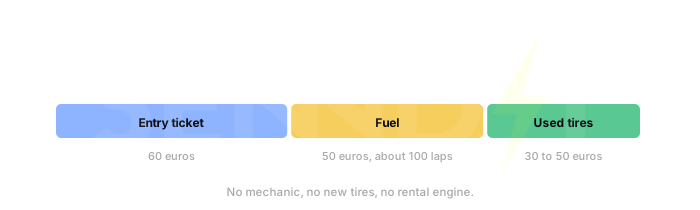
You can even take some tires from the garbage if they’re still good. With just 150 euros, you can get yourself a full day of driving at the local karting track. That is definitely a good way to get as much track time as possible.
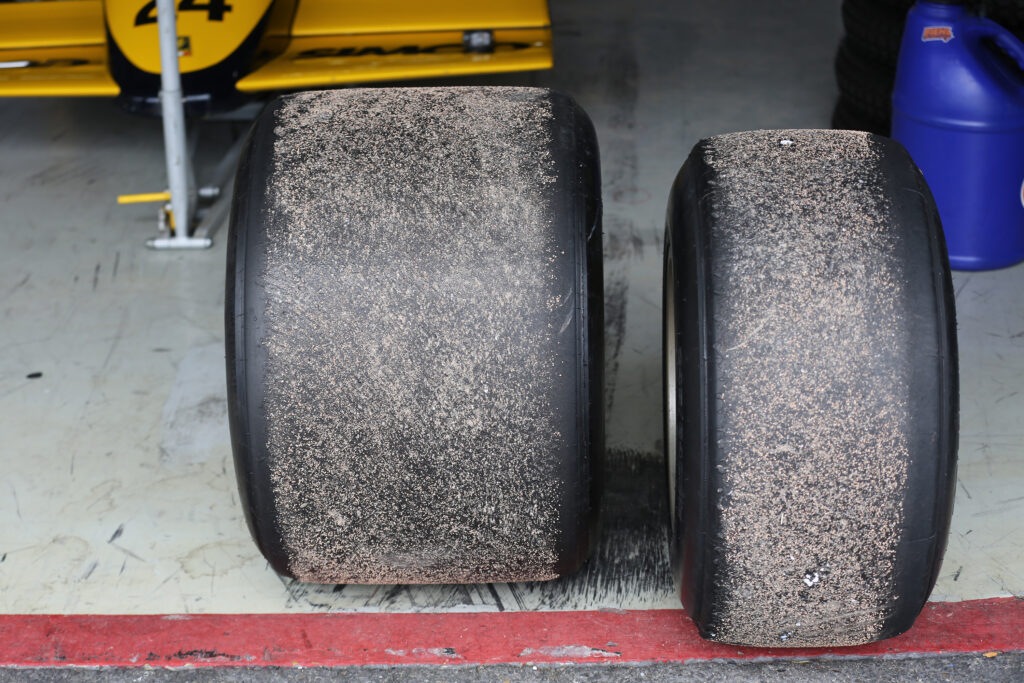
You only get good by driving more. Every day you are not driving, you’re getting worse. If you’re not driving for 100 days, you’re not going to stay at the same level, you’ll be worse.
Definitely double down on your training days. If you are really strapped on cash and your budget is very limited, I encourage you to do less races and more testing days. Spend less on your testing days. You do not need a race engine. You do not necessarily need new tires.
The major thing you have to build is your muscle memory and your skills. Of course, you’ll also want to have very good equipment for the races. I would buy a new kart, a very good kart, and then just use that. If you drive with a crappy kart, that’s not good. But it’s better to drive with a new kart and spend quite a lot up front than to save up on a kart and buy a broken one, then hoping to make it up with new tires or a race engine. There’s no point in that.
It’s better to buy a very good kart and then save money elsewhere, by using used tires on test days, and by using your own engine instead of paying for a rental engine. There’s literally no point in renting an engine for a testing day.
How important is private testing early on?
It’s extremely important. As in any sport, the more repetition, the more skills you build. It’s all about muscle memory. A tennis player needs to practice four or five hours a day, and a racing driver needs to also practice a lot.
If you just expect to win by practicing once a month, it’s just complete foolishness. It’s not going to be possible. The level is getting higher and higher every year. So it will require from you to be extremely, extremely committed. You will need to allocate time.
I know with school or other commitments, it’s not going to be easy. But if you really want to do this seriously, you need to invest time into that, and that’s going to give you the best ROI on your money, into testing and track time.
Better spend more time testing, more days testing in a cheap way than more races. In a testing day, you do about 150 laps per day, whereas in a race day, you just do about 40-50 laps per day.
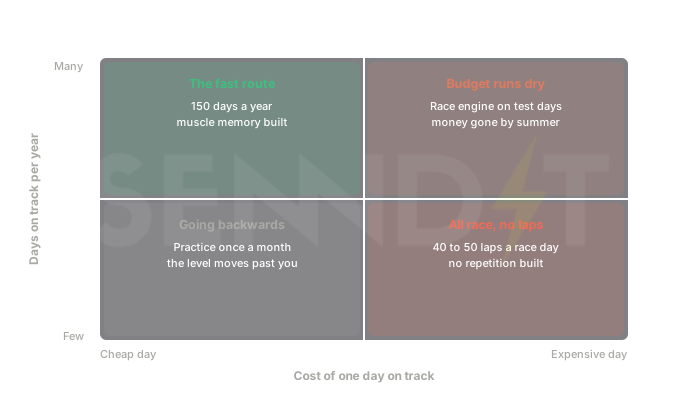
You understand how much of a difference there is between a testing day and a race day. Do more testing. Build the muscle memory. Get faster.
What equipment can be safely bought secondhand?
One of the equipment that can be bought secondhand safely and not really hurt performance is a rib protector and a helmet. You can save about 500-600 euros from a helmet and about 200 euros for a rib protector.
However, a race suit should definitely be custom made with your own size. You do not want to be too tight or too wide in the suit. The suit actually makes a big difference in terms of aerodynamics. If it’s oversized, it’s gonna slow you down on the straights. If it’s too tight, you’re gonna feel like you cannot move properly in the kart.

The same goes for your gloves and boots. If you have no good feeling when you drive, there’s no way to be fast. There’s no point wasting a tenth of a second on your shoes or gloves. Just get a set of professional shoes and gloves and then use them for a long time.
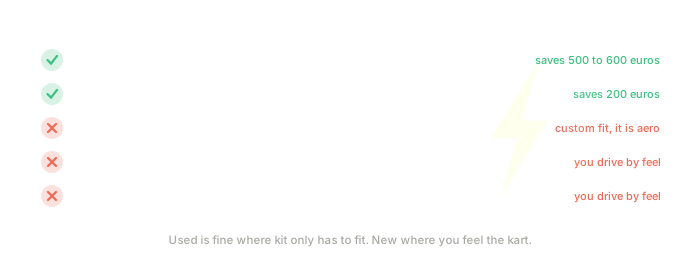
Here’s what you can safely buy secondhand:
- Helmet (save €500-600)
- Rib protector (save €200)
Here’s what you should always buy new or custom:
- Race suit (custom fit)
- Gloves
- Boots
What expenses should never be cheaped out on
I believe that you should never, ever, ever be cheap on your kart purchase. What I mean is that you should get a professional go kart at the beginning of the season, instead of trying to save up for a used kart.
Why? You never know how many laps the used kart has done. It might have micro cracks in the tubes. You want to get all the materials and tools, basically all the accessories in the kart, to be new:
- Stub axles
- Axles
- Rims
-
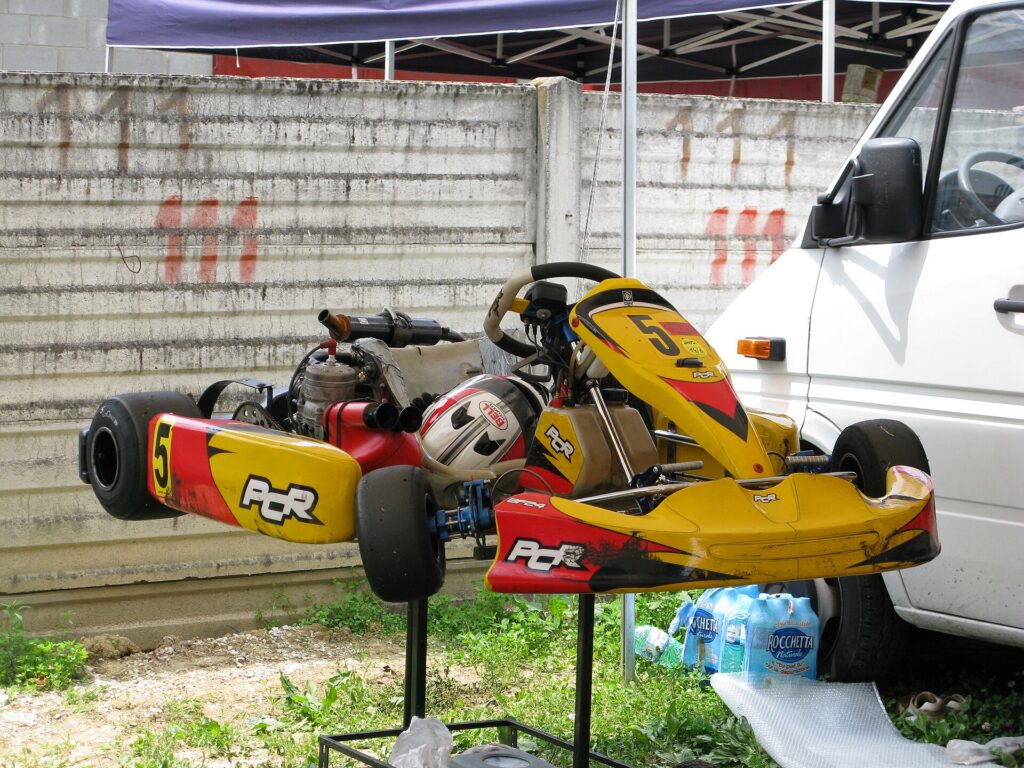
With no suspension, the frame itself absorbs every kerb the previous owner hit. That fatigue does not show up on a walk around the paddock.
Send your onboard footage. Alessio reviews it corner-by-corner and tells you exactly what's costing you time, and how to fix it. Back within 48 hours.
Get My Onboard Reviewed → Reviewed personally by a CIK FIA World Champion, never an assistant.I promise I'll not spam you with repurposed shitty AI content but real experiences that only I, Alessio Lorandi, experienced. Written in my funny English-Italian tone of voice 😂
Alessio Lorandi is the former CIK FIA World Junior Champion, winning against Lando Norris in 2013 & F3 multiple race winner. He's helped 200+ karting drivers worldwide get faster & win WSK titles with BabyRace Driver Academy & now through Senndit, his online karting coaching platform.