
Early vs Late Apex Explained
Master the apex choice that separates fast drivers from the rest. Corner speed, exit strategy, track layout, it all matters.

- An apex is the narrowest point across a corner, but the perfect apex changes based on corner speed, approach straight, corner radius, and track characteristics
- Early apexes sacrifice exit speed for higher entry speed; late apexes prioritize better exits and traction
- Faster corners typically require earlier apexes; slower corners require later apexes
- Banking, elevation changes, and upcoming straights dramatically influence the correct apex choice for each corner
- Beginners often apex early due to braking too early, the solution is to brake later first
- Car balance affects apex instincts: understeer tempts early turning; good rotation allows later apexes
- But wait, what is even an apex?
- What is the difference between early geometric and late apexes?
- What’s an early apex?
- What’s the advantages and disadvantages of an early apex?
- Why do professional drivers? Often prefer late apex?
- How does the apex affect exit speed?
- How does corner type influence Apex choice?
- So how does the apex point changes during overtaking?
- Why do beginners often take an early apex?
- How does car balance affect Apex strategy?
- How can drivers exactly know what perfect apex in a given call?
But wait, what is even an apex?
Well, an apex is defined as the narrowest point across a corner. It’s funny, because if you ask this question to most iPhone drivers, you will see that they will struggle to give you a proper reply, because an apex for most of them is something that they are being used to hit and chase since they were six years old when they started in karting. But they never quite had to define it, because it’s something that you just drive and you just feel it.
But yeah, the reality is that it’s really the narrowest point inside a corner where you ideally want to hit to take the best possible line, but that narrowest point in a corner is not going to always be the same for every single corner. Some corners will require an earlier apex, which means they’re going to be hit earlier on into the corner, whereas other ones are going to be needing a later apex, which means later on in the corner, compared to the geometrical Apex defined by theory.
What is the difference between early geometric and late apexes?
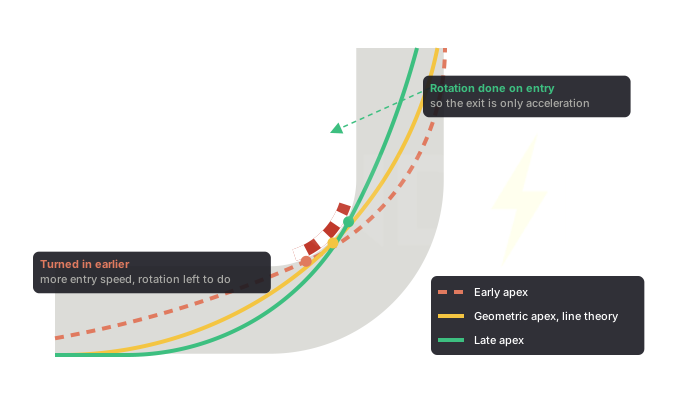
So let’s start by defining what a geometric apex is. A geometric apex is basically the apex defined by line theory. So according to line theory, the apex will be at a specific point, but in some cases, it may be at slightly different points than that geometric point.
Well, why? Because on the real track, differently from the textbooks, there are many different things that are going to be taken in consideration:
- The length of the upcoming straight, if there is an upcoming straight
- A sequence of corners
- Banking
- Elevation changes in the entry or on the exit
So there’s many different things that have to be taken in consideration. The geometry Apex will not always be hit, and sometimes will be earlier. Sometimes will be a later. Sometimes it will be just exactly the same as the geometrically apex.
What’s an early apex?
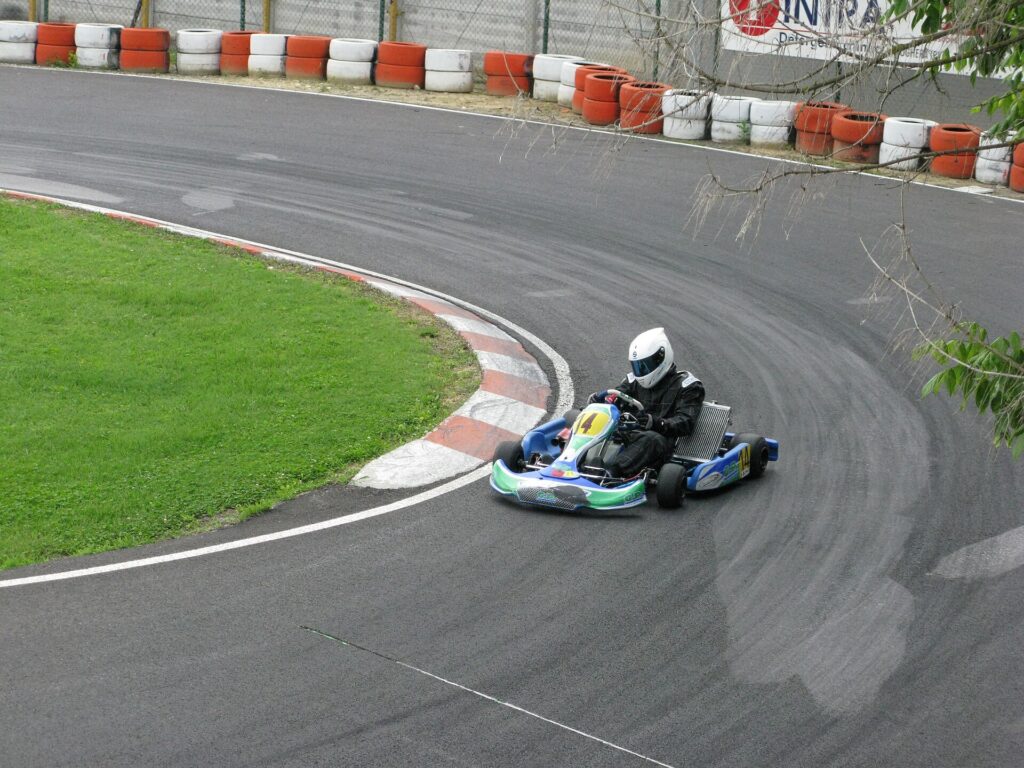
Well, an early apex is simply an apex that is hit earlier on into the corner than the geometrical Apex according to line theory. So basically, this kind of APEX will be earlier on, because probably the exit is not going to be that important compared to the entry speed that’s want to be carried.
So in this case, the driver will probably carry more speed on the entry than the theory, and it will turn earlier than in the theory. So that’s why it’s going to be called an early apex. He’s going to get to the narrowest point of the corner at earlier stages, rather than if he had a geometrical apex or a late apex.
What’s the advantages and disadvantages of an early apex?
Well, the advantages of an early apex is definitely carrying more entry speed, because you’re going to essentially just turn in earlier, release the brakes, and just carry more speed into the corner. So for sure, you’re going to be able to carry in a lot more speed at an expense of a slower exit speed.
And that’s why that’s a disadvantage. Basically, you can’t have everything, but in some corners, you will not care as much about the exit, because probably you have a sequence of corners. Perhaps you have another corner right away that doesn’t really necessary, and it requires a fast exit from the previous one.
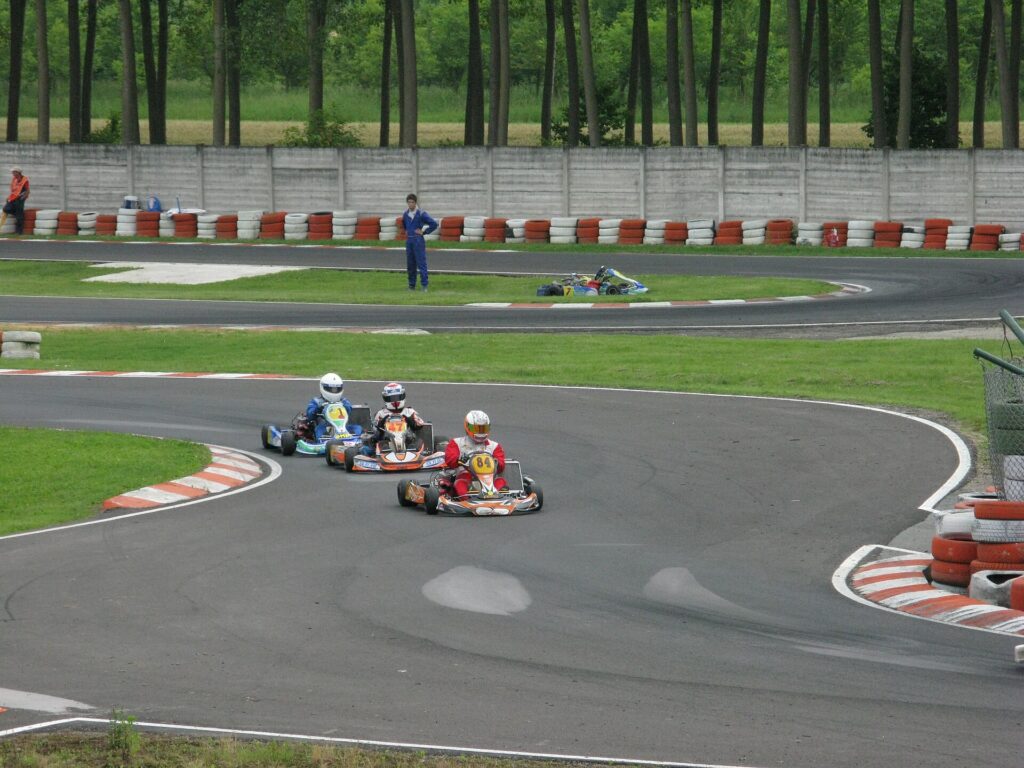
And so in that case, you know, sacrificing the previous exit does not make sense. And so, of course, it pays off to, actually, you know, get an early apex and simply sacrificing the exit, as long as, of course, the delta time between the whole section is faster because that’s at the end of the what we’re caring about delta time, that is our religion, basically.
Why do professional drivers often prefer late apex?
Well, I think that’s a bit of a myth, because it’s not true that professional drivers often prefer late apex, you know. But the ones who do prefer late apex are normally in very, very high powered cars, for example, such as Formula One, because in that case, you need to really try to straighten up the exit quite a bit.
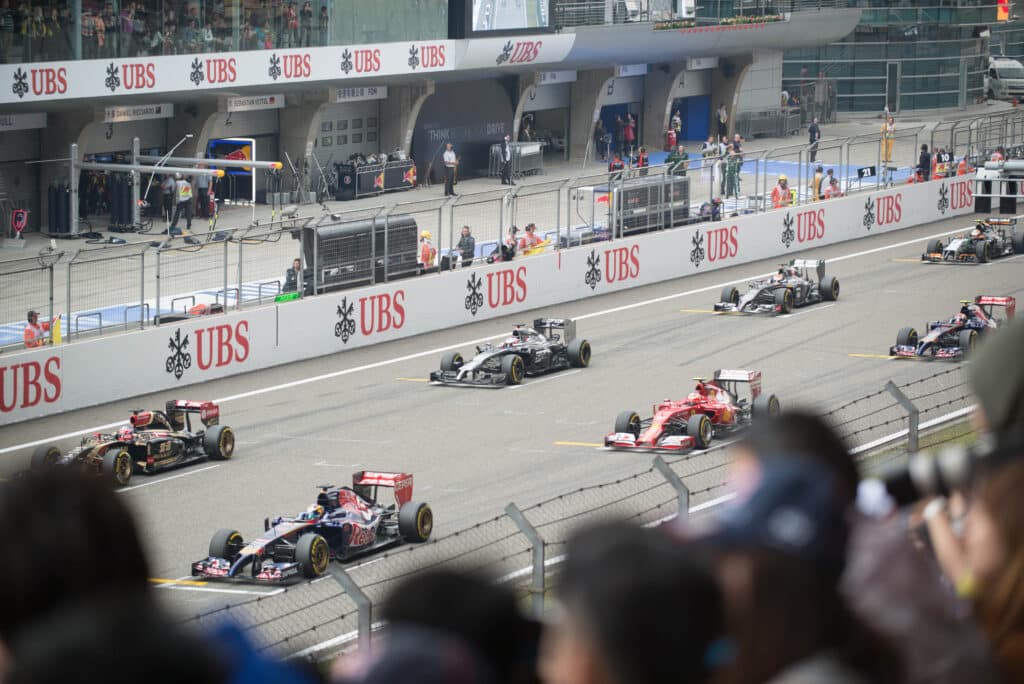
And of course, you need to make sure that your steering wheel is relatively straight on exit to go full power and have the maximum traction. But of course, that late apex technique is mostly used just in slow speed corners, because, you know, in medium to high speed corners, you will have to, most of the times go for an early apex.
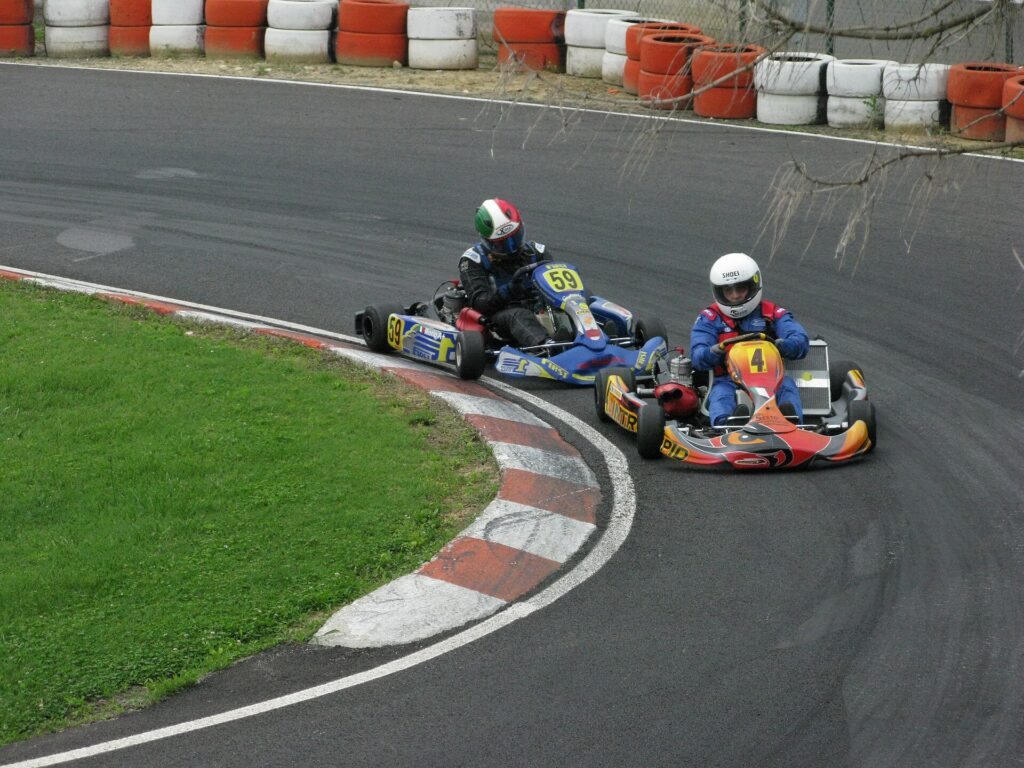
But it also depends a lot on the car balance. For example, if the car has a lot of understeer on the exit, then you want to have a late apex in order to make sure that you have the steering as straight as possible to go full power and not have any traction issue.
Whereas, for example, if the car is massive rotation on the exit, and it’s actually very good for that. You know, you can go for a bit of an earlier Apex because you still can rely on great rotation on the exit.
In medium to high speed corners, you will have to, most of the times go for an early apex, but it also depends a lot on the car balance.
How does the apex affect exit speed?
Well, think about it. It’s quite clear. You know, the apex position basically affects the rotation of your car. Therefore, if you decide to apex early by turning early, you’re going to give up initial rotation on the entry in spite of more rotation required on the exit.
So in that case, if you have to go and do more rotation on the exit because you have turned earlier on the entry, and therefore didn’t make enough rotation, then in that case, you will have a worse exit because you will still have to sometimes slow down the kart and still rotate the car on the exit, which does not allow you to use all the traction available from your tires to accelerate in a straight line, ideally.
So of course, if you go for an early apex, you are sacrificing quite a lot of exit speed, because you are asking the tires then on the exit to not only accelerate, but also to rotate the car, whereas on late apex technique, you are going to do most of the rotation on the entry of the corner, and therefore on the exit of the corner, You will be left with mainly just the acceleration part, which is, yeah, much better than you know, having to do the acceleration part and a lot of rotation.
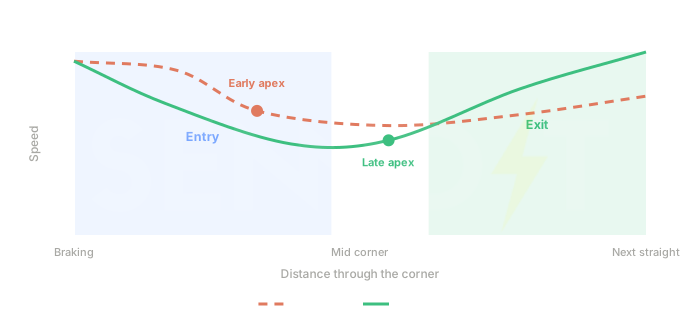
So yeah, that’s why there’s massive differences in exit speeds based on Apex technique between a early apex or late apex. So if you normally feel that when you’re driving behind someone else that they are getting way better exits. And it’s not just illusion of the concertina effect. If you feel like, generally, like you’re getting worse exit, or even in the data you’re seeing that you’re getting worse exits, then what you need to try to do is to get a later Apex stopping the car more on the entry, trying to, you know, induce more rotation on the entry, so that on the exit, you will be left with simply getting the power down and just thinking about getting the best acceleration path.
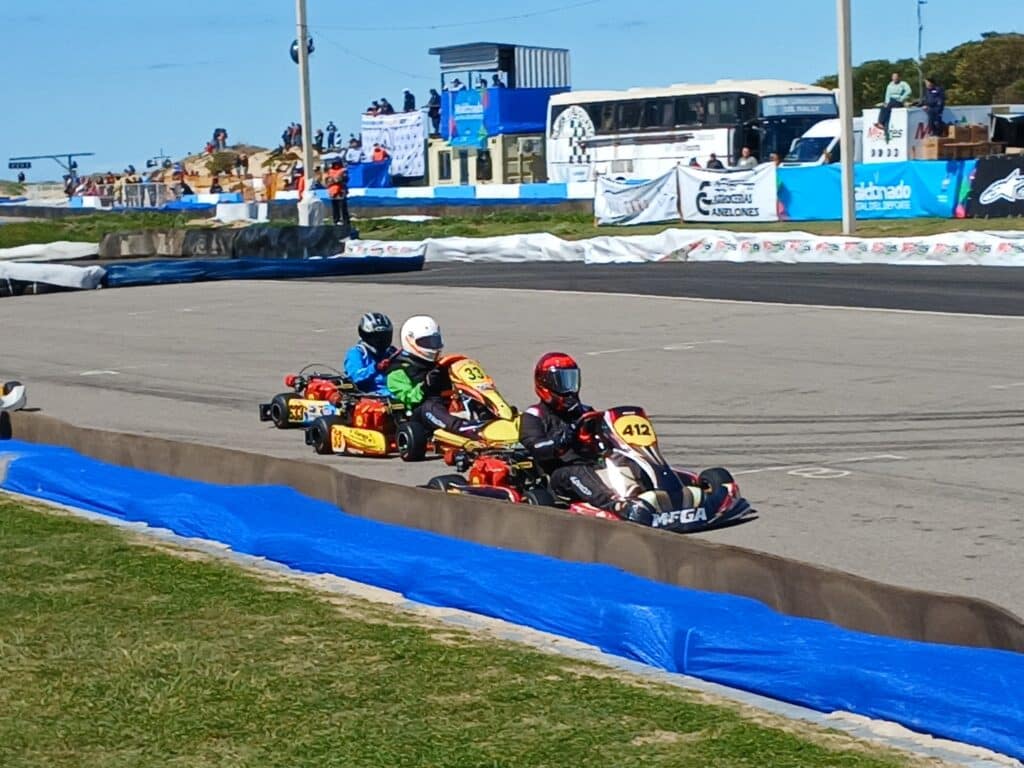
Whereas if you feel like you’re losing on the entries and gaining on the exits, but you feel like still, overall, it’s a time loss in the delt, then the next lap, you have to try to carry more entry speed, turn a bit earlier, doing less rotation on the entry and having to gain massively on the entry, while still sacrificing a bit on the exit. But the goal is that overall, the corner is going to be quicker in this style than what you did in the previous lab with a later apex.

If you’re losing on exits, get a later apex and brake more on entry to induce rotation. If you’re losing on entries, carry more speed and turn earlier. The key is analyzing delta time across the entire corner, not just individual sections.
How does corner type influence Apex choice?
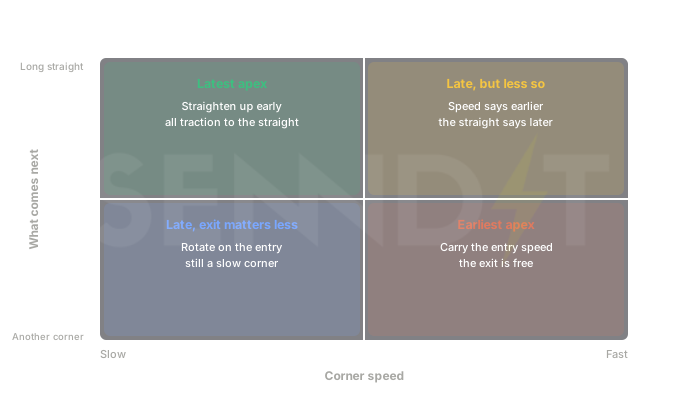
Well, it’s pretty clear that the faster the corner, the earlier the apex, the slower the corner, the later the apex. That’s kind of the rule of thumb when it comes to apexes, and you should follow it like your religion.
But of course, it always depends on other aspects. For example, at the straight that is coming up ahead, if there is a straight or is maybe a sequence of corners, of course, if you have a long straight that’s coming up, then you really want to focus a bit more on the exit right, because you want to get good speed down straight. Therefore, in that case, you will require later apex, whereas if you have no straight at all, you’ll have the freedom to carry lots of entry speed and going for an earlier apex. Because you, anyways, don’t care about the exit too much.
But of course, you have to pay attention at other things, as already mentioned, for example, as the elevation changes or the banking. If you, for example, have a very banked corner with positive banking, then you will have to probably turn in a bit earlier to catch the banking, like, for example, turn one at zandward in Formula One. I mean, I’ve raised there two times in Formula Three. And I can remember very, very well that, you know, you had to turn in a bit earlier than normal, because you wanted to catch the banking. So it was a bit of an earlier Apex because of that.
Whereas in other corners where you add negative banking, you actually wanted to turn in quite a bit later because you wanted to stay on the lower area for a bit longer in order to avoid, you know, getting into the negative banking, which actually would have given you less grip.
It’s the same with elevation changes. For example, if you know that on the exit you’re going to have a massive uphill section and the truck is going up, you will know that the exit is going to struggle, and therefore you will need to get a later apex, most of the times, because you want to straighten up the car and just get the best exit possible, because you know that otherwise, you’re going to pay the price. I mean, think about it, if you get a bad exit in an uphill corner, you’re going to be really losing a lot compared if you were on a flat corner on the exit, or, like downhill corner on the exit.
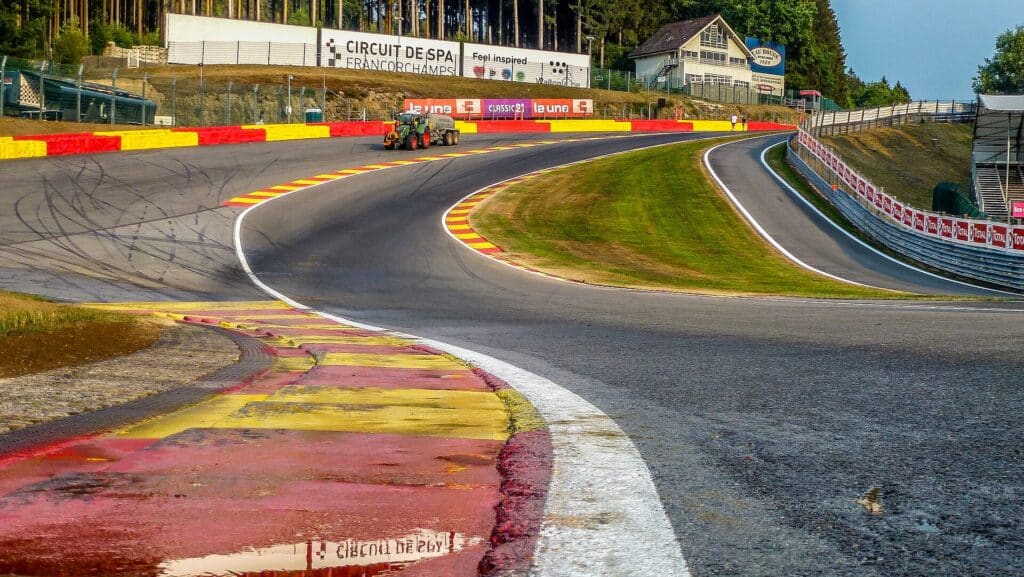
So of course, if you have a downhill corner on the exit, though, you can, you know, attack a bit more on the entries, because you know that even if you have an earlier apex, the exit, anyway, is going to be downhill. So even if you lose a tiny bit of time spending more time on rotation on the exit, that it’s actually not going to cost you that much, because anyways, you’re downhill.
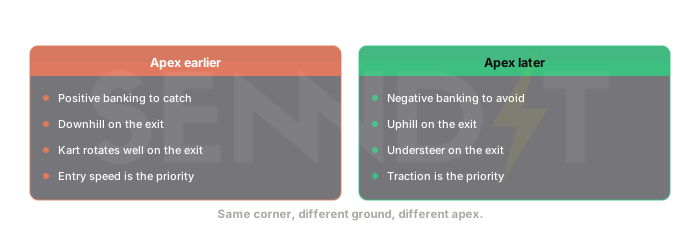
The faster the corner, the earlier the apex, the slower the corner, the later the apex. That’s kind of the rule of thumb when it comes to apexes, and you should follow it like your religion.
So how does the apex point changes during overtaking?
Well, I think it’s quite clear that when you’re overtaking someone, you’re not going to think too much about the apex, are you. I mean, the goal is to make the overtake sick. But yes, I mean, you can probably assume that when you’re overtaking someone, you’re going to go for an earlier apex, and ideally, you’re going to be able to stop by the apex in a way that you’re not going to get switched back on the exit.
Why do beginners often take an early apex?
Well, normally, the beginners are taking an early Apex simply because they are breaking early. And when you break early, you are naturally, automatically feeling like having to turn early because it’s an automatism. You know, when you break then you feel like, at some point you have to start turning. And so if you have an overly anticipated breaking point, then you’re going to naturally feel like, oh, I have to turn. So then you’re going to start turning, and then everything is going to be bad, because then you’re going to have:
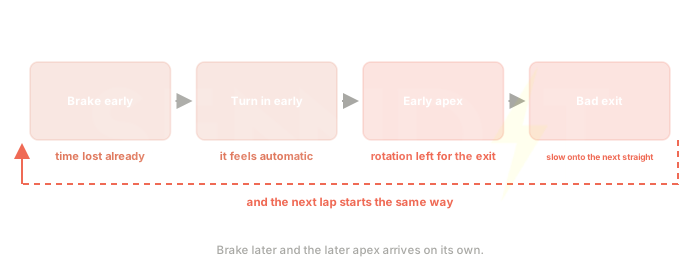
- Early breaking, which you’re going to lose time
- Early turning, which you’re going to lose time
- Bad exits due to the early apex and because you need to rotate the car on the exit
So yes, most beginners make this mistake, not only in karting, but also in race cars. So it’s quite common, and so the major goal is that they should start focus about braking later, and that’s going to automatically get them to turn later and therefore make a later apex and get a better exit. So it’s a bit automatic. As soon as they start braking later, then the later Apex will come.
If you’re apexing early, your real problem is likely early braking. Focus on braking later first, and the later apex will come automatically. You
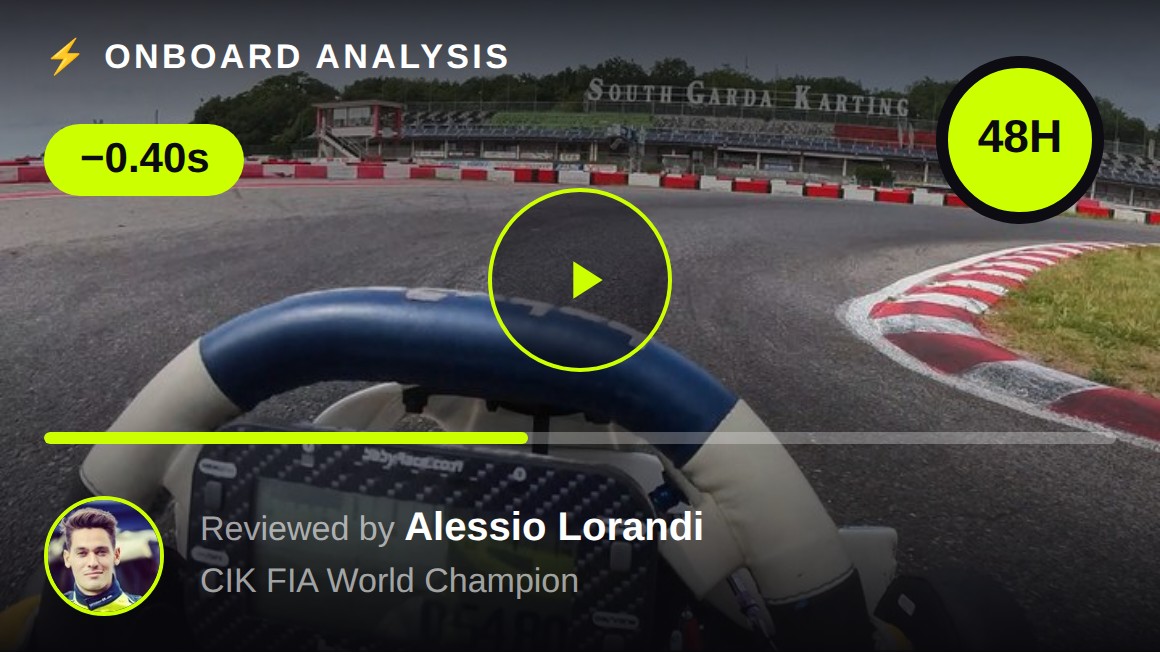
Send your onboard footage. Alessio reviews it corner-by-corner and tells you exactly what's costing you time, and how to fix it. Back within 48 hours.
Get My Onboard Reviewed → Reviewed personally by a CIK FIA World Champion, never an assistant.I promise I'll not spam you with repurposed shitty AI content but real experiences that only I, Alessio Lorandi, experienced. Written in my funny English-Italian tone of voice 😂
Alessio Lorandi is the former CIK FIA World Junior Champion, winning against Lando Norris in 2013 & F3 multiple race winner. He's helped 200+ karting drivers worldwide get faster & win WSK titles with BabyRace Driver Academy & now through Senndit, his online karting coaching platform.