Here’s How To Correct Bad Driving Habits
Bad habits cost you races, here's how to break them before they cost you a career.

- All drivers develop both positive and negative habits – the goal is maximizing good habits while eliminating bad ones
- Bad habits become exponentially harder to fix as you progress up the racing ladder
- Common negative habits include turning too early, keeping throttle on brakes, looking back too much, and half-moves when overtaking
- Fix bad habits in karting (Mini, Junior) rather than waiting until Formula cars where stakes and costs are much higher
- Breaking habits requires conscious thinking and discipline over multiple sessions – it won’t happen overnight
- Awareness is the first step – you must recognize your bad habits before you can eliminate them
So hear me out. There’s something you need to know.
We all have habits in our lives. We have habits at school, we have habits at home, we have habits at the gym, we have habits at the track. We have habits when we drive, we have habits in the paddock.
With all the things we do, we have many habits, and some of them are positive. Some of them are good. And some of them are negative – they make you go worse.
The goal is that we will have as many good habits as possible. And we need to fix the negative habits one by one.
Here are the most damaging habits I see drivers develop:
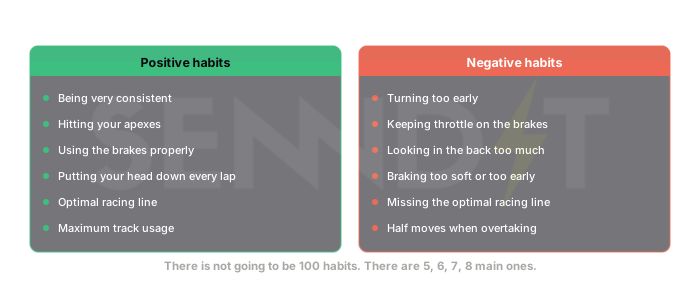
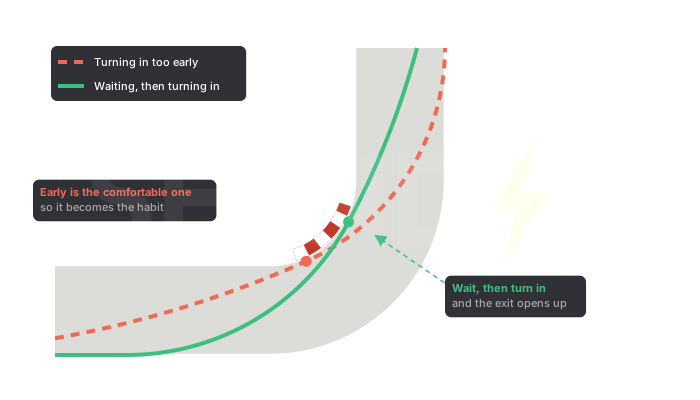
- Turning too early
- Keeping throttle on the brakes subconsciously
- Looking in the back too much – being anxious and afraid
- Not using brakes properly – braking too soft or too early
- Missing the optimal racing line consistently
- Making half-moves when overtaking – not being committed enough
You have no idea there’s so many positive and negative habits. The positive ones will be things like being very consistent, hitting your apexes, using the brakes properly, putting your head down every lap, optimal racing line, and maximum track usage.
If you’re one of those drivers that keeps the throttle on the brakes, it’s not going to take a session. It’s going to take plenty of sessions with conscious thinking.
What are the positive and negative habits drivers build?
We got a lot of different habits, positive and negatives. The goal is that one by one, we climb this mountain – your road to your racing career.
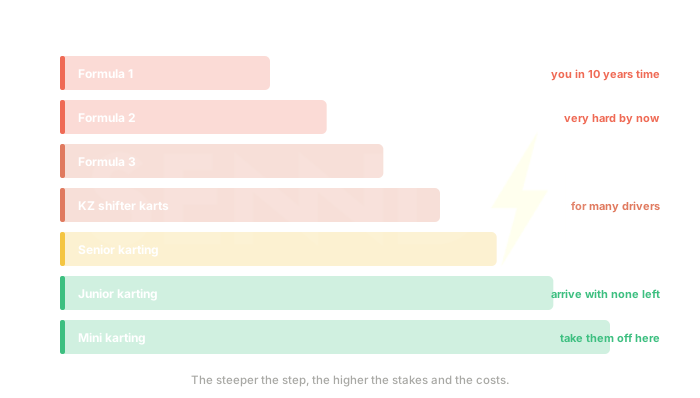
This is you starting now, at the beginning of your career. And this is you in 10 years time as a professional racing driver. That means Formula One, if that’s your goal. But it could be IndyCar, NASCAR, Formula E, etc.
The steps along the way look like this:
- Mini karting
- Junior karting
- Senior karting
- KZ shifter karts (for many drivers)
- Formula 3
- Formula 2
- Formula 1
Of course, if you don’t want to do the F1 route and want to go into GT racing, it’s an easier mountain. You can do KZ and then go straight into GT as a paid driver, then eventually become a pro.
The more you go up through the racing ladder, the steeper the steps become. The stakes become higher and the costs become higher.
You’re probably just a kid, and you may not be aware of all the costs, but believe me, in racing, your parents are doing a big sacrifice. They never forget that they love you, and you always have to be grateful.
Every step becomes more expensive. But when it comes to habits, it also becomes more difficult to break down the bad habits. That’s the whole point of this video.
Why do bad habits become harder to fix later?
Every step along the way, it’s going to be more and more difficult to break the habits. The goal is that we take off all the bad habits one by one, literally taking an eraser to them as early as possible.
Hopefully in Mini karting, we take off these habits. The goal is that we take off all the habits in Mini as early as we can. We’re going to have better and better results.
In karting, new habits may come up. We have to try to take them out with an eraser as soon as possible. Maybe there’s a couple we can’t take off in Mini, and maybe that will be the reason why we can’t win every race.
But if we could take off all the bad habits, and if we were in a good team, we would win pretty much all the races.
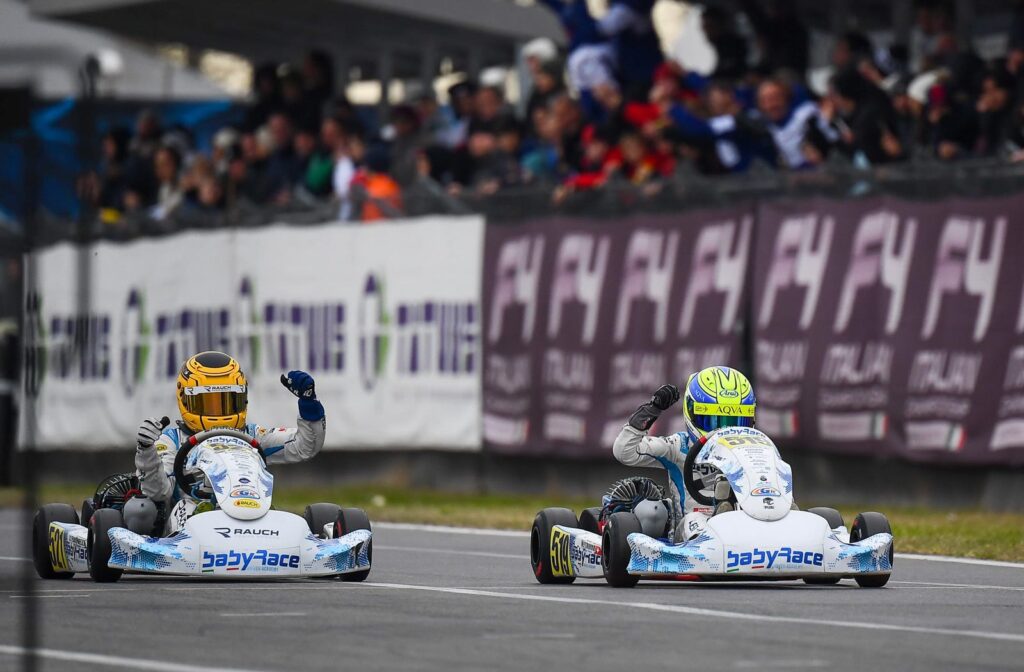
If you arrive in Formula 4 and you still have all these bad habits – racing lines, keeping throttle on brakes, not braking enough, turning in too early – mate, it’s no chance. No chance.
In Junior karting, the goal is to remove all the remaining bad habits. You should arrive with just good habits, positive habits, and no negative habits from Juniors onwards.
This is the problem: if you arrive in KZ or Formula 4 and you still have so many bad habits, there’s no chance if you’re still not aware of these bad habits.
Every one of us starts with some bad habits. If you drive with a specific team, on a specific track, with a specific coach, you may pick up good habits or bad habits. We all pick up some bad habits along the way.
What is the goal with your habits through your racing career?
The goal is to try to remove bad habits as much as possible. This is how I view it in my world.
The goal is really to break, to remove all the bad habits – not in Formula 4, not in Formula 3, but as early as possible in Mini and Junior karting. You will have better results.
You’re going to reap the rewards of that work you did early in your career. You’re going to have a way easier and smoother career.
If you still arrive in F2 and you still have all those negative habits you could have fixed in Mini karting – like keeping throttle on the brakes – it’s going to be very hard.
Why should you fix your bad habits as early as possible?
Remember, we all have habits. We all have some positive habits and some negative habits.
The goal is to keep increasing the good habits list. We need to keep making them more and more and more. And remember, it’s not just on the track, but it’s also off the track.
You need to try to make more positive habits and remove the negative habits. There’s not going to be like 100 habits – there’s going to be 5, 6, 7, 8 main habits.
It doesn’t take one hour or one session or one day. It takes discipline and it takes commitment to break the habits.
If you are one of those drivers that turns too early, it’s not going to take a session to fix that. If you’re one of those drivers that keeps the throttle on the brakes, it’s not going to take a session.
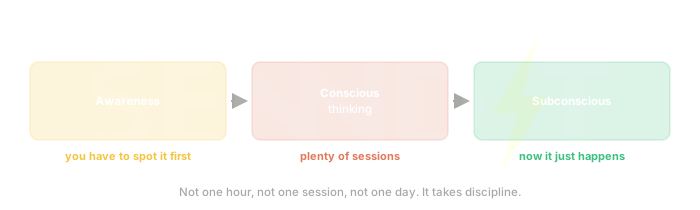
It’s going to take plenty of sessions with conscious thinking. If you never make that conscious work, you’re never going to fix it. I promise you, it’s going to stay with you.
At first it’s going to be conscious, but then it’s going to be subconscious. Just keep that in the back of your mind.
The goal is that you keep the optimal pedals position with your legs a little bit bent. When you’re flat out and when you’re on the brakes, you’re not too stretched.
Then it’s just about being aware – awareness – and just thinking about it. You think at first it’s going to be conscious, but then it’s going to be subconscious.
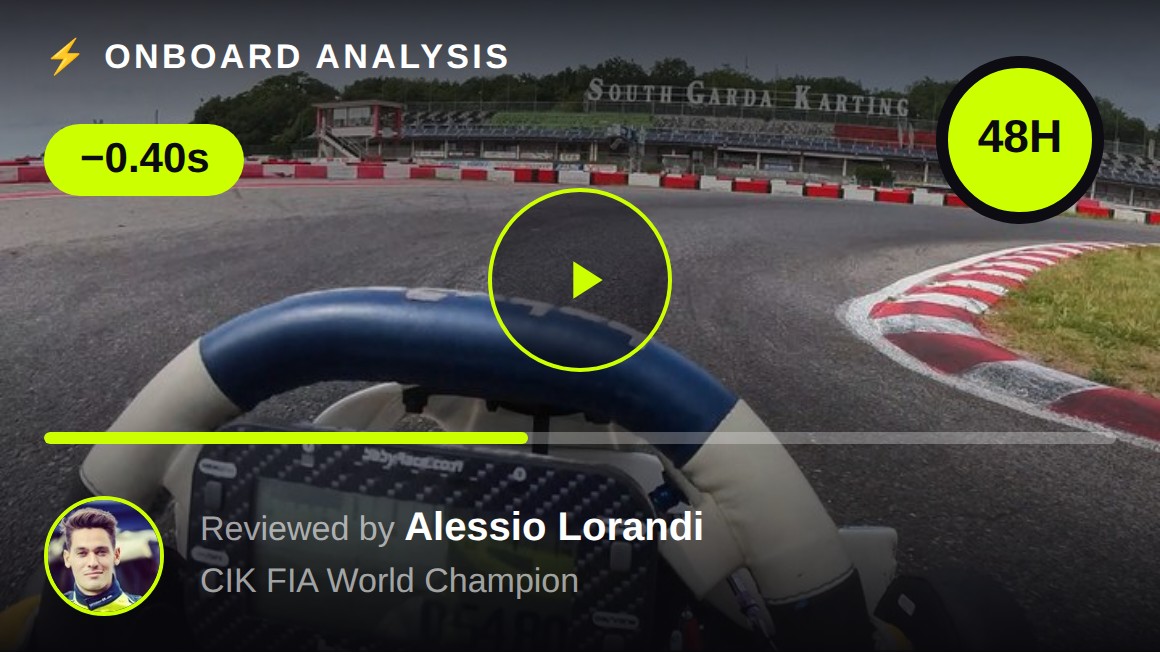
Send your onboard footage. Alessio reviews it corner-by-corner and tells you exactly what's costing you time, and how to fix it. Back within 48 hours.
Get My Onboard Reviewed → Reviewed personally by a CIK FIA World Champion, never an assistant.I promise I'll not spam you with repurposed shitty AI content but real experiences that only I, Alessio Lorandi, experienced. Written in my funny English-Italian tone of voice 😂
Alessio Lorandi is the former CIK FIA World Junior Champion, winning against Lando Norris in 2013 & F3 multiple race winner. He's helped 200+ karting drivers worldwide get faster & win WSK titles with BabyRace Driver Academy & now through Senndit, his online karting coaching platform.