
How To Set Up Your Engine For Superior Performance
Did you know that you can change the setup of your engine? Yes, you heard me. Well, just like you can change the setup of your chassis, you can cha…


Did you know that you can change the setup of your engine? Yes, you heard me. Well, just like you can change the setup of your chassis, you can change the setup of your engine, and that’s exactly what I’m going to talk about today. Your engine is not fixed. I mean,
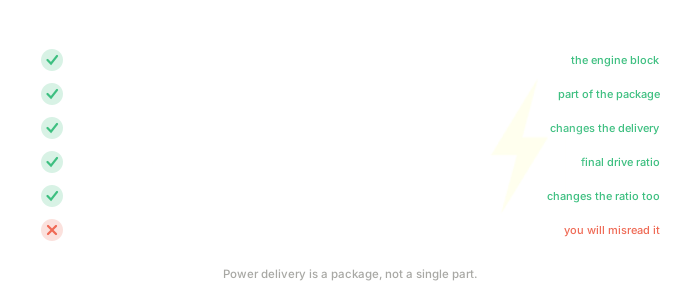
- An engine is a package, not a part — sprocket, exhaust, carburettor and timing all decide the power delivery.
- You get bottom or top, rarely both. It is a short blanket.
- The sprocket is the first and easiest change. Larger gives bottom, smaller gives top.
- Longer exhaust means more bottom, shorter means more top. Same for the spacer at the back of the engine.
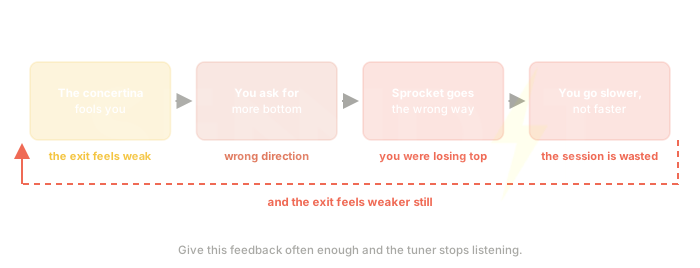
- Most ‘my engine is weak on exit’ complaints are the concertina effect, not the engine.
- Wrong feedback repeated enough and your tuner stops listening. Credibility is a real asset.
- The best drivers run one sprocket lower than everyone else — which is only possible with higher minimum speed.
- Fix the driving first. Chasing a tenth in the engine while half a second off on driving fools nobody.
- What actually counts as the engine
- Bottom end or top end: you have to choose
- It depends which engine you run
- How my tuner and I actually worked
- The driver-tuner relationship is worth lap time
- The feedback that sends your tuner the wrong way
- The concertina effect, and why it fools you
- Why data analysis settles it
- Why a big team beats a good engine
- What to do with no teammates
- What you can actually change
- Sprockets: the first and easiest change
- Rev limiters change the calculation
- Exhaust length
- The spacer at the back of the engine
- Engine timing
- Carburation is a different lever
- The best drivers run one sprocket down
- What a tuner actually does back at the workshop
- Give wrong feedback often enough and he stops listening
- But fix the driving first
What actually counts as the engine
the engine is made by components that can be replaced whenever you want. Basically, obviously, it’s going to be the job of the engine tuner, I guess, unless you have expertise in this matter, but the engine is made by, you know, the clutch, the crankshaft, the cylinder head, and if we also want to, there’s obviously many other things. I don’t want to go too much in depth, but obviously we can include also the carburetor as the engine block, let’s say, and also, I would say, the pinion and the sprocket.
So when we talk about engine, you know, there’s, you know, like a massive block of power delivery, which is, again, made not just from the engine itself, but also from the carburetor, the sprocket, as well as the exhaust. So anytime you are, you know,
Bottom end or top end: you have to choose
not super satisfied with your engine performance, whether at the top range or at the bottom range. You can always go back to tuning it based on, again, what you need, whether you need more bottom or whether you need more top. You rarely will have the chance to, you know, to have more bottom and more top at the same time.
At the end of the day, it’s like a blanket. You know, when you are trying to sleep at night and you have, like, a tight blanket that if you pull it too much towards your head, you know, your feet stay cold, whereas, if you are, you know, leaving your feet warm, then maybe your your head stays cold. So it’s a bit of a tight window that you need to operate in.
It depends which engine you run
Obviously, it depends a lot from what kind of engine we’re talking about, if we’re talking about, you know, Rotax, if we’re talking about IAME X30, or we’re talking about Rok, or or CIK-FIA engines like OKJ, OK or KZ shifters. So there’s obviously many, many aspects involved in any different kind of engine. I’m not going to be discussing them here, but the rule of thumb is that, yes, you can definitely change your engine settings, your engine performance based on what you need.
And I’ll tell you the story. You know,
How my tuner and I actually worked
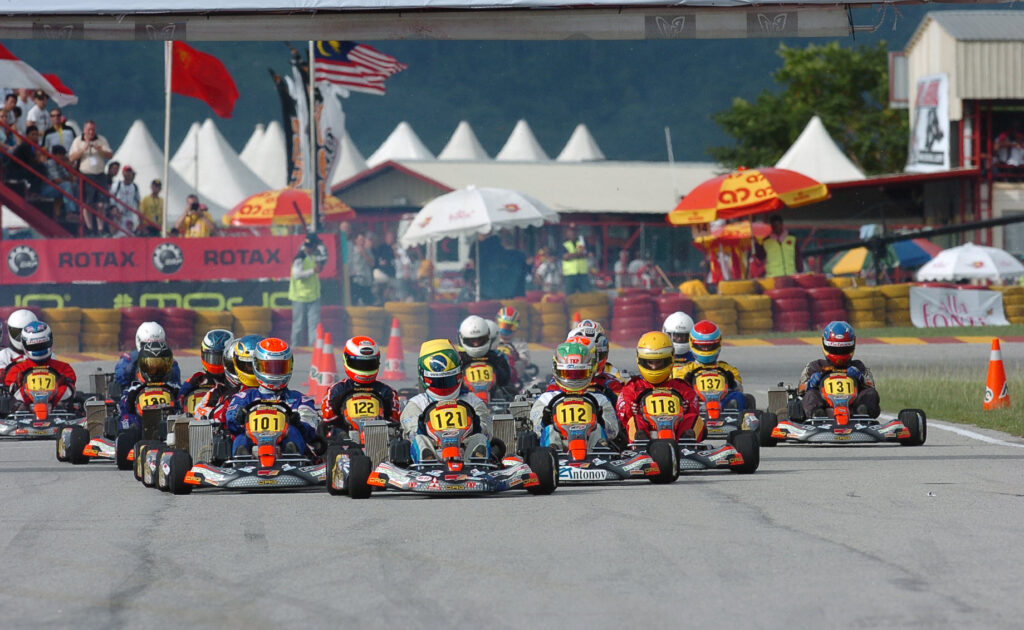
when I was back in in the 2013 2012 years, I remember that my engine tuner kept asking me what I felt, what I felt like I need more and based on what I was seeing on the track, you know, I was looking around the other drivers, I would always try to understand whether we were on the same sprockets as the other fast drivers, whether we are a little bit too short, so whether we had more bottom and not enough top, or whether we have maybe a longer sprocket, so maybe we’re a bit too long.
So we were hitting the limiter later, so that we were postponing the limiter by having a longer sprocket, but maybe we’re losing a bit of bottom end. So maybe we could find a way to find, you know, some bottom end while still keeping that same sprocket so we could gain on the top and gain at the bottom. So, you know, I remember this story, and I was working with a very good engine tuner, and he always asked me what I felt like.
And he always, I mean, also looked at the track, and he would try to understand. And yeah, we would find a lot of lap time with that, because we would be okay. We need this. We need to do that. We need to that. And I think it’s super important between the relationship and
The driver-tuner relationship is worth lap time
the communication between driver and engine tuner. It’s very, very important, because you can really find lap time, even though maybe you start at the end of the at the beginning of the weekend, and you are not super fast. Let’s say you’re two tenths off with that same engine package. Let’s say we keep the same chassis, we keep the same driving.
Obviously, the track is going to change. So there’s no such a thing as keeping the same chassis or keeping the same driving, because you will always slightly change your driving. And also the track is going to change. So even if you keep the chassis exactly as it is, the track is always going to change. So anyways, going back to it if, if you are going to be playing around with the with the engine setup, I mean, if you are playing with with with engine setup, together with your tuner, and you give the right feedback, because we always get back to that point, you need to make sure you give the right feedback.

So if you’re able to give the right feedback, I’m telling you, you will be able to get way better results in general, because with better feedback, your your tuner will know exactly what you need to do, what he’ll need to do to you. And imagine if you are
The feedback that sends your tuner the wrong way
coming back with a feedback after a session which is completely wrong. Let’s say you feel like you are losing in the bottom, in the exit of the corners and and so you tell your tuner to losing in the exit of the corners. But you actually have not realized that the reason why you feel like you losing the bottom may be cause of the concertina effect, which is just an illusion, basically that you feel like it’s,
The concertina effect, and why it fools you
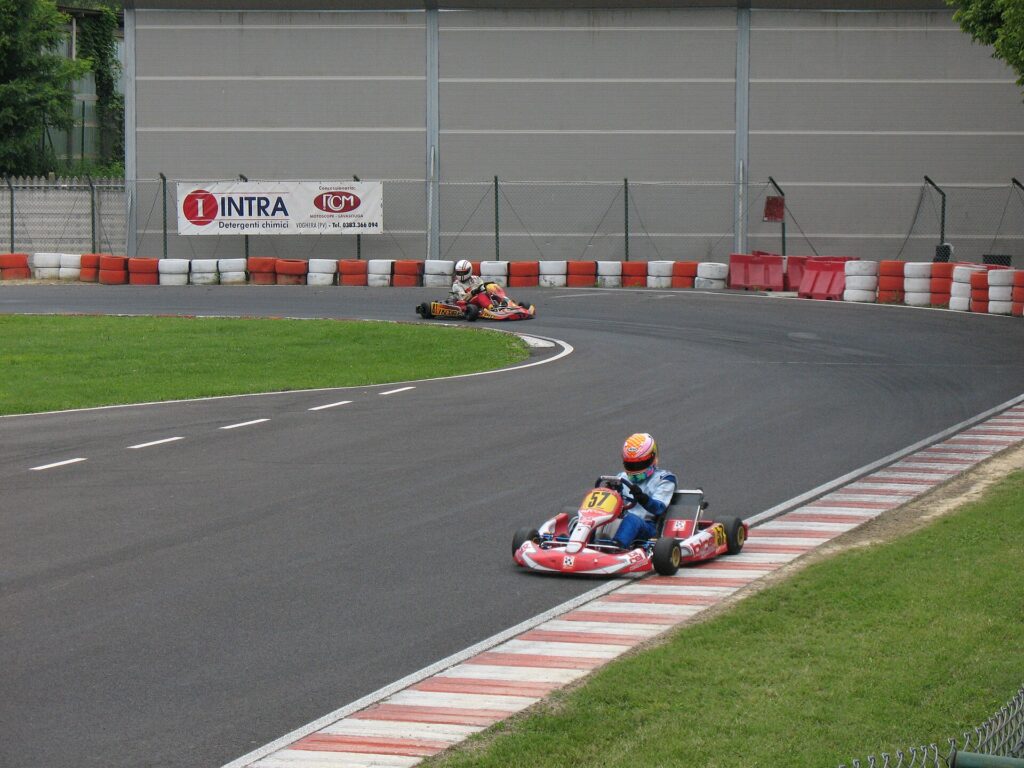
I call it also the rubber band effect, or the elastic effect. It’s basically that the physics effect, that when you are you know, as speed expands, distance expands, and as speeds contracts, distance contracts. So you have seen it in Formula 1 too I mean, when you go down in the hairpins, it always feels like the driver behind is braking later than the driver in front.
Imagine like the the tight hairpin at at Monaco, it always feels like the driver behind is closing the gap on the entry. It feels like he is braking later. But it’s not true. It’s just a concertina effect. And and then in the exit, the driver in front gaps the driver in the back. Well, is it because he has a better engine in the bottom, more exits?
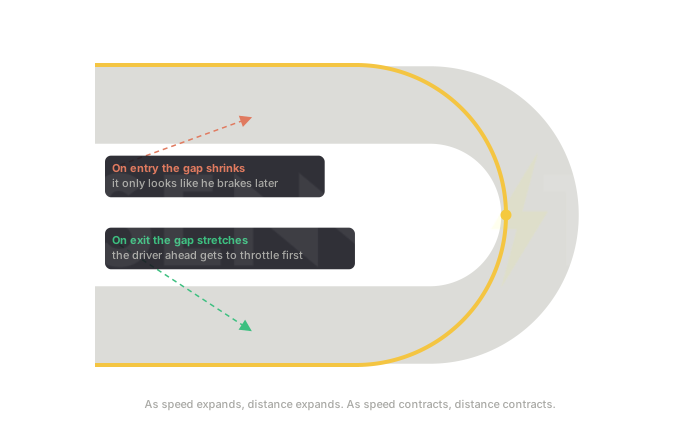
No, it’s because, by simply the way it is, he went on the throttle earlier in time. By just definition, he’s ahead. Obviously goes earlier. And so that’s as when he goes on the throttle earlier, the distance expands because the speeds expands, so the gap distance expands. So I’ve spoken about this specifically and wrote about this in an article and in our podcast, so you should go and check it out.
But yeah, the point I was trying to tell you, if you come back and tell your tuner, I am losing bottom end, I am struggling on the exits of the corners. But the reality is is probably the opposite, that you are probably struggling at the top, because maybe your sprocket is already towards the bottom, okay, towards helping you in the bottom and fixing that illusion that you have.
If you give wrong feedback, you’re actually going to go slower than better. So it’s very important that you are objective, and you separate the illusion again, of the elastic effect, for example, which is going to screw your judgment from the exit of the corners. I mean, you should always lose on the exit of the corners from the driver in front period.
I mean, unless the driver goes on the throttle super late, and you go on the throttle super early and he missed the corner, and you get a perfect corner. But if you both get, quote, unquote, a perfect corner, even though I don’t believe there’s anything such a thing as a perfect corner. And I again, talked about this many times, but let’s say you go both get exactly the same corner in terms of lap time, that specific corner, if there were a mini-sector split and you had the same mini-sector time, you would still be gapped on the exits.
Because it’s just the physics, you know, it’s as speed expands, distance expands, and you will be closing on the braking, and you will feel like you’re braking later, just because you have this concertina effect. So it’s very important, going back to it, that you give the proper feedback, not just has to be your perception. It does have to be your real, you know, the real what’s happening for real, not just the illusion, not just your perception.

Why data analysis settles it
So that’s why data analysis is super key. And I use a lot the MyChron and Race Studio 3 software, and I just work relentlessly on that. And of course, if you have only your data and you don’t have any teammates, then it’s difficult, because you just can compare against yourself against other laps or other other sessions.

Why a big team beats a good engine
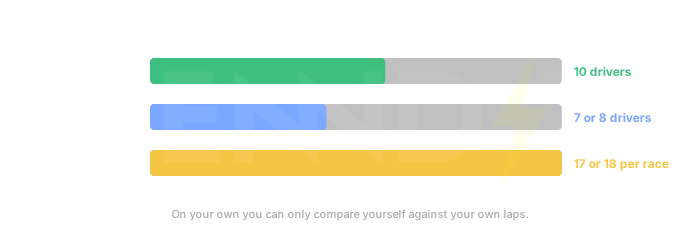
But that’s why the power of teammates come into place, and that’s why you should select a team that has a lot of drivers. I mean, we at BabyRace, I have 10 drivers in Gr.3, and like seven or eight drivers in 60 Mini Under 10. So between the two categories we have about 17 or 18 drivers on average per race.
And that’s very useful, because you can really compare data, and you can, you know whenever you see a driver that’s super fast in one corner, and you can then compare it against the other drivers that are struggling in that corner, and it’s super easy and efficient to find lap time like that. And and it’s really the the power of having multiple teammates that gives you that that data.
Whereas if you are just one driver in a team, or you only have another teammate, which is not very good, maybe slower than you, then you really struggle to find the comparisons in terms of engine tuning, and so
What to do with no teammates
when you don’t have a teammate, what can you do? Well, you cannot go and get the data from the other drivers. I mean, that will be considered spying and get they’ll get in trouble. But what you can do is to just have your mechanic, ideally, a very good mechanic, give you his opinion on what he sees on track, whether it’s more the bottom or the top that is required.
Again, we always have to focus way more on the driving, on the setup, etc. But if we’re talking about purely engine tuning in the set, in this specific video, you can definitely have an effect with your own feedback. And as I said, there’s many things you can change. So let’s get back to it.
What you can actually change
What exactly can you change on the kart to make it go to the engine to basically make it go faster in the bottom, or make it faster in the top. Well, what you can make is, you know, first of all, the first thing that the tuner can change, and the easiest thing you can change to tune up the power delivery.
Because when we talk about engine, we include the whole power delivery, that power block, okay? Because, again, the power is not just made by the engine. It’s made by the you know, the final drive ratio, which is done and calculated between the pinion, the sprocket, and actually even the dimension of your wheels. If your wheels are very large, then you are going to have a certain power final drive ratio, whereas if your tyres are very small, you’re going to have a completely different final drive ratio.
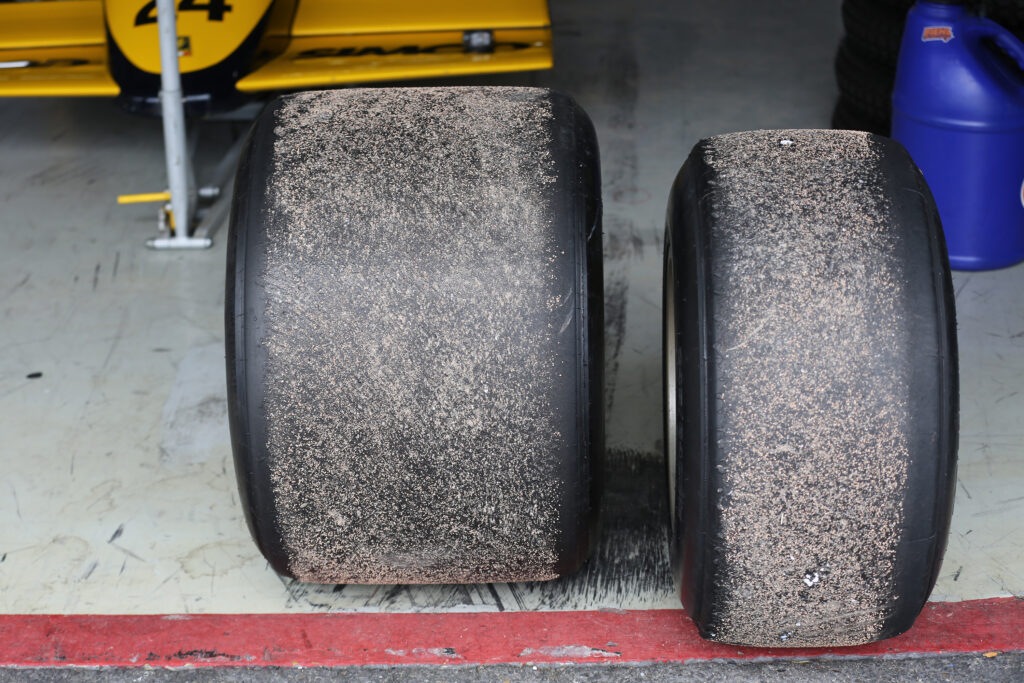
Again, I want to talk about this in another article, in another podcast. But the point being is that if you have, if you only look at the engine in isolation, and you do not consider the carburation, you don’t consider this, the sprocket, you don’t consider exhaust, it’s going to be very hard for you to make any judgment. So it’s very important that you include all of those things if you, for example, need more bottom.
There’s few things you can do.
Sprockets: the first and easiest change
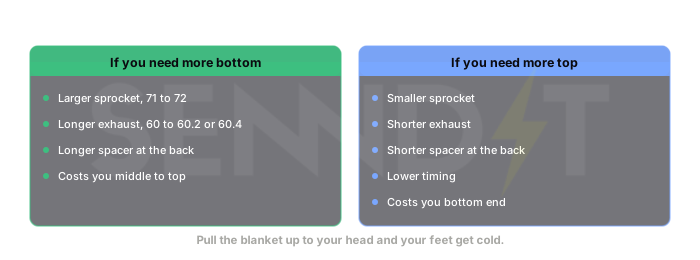
You can go on a larger sprocket, for example, okay, you can go from, let’s say, 71 to 72 it’s going to give you more bottom, less middle to top. And
Rev limiters change the calculation
if you have the limiter, okay, like we have in Italy. I mean, we have limits of 13,000, 14,000 or 15,000 depending on the category and what, what year of the regulation? For example, in mini last year, used to be 14,000 in Mini Gr.3 this year. It’s 13,000 and so it’s like that. For example, in shifters, there is no limiter.
As well as in categories like IAME X30 or, for example, Rotax or Rok, they don’t have the limiter there. But CIK-FIA categories mostly have the limiter and basically through a coil. Anyway, back to the sprocket. Say we still want more bottom. And if we don’t want to change sprocket, there’s a few things. For example, the engine tuner can go and basically
Exhaust length
put, like, a longer exhaust, normally a longer exhaust. For example, if you go from 60 to 60.2 or 60.4 or if you just, like, basically, the longer the exhaust you put, normally, the more bottom and a little bit less top you get. And vice versa, shorter shorter exhaust means more top and less bottom.
The spacer at the back of the engine
But you can also play with the restrictor basically at the end, you can basically make it longer, or you can make it shorter. If you make it longer it is going to give you more bottom. And basically, yeah, that’s extra spacer that you have from the back of the engine. Let’s say that goes towards exhaust. If you make that longer, you are going to have more bottom.
You make it shorter, you’re gonna have more top Okay, so that’s a few things, but of course, there’s so many other aspects that tuner can do, and I don’t get too in depth, but
Engine timing
you can play with the timing of the of the engine. So engine timing, okay? So you can really, then, based on the timing of the engine, you can affect it and have either more bottom or have more top. Okay, normally, if you have lower, if you go with lower timing, you’re going to have less bottom, but more middle to top.
And there’s also many other things you can play around with, with the with the cylinder, etc.
Carburation is a different lever
And if we talk about, for example, the carburation, okay, terms of carburation, I mean, you can’t really affect the power at the bottom the top in in a proper way, as you can do it in the sprocket or, like, proper engine configuration, which is gonna require, yeah, almost like an engineer background, to explain everything in detail. The purpose here is not to list every change.
It is to break the myth that you can actually go and have an effect on the engine performance. You cannot just say, Oh, my engine is bad, that’s it. Oh, my engine is good, that’s it. No, you have a proper effect on the engine performance. And you need to be aware of this, because once you are driving, you gotta realize that, and that’s gonna give you, I mean, also the motivation and the awareness that, okay, you know what?
I can affect the engine performance right now, I don’t feel very good with the engine, but let me notice exactly what’s happening. So you need to have full awareness of what’s happening around you. And okay, right now, I just feel like I’m losing some top. I feel like I am hitting the limiter here, and they are hitting it a little bit later, and I feel like the gap in me at the top.
Okay, all right, let’s try to go on a small sprocket, and maybe the engine trainer tries to do something with exhaust to compensate that, you know. So this is really the thing. But remember that normally, based on experience,
The best drivers run one sprocket down
the best drivers are the drivers that always manage to run with one sprocket down from everybody else, or, I mean, on the low side, let’s say you can always have somebody who goes lower than you. But let’s say if 90% of the drivers go with 75 and you manage to go on 74 most of the times, you’re going to be the winning driver, because when the grip picks up for qualifying and the track gets a little bit faster, you are going to naturally gain an advantage, because, yes, if you obviously manage to have minimum speeds that are higher than the others, of course, the only way for you to run on lower sprockets is to have higher minimum speed, and therefore keep up the RPMs in the middle of the corner.
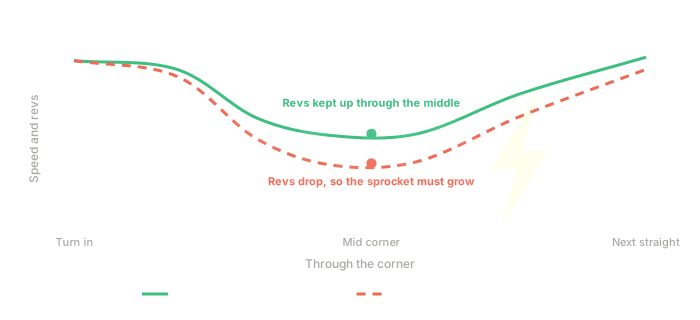
If you can’t do that, I mean, it’s just not possible for you to to run on a smaller sprocket than the others. So that case, you’re going to struggle out of the corners, and you are not going to get the benefit that you’re going to get a top because, again, you benefit of having a lower sprocket just when you actually are getting through the corners.
So that is really it. Remember next time you got on track, as I did back in the days, and I still do mean, when I go driving, my engine tuner always asks me, what do you need? I mean,
What a tuner actually does back at the workshop
the engine tuner’s job is just that. I mean, obviously not just that. Sorry. I mean, it has a lot of jobs to do, especially back at the factory. You know, in his workshop, he needs to work relentlessly on, on putting the engines on the dyno, and understand exactly where he can find the performance every single 0.1 horsepower, where he can find and doing the development, and also into the, you know, selecting the right set, the right tools, the right equipment to use because, you know, in motorsport you will find 10 different crankshafts that are all behaving a little bit different.
You will find 10 different exhausts that will be behave all a little bit different. And for all components is a bit like that. So that’s why the engine tuner’s job is also to really select the best materials, out of which the ones he has and yeah, and discard the ones that are less performing. And that’s what it basically does.
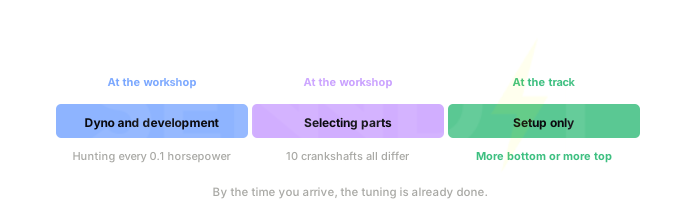
And also the development is another major aspect when he’s at the workshop, but then when he’s on the track, he can’t do too much tuning. You know, that’s the tuning has to come from the setup, okay? So he does the tuning at the workshop, and then at the track he does the setup. And the setup, again, is coming from, Okay, should I give more bottom?
Should I give him more top? How should I give him bottom? How should I give more top? And but before he understands what to do, you got to give him clear directions on what you want. Otherwise he’s going to be clueless of what’s the goal. Because, let’s say, if you keep telling him to go in the wrong direction, so if you keep telling him to give you more bottom, but the reality is, you keep losing the top just because you have this illusion of the concertina effect, well, then it’s just gonna, you know, you’re gonna upset him at the same time, and you’re also gonna lose some credibility.
Yeah, it’s happened to me a lot of times
Give wrong feedback often enough and he stops listening
to see drivers. I mean, not to me, thankfully, I was always pretty good at getting feedback, but I have seen many drivers give wrong feedback. They still do. I still have these kind of drivers, and unfortunately, the engine tuner is going to stop listening to that kind of driver, if that’s you, if you keep giving wrong feedback. So it’s very important that you are focusing on giving the proper feedback, that it’s going to be the key.
So make sure, next time you go out on track, you make sure to understand exactly and be fully present of what’s happening and fully aware of what’s happening to your engine. I mean, again,
But fix the driving first
I would focus way more on the driving and on the setup side and the engine, especially if you’re going testing. I mean, if you’re in testing, you don’t really have to focus too much on the engine, but it’s good to kind of understand, at least where you feel if you obviously are doing already 10 out of 10 driving, if you’re doing 10 out of 10 driving, it’s good to understand where the engine can be improved.
But again, first thing about where you can improve the driving, do not jump straight to thinking about the engine. I mean, if you’re still two seconds off in terms of driving or even, or even five tenths off in terms of driving, you can tell whether it’s your driving. I mean, people around you can tell it. So if you are like, Oh, I’m half a second off.
But you know, I think we can improve 1/10 on the engine here. stop – you will lose credibility with people around you. Focus first on your driving. Sure the engine is important too. That shouldn’t be neglected. But I would say first the priority is to focus on the on what affects lap time most. So if it’s your driving or if it’s like a broken setup on your chassis, or anything that’s really slowing you down, then you wouldn’t want to focus first on that.
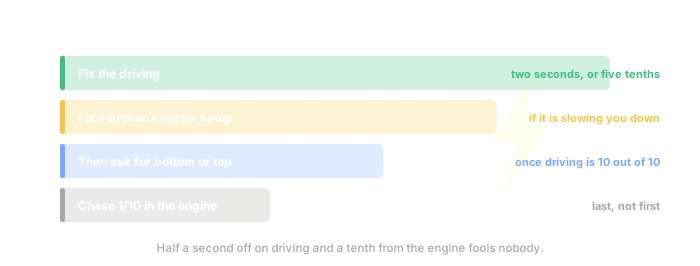
You would not want to focus first on the engine. You want to focus first on that. So boys and girls, I hope this was useful, and hopefully you apply this on the track next time you go out, especially when you go racing. And if you want to get some one on one coaching, feel free to enquire about my program, or you can check my onboard video analysis, which is a very effective way for me to coach you and give you the proper tips that you need in order to improve your driving.
I’ll see you in the next one. Take care and remember to keep sending it. Ciao.
Related: four pro carburation tips, optimising your gear ratio, and the concertina effect explained.
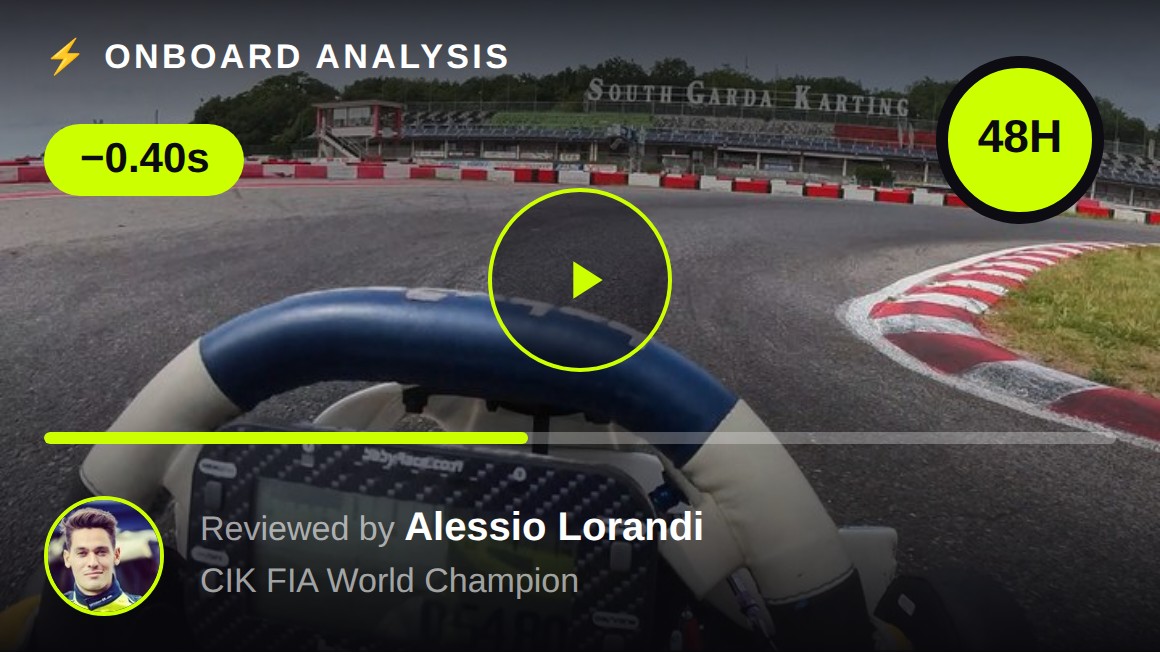
Send your onboard footage. Alessio reviews it corner-by-corner and tells you exactly what's costing you time, and how to fix it. Back within 48 hours.
Get My Onboard Reviewed → Reviewed personally by a CIK FIA World Champion, never an assistant.I promise I'll not spam you with repurposed shitty AI content but real experiences that only I, Alessio Lorandi, experienced. Written in my funny English-Italian tone of voice 😂
Alessio Lorandi is the former CIK FIA World Junior Champion, winning against Lando Norris in 2013 & F3 multiple race winner. He's helped 200+ karting drivers worldwide get faster & win WSK titles with BabyRace Driver Academy & now through Senndit, his online karting coaching platform.