Is Karting Safe for Kids? What a Coach Actually Worries About
Is karting safe for kids? My honest answer after more than 20 years on kart tracks: what I have seen go wrong, the gear that has to fit, and how I …

- Karting is a dangerous sport. I will not tell you it is safe. It deals with speed, and your driver shares the track with other kids.
- In more than 20 years on track I have seen broken bones and big crashes, and I have never seen a fatal crash myself. It can still happen. It is a numbers game.
- The mistake I see parents make is throwing an inexperienced kid onto a track full of faster drivers. Choose a day and a track where there is almost nobody else.
- Gear that does not fit is a danger by itself. A rib protector or a seat that is too small or too large is the first thing I would fix.
- A very young driver needs a light kart with low power. If the kart goes over them in a crash, they have to be able to withstand the weight.
- Three habits from day one: careful when joining the track, hand up when coming into the pits, and no zigzag.
- Train first, race later. I think it is silly to throw kids into the arena without proper practice.
- Is karting safe for kids, honestly?
- How does karting compare to other sports kids do?
- What injuries have I actually seen in karting?
- What do I see go wrong with young drivers?
- What safety gear does a child need, and how should it fit?
- How fast is a kid’s kart, and can you slow it down?
- What makes a track and a day safe for a first-timer?
- What do marshals and flags do when something happens?
- What safety habits should a kid learn from day one?
- Can a parent’s fear make karting more dangerous?
- What should you look for in a karting academy?
- What would I actually do with a young driver?
- Frequently asked questions
One of the first questions every parent asks me is simple. Is karting actually safe?
I will give you the honest answer, not the comfortable one.
And then I will tell you what I have seen myself, and what I would do with a young driver on the first day.
Is karting safe for kids, honestly?
No. Karting is a dangerous sport, like anything in motorsport.
You deal with high speed. And anything that deals with high speed has a factor of danger.
Does the danger outweigh what your driver feels in a kart? Nobody can answer that for you.
I can only tell you my case. When I got into a kart for the first time it was love at first sight. I could feel the speed, and there was no going back.
So one more warning, and I mean it. Karting is very addictive. Once your driver tries a kart, it is going to be very hard to take it away. Think about that before the first time.
But here is the other side. If you do it properly, in the right environment and with gear that fits, it is safer than most parents expect.
In more than 20 years on track I have seen some broken bones. I have seen some big crashes. I have never seen a fatal crash myself.
We keep our fingers crossed, because it is a numbers game and it could always happen. I will not promise you it can’t.
How does karting compare to other sports kids do?
You cannot say karting is the safest sport in the world. That would be a lie.
The speed is a risk factor. And your driver is on track with other kids, which makes it more dangerous again.
Is it the most dangerous one? I don’t think so.
I think motorbikes are more dangerous. Downhill biking or skiing could be on the same level. That is only my opinion, I have no numbers for you.
And no sport has a danger level of zero. Not even football.
What injuries have I actually seen in karting?
The one I have seen most is the ribs.
I have had fractured ribs a couple of times, and I have seen other drivers do it too. It can come from a big contact. It can also come just from driving, with high grip and no proper rib protector.
Then the collarbone. I broke mine once.
I was trying to go a bit too fast through a chicane. I clipped the barrier on the inside, and it launched me and flipped me over.
It was very painful at that moment. I had surgery, and three weeks later I was back in the kart.
I am not telling you this to scare you. It happened, and I am still here.
I have also seen drivers hurt a wrist or a finger, for example when another kart drives over the steering wheel. To be honest I have not seen that often.
And flips? You will see drivers flip. I guess every driver has flipped at least once.
I have seen lots of drivers flip, get back up and walk away from the kart. But I am not a doctor, and I am not going to give you percentages.
What do I see go wrong with young drivers?
The common mistake I see from parents is this one.
They throw a completely inexperienced driver onto a track with experienced drivers who are going way faster.
Why is that so bad? Because karting is not only about you. It is also about who is around you.
The new kid is slow, or moves in an unpredictable way. That is a danger for everybody, including the kid who has no idea what is happening.
The second one is rushing. Taking a kid to the track too soon, when they are still afraid of speed, and not doing it in a safe way.
Even a small crash can stay with a kid for a long time.
I remember how I started. My dad was holding the kart from a leash. I wanted to go flat out. And if that leash had come off I would probably have gone into the wall, because I didn’t know the controls yet.
The third one is racing. In a race the biggest risk is the start, because all the drivers are bunched up. If somebody spins in the middle, the others collect them.
When a driver is alone on the track, it is very unlikely that anything dangerous happens.
What safety gear does a child need, and how should it fit?
The helmet protects the most. That is quite obvious. You would be a fool to drive without one, and you are not allowed to race without one anyway.
Related: which karting helmet for a child.
Then the suit, the gloves, the race boots and the rib protector.
For racing, the gear has to be homologated. Which homologation, and until when, depends on your federation and your series. So ask them before you buy.
The rib protector is a major one for me. It is for impacts, yes. But it is also for normal driving, lap after lap, when the grip is high. More on that in my guide on whether you really need a rib protector.
Now the part parents miss. Homologated is only half of it. It has to fit.
A rib protector that is too small or too large creates a situation of danger. A seat that is too small or too large does the same.
And kids grow. Between 8 and 15 years old I would expect a driver to go through two or three rib protectors. Don’t be cheap with that.
The first thing I always tell drivers is that the gear has to fit like a second skin. The helmet shouldn’t wobble. The gloves should grip right.
Because a driver who is adjusting the gear in the middle of a session is not looking at the track.
How fast is a kid’s kart, and can you slow it down?
The karts for six to eight year olds can reach 100 to 105 kilometres an hour.
I know. That sounds like a lot for a kid of that age.
But you can limit it. You can change the coil so the engine stops at 13,000 or 12,000 rpm and not 14,000. Or you can put a bigger sprocket on the rear to bring the top speed down.
So a very young driver should be in a low power kart. Don’t overpower it.
And the weight matters as much as the speed.
I have noticed kids as young as four or five getting started, with very skinny bodies. They did it, no problem. But if they crash and the kart goes over them, it is quite a bit more dangerous than for a kid of nine, ten or eleven.
So the younger the driver, the lighter the kart has to be.
What makes a track and a day safe for a first-timer?
The circuit plays a massive role, and circuits are not all the same. It changes from track to track and from country to country.
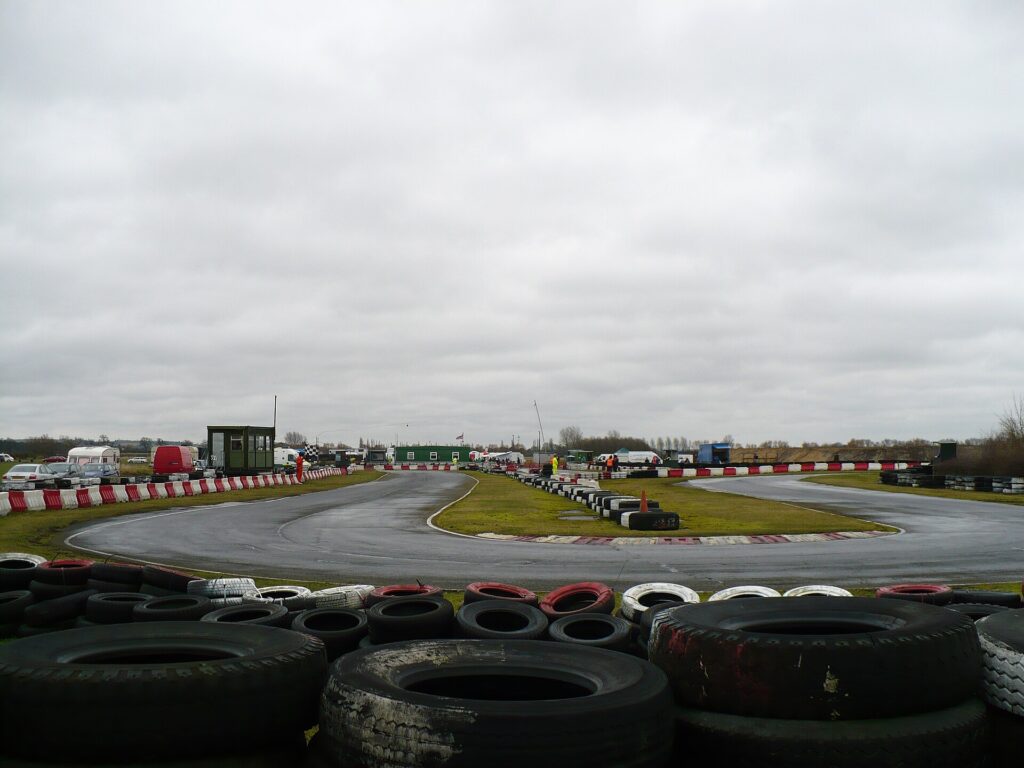
Look at the run-off areas. And what is on the outside of the corners.
A wall is a lot worse than a fence or a proper barrier.
Then the day. For me this is the big one.
If your driver is very young or very new, choose a day or a track where there is basically nobody else. Let them drive without getting overtaken left and right by much faster karts.
What about rental tracks? I feel they are quite safe. They have protective barriers, and the speed is a lot lower. The lower the speed, the lower the danger.
Before your driver even sits in the kart, walk the track with them. Find the pit entry and the pit exit. Look where the marshal posts are.
If something happens and there is a yellow flag, they need to know where it is going to be waved from. I go through the first day in my guide on how to start karting step by step.
What do marshals and flags do when something happens?
Marshals and the race director decide a lot about how safe a race is.
Say there is a big crash. If nobody gives a yellow flag, a slow procedure or a red flag, the kids arriving at full speed have no idea. And the kid who crashed is still sitting there.
So your driver has to know the flags before the first session. A lot of young drivers overlook this.
Yellow is caution, slow down. Red is stop right away. Blue is let the faster driver through.
And there is the slow procedure, which is pretty much a safety car for karts. Everybody slows down, goes in a single line and nobody overtakes.
The full list is in my guide to go kart flags and their meanings.
What safety habits should a kid learn from day one?
The first one is at the pit exit. When they come out of the pit lane, they have to be careful joining the track.
The second is the pit entry. When they are coming off the track, they raise a hand. That tells the driver behind that they are going into the pits, so nobody crashes into them.
The third is to drive in a predictable way. No sudden changes of direction, no zigzag.
And in practice, if somebody faster is trying to pass, let them go. Don’t block. You are not proving anything by causing contact.
Then there is one for the kids themselves, when they start racing. This is not a PlayStation. What they do on track has consequences, for them and for the other kids.
If they all respect each other, the karting environment gets a bit safer than it was before.
Can a parent’s fear make karting more dangerous?
I believe it can.
I understand it. If I had a child I would do the same, I would try to protect them too much.
But what I normally notice is this. The more stress and anxiety a parent puts on safety, the more issues it creates for the driver.
And I don’t want a kid driving overly cautious either. That is like driving with an invisible handbrake.
So what do you do with your fear? You put it into the things you control. The gear, the kart, the track, the day. Then you let them drive.
I wrote more about this in how parents should support a young driver.
What should you look for in a karting academy?
Number one, karts that are well maintained. Maintenance is key.
Let me give you one example. When the brake pedal gets long, the brake fluid is probably running out or needs replacing. For me that is one of the earliest signs of a situation where you can find yourself with no brakes.
If you look after the kart yourself, start with my guide on kart maintenance basics.
Number two, where they take the kids. Do they choose circuits with high safety standards, or not?
This is what we do at BabyRace. We take the kids to the safest environments we can. We make sure the karts are very well maintained. And we choose the days, so the kids are not out there with other drivers flying by around them.
And look at who is coaching. A coach who has never driven is like a personal trainer who has never hit the gym. More on that in why you need a go kart coach.
What would I actually do with a young driver?
I would not start with a race.
First I would sort the gear, and I would check the fit of the rib protector and the seat before anything else.
Then a light kart with low power. A basic one is fine, new or used, as long as it is in good shape.
Then I would choose a quiet day at a track with good run-off, and walk it together before the first session.
I would teach the three habits before they go out. Careful at the pit exit, hand up at the pit entry, no zigzag.
And then just track time, with no pressure. Train first. Racing comes when they are up to speed, not before.
I think it is quite silly to throw kids in the arena without the proper practice. It is a pretty common mistake.
Just Senndit,
Alessio
- All my guides for new drivers and parents are in one place: the beginner guides.
- If your driver already has a camera on the kart, send me an onboard and I will tell you what I see: onboard video reviews.
- If you want me to work with your driver for longer: the six months training program.
Frequently asked questions
At what age can kids start karting?
There is no real age that makes it safe. I have noticed kids as young as four or five getting started, and I started at about five and a half myself. It is more about whether the kid can deal with the feeling of speed. I go deeper in my guide on the ideal age to start karting, and in karting for 6 to 8 year olds.
Are rental karts safer than racing karts?
In a way, yes, simply because the speed is lower. Rental tracks also have protective barriers. But you cannot really compare the two. They are different things.
Does a child need a rib protector?
Yes. It is not only for crashes. With high grip you can hurt your ribs just from driving. And it has to fit. Too small or too large creates a danger by itself.
Should a child race straight away?
No. I feel kids should just train at first, in a safe environment with no other kids around and no pressure. Get them up to speed first. That is the number one priority.
Send your onboard footage. Alessio reviews it corner-by-corner and tells you exactly what's costing you time, and how to fix it. Back within 48 hours.
Get My Onboard Reviewed → Reviewed personally by a CIK FIA World Champion, never an assistant.I promise I'll not spam you with repurposed shitty AI content but real experiences that only I, Alessio Lorandi, experienced. Written in my funny English-Italian tone of voice 😂
Alessio Lorandi is the former CIK FIA World Junior Champion, winning against Lando Norris in 2013 & F3 multiple race winner. He's helped 200+ karting drivers worldwide get faster & win WSK titles with BabyRace Driver Academy & now through Senndit, his online karting coaching platform.