Karting Racecraft 101: When To Overtake Vs When To Defend
Know when to attack and when to hold position. That's what separates winners from the rest.


- Racecraft is a completely separate skill from raw speed, and it can win you races even when you’re slower
- Pace comes first, always, but racecraft is what you fall back on when pace isn’t enough
- Defending too early costs you time chasing the driver ahead, only defend when it truly matters
- Patience is everything: take overtaking bets only on high-probability situations
- The more races you do, the better your racecraft gets, pattern recognition is built through repetition
Many drivers can set very fast lap times in practice or qualifying. But races are won with racecraft, and that is everything you want to master if you really want to win.
It’s not just about being fast. Racing, the act of actually racing, is what racecraft is all about. Understanding when to defend, when to overtake, how to handle race starts when everyone is around you.
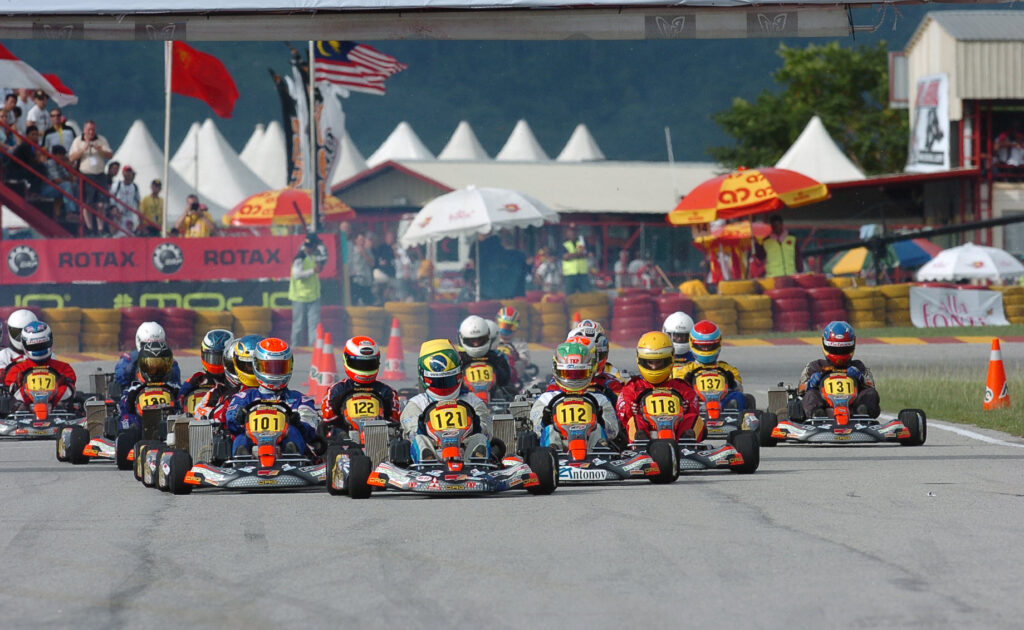
These are scenarios that are always going to change, and you need the racing intelligence to respond correctly in the moment.
In this guide, I’ll answer the most frequently asked questions about racecraft, shed a light on some of the myths behind it, and get into it.
What Exactly Is Racecraft?
My very simple answer: racecraft is the ability to race, knowing how to race, which is entirely different from just being fast. It’s what really sets the greats apart.
I’ve raced against very fast drivers in my life. Sometimes those drivers were quicker than me because the conditions suited their driving style or their body shape.
Take Lando Norris, I raced him in karting all the way through 2013 and 2014, over 25+ races together.
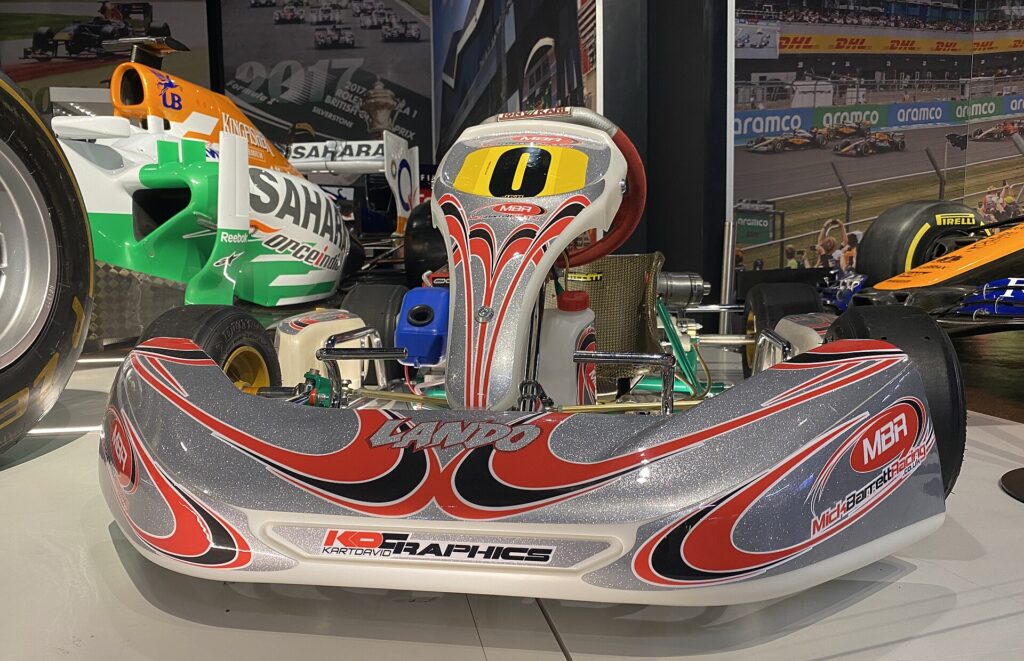
When it was cold and slippery, I would be so much faster than him in most races, especially in the winter cups. But when it was hot and grippy, at a track like La Conca, he would be very, very fast, and I would struggle to be within a tenth of him in pure pace.
The only way for me to fight in those summer conditions was to get P2 or P3 in qualifying, then try to get ahead of him on lap one and win purely through racecraft.
I knew his center of gravity being so much lower gave him a massive advantage in high-grip conditions, but I could still win those races by being smarter.
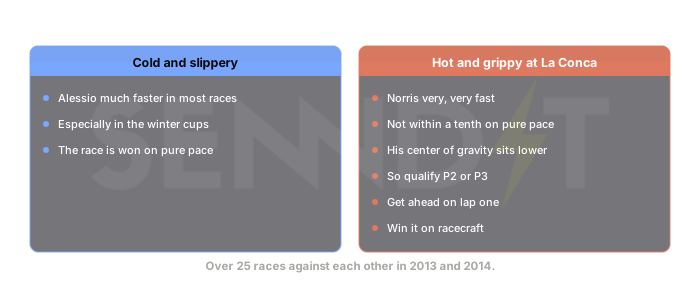
That goes to show: yes, you need speed, but great racecraft can win you races even when you don’t have the pace. I’ve really seen it happen.
In a race it’s a bit like a rugby fight. You need to take the right decisions and find yourself at the right place, at the right time.
Why Racecraft Beats Raw Speed
Raw speed is important, don’t get me wrong. PACE comes first. I always say you should find the pace to be at the top, and then racecraft is what you rely on when pace alone isn’t enough.
But here’s the thing: in the first couple of laps of a race and the last couple of laps, pace doesn’t really matter.
When you’re overtaking or defending, picking up dirt, fighting in a corner, it doesn’t matter if your kart is a tenth slower or faster. What matters is the decision you take in that moment.
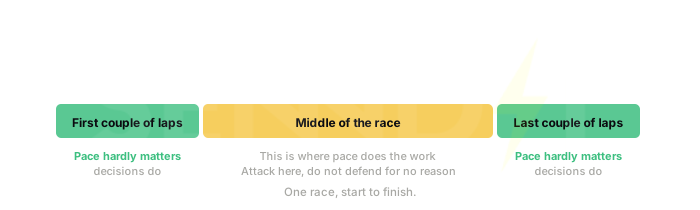
If you have the racecraft skills, you can go from the back of the grid to the podium even with significantly less pace than the drivers you’re overtaking, because the key is losing the least amount of time in each battle, not outrunning everyone on a flying lap.
Drivers who make 35 races a year, doing the full WSK Championship, the Italian Championship, the CIK FIA, they statistically perform better in terms of racecraft because it’s a skill of its own.
The more you race, the more naturally it develops. There’s no other way around it.
What Makes a Good Overtaking Move?
It really depends on the situation. There is no single definition of a “great overtaking move”, it’s completely context-dependent.
The biggest mistake? Overtaking and losing a lot of time when there’s no need to, because you actually want to catch the drivers in front.
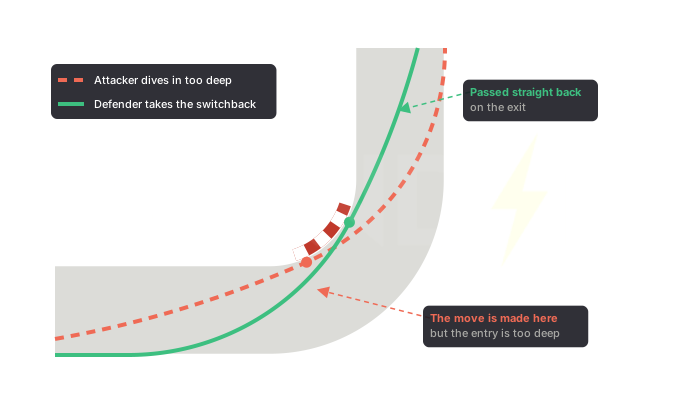
And the second biggest mistake: making the move, then getting switchbacked immediately on the exit because you went in too deep.
If you overtake and get switchbacked on the very next corner, that is a big mistake. You should never let that happen, and again, that’s part of racecraft.
How to Defend Your Position Legally
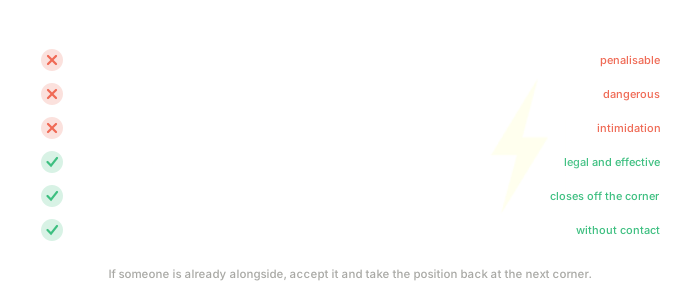
This is an important topic, because a lot of drivers defend in an illegal way, which is not only penalisable but also dangerous.
What is NOT allowed:
- Changing direction multiple times on the straights
- Squeezing a driver who is already alongside you onto the grass
- Turning into someone who is already level with you to intimidate them into lifting
What is legal and effective:
- Defending all the way to the white line, holding one consistent line
- Taking the inside line early to close off the corner
- Using your kart width to occupy space without making contact
If you develop the habit of turning into drivers alongside you in a kart, and then you get to Formula cars, that becomes life-threatening at 300 km/h. Fix your driving standards now. If someone is already alongside, you need to accept it and try to take the position back at the next corner.
One more thing: there is almost never a good reason to defend hard early in a race.
Defending costs you time from the driver ahead. Unless it’s lap one, the last lap, or you’ve just made an overtake and need to protect it for one corner, defending mid-race is largely a loser’s mentality.
If you’re a winner, you want to be attacking.
Why Patience Is Super Important in Racing
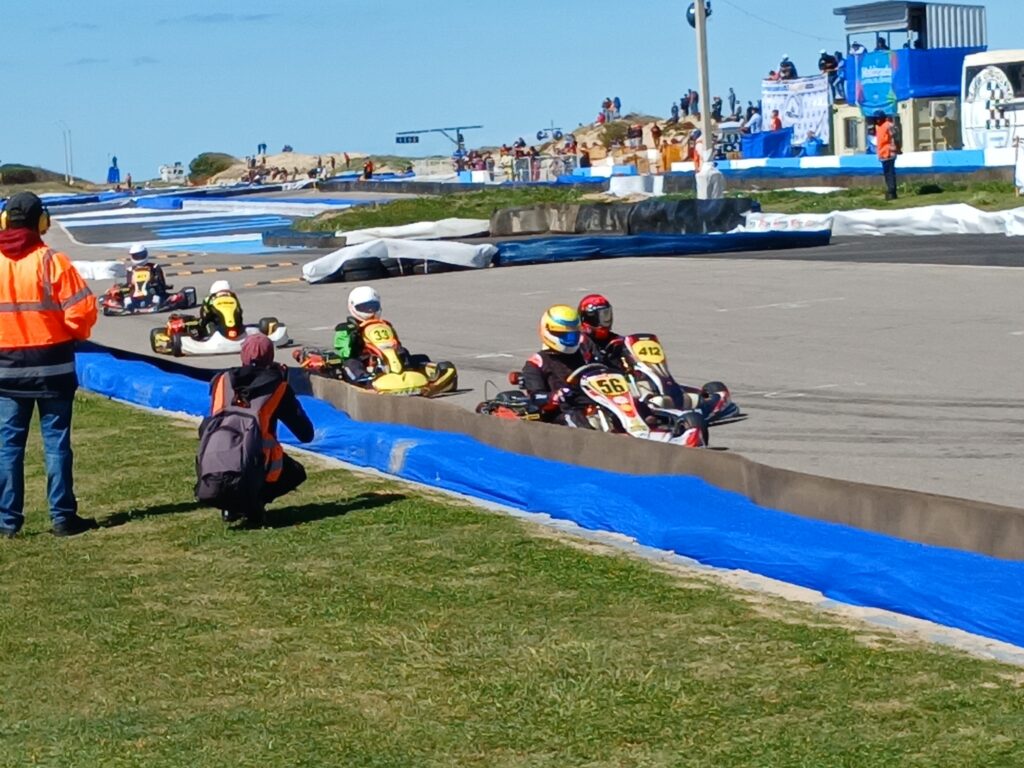
You have to balance patience and aggression, almost like taking bets at a casino. If you bet recklessly on everything, you’ll leave with nothing. In races, you need to understand when to take your bets.
The key principle: only make overtaking attempts in high-probability situations. If you try to pass from 20 karts behind just because you feel like it, that’s reckless.
You need to close the gap first, then strike when the window opens.
That said, there are moments where urgency is the right call:
- The driver behind is closing fast and you need to make something happen
- It’s the final laps and waiting costs you more than the risk of the move
- The driver in front makes a mistake, the window is open right now
In those moments, yes, it will require courage. There may be a chance of crashing.
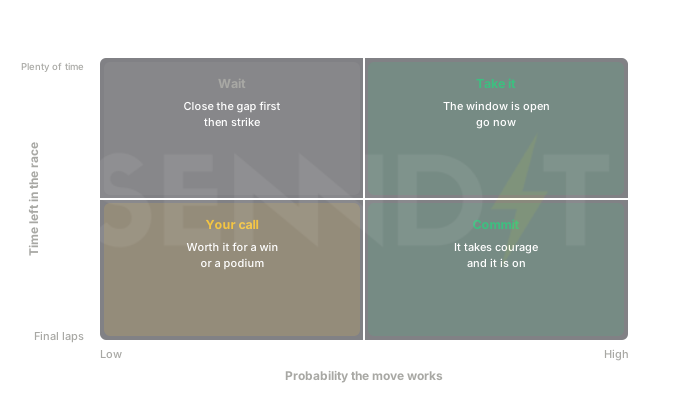
But if the bet is worth it because it can give you a win or a podium, it’s worth taking. Just don’t do it out of pure impatience.
How to Anticipate Opponents’ Moves
It comes down to your eyes, your reaction time, and the patterns you’ve built up through experience.
Racecraft is largely pattern recognition, you’ve seen a situation before, so you know what’s likely to happen next.
Here are some specific things to watch for:
- Driver missing the apex and running wide, they’ll have a bad exit. Set up the overtake for the next corner.
- Driver looking behind frequently, that signals stress and panic. They’re making mistakes and they’re under pressure. Attack.
- Body language in the kart, from your mirrors, you can often sense whether a driver behind feels strong or is starting to struggle. Use that information.
Don’t be the driver who constantly looks behind, it signals to your opponent that you’re under stress. Check your mirrors once every 3-4 laps at most. Anything more than that and you’re telling the driver behind exactly how you’re feeling.
Common Mistakes Beginners Make When Racing
The most common one, by far:
- Defending for no reason. Defending when you don’t need to is a loser mentality, you’re giving up ground to the driver ahead for no gain. Only defend when you truly have to.
- Getting switchbacked on every overtake. They don’t brake properly, overshoot the apex, and the driver they just passed takes it straight back. Very, very common, and it looks terrible from the outside.
- Getting switchbacked when defending. Same problem on the other side, defending too aggressively past the apex, leaving the door open on the exit.
- Reckless impatience. Trying to force passes that simply aren’t on, crashing themselves out instead of waiting for a better opportunity.
From the outside it looks so stupid, and you lose a lot of points in terms of reputation with the other drivers. Getting switchbacked on every move is one of the most costly habits a young racer can have.
How to Practice Racecraft
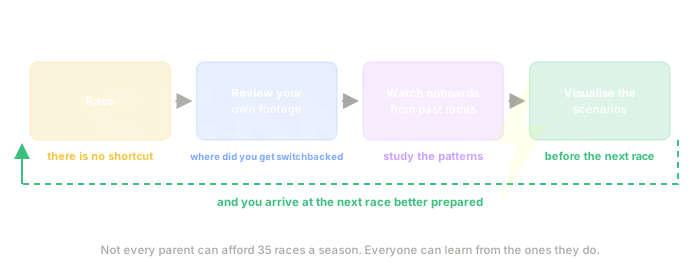
Honestly? The only real way is to race more. There is no shortcut.
But not everyone can do 35 races a year, so here’s what else you can do:
- Use free practice for racecraft sessions. Schedule specific sessions dedicated to overtaking and defending, not just chasing lap times. Try to not crash, but focus on pure racing intelligence.
- Watch onboard videos from past races. Study the patterns. What did the driver in front do wrong? When did the overtake open up? That pattern recognition stays in your brain.
- Visualise different scenarios before you race. You can’t anticipate every situation, but mentally rehearsing common ones, the first lap, a late-race battle, prepares your instincts.
- Review your own races critically. Don’t just watch to enjoy the footage. Ask: where did I defend unnecessarily? Where did I get switchbacked? Where did I wait too long?
The point is not just to do more races, it’s to learn from the races you do.
Not every parent can afford 35 races a season. But everyone can watch race videos, review their own footage, and drive smarter in every session they have.
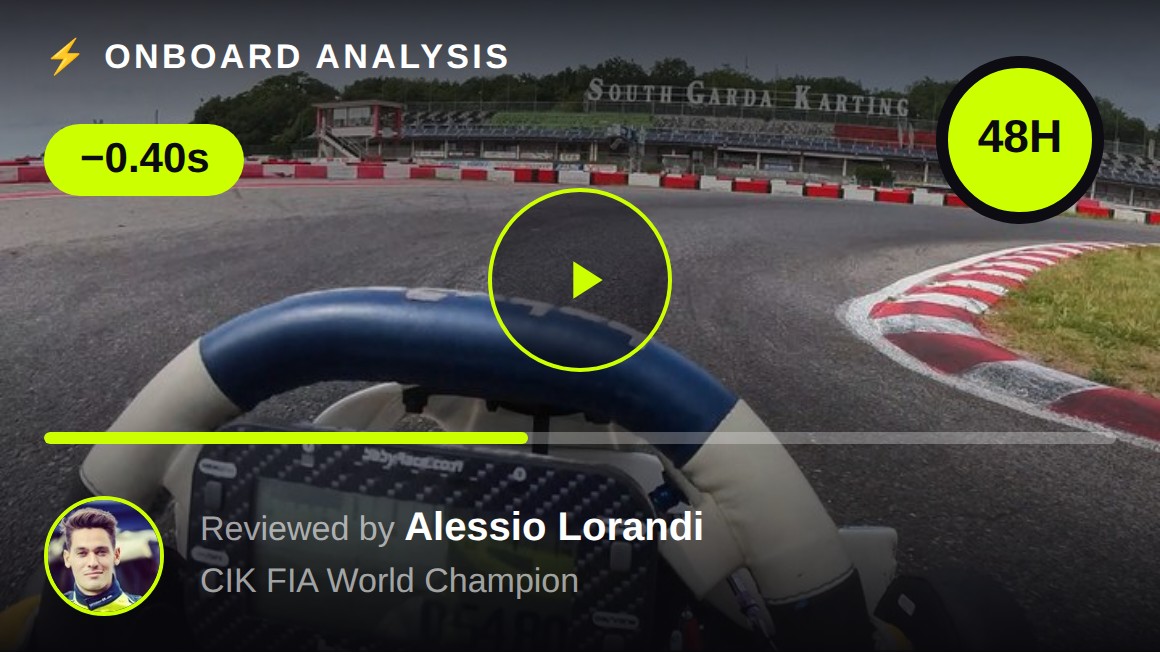
Send your onboard footage. Alessio reviews it corner-by-corner and tells you exactly what's costing you time, and how to fix it. Back within 48 hours.
Get My Onboard Reviewed → Reviewed personally by a CIK FIA World Champion, never an assistant.I promise I'll not spam you with repurposed shitty AI content but real experiences that only I, Alessio Lorandi, experienced. Written in my funny English-Italian tone of voice 😂
Alessio Lorandi is the former CIK FIA World Junior Champion, winning against Lando Norris in 2013 & F3 multiple race winner. He's helped 200+ karting drivers worldwide get faster & win WSK titles with BabyRace Driver Academy & now through Senndit, his online karting coaching platform.