
Karting Rib Protectors: Do You Really Need One?
Rib protectors aren't optional, they're the difference between walking away and months of recovery. Here's what actually matters.

- Karting rib protectors are mandatory at international level because karts reach 2.5 G forces with rigid resin seats that can destroy ribs without proper protection
- Even beginners should never skip a rib protector, the risk of injury is too high, and you’ll move around in the seat without one, causing more damage
- High-grip conditions and aggressive curb use are the biggest culprits for rib injuries; poor seat fit (too loose or too tight) makes it worse
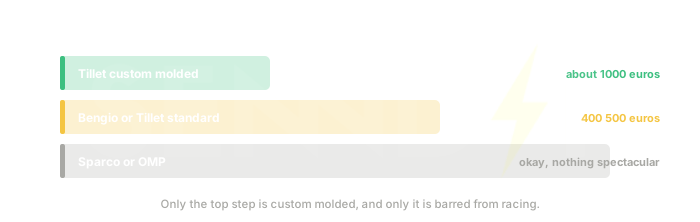
- Custom-molded Tillet protectors (€1000) are the gold standard but aren’t homologated for races; Bengio and Tillet standard protectors (€400-500) are your best legal options
- Rib recovery takes 1-2+ months and requires complete rest from driving and intense exercise; continuing to drive on an injury compounds the damage
- Invest in a quality rib protector early, it’s equally or more important than your helmet, protects your lap times, and prevents years of chronic pain
- Why are rib injuries so common in karting?
- Can karting beginners skip a rib protector?
- What actually causes rib pain in karting drivers?
- How should a rib protector properly fit?
- What’s the difference between entry level and high-end rib protectors?
- Are custom molded protectors worth it?
- How do you know if yours is fitting correctly?
- What are the early warning signs of rib injury?
- Do kids need different rib protectors than adults?
- How long does it take to recover from rib damage?
- Does seat position and seat size affect rib injuries?
- Do you increase the chance of rib injuries if you use curbs frequently?
- If you could only invest in one protective item after the helmet, would it be the rib protector?
I get asked this question all the time by newbies that are not in the world of karting. And I wonder why drivers use rib protectors, whereas in Formula 1, they don’t.
And I briefly explained to them that, well, first of all, the seat is very stiff, and due to the fact that they reach up to 2.5 G’s and having a resin seat that is not made of foam, as in the case of Formula One, they need to have rib protectors, because otherwise they would destroy their ribs with the high G forces that you get, especially in high grip conditions.
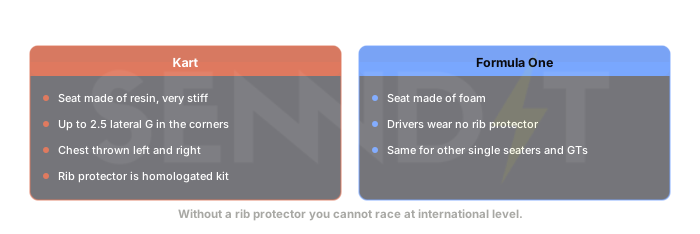
So in order to not crack your ribs every session, basically you have to use your rib protector. And it is actually mandatory. It is homologated, and it’s something you need to use otherwise you just basically cannot race at an international level. And to be honest, it really makes sense, because if you drive without rib protector, it’s actually a bit of sheer masochism, and I’m not sure you want to do that.
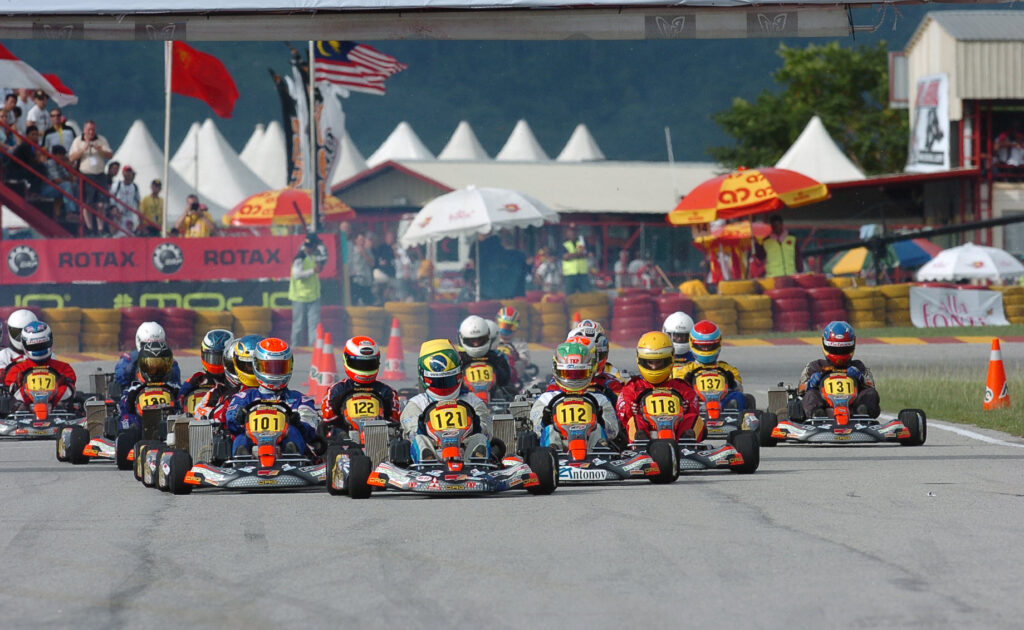
Trust me, I had severe ribs injuries even though I was using a rib protector, so imagine if I didn’t use one, that would have been even more of an issue.
In this guide, I will cover all of the frequently asked questions about rib protectors. So let’s get started.
Why are rib injuries so common in karting?
Rib injuries are so common in karting simply because you are going at super high speed through the corners and you reach up to 2.5 lateral G’s, sometimes even slightly more.
And the seats are made of resin. They are not made out of foam, as in the case of Formula One other single seaters and GTs. So if you go basically and hit with 2.5 G’s, 2.5 times the gravity acceleration of 9.8, and you multiply that acceleration with your own body weight, and you throw it against the seat left and right, sooner or later, you will destroy your ribs.
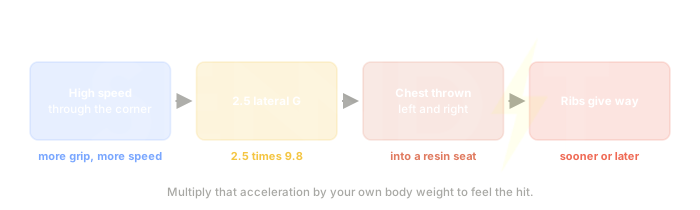
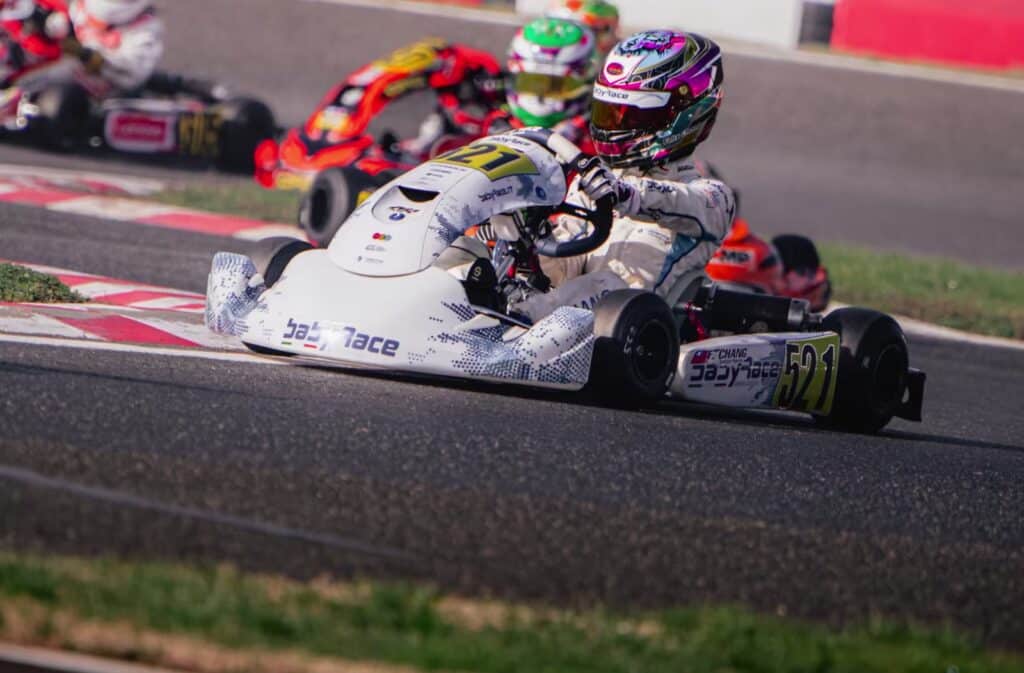
And yes, that will be more and more severe with a higher grip level on track, because with the higher grips, you will carry more speed, more G forces into the corner. With more G force, there’s more acceleration of your chest cage being thrown left and right. So that is basically the reason why you have to use rib protectors to prevent that.
Can karting beginners skip a rib protector?
Well, I believe that’s a really bad idea, and I do not recommend it at all, actually, because beginners may get hurt more likely, and so they will need more safety than other drivers.
Yes, being beginners, they will carry less speed into the corners because they have less confidence. And less speed equals less G forces. Less G force equals less strain on the ribs. But still, I would never, ever drive without a protector in my life.
You know, I think one session every in my life, I realized in the outlab that I didn’t have it, and so I boxed right away, and I checked and I had to put it on, because otherwise, I would have destroyed my ribs. So it’s just impossible to hold yourself inside of the seat without going left to right, and so you’re just going to destroy the ribs.
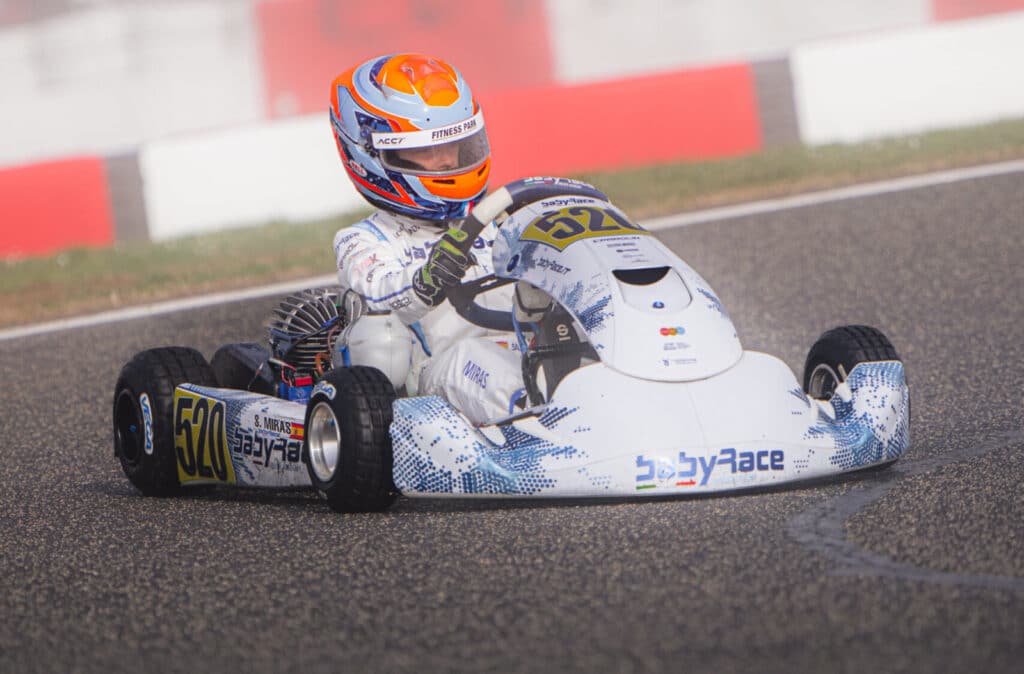
Now I know that in the past, like 30 years ago or so, some drivers were quite heroic in the sense that some of them drove without a rib protector. They actually just put some foam on the seat internally and so that they would drive like that. But again, I think that is just not the way that is possible to do nowadays, because just the speed and the G forces have gotten higher and higher.
The karts have gotten also a little bit heavier. So just carrying more speed to the corners, more speed equals more G forces. And even though, even in the past, there was a lot of grip, but I think nowadays it’s just impossible. Like maybe in the past you could have had something like that, but now it’s just not possible.
What actually causes rib pain in karting drivers?
The thing that causes rib pain the most is being squeezed from left to right with the high G forces. And really, most of the times it is not just the G forces that are heavy, but also the use of curbs.
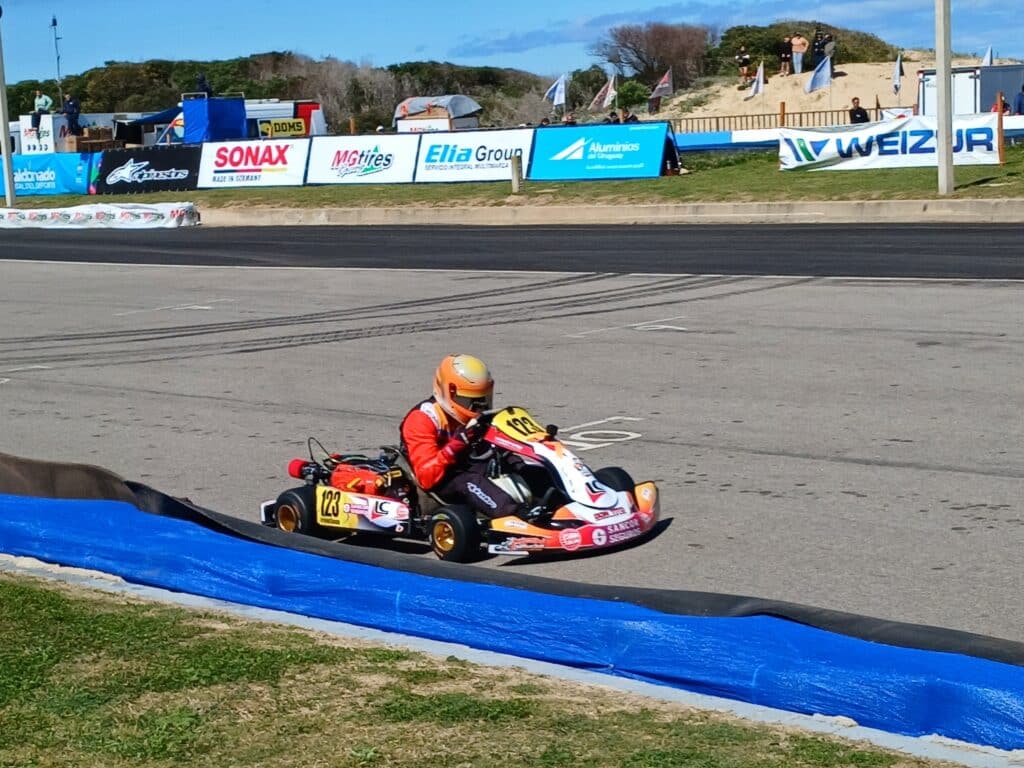
When you use the curbs, you have sudden smashes on the ribs, so your ribs basically smash against your rib protector, and your rib protector smashes against the seat. So even though you may have a rib protector, you may still hurt your ribs, and you may still crack them if you just go a bit too aggressively over a curb, and maybe you’ve had already some pain, and maybe you were already straining your ribs.
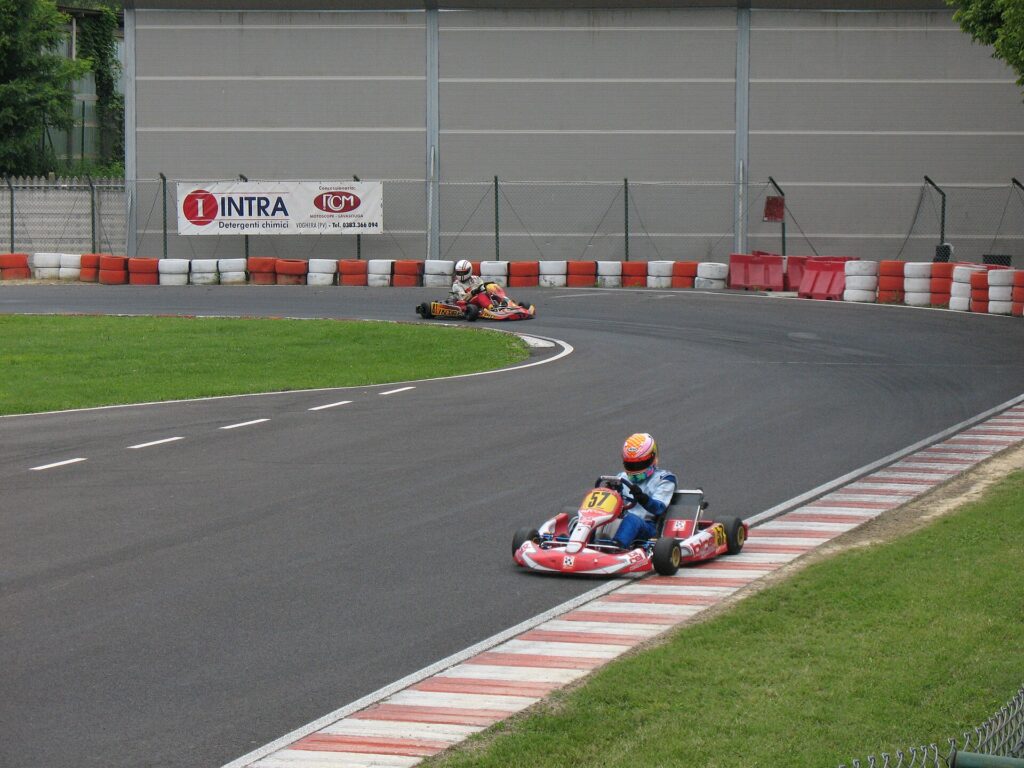
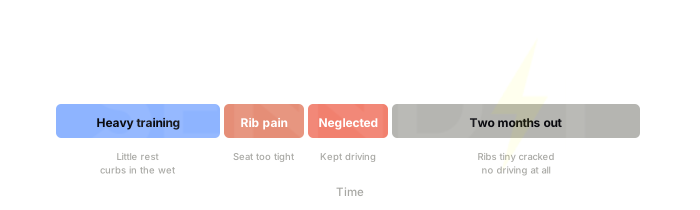
I had this issue last year. I was severely training. Getting training, training without resting too much. And I was smashing the curbs, smashing the ribs in a wet to go faster. And I remember that I was at a French record that I just overdid it, and my seat to be on it was a bit too tight. And what happened was just that I got a bit of a rib pain, and then I neglected it, but then kept staying there, and I got more and more of a pain, and then it actually became a big one, and I had to stay away from driving for like, two months, because my ribs were like tiny cracked.
But when I was in 2013 one time I literally cracked my rib, and it was very, very painful, you cannot imagine. And I still had to finish the race, and I still had to do the whole weekend under injections and painkillers because I was fighting for the championship, and it was, yeah, very, very painful.
In the end, I did not win the championship, but I finished P2 still, it was great, because I was able to, I think we win the pre final. And I remember, after the adrenaline stopped in the in lab, I was just like almost crying in the helmet, a bit like the scene that Ayrton Senna did when he won in Brazil, when he got stuck in sixth gear.
And so, yeah, it felt really, really painful.
So yeah, all in all curbs, plus high grip conditions are going to be a big issue for ribs, especially if you have to go and smash a curb flat out at, I don’t know, like 120 kilometers an hour.
I remember in La Conca in the past, you used to smash the curb so much. Now they changed it the last couple of years, so it’s not as aggressive on the curb. The curb is not that sharp, but we used to fly, literally, with four wheels over the over the curb and the chicane, and yeah, after I remember, there was a day where it was in summertime, there was so much grip, and I drove like 150 laps, but I used to do, like, two long stints, and I got quite, I got quite bruised, but I kept going, and then I kind of cracked the ribs there as well.
So I had the had a bit of a bad luck over the years with my ribs, but then I realized I had to get the absolute best rib protector in the market. And back then it was the Tillet custom P1 and then now it’s still available, but of course, you have to fly to the UK to Steve, still the legend himself, and getting your rib protector being made custom molded around your ribs. And yeah, it costs quite a bit. It’s about 1000 euros, but it’s totally worth it.
Now, it’s not homologated anymore. Unfortunately, you cannot drive with it, but you can still use it in the free practice and in the testing. Overall, it’s just not allowed to race during the international races, simply because it doesn’t have the frontal chest protection that nowadays all rib protectors have.
How should a rib protector properly fit?
Rib protector should fit in a way that they’re very, very firm and they’re not too loose, of course, and they’re not too tight. If they’re too tight, they are going to obstruct your breathing and probably going to do worse, more harm than good, actually.
But I prefer it to be a little bit on the skinny fit side, rather than on the loose side, because if we say on the loose side, then you’re just going to move around. And if you have no proper feeling of being locked in, basically in your rib cage, in your seat as well, then it’s going to be a problem.
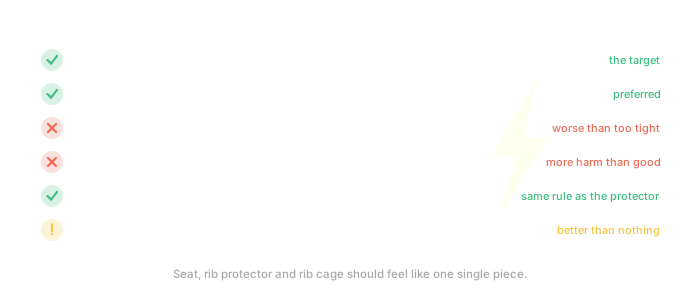
That’s why, also the seat has to be perfectly fitting your rib cage in your chest. Basically, you do not want to have an oversized seat or too tight seat. You just need to be slightly tight, again, like the rib protector, slightly on the tight side, rather on the loose side. But you don’t want to be on the opposite side as well of being way too tight.
For sure, being too loose is worse than being too tight overall. But yeah, I’ve had an issue where I had my seat being too loose, and because of that, I was moving inside of the seat, even though I put a lot of foam on the sides of the seat to try to basically stay more stuck. But still, that wasn’t a good decision. It was better than nothing, but still was not the right decision.
That just the wrong decision was just not getting a tighter seat in the first place. So I will not make this mistake ever again, because that damaged my ribs. Just the fact of moving left to right, I should have been locked in, centered and perfectly locked into this, into the seat, but I was not, and so it destroyed my ribs.
What’s the difference between entry level and high-end rib protectors?
Well, the main difference, of course, is the protection and the price. Of course, the more protection you get, the higher the price and at the same time, the comfort.
Now there are some rib protectors that are a bit low end because they’re not specifically um, brands that are dealing with rib protectors, they are just designing them, just to add them in the category of products. But let’s be honest, that’s not their main speciality. So in this way, they just made some products that were okay, but not exceptional.
And I’m talking about, for example, the Sparco rib protector, the OMP rib protector, which are, okay, nothing spectacular, but they’re not as good, near as good as the Bengio or the Tillet one. I use a Tillet one.
Are custom molded protectors worth it?
Absolutely yes. I know the only custom molded protector in the world is from Tillet. You literally have to fly to the UK and get it done at their workshop. It’s just fascinating. And of course, it’s the best thing you can get when it comes to dealing with ribs and rib issues.
Of course, it’s much more expensive than a normal rib protector that’s costing like 400 500 euros. In fact, the custom molded one costs up to 1000 euros. So yeah, you cannot get it for cheap. But yes, it’s totally worth it, because it’s just perfectly reflects the shape of your ribs, and therefore you’re not going to have extra moving bits in your in your seat, between your seat and your rib protector.
This is going to essentially be like a glove. So your rib protector is going to fit perfectly like a glove, and that is just perfect for for optimal safety and optimal comfort at the same time.
And you just need to be one piece, just literally one piece between the seat, the rib protector and the the rib cage, it has to be just one single entity. If it’s for some reason too loose in between, or too large or too tight something, and you feel like it’s not one piece, well, then it’s going to be a problem, and you’re going to feel issues. You really need to feel like one okay.
But unfortunately, custom molded protectors are not homologated because they don’t have the frontal chest protector, and therefore they are not allowed anymore, but you can use them in testing and free practices, as I still do, and I will keep doing it. I have one from when I was 15 years old, and unfortunately it doesn’t fit me anymore, but
Send your onboard footage. Alessio reviews it corner-by-corner and tells you exactly what's costing you time, and how to fix it. Back within 48 hours.
Get My Onboard Reviewed → Reviewed personally by a CIK FIA World Champion, never an assistant.I promise I'll not spam you with repurposed shitty AI content but real experiences that only I, Alessio Lorandi, experienced. Written in my funny English-Italian tone of voice 😂
Alessio Lorandi is the former CIK FIA World Junior Champion, winning against Lando Norris in 2013 & F3 multiple race winner. He's helped 200+ karting drivers worldwide get faster & win WSK titles with BabyRace Driver Academy & now through Senndit, his online karting coaching platform.

