The Ultimate Karting Ladder From 6 to 16 y.o.
If you’ve been wondering about what was the exact step-by-step karting ladder from kids getting into karting for the first time at what, six,…


If you’ve been wondering about what was the exact step-by-step karting ladder from kids getting into karting for the first time at what, six, seven, eight years old all the way up to 10, then 12, and then 14, and maybe at 15, that’s their last year in karting, and then they will move you up to single seaters, if they do move up to single seaters, for the ones who do move up in this guide, I will break down exactly step by step what is the normal karting ladder path from when they get started to when eventually they transition into single-seaters, if they ever will, or if they will just keep doing karting as a hobby or even professionally without needing to move up to single-seaters.
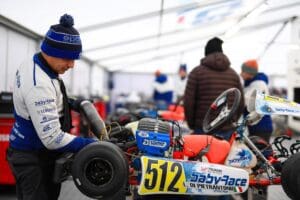
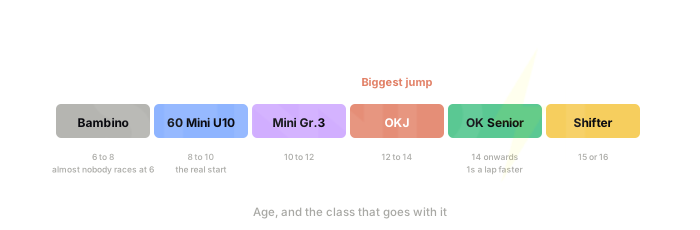
- Bambino / Baby is six to eight, but almost nobody actually races at six. Eight is the realistic start.
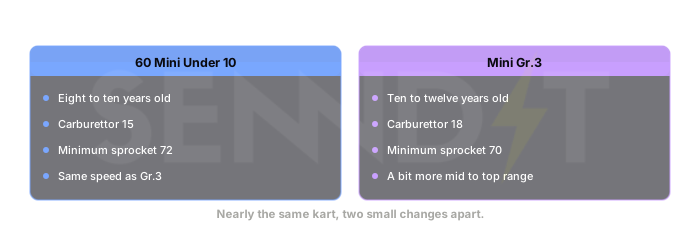
- 60 Mini Under 10 (8–10), then Mini Gr.3 (10–12). Nearly the same kart — the carburettor and two sprockets are the difference.
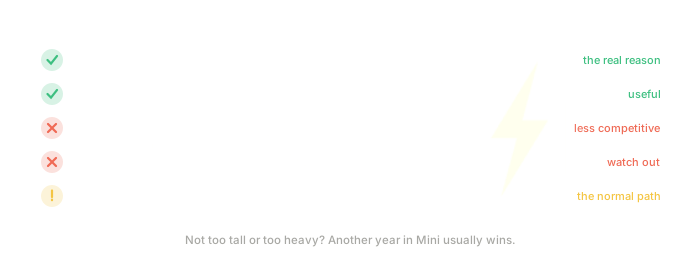
- OKJ at twelve. OKNJ exists, but the level is lower than Mini Gr.3, so another year in Mini often beats moving up early.
- OK Senior at fourteen. Identical chassis to junior; about a second a lap comes from the engine alone.
- Mini to Junior is the biggest step you will ever feel — bigger than karting to cars.
- Shifters at fifteen or sixteen teach gears, front brakes and standing starts before you need them in a single-seater.
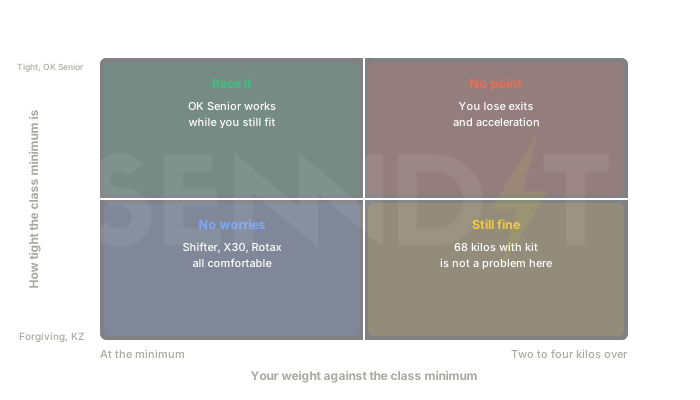
- Weight ends a senior career, not age. Two or three kilos over the minimum and there is no point racing.
- The single-seater ladder is F4, Formula Regional, F3, F2, F1 — and it has never been a pure meritocracy.
- Bambino and Baby: six to eight years old
- 60 Mini Under 10 and Mini Gr.3: eight to twelve
- OKJ and OKNJ: the junior years
- OK Senior: from fourteen onwards
- Why moving up to seniors used to be harder
- The biggest jump you will ever feel
- Shifters at fifteen or sixteen
- Why Verstappen and Leclerc raced shifters first
- What shifters teach you before single-seaters
- Why I still drive a shifter
- The whole ladder in one list
- Why weight ends a senior career, not age
- After karting: Formula 4 to Formula 1
Bambino and Baby: six to eight years old
So, the first step for kids joining karting for the first time, they’ll have to get into the Bambino categories, so basically the Bambino categories, even called baby category in Italy. It’s from like six till eight years old, that’s normally what you get. You can find that Bambino class in the UK, but you can find it also, I think, in the UAE.
Not sure, but I mean, you’ll find different variations in different countries. They may not be called Bambino, they may be different category names, but yeah, I mean, in Italy, for example, it’s not called Bambino, it’s called Baby, and you can do this category, for example, in EasyKart, or you can do a national series from six to eight years old, there’s like an Italian championship series, you can do those races with the kids between six to eight, but again, that’s the number one ladder.
When you get started, you may be even below six, and you can’t really do the races below six. Yeah, you just have to do testing days and get ready for when you start doing the races. But to be honest, it’s quite unusual to start racing at six. Normally, most of the kids start racing at eight, just to give a perspective.
60 Mini Under 10 and Mini Gr.3: eight to twelve
At eight years old, if you are thinking to race in Italy, for example, you will get to drive the 60 Mini under 10 category. Okay, from eight to 10 years old, which is basically, I mean, the same speed as the Mini Gr.3, which is from 10 to 12 years old. The only real difference is the carburetor from 15 to 18 in Gr.
3, so it’s a, it’s a little bit more power in the mid top range, but again, it’s very, very similar, and you also have two sprockets difference, you know, the minimum sprocket is 70 in Gr.3, and in under 10 it’s 72 so that is normally the ladder from Bambino to mini under 10 all the way up into mini,
OKJ and OKNJ: the junior years
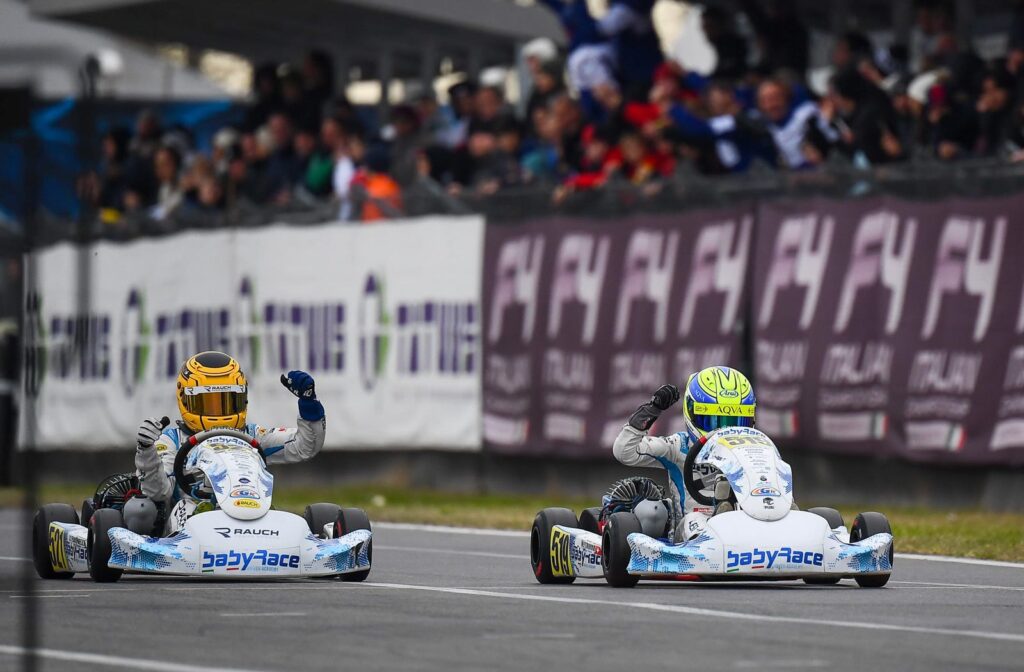
and then at 12 years old, sometimes even earlier, like at 11, kids move up into OKJ, which is the juniors category at international level that does CIK-FIA races, WSK, and Champions of the Future races, but there’s also OKNJ, which is the national junior level racing in Italy and also around Europe, so that is an option for kids that maybe are too tall or too heavy for 60 Mini in when they’re 11 and they want to transition into juniors, or maybe they’re not too tall and not too heavy, they just want to transition into juniors simply because they feel it’s better for them to prepare for their junior career.
So many kids now starting to do this OKNJ. Honestly, I just feel that, yeah, it’s not bad as a category, but the reality is that the level is not super high, and it’s almost better to stay mini for one year more, and I’m not saying this because I’m biased as a team manager and owner at BabyRace Driver Academy, but the reality is that, yeah, I just feel like when you go to OKNJ, the level actually gets lower than Mini Gr.
3, rather than going higher, so yeah, I mean, you just drive a kart, which is more powerful, and you get used to the big kart, but the reality is that it’s a little bit less competitive, and so I mean, yeah, it’s it’s easier to get results, but realistically those results are a little bit less meaningful, but anyways, then after OKNJ, you move on to OKJ at 12 years old, if you go right into OKJ, which most drivers do anyways, and you’ll stay there for two years all the way until 14 years old,
OK Senior: from fourteen onwards
and at 14 years old you’re going to move up into seniors, so the OK category, it used to be called KF2 back in the days, and the OK category is essentially the senior category, for, you know, international level, it’s the same as, let’s say, X30 Senior or Rotax Senior, it’s like it’s just the senior category that is at the international level, and you know those have more powerful karts and engines, I mean, than than juniors, that’s the only difference.
The whole kart is exactly the same as the juniors. I mean, nothing changes really. The only difference is that there is a bit more power from the engine, and so there’s like about one second per lap difference in terms of lap times.
Why moving up to seniors used to be harder
In the past, it was great because when you were transitioning to seniors, which was called KF2, you had front brakes, which was amazing. You could really break late and break literally into the corner, but I don’t understand why they removed that, because it was so cool, and yeah, it’s a pity that you can’t do that anymore. But yeah, it was a real, real pleasure to use those front brakes.
Now, yeah, when you just move up from juniors to seniors, it’s easier, because you don’t have to adapt to anything in terms of chassis, because it’s exactly the same, whereas back in the days you had to. Really, learn how to use the front brakes, because it was not easy. You had to kind of change a bit your, your approach, and your driving, whereas now it’s easy to transition from from juniors to seniors, just a little bit more power, but you almost don’t even notice that,
The biggest jump you will ever feel
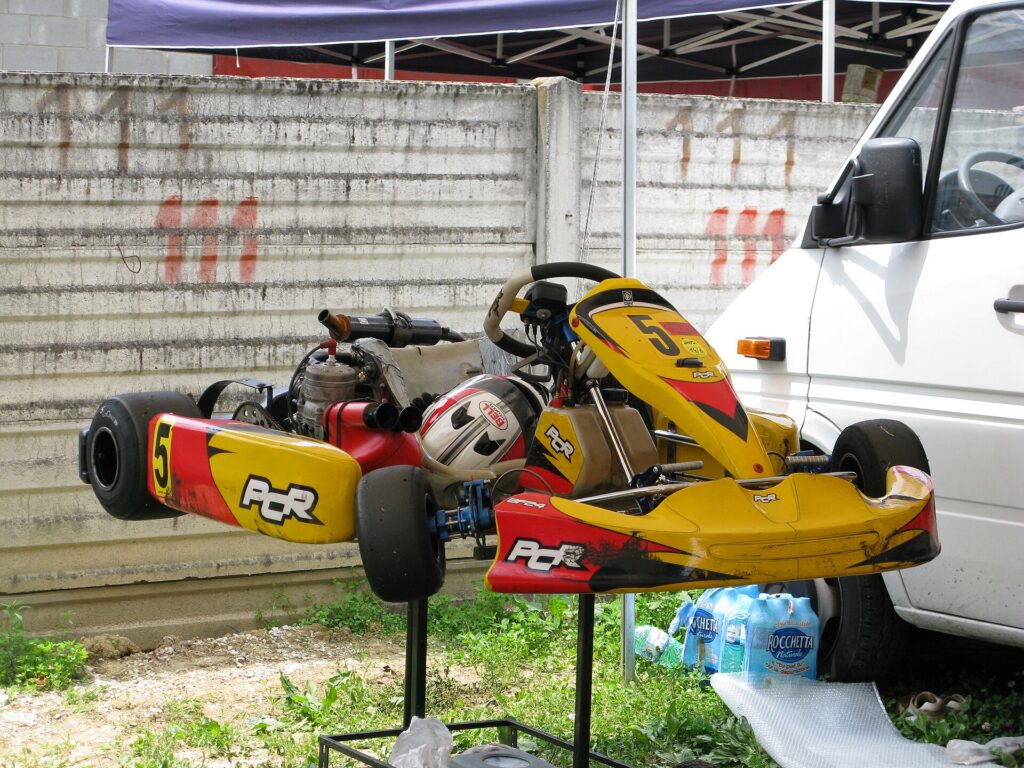
because to be honest, the biggest jump in category as a driver that you will feel is from 60 Mini to juniors, that is pretty much the biggest jump you will feel, because not only you pick up so much more power in comparison to what you have in Mini, so you have way more acceleration. You, I still remember the first day I was, I drove in a Junior Kart, a KF3, back in the day, that’s how it was called, in 2011 I mean, it was crazy, it was like so much power out of the corner.
I was like, wow, this is like a Formula One, that’s that really felt like the fastest thing I would ever feel in my life, like when I did the transition from karting to formula, it was also quite powerful, but it was still a pretty large step. But realistically, the largest step I felt in terms of upgrade was from mini to juniors was quite crazy,
Shifters at fifteen or sixteen
and the other very interesting step that I did was when I did from seniors to shifters, and normally go to shifters at about 15 or 16 years old, if you ever want to, because many drivers don’t even go through shifters, they go straight into single seaters, the ones who do, I mean, not everybody has to go, I mean, honestly, single seaters are so expensive, and if you really have the budget and the backing to get up there, it’s one thing.
Otherwise, you shouldn’t really just try to go in singles. It is just because everybody’s doing it. You need to really have the sponsors or the financial backing from your family to support you. But again, it’s yeah, it’s extremely, extremely expensive your way to Formula One. But anyways, so many drivers are trying to go to Formula 1, they go and sometimes skip shifters, which is a pity, to be honest, because
Why Verstappen and Leclerc raced shifters first
the best drivers in the world have all done shifters. For example, if you talk about Max Verstappen, he did two years full-time shifters in 2012 and 2013 and he won a world championship and an European championship in shifters in KZ1. Also, Charles Leclerc, he did shifters for one and a half year, I believe in 2012 and in 2013 and he finished p2 in the World Championship behind Max Verstappen, and you know these two, which I believe are the two current best drivers in Formula One.
They did it, and if they did it before transitioning to single seaters, then you should do it too, probably, right? Because let’s be honest, I mean,
What shifters teach you before single-seaters
the great benefit of driving shifters is that you’re able to get used to the gears, the front brakes, the standing starts, you know, changing gears and everything. It’s something that you ideally want to give for granted when you go up to single seaters, because again, you don’t want to also learn those things, because when you’re up to single seaters, you already have to learn a lot of things, like aerodynamics, you know, trail braking really deeply into the corners, you want to get used to everything, and also the fact that you sit very low in the kart, that you can’t see pretty much anything compared to what you could do in karting.
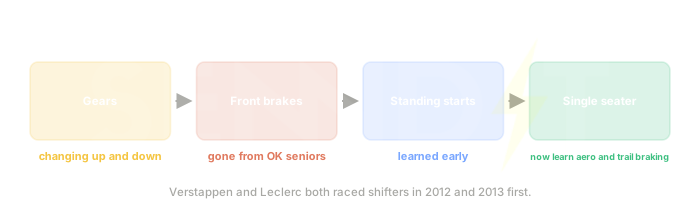
So that’s a massive difference already in terms of all the things you have to shift and adapt to when you go up to cars. So, if you can already adapt to gears and front brakes and standing starts when you are in karting by doing shifter, well, for sure, that’s that’s a good thing that I recommend doing, and to be honest,
Why I still drive a shifter
I feel the level in shifter is so high that, yeah, I mean it’s gonna be such a pleasurable experience, and it’s very, very competitive. I love it, like to be honest, I still get to drive my shifter quite a lot, and it’s just so fun. It’s my, yeah, stress relief, I would say, because anytime I have a stressful weekend, I always look forward to spending one day on track, on, you know, the Monday or the Tuesday after the race at BabyRace, for example.
I just hope I can go and drive one day, so I can take off the adrenaline and the pressure and kind of enjoy it, but at the same time, I just like love driving. If I could drive every day of my life, I would do that. I mean, it’s just my passion. It’s what I love doing the most. And driving shifters is a pure pleasure.
You have no idea, it’s just pure pleasure. And so, if I could do that every day, I would do that. You will have no idea. Like, the moment you try a shifter, if you are a will, which I encourage you to, if the moment you will try a shifter, it’s gonna be insane. It’s gonna feel so good, and you will want to do that again and again.
It’s gonna be, it’s like driving a mini Formula One, honestly. It’s like the thing is so powerful that, especially in the, in the exits of the corners, in terms of power, it only has 52 horsepower. It doesn’t feel like you have 1000 horsepower, like, like a Formula One car, but it almost, like, the first time you try, and you’re not used to that, the power on the exits of the corner is just insane, so the ultimate top speed is not so high, but the power range at 10,000 to 11,000 rpm is just insane, and you have, like, for sure your neck will be sore and hurting at the end of the day if, if you’re not used to that, and yeah, just, it just feels like being on a roller coaster all day, to be honest, just like going to Disneyland, I mean, that is my Disneyland, by the way.
It’s, uh, it’s my treat. So, yeah, that’s the step.
The whole ladder in one list
Okay, so we said first to get into Bambino, six to eight, then you move up to under 10, mini eight to 10, then you move to Mini Gr.3, 10, to 12, then you move into OKNJ, if I mean you are playing too, but most of the drivers skip that altogether. Because it’s not really required and most of the drivers don’t do that, so you will go from 12 to 14 in juniors, and then you do from 14 to 15, or even 16 in seniors, and then from let’s say 16 onwards, you’re gonna go into shifters, but you, to be honest,
Why weight ends a senior career, not age
in seniors you can stay as long as you want, I mean, as long as you don’t grow too much in terms of height and weight, because that’s the only problem about seniors is like the karts are very light in terms of minimum weight, so that’s why, like, if I wanted to do seniors, I couldn’t, because I’m too heavy, and I mean, a bit too tall, but it’s the problem is, there is the weight, even though I’m only like 68 kilos with kit, the reality is that that’s too much, and that’s why, I mean, you can’t, you can’t really do seniors as much as you can do shifters, if you’re an adult, you like, if you drive X30 or Rotax, I’m pretty sure that they are more flexible in terms of minimum weight.
I think that it’s more forgiving in shifters. I mean, you don’t have that problem, you can quite easily do that, but again, when you try to do international seniors, so if you do it okay, then it’s gonna be very hard to stay within the minimum weight, and if you go beyond the minimum weight, and you are like two, three, four kilos above, there’s not even point to race, because you’re gonna lose so much performance in terms of like exits, uh, acceleration, because your extra weight, so, and the competition is so fierce that if you try to compete with extra weight, you’re just like shooting yourself in the foot, essentially, so just don’t do that at all, all right.
So that’s pretty much the career ladder in karting, and yeah, I mean, honestly,
After karting: Formula 4 to Formula 1
if you then transition into single seaters, the next step would be Formula 4, and then Formula Regional, and then Formula Three, and then Formula Two, and if everything is aligned properly, and you won races, you won championships, you have the funding, then you can get to f, but again, that’s a very long story, because you can, you can get to Formula 1 even without winning Formula 2, even without winning Formula 3.
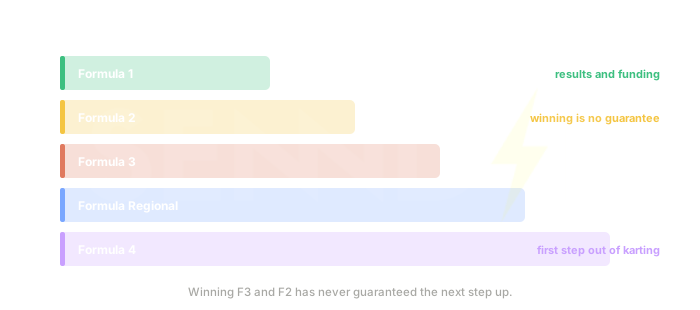
We’ve seen drivers getting to Formula 1 without having won much in Formula 2 or Formula 3, but because they may be backed by Formula 1 academies, or for whatever reason, they may be considered f material, and well, rightfully or not, they will get upgraded to Formula 1, whereas drivers who have won championships in Formula 3 and Formula 2 will not, in some cases, and again, it’s a big debate.
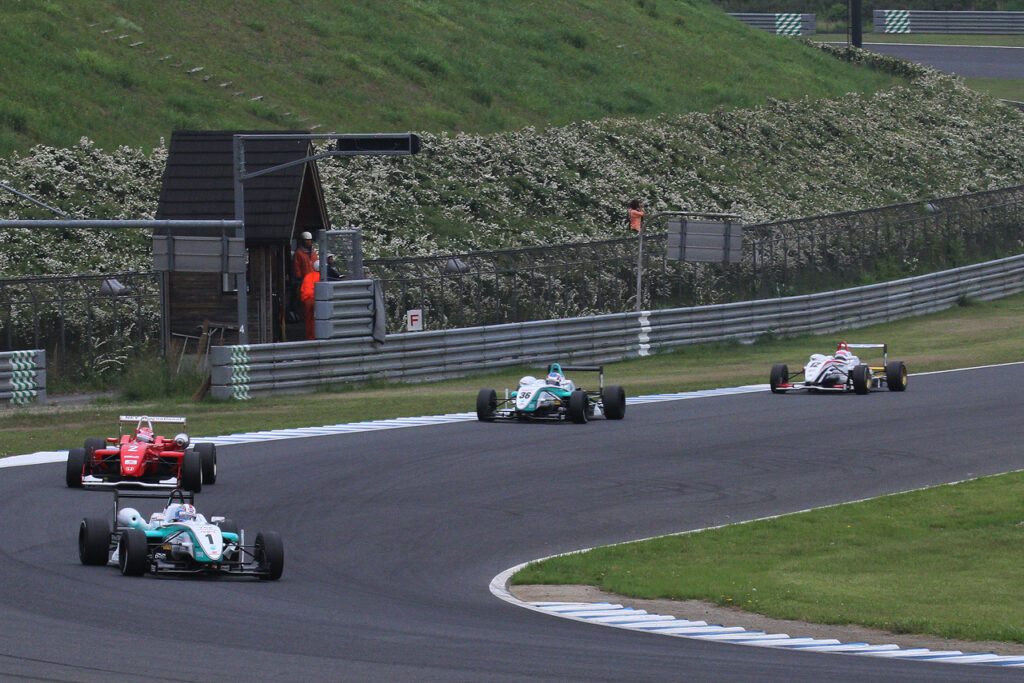
I can’t really talk about this right now, but, anyways, you know, it’s not like a straightforward thing that if you win Formula 3 and Formula 2, you should be in Formula 1. I mean, I agree it should be like that, but in some cases, in most cases, not like that. It’s almost like somebody has some preferential paths, and yeah, I mean, it’s a bit sad, it’s a bit unfair.
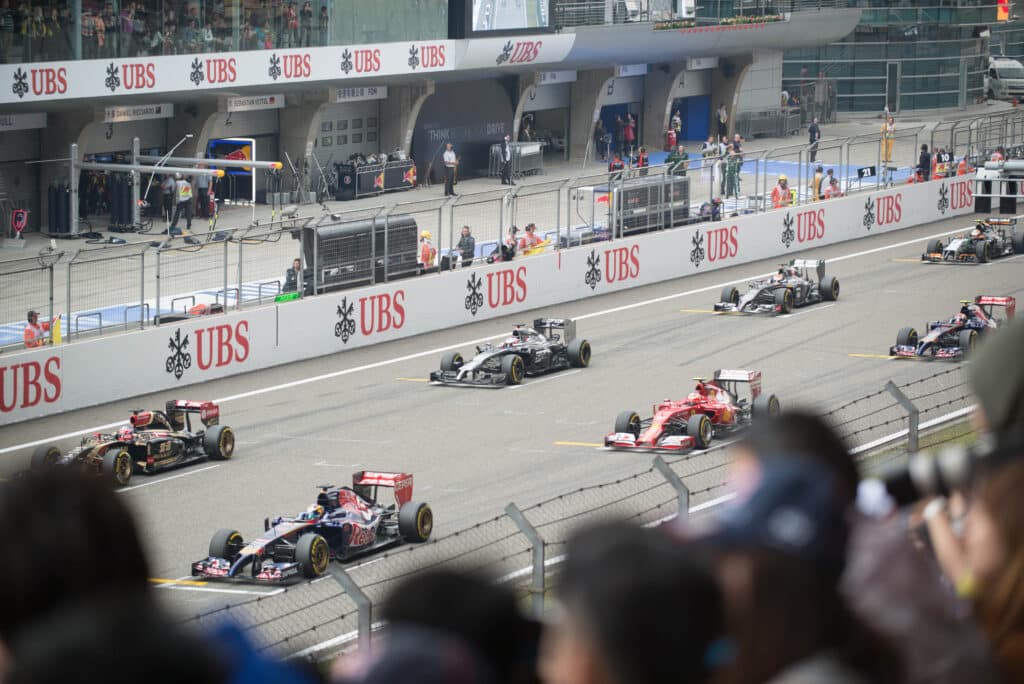
But what can you do? You know, now I hope this was useful. Feel free to follow me on Instagram @alessiolorandi. I’ll be happy to get to know you, but if you want to find lap time for your upcoming race, feel free to sign up to the remote onboard video analysis, where I will be able to analyze your onboard video and provide the right feedback for you to improve next time you go out on track, and ideally you go out and kick ass and win races.

Whatever you do, make sure you keep sending it and you keep doing it extraordinarily well, as well as you can. And I’ll see you in the next time. Ciao.
If you are working out where your driver sits on this ladder, read next: what karting is like for 6–8 year olds, the same for 8–12 year olds, and the beginner classes explained.
Send your onboard footage. Alessio reviews it corner-by-corner and tells you exactly what's costing you time, and how to fix it. Back within 48 hours.
Get My Onboard Reviewed → Reviewed personally by a CIK FIA World Champion, never an assistant.I promise I'll not spam you with repurposed shitty AI content but real experiences that only I, Alessio Lorandi, experienced. Written in my funny English-Italian tone of voice 😂
Alessio Lorandi is the former CIK FIA World Junior Champion, winning against Lando Norris in 2013 & F3 multiple race winner. He's helped 200+ karting drivers worldwide get faster & win WSK titles with BabyRace Driver Academy & now through Senndit, his online karting coaching platform.