The Good & Bad Of Sliding
Sliding kills lap time when you get it wrong. Learn when it actually works.

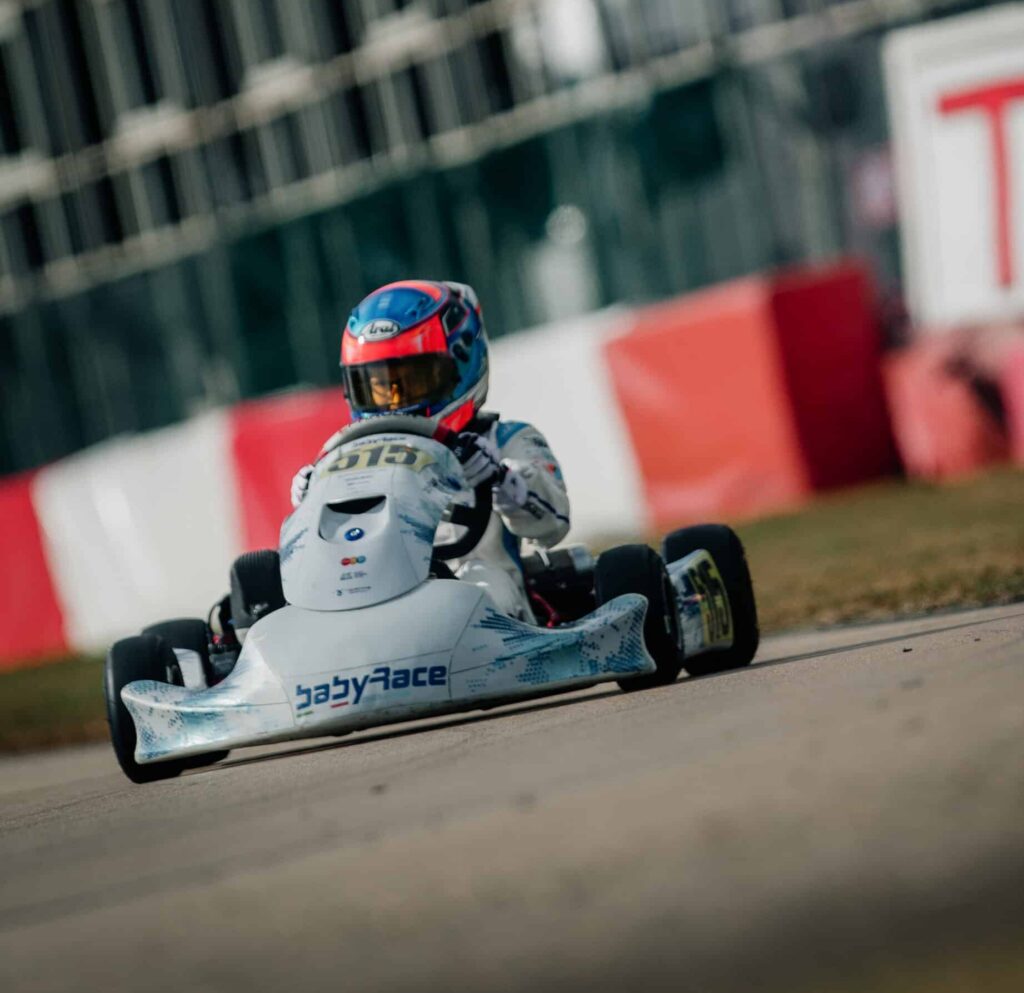
- Sliding is only beneficial in specific conditions, warming up cold tires, pushing in winter conditions, or inducing rotation when needed
- The worst ways to slide are missing the line, being too abrupt with steering, and being too aggressive with the pedals
- Most drivers mistake excessive sliding for speed, but it actually costs lap time by keeping you outside the traction circle
- In hot, grippy conditions with soft tires, sliding will overheat your tires and make everything worse
- Smooth inputs and the correct racing line should be your foundation, sliding should be intentional, not accidental
You may think that you’re fast when sliding the kart around, almost like in a drifting state, but the reality is that if you’re sliding in a way that is too much, you’re definitely going to be leaving lap time on the table.
Now let me explain: you could be sliding because you’re pushing to the limit, all right? And you should be constantly on the limit of sliding and having a slightly bit of sliding. But when you are sliding too much, there are many reasons for it.
One of the reasons could be you are missing the line. When you’re missing the line, let’s say this is the corner and this is the ideal line, you’re just missing the turning point. You’re going off the grip, and of course, you’re going to be sliding. But that’s a bad way of sliding. That’s negative sliding.
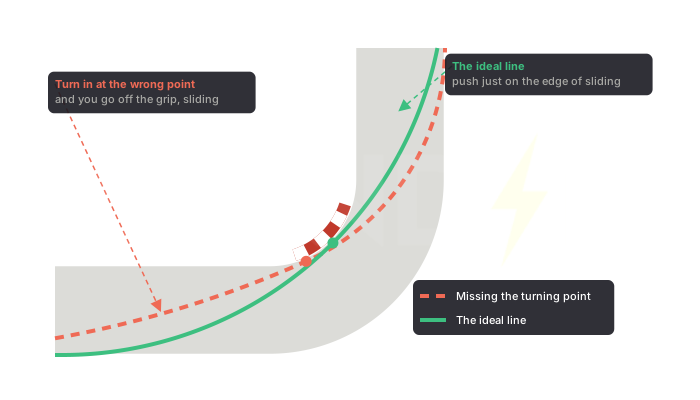
So let me define this for you. There are actually two separate ways of sliding, good and bad. This distinction is important because sliding is most of the time a mistake, but it can also be a strategic tool.
Good Sliding vs Bad Sliding
Bad sliding falls into a few clear categories:
- Wrong line, If you miss the optimal grip level, you have sub-optimal grip and not enough speed. You make more meters, lose speed because you’re sliding, and it makes your lap time worse.
- Too abrupt with steering, If you’re going into a corner and instead of using a tiny bit of steering input, you use too much, you’re going to slide. If you’re steering too much for what the grip level allows, you’re going past the tire slip angle and the traction circle. This is usually your mistake, not the kart’s.
- Too aggressive with pedals, Being abrupt on the brakes or accelerator, especially in fast corners, will cause unnecessary sliding and lap time loss.
When you understand the traction circle, this all makes sense. The traction circle represents the maximum grip available from your tire. If you exceed it, by turning too aggressively, braking too hard, or accelerating too abruptly, you slide and lose grip.
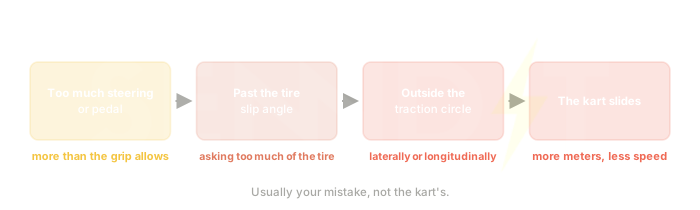
When you go outside the traction circle, you lose grip because you’re asking too much from the tire. The tire has a certain amount of grip available, and if you ask more than that, the car will slide.
So we have three major reasons for bad sliding. But there’s more to this story, because sliding isn’t always bad.
Warming Up the Tires
One of the good ways to slide is when you’re trying to warm up the tires. You need to warm up the tires, and you gotta be sliding. The only way to warm up the tires is to slide the tires. If you drive under the limit, you will not warm up the tires.
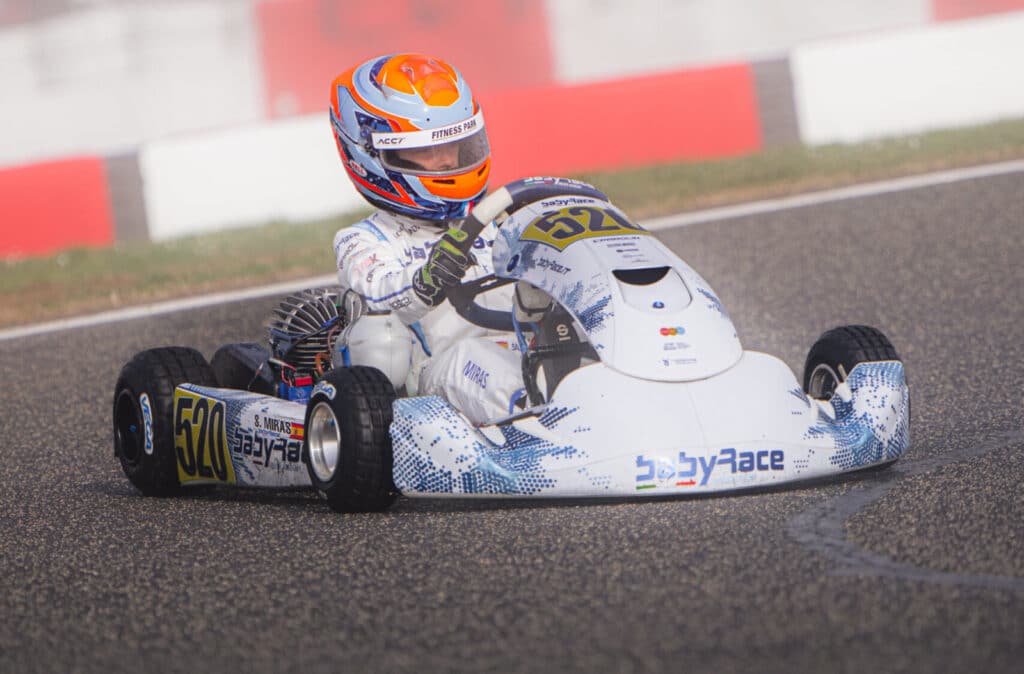
Why does this work? Because when you’re warming up the tires, you’re putting in hard steering inputs, braking hard, and accelerating while turning. You’re stressing the tire and pushing beyond the traction circle intentionally. This creates heat in the tire, which is exactly what you want.
When the tires are up to temperature, you should be driving clean so that you’re not sliding. But during warm-up, sliding is a strategic tool.
Pushing in Cold Conditions
Another good reason to slide is when you’re pushing in cold conditions with hard tires.
If you’re driving in the winter, say December in the UK, with hard tires like Maxxis or MGS or Comets, it’s going to be very hard to generate any grip. The only way for you to generate grip is to push more, slide the tires, and go beyond the traction circle. And that’s going to be a good way of sliding because it allows you to warm up the cold tires.
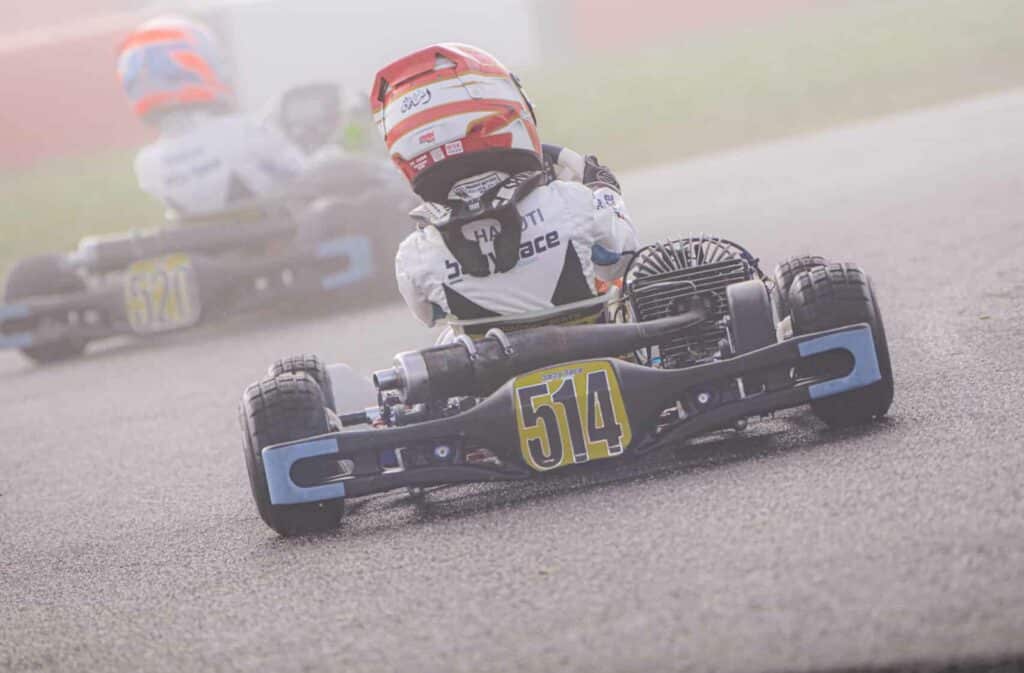
In cold conditions with hard tires, sliding is one of your best tools. You have to slide the kart around to build temperature. It’s the opposite of hot, grippy conditions.
But here’s the worst way of sliding: just missing the line and going completely off. That’s the absolute worst. The second worst is being too dirty on the steering. These destroy your lap time by keeping you on the wrong part of the track.
Inducing Rotation
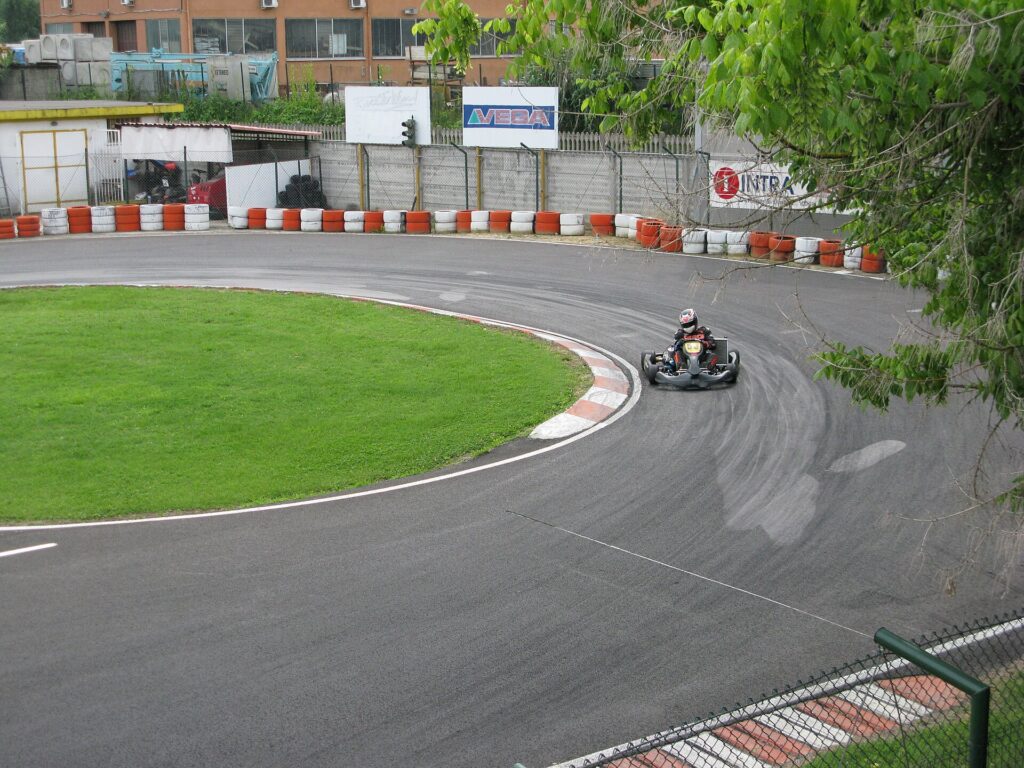
Another way of sliding that’s actually good is when you have a little bit too much grip in the rear and you want to make the rear slide a bit so that it’s less stuck. I call this inducing rotation.
You’re going to get more rotation from the kart, and more rotation means a little bit more rear sliding. This is especially useful in the wet sometimes.
It’s very important that the driver understands when he needs to induce rotation, so that he’s able to make the kart turn a bit earlier and rotate a bit earlier. If it takes you so long to rotate the kart waiting, waiting, you can instead carry more speed, use the brakes a bit more on the entry, carry a bit more speed, and use a little bit of a turning input to get the kart to rotate a pump, and that makes the rear slide a bit. That’s positive sliding.
But again, the three worst ones are:
- Wrong line
- Dirty steering and pedals
- Going outside of the traction circle
The Dangers of Hot and Grippy Conditions
There’s another very bad way of sliding: when it’s hot and grippy. You don’t want to slide in these conditions. It’s the opposite of cold conditions.
When you have hot conditions, a grippy circuit, and soft tires, and you’re over-pushing, you’re going to overheat the tires for sure. If the target temperature is here, over-pushing will slide, slide, slide, slide, slide, and overheat the tires. All of this extra sliding is because you’re overheating the tires and going outside the traction circle.
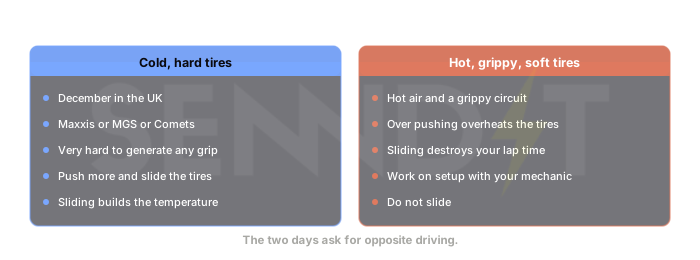
In hot, grippy conditions with soft tires, sliding will overheat your tires and destroy your lap time. Instead, work with your mechanic on setup to get optimal balance without needing to slide.
The Truth About Sliding and Speed
Sliding can be used as a tool. It can be used in a clever way to find lap time and win races. During the formation lap or during qualifying, you should be warming up the tires by sliding the kart around. During the race, you should still be driving smoothly while sliding intentionally when needed.
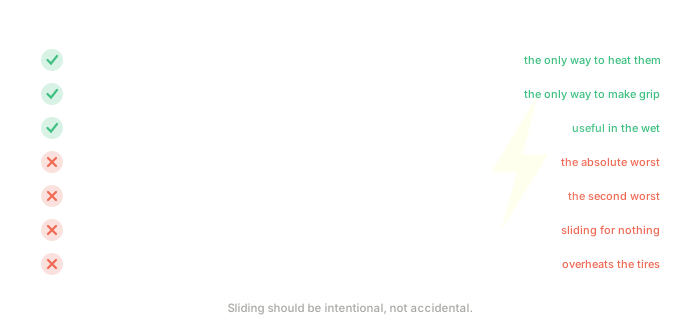
When you’re driving in December or January, you have to slide the kart around, but in a good way, by pushing in cold and hard tire conditions, not by making the wrong line.
Another good way to make it slide is inducing rotation. Of course, it’s better when it’s cold and slippery with hard tires. When it’s hot, you still might do that, but in that case, I would prefer not to do too much, because if you use rotation with sliding, you’re going to create maybe a little bit too much temperature in the rears.
The absolute worst way of sliding is when you are having the wrong line. If you’re just missing the turning point or being too dirty with the steering wheel, turning too aggressively, braking too aggressively, of course, you’re going to be sliding the rear. And it’s not going to be the kart’s fault. It’s going to be your fault.
In those cases, you just have to be a lot smoother. When you go too dirty either with the steering wheel or pedals, you’re basically going beyond the traction circle either laterally or longitudinally.
Just keep this in the back of your mind: sliding can be good in many cases, but most of the time it’s bad in ideal grip conditions. In hot, grippy conditions with soft tires, you are making the kart slide too much, and that is bad overall.
The absolute worst thing is the wrong line, which is what 90% of drivers do until they become race winners. Even when they’re becoming race winners, it’s the most likely thing. You’re pushing too much in a corner, you miss the line a bit, and you’re sliding.
You may feel like you’re fast because you’re sliding. You feel like you’re on the limit. But here’s the truth: if you think everything is under control, you’re not going fast enough. However, that doesn’t mean you should be sliding like an idiot by just missing the lines and then feeling fast because you’re counter-steering all the time. That’s not the way to drive.
You should be pushing on the racing line, a little bit on the edge of sliding, but you shouldn’t be sliding all the time because of the wrong line or very bad steering or pedal inputs.
Send your onboard footage. Alessio reviews it corner-by-corner and tells you exactly what's costing you time, and how to fix it. Back within 48 hours.
Get My Onboard Reviewed → Reviewed personally by a CIK FIA World Champion, never an assistant.I promise I'll not spam you with repurposed shitty AI content but real experiences that only I, Alessio Lorandi, experienced. Written in my funny English-Italian tone of voice 😂
Alessio Lorandi is the former CIK FIA World Junior Champion, winning against Lando Norris in 2013 & F3 multiple race winner. He's helped 200+ karting drivers worldwide get faster & win WSK titles with BabyRace Driver Academy & now through Senndit, his online karting coaching platform.