Understanding Weight Transfer In Karting
Master weight transfer and unlock instant grip gains. Here's what separates quick drivers from the rest.

- Weight transfer affects tire grip – too much or too little weight reduces performance
- You can use your body position to control weight distribution and kart rotation
- Seat stiffness changes weight transfer characteristics – softer seats create more movement
- Smooth but strong inputs are key to managing weight transfer effectively
- Understanding weight transfer improves braking, steering, and overall kart control
- This is fundamental kart control you can feel and improve from day one
Alright, let’s talk about something that most beginner drivers overlook, but it’s absolutely crucial in karting: weight transfer.
This is one of those things that, once you get it, completely changes how you drive and how you approach corners.
You’ll start braking better, steering smoother, accelerating more aggressively… all by using the weight of your kart (and your body) the right way.
Let me break it down for you.
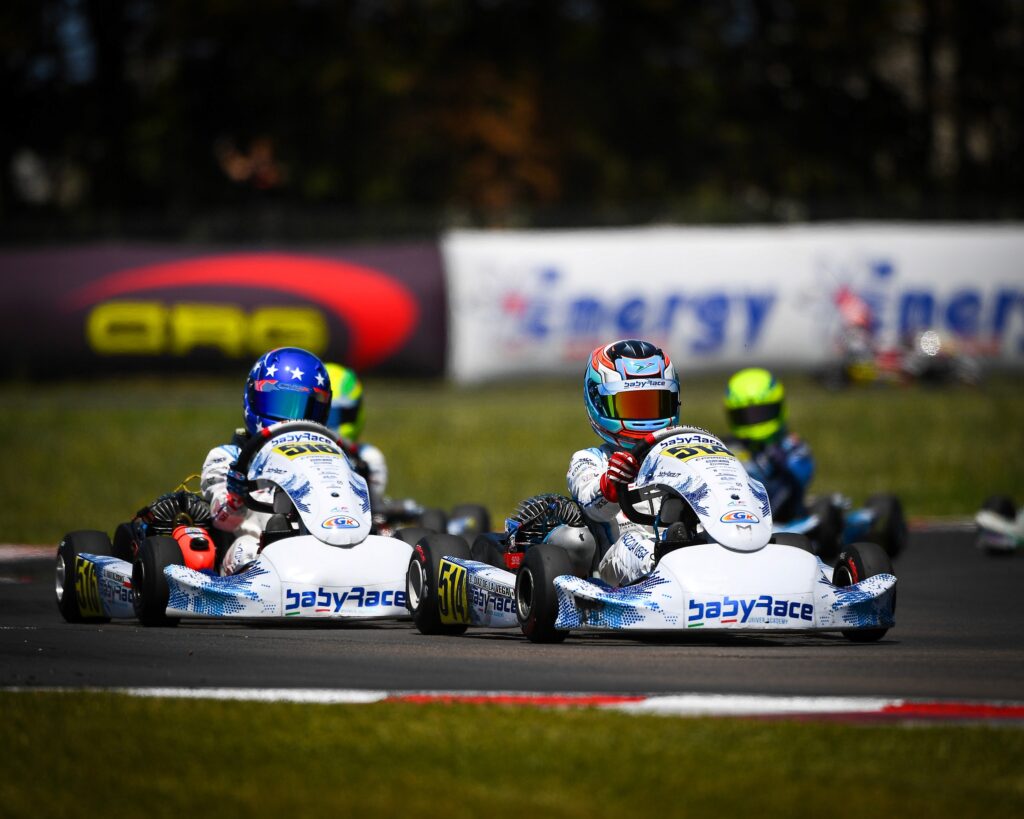
What Even Is Weight Transfer?
So let’s start by stating this: when you accelerate, brake, or turn, the weight of your kart shifts around.
Simple, right?
But here’s the thing: how that weight moves affects how much grip your tyres have.
If you overload a tire with too much weight, it’ll struggle. If there’s not enough weight, it won’t grip properly either.
The trick is finding that sweet spot. And that’s where experience comes into place.
Your Body Plays a Big Role
Now here’s something many drivers don’t realize, you can use your body to help control weight transfer but it doesn’t mean you should overly obsess about it.
It’s just good for you to know some of these things, to then be more aware of what’s happening on track and how you can affect the balance of your kart:
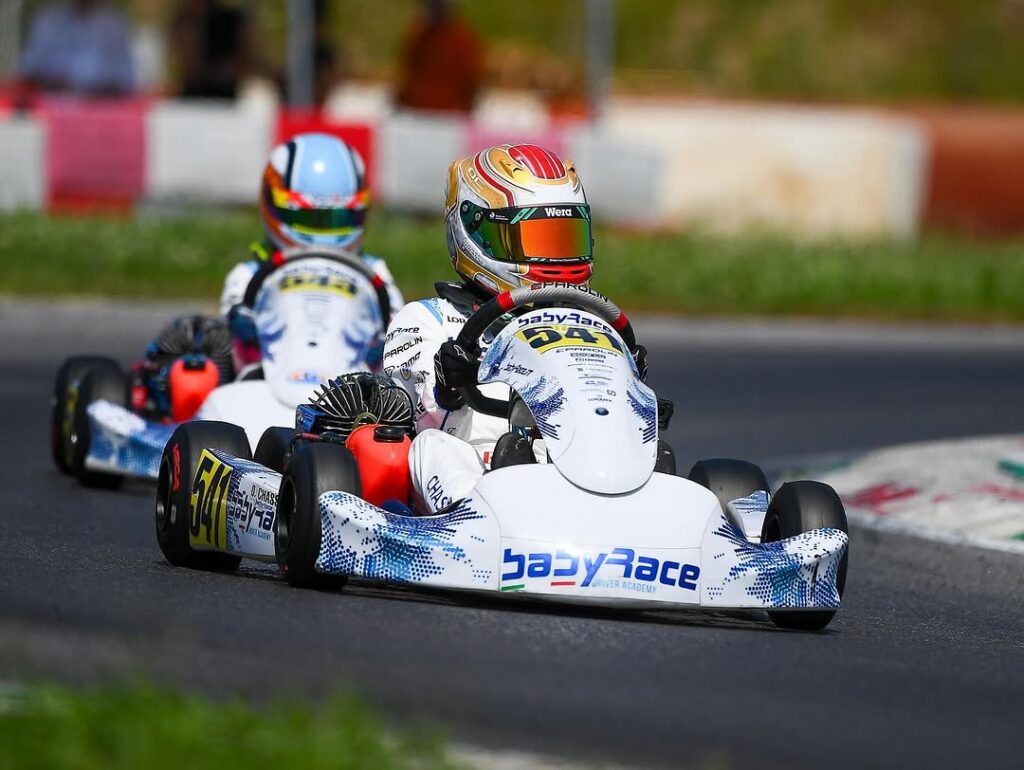
- Moving your body “outside” the corner will give more weight to the outside wheels, thus making the inner rear tire lift up a bit, thus generating more rotation.
- Moving your body “inside” the corner (kind of like “watching the apex” style or the “moto gp” driving style) will reduce the weight transfer to the outside, thus gripping up the rear more, so having more rear stability. Sometimes that causes lots of understeer when the track’s got lots of grip and the rear is already very strong. In that case it will become too strong and will thus not generate enough rotation needed to get good mid-exits.
- Aggressive braking or corner entry generates a lot of wight transfer to the front, thus increasing rotation.
- Soft braking and slow entries generally generate more understeer, with less wight transfer to the front and therefore less rotation.
These are the rule of thumbs you’ll want to know to grip the kart as well as you can.
Seat Stiffness Matters Too
An other important thing I learned over the years is that the stiffness of your seat changes the way weight moves.
- A softer seat lets the kart flex more, which gives you more weight transfer, thus making the kart more free on the rear.
- A stiffer seat will limit movement, making the kart more stable, but usually a little trickier to rotate.
Knowing when to use which seat setup is part of dialling in your kart properly.
It All Comes Down to Smooth, but Strong Inputs
When you’re braking, for example, you want to hit it hard, late, but controlled. Not sloppy.
The goal is to load the front tires just enough to bite into the track, without unsettling the whole kart causing excessive weight transfer to the front.
Same with turning, don’t just dirtily turn the wheel. Turn smoothly, use your body, and manage the balance of the kart through the corner.
Think About Weight Transfer in Every Session
Next time you’re on track, start asking yourself:
- Am I shifting the weight the right way during each phase of the corner?
- Am I giving too much or too little load to the tires?
- Can I help the kart rotate better with my body?
Trust me, this mindset shift alone will already make a huge difference in your lap times and overall consistency.
Final Thoughts
Weight transfer isn’t some advanced driving theory.
It’s a basic part of kart control that you can feel (and improve) from day one.
Once you start understanding how your inputs move the kart’s weight, your driving becomes more refined, more in control, and a lot quicker.
Just Senndit
, Alessio
Send your onboard footage. Alessio reviews it corner-by-corner and tells you exactly what's costing you time, and how to fix it. Back within 48 hours.
Get My Onboard Reviewed → Reviewed personally by a CIK FIA World Champion, never an assistant.I promise I'll not spam you with repurposed shitty AI content but real experiences that only I, Alessio Lorandi, experienced. Written in my funny English-Italian tone of voice 😂
Alessio Lorandi is the former CIK FIA World Junior Champion, winning against Lando Norris in 2013 & F3 multiple race winner. He's helped 200+ karting drivers worldwide get faster & win WSK titles with BabyRace Driver Academy & now through Senndit, his online karting coaching platform.