
Why Kart Drivers Crack Under Pressure (And How to Fix It)
Why kart drivers crack under pressure and how I fix it: confidence, underdriving, looking in the back, expectations, and what to tell yourself on t…

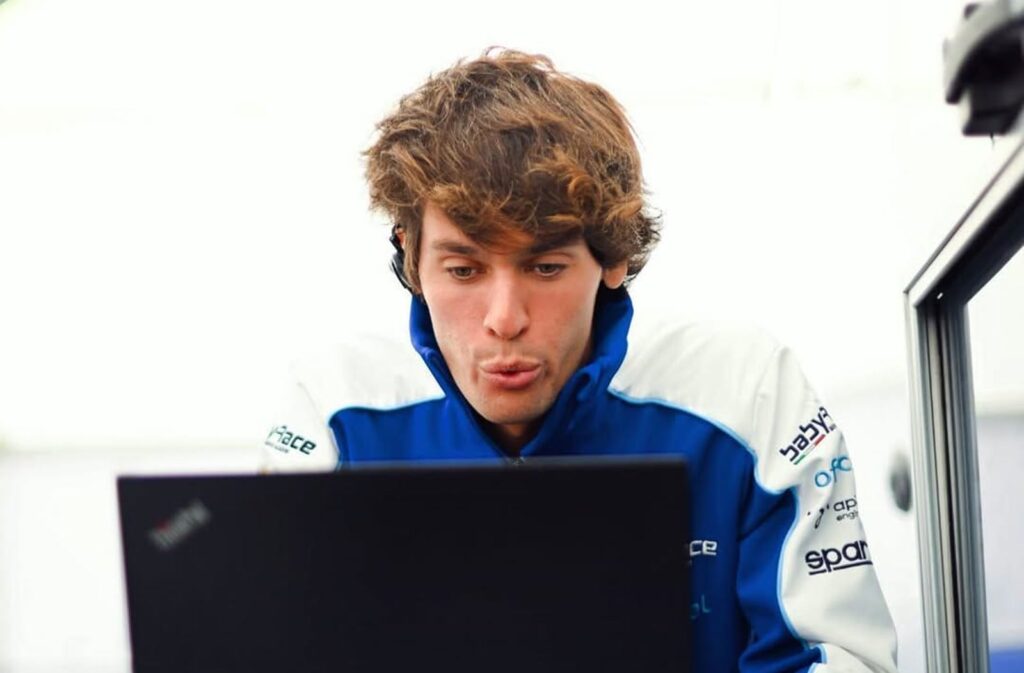
- Pressure comes from a lack of confidence. In yourself, in your kart, or in the people around you.
- Cracking is mostly underdriving. You drive conservatively to avoid the mistake, and that is the mistake.
- Two triggers do most of the damage. Looking in the back, and trying to compensate for a mistake in the next corner.
- Nobody is born with it. You train it by being in competition again and again.
- Expectations are your worst enemy. I never told myself “I’m going to win”. I told myself I was going to give everything.
- In the kart, think small. Next corner, next lap, and a big breath on the straight.
- Parents: “you need to win” is negative pressure. It sets expectations and it makes the results worse.
- Why do kart drivers crack under pressure?
- What does cracking under pressure look like on track?
- How much lap time does driving conservatively cost?
- What triggers the mistakes when you are under pressure?
- Are you born with nerves of steel, or do you build them?
- How do you prepare so the pressure is lower on race day?
- Why are expectations your worst enemy?
- What should you tell yourself before the race?
- What do you do in the kart when you feel the pressure?
- Can pressure make you drive better?
- What should parents say before a race?
- Frequently asked questions
Fast in practice, fast in qualifying, and then the final comes.
I see it a lot. A driver is quick all weekend, and then the pressure rises and he starts to struggle. It happens in WSK and in CIK-FIA races, but also in club races and even on training days. So why does it happen, and what can you do about it? Let me give you my take.
Why do kart drivers crack under pressure?
In my opinion the pressure comes from a lack of confidence. And it can be confidence in yourself, in your kart, or in the people around you, like your mechanic.
Let me give you an example. You start P1 in the final. But in the warm-up the kart felt a bit strange. Then you had a bad conversation with your mechanic. And on the pre-grid the drivers behind you looked quicker, and they looked confident.
So what happens? By lap two you are already looking in the back. You panic. And you crack.
Nothing changed in the kart between the pre-grid and lap two. The only thing that changed was in your head.
And listen, you need to have that confidence even when you don’t have the fastest package. Because once you leave the pre-grid you can’t change the kart anymore. Maybe the carburation, if you are in junior or senior. That’s it. So the only thing left to work on is your own driving.
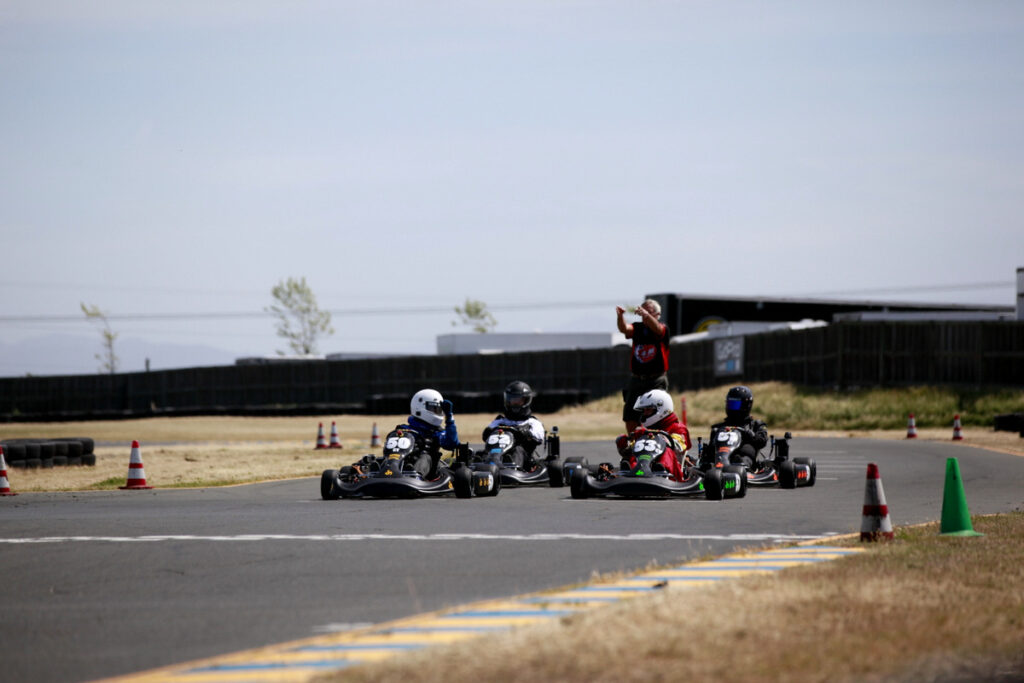
What does cracking under pressure look like on track?
Most of the time it doesn’t look like a crash. It looks like a driver who goes slower on purpose.
Take qualifying. You see the green light on the dash for two sectors in a row. And what do you do in the last sector? You drive it more conservatively. “I don’t want to screw up the good lap.” And you lose those vital 2 tenths right there. From a potential top 3 you end up outside the top 10.
And then you blame the chassis or the engine. But the lap before, your sector 3 was better. With the same equipment.
In the race it’s the same story. You are P1 and the pack is closing. So you start overpushing here, underpushing there, anxiously looking in the back, and defending on lap 8.
But if you were P2 with a gap to P3, chasing the leader, you would be relaxed. Same driver, same kart. So where is the difference? You are too results oriented. You get emotional, and you underdrive for the fear of failing.
By the way, I see this a lot in 60 Mini and Juniors. They get to the lead quite easily, and then with a few laps left they start driving worse. Missing apexes, braking too early, looking back. Seniors and shifter drivers are more used to it.
How much lap time does driving conservatively cost?
When the stakes are high we start driving conservatively to avoid making mistakes. But that same act is a mistake on its own. It’s an underpushing mistake.
Let me put some numbers on it. They are just an example, to explain the idea.
Say the track record is 46.5 and two drivers with equal karts are both driving at 99.5% of the limit. That’s a 46.733. Five laps to go, and the leader has a full second.
| Before | Last 5 laps | Lap time | |
|---|---|---|---|
| P1, driving conservatively | 99.5% | 99.2% | 46.733 to 46.875 |
| P2, nothing to lose | 99.5% | 99.8% | 46.733 to 46.593 |
That’s 0.282 seconds per lap between the two. Almost 3 tenths. So the full second is gone in 3.5 laps.
And in karting you don’t need to be on his bumper to send it down the inside. A tenth is enough. So after about 3.2 laps the driver in P2 can attempt the move. With 1.8 laps still to go.
I saw way too many races led with a comfortable gap being taken away in the last couple of laps like this.
And I was that driver in P2 several times. My first WSK Euro Series win, in 2012 at Val d’Argenton in France, came exactly like that. I was in KF3, chasing the leader after a poor start. With 2 laps to go the gap was about half a second. At the beginning of the last lap it was 2 tenths. And I sent it down the inside of turn 1.
Did he crack under pressure? I can’t exactly tell. But I, in P2, had nothing to lose. He, in P1, had everything to lose. And I’m pretty sure that if our roles were reversed, I probably would have ended up doing the same underpushing mistakes.
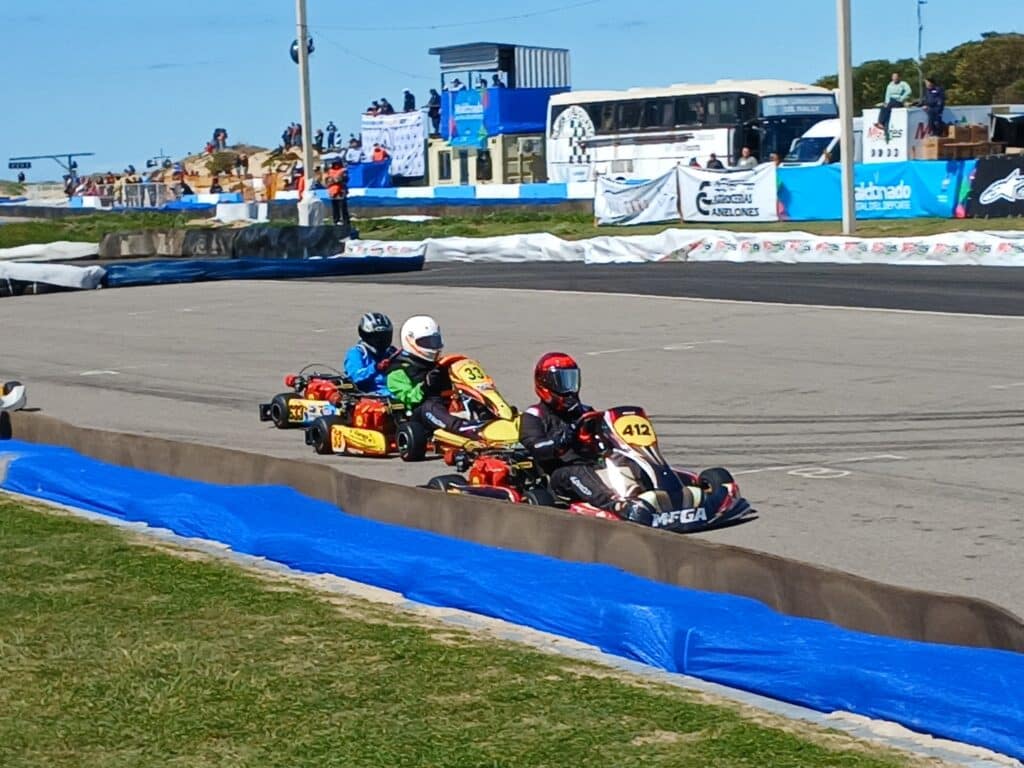
What triggers the mistakes when you are under pressure?
The major one is looking in the back.
Listen, I would rather have a driver being overtaken without looking in the back. Because the driver behind is always going to be there. Looking at him doesn’t make him go away. It only takes your focus off the track ahead.
Are there exceptions? Yes. The first lap. The last lap, sometimes the second last. Or right after you made a move for the lead and you have 3 or 4 drivers behind you. But if it’s lap 10 out of 20 and you are P7, do you start defending for P7? I go deeper on this in when you should and shouldn’t look in the back.
The second trigger is the mistake itself. You make a small mistake, and then you try to compensate for it in the next corner. And what happens? You make a bigger one.
And the two come together. You drop a wheel, you lose three tenths on the exit, and 99% of the drivers will immediately look in the back. Mistake plus looking back. That’s the big combo.
So when you make the mistake, note it, then park it. Nobody’s perfect. You still need to remember it, so that you can correct it the next lap. But you don’t try to get the time back in the next corner.
Are you born with nerves of steel, or do you build them?
I feel that you are not born with it. You train it.
It’s shaped by anything you are repeatedly doing and by what you surround yourself with. Take Max Verstappen. He was put in the situation of competing at a very young age, many times. So for a driver like that it becomes kind of second nature.
What you need is a competitive environment. I didn’t say a high pressure environment. That’s a different thing.
I mean, I was competing every day. On track, at school, in other sports, at home with my brother. We were racing each other on the F1 games on the PlayStation as well. So competing was normal for me well before a final.
And the same goes for rental karts. If a driver cracks under pressure on an indoor track, he’ll do the same on the real track. So you can train it there as well. I wrote more on this in how to become strong in the head.
How do you prepare so the pressure is lower on race day?
Preparation is connected to confidence. The more prepared you are, the more confident you are when you get in the kart.
Think about it. One driver has done the perfect lap a thousand times in his head, the evening before and the morning of qualifying. Another driver has done zero. Who is going to feel more pressure on the out lap?
Get yourself a steering wheel, close your eyes, put some headphones on, and visualize the perfect lap. Hundreds of times, thousands of times. I explain the full method in how visualization can improve your karting.
Then there is experience. It reduces the pressure massively. But what if you don’t have it? “I only did five races and the others did 30.” Okay. You can cry about it, or you can recover the missing laps.
How do you recover them?
- Testing days. More laps, simple as that.
- Races. It’s the only place where you train starts, formation laps and battles.
- Visualization. The laps you can’t afford on track, you do them in your head.
- Race videos. You watch them to recognise the patterns before they happen to you.
- A simulator, but not a karting one. I don’t suggest karting simulators at all. A formula or GT sim is better, for your visual skills and your reaction.
And on race day, have a routine. Breathing, music, noise cancelling headphones, some time on your own. I’m not going to repeat it all here because I already wrote it in 5 ways I get in the zone before racing and in how racing drivers train focus and concentration.
One thing I will add. Sometimes I like to distract myself. I juggle, I play ping pong, sometimes I even have the table with me. Have a laugh about it. And if you are feeling the tension of an important race, a joke with your mechanic 15 minutes before is a good thing.
Why are expectations your worst enemy?
Because results equal expectations. And when you don’t meet them, you get frustrated.
Let’s say you tell yourself “I’m going to win” before five races. And you don’t win even once. What happens the sixth time you say it on the grid? Your inner voice goes: “Sure, just like the other 5 times.” You are destroying your own confidence.
I see it with kids all the time. They say “I’m going to win”, they start P1, and they fall apart as soon as they lose one position. Because it was a promise to themselves, and now it’s broken.
And I was the same. I started as an average driver who was setting expectations, and I was not winning. At about 11 or 12 years old I tried going into a race with no expectations, almost like a lucky charm. The race went well. So I kept doing it. Was that a coincidence? I don’t know. But it worked for me.
The few times I told myself “I’m going to win” or “let’s get a podium” are the times I never achieved it. It happened mostly in single seaters, where the pressure to attract sponsors pushed me to set race targets and championship targets.
And there is another reason. You start P1, somebody runs you out in the first corner and you are down to P10. If you were fixated on the result, you sabotage yourself. You give up. If you were not, you just drive.
The fear of losing is a topic on its own, and I cover it in the 5 most popular karting fears.
What should you tell yourself before the race?
I used to tell myself this, in Italian: “Dai il massimo, guida il meglio che puoi e quello che viene, viene.”
Give your max, drive as well as you can, and what comes, comes.
I always really wanted to win. But I couldn’t tell myself “go and win”. Because if I didn’t win, I would feel like a failure. And many times you don’t win for reasons that have nothing to do with your driving. Engine performance, a technical issue, being taken out by another driver.
So I learned to separate the input from the outcome. Did I get a 10 out of 10 from the engine, from the chassis, from my driving? That’s my job. The result is a consequence.
I would also tell myself “it’s just another race” and “it won’t change anything to your career”. I would purposely set the bar very low.
And if you drove exceptionally and you finished P2, P3 or P4, be proud of it. Then you work on the kart afterwards.
What do you do in the kart when you feel the pressure?
You can’t meditate while you are driving. So what can you do?
First, think small. Do the next corner the best you can. Then the next lap the best you can. Not the chequered flag, not the trophy.
Second, breathe. A lot of drivers drive in apnea. It happens to myself as well. So before you go out, visualize that on the straights you take a proper big breath. Fresh oxygen, better decisions. Sports psychologists talk about cortisol, the stress hormone, and I leave the full explanation to how breathing exercises help drivers stay calm.
Third, drive as if it was a practice session. That’s the best way I figured out myself to deal with the pressure in the key moments of a race. Same lines, same braking points as the testing days.
And don’t check your teammates’ dash on the grid. That’s the recipe for disaster.
Can pressure make you drive better?
No. In my opinion that’s the wrong way of looking at it.
But pressure is part of the game. It’s inevitable. And if you feel it, you are probably fighting for something meaningful. A podium, a win, a championship. So it’s not a bad sign.
What you can do is take the expectations away. With no expectations the pressure goes almost down to zero. And the winning comes as a consequence.
What should parents say before a race?
Not “you need to win”. Not “you need a top three”. Not “see you on the podium”. That’s negative pressure. And it sets expectations, which is the worst thing your kid can have.
This results oriented mentality in Mini and Junior drivers is most often inherited from dad or mum. I see parents and coaches setting targets for a driver like quarterly business goals. I understand it. Maybe you want to impress a team or attract a sponsor. But putting the pressure on the driver only makes the results worse in the long run.
And your kid must never feel that he has to earn your love with results. Especially between 8 and 12 years old.
So what do you do instead? Give him the tools. A good team, good people around him. Build an environment of competition. He needs to know that his future in racing depends on his results. But he doesn’t need you to remind him on the pre-grid.
And if you are the driver, and your parents tell you “you need to win”? Answer this: “I’m gonna do my best.”
- All my guides on the mental side are in the mindset hub.
- Want to see where you underdrive when it counts? Send me your race onboard for an onboard review.
- If you want me to work with you for a full season, look at the 6 months transformation.
So at your next race, try it. No target for the result. Tell yourself “I’m gonna give everything I have”, drive the next corner the best you can, and take a big breath on the straight. What comes, comes.
Frequently asked questions
Why am I fast in practice but slow in the final?
Because in the final you become results oriented. You drive conservatively to avoid mistakes, and that is an underpushing mistake on its own. Drive the final like a practice session, with the same lines and the same braking points.
Should I look behind me when a driver is catching me?
Most of the time, no. He is always going to be there, and looking only takes your focus off the track ahead. The exceptions are the first lap, the last lap, sometimes the second last, or right after a move for the lead.
Is handling pressure a talent or can I train it?
I feel you are not born with it. You train it by putting yourself in competition again and again. On track, in rental karts, in other sports, even at home.
What should I say to myself on the grid?
Never “I’m going to win”. I told myself: give your max, drive as well as you can, and what comes, comes. And also: it’s just another race.
My kid gets nervous when I talk to him before the race. What should I do?
Don’t give him a target for the result. “You need to win” or “you need a top three” is negative pressure and it sets expectations. Give him the tools and a good team, and let him drive.
Send your onboard footage. Alessio reviews it corner-by-corner and tells you exactly what's costing you time, and how to fix it. Back within 48 hours.
Get My Onboard Reviewed → Reviewed personally by a CIK FIA World Champion, never an assistant.I promise I'll not spam you with repurposed shitty AI content but real experiences that only I, Alessio Lorandi, experienced. Written in my funny English-Italian tone of voice 😂
Alessio Lorandi is the former CIK FIA World Junior Champion, winning against Lando Norris in 2013 & F3 multiple race winner. He's helped 200+ karting drivers worldwide get faster & win WSK titles with BabyRace Driver Academy & now through Senndit, his online karting coaching platform.