Go Kart Tips for Beginners: 9 Things to Do Your First Time
Nine go kart tips for your first time, from the mistakes beginners make: lines too tight, braking early and soft, too much steering, drifting. Plus…

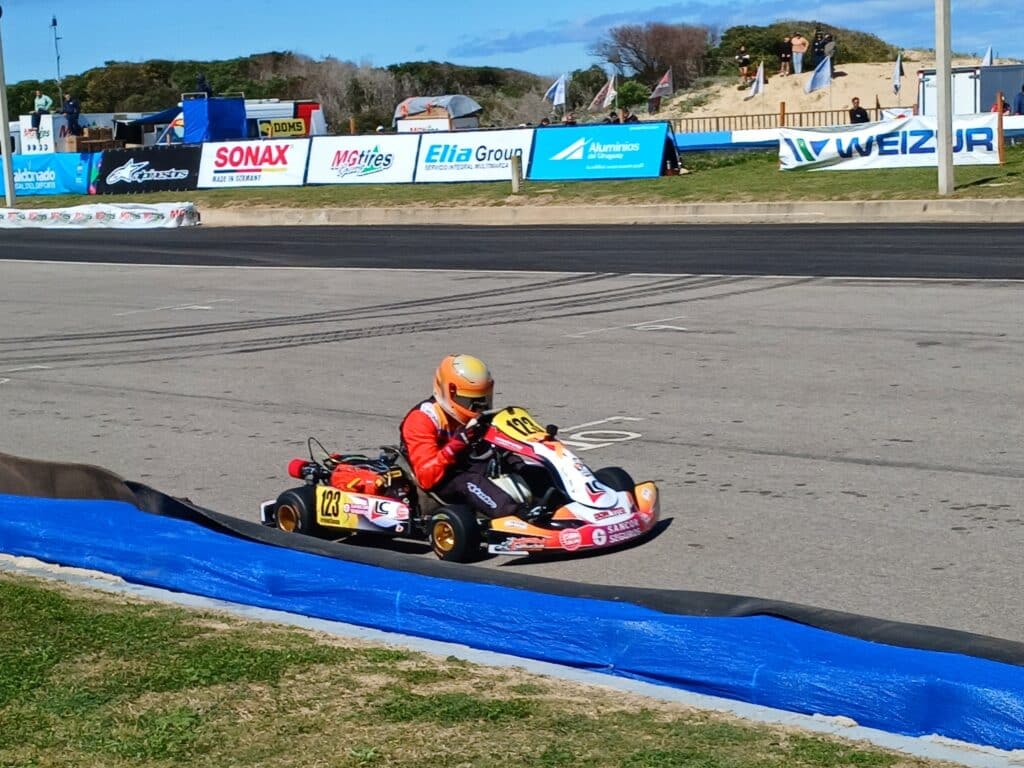
- Take it step by step. Most kids start too fast and they get scared.
- Open up your lines. Corners taken too tight give you lower minimum speeds.
- Brake late and hard. Beginners brake early and soft, and the early apex comes from there.
- Smooth is fast. A kart’s steer ratio is 1 to 1. A road car is about 12 to 1, or even 15 to 1.
- Don’t drift. It may feel fast but it’s not fast.
- Look further up the track. Most drivers at the beginning look almost at the ground right in front of them.
- Drive once a week if you can. In rental karts, if the others drive once a month, you’re already going to get better.
- How do you drive a go kart for the first time?
- What should you know before your first go kart session?
- What is the right line through a corner in a go kart?
- How do you brake in a go kart and get faster every lap?
- Why is smooth fast in a go kart?
- Should you drift a go kart?
- Where should you look when you drive a go kart?
- Is it enough to just do a lot of laps?
- What should you think about while you drive a go kart?
- How long does it take to get good at go karting?
- How do you know you’re improving at go karting?
- Are indoor go karting tips any different?
- When are you ready for your first go kart race?
- Frequently asked questions
If it’s your first time in a go kart, you’re going to feel slow. That’s normal. Nobody’s fast on their first day.
I have 20 plus years of experience in karts, and these are the nine tips I would give you before you go out. Most of them come from the mistakes beginners make. After the nine tips I answer the other questions I get: how long it takes, indoor karting, and when to do your first race.
There’s a video version too.
How do you drive a go kart for the first time?
Tip 1: take it step by step. And I mean it.
Most kids start too fast and they get scared. If you take it step by step, it’s going to give you much more confidence down the road.
Why is it so hard at the start? The speed sensation. That is the hardest skill at the beginning. We’re not designed to drive at 150 kilometers per hour on a four-wheel machine that weighs only 145 kilos in total. And in a kart you sit about two centimeters above the track, which makes the speed perception really high.
A rental kart is a lot slower than that. At South Garda Karting in Lonato, a 1,200 meter track, we normally do a 46 or 47 second lap with senior or junior karts. A rental kart at Lonato would be at least 20 seconds slower. Juniors and seniors reach 135 to 140 kilometers an hour at South Garda. Rental karts, I believe, reach up to 75.
But on your first day, 75 is plenty.
So for sure you will deal with spins. You will deal with off-track excursions. At the beginning it may feel a bit traumatic and you’ll be like, whoa, why am I slow? It’s fine. Step by step.
What should you know before your first go kart session?
Tip 2: study the track before you drive it. Look at the layout. Listen to the briefing. Know where the pit exit and the pit entry are. If you can, watch an onboard video of that track before you go.
Then the controls. Brake on the left foot, throttle on the right foot, steering with your hands.
What about gear? With a rental kart you don’t need anything. They provide it all for you. With your own kart you need a helmet, a rib protector, gloves, race boots and a race suit. If you’re buying, start with how to choose your first helmet.
And learn the flags before you go out. Here is the list of go kart flags and what they mean.
By the way, I would start with rental karts. They’re cheaper. They’re safer, with protections on the sides, the front and the rear. And the speed is low, so you can test the limits. I go through the whole path in how to start karting step by step. If it’s your kid who is starting, read is karting safe for kids first.
What is the right line through a corner in a go kart?
Tip 3: open up your lines.
The first thing you need to master is the racing line. There’s no way you can be fast if your racing line is wrong.
And the first beginner mistake is not opening up the lines. Making the corners too tight. That results in lower minimum speeds.
So use the track. Try widening your corner entries and exits, while making the apex at mid corner.
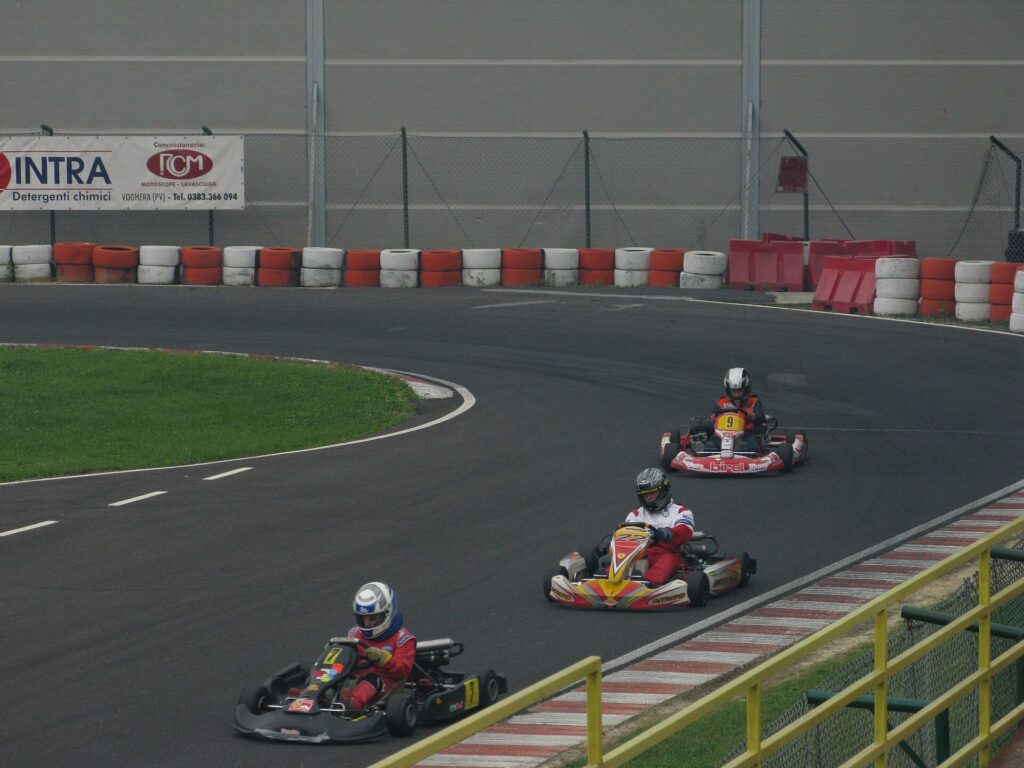
Why do beginners turn in too early? Normally because they are braking early. When you brake, at some point you feel like you have to start turning. It’s an automatism. So you brake early, you turn early, and you end up with an early apex without wanting one.
There’s more on this in mastering the racing line. But first you have to fix the brakes.
How do you brake in a go kart and get faster every lap?
Tip 4: brake late and hard. Beginners brake early and soft. You want the opposite.
You don’t get there in one lap. Each lap, try to push a little more. Brake a bit later, get closer to that apex, accelerate a bit earlier.
A rental kart is a good place to do it, because you’re not losing much speed. For a hairpin you may go from 50 kilometers an hour to 35, and you brake for 10 or 15 meters. In a racing kart you may go from 130 all the way down to 50.
And if you spin on the brakes? Actually you should be happy. It means you are really braking hard. The problem normally is the steering. You brake hard, you hear the tires locking, you panic and you turn the wheel. That’s what makes you spin. So brake straight.
The other beginner mistake is going on the throttle too late. Later on you can also go on it too early, and I explain why going on the gas too early is bad. For the brakes, read how to fix your early braking. And when braking in a straight line is easy for you, the next step is trail braking.
Why is smooth fast in a go kart?
Tip 5: smooth is fast. It’s the golden rule of karting. Stamp it, print it, tattoo it on your arm.
Here is why. The steer ratio of a go kart is one to one. One degree of steering input equals one degree of wheel turn. A road car is about 12 to 1, or even 15 to 1.
So adults who drive a road car every day get in a kart and think they should turn the wheel as much. And they overreact. The steering is very sensitive, so you have to use very little steering input. Kids adapt earlier. They’re more plastic.
One thing to try. Push with your outside hand rather than pulling with your inside hand. In a right hander, that is your left hand. When I re-watch the videos, you can tell the fastest drivers are pushing with the outside hand.
But smooth doesn’t mean soft. Karting is all about being smooth while aggressive at the same time. If you’re smooth but not aggressive, you’ll be slow. And if you’re aggressive without being smooth, you’ll be all over the place.
I go deeper in smooth is fast and in smooth steering and throttle inputs.
Should you drift a go kart?
Tip 6: don’t drift. Drifting may sound fast, it may feel fast, but it’s not fast.
It happens indoors, because the grip level is low and you may have to slide sometimes. There’s nothing wrong with sliding a bit. But you don’t want to drift at all, because that’s not the way to go fast.
Same with the hands. Being overly aggressive with the steering wheel is on the same list of beginner mistakes. See tip 5.
Where should you look when you drive a go kart?
Tip 7: look further up the track.
Most drivers at the beginning look too close. Almost at the ground right in front of them. Lift up your eyes and your head and look at what is happening further up ahead. That’s very good for avoiding crashes, and it’s very good for lap times too.
How do I know they do it? I watch my drivers’ onboard videos all the time. I like to put an Insta360 Go camera on the helmet, and from the way the camera gets tilted I can spot whether a driver is looking far enough ahead. When he’s not, I tell him immediately.
It’s not easy to fix, to be honest, because drivers do it by instinct. But it’s a common bad habit at the beginning, so start working on it from day one. There’s more in want to stop crashing in karting, try this.
Is it enough to just do a lot of laps?
Tip 8: do the laps, but with a plan.
You need laps. Laps and laps and laps. As in any sport, that’s how you build the myelin around your nervous system. You build a muscle memory, and that is what makes you drive subconsciously.
But it’s easy to do lots of laps. If you do lots of laps and learn the bad habits, it’s actually going to hurt you. Driving casually, without a specific plan, is what slows your progress down.
So watch yourself. For drivers starting today, in 2026, I would say watch your onboard. A GoPro or an Insta360 will do. And ideally get coached by somebody who can explain the right techniques, so you build the good habits and not the bad ones.
I wrote about how to make the most out of practice days and how to correct bad driving habits. And if you want me to watch your onboard, that is what an onboard review is.
What should you think about while you drive a go kart?
Tip 9: one thing at a time.
Focus on one thing at a time. Maybe today you work on your braking points. Tomorrow, your corner exits.
The rest has to become subconscious, and that only comes with the laps from tip 8.
People also ask me about simulators. For karting, I think sim racing is not there yet, and it can make things worse. A GT or formula sim is ok for your reaction times.
Later, when you have a data logger on the kart, start with how telemetry can make you a better driver.
How long does it take to get good at go karting?
Longer than a weekend. But the start is the quick part.
The first day you may improve like three seconds. The second day, two seconds. Then one second, then half a second. It’s a logarithmic curve.
I think talent is overrated. What counts is the laps. A testing day of 150 laps is about two hours of driving. After a thousand hours, so about 500 days of two hours a day, you already get really good.
In rental karts you don’t need that. You can get good just by driving once or twice a week. If the others are driving once a month and you drive once a week, you’re already going to get better.
The long answers are in how long does it take to get good at karting and is karting hard to learn.
How do you know you’re improving at go karting?
Compare yourself with yourself. The fast guy at your track is the wrong ruler.
Why? Some drivers may have had 10,000 hours of driving. Others only 1,000 or 500. Take two twins with the same talent. One does 10,000 laps and the other does 100. The first one is going to be way faster.
And remember the curve. Three seconds the first day, half a second a few days later. When the gains get small, you’re just further along the curve.
If you started as an adult and this is on your mind, I wrote can adults start karting late for you.
Are indoor go karting tips any different?
A bit. The nine tips stay the same, but the track changes.
Indoor tracks are more slippery, but the grip is consistent. And they’re narrow. Maybe six or eight meters wide, where an outdoor track is 10 or 12. So using 20 or 30 centimeters more of the track makes more of a difference indoors.
The apex indoors is a wall and not a curb. Just like a street circuit. I raced Macau, I raced the Pau Grand Prix, I raced the Norisring, and those are the tracks that require the highest amount of precision from a driver.
That is why we as a team, Baby Race Driver Academy, do a lot of indoor rental karting sessions. Getting close to the walls makes you more precise for the real track as well.
Two more things. It’s harder to overtake indoors. And outdoor is more forgiving, because you end up on the grass and not in a wall. Most of the time you don’t get hurt indoors anyway.
The full comparison is in indoor karting vs outdoor karting.
When are you ready for your first go kart race?
When you drive without accidents, without spins, without major mistakes. And when you feel in control.
But you cannot wait to be perfect. Otherwise only the Max Verstappens and the Michael Schumachers of the world would race. And nobody won, probably, their first race weekend.
So when you feel ready, look for racing leagues nearby, either for rental karts or for your own kart. Before the first one, go through my first championship checklist.
What would I do if I was starting today? I would watch my onboard, train harder physically and get proper coaching. If you’re starting out, I’ve been where you are.
If you want that coaching from me, look at the 6 months transformation. And there’s more for first-timers in the beginner guides.
Just Senndit.
Frequently asked questions
What is the best tip for go karting beginners?
Take it step by step. Most kids start too fast and they get scared. Then open up your lines, brake late and hard, and stay smooth on the steering wheel.
Is go karting hard for beginners?
The hardest skill at the start is the speed sensation. The second is the feeling of being on the limit. Both come with laps.
Which foot do you brake with in a go kart?
The left. Brake on the left foot, throttle on the right foot, steering with your hands.
Do you need your own gear for your first time go karting?
Not with a rental kart. They provide it all for you. With your own kart you need a helmet, a rib protector, gloves, race boots and a race suit.
Is drifting faster in a go kart?
No. Drifting may feel fast but it’s not fast. Sliding a bit is fine, mostly on a low grip indoor track, but you don’t want to drift.
How often should a beginner go karting?
In rental karts, once or twice a week is enough to get good. If the others drive once a month and you drive once a week, you’re already going to get better.
Send your onboard footage. Alessio reviews it corner-by-corner and tells you exactly what's costing you time, and how to fix it. Back within 48 hours.
Get My Onboard Reviewed → Reviewed personally by a CIK FIA World Champion, never an assistant.I promise I'll not spam you with repurposed shitty AI content but real experiences that only I, Alessio Lorandi, experienced. Written in my funny English-Italian tone of voice 😂
Alessio Lorandi is the former CIK FIA World Junior Champion, winning against Lando Norris in 2013 & F3 multiple race winner. He's helped 200+ karting drivers worldwide get faster & win WSK titles with BabyRace Driver Academy & now through Senndit, his online karting coaching platform.