How To Master Weight Transfer in the Wet
Wet conditions demand weight transfer mastery, nail it, and you'll rotate the kart earlier and hit throttle sooner than your rivals.


- Weight transfer is the #1 skill to master for fast wet lap times – it helps lift the inside rear wheel and creates crucial rotation
- Wet conditions reduce grip dramatically, especially over rubber lines, making weight transfer even more critical
- Use your body weight by throwing yourself to the outside of corners, combined with precise steering inputs
- Too little weight transfer causes understeer and prevents early throttle application
- Too much weight transfer makes the rear unstable and uncontrollable
- Practice the technique stationary in the kart first, then apply it progressively on track
- Why is weight transfer more important in wet conditions?
- How does grip change when the track is wet?
- How do you increase weight transfer from your kart when driving in the wet?
- What happens if there’s not enough weight transfer in a corner?
- What happens if you have too much weight transfer in the wet?
- How can drivers practice this weight transfer skill?
Why is weight transfer more important in wet conditions?
If you wish to be fast in the wet, you’ll have to master the art of weight transfer. Yes, weight transfer is probably the number one thing you’ll have to master in the rain in order to set super fast lap times and ideally win races.
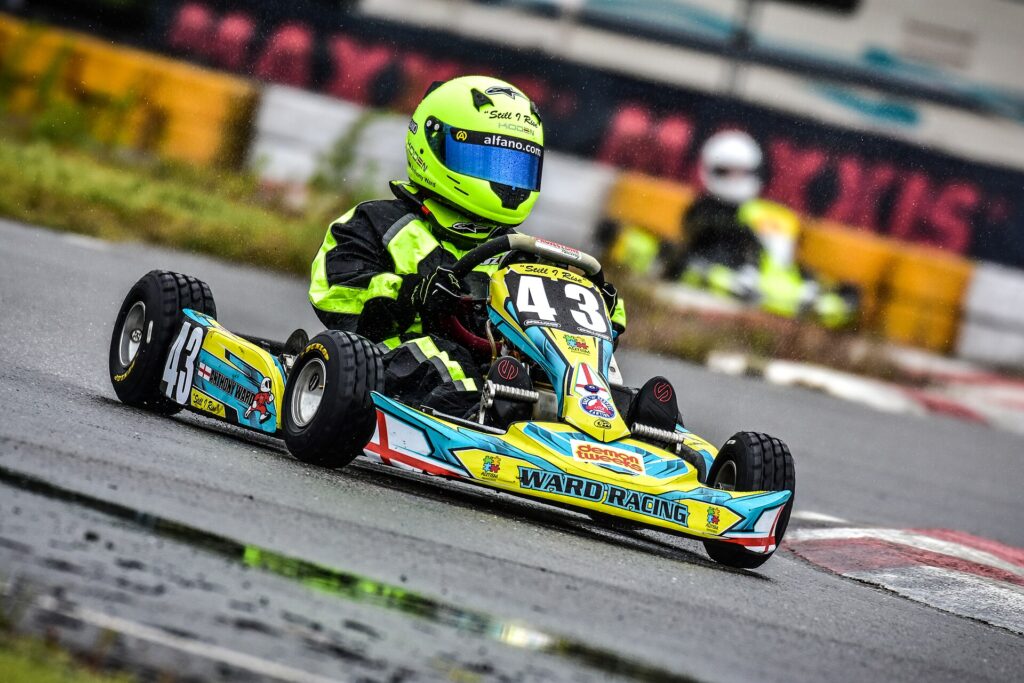
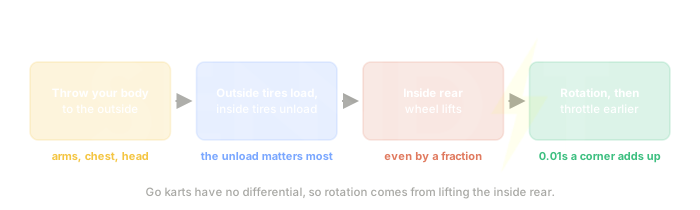
So why is weight transfer more important in wet conditions? Well, the reason is that in the wet you are essentially trying to get the kart to rotate as quickly as possible. In order to induce that rotation, and basically to lift up the inside rear wheel, which makes that kart rotate more, you need to shift the weight to the outside.
The whole point is that weight transfer allows you to shift the weight to the outside wheels, and that creates more load on those tires and unloads the inside tires.
Now, there are two styles of driving in the wet:
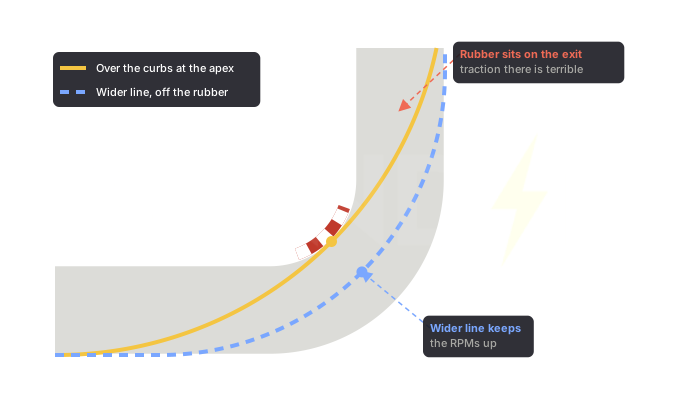
- Going over the curbs at the apex (especially for junior karts, seniors and KZ shifters)
- Taking wider lines to keep up the RPMs (normally for mini karts, but can work for bigger classes too)
It’s not really the extra load on the outside tires that matters most. It’s more the unload on the inside rear tire. You really want to lift up even by just a fraction, the inside rear wheel.
By doing so, you’re going to have a better rotation, which is crucial if you want to get on the throttle. If you have a very quick rotation and are able to gain just 0.01 of a second in every single corner compared to the other drivers in terms of rotation, that’s going to result in faster lap times.
How does grip change when the track is wet?
When you are driving in wet conditions, the friction coefficient reduces. Just by driving on any surface when there’s water, there’s always going to be less friction. With less friction, less grip comes.
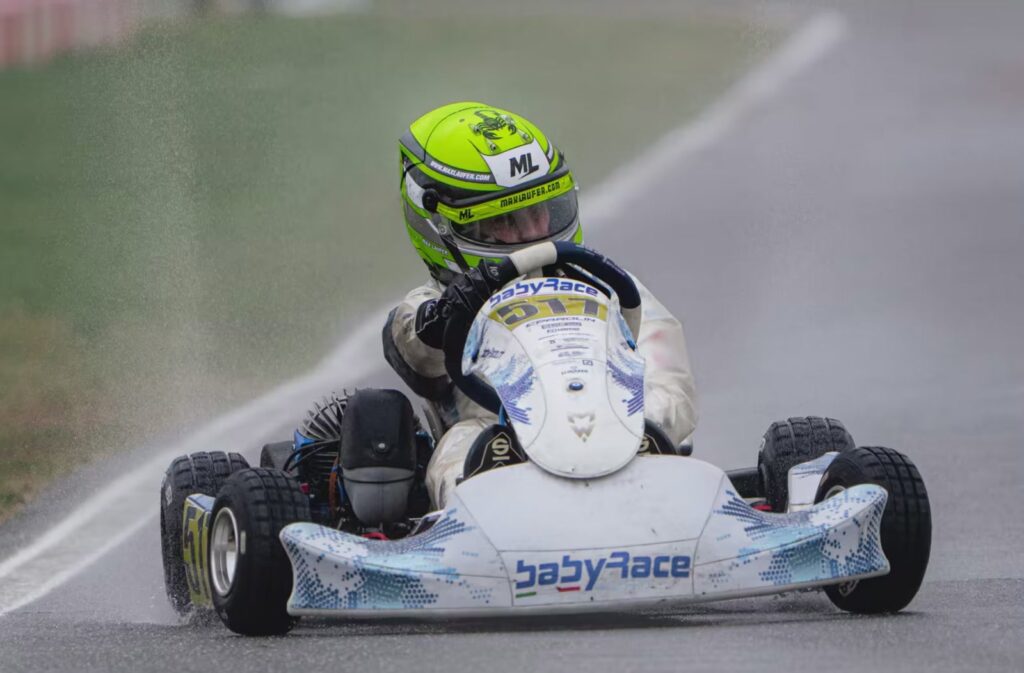
But the problem is worse when you drive over the rubber. The rubber that has been layered on track by the karts is going to be even more slippery. Those plastic chemicals that are the components of the tires create even more grip loss.
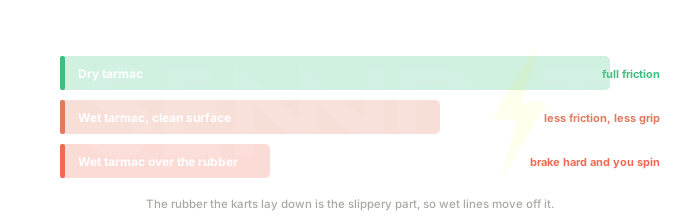
If you try to brake really hard in the wet onto the rubber, you’re going to slide and probably go straight or spin.
The friction coefficient will be less and it’s going to be very slippery when you drive over those parts. That’s why if you try to go full throttle over a place on the track where there’s so much rubber – for example, on the racing line on the exit where everybody’s going flat out – your traction is going to be terrible.
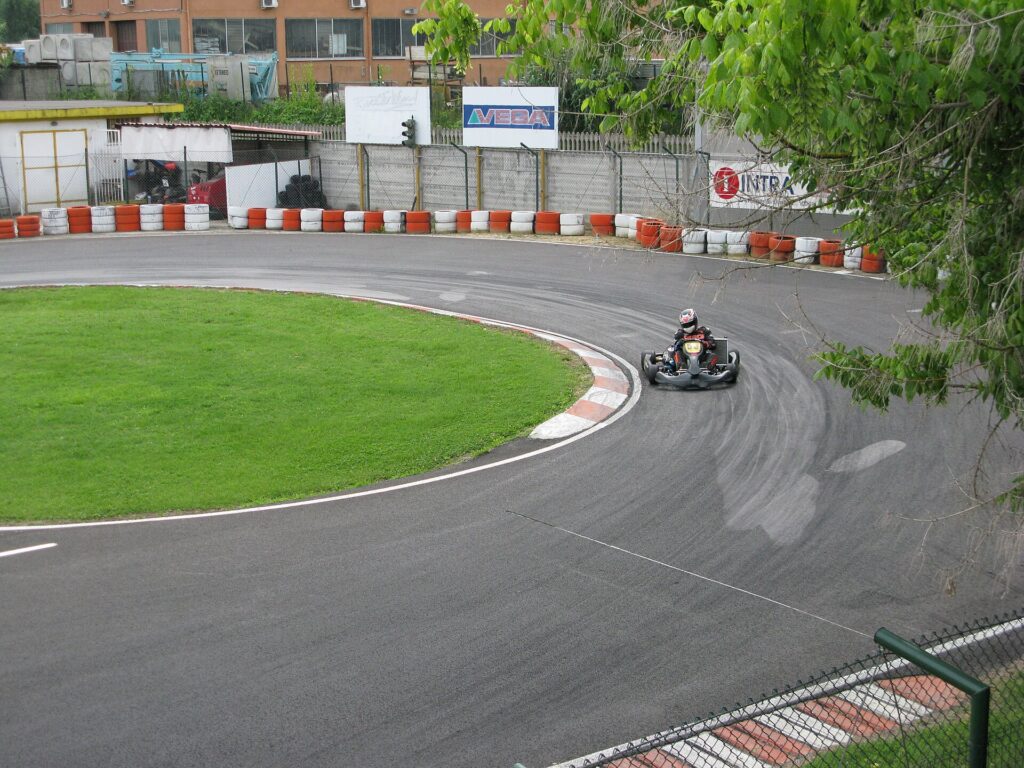
That’s why drivers try to take different lines. Otherwise, drivers wouldn’t be taking different lines at all. The grip change in the wet is dramatic, and drivers try to avoid as much as possible the rubber line.
How do you increase weight transfer from your kart when driving in the wet?
There are two major ways you can affect weight transfer with your driving.
Method 1: Using Your Body
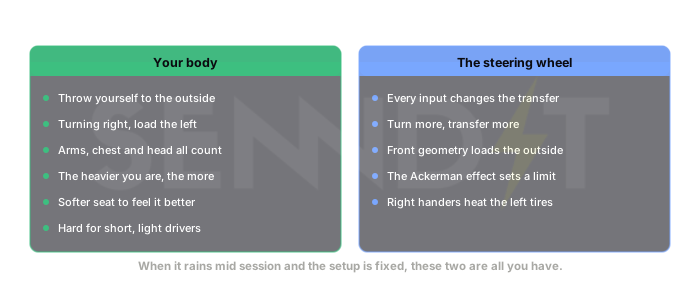
Obviously your body has certain weight, and the higher the weight, the heavier you are, the more weight transfer you’ll create. Just the simple movement of your arms, chest, or head is going to increase weight transfer automatically.
If you consciously want to increase the weight transfer, literally throw your body outside of the kart when going through a corner. For example, if you’re turning to the right, you’d have to load the kart on the left. How to load the kart on the left is by simply throwing your body outside, therefore loading on the left hand side.
In the wet you would normally run with a softer seat – loosening up the seat just simply to make it a bit softer so that it can feel the weight transfer better.
You always have to load on the outside. But that obviously depends on the setup. If you have a lot of understeer, you are going to do it more than if your kart has a lot of rotation.
Method 2: Using the Steering Wheel
The second way to affect weight transfer is through your hands and the steering wheel. Remember that anytime you turn the steering wheel, you are essentially changing the weight transfer. With the geometry of the front, when turning to the right, you will be loading the outside tires.
That’s why when you have predominantly clockwise right hander turns, you are going to load much more the left tires. Those tires are going to heat up way more than the right hand ones.
In the wet, if you feel like you need to get more rotation, and if you turn the wheels more, you’re going to increase the weight transfer until a certain amount. There’s a certain limit in the geometry and the Ackerman effect, but it’s very unlikely that you’re going to turn over the slip angle.
Go karts don’t have differentials, so you’re relying only on the rear axle. The goal is that the rear inside tire lifts up so that you generate rotation in the wet.
What happens if there’s not enough weight transfer in a corner?
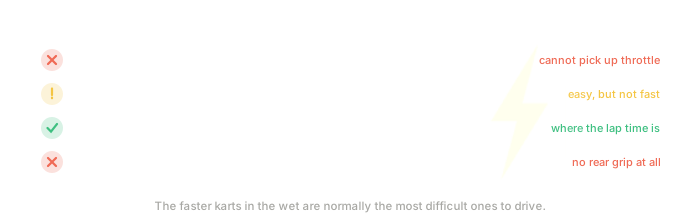
In the wet, if you’re not having enough weight transfer, you’re basically struggling with rotation. If your rotation is poor, you will have understeer. If you have understeer, you’re not going to be able to pick up the throttle, because you’ll still be turning the wheel.
The real goal is that the rotation in the mid corner must be really maximum in the wet, until the point when it becomes too much and gives you no rear grip at all.
You need to chase as much rotation as you possibly can. If you feel that you don’t have enough rotation, you have to think about the weight transfer:
- How to generate more weight transfer by tweaking the setup
- How to use more steering wheel if needed (until a certain threshold)
- How to use your body more effectively
For shorter drivers who are not able to induce a lot of weight transfer with their short height and low weight, the setup is critical. It’s very hard for them to create any weight transfer just by using their body size.
What happens if you have too much weight transfer in the wet?
You’ll notice that when you’re going through corners, the rear is just so unstable, it’s like going on its own, and you can’t really correct it.
Normally, I prefer to be on the high end of weight transfer, on the high end of rotation. But at the same time, I wouldn’t want to have too much that I can’t control it.
The best drivers, like Max Verstappen, are able to have a kart or car that has a lot of rotation, and that is always a fast kart.
If you want to have a lazy kart that is easy to drive, it’s easy to create that. But is that going to be fast? No. That’s why faster karts are normally the most difficult to drive ones.
I believe that the driver should not be moving too much when driving, because most of that should be coming from the setup. The driver should still push hard, but I feel that a faster kart in the wet is when the kart is almost rotating on its own, without having the driver having to do too much rotation.
How can drivers practice this weight transfer skill?
What I normally do with my drivers at BabyRace is asking them to get into the kart when in the tent, inside the kart, and try to practice that movement.
Here’s the practice routine:
- Turn to the right and push your body to the left
- Turn to the left and push your body to the right
- Feel how the kart flexes with your movements
- Watch how the inside tires move and lift
By doing so, they are going to start to have a feel for what it means. When you are on the ground, you can feel that the kart is flexing. You can see that the inside tires are lifting, not just moving.
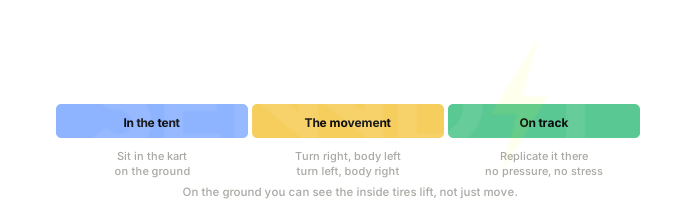
The number one way I ask drivers is to just try it first on the ground, get used to that, and then just replicate it when you’re on track, without pressure, without stress.
Weight transfer is a very important skill to master. But it’s not just about the driver inducing weight transfer – the kart setup has a big role too.
When you are out on track and it starts to rain, maybe you’re not able to change the setup that much. Then it’s really up to you to generate that weight transfer that you need to create the rotation.
The driver needs to always be able to compensate when the weight transfer from the kart is not enough. They need to always feel what’s the ideal weight transfer for any given moment. That is the skill that drivers need to develop – the ability to drive on the limit all the time, inducing the weight transfer at the right time and in the right way.
Send your onboard footage. Alessio reviews it corner-by-corner and tells you exactly what's costing you time, and how to fix it. Back within 48 hours.
Get My Onboard Reviewed → Reviewed personally by a CIK FIA World Champion, never an assistant.I promise I'll not spam you with repurposed shitty AI content but real experiences that only I, Alessio Lorandi, experienced. Written in my funny English-Italian tone of voice 😂
Alessio Lorandi is the former CIK FIA World Junior Champion, winning against Lando Norris in 2013 & F3 multiple race winner. He's helped 200+ karting drivers worldwide get faster & win WSK titles with BabyRace Driver Academy & now through Senndit, his online karting coaching platform.