No, Your Engine Isn’t Slow: It’s the Concertina Effect
Your engine isn't the problem. Most drivers miss this optical illusion that kills confidence and wastes setup time.

- The concertina effect is an optical illusion, closing up on braking and losing ground on exit doesn’t mean your engine is slow
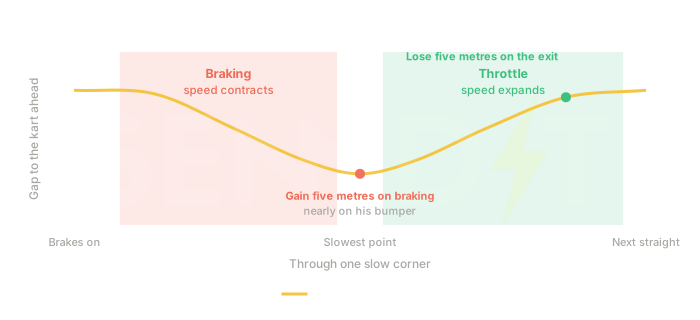
- At slow corners, speed contracts when you brake (gap shrinks) and expands when you accelerate (gap grows), it’s just physics
- 99% of drivers, parents and mechanics don’t account for this, and give the wrong feedback because of it
- If you gain 5 metres on braking and lose 5 on the exit, don’t panic and don’t blame the kart
- Understanding this effect makes you calmer, gives clearer feedback, and stops you chasing setup changes that fix nothing
Let’s Clear This Up Once and For All
I can’t tell you how many times I’ve heard this at the track:
“Alessio, I was closing up on entry, but then on the exit they just pulled away. My engine is not good. Something must be wrong.”
Truth? Most of the time, nothing is wrong. No broken engine. No magic tyres. No secret setup.
What you’re seeing is something called the concertina effect, I even like to call it the “elastic effect” when I explain it to kids. That’s how I understood it when I was a kid.
It’s just an illusion. And if you don’t understand it, you’ll keep giving the wrong feedback, blaming your equipment, and missing the point entirely.
So What Is the Concertina Effect?
Think about an accordion, or an elastic band.
- When you brake, speed contracts → distance shrinks.
- When you accelerate, speed expands → distance grows.
That’s it. It’s not black magic. It’s just physics.
At slow corners especially, it feels dramatic. You brake late, close right up to the guy in front, maybe even nearly hit their bumper.
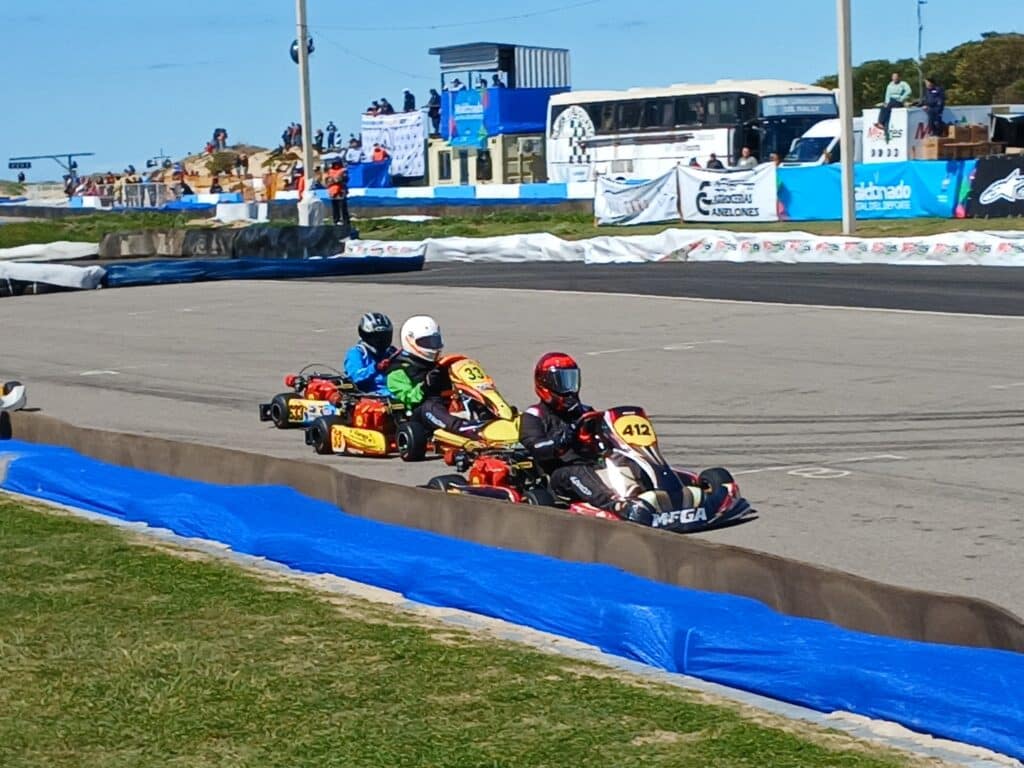
Then, as both of you accelerate, it looks like they have more power because they pull away again.
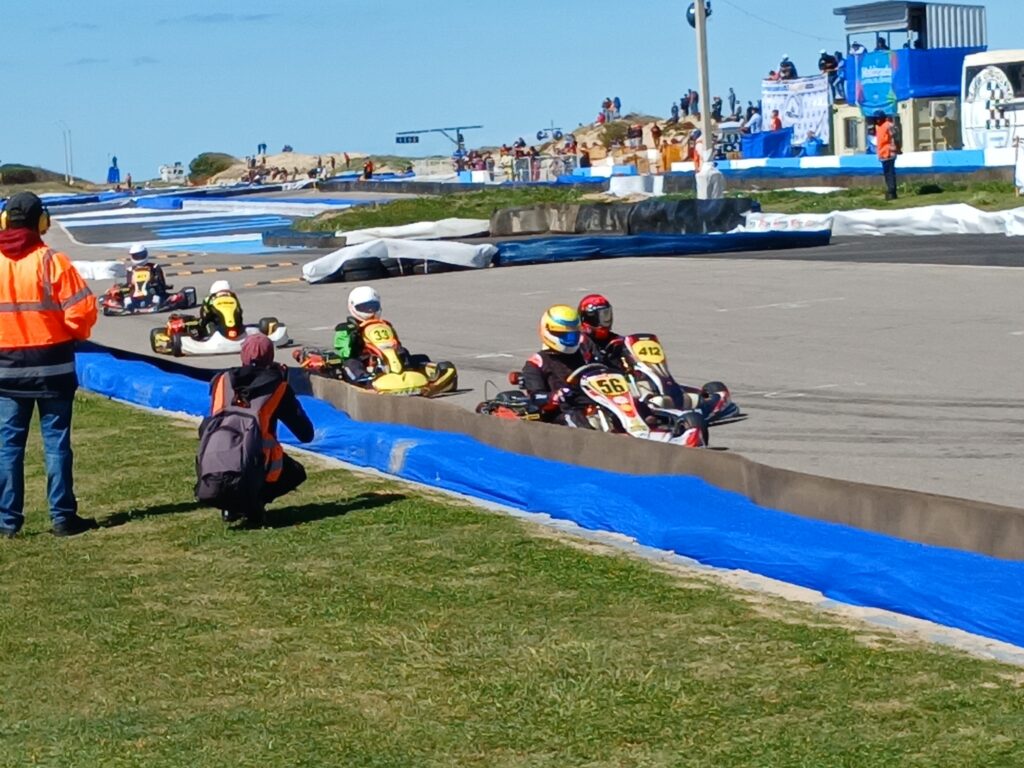
But most of the time, they don’t. It’s just the concertina effect in action.
A Formula One Example
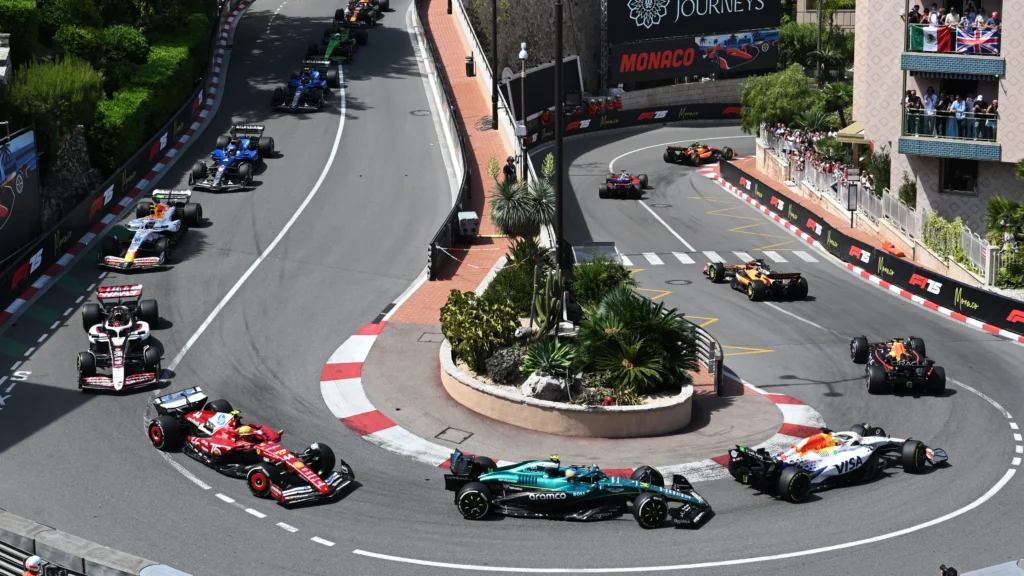
Look at Monaco, especially the famous hairpin. You’ll see cars closing up like crazy on the brakes. One driver nearly on the gearbox of the guy ahead.
Then, as soon as they get on the throttle, the gap stretches again.
How come?
That doesn’t mean one car braked way later or had a rocket engine on exit. It’s just speed contracting and expanding. Yup.
Here’s a great example to watch:
My Personal Experience With It
When I was younger, racing in juniors and seniors, I used to think I was some kind of braking genius. I’d close up so much on entry and tell myself: “Wow, I’m amazing on the brakes.”
Then I’d get dropped on exit and think: “Damn, my engine is s***. Something’s wrong with my kart.”
Looking back? I was just falling for the concertina effect, which, by the way, 99% of drivers, parents, and mechanics don’t even consider. It wasn’t my engine. It wasn’t bad luck. It was simply physics playing tricks on me.
Why This Matters for You
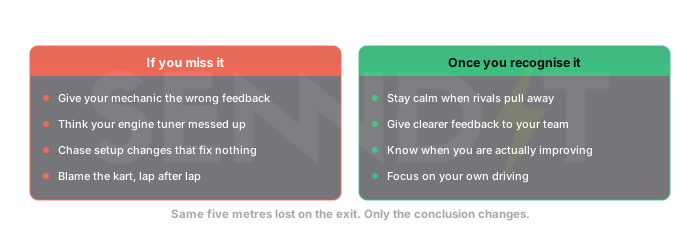
If you don’t understand the concertina effect, you’ll:
- Give your mechanic the wrong feedback
- Think your engine tuner messed up
- Waste time chasing setup changes that don’t fix anything
Instead, once you recognise it, you’ll:
- Stay calm when rivals pull away on exits
- Give clearer, more accurate feedback to your team
- Understand when you’re actually improving, and when it’s just physics
Where It Shows Up Most
- Tight hairpins, the biggest speed delta gaps in braking and on exit. You’ll feel it the most here.
- Shifter karts, even more noticeable because of front brakes and big speed changes.
- Tracks with heavy braking zones, you’ll always feel that “closing in, then dropping back” sensation.
The Key Takeaway
If you gain five metres on braking and then lose five on the exit, don’t panic. Don’t blame the kart. Don’t cry about your engine.
99% of the time, it’s just the concertina effect. It’s just an illusion.
Once you accept that, you stop wasting energy on excuses and start focusing on what really matters: your own driving.
Karting is full of little illusions like this. Some drivers understand them. Others complain about them. Who do you think improves faster? Who do you want to be?
So next time you feel like you’re closing up on entry and then getting “dropped” on exit, remind yourself:
“Probably it’s not the engine. It’s just the concertina effect.”
That awareness alone will make you a smarter, calmer, and better driver.
Send your onboard footage. Alessio reviews it corner-by-corner and tells you exactly what's costing you time, and how to fix it. Back within 48 hours.
Get My Onboard Reviewed → Reviewed personally by a CIK FIA World Champion, never an assistant.I promise I'll not spam you with repurposed shitty AI content but real experiences that only I, Alessio Lorandi, experienced. Written in my funny English-Italian tone of voice 😂
Alessio Lorandi is the former CIK FIA World Junior Champion, winning against Lando Norris in 2013 & F3 multiple race winner. He's helped 200+ karting drivers worldwide get faster & win WSK titles with BabyRace Driver Academy & now through Senndit, his online karting coaching platform.