Why Half Moves Kill Your Race
Half moves cost you races. Commit or stay out, there's no middle ground on track.


- A half move is worse than no move at all. You lose time, momentum, position and confidence in one go.
- Most of the time it’s not the championship, it’s fear. In a championship P2 can be enough. In a one-shot race, nobody cares if you finish P2.
- Hesitation is the enemy of racing. When you have to attack, you attack, no second thoughts.
- Half moves cost you respect. Rivals push you wider and close the door harder, because they know you’ll back out.
- This sport is not for gentlemen. My father told me that when I was still in 60 Mini, and he was right.
- Take your bets like a poker player. Go for the move when you have the confidence you’re going to make it work.
- Confidence isn’t bought, it’s built. Practise late braking, and practise your dive bombs before the race where you need one.
- What is a half move in karting?
- Why is a half move worse than no move at all?
- Is it really the championship, or is it fear?
- When should you go for the move, and when should you wait?
- Why does hesitating halfway through a move cause crashes?
- What does a half move look like from the kart in front?
- How do half moves hurt your reputation on the grid?
- Why does driving like a gentleman cost you races?
- How do you build the confidence to commit?
- Do I still make half moves myself?
- So what do you do the next time you see a gap?
- What do drivers ask most about half moves?
What is a half move in karting?
Let’s talk about something that drives me absolutely crazy: HALF MOVES.
You’ve probably done one before. I’ve done it too, and every time I do, I tell myself:
“Alessio, what the hell was that?”
Here’s what a half move actually is.
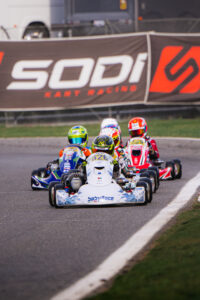
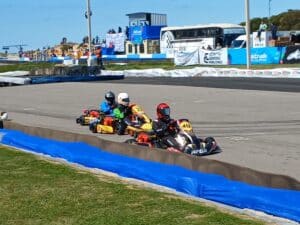
You go for an overtake. You dive inside, start the move, and then halfway through, you back out. You brake a bit too early, hesitate, and let the other driver stay ahead.
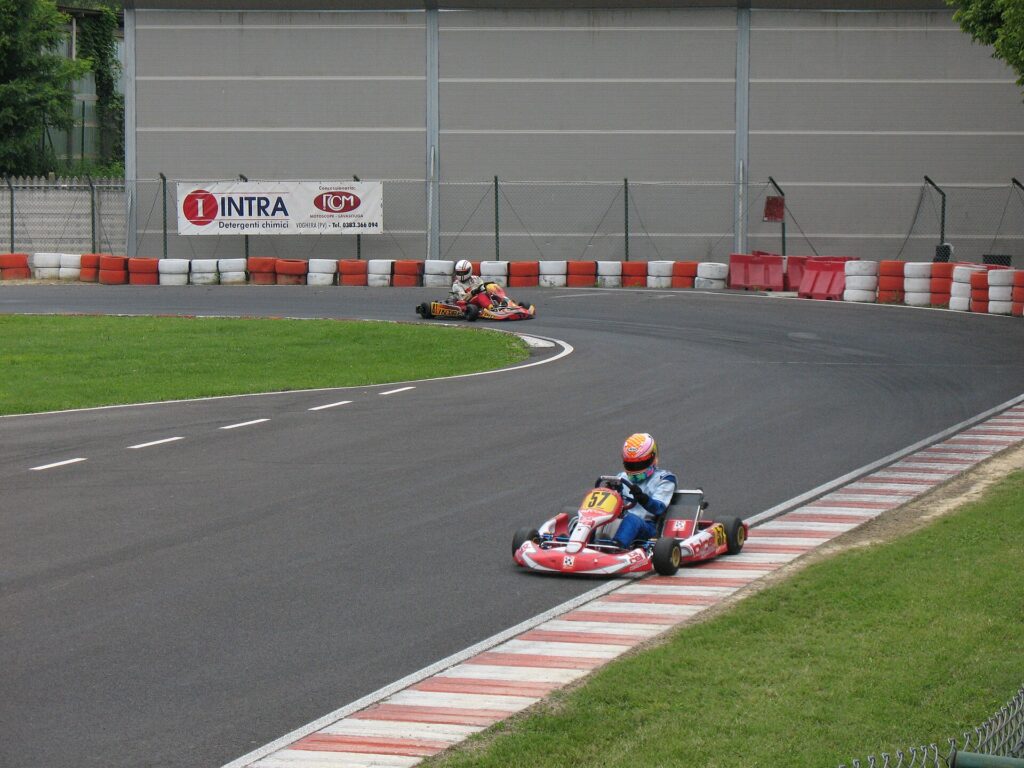
It’s basically saying: “I want to pass… but not really.”
You’re signalling to the driver in front that you’re afraid to commit. And to the driver behind? You’re showing weakness.
He’s thinking: “This guy’s not going anywhere. I’ll just pass him next corner.”
And let’s be honest. When you make one or more half moves in an attempt to overtake, you look like a fool and you lose tons of time.
Why is a half move worse than no move at all?
Half moves don’t just fail, they make everything worse.
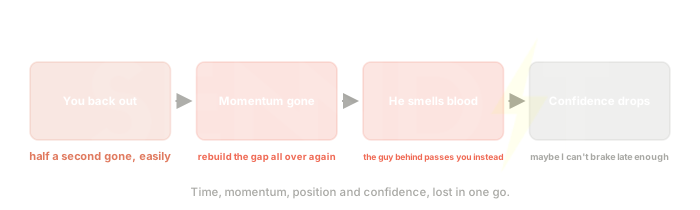
Here’s what actually happens when you make one:
- You lose time. You slowed down for an overtake you didn’t complete. Half a second gone, easily.
- You lose momentum. The gap you closed so carefully? Gone. You’ll have to rebuild it all over again.
- You lose position. The guy behind sees your hesitation, smells blood, and overtakes you instead.
- You lose confidence. You start doubting yourself, “Maybe I can’t brake late enough. Maybe my kart isn’t good enough.”
90% of the time, it’s not the kart, it’s mental. You can make the move. You just didn’t trust yourself enough to go all in.
Is it really the championship, or is it fear?
Sometimes drivers say: “I didn’t want to risk it, I’m thinking about the championship.”
That’s fine if you’re genuinely defending a title in the final rounds. But most of the time? That’s not the real reason.
The truth is: it’s fear.
Fear of crashing. Fear of contact. Fear of losing the place. Fear of failing. Whatever form it takes, it lives in your mind, not in the kart.
And here’s the reality that matters:
If you were close enough to go for the move in the first place, that means it was on. You earned that chance. Backing out halfway only guarantees you lose more in the long run.
Listen, I’m not saying you should never use your brain. If it’s a championship, it may be enough to finish P2 and not risk it all, and take the points that could give you the win at the end of the season.
But if it’s a one-shot race, you may as well try it all and risk crashing. Worst case scenario, you crash in an attempt to win. I’ve done it many times. Sometimes I managed to win, sometimes I didn’t.
But the reality is that nobody cares if you finish P2. You’re the first of the losers.
I talk more about that moment in how to defend your position in the last lap. And if the fear is the real problem, start from how to become strong in the head.
When should you go for the move, and when should you wait?
I’m not a gambler. But think about professional poker players. They can’t just randomly choose where to put their chips. They take their bets on a high probability outcome, where they are confident it’s going to result in a win.
That’s the same in karting. Whenever you go for a move, you gotta make sure you have the confidence you’re gonna make it work.
So if you’re closing up on the driver in front and you’re within striking distance, you have to just send it. It’s never going to be the best moment. You need to find a good enough moment, a good enough opportunity, and just decide to make the move.
Sometimes the situation decides for you. Say you’re P2 and there’s a driver right behind you. If you don’t attack, you’re going to get attacked. And if you just defend, you let the guy in front pull away. So the only option you have to win is to overtake the driver in front, even if he’s a bit far.
I go deeper on the timing in when to be patient and when to attack.
Why does hesitating halfway through a move cause crashes?
You know what happens when you hesitate mid-move?
You don’t just lose momentum, you also put yourself in danger.
You’re half in, half out. You’re on the inside but braking harder than usual. The other driver turns in. And boom, you clip, lose the rear, or get collected.
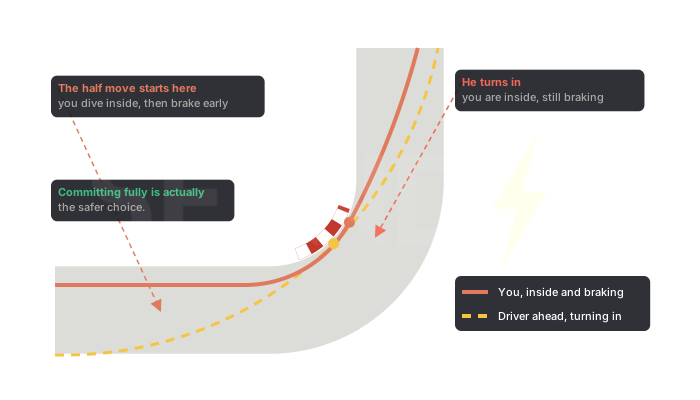
That’s how unnecessary crashes happen. Ironically, you crash because you tried to avoid crashing. Committing fully is actually the safer choice.
Most of the time in racing you have to be patient. But when you have to attack, you attack, no second thoughts. Because every hesitation is going to massively reduce the chance of you making that move.
Hesitation is the enemy of racing.
You’ve also destroyed your rhythm for the next few corners. A half move doesn’t just cost you one opportunity, it costs you three.
Listen, this is racecraft, and it can be learned. It is one of the things I teach in my six month training program, together with the starts and the overtakes.
What does a half move look like from the kart in front?
Let me tell you how it looks from the other side.
I re-watched some races from my past. At the World Championship at Sarno, a driver tried to pass me. But I braked so late that I didn’t even notice him. He realised how late I braked, and he just had to abort the overtake and try again.
He basically made a half move. And I didn’t even have to defend.
That’s the thing. If you are super late and hard on the brakes, and really efficient, you can make some unbelievable defence without even defending. If you are too early and too soft on the brakes, you are very, very vulnerable.
And remember, in the last lap the goal is to not even have to fight.
How do half moves hurt your reputation on the grid?
In racing, respect isn’t given. It’s earned.
And the fastest way to lose it is to keep making half moves.
Your rivals will think: “This guy’s got no guts.”
Once that reputation sticks, the grid treats you differently:
- They push you wider into corners
- They close the door harder and earlier
- They overtake you without hesitation, because they know you’ll back out
But if you’re known as someone who commits? They give you space. They think twice before defending too aggressively.
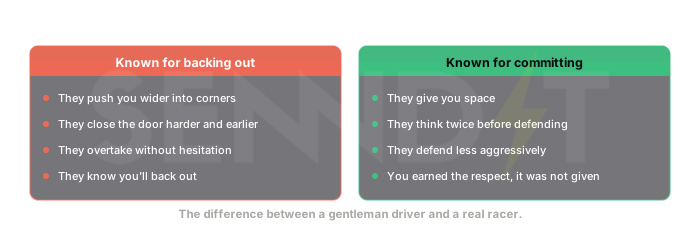
That’s the difference between being seen as a “gentleman driver”, and being seen as a real racer.
A strong reputation is kinda like a shield around you. They’ll give you just a bit more space when defending. They’ll hesitate to overtake you, even if they are faster. They keep an extra gap at the start, because they fear your reaction in case of any contact.
And your reputation comes from your behaviour and your results. How you overtake is part of your behaviour. Do you send it right away, without thinking twice about it? Or do you wait for the “perfect moment”, secretly hoping to make a “DRS move” on the straight, because you’re afraid to crash when braking deep alongside him?
Same with looking behind. If you look in the back every lap, sometimes multiple times per lap, you’re communicating your fear to the driver behind.
People observe you and take calculated decisions based on what they see. Sometimes I hear mechanics on the grid telling their driver on the radio to get past driver X as soon as possible, because he’s scared and he’ll probably drive conservatively.
You can’t fake it though. If you’ve got confidence in yourself and in the kart, you’re going to appear confident in the eyes of your competitors, and they’re gonna treat you differently.
Why does driving like a gentleman cost you races?
I learned this one the hard way.
“You drove like a gentleman,” my father said. “You left the door wide open on the first lap, you were not aggressive, you just let everybody pass. This sport is not for gentlemen.”
I was in tears. I wish I remembered exactly what race it was. For sure I was still in 60 Mini. But I still remember how stupid I felt.
I was quick, but I was too mentally fragile, and too “nice” on track. Older drivers would take advantage of me, smash me off and then have a laugh about it.
So I had to change. Not letting anyone pass me on lap 1. Not letting anyone pass me around the outside. Not letting anyone successfully resist me around the outside when I was overtaking. And giving back what I received.
If you ask me how many drivers I know that tick all those boxes, I’ll say very, very few. I probably see just 2 or 3 new young drivers a year that are like that. And they are the ones who typically end up winning most.
And a half move is exactly that gentleman thing. You go for it, and then you give the place back yourself. I wrote more about it in stop driving like a gentleman.
How do you build the confidence to commit?
You can’t buy confidence. You build it. There is no shortcut.
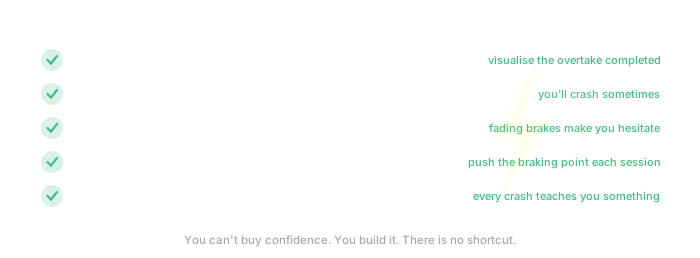
Here’s how:
- Train your mindset. Every time you go for a move, tell yourself: “I’m going to make it stick.” Don’t visualise failure. Visualise the overtake completed cleanly, every single time before you go for it.
- Get comfortable with risk. You’ll crash sometimes. You’ll bend the chassis. You’ll DNF. That’s part of racing. But every time you commit, even if it ends badly, you build more confidence for the next one.
- Make sure your equipment works. Confidence also comes from trust in your kart. If your brakes are fading or your setup feels off, your instincts will hesitate. Keep the kart in top shape so your mind doesn’t second-guess itself.
- Practice late braking. Go on track and deliberately push your braking point a little further each session. Find the limit. The more you do it, the more you’ll know exactly how far you can go without overdoing it.
- Accept that failure is part of learning. Every crash teaches you something. Every mistake sharpens your instincts. You can’t grow as a driver if you’re always playing it safe.
And practise your dive bombs too. Go out there, do some overtakes every day, and sometimes do some dive bombs. Obviously sometimes you will crash. But you may need that skill in the last lap of a very important race. And if you have never done it in your life, the chance of you doing it, or having the balls to do it, is very, very low.
Same with the brakes. If you want to become the next world champion, in karting or in Formula 1, you need to become the strongest driver on the grid on the brakes. There’s no way around it. If braking late still scares you, have a look at how to fix your early braking.
And train your instincts. In a race it’s a split-second decision, it’s mostly instinctual. I don’t think about it when I’m racing, I’m driven by my instincts. But you can program yourself, with visualisation, by studying race videos and by creating a lot of muscle memory in your driving and in your decision making.
Do I still make half moves myself?
I’ve been there myself. I’ve made half moves and hated it. Sometimes I still do, by mistake.
It’s like watching a replay of yourself hesitating. You can see the opportunity dying right in front of you, and there’s nothing you can do about it.
Sometimes I’ve been too conservative, thinking long-term. Other times I’ve gone for it, crashed, and thought: “Okay, that was too much.”
But over time, I realised something:
I’d rather be the driver who tries and sometimes fails than the one who never goes for it. Because the driver who hesitates never wins.
By the way, that’s where the name Senndit came from. From the idea of taking the risk and just sending it, not being afraid of making mistakes, and lunging it, dive bombing it.
Real lunges are my specialty, and I love to do that. Back in the days we had front brakes in seniors, and you could really send it from far away. I wouldn’t be afraid of making a dive bomb from far away, I would maybe be 10 meters behind the kart in front of me.
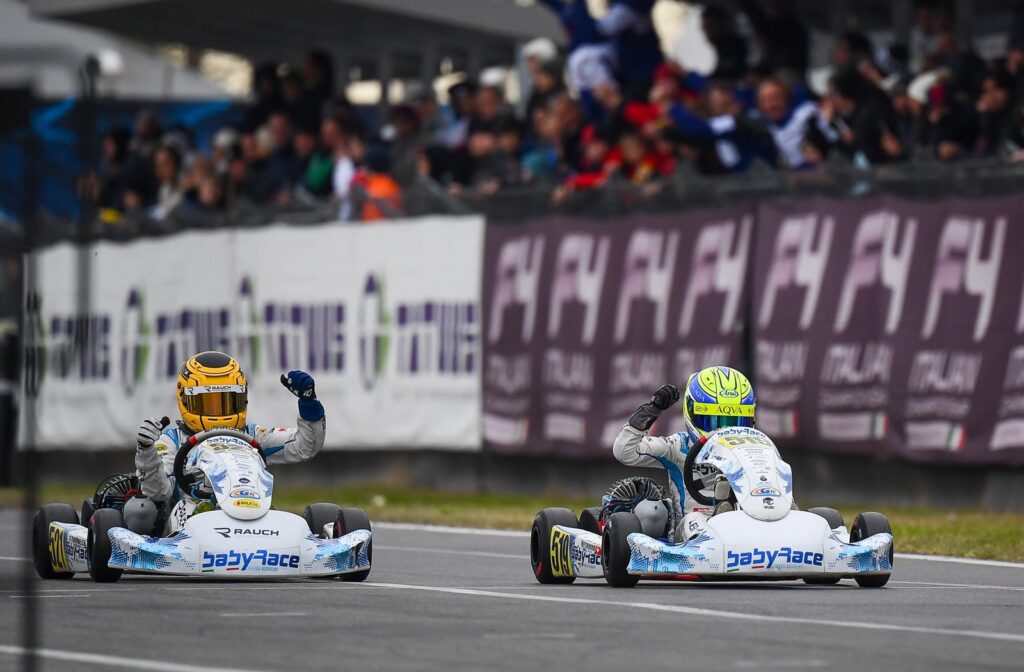
So what do you do the next time you see a gap?
Half moves are poison for your racing. They kill your rhythm, your confidence, and your reputation, all at once.
When you see a gap: COMMIT.
Even if it’s tight. Even if it’s risky. Because that’s racing. You’ll make mistakes, sure. You might crash. But over time, you’ll become sharper, braver, and more respected on track.
- Don’t be the driver known for backing out.
- Be the one who sends it.
What do drivers ask most about half moves?
What is a half move in karting?
You go for an overtake, you dive inside and start the move, and then halfway through you back out. You brake a bit too early, hesitate, and let the other driver stay ahead.
Why is a half move worse than not overtaking at all?
Because you lose time, momentum, position and confidence in one go. You slowed down for an overtake you didn’t complete, the gap you closed is gone, and the driver behind sees your hesitation and overtakes you instead.
Is it ever right not to go for the move?
In a championship it may be enough to finish P2 and take the points that could give you the win at the end of the season. In a one-shot race you may as well try it all. But most of the time, the hesitation is not about the championship. It’s fear.
Why do half moves cause crashes?
Because you’re half in, half out. You’re on the inside but braking harder than usual, the other driver turns in, and you clip, lose the rear or get collected. Committing fully is actually the safer choice.
How do you stop making half moves?
Build the confidence to commit. Push your braking point a little further each session, practise your overtakes and your dive bombs, keep the kart in top shape and accept that failure is part of learning.
If you want me to look at your overtakes, send me your onboard for an onboard review. And if you want to work on your racecraft, your braking and your mindset for good, that is what we do in the 6 months transformation.
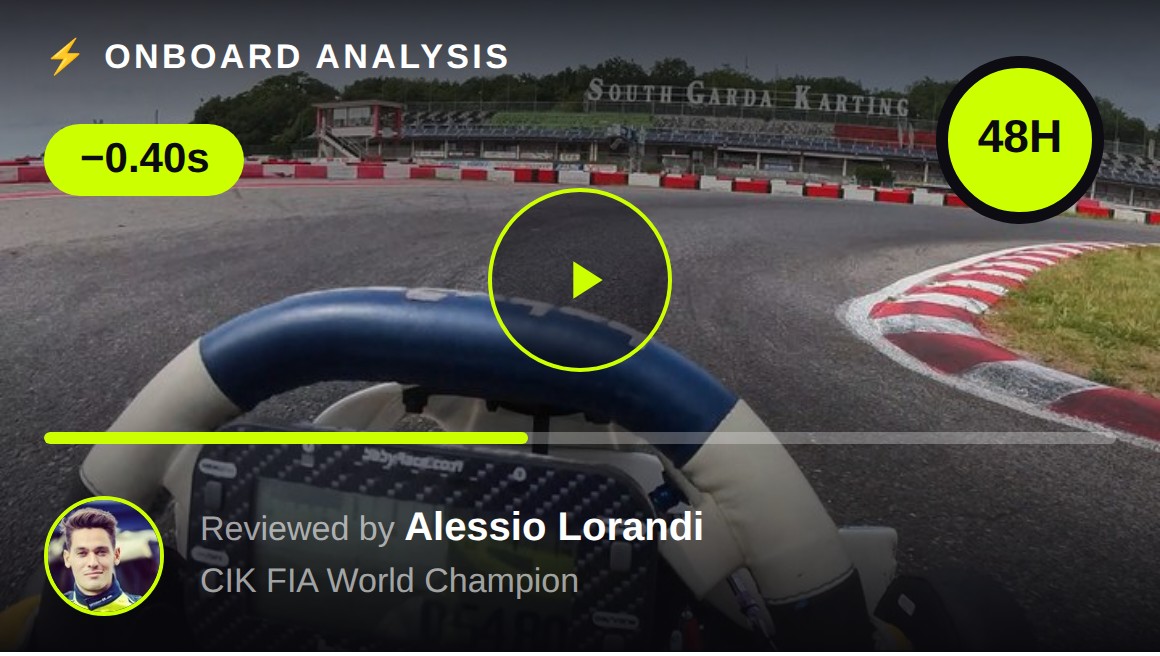
Send your onboard footage. Alessio reviews it corner-by-corner and tells you exactly what's costing you time, and how to fix it. Back within 48 hours.
Get My Onboard Reviewed → Reviewed personally by a CIK FIA World Champion, never an assistant.I promise I'll not spam you with repurposed shitty AI content but real experiences that only I, Alessio Lorandi, experienced. Written in my funny English-Italian tone of voice 😂
Alessio Lorandi is the former CIK FIA World Junior Champion, winning against Lando Norris in 2013 & F3 multiple race winner. He's helped 200+ karting drivers worldwide get faster & win WSK titles with BabyRace Driver Academy & now through Senndit, his online karting coaching platform.