
Karting Maintenance Basics For Beginners
Your kart's performance lives or dies in maintenance. Learn what you can DIY and when to call a mechanic.


- Apply chain lube every session and replace chains every ~1000 laps to prevent breakage and maintain performance
- Bearings, pistons, and brake maintenance have the biggest impact on lap time, dirty or broken bearings create massive drag on straights
- Beginners can handle chain lubing, spark plug replacement, and air box cleaning themselves; leave bearing replacement, piston work, and brake service to professionals
- Engine rebuild frequency depends on your category, casual hobby driving needs minimal maintenance, but competitive racing at shifter level requires piston replacement every 15-20 laps
- Early warning signs include engine knocking before seizure, long brake pedal travel (fluid loss), and chain slipping without proper lube
- Ignoring maintenance will cost you, chains break first, then pistons seize; proper upkeep takes only 1-2 hours per week and keeps your kart enjoyable to drive
- What basic maintenance work should be done from session to session?
- What breaks most often?
- How often should chains and sprockets be changed?
- What maintenance affects lap time the most?
- What basic maintenance tweaks can beginner drivers do themselves?
- What maintenance work should be handled by professionals?
- How often should engines be rebuilt?
- What are early warning signs of mechanical problems?
- How much time per week does basic maintenance take?
- What happens if you ignore maintenance on your kart?
How often should you rebuild that engine, or how often should you change those brake pads, or how often should you change that brake fluid?
All these questions and more are going to be addressed in this detailed guide on kart maintenance.
When you’re a karting beginner, you want to know exactly what has to be replaced, and also how much you need to budget for each part that needs to be replaced.
Because, I mean, let’s be honest, we don’t want to go to the track, you know, after a long week of work, and then get into the kart and, you know, having a silly bearing that broke, or, you know, maybe silly things like chain or spark plug, or maybe, you know, you run out of brake oil.
Or maybe, just like, your brake pads are just too finished, and it just say goodbye to your brakes. Perhaps even your piston needs to be replaced.
And, you know, at some point you go down the straight and you see the engine, which actually makes a beer damage to your kart, if only had replaced that $80 piston.
So in this guide, I’ll try to shed a light on some of the most common maintenance questions.
What basic maintenance work should be done from session to session?
First thing first, you want to make sure you spray chain loop over your chain to avoid your chain actually running out of loop and therefore overheating and just like, Yeah, at the end of the day, is going to break the chain.
But not only that, it’s just going to be bad for the power, for the performance. So if you want your chain to last a lot, you want to make sure you are going to add chain loop every single session.
Then next you obviously want to check tire pressures, but I guess that’s not including the maintenance kit.
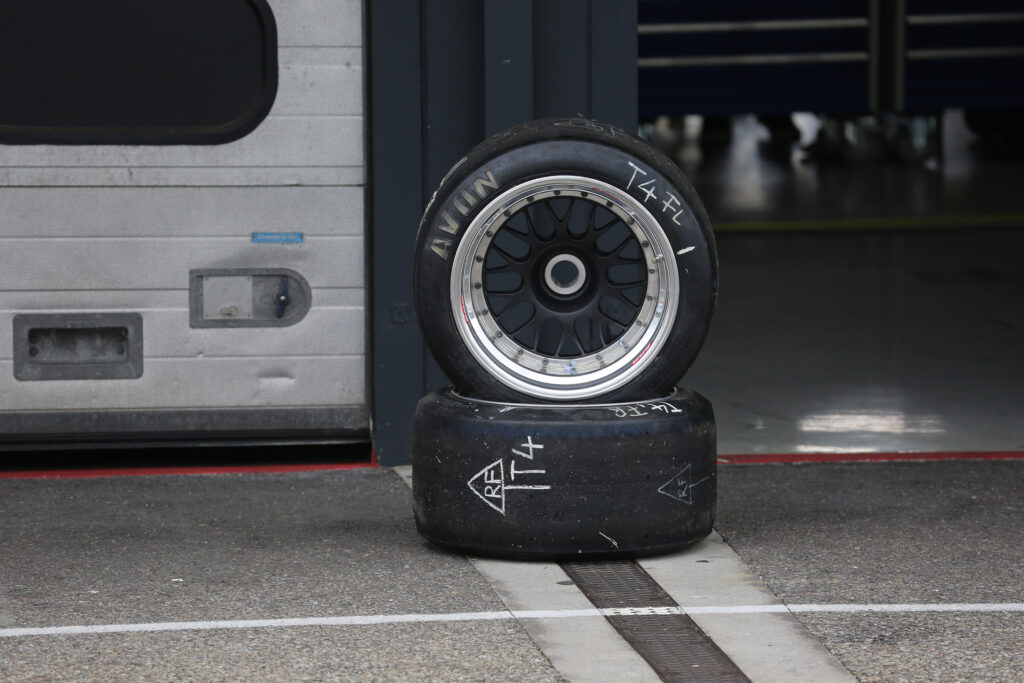
One thing that needs to be checked very often, of course, is the brakes fluid. I’m not saying that you should be doing it after every session, but it should be done every once in a while, as well as monitoring your water radiator level from session to session.
Of course, you don’t want to run out of water for any kind of leakage, because in that case, it’s going to seize the engine. But yeah, these are the basics checks that should be done from session to session.

What breaks most often?
To be honest, the parts that break the most often are the chain, the spark plug and the rear axle bearings, even though they’re not really going to completely stop your driving, but they are going to actually make your kart a lot slower, because it’s going to basically drag down the straights instead of having perfect, seamless friction.
How often should chains and sprockets be changed?
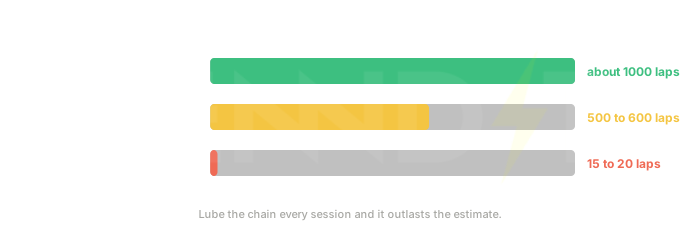
It depends quite a lot from the quality of the chain and the quality of the sprocket that you have opted for. But in a fair estimate, you would have to change chains every 1000 laps, I would say.
But of course, it depends massively from how you treat the change. Of course, if you loop it properly, it’s going to last way longer than if you forgot to put chain loop every session or so. So, I mean, it’s very, very depending on how you treat that chain.
If you really want a sprocket that is high performance, then you may have to change the sprocket every, I don’t know, 500 or 600 laps. If you really want to go for that 0.01 extra performance on the dyno, you see.
But if you just want to casually drive, I mean, you can use that chain and sprocket for just WAY longer. I mean, I mean, the sprocket is actually very unlikely that it’s going to break. It’s almost like indestructible.
But of course, it’s strictly interconnected to the chain maintenance. So if you maintain a chain properly, then the sprocket is also going to last longer.
But at the end of the day, if you’re going for a race where every millisecond counts, then of course, you definitely want to go with a new chain and new sprocket every three, four races.
So yeah, of course, make sure you treat it well. Normally, what we do as a team at baby race, we kind of always have a chain and sprocket that is for testing, and now we have a chain and sprocket that is for the races. So I think that’s quite a good thing to do, so that you are saving up basically the best material, and you’re going to basically use the worst material for testing.
Keep separate chains and sprockets for testing and racing. Use older, worn material for testing and save fresh components for races when every millisecond counts.
What maintenance affects lap time the most?
I believe the maintenance work that affects lap time the most, besides, of course, the chain and sprockets that, of course, is going to provide more or less horsepowers, I believe the bearings.
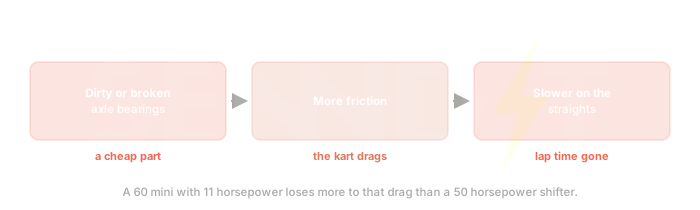
The bearings play a big role on on the friction of the kart. So if you have broken bearings or very dirty bearings of your rear axle, basically there’s going to be way more friction to the to the kart when going flat out on the straights. And that’s going to actually affect massively your performance.
Of course, if you’re talking about a 60 mini kart with only 11 horsepower, that it’s going to affect the way more in relation to, for example, a shifter case, a two kart with 50 horsepower. So of course, given the same friction, a kart with less power is going to be mostly affected compared to a kart that has way more power.
Also in terms of brakes, if your brakes are not well maintained, and, for example, they are rubbing on the disc while driving, that’s going to create also some friction, and that’s going to, basically, again, going to cost you lap them down the straights, which you don’t want to do.
On top of that very worn out piston is going to make your laps slower, so perhaps just changing the piston and putting a new one is going to give you lap them right away.
One of the easiest and fastest ways to find lap time on a used and quite old kart is to just put a new chain, a new sprocket and putting new bearings on the rear axle, as well as on the front hubs, or front spindles.
And that’s all going to provide less friction, therefore more speed on the straights.
What basic maintenance tweaks can beginner drivers do themselves?
You know, I am in this situation myself, because I am not a pro when it comes to mechanicing, and actually, I’m very beginner myself. From that standpoint, I never been a mechanic in my life, so I can’t do 90% of the maintenance work.

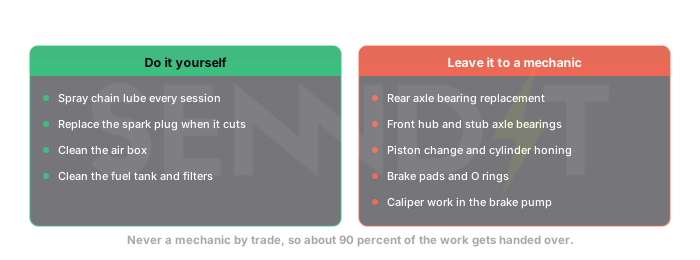
What I suggest the beginners do is just take care of the chain loop. So make sure that chains getting taken care and nicely oiled up with great lube. I mean, that’s simply spraying on the chain. That’s the easiest thing you can do.
Then every once in a while, you’ll have to replace, I guess, the spark plug, when you feel like it may be cutting off.
Then other thing you should be doing is just clean your air box, because maybe you’ll get some dirt every once in a while inside of your air box, and to avoid that dirt going inside the carburetor, which may cost you perhaps a lot of lap time losing a race, or maybe even just like seizing the engine, because some dirt goes through the carburetor into the engine, like stones, grass or pieces of sand.
Then, of course, that’s one of the easiest thing you can do, just like removing your air box, cleaning it in as well as cleaning your fuel tank or the fuel filters that are connected the pump so that you are going to make sure there’s no dirt going through.
- Apply chain lube every session
- Replace spark plugs when needed
- Clean air box regularly to prevent dirt entering the carburetor
- Clean fuel tank and fuel filters
What maintenance work should be handled by professionals?
Well, I believe that, for example, like replacing the bearings of your rear axle is definitely one of the things that beginners cannot do, so they should be done from a proper mechanic, as well as changing the front stub axle bearings or your front hub sparings If they’re broken.
Even replacing a piston, of course, requires a engine tuner or someone that can open up an engine just basically replace the piston and hone the cylinder.
But also, when it comes to brakes maintenance, I mean changing pads, replacing the O rings, or even the calipers inside the brake pump. I mean, that’s something that you should be letting a professional mechanic do it, because if you do it yourself, you may just make some damages, and you’re actually gonna create more harm than good.
- Rear axle bearing replacement
- Front hub or stub axle bearing replacement
- Piston replacement and cylinder honing
- Brake pad changes
- O-ring replacement in brake system
- Brake pump caliper work
How often should engines be rebuilt?
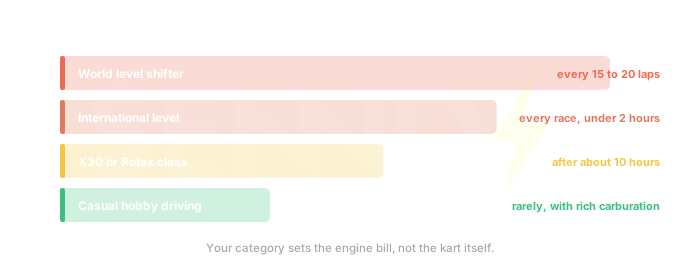
I mean, it depends, really from the type of engine and the series you’re in. For example, if you’re competing at international level races, you may have to really replace your pistons and the rings every single race, which means just about under two hours of driving.
Whereas, if you’re driving a series such as x 30 Ayami or Rotax or rock that you’ve got way less maintenance costs, then of course, you will have to replace the pistons way less often, maybe after 10 hours of work or so. And so, of course, the bill for placements on the engine will be a lot less and and so you’re going to be able to to spend less money per per driving time.
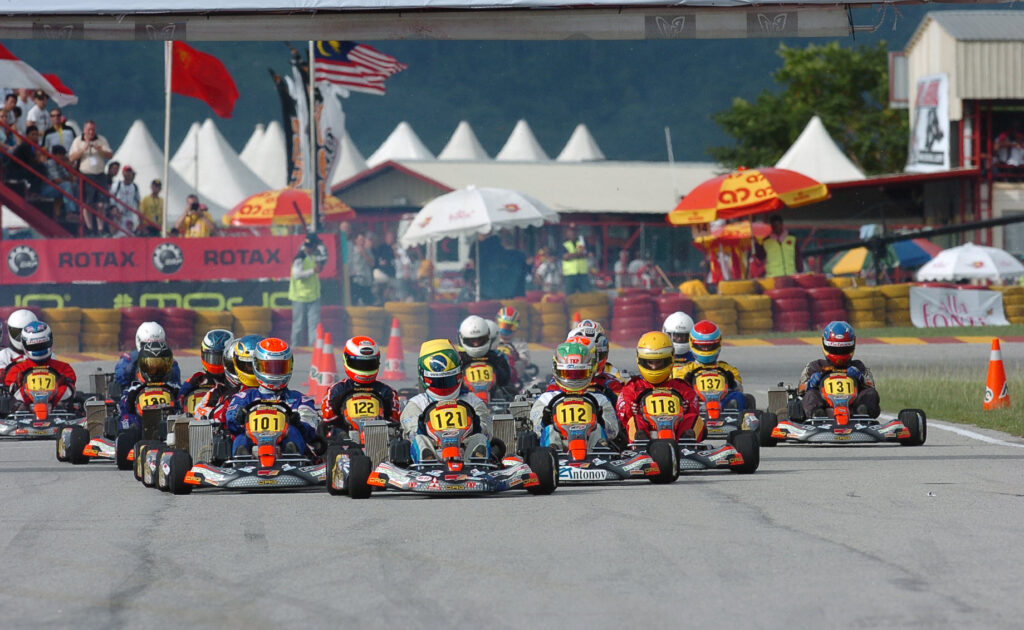
So of course, you are going to save up in the end. But of course, yeah, it really depends from category to category.
Normally, the shifter gearbox classes are going to need a different piston almost every session. I mean, I was racing in the world championship last year, in 2025 the shifters World Championship, and we literally replaced piston in every single race. So, I mean, like every single heat races. So like, after 15 laps, the piston would be replaced. I mean, it was that insane.
If your goal is to compete at the highest levels in the world, you’ll have to replace your piston every literally, 15-20 laps.
But of course, if you’re just doing it for fun, for just casual hobby driving, and you are having a carburation that is quite rich, then you will not have to change the person that often you’ll see it’s going to be way easier to to maintain, and it actually is gonna be less pain overall, and you’ll have less problems. So whenever you go to the track, you’re just gonna enjoy it without pain in the butts.
What are early warning signs of mechanical problems?
Well, for example, when it comes to engine problems, to for example, the piston, you can kind of tell just a few laps before seizing the engine, when your piston is about to give up, that it’s almost like, you know, at the end of the straight is almost like shooting when I kind of say, so you can feel that your engine is too lean, and it’s kind of like giving, kind of a signal that, you Know, I’m about to give up, I’m about to break and there’s not much you can do.
I mean, the only thing is, if you’re really about to seize the engine, for example, in a shifter kart, then you have to pull the the clutch and just come back into the pits.
But when it comes to, for example, your brakes, there’s not much you can notice from that. I mean, you will probably feel like, yeah,
Send your onboard footage. Alessio reviews it corner-by-corner and tells you exactly what's costing you time, and how to fix it. Back within 48 hours.
Get My Onboard Reviewed → Reviewed personally by a CIK FIA World Champion, never an assistant.I promise I'll not spam you with repurposed shitty AI content but real experiences that only I, Alessio Lorandi, experienced. Written in my funny English-Italian tone of voice 😂
Alessio Lorandi is the former CIK FIA World Junior Champion, winning against Lando Norris in 2013 & F3 multiple race winner. He's helped 200+ karting drivers worldwide get faster & win WSK titles with BabyRace Driver Academy & now through Senndit, his online karting coaching platform.