
Rotation Masterclass: Why Rotation is Key & How To Generate It
The best drivers in the world are the ones that are able to control rotation and generate as much rotation as they need to go as fast as possible t…


The best drivers in the world are the ones that are able to control rotation and generate as much rotation as they need to go as fast as possible through the corners. And one of those masters of rotation is the goat Max Verstappen himself. So he is the, probably the best one when it comes to generating rotation, and you can see in his onboard videos.
But in general, like if you watch his driving style, he is creating as much rotation as he needs to, but not only in terms of his driving, but he also really enjoys driving with a lot of rotation from the car. And that’s why lots of his teammates have stated in previous interviews, for example, like Alex Albon, where you know he says that his car, the Mac, the car of Max, is super pointy in the front, which obviously creates lots of rotation, and that’s what Max wants.
I mean, obviously
- Rotation is the time between pointing one way on entry and the other way on exit. Less time there is lap time everywhere.
- A balanced kart is usually a slow kart. Predictable and easy is rarely quick.
- Grip always arrives at the rear first when a track rubbers in, because the rear tyres are wider. That is why you get understeer.
- Almost nobody moves the seat between green and grippy. It is the single biggest lever and it sits unused.
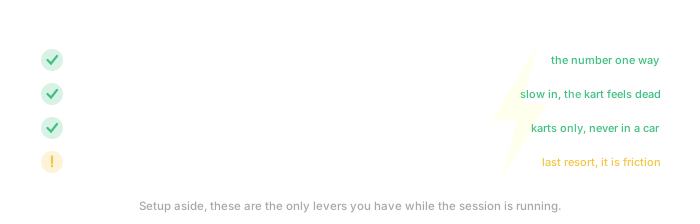
- Brakes first. Trailing them shifts weight forward and down, and that is where most rotation comes from.
- Entry speed creates rotation too. Run in an engine and the kart feels dead – that is the proof.
- Lean out for more rotation, lean in for less — mid-corner, never on entry.
- Steering is your last resort. Past a point it is just friction, and friction is a brake.
- Why rotation is lap time
- How I define rotation
- Why Albon could not drive Verstappen’s car
- Schumacher and Senna wanted the same thing
- A balanced kart is usually a slow kart
- What my mechanic made me do at eleven
- Why grip always arrives at the rear first
- Almost nobody moves the seat, and they should
- Weight distribution: from 70/30 to 60/40
- Four ways to create rotation while driving
- 1. Rotate with the brakes
- The Hockenheim data that changed my braking
- In a kart, come off the brakes just before the apex
- 2. Rotate with entry speed
- 3. Rotate with your body
- Lean out for rotation, lean in to calm it down
- The wet is where this matters most
- 4. Rotate with the steering, carefully
- Steering is friction, and friction is a brake
- It is all adaptability, and it starts young
- Why it is like driving on ice every day
Why rotation is lap time
the more time you spend waiting for the car to rotate in the middle of the corner, the slower you are period. The obvious goal is to get as little time as possible to take the car to rotate. But obviously you don’t want to unsettle the rear and create a lot of oversteer, too much oversteer that you can’t control the car, and it becomes so unpredictable to drive.
Because, yes, I had conversations with engineers in the past where they were like, you know, yeah, not always, not always. The fastest car in theory is the fastest car on track. Because, you know, the reality is that you still have to drive it, you know, if you have a very low polar moment of inertia, basically where the masses are concentrated at the center of the car, essentially, that’s going to make it a very high reactivity car with a lot of rotation, which is the same principle in karting, and that’s why I love, for example, driving with my seat very far to the front, even though in many cases it’s not super fast, because I will be ending up sliding too much on the rear.
But yeah. I mean, the reality is that, as Max figured out, the least time you can spend rotating the car in the middle of the corner is it’s the earlier for you to go on the throttle. Essentially, at the end of the day, you want to go from point A to point B on entry to exit of a corner.
Let’s say the entry is point A and the exit is point B. And that’s, by the way,
How I define rotation
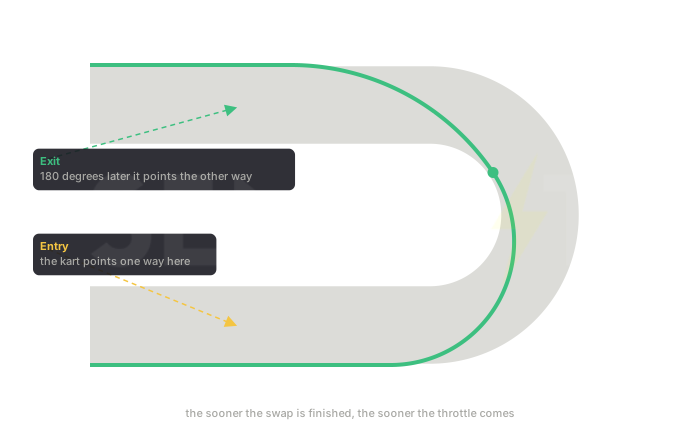
what I define rotation. Okay, there’s many way to define rotation, but my simple way to define rotation is basically taking the kart from pointing in one direction on the entry to pointing in the other direction on the exit as quickly as possible. Okay, so that’s rotation. Okay. So you’re pointing from one part of the corner the entry to the pointing of the other side of the corner, which is the exit.
And you want to, basically, if you want to be fast, you want to take that to be as little time as possible from the pointing on the entry. The pointing on the exit is essentially, that’s how I like to view it. So that’s basically where you’re Yeah, imagine if you had an arrow pointing from the center of your kart that’s going, like one meter ahead from the kart.
And basically, you want to take this arrow from pointing on the entry in a certain direction to where you want to point it on the exit. If it’s like 180 degrees hairpin, basically you want to point it basically, yeah, just from from going in that direction to the opposite direction, as quick as possible without obviously losing the car and being too unpredictable to drive.
Why Albon could not drive Verstappen’s car
Of course, it requires more skills and car control when you drive a car with a lot of rotation. That’s why drivers like Alex Albon have opened up of why it is so difficult to be teammate of Max Verstappen, because he simply require such a pointy car from his engineer that it’s it’s hard for his teammates to even drive that car.
And that’s why he’s been so famous for for destroying his teammates Max in the last few years. I mean, the only teammate it was kind of similar to him was was Carlos Sainz. But all the other teammates he raced against, he basically destroyed them and and that’s probably one of those reasons, because it drives with a car, and he develops the car in such a way that can’t be driven by the others.
So the whole point of this introduction is to make you understand that rotation is key, and if you want to win races and be super fast, you gotta learn how to drive a high rotation car or kart, which is super key.
Schumacher and Senna wanted the same thing
And by the way, it’s not just Max who loves driving high rotation cars with super, super pointy fronts. It is also Michael Schumacher and many other legends like Senna. You see the pattern: the greats all drove high rotation karts, because it was the fastest way around the track. And I still see to this day when I’m in karting you know,
A balanced kart is usually a slow kart
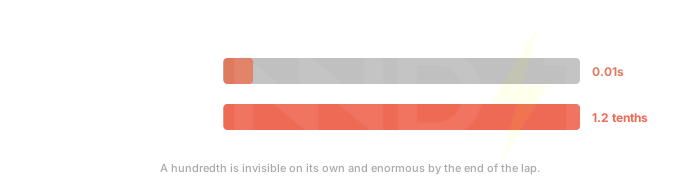
it’s so easy to make the car to be predictable and to make it like very balanced, but a very balanced most of the time. It’s not a faster kart, because you will need to have to wait in the middle of the corner for the rotation to come, and every 0.01 even just 100 of a second extra time to rotate the car in each of the corners.
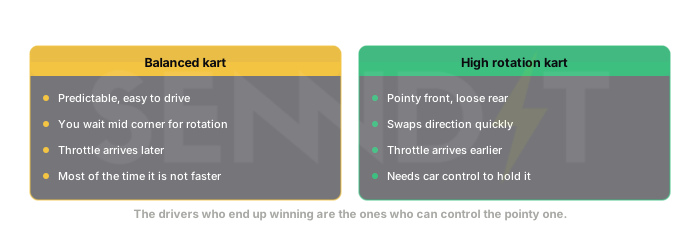
If we’re talking about 12 corners, that’s 1.2 tenths lost over a full lap because of less rotation in middle corners. So what I normally see is that the drivers who end up winning and succeeding and becoming the best drivers overall are the ones who are able and capable of controlling a high rotation kart or car. And it’s really like that the least time you can rotate the car in the middle of the corner, the fastest you will be.
And that’s why, for example, at the drivers at BabyRace. And you know, thankfully, my my mechanic when I was when I was little, when I was, like, 11,
What my mechanic made me do at eleven
it taught me how to drive a high rotation kart. And I remember saying: it slides, it slides at the back – scivola dietro, as we say in Italian. And he was like, no, no worries. Just keep driving. And he was right. And I remember that I got used to that. It was tricky at first, but I got used to that.
I got used to driving that kind of way, and the moment that it was grippy, and everybody struggled with understeer, because think about it,
Why grip always arrives at the rear first
every time the track goes from from green to grippy, you always pick more rear than front, always because the rear tyres are wider than the front ones. So if you calculate the whole you know, contact patch from the rear to front, if you get 2% more grip on track, the rear is going to pick up more grip than the front.
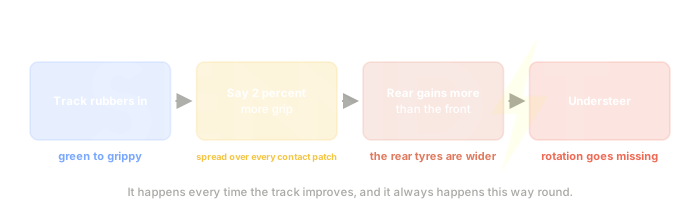
This is a quick hack, but it’s one for you to notice. The grip is always going to be higher at the rear than at the front when you are transitioning from Green track to grippy track. And yes, while you can say yeah, you can change the setup and suit all the conditions between green and grepy, yes.
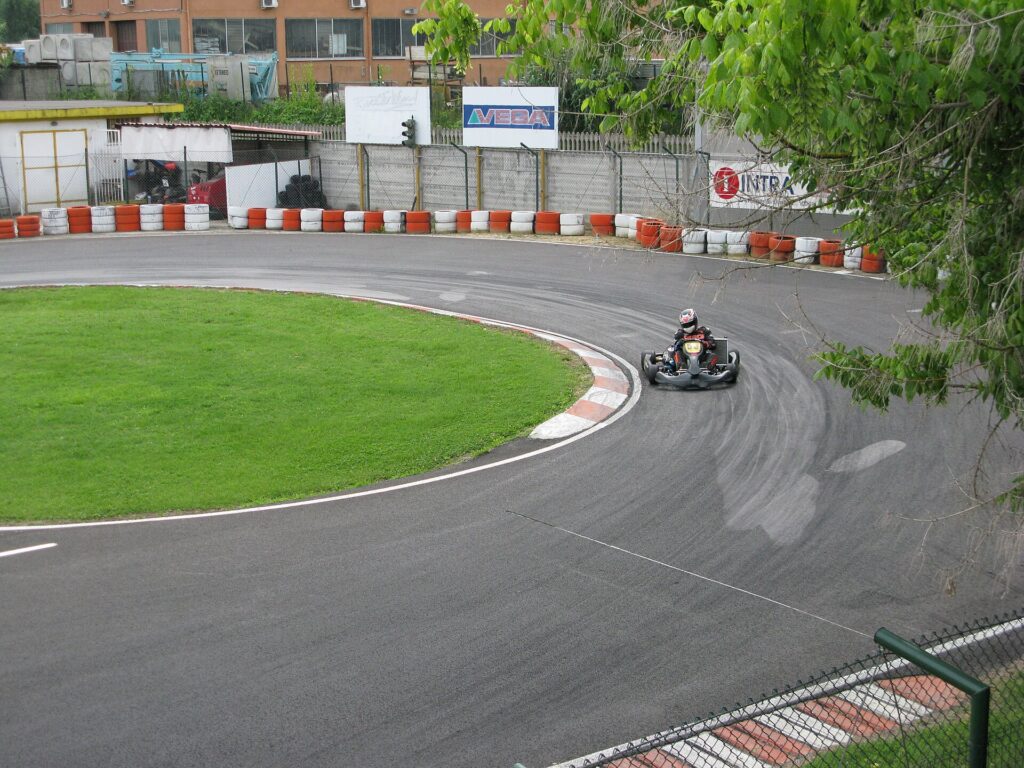
Almost nobody moves the seat, and they should
But the reality is that 99% of the teams and drivers are not going to change the seat position between green to grippy track. They, most of the times, change some axles. They change something on the front. But the reality is that you gotta change something on the seat to make it the which is the weight distribution at the end of the day, to make the rotation either more or less.
Weight distribution: from 70/30 to 60/40
If you want to have more rotation, you gotta put the seat more forward so that you can center the weight and take the weight from the rear. Instead of having a, let’s say, 70 weight distribution on the rear and 30 weight distribution on the front. That is in percentage terms. You’re going to go from a 7030, to a 6040, or even 5545 and yeah, you still have a little bit more weight in the rear, but you have way more in front, which means, yes, you get quite a bit more front and the rear loosens up.
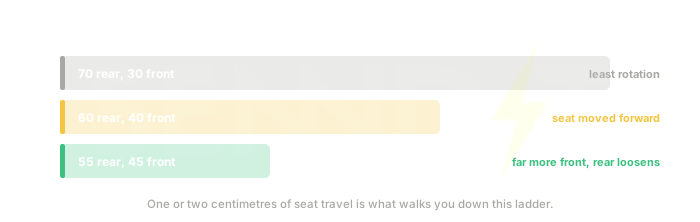
And again, when you need to have that sort of condition in in grippy tracks. where you have understeer, it is going to help you a lot. But again, very few people are going to change the seat. So that’s why I see this not being a common thing to do, to change the seat. So that’s why I prefer the kids to drive with seats that are slightly more forward rather than backwards, because, you know, they can always learn how to drive with with an oversteer a car by doing so.
And if you always drive with an understeering kart, then the moment you are looking to, you know, search for some oversteer. And let’s search for some more rotation. You’re not going to be used to it. And the reality is that you will not develop your car control as well as you could have if you had a more pointy car, more rotation kart from when you start racing, or basically, when you’re going testing and training, you can’t just expect, oh, okay, let’s create a rotation.
Now, you know, you have to be used to that. That’s why Max Verstappen is used to that, and that’s why he’s a legend. And all the other f1 drivers who try to drive his own cars end up crashing or end up, you know, embarrassing themselves, because they just cannot, because they just don’t have the adaptation, they don’t have the muscle memory, they don’t have the, no, I’m not saying the skills.
It’s just they don’t have. They’re not just used to driving such a pointy car from an early age that probably Max was used to. And you know, so for sure, I think Jos taught Max how to drive a very pointy car, and from that moment, I guess it’s been chasing that ever since, and I guess it’s worked really well, four times world champion, and probably gonna sit as one of the greatest, if not the greatest of all time.
But again, not trying to be a fan. Here, I just state the facts. So now that we’ve spoke about so long about why rotation is so fast and why it’s key to be fast, and of course, you need to learn how to drive that, because it’s fast on paper, but if you don’t know how to drive that high rotation vehicle, if you can’t control that, well, then you’re going to be spinning and getting off and making big mistakes more than than what you should have gained by by driving it.
So it’s really about adaptability, adaptability and getting used to it. But the question is, besides the car setup,
Four ways to create rotation while driving
are there any ways that you can alter your rotation as a racing driver? And the answer is yes. There are bunch of ways you can alter rotation in cars and in karts.
1. Rotate with the brakes
So the number one way to alter rotation is with the brakes. Yes, you heard me. Well, rotating with the brakes is the number one way to get the car to rotate, and that’s the reason why you are trailing the brakes, and you are holding the brakes all the way up until the apex in cars. That’s super key, because by doing so, you control the front ride height.
So basically, every time you you hold the brakes, you are essentially transferring the weight forward. You’re you’re basically lowering the front and the rear is kind of lifting up, even though you may have anti-dive and anti-lift, you know, on suspensions, but still, you’re always going to dive in the front whenever you break hard. And in karting is not as much.
It’s not as felt the the kind of transition when you’re braking, but it you also feel it with the flexing of the tubes, and the weight still goes forward. I mean, it’s inevitable. When you brake, the weight moves forward and down a bit. So in in kart, I noticed, you know, why? Because when I drive with my KZ, and sometimes, you know, I’ve had the chance of driving with a very low front bumper that maybe by mistake or for whatever reason, but yeah, I used to feel that when I was braking hard, I could feel that the front bumper was touching the ground.
So that was a clear explanation and a clear example. Of the weight Moving to the front and going actually lower. Okay, so that transition lower and forward. So it’s the same. In cars multiplied, you feel it way more because the weight of the car is way higher. The speeds are way higher, as well as the downfall is way higher.
So in cars, if you are, for example, not holding the brakes until until the apex, you’re losing I remember when we were,
The Hockenheim data that changed my braking
I was in Formula Three. That was my first year. That was basically 2015 and my engineer, Peter, he told me, you know, Alessio, look at this data. And we were early on. I think it was the first race of the year, or not even, I think we were still working on the simulator. Yes, we were on the simulator preparing for the first race.
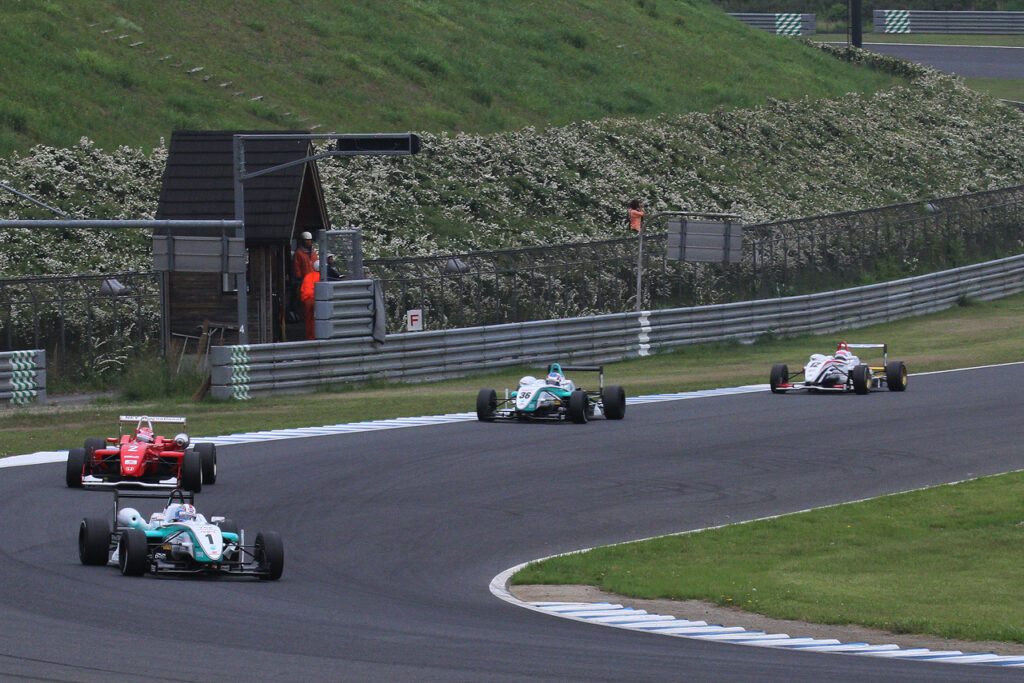
And we were watching the telemetry at Hockenheim of Daniil Kvyat. They had the data from Daniil Kvyat because it was not one of the driver, but it was data being shared by Volkswagen because we were using Volkswagen engine, I think the year before they shared the data, or two years before, I don’t remember, but it was showing me this braking technique in the second corner at Hockenheim, as well as the fourth corner of Hockenheim – basically the two major hairpins you get.
And he was showing me that you need to really hold the brakes up until the up until the apex, because otherwise you would lose the front the car wouldn’t turn and and so I was, I was quite, yeah, I was quite amazed, because I felt I was doing that in karting. I was like, okay, that’s, that’s what I’ve been always doing.
Because, you know, when you break late, you feel like you naturally have to hold the brakes until the apex, although you typically want to pick up the throttle slightly before the apex, you’re always like breaking hard, almost like threshold braking rather than trail braking and locking those tyres. And then you come off just before the apex, and you get on the gas with a very small transition, but you still always have a little bit like, of time of transition, like 0.
1 second or so, because you want to let the kart settle and load and grip before you go on the gas. But in cars, you wanted to reduce that time as little as possible. You basically didn’t want to have any dead zone in cars. In f3 he told me, You know what, you got to hold the brakes. Because I wasn’t really doing that too much on the sim.
I was like, again, doing some dead zone. Basically, I was kind of doing some coasting in the middle of the corner a tiny bit, which is a very common mistake from drivers coming from karts. So especially in the first season, which was my case, I was a total rookie, and so I was like, oh, okay, let’s try it out.
And it was totally right. I mean, when I got out and tried it, the kart felt so much more pitched in the front, and it got way more rotation. And that was the day I realized, oh, you know what, he’s right. I gotta do it all the time then. And yeah, that was the quest to hold the brakes until the apex, which is, again, really, really useful in cars, you’ve got to need it.
Basically,
In a kart, come off the brakes just before the apex
in karting, again, you have to hold the brakes. You have to steer the kart on the brakes. But normally in karting, you want to be slightly before the apex off the brakes. And you just want to be doing a tiny bit of rolling, just because you want the kart to settle. Remember, in cars you have differentials and you have suspensions.
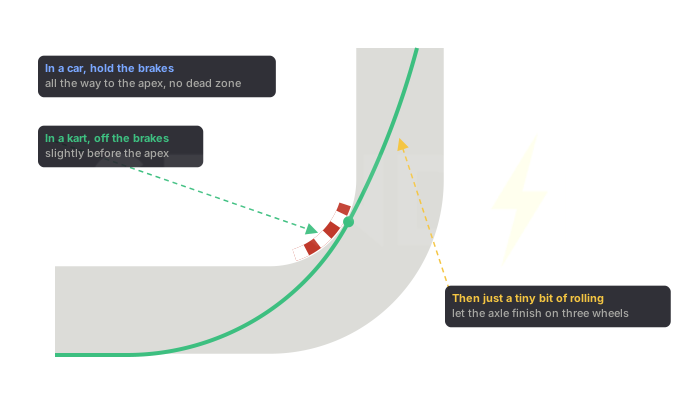
In karting, you got an axle, and you gotta let that axle flex. If you’re driving really hard into the corners and you’re braking really late, and you’re carrying so much speed on the entries, the axle is going to, you know, lift up, and you want to make sure that the axle is just like completing the rotation on three wheels basically before you get on the gas.
Because if you go too early, it is just going to bounce and push into understeer. So you’re not gonna do any good to your kart and basically into your driving. So you really want to make sure you learn how to rotate with the brakes. Though, it’s not just in cars. It’s also in karts. And again, if you I always tell to my drivers, so you have understeer, all right, what is the only thing we can do?
Well, we kind of change the setup, of course, when we’re driving, but what’s the only thing you can do, really, in terms of your of your pedals, what can you do to get more rotation? Well, with my pedals, I can get more rotation with the brakes, and you’re right. All right. Then go out and do it, you know, if you have understeer, you got to make sure you rotate the car with the brakes.
And, I mean, of course, when you’re going through a fast corner, you may not have to use the brakes. So in that case, you’re kind of screwed. And the only thing you can do is to try to induce rotation with the speed and with the steering. But yeah, normally in the hairpins, you really can create a lot of rotation by braking later and harder, holding the brakes a bit longer, and you’ll see the kart is going to rotate better.
So then what’s the next thing you can do to affect the rotation of your kart. Well, the speed,
2. Rotate with entry speed
the speed that you carry, is going to affect the rotation. Well, you’ll be like, Oh, what do you mean, Alessio? What do you mean that you can alter rotation with the speed? Well, think about it, if you are going very slow for whatever reason, let’s say you’re running in the engine. I guess all of you have at least once had to run in an engine, which is like the act of going slow and basically getting the engine to be, you know, little by little, getting up to temperature, getting up to to speed, so that, like, the piston and piston ring, kind of like, gets properly, you know, matched with the with the cylinder.
Anyways, for example, when you’re running in the engine and you are going very slow, you will probably feel that the kart has no rotation, but absolutely nothing, it feels so understeery, right? Yes, because you’re going very slow in the corners, because you have to be, like, 50% of speed on the straights. You have to go, like, releasing the gas every two or three seconds, like, like that.
So you are not going to be fast in the corners either. And by doing so, you will not feel the speed in the corners. And when you’re not high speed into the corners. you are not braking late, you’re not carrying enough speed, you’re not going in the gas the right time, et cetera. you are not going to rotate the kart properly.
And you will notice that. I mean, you notice that when you are running in the engine, the car is not rotating. It’s just like that. So what you learn from this story is that when you instead are carrying the speed and attacking the corners, the car is gonna rotate on his own way more than if you than if you just didn’t push.
So what you have to learn from this is that you’re going to affect, and you have a massive effect on the rotation based on the speed that you carry in the corners. If you carry high speed into corners, your car is going to rotate way more than if you carry little speed into the corners. Then what’s the next thing you can do to rotate the car?
We said about the brakes. We said about the speed that you carry. The next thing you can do in karting, you can’t do it in cars, but in karting,
3. Rotate with your body
you can rotate with the body. Now, why you can’t do that in cars? Well, because in cars, you are strapped with seat belts and you can’t really move. You can only move a little bit your head. But again, you have the HANS device, which doesn’t really let your head move around much, and just in terms of safety, is going to prevent you from, you know, breaking your neck, but I mean, still, you’re not going to be able to move.
And even if you wanted to move in the car, your weight, it’s very, very little compared to the overall weight of the car. Let’s say you’re driving a car that’s 800 kilos, and your weight is 70 kilos. Well, your weight is going to be less than 10% about 8% the weight of the car. So you’re not going to be able to affect a lot in terms of weight transfer, right?
Because we’re all talking about weight transfer. When we’re talking about rotating the kart or car with the weight we’re talking about weight transfer inducing weight transfer. So if you want to get the car to rotate, you gotta use a little bit your body and
Lean out for rotation, lean in to calm it down
do that sort of lean out technique. Because when you lean out, basically you are lifting up the inside rear wheel more easily, and that’s why, normally, softer seats create more rotation, because softer seats lift up the inside rear wheel more than stiffer seats. So if you want to have more weight transfer, you should go for, for example, a softer seat or just leaning out a bit more.
If you have too much weight transfer because you’re too heavy and you lean out too much, then you should try to do well, obviously, either run a stiffer seat, so you reduce the weight transfer, or you should just try to, instead of leaning out, you should lean in. So if you have too much weight transfer, if you have too much rotation, you should lean in.
Okay, if you have not enough rotation, not enough weight transfer, you should lean out. I mean, the thing is, obviously you can change that also with the setup, quite a lot. But let’s say, for whatever reason, you’re in the session, which is, for some reason, very understeery. You cannot switch on the front tyres. The rear tyres have too much grip.
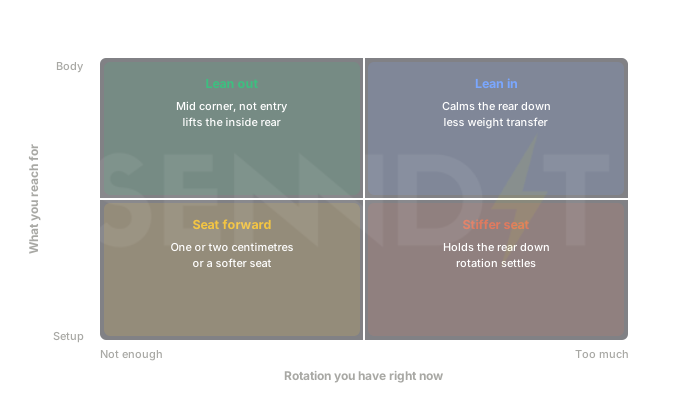
I don’t know. Whatever is the case. If you feel like there’s not enough rotation, you can lean out a little bit in the mid corner, not on the entry in the mid corner. And by doing so, you are fractionally going to lift up the inside rear wheel. And by doing so, you’re going to get more rotation, more rotation, earlier throttle.
That’s it, faster lap time. So again, the end of the story, you can find lap time and find rotation with your body if you lean out, but don’t overdo that. Just do the one you need.
The wet is where this matters most
For example, in the wet, you know we want rotation, right? Because most of times in the wet, we’re lacking front grip rather than rear grip. Yes, we lack also rear grip. But if you get more rotation, believe me, you’re gonna get way faster lap times than if you had too much stability in the rear. There’s this common fallacy in karting that, oh, it’s the rear in the wet that is defining your performance.
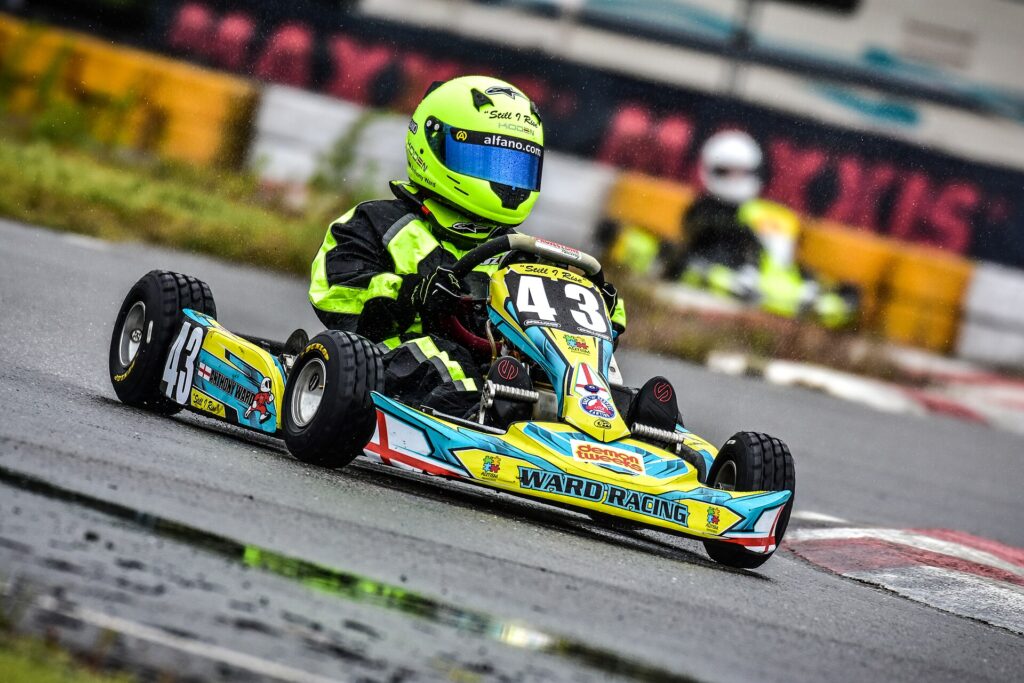
It’s not really true, because if you have too much rear, not enough front, you’re not going to rotate the kart as well, and you’re not going to be fast. That’s why, I mean, I love going with the seat far forward in the wet because, and actually quite high, to create extra weight transfer – which in my case always works well.
But again, we said about rotating the brakes, rotating with the speed, rotating with the body. Now,
4. Rotate with the steering, carefully
let’s talk about how to rotate with the steering normally. You know, in karting we don’t want to use too much the steering. Okay? Because smooth is fast. You don’t want to use too much steering. Okay, if you use too much steering, that’s bad. In cars. You can use a lot of steering because you need to, in the mid corner, use, I mean, as much steering as you need in terms of the I mean, if the car isn’t rotating, you gotta use more steering wheel, of course.
And in karting is not really like that, because if in karting, you’re turning too much, I mean, it’s just gonna make everything worse. So if you need to turn that much because the car is not turning, then you gotta make sure you do something with the setup together with your mechanic. It’s probably because you don’t have enough front, or because the rear is too much and it’s pushing.
So you gotta alter that easiest thing to do if you have so much understeer, not enough rotation. Therefore you need to go further with the seat, at least one or two centimetres. Try that, and you’re gonna see the kart is going to change drastically without you doing anything else first. And, yeah, okay, but let’s say you have a tiny bit of understeer, and it’s, again, maybe the first session in the day.
It’s a bit cold, and you can’t really change the setup for that. Well, what can you do? You can use a tiny bit more steering wheel in the mid corner. Okay, that’s another way to generate rotation. But again, you don’t want to use too much. That’s the reason why you don’t use too much, because, again, it’s, it’s important kart to be smooth.
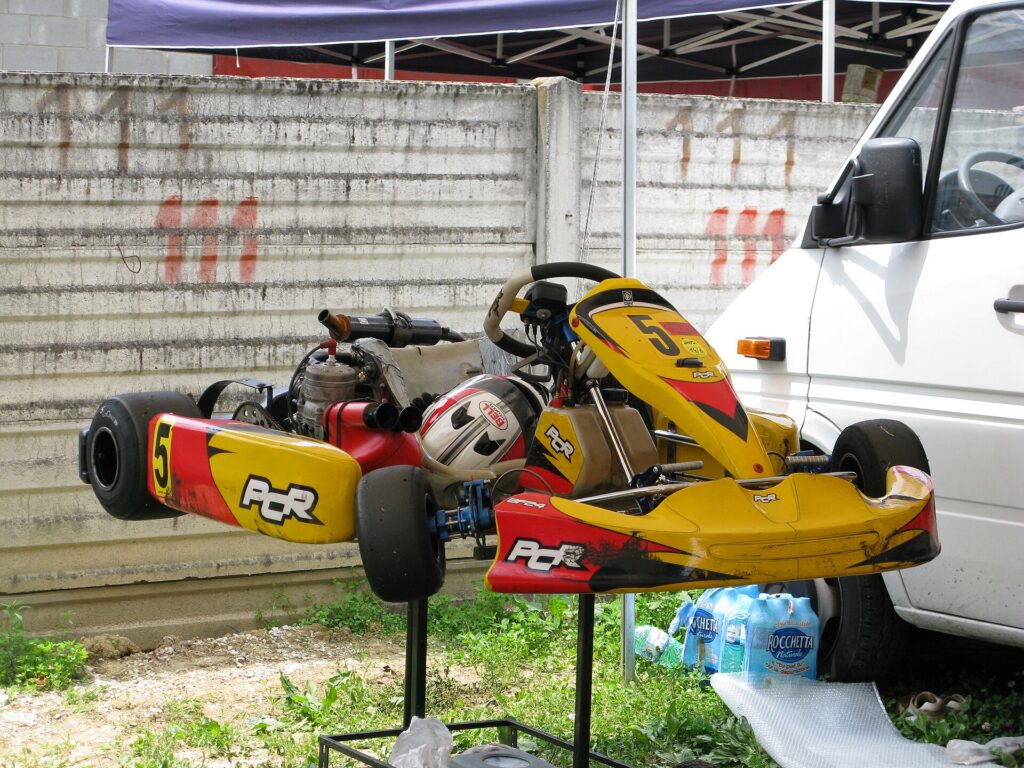
You know, we don’t have suspensions. We have very, very aggressive steering ratios and Ackermann. So what happens is that if you are too aggressive in initial turning in, then you are going to make the whole corner very unstable and unpredictable, and you’re going to overheat the tyres and.
Steering is friction, and friction is a brake
And also remember that the steering acts as a brake, especially with lower powered cars, like 60 Mini or juniors. You don’t have a lot of horsepower, and so the steering can act as a brake. It’s actually friction. So the more your tyres are turning, rather than, you know, pointing straight on the axis of a corner, for example, and the more friction you have, essentially, and that is going to kill some horsepower on the exit.
Now that you have finally understood all of the ways you can affect rotation and why. First of all, it’s super key to chase rotation and why rotation is fast. We talked about Verstappen. We talked about Schumacher, you know, we talked about, you know, drivers like Albon and other drivers not being able to drive the same car as Max Verstappen because it is too pointy at the front, it’s too high rotation.
It’s, it’s very unpredictable to drive.
It is all adaptability, and it starts young
You see, it’s about adaptability. You get, you got to get used to driving a high rotation car. I’m telling you, it’s, it’s something that has to start from as early age as possible. If you start at 16, it’s a bit too late, in my opinion, and that’s why here at BabyRace and at Senndit, I keep telling my drivers, and I force my drivers to drive with very loose rears and high grip front because by doing so, you get used to have the rotation that you need, and it’s always gonna help you a lot.
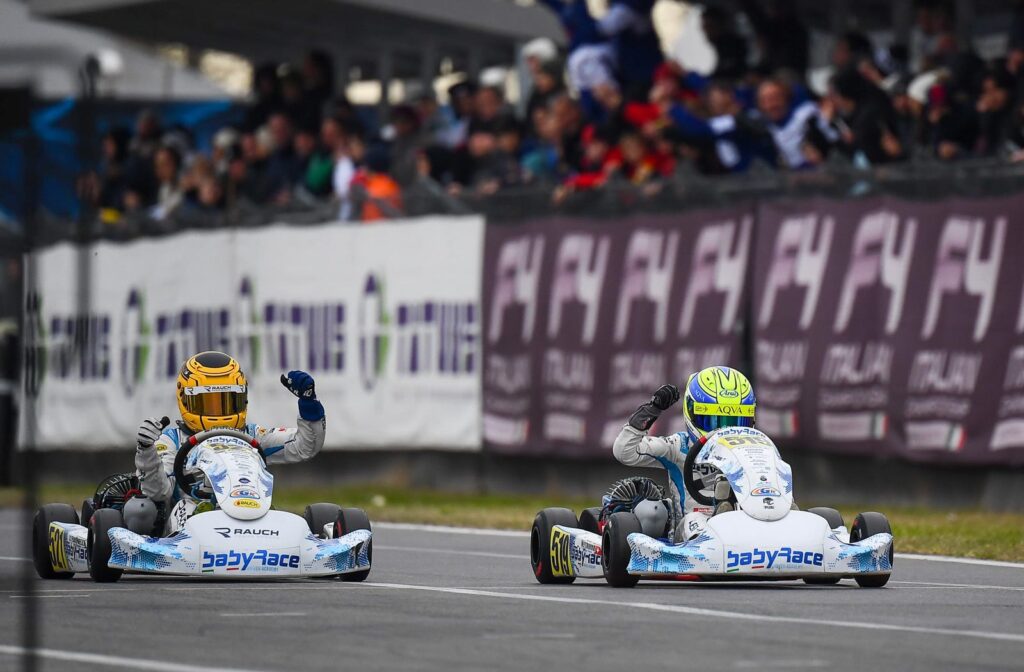
It’s gonna help you a lot. So you gotta make sure you keep working in that and get used to it, because once you get used to it, it’s gonna be part of your driving style. You’re going to be used to this. It’s going to be good for your car control skills. Because remember, whenever you have a lot of rotation, and the car is always like snapping and like sliding on the rear.
I mean, maybe it’s not ideal in that specific moment, but you are developing car control,
Why it is like driving on ice every day
it’s almost like you’re driving on ice every single day, every single lap. And it’s like, you know, the older Finnish drivers, like they’re so good in car control, like Kimi Raikkonen, Valtteri Bottas or Mika Hakkinen, because they, you know, they experience those slippery conditions all the year, not just when they are driving, maybe on ice karting, but also when they’re driving on the road, they might find ice.
And so they are used to driving those conditions. And so, yeah. But again, when you go ice karting, for example, I’ve gone once. It was beautiful. It was so fun. I’m looking forward to going again. But when you go ice karting, essentially you are just driving sideways all the way through, just like sliding on the rear, because that is the only way to get it round.
If you try to rotate the car with the front, it’s just not possible. You gotta induce the rotation. You gotta get used to that. And when you do so, you’re gonna get comfortable to that. You’re going to be adapted to, that you’re just going to be so fast, you’re going to be flying and, yeah, you just have to chase rotation.
You have to create that rotation. And if the car is not rotating in that specific session, you gotta rotate the car, either with the brakes or with the steering or with the weight transfer or with the speed. Okay, it’s very, very important. So I hope this was useful. If you need some onboard video analysis. Sign up to my program.
I’m going to review your onboard videos, and you’re going to find lap time instantly. Otherwise, if you want to sign up to the six months training program, I have a few drivers that I’m admitting every six months, or if you just want to have one on one conversation with me, you can sign up to that coaching plan. I’ll see you remember to keep sending it, generate that rotation.
It’s going to help you. You’re going to become, hopefully, the next Max Verstappen.
Related: entry versus exit rotation, the art of trail braking, and soft seats versus hard seats.
Send your onboard footage. Alessio reviews it corner-by-corner and tells you exactly what's costing you time, and how to fix it. Back within 48 hours.
Get My Onboard Reviewed → Reviewed personally by a CIK FIA World Champion, never an assistant.I promise I'll not spam you with repurposed shitty AI content but real experiences that only I, Alessio Lorandi, experienced. Written in my funny English-Italian tone of voice 😂
Alessio Lorandi is the former CIK FIA World Junior Champion, winning against Lando Norris in 2013 & F3 multiple race winner. He's helped 200+ karting drivers worldwide get faster & win WSK titles with BabyRace Driver Academy & now through Senndit, his online karting coaching platform.