
Soft Seats vs Hard Seats: What’s Faster? | Complete Guide
What is faster, a soft seat or a hard seat? Well, this is the typical question I get asked by drivers and parents, but also sometimes from mechanic…

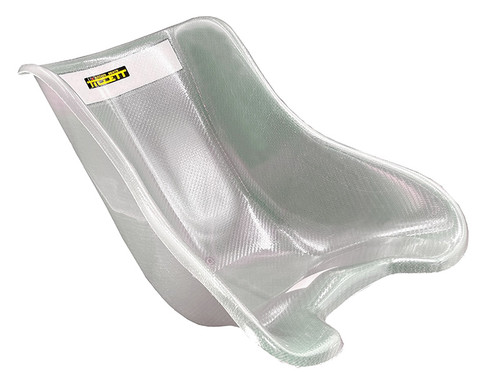
What is faster, a soft seat or a hard seat? Well, this is the typical question I get asked by drivers and parents, but also sometimes from mechanics. The reality is that there’s no such a thing as a faster seat in terms of the softer the better. The reality is that each of the seats’ stiffness models are going to be either better or worse in different conditions, in different scenarios, that’s really my take.
And I know it would have been nicer to hear, “Oh, this is definitely better, and that is definitely worse. But the reality is that there’s no such a thing as a faster seat or a slower seat. Of course, if the seat is completely broken, it’s probably going to be worse than a brand new seat, but the reality is that a completely broken seat may actually work in some scenarios, I’ve seen it happening, for example, because when the seat gets broken, for example, it gets super soft, and you may need a super soft seat when there’s high grip conditions.
- There is no faster seat. There is only the seat that suits the grip you have today.
- A softer seat creates more weight transfer, lifts the inside rear more easily, and gives you rotation.
- A stiffer seat keeps both rear wheels planted — what you want on a slippery track or a fast, flowing layout.
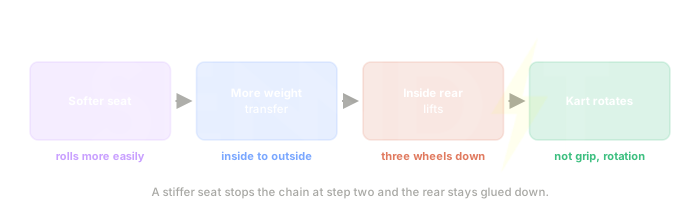
- Lifting the inside rear is not about grip, it is about rotation. Three wheels down rotates; four wheels down pushes.
- Seat stiffness, rear axle and front geometry all pull the same lever. Change one at a time.
- Do not fiddle constantly. Run a medium baseline and change only at the extremes of grip.
- Small light drivers want soft, tall heavy drivers want stiff — they already bring their own weight transfer.
- In the wet, soften it. Counterintuitive, but you need rotation more than you need rear grip.
- Why I went to see Steve Tillett
- The only question that matters: do you need weight transfer?
- Slippery tracks: why a stiffer seat helps
- What the inside rear wheel is really doing
- What it feels like when the rear stays glued down
- Why this matters most in 60 Mini
- How a soft seat prevents snap oversteer
- When you want the rear planted instead
- Seat stiffness, axle and front geometry do the same job
- The three Tillett stiffnesses I actually carry
- Why soft seats exist at all: the tyres got softer
- The Jesolo story: broken seats were faster
- The rule of thumb
- Tillett or Gecko, and building the setup around the seat
- Why tall drivers and small kids need different seats
- Why the wet is counterintuitive
Why I went to see Steve Tillett
I mean, I spoke to Steve Tillett himself, the legend. I came to visit him last year in England because I needed to basically get my custom rib protector made from him to absorb all the shocks on my ribs in order to prepare for upcoming races. Since I wasn’t racing for like five years, I needed a new rib protector, so I went to the UK and Steve custom made one for me, which is absolutely amazing.
I also have the other one from Tillett, but this one is, of course, more precise, but the other one is also amazing, the P1 Defender, which is, I mean, amazing, but if you want to obviously have something a little bit more, I don’t think it’s available to everybody, you just need to have a request, but you know, since it’s made one-to-one custom, it’s not for everyone, but anyways, let’s go back to it, the reality is that a soft seat like that one, you know, could be super fast if the track is super grippy and you need to generate the weight transfer.
The only question that matters: do you need weight transfer?
So now that you have an idea of what I said is like a soft seat essentially is going to create more weight transfer, is that better or worse? Well, the reality is that, do you need the weight transfer or not? Do you need the, you know, the weight to shift from the inside to the outside, more or not. That’s basically the question.
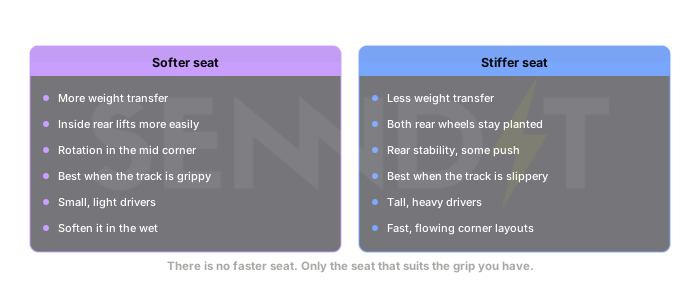
That’s why there’s not such a thing as the softer the better, or the harder the better, in terms of seat stiffness. So I get asked this question a lot, and what I said to them, listen, do you need weight transfer or not? All right,
Slippery tracks: why a stiffer seat helps
so when I see this trend of going towards slipperier and slipperier tracks. The reality is that you may need to have a stiffer seat, because in that case it’s actually going to reduce the weight transfer, so the rear wheels are going to stay more rigid and more firm to the ground, and they’re not going to lift up as much.
What the inside rear wheel is really doing
Okay, essentially when you have a stiff seat, the inside rear wheel is going to lift up less. This basically what Steve told me. Any, any, I mean, I totally relate to that, because when you have a softer seat, it’s happening the opposite, which means when you’re having a softer seat, the inside rear wheel lifts up easier, because again, there’s more transfer from the inside to the outside, and so there’s, if there’s more transfer, the inside rear wheel lifts up, and is that a better thing or a worse thing?
Well, again, do you need it or not? If your inside rear wheel lifts up, what’s going to happen? Is it going to be more grip or less grip? Well, the reality is not going to be either the two. What’s going to happen is that when you lift up your inside rear wheel, you’re going to have more rotation. That’s it.
You’re going to have more rotation, because again, the kart rotates more when you have three wheels touching the ground and one lift up, then if you have four wheels touching the ground,
What it feels like when the rear stays glued down
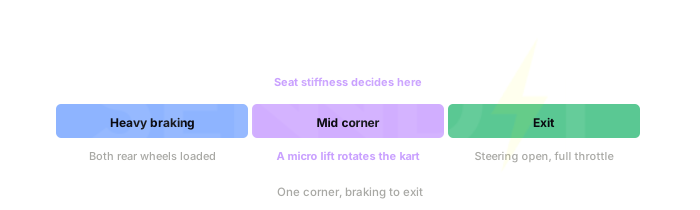
and I have experienced this a lot in my life. I mean, when you have all four wheels and the two rear wheels, obviously on the ground, let’s say on the mid corner at the end of a heavy braking zone, and the two wheels are basically like completely attached and glued to the ground, because yes, either you didn’t carry enough speed, or your seat is too stiff, or because your axle is too stiff, and if you can’t get the sort of like bit of roll and like lift up of the inside rear wheel, then it’s gonna generate understeer and basically a rear push, which you may need it in some cases, but in some cases it may be just very deadly, for example, in 60 Mini,
Why this matters most in 60 Mini
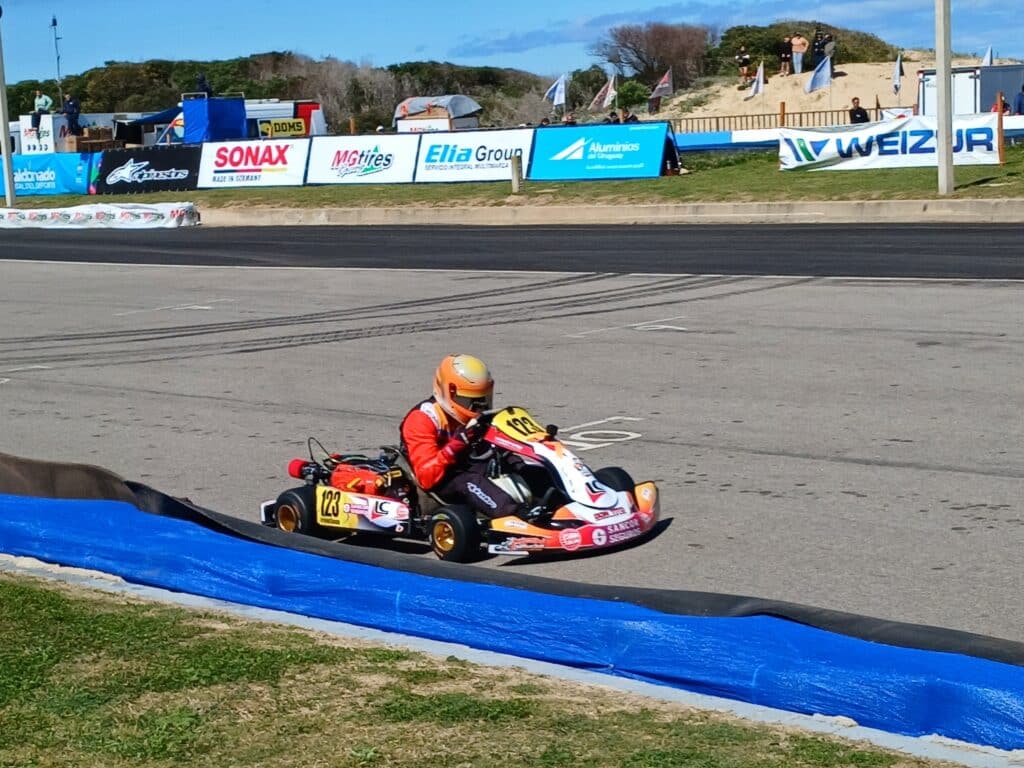
where you have only 11 horsepower, it’s quite deadly to have too much steering angle in the mid to exit phase of a corner, because you want to ideally just be open with the steering and just like drive out without any extra drag from the front, because yes, guys, when you have too much steering angle, it essentially becomes dragged, and it’s just gonna slow you down, so in some cases it’s gonna turn into snap oversteer.
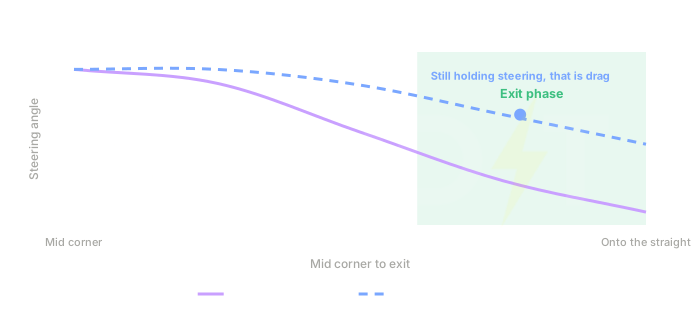
If you have a high power kart and you go from understeer and you try to pick up the gas abruptly, you’re gonna get snap oversteer because you had understeer first.
How a soft seat prevents snap oversteer
So the reality is that when you have a soft seat, you are going to prevent that, because you’re going to have more weight transfer from inside to outside, and you may need that little micro lift in the mid corner, which rotates you, and then you have completed rotation more than if you had the stiff seat, and that’s in that case good, because it just opens you up, and you’re ready to go full throttle, and not having to use too much steering on the exit,
When you want the rear planted instead
but of course, if the grip level is too low, all right, you may need a more. Or planted rear end, and again, you may need both wheels attached and glued to the ground, rather than lifting one up. So, yeah, in that case, you may have a little bit of understeer, like real push, but in that case, again, the rear grip may be very strong, and you can compensate with huge amount of front grip, in terms of caster, in terms of front track width, etc.
But, yeah, you can compensate it if you kind of need a lot of rear grip in the rear. Normally, it makes sense to add a stiffer seat or to stiffen up the current seat you have. All right, but again, it’s not either fast or slower. It depends on what you need, but again, if you need more, more stability from the rear, and let’s say more, yes, I would say more rear push, I would say you go probably with a stiffer seat instead.
If you need more rotation from the rear end, especially in the mid corner, you want the inside rear wheel to lift up. Then, yeah, you will want to go for a softer seat. That’s basically it. You know, if you every time you think about your balance on track, you always want to think, okay, am I able to rotate the car as well as I want in the mid corner or not, because you know, if you are not able to rotate there, there may be tons of things that you, you can work on, it can be a lot of things.
Before thinking about weight distribution, there’s other things you can consider, even though, to be honest, I like to tweak the weight distribution first, especially if you know I have different seats where I can place them all at different positions, whether a little bit more forward, a little bit more backwards, but again, the seat position is not going to affect massively whether, in terms of, you know, if your seat is moved way forward or way backwards, that’s not massively going to affect whether your inside rear wheel lifts up.
I mean, at some point, yes, it does, but it’s not that much. What it’s
Seat stiffness, axle and front geometry do the same job
affecting the most is the seat stiffness, the seat stiffness, whether it’s soft or hard, also the rear axle, whether it’s soft or hard, but also equally the front geometry. Okay, if you have a very negative front geometry, in a way, a lot of negative caster and a lot of negative camber, in that case, you are going to lift up more easily the inside rear wheel, which, again, in many cases it’s good.
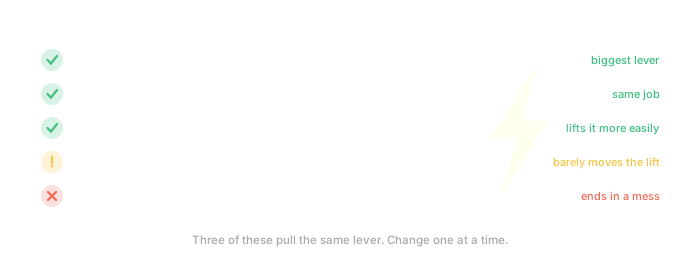
Okay, in some cases it may not be good, but in many cases I like to see that, because it just creates more rotation, and in some cases, maybe extreme, like when you have an extremely high amount of grip on track, and you don’t want to generate, let’s say, the inside rear wheel lift by having too much front in terms of too much negative front geometry, but you may want to generate that inside-rear lift to basically free up the rear by having a soft seat.
So, I mean, there’s a lot of things you have to consider, I would say, but it’s not like, oh, you should do this, this, and that, and you will always be fast. No, it’s always like moving target setup, tuning is always a moving target, and when it comes down to seat stiffness, it’s, it’s really like that. I mean, it’s, it’s gonna work particularly well in some conditions, a stiff seat, and it’s gonna work particularly bad in other conditions, and vice versa.
A soft seat is gonna be, when the stiff seat is bad, the soft seat is better. But to be honest, what I’ve noticed over the years, that you shouldn’t be playing too much with seat stiffness, like
The three Tillett stiffnesses I actually carry
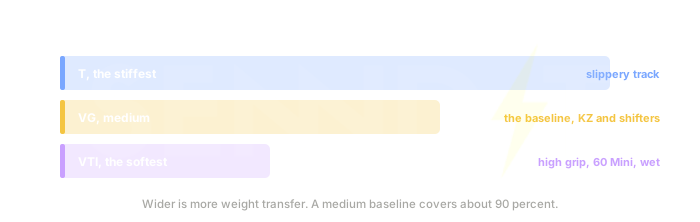
I always like to have a three different rigidity from Tillett, in you know, in my seats, so I always have the different rigidity if I actually need it. For example, if if again there’s a lot of grip and I want to free it up a little bit, I’m gonna go with a softer version, the VTI, instead. In the opposite scenario, if the track is super slippery, and I want a little bit more, you know, support and load on both rear wheels, I will then go for the stiffer one, which is the T, right?
That’s the T version from Tillett. Instead, if I have similar conditions and, you know, medium grip level, I’ll go with the VG, which, to be honest, in KZ in shifter, it’s the one that works the best, the VG, I’d say, and yeah, I mean, I just feel that is what I like to be working on the most. It’s quite, it’s quite consistent, whereas in mini 60 Mini, we always drive with the VTI, which is the softest Tillett makes.
We tried the other ones, they are fine in some conditions, but when a grip comes, especially with 60 Mini, because you know you need to again release the rear grip to have better exits. You normally want to be softer, and that’s why I went to the UK, and I had a conversation with Steve, and he was like, yeah, that’s why
Why soft seats exist at all: the tyres got softer
we started to introduce this very soft seats, because at first it was only, you know, stiff seats in the past, but then they started to make softer and softer tires, especially in the early 2000s and early 2010 1112, there were very soft tyres, and in that case you, you really could have the crust of rubber on the on on tarmac, you could really see that crust of rubber being piled up, and in that case the only way to free it up was to have a soft seat that would generate the weight transfer, and once you had the transfer, then you would have the rotation, otherwise you would pick understeer, and you would get stuck, basically, and dragging out on the exit of the corners.
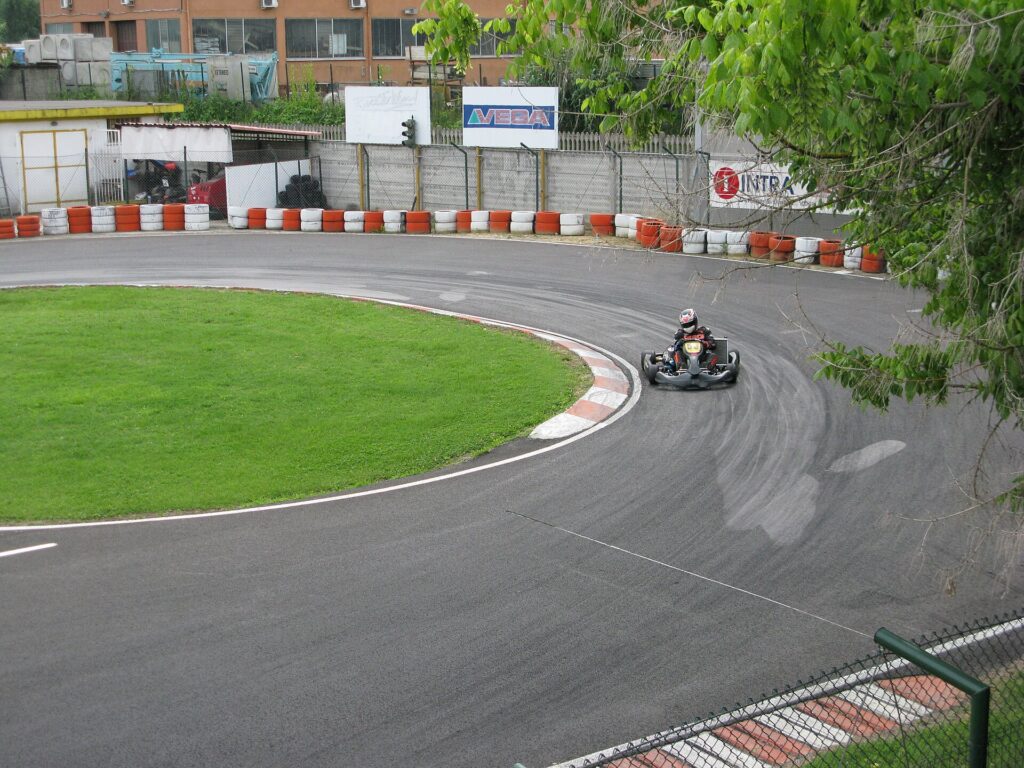
So that’s what he said. Well, since the rubber got softer and softer, we had to make softer seats, and they started to work better.
The Jesolo story: broken seats were faster
And he told me this anecdote about Jesolo, a track in northern Italy, close to Venice. In Jesolo they realised that with broken seats they were faster, and, and so they started to create the softer seats with, with high grip conditions, and he started go faster, and I’ve noticed it, to be honest, even though we are in the softer seats, the VTI, the Tillett ones, we, we typically sometimes break them up, but not on purpose, you know, just by, by, yeah, driving and driving, driving, they sometimes obviously micro fracture the seats, but sometimes they go faster, because you may need extra softness, and in that case, when you go to very high grip scenarios, those seats may be really, really fast, because they free up a little bit the chassis even more in the rear, and again, 60 Mini, you may really need that.
So, yeah, I just feel that that’s rule of thumb.
The rule of thumb
Do you want more weight transfer or not? If you want more weight transfer, you’re gonna go with a softer seat. If you want less, you want to go for the stiffer seat. And again, typically it results in more loose rear with a soft seat and more, let’s say, rear stability and rigidity with a stiffer seat, which means it’s less easy to lift up the inside rear wheel, but in some cases you may need that, you know, if you are going fast corners, if you’re in a track with a lot of fast corners, and you don’t really necessarily need to lift the inside rear wheel, and you need like stability, also if you need many minimum speed corners, and you’d need more like the rear stability rather than just like the like a whole transfer to the outside, then in that case, yes, it makes sense to run a stiffer seat, which keeps everything a little bit more compressed.
For example,
Tillett or Gecko, and building the setup around the seat
the ones from Gecko, they are quite stiff, and yeah, they also have different rigidity. They also have the carbon ones, which are softer, but yeah, normally that’s the two options in mainly Tillett or Gecko, and just, you know, I’m sure you can set up the chassis based on both, you know, you can obviously you can set them up differently, you know, if you build the setup around one specific seat model, then you will have to tune and tweak other settings in the chassis in the setup, but realistically you can still find similar, you know, similar balance with either of the seats, but the reality is that the seat is still, I think, the core of the chassis, like the seat position and the seat stiffness is still key, because if the weight distribution is is not enough at the front or not enough at the rear, and it’s not enough in terms of like lateral, you know, roll, that’s also not good, you know, you gotta have that one nailed first, that’s why the top teams, they always have the, you know, like baseline setup, which is gonna be good in 90% of the times, and then in those 10% of the times, you know, it’s gonna be a bit of suffering, but the reality is that if you try to go and be too smart about seats and try to change the rigidity all the time, things gonna be a bit of a mess, to be honest, but yeah, you can have the softest seats version, the VTI, as well as the stiffest seat version, which is the T, and from Tillett, and you can basically have them both in the same drilled position.
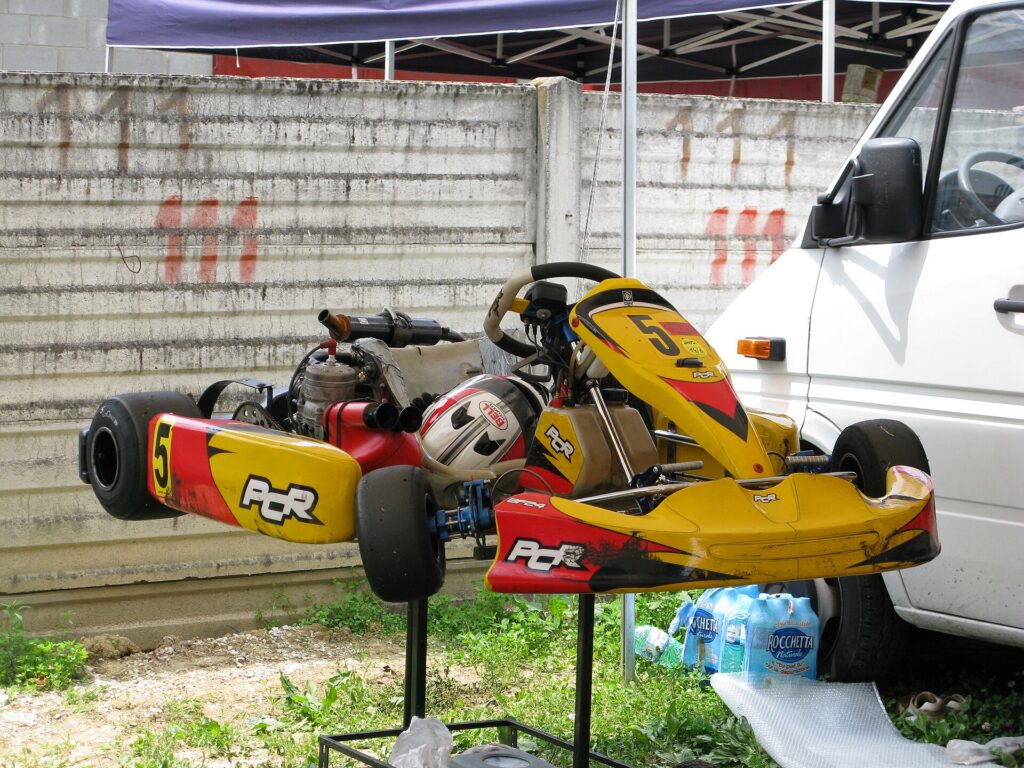
Okay, in the same position, so that you can basically swap them if you need them, just to make a test, and you can go from stiffest to softest, and in based on your tires that you’re using for your specific races, or based on your driving style, one of the two is probably gonna work better, and it changes a lot, also in terms of body composition and height, etc.
Okay, I’ve come, I’ve come to realize that normally
Why tall drivers and small kids need different seats
the taller drivers already have a lot of weight transfer themselves, because again, they’re tall and they’re heavy most of the cases, so it’s a little bit hard for them to, it’s a little bit hard for them to go with the very soft seat, because they’re having way too much weight transfer. So with smaller drivers, younger drivers that are already having a lot of weights on their cars, which already, when you add a lot of weights, that ballast itself stiffens up the seat.
So, and also, the small kids have less weight to transfer, so normally the small kids are gonna work better with the with a softer seat, whereas yeah, taller drivers, heavier drivers are gonna work better with a with a stiffer seat. Well, I hope after this guides, now you have more of an idea what what’s to do with seat stiffness.
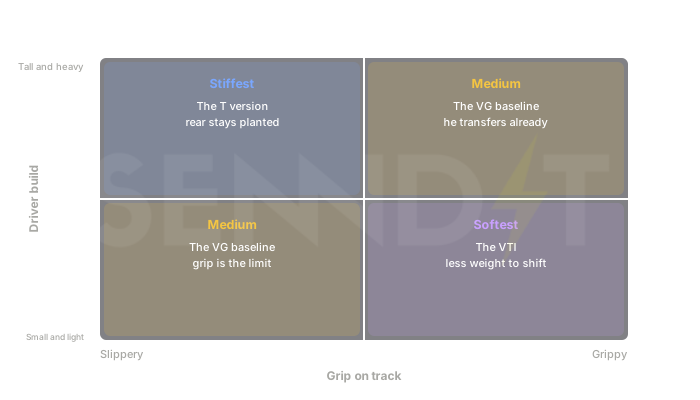
I mean, I hope this was useful. As I said, remember, there’s no one size fits all, which is either it’s better or it’s worse, it’s not true at all, and, and so it’s really coming down to the specific condition, the specific track condition, whether it’s slippery or grippy, the specific tires you’re running, because sometimes you have tires where you want to wear more weight transfer, but you may also have tires where you need less weight transfer, so it’s important to really understand what what’s there in the requirements and what’s the conditions right now, but again, I wouldn’t play too much with the seats, like the best bet you could do is to go for a medium seat stiffness, which is like the VG in shifters, like at Sodi, they always run the VG, what I know, but of course in some scenarios they may need to change stiffness, but you know, like the top teams are going to normally have a medium rigidity to start, and then they may, you know, change rigidity whenever they need it based on extremely low grip or extremely high grip scenarios, but you know, you might ask:
Why the wet is counterintuitive
but why in the wet you normally loosen up the seat, in normally in the wet, you know, it’s very low grip conditions, so in the wet you may want to, you know, you may want to have more. Grip right, but reality, yeah, it’s that’s why racing in karting is a bit counterintuitive, because in the wet it would make sense to stiffen up the seat, but the reality, if you stiffen up the seat, you have less rotation, so I actually like to soften up the seat a lot whenever I drive in the wet by, you know, just like either changing the seat completely or by actually just like, yeah, just softening it up on the sides, at the bottom or top.
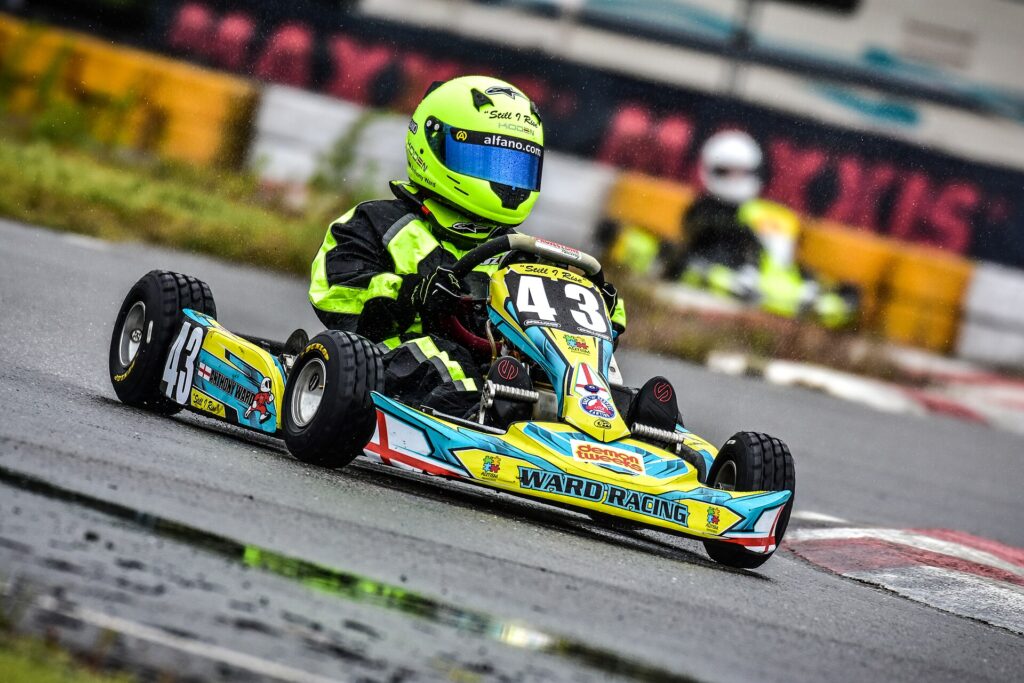
Mostly, I like to soften it up at the bottom, but, but yeah, the reality is that, yeah, in the wets, you normally have to do something which is counterintuitive, and you know, you know, everybody wants to add rear grip in the wet, but I kind of disagree, and what needs to be added the most is the rotation, because that’s when you pick up the speed, you need a lot of front, and I’m not saying the rear has to be free.
The rear can still have big hubs, etc. But yeah, that’s the topic for another guide another day. But yeah, in the wet, normally, even though you may feel like you should go with a stiffer seat, most of the times it just doesn’t work, in my opinion. Just better to have more weight transfer in the wet, that’s why drivers are, you know, moving their head, moving their body to the opposite side, in the mid corner.
That’s because they want to, that’s because they want to load more the outside, because they want to rotate the car more. That’s basically it, you know. So, if they want to get the weight transfer for the rotation, then why would you go with a stiff seat? It wouldn’t make sense, right? At the end of the day, it really comes down to what you need, you need more weight transfer to get more rotation, or not.
Okay, and again, it depends on the driver, it depends on the track, and it depends on the tires, it depends on many, many things, and obviously the grip level on track, not just a track layout. So, I hope this was useful. If you want to find some lap time right away, just send me an onboard video, and I will analyze it for you.

Otherwise, you can try to apply for the six months training program, where I’m going to take you from zero to hero over the six months, and I’m pretty sure I can turn you into a successful racing driver with one-to-one Zoom calls, as well as 600 plus pre-recorded video lessons. And yeah, whatever happens, make sure you hit me up on Instagram, I’ll be happy to get in touch @alessiolorandi.
I’ll see you. Bye.
Related on the setup side: how weight transfer actually works, how a chassis reacts to track conditions, and the full karting setup masterclass.
Send your onboard footage. Alessio reviews it corner-by-corner and tells you exactly what's costing you time, and how to fix it. Back within 48 hours.
Get My Onboard Reviewed → Reviewed personally by a CIK FIA World Champion, never an assistant.I promise I'll not spam you with repurposed shitty AI content but real experiences that only I, Alessio Lorandi, experienced. Written in my funny English-Italian tone of voice 😂
Alessio Lorandi is the former CIK FIA World Junior Champion, winning against Lando Norris in 2013 & F3 multiple race winner. He's helped 200+ karting drivers worldwide get faster & win WSK titles with BabyRace Driver Academy & now through Senndit, his online karting coaching platform.