
Banking Explained: Positive vs Negative Banking
Imagine you’re doing the track walk for the first time on a brand new circuit, and while going through the track walk, you notice that one co…


Imagine you’re doing the track walk for the first time on a brand new circuit, and while going through the track walk, you notice that one corner is very strange. For example, let’s say it’s turn three, you notice that that corner is not flat, like you always seen, it’s inclined, it has some inclination, which is like, okay, this is weird.
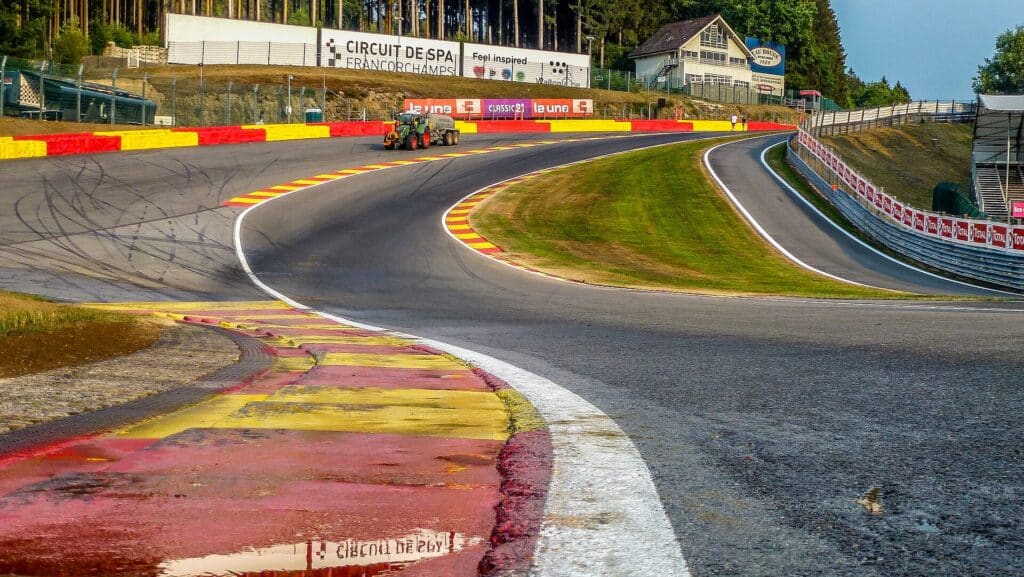
I mean, I’ve seen some Formula One races, and I’ve seen, for example, tracks like Zandvoort, having a lot of banking, and I’ve also seen other tracks, for example, like Spa’s Raidillon, or turn one at Austin, Texas. But what banking is all about, and what are the two main forms of banking? Well, the only two, actually. So, you know, there’s
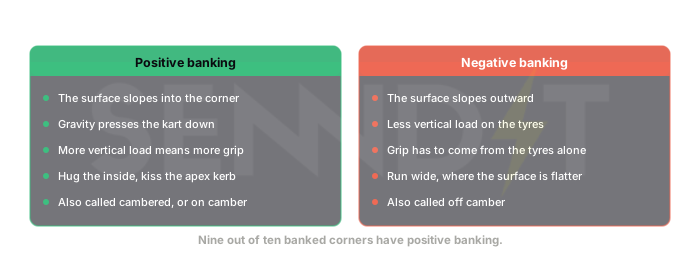
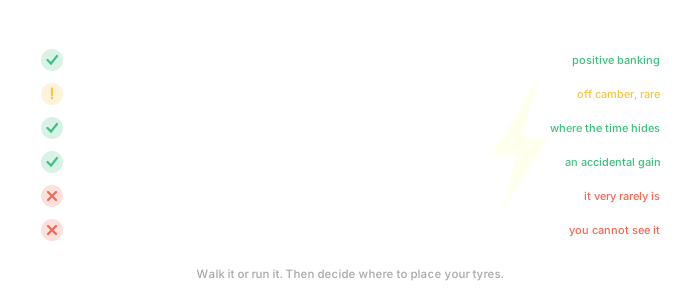
- Positive banking slopes into the corner and adds vertical load, which is grip. Negative banking (off-camber) takes it away.
- Nine out of ten banked corners are positive. Genuine off-camber corners are rare, and they are the ones that catch people out.
- In a positive banked corner, precision beats entry speed. Missing the apex by half a metre costs more than a kilometre an hour on entry.
- Positive banking: hug the inside. Negative banking: run wide, where the surface is flatter.
- Micro banking is where the time hides — the accidental tilt nobody designed, that makes an unconventional line faster.
- Unexplained front lock-ups often mean off-camber, not bad braking.
- You cannot see any of this from the seat. Walk or run the track, every day you are there.
- The two types of banking
- Positive banking: the slope works with you
- The physics: vertical load is grip
- Why the track walk is not optional
- So which one is faster?
- Nine out of ten banked corners are positive
- Zandvoort, Monza and the ovals
- Where the banking actually is on karting tracks
- Precision beats entry speed in a banked corner
- Why kids tip onto two wheels in banked corners
- In a positive banked corner, the mid-corner is king
- In a negative banked corner, go wide
- Adjust before you drive, not during
- Micro banking is where the real time is
- How I spot a special driver
- What to do on your next track walk
- Why you lock the fronts on an off-camber entry
The two types of banking
two separate types of banking, and that’s called positive banking and negative banking, and what banking is all about is the angle at which a track’s corner is sloped relative to the horizontal plane, so you have to imagine there’s a horizontal plane, and you need to understand that that corner has now an angle, okay, and it’s basically sloped in a certain direction, either sloped in or sloped out, so, and that’s basically the difference between positive and negative banking.
Positive banking: the slope works with you
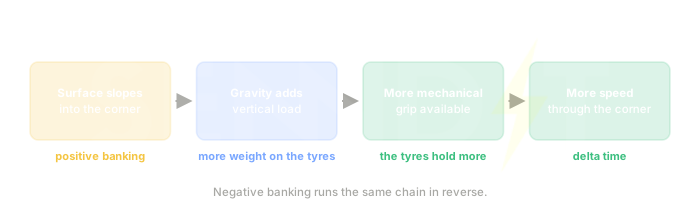
So, positive banking has basically a slope, which is inward, that naturally pulls the vehicles, the cars through the corners, whereas negative banking, right, is the opposite, is actually sloping outward, and that forces the vehicle to really rely entirely on mechanical grip and friction, whether they’re not relying as much on the vertical gravitational force, which is commonly referred to as gravity, essentially, and that sort of gravity is amplified a lot with positive banking corners, whereas for negative banking corners is quite the opposite.
In fact, you’re not really taking advantage as much of the banking of the, of the gravity. Okay, you’re not taking advantage of that, and that really is.. I mean, it’s at the end of the day, it’s
The physics: vertical load is grip
a physics principle. Whenever you have more vertical load from the gravity, you’re going to essentially have more grip, whereas when you have less vertical load, when you have less, you know, gravity, let’s say force on on the kart, or on the car, whatever your vehicle you’re driving, at the end of the day, you are going to have less total mechanical grip available, and that basically determines how much speed you can carry into a corner, and that really is a difference, because I mean, we wouldn’t care if the corners had different inclination, in just in terms of aesthetics, you know, in terms of how they look, oh, this corner looks nice, this kind of looks not so nice.
I mean, we don’t care about that, but what we care is how to find lap time. I mean, at the end of the day, our delta time is our religion, as I like to say, and we need to really identify those corners that have either positive or negative banking, and try to find lap time by understanding how they’re made, because again, that’s by the way, super important to make the track well, because when you are driving on track, you’re not noticing those things as much as you do when you walk the track.

That’s why I believe it’s
Why the track walk is not optional
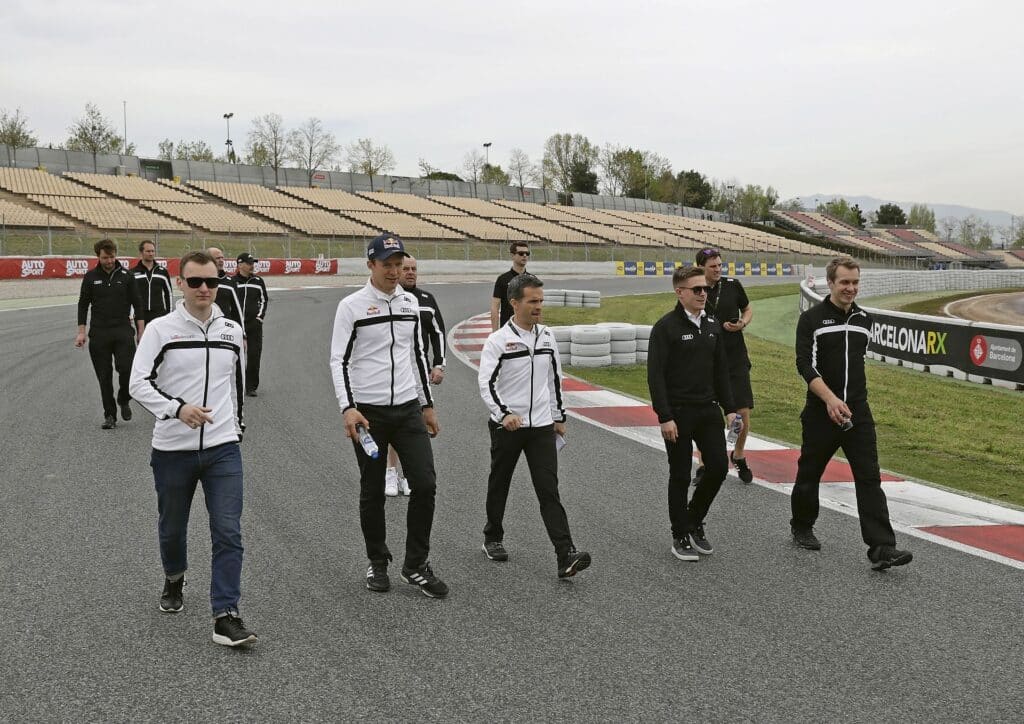
a mandatory task to complete in every time you go to a new track, but also when you go to tracks you’ve been already several times, and I like to make this a daily habit of walking the track, or even running the track, as we do with the kids at BabyRace, where we always try to spot something different. We always try to spot something, you know, new every time we go to the track.
I mean, and this is something you should probably do as well. But realistically, yeah, it’s very important to understand the inclination of the circuits, not just inclination going up and going down, whether it’s uphill or downhill, which, by the way, changes a lot. Again, the braking, braking place, the braking efficiency, and again mechanical grip, but also the banking, which is again the either negative or positive inclination into corner, is going to massively affect.
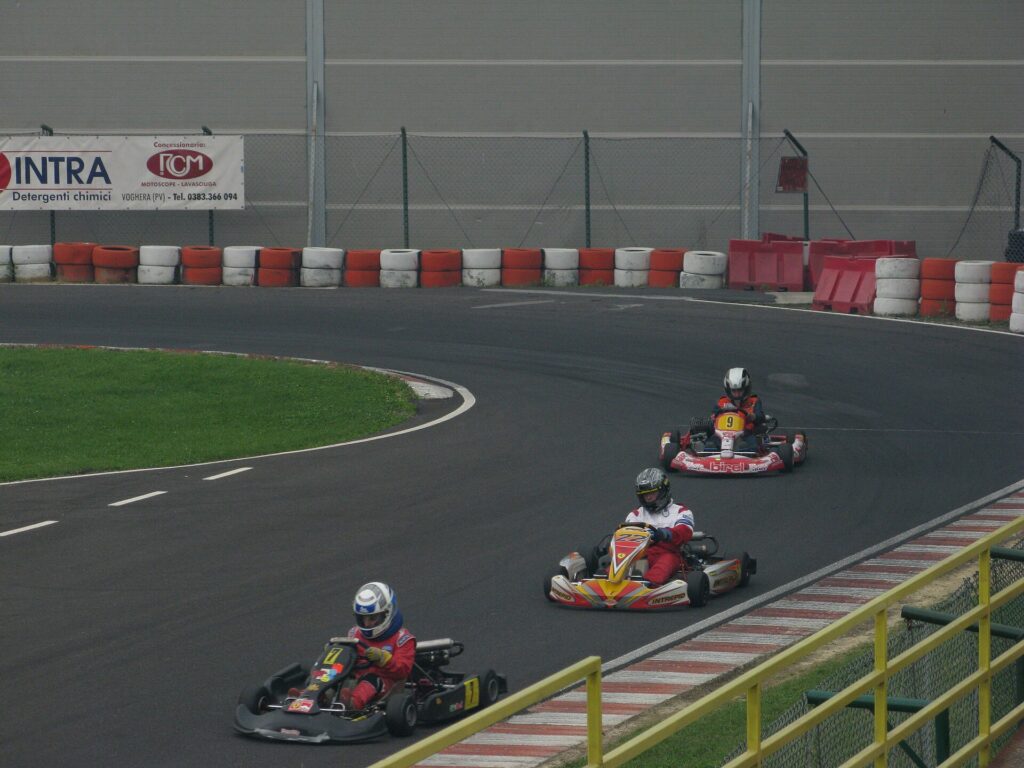
So which one is faster?
So, which one is faster, positive banking corners or negative banking corners? Imagine you had two exact same corners with exact same layout, exact same, you know, with exact same angle, etc. What it’s going to change in terms of positive to negative banking. Well, it’s going to change massively if you have a corner which has, I don’t know, let’s say five degrees of positive banking versus a corner that has five degrees of negative banking.
It’s going to change massively the speed you can carry into the corner, probably about two tenths, I would say, or it’s very hard to quantify. I mean, I can’t really quantify it, but that’s just my guess, but you know there’s corners with a lot of banking where you can carry huge amounts. Well, when I talk about a lot of banking, I most of the time talk as positive banking, which, by the way, is the most common types of corners you get in terms of banking.
You know, I would say
Nine out of ten banked corners are positive
nine out of 10 banking corners will have positive banking rather than bank negative banking corners, and basically those positive banking corners, which are also referred as cambered into the corner. Okay, so that’s like either banked, positive banks, or cambered, or on-camber, whereas the negative banking are called also off cambered. But anyways, again, the positive banking corners are the most frequent, to be honest.
I mean, you don’t get them a lot. They are either built by pure, let’s say, luck, in terms of, like, you know, it just happens the moment they build the track, they don’t really plan for it sometimes, and it just happens, you know, that you have a corner which has a different inclination, normally it’s because, you know, when they build the kerb it kind of tilts in a little bit, but there I would say
Zandvoort, Monza and the ovals
most of the modern tracks are being built with positive banking in mind, such as the track Zandvoort, you know, in the Netherlands, the Dutch GP. It’s just amazing. I mean, I raced there two times, no, actually four, I raced four times there in Formula 3. I mean, it was two times per year, because there was the FIA Formula 3 European Championship, but then it was also like the Zandvoort Masters, that’s where they were called, and I remember very well that turn one was super positive banked, but like crazy, and now in F1 they built the massive Parabolica in the last couple of corners, which is crazy, I mean, also looking at it, also, Monza, in the past, used to have the historical Parabolica, which was super banked, and you know, IndyCars, they have a lot of banking, and you know, also NASCAR, you know, at the end of the day, they’re using the same tracks, aren’t they?
I mean, I’m not a big Nascar expert, but yeah, they seem to be using the same tracks in terms of ovals, but you can see the ovals have a lot of positive banking built in place, and that’s why they want to stay nice and low in the banking most of the times, because there’s more, there’s more grip in general.
And imagine if they built an oval with negative banking, I mean, that would be quite crazy, because everybody would have to drive as farther out as possible, where there is the lower area, basically, as you know, in the case of Zandvoort turn four, you know, and they have to, you can see they have to go so wide in the mid corner, there’s basically no such a thing anymore as an apex, because they are just, yeah, going as wide as possible, because the lower you are, the actually more mechanical grip you are, so even though you make a lot of distance, the speed that you carry compensates so much with the distance you make, so that’s an important thing to consider, and yeah, I mean, in tracks, imagine in ovals for IndyCars, they had negative banking instead of positive, it would be quite crazy, because they would have to be driving so close to the walls all the time, and it would be actually pretty dangerous.
So, I think that’s one of the reasons why they made them positive, so that it actually requires drivers to stay further out from the walls, in general, even though they still make massive crashes every year, but maybe like this they are doing less, so that’s the two things. Which one is faster? Obviously, positive banking is way faster than negative banking corners, and negative banking corners are really tricky to drive.
To be honest, in karting, I don’t get to see many of those. It’s very rare, and it’s like, you know, it’s not usual really to have those kind of negative bank corners, and even in F1, I cannot name many, you know. Yes, I can name the one of Zandvoort, turn four, but to be honest, off the top of my head, I don’t have many others, and you know, in terms of karting in Italy, for example,
Where the banking actually is on karting tracks
the corners that I know have the most banking are, for example, are at Sarno, and you know, again, it’s not extreme, you don’t get an extreme amount of banking, it’s like a tiny bit of banking here, a tiny bit of banking there. There’s also tracks like at Motorland Aragon, that was crazy in terms of banking, you know, there’s the final sectors, it’s just crazy how the amount of banking, so that was the track where I saw the most amount of banking and undulation, so elevation changes in my life, that was quite insane.
But then we have tracks like Sarno, Cremona here in Italy, which is not a lot of banking, it’s just tiny bit. But yeah, you get to, you get to feel it. For example, at Sarno, you have the last corner before the chicane, you have a bit of banking, and you have to be super precise at the apex, because I mean, the closer you are to the apex, the narrower you are, the more mechanical grip you get, the faster you are.
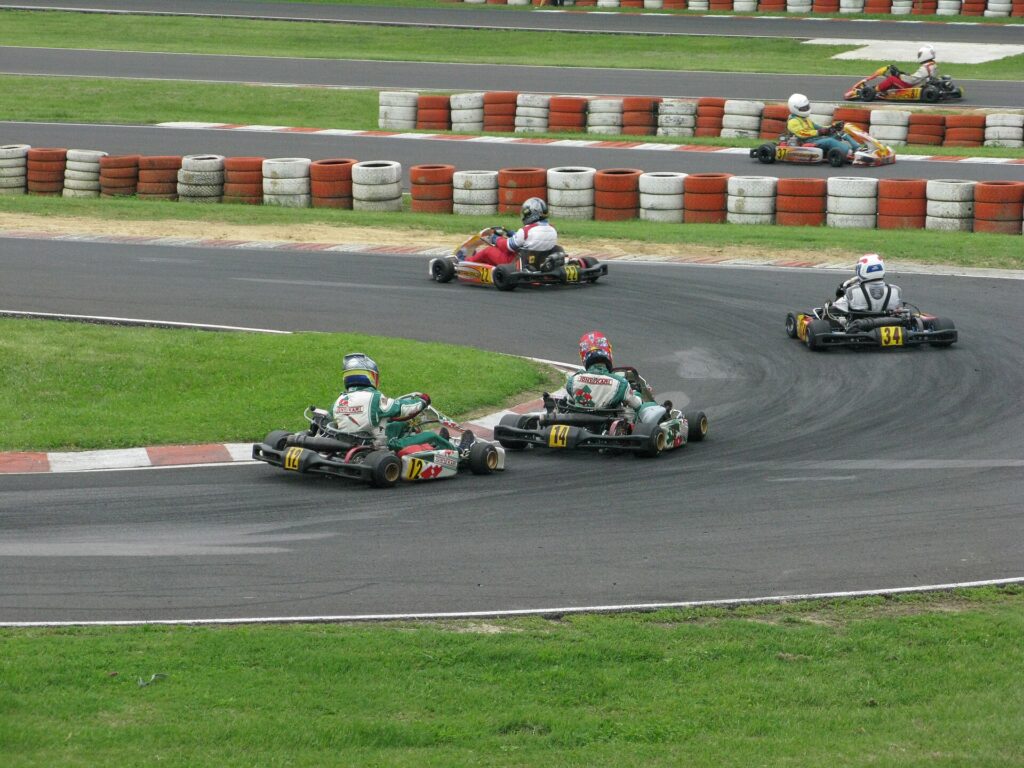
That’s also the same case into turn five at Sarno. It’s quite the left-hander hairpin, it’s quite a lot of banking there too. So you have to be super precise.
Precision beats entry speed in a banked corner
Precision is key in any kind of track, in any kind of corner, but when you go into heavily banked corners, it’s unbelievably more important to be, to be precise. The precision gets exponentially more priority, let’s say, than entry speed. For example, if you try to carry one kilometer more entry speed, but you miss the banking by 20 centimeters, you will lose quite a lot, compared to actually the driver carries maybe one kilometer less on the entry, but he’s able to then be super close in the mid corner to the apex or being even on the apex and then he has more mechanical grip because of the positive banking and so he can carry way more speed, so that is really it.
I mean it’s all about mechanical grip created by this positive inclination slope of the corner, which again generates more force, gravitational force, and yeah, just more gravity, which at the end of the day creates more mechanical grip. There is simply more weight on your tyres. That is what happens – more weight on those tyres, and in that specific moment, there is yeah, a lot of grip.
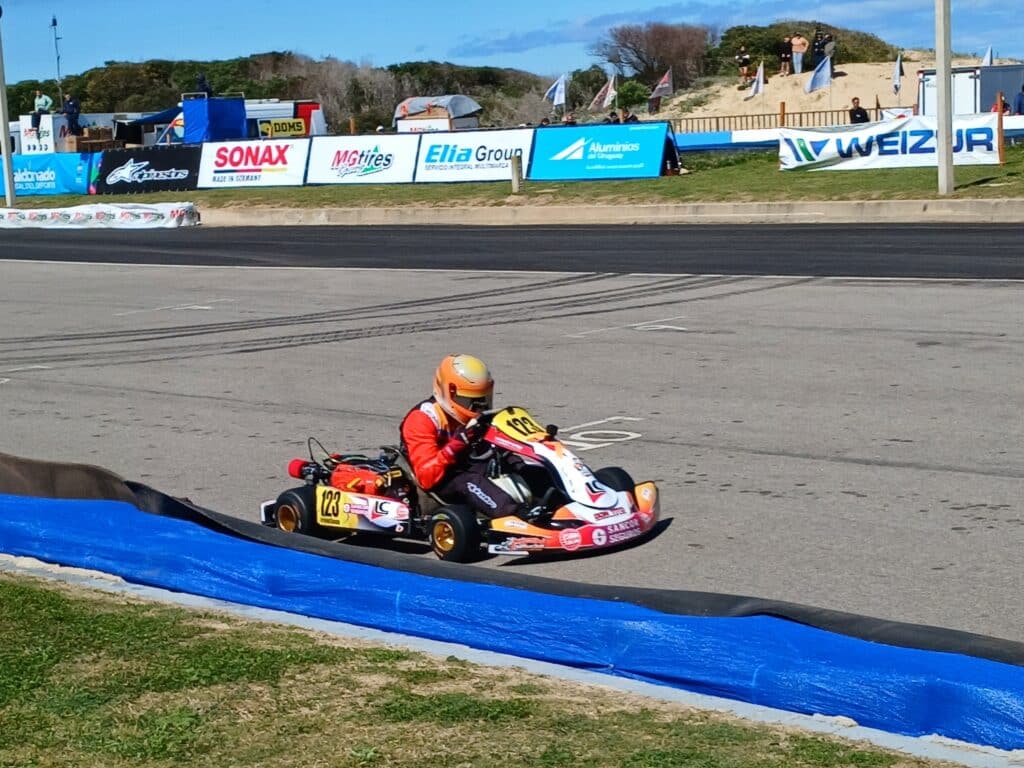
And that’s to be honest, the place where it’s
Why kids tip onto two wheels in banked corners
the easiest to go onto two wheels. And I’ve seen the most kids going onto two wheels in those heavily banked corners, because there’s already a lot of grip, and say there’s a lot of grip, because maybe there’s a lot of rubber on the track, and I see a lot of tall drivers there struggling to stop it going onto two wheels, because when there’s a lot of grip and there’s tall drivers, it’s very easy to go onto two wheels there, but anyways,
In a positive banked corner, the mid-corner is king
the thing that you want to remember when you go through corners with a lot of banking is that the entry is important, but the most important part is the mid corner and at the exit, but the mid corner is the main part, because again, you have to prioritize the mids. If you are going too quick on the entry and you miss the mid corner and you’re like half a metre or one meter off from the apex, you’re gonna lose so much more than if you slow it down slightly on the entry, but carry way more mid speed, because again, you would be on the right place, you would be on the heavily banked place.
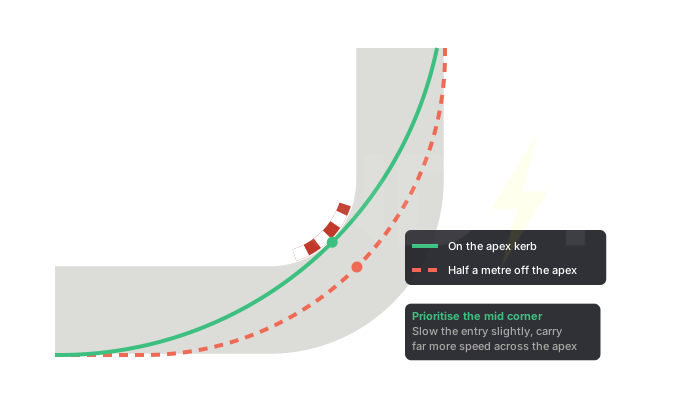
Again, the goal is that whenever you have a heavily positive banking corner, you want to be as close as possible to the inside edge, so you want to be on the apex, almost touching the kerb, or even touching the kerb sometimes works very well, as again, that turn five I mentioned at Sarno, it works well to kiss and clip a little bit the apex curve, which wouldn’t be the case if it was flat the corner, but in that corner it works a lot.
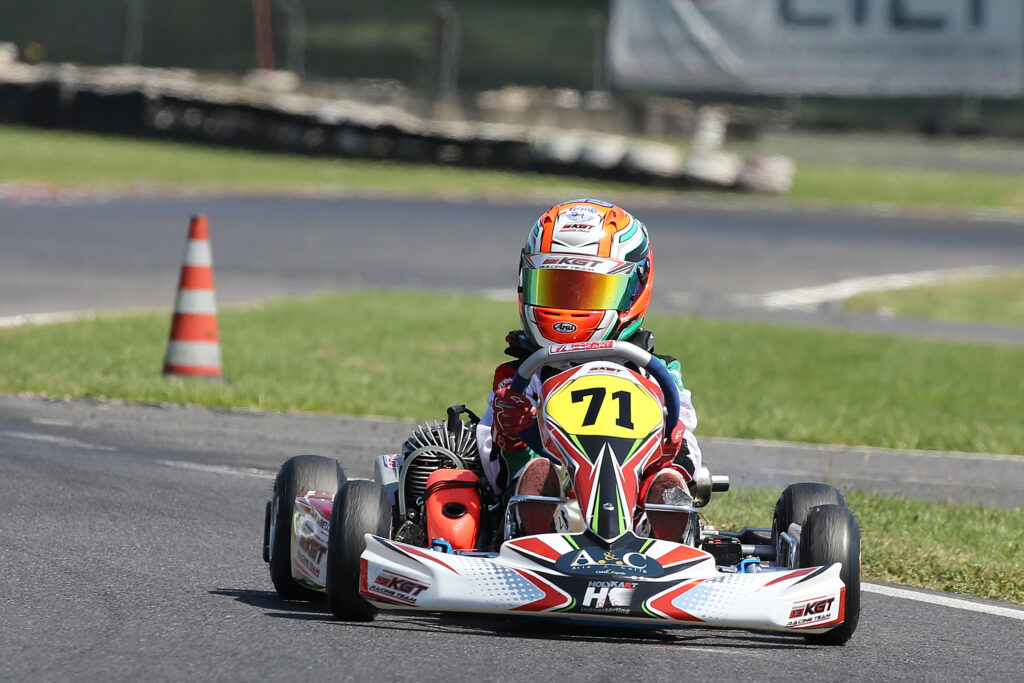
So you have to heavily prioritize the mid corner speed, in spite of perhaps losing a tiny bit on the entry, because if you try to be an hero on the entry and you miss the apex and you’re quite wide the mid corner, you will lose a ton of time, but like, ton of time, and that’s
In a negative banked corner, go wide
exactly the opposite for negative banked corners. You want to be nice and wide, and ideally, you know, I can’t tell you exactly where you have to be, because we’re going to be again, depending on the layout of the corner and how much negative banking there is. But for sure, you don’t want to be tight at the apex, you want to be quite wide, like turn four at Zandvoort, where there is a lot of negative banking, and you can see the drivers are going wide, and yeah, that’s one of the corners that I can refer to.
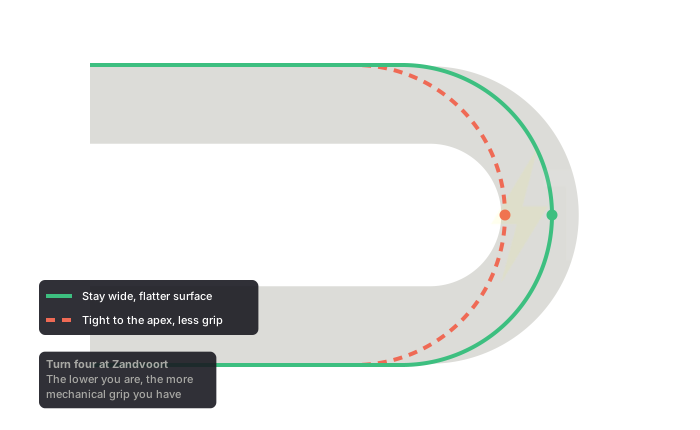
And if you have negative banked corners, hit me up on Instagram. By the way, I’m curious to hear what kind of negative banked corners you’ve encountered. I would be interested to hear from you, because I don’t have many off the top of my head. Actually, I don’t have right now. I don’t have any, but I’m pretty sure I’ll come up with if I think deeply for more hours.
But yeah, I’ll be happy to hear, maybe in your, because you know I’m more familiar with Italian tracks and European tracks, but maybe in your own country there are more extreme tracks with different layouts, which would be interesting for me to know.
Adjust before you drive, not during
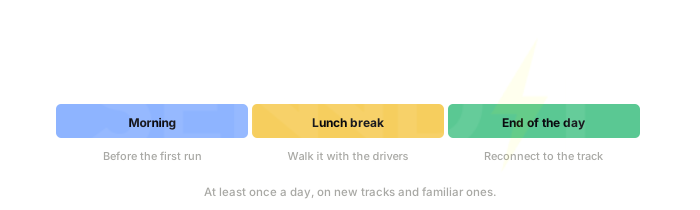
So make sure you adjust your driving a lot for those heavily banked, either negative or positive banked corners. It is important to be aware of them beforehand, because if you’re not aware, you will never, you know, adjust to them. So that’s why you, to be aware, you gotta go and do the track walks and track runs, you know, at least once a day.
I like to do it either at the end of the day, or the morning, or in the lunch break with my drivers at BabyRace. Also, when I’m driving by myself, it’s key. It’s like helping me to reconnect to the track, but also to again find the tips and tricks to get faster. And one of those tips and tricks is obviously understanding where the banking is.
Micro banking is where the real time is
And again, there might be micro banking. This is an important thing. It’s not just a matter of huge amount of banking, which is so visible. The trick is in finding the micro bit of banking that again didn’t happen on purpose, the track builders didn’t put them on purpose, it just happened for whatever reason, and that little bit of banking in a specifically right point is gonna give you a lot of more grip, and that’s gonna give you a different line, for example, you know, like at Cremona, at turn eight, it is crazy fast to turn in quite early, which is going against the conventional wisdom and the geometric line of that corner.
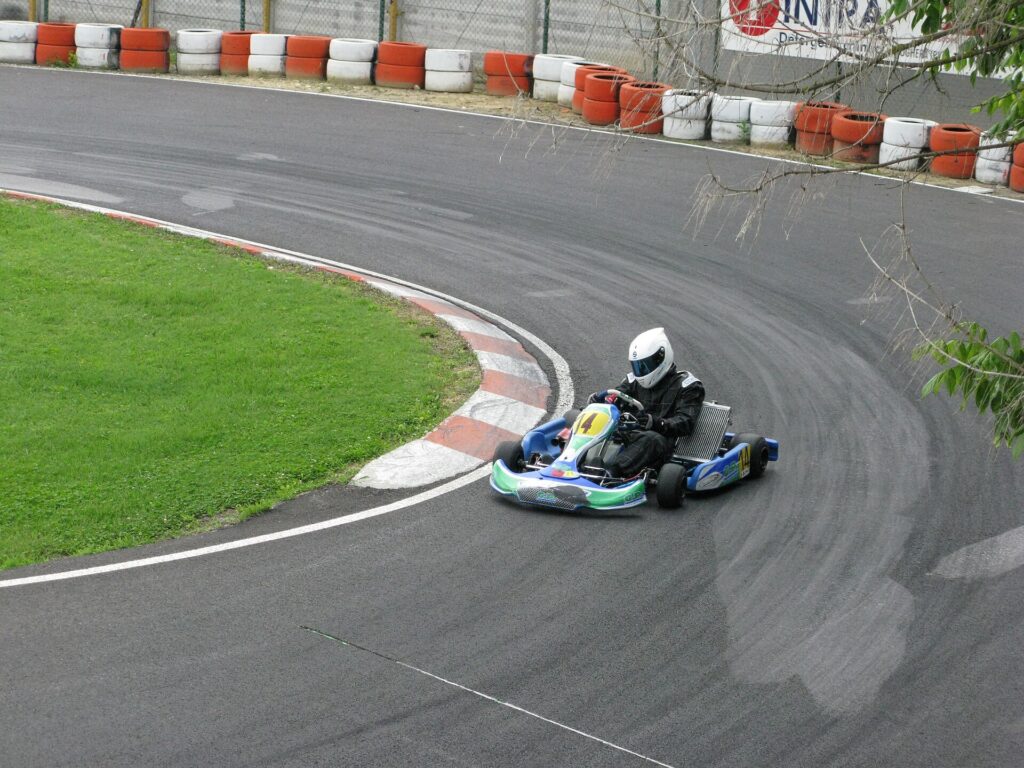
If you look at the corner, you’ll be like, oh, you have to go in for a late, very late apex, but the reality is that there is some nice positive banking just on the entry of the corner, not in the mid and not on the exit, just on the entry, you can find quite a bit of positive banking if you turn in quite early, so it’s on the inside end, and so that’s why you see drivers in mini, or in juniors, doing something which is completely unconventional, which is like turning quite early, which again wouldn’t work at all if the corner was flat, but because there is quite a lot of positive banking, you actually end up finding more time on the entry than the time you lose on the exit, so overall it’s a net gain, and that’s why drivers do it.
And to be honest, that’s
How I spot a special driver
how I know whether a driver is special or not. That’s to be honest, my number one way to see it. If a driver figures out earlier than everybody that there you have to go there in a specific place and doing some unconventional lines, just because it’s just faster because there’s more grip, because there’s more banking, or maybe they don’t even know why they’re doing that, you know?
If you ask them, why are you turning in early in that corner, which normally you would want to go for a late apex, why are you doing an early apex, and they say, well, I don’t know, but it’s just faster. I mean, that’s when I know the driver is so good, because he has built so much muscle memory, and he has a lot of feeling, basically, from his, from his experience, and from his, yeah, from his skills that he built, and he can really quite feel whether there is banking or not, and he can figure out if it’s faster or not, and obviously, when you go for an earlier apex, like in that case, you will gain quite a bit on the entry, maybe you gain two tenths on the entry, but then you will end up losing 1/10 for sure, and the exit to someone who made an extremely late apex, but overall it’s a net gain of 1/10 and I don’t know about you, but I will take a 1/10 gain on the others every day of my life in just one corner, because then if you multiply it by 15 laps, it’s 1.

5 seconds. So I hope this was useful, guys.
What to do on your next track walk
Make sure you go out and do track walks, because you know now we know what’s the difference between a positive banked. Corner and a negative banked corner. Knowing the difference isn’t enough. I mean, the goal is to go out there and figure out which corners have the positive banking or negative banking, or they’re flat. Remember, there’s always going to be some micro banking here and there.
It’s very rare to see the track being completely flat. You want to be as much as possible where there is positive banking, and for example, if there is negative banking on the inside of on the entry, for example, and and let’s say it’s a medium, medium corner, where you would require, let’s say, a medium apex, it may actually work in that case to go for a late apex, because if you turn in early, you will get negative banking, which again is worse, so it’s probably better in that case to go for a later apex than normal than a geometric line, let’s say, because you know that there is negative banking around, negative banking gives you less grip, so you gotta be really clever with that, and I’ve seen it a lot of times,
Why you lock the fronts on an off-camber entry
driver making mistakes, you know, there’s in formula cars you can pick up front tyre lockups on those negative banked corners if you don’t realize it, so you may, you may always wonder, why am I locking, why am I locking the fronts, and the reality is that yes, you’re basically going in a patch where there’s, you know, less mechanical grip, because again, the inclination of the tarmac is not steep enough, is actually there’s like less force being applied in the tyre for the gravity, and so that essentially creates less, less grip, and so you want to be where there is more gravity, where there is more grip, and you need to be out there finding and figuring out where to place your tyres.
That’s the job of you as a racing driver, and you know that’s why racing, I feel, is like an art more than a science. You need to go out there and figure out where to place your tyres. It’s not always about the geometric line. There are so many things who are going to affect that geometric line, and I believe that is banking is the major one, and once you’ve mastered banking, you are going to definitely find lap time and win more races than the ones who don’t.
I hope this was useful. If you want to find some lap time by reviewing your video, you can send me over. I will provide this kind of service for you within 48 hours. Otherwise, hit me up on Instagram @alessiolorandi. Hope this was useful. Make sure you keep sending it. Ciao.
Next on reading a circuit: how elevation changes and banking affect grip, becoming a grip hunter, and mastering the racing line.
Send your onboard footage. Alessio reviews it corner-by-corner and tells you exactly what's costing you time, and how to fix it. Back within 48 hours.
Get My Onboard Reviewed → Reviewed personally by a CIK FIA World Champion, never an assistant.I promise I'll not spam you with repurposed shitty AI content but real experiences that only I, Alessio Lorandi, experienced. Written in my funny English-Italian tone of voice 😂
Alessio Lorandi is the former CIK FIA World Junior Champion, winning against Lando Norris in 2013 & F3 multiple race winner. He's helped 200+ karting drivers worldwide get faster & win WSK titles with BabyRace Driver Academy & now through Senndit, his online karting coaching platform.

