How to Analyze a Kart Track Before Driving: Finding the Perfect Line
Master track analysis before you hit the throttle. Learn how grip, camber, and line choice separate fast drivers from quick ones.

- Use every inch of track at entry, apex, and exit to maximize speed
- Track walks reveal crucial grip changes and banking that affect your line choice
- Positive camber allows earlier turn-in, while off-camber corners require more conservative exits
- Test different lines in practice with data validation before committing to one
- The perfect line changes with track conditions, temperature, and setup
- Master the line first at moderate pace, then push the limits
If you’re trying to hit really fast lap times, there’s one thing you have to nail: the racing line.
You can have perfect braking, great exits, and hit every apex, but if you’re not using the full track or linking corners the right way, you’re going to leave lap time on the table.
Especially in sequences of corners like chicanes or double/triple corners, if you mess up the first one, the rest of the section is going to be compromised.
And the delta time increases…(Which you don’t want, right😉?)
If you mess up the first corner in a sequence, the rest of the section is going to be compromised.
The Basics: Maximize Every Single Bit of Track
I always say: use every inch of the circuit, entry, apex, exit. Use the kerbs as much as possible (except the one at the Apex, unless it’s flat so you can drive over it):
- Entry: Start as wide as possible. If there’s a flat kerb, use it all.
- Apex: Cut the distance as short as you can. You don’t want to miss the apex by a meter or more, not only is it slower, but you’ll be on dirtier, less grippy tarmac which…ain’t good, mate.
- Exit: Again, use all the track, kerb and even more if there’s extra tarmac and they don’t check track limits (unless you’re in a shifter kart, where exit kerbs in slow corners are usually avoided).
It sounds simple, but doing this consistently takes skill and confidence, especially when you’re pushing really hard under braking.
Track Walks = Free Lap Time
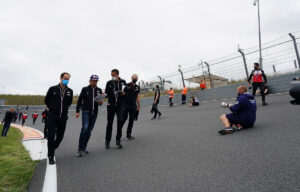
Track walks (or even light jogs as I like to do first in the morning) are super underrated.
I do one every single day at the track. Why? Because:
- You can feel where the grip is, some areas are stickier than others.
- You can see where the rubber is laid down and how the track is developing.
- You get to check banking or off-camber areas, things that massively affect lines (even they don’t really change from day to day as grip does).
- Bonus tip: You can find Gopro cameras for free ahaha
For example, a corner that looks like it should be late-apex might actually grip more if you turn in early because of banking, like that long left in Viterbo where you’ll have to fall into the banking really soon.
Same with Ugento, the banking starts early, so you need to commit earlier than you’d think it would make sense.
I do a track walk every single day at the track. Track walks are super underrated.
Pay Attention to Camber and Grip Changes
Positive or negative camber (from the track) changes everything:
- Banked corners = more grip, turn in earlier.
- Off-camber exits = less grip, avoid going too far wide, so you may have to open up the corner less on entry or stay tighter on exit.
If a kerb is steep or the asphalt falls away, you might bottom out or get pulled off line. So you need to know when to trust the kerb and when to avoid it.
But it always comes downto what?
TRACK WALKS.
Heck, last night I had a weird dream, it was a test day and I was halfway through the day without doing any track walk and it made me feel so guilty ahaha.
Follow Fast Drivers, But Be Smart
When I’m on a new track, I always watch what the fast guys are doing.
- Are they turning in super early? Maybe there’s grip you didn’t expect.
- Not using the kerb? Maybe that kerb is too steep or dirty.
It’s easy to assume someone’s doing it wrong… until they gap you. So test what they do, then validate it with data. Try both lines. See which one is quicker.
The stick to whatever works best, leave the ego aside.
Use Data and Onboards to Compare
Look at your own telemetry. Try:
- One lap with the exit kerb, one without. What’s quicker?
- One lap turning in earlier, one later. Where did you gain or lose?
If something feels good but the data says it’s slower, believe the data.
Practice Different Lines, Then Lock It In
Always remember: there’s not always one “perfect” line…it can change a lot depending on the track surface, temperature, or your kart setup.
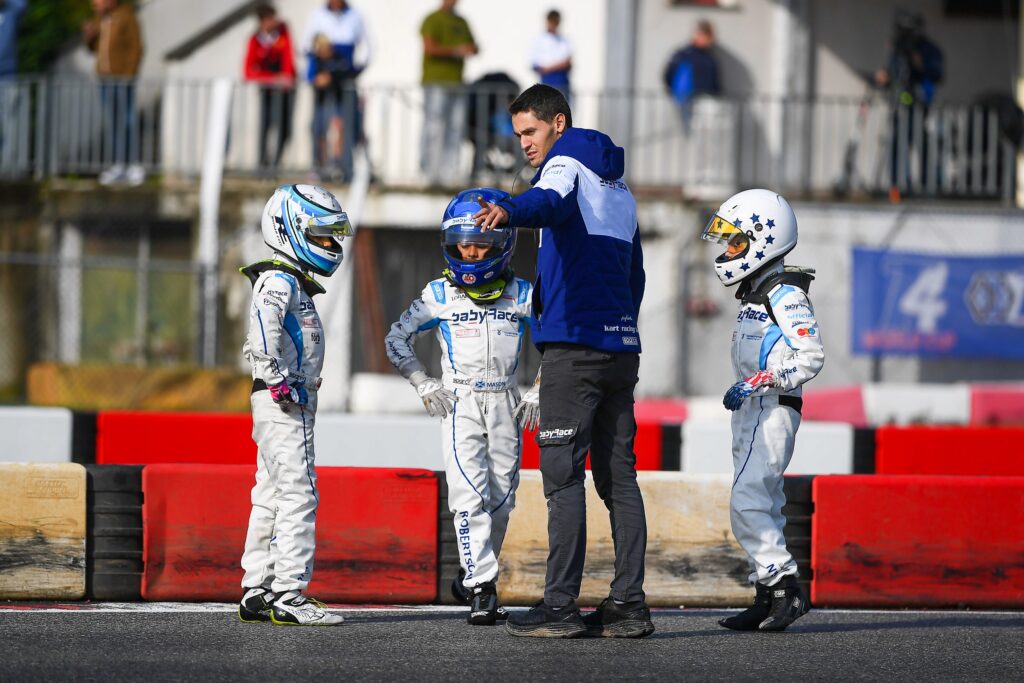
That’s why in free practice, I always test a few different lines, especially in new tracks or in changing track conditions. Once I know what works, I lock it in and focus on consistency.
Also: don’t go flat out from lap one. Nail the lines first.
Once on point, then you can start pushing the limits.
Final Thoughts
Finding the perfect line isn’t about copying what you saw on a YouTube onboard or doing what feels comfortable, it’s about experimenting, observing, and adjusting.
Walk the track, test things in practice, look at your data, and pay attention to the fast drivers.
And most importantly, be flexible. The perfect line today might not be the same tomorrow. Yep.
The perfect line today might not be the same tomorrow.
Hope this helps to find some lap time.
Just Senndit
, Alessio Lorandi
For the data-side version of the same job — arriving at an unfamiliar circuit and getting up to speed quickly — see how to learn a new kart track on PURPL.
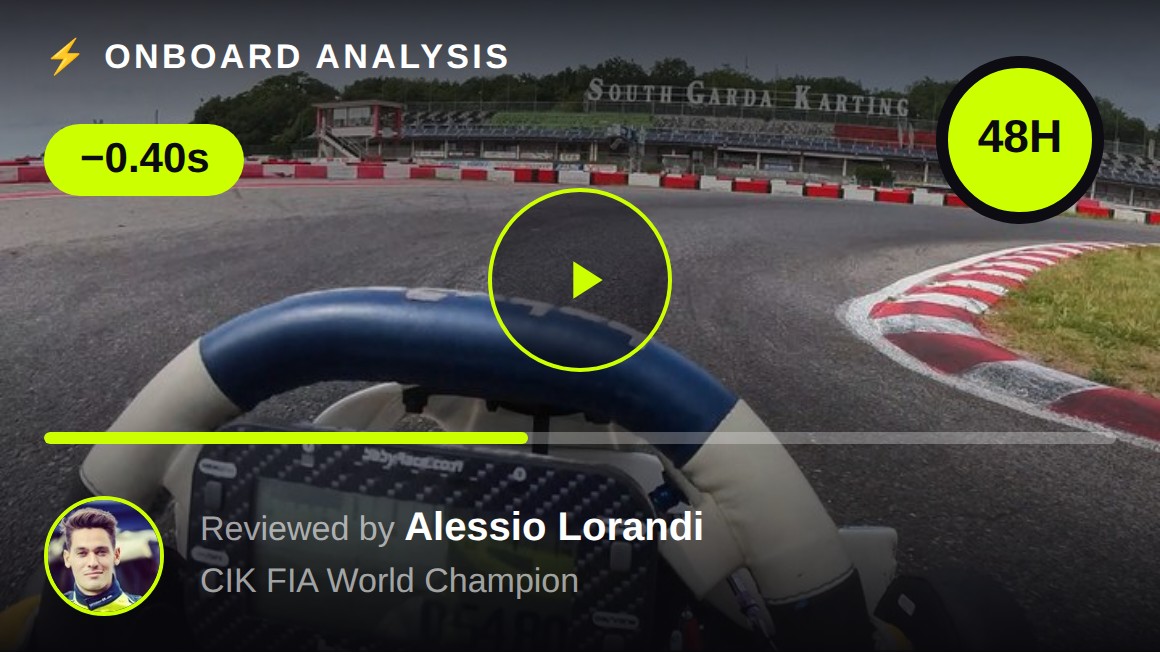
Send your onboard footage. Alessio reviews it corner-by-corner and tells you exactly what's costing you time, and how to fix it. Back within 48 hours.
Get My Onboard Reviewed → Reviewed personally by a CIK FIA World Champion, never an assistant.I promise I'll not spam you with repurposed shitty AI content but real experiences that only I, Alessio Lorandi, experienced. Written in my funny English-Italian tone of voice 😂
Alessio Lorandi is the former CIK FIA World Junior Champion, winning against Lando Norris in 2013 & F3 multiple race winner. He's helped 200+ karting drivers worldwide get faster & win WSK titles with BabyRace Driver Academy & now through Senndit, his online karting coaching platform.