
Kart Practice Day: How to Structure It So the Laps Count
How I structure a kart practice day: one goal before you arrive, every session driven like qualifying, new tyres at 11 a.m. and 9 questions after e…

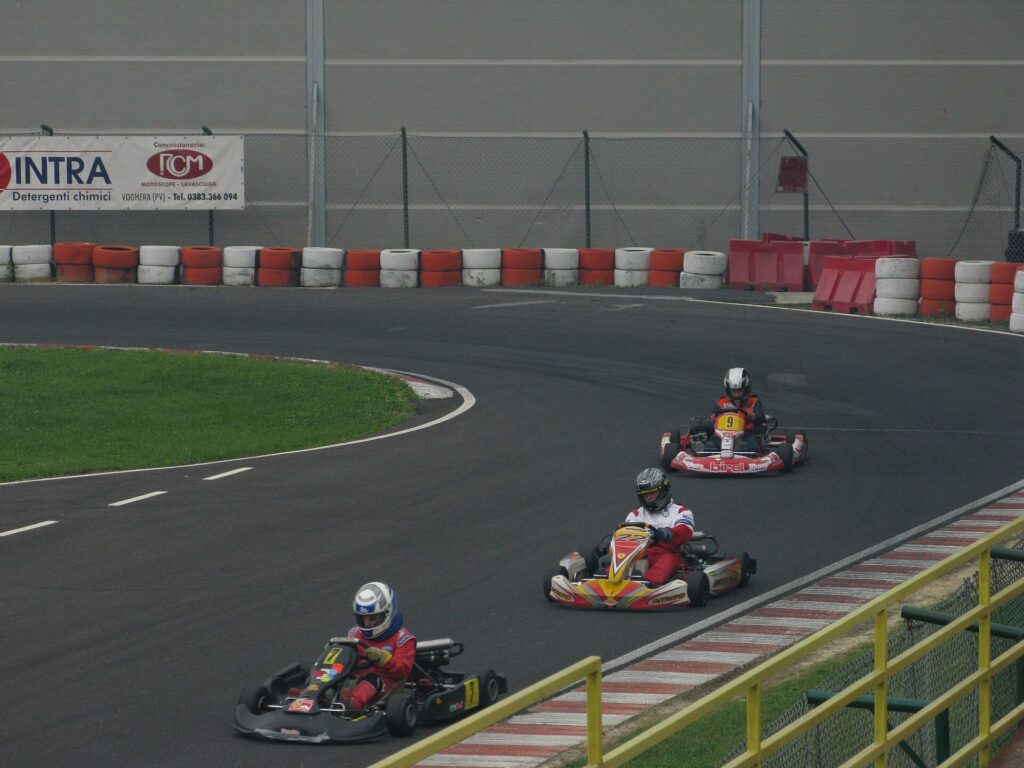
- Empty laps. Driving empty laps on a kart practice day is a huge crime. Every day on track needs a goal.
- The goal. You either react to what the first one or two sessions show you, or you decide it before you arrive because of what went wrong in your last race.
- How many goals. More than one is fine. Obviously not too many.
- The race. Practice on the track you are preparing for, or on one with a similar grip level, on the same tyres you will race.
- Every session. Treat each one as if it was a qualifying or a race. Then in the races you treat them like testing days.
- New tyres. For most drivers the sweet spot for lap times is the end of the morning. So new tyres go on at 11 a.m. rather than 3 p.m.
- After the session. Ask how close you were to your theoretical, how consistent you were, and in which sections you lose the most.
- Why are empty laps a waste of a practice day?
- What goal should you set for a kart practice day?
- How many goals can you work on in one day?
- Which track and tyres should you practice on?
- What should you do before the first session?
- How should you drive each session?
- When should you put new tyres on?
- What should you check after each session?
- What should you do between sessions?
- Can you use a practice day just to get fit?
- How do you practice for one specific race?
- How do you practice overtaking on a practice day?
- What if you are alone on track?
- How do you structure the day, step by step?
- Frequently asked questions
If you are not practicing with a goal, are you really practicing?
Driving empty laps on a kart practice day, it’s just a huge crime. I mean it.
You want to structure the day in a way that, when you go home, you know you have improved. So here is how I do it for myself, and what I ask my drivers to do.
Why are empty laps a waste of a practice day?
Because every lap you make, you are essentially paying a price. Track time is expensive. So if you go out and drive clueless, with no idea what you are looking for, those laps are wasted opportunities.
And later you have regrets.
Listen, a testing day is where you get the most driving. In the big races you get about 4 sessions a day of about 10 minutes each. So about 40 minutes. On a testing day, let’s pretend an average of 6 sessions of 15 minutes each. That’s about 90 minutes of driving, more than 2 times a race day.
That’s also why you need to arrive at a race weekend ready from the testing before. Otherwise you won’t have enough time to get up to speed.
I already explained why track time is key in karting, so I won’t repeat it here. This post is about what you do with that time once you have it.
With my 20 plus years in karting, the one thing I can tell you is that you really want to have a plan.
What goal should you set for a kart practice day?
It depends on the day. But every day needs one.
If it’s a new track, the goal is clear. First you find the reference points. Then the racing line. Then you push beyond the limit and you come back to it.
If it’s a track you already know, you need to know what you are looking for. Maybe it’s getting your body in shape. Maybe it’s a new setup, an engine setting, or comparing two engines. Maybe it’s fixing a common problem with the chassis, like too much grip, or sliding, or not enough front.
And there are two ways to arrive at the goal.
The first one is reactive. You do the first one or two sessions, and you look at where you lose. Maybe it’s the slow corners. Maybe you brake too early. You see it from the data, or your mechanic or your coach notices it from outside. And then that’s what you work on for the rest of the day.
The second one is planned before you arrive. Say in my previous race I was not confident on the brakes. Then the next practice day I focus relentlessly on braking. I drive myself into the grass, outbraking myself, again and again, until I build that muscle.
| The day | What I work on | How I know it worked |
|---|---|---|
| New track | Reference points, then the racing line, then beyond the limit and back | How close I get to my theoretical best |
| Track I know | A new setup, an engine setting, or a chassis problem like too much grip or sliding | Same driver, same day, session against session |
| After a race where I was weak on the brakes | Braking, relentlessly, even into the grass | I brake later on the data. And did I still make the apex? |
| Before a low grip race | Many laps on a track with very low grip | My consistency |
| Setup day | Driving a kart that slides, or one with more grip, to get used to it | How I adapt when the grip changes |
| Fitness day | Laps, and at least one more goal | Is the stint fading or not? |
| Busy day | Overtaking and racecraft | How little time I lose in each overtake |
How many goals can you work on in one day?
You can have multiple goals. But obviously not too many.
If your only goal for the day is fitness, fine. But have at least one more. For example getting close to your theoretical best. Or doing more laps in your optimal lap time. Or a lower standard deviation.
And if you want something simple to start with, try to improve at least a single corner each time you go out. One corner. If you do that every session, at the end of the day you drive a different lap.
Which track and tyres should you practice on?
The first thing is track selection. Drive the track you are preparing for. If you can’t, go to one with a similar grip level.
Then the tyres. Use the same tyres you are going to race on. Because the grip of a track also depends on which tyres everybody is running on it. LeCont leaves a lot of grip. With MG, Vega red or Komet the track is more slippery.
Same for the kart. You want the balance to be like the one you will have in the race.
But I’ll be honest with you. The conditions are rarely the same between the testing and the race day. So don’t expect to copy and paste. That’s one more reason to work on yourself and not only on the lap time.
And not every day has to be on new tyres and the race engine. When I was a kid I did laps and laps in Lonato after school, on pretty old tyres and a pretty slow training engine. I was rarely the quickest. But that really formed me. So don’t stress too much about the performance when you are testing.
What should you do before the first session?
Walk the track. Not only the first time you go there. You should do track walks again and again, because you always have to relearn the circuit. The grip, the elevation changes, the banking, the kerbs.
In Lonato I recommend doing it in the morning, before the activity on track starts. Today, when I drive in KZ2, I run on the track in the morning.
If the track is new for you, watch onboards before you drive. You find them on YouTube. Onboards are great for a new track. Once you know the track, the data becomes more useful.
Then warm up. I’ve always enjoyed doing a few minutes of rope skipping before every session. I picked up this habit late, when I was in single seaters, and I wish someone taught it to me sooner. It warms up your coordination, your muscles, and it raises your heart rate.
On a test day, when I head to the pitlane, I may do some basic running while warming up my shoulders. Then I sit in the kart and I simulate the lap for a minute. Hands, feet, gear changes, as if I were doing the perfect lap.
And drink. I drink a lot from my bottle filled with mineral salts, even up to 3 or 4 liters in a day.
How should you drive each session?
Treat every session as if it was a qualifying, or as if it was a race. And then in the races, you treat them like testing days.
What does it mean? It means you don’t wait half a session to start pushing. One of the questions I ask my drivers is: how many laps did it take you to get to your fastest lap? And then: why did it take all those laps?
Nine out of ten times the answer is that there was not enough temperature in the tyres. So push harder in the first laps.

And you need something recording. Data, onboard video, a track map to write on. Without an onboard or telemetry you are driving blind. To me that’s a useless session, because when you come in you only have your feeling, and the feeling is often wrong.
When should you put new tyres on?
At the end of the morning.
For most drivers the sweet spot in terms of lap times is the end of the morning. At the end of the day you are usually slower than at the beginning, because you are tired.
So if you have one new set for the day, it’s better to put it on at 11 a.m. than at 3 p.m.
How the track changes during the day is another story. I wrote about it in how to read the grip as the track evolves.
What should you check after each session?
I made a list of questions for my drivers to answer after every session. Here they are.
- How close was I to my theoretical best?
- How consistent was I?
- How many laps did it take me to get to my fastest lap?
- Why did it take all those laps?
- How much did I lose in total, all laps against the theoretical?
- What was my peak brake G?
- How repeatable are my braking points?
- In which sections do I lose the most, and how much?
- How repeatable is my line?
Look at the first one. I ask “how close”, I don’t ask “how far”. And if you are five or six tenths off your own theoretical, you cannot blame the kart. One tenth is really good.
The second one is about the standard deviation of your clean laps. If you are 0.1 seconds from your fastest lap on average, that’s really good news. Doing a great lap just once and then being four or five tenths off it is a nightmare. I went deep on this in why consistency matters more than speed in practice.
On number eight, I say sections, not corners. A chicane is one section, not two corners. First address the three sections where you lose the most, and try to understand why. That’s how the day gets a direction.
And then the lap time. Should you look at it? Yes, but relying on the lap time alone is the losing strategy. You can be four tenths off your personal best, but with zero gap to your theoretical and on the pace by lap two. For me that’s an outstanding session, even if the timing screen says the opposite.
If you want to see where I click first when I open a session, read what a coach looks at first in AiM Race Studio 3.
One last thing. After every session ask yourself one question: what could I have done better? Write it down in a little notebook if needed, so you can get back to it. My mechanic in karting would write down in his “papers” the sprockets, the tyre pressures, the axle and all the other setup adjustments. So when we were struggling with pace, he knew where to look.
What should you do between sessions?
There is a lot to do, actually.
You analyze your data. You watch your onboard. You share your feedback with your mechanic and you discuss the setup. You revise your track maps. You fill your drinking bottle. You clean your visor. And then you go through your pre-session routine.
Would you be able to do all of that if you went messing around with your friends, or playing on your iPad? I don’t think so.
One choice gets you closer to the goal. The other keeps you stuck.
And at the end of the day, review it. Which corners were still not there? Tomorrow, or the next time out, those are the corners you push on.
Can you use a practice day just to get fit?
Yes. Because you don’t want to be gym fit. You want to be race fit.
Only driving gets you driving fit. Your neck, your forearms, the muscles around the rib cage.
How do you see it? Look at the stint. Is it fading? Most of the time when the lap times drop, it’s the driver getting tired, not the kart. Inexperienced drivers, after 10 laps, they’re kind of dead.
So take note of it, session after session. And then track it week after week.
But as I said, have at least one more goal on that day.
How do you practice for one specific race?
You copy the conditions of that race as much as you can. Even with the setup.
Take the SKUSA SuperNationals in Las Vegas. It’s in a parking lot, so the grip is very low. When I was thinking about racing there, my plan was to practice on low grip tracks in northern Italy first.
You can do it with the setup too. I had a day where I mounted a seat that put me very low, to reduce the drag and also the grip. I moved the seat forward to free up the rear. It was quite extreme, it made me slide so much. But it was training. I knew that the moment the grip came, from new tyres or from the track, I would find a lot of performance.
I like to always have one kart with a bit more grip and one a bit more free. So I get used to both.
How do you track progress on a day like that? With low grip, I look at my consistency. With braking, I look at the data to see if I brake later. But then I ask myself: did I still make the apex?
And be patient. Even if you practice 150 laps, you won’t be perfect. But a day like that is a day with a purpose. And it makes you adaptable, which is what you need when the grip changes at the race.
How do you practice overtaking on a practice day?
Pick a busy day.
On an empty track you probably won’t be overtaking anybody. On a busy one you can get as close as possible to the other drivers on the brakes, brushing their side pods every time you overtake. The goal is to overtake losing as little time as possible, instead of losing one second for a pass.
If the track is empty, don’t worry. You still have lots to work on. Everything above.
What if you are alone on track?
Then you benchmark against yourself.
First priority, match your theoretical best. Second, your consistency. The kart doesn’t change enough inside one session to excuse a big spread in your lap times. So if you make a mistake that costs half a second, the job is to make it cost a tenth.
And don’t over-compare the data across different days. The conditions change too much. Focus on that day and on that session.
If you want a reference, you can also rent a fast benchmark. I mean a really fast driver of your category who comes for a day and drives side by side with you. The track is the same for both, so you have no excuses. It’s going to cost you quite a bit, but I think it’s very worth it. Or you work with a coach. I compared the options in karting coaching compared.
How do you structure the day, step by step?
This is the whole day in order.
- Decide the goal before you arrive. From your last race, or from what you want to test.
- Choose the track and the tyres like the race. Same track or similar grip, same tyres.
- Walk the track in the morning. Before the activity starts.
- Warm up before every session. A few minutes of rope skipping is what I do.
- Drive the session like a qualifying. Push from the first laps.
- Answer the questions after the session. Theoretical, consistency, the three worst sections.
- Take the next session’s focus from the answers. At least one corner better each time out.
- Put the new tyres on at the end of the morning. Around 11 a.m., not at 3 p.m.
- Write it down and review the day. So the next day starts from there.
You improve the driver and the kart together. And it just compounds.
- New to all this? Start from the beginner guides.
- Want to answer the questions with data? Go to the telemetry guides.
- Send me the onboard of your last practice day and I tell you where you lose time: onboard reviews.
- Want me to follow you for six months? Look at the 6 months transformation.
So before your next practice day, write the goal down. One line is enough. And when you come home, check if you can say what you improved. If you can’t, that was a day of empty laps.
Frequently asked questions
How much driving do you get on a kart practice day?
Let’s pretend an average testing day is about 6 sessions of 15 minutes each, so about 90 minutes. A race day in the big events is about 4 sessions of about 10 minutes, so about 40 minutes. It changes from track to track.
How many goals should I have for one practice day?
You can have multiple goals, but not too many. If the main one is fitness, add at least one more, like getting close to your theoretical best or lowering your standard deviation.
When is the best time to put new tyres on during a practice day?
At the end of the morning. For most drivers that’s the sweet spot for lap times, and at the end of the day you are usually slower because you are tired. So 11 a.m. is better than 3 p.m.
Should I judge a practice day by my lap time?
Not by the lap time alone. Look at how close you were to your theoretical best, how consistent you were, and how many laps you needed to get on the pace. A session can be slower than your personal best and still be an outstanding session.
Is a practice day useful if I’m alone on track?
Yes. You can’t practice overtaking, but you benchmark against yourself: first match your theoretical best, then work on your consistency. For racecraft, pick a busy day.
Send your onboard footage. Alessio reviews it corner-by-corner and tells you exactly what's costing you time, and how to fix it. Back within 48 hours.
Get My Onboard Reviewed → Reviewed personally by a CIK FIA World Champion, never an assistant.I promise I'll not spam you with repurposed shitty AI content but real experiences that only I, Alessio Lorandi, experienced. Written in my funny English-Italian tone of voice 😂
Alessio Lorandi is the former CIK FIA World Junior Champion, winning against Lando Norris in 2013 & F3 multiple race winner. He's helped 200+ karting drivers worldwide get faster & win WSK titles with BabyRace Driver Academy & now through Senndit, his online karting coaching platform.

