Preparation Builds Confidence (What One F2 Simulator Session Taught Me)
Confidence in karting comes from preparation. A 4,000 euro Dallara simulator morning before Sochi in F2 showed me why, and how to prepare on every …

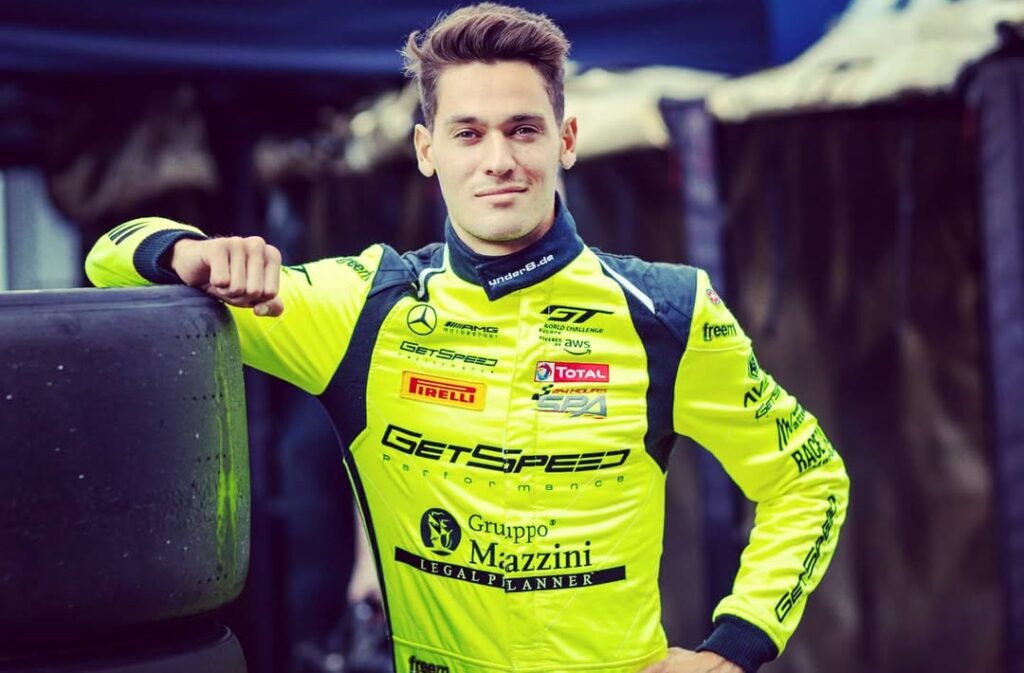
- The races I felt most confident in were the ones I had prepared for the most, and when confidence was high the results came automatically.
- Arriving at the track without your homework (track map, race videos, onboard videos, notes from previous years, data) starts a vicious cycle: less confidence, worse results.
- In Formula 2 our team had no proper simulator, and the Dallara one cost 4,000 euros for four hours, shared with my teammate Arjun Maini. So we went once, for Sochi.
- In Sochi the track felt exactly like the simulator: I was up to pace very quickly, around P7 in race one, and on the front row for race two.
- A proper simulator helps you. A bad one can actually hurt you.
- Prepare at 360 degrees: physical (neck, endurance, karting muscles), mental (reactions, hand-eye coordination) and technical (track time, setups, your mechanic).
Where does confidence actually come from in racing?
You probably never thought about it, but the key to build confidence is to have the maximum preparation you possibly can.
The key to confidence is preparation
And what I mean by that is that I’ve been preparing for many big races in my life. And the times where I felt the most confident were the times I had been prepared the most before that upcoming race. In terms of physical preparation, but also in terms of pure driving and technical preparation.
And when that confidence was high, automatically the results would come and everything was worthwhile.
But in a few races where I did not prepare as well, I was not feeling as confident. And because I wasn’t feeling as confident, I would not get the results that I wanted.
Less preparation means less confidence. Less confidence means worse results. And worse results make it even harder to arrive confident at the next one. It works the other way too: preparation builds confidence, and confidence translates into performance.
Arriving at the track without your homework
It’s a bit of a vicious cycle. Because when you arrive at the racetrack and you realize you haven’t done your homework. You haven’t studied the track map. You haven’t gone through race videos. You haven’t gone through onboard videos. You haven’t gone through your notes from the previous years, or from previous testing days. Or maybe you haven’t spent enough time on the data.
When you arrive at the racetrack and you’re not feeling fully prepared, you’ll see that your confidence won’t be the highest.
I can really relate to that. The points where my confidence was the lowest were when I was not feeling prepared.
Maybe in some cases there was nothing I could do to prepare more. Let me tell you about one of those.
Formula 2, no simulator, and a 4,000 euro morning at Dallara
When I was in Formula 2, I remember that I wanted to go to the simulator and practice. I wanted to find some lap time and get used to the track.
But the problem was that the team I was in didn’t have a simulator. Trident back then didn’t properly have a Formula 2 simulator. I mean, they had a small simulator, but it wasn’t really anything special. It almost felt like it wasn’t helpful at all. If anything, it was harmful.
And that’s always been my theory about simulators. If they are proper, they’re going to help you. Otherwise they’re actually going to hurt you.
It’s the same reason I’m careful with sim karting. In a real kart, if you just miss the grip by half a meter, you’re cooked: you lost the apex and there’s no grip there anymore. A sim that doesn’t punish that builds bad habits. More on that in my take on whether simulators are worth it for karting.
And I couldn’t try anything on the real car either. Because you cannot test in F3 and F2 whenever you want. It’s not like karting, where you can test every time you want.
The only simulator we could get our hands on was the Dallara simulator. But it cost like 4,000 euros for four hours. So if you wanted to stay the whole day, it would be 8,000 euros. We did just the morning, for 4,000 euros, which we shared with my teammate back then, Arjun Maini.
And I remember that the only time we did go to the simulator, it was for the Sochi race. For all the other races we didn’t do anything in the sim.
Sochi: the one round I was fully prepared for
In Sochi I felt like I already knew the track. I already knew the car. We worked so much on the setup. There was preparation in terms of driving, but it was also technical preparation, with the setups and everything. And I really felt that was the absolute best simulator you can get your hands on.
As soon as I got out on the first lap, the track really felt like the simulator at Dallara. I was shocked by how real it was.
When I went out, I had way more confidence than in the other races I took part in, and I was very quickly up to pace.
I finished somewhere around P7, I think, in race one. I had really strong pace. And then I started race two on the front row. Unfortunately I had a crash in the first lap, but I was momentarily leading into turn one. Compared to the other races, we had way more pace that weekend.
And I think that was from the car point of view, but also from the driving point of view. I felt so much more confident, and the results came automatically because of that simulator session at Dallara.
Even though it was just two hours of me driving and two hours of my teammate driving. And it wasn’t even really two hours each, because we were changing back and forth. But we tried to take advantage of all the time we could possibly have. In all that limited time, we still felt like we prepared ourselves so much.
That simulator is very expensive, and that’s why we could only go once. I wish we could have gone more times. In hindsight, I would have pushed to get more budget spent on that side.
That may feel like a lot of money. But going to the racetrack and not doing any sort of result whatsoever feels more like a waste. It’s more of a waste to go to the racetrack not prepared than not to drive at all.
By the way, I say the same to the Babyrace parents. You cannot expect a good result if you just show up to the race. If you can’t make the testing before a big race, it would be better not to do that race at all.
The school exam test
So that’s really it. And I do feel it’s the same in karting, the same in any other sport, and also in life.
Think about it. When you go to a school exam, when are you going to be feeling the most confident? When you’ve been studying for weeks? Or when you just realized in the morning that the exam was due, and you did not study any page at all, so you’re just going to improvise and hope for the best?
I mean, it probably happened to me once or twice in my life, and I still kind of remember those scary days. Because you feel like an idiot. You feel so unconfident and afraid of the outcome, because you know you haven’t prepared.
Whereas the times I prepared so much were actually the times I was looking forward to the exam the most. And I do think it’s the same in racing.
Prepare on every front
So the point being is that you really want to prepare yourself as much as possible.
Physically. Arrive as physically in shape as possible. Whether it’s your neck training or your endurance training, get your stamina at its peak. But also your reaction times, your hand-eye coordination, your muscle memory. And get fit, not just for the gym, but mostly for the karting muscles you’re going to be using, which are even different from the formula or GT muscles.
Mentally. You want to be as mentally ready as possible. Being strong in the head, doing reaction time drills, practicing hand-eye coordination. All these kinds of drills are going to help you big time.
Technically. Practicing on track, getting laps, testing different setups. Getting very confident with your kart, getting confident with your mechanic even, and getting confident with the track.
And when you’re able to be prepared on all fronts, at 360 degrees, you’ll see that you arrive at the racetrack way more confident, looking forward to the race. And you’re just going to get better results as a result. No pun intended.
A racing driver thrives when he is confident, and is completely stressed and tense when he’s not prepared.
The reality is that the amount of preparation you put into any competition is massively correlated with the actual result. And in between the preparation and the result, there’s the confidence of achieving that result. That’s really key.
What to do before your next race
So I strongly suggest all drivers listening and reading this to spend more time preparing themselves.
- Study the track map.
- Watch more race videos and more onboard videos.
- Go through your notes from previous years and previous testing days.
- Spend more time downloading and analyzing your telemetry, really going through the data to find that lap time.
- Visualize the perfect lap, again and again.
By doing all these tasks combined, it’s going to bring some very strong confidence. Which automatically will translate into performance, and ultimately P1s, pole positions, race wins and overall strong results.
And if you want help with the data side, sign up to PURPL to find the lap time that you already have in yourself.
I hope that was useful. I’ll see you in the next one.
Frequently asked questions
Does preparation really make a difference to confidence in karting?
Yes. In my own career the races where I felt most confident were the ones I had prepared for the most, physically, in the driving and on the technical side, and the results followed. When I arrived without doing my homework, my confidence was lower and so were the results. Preparation comes first, confidence sits in between, and the result comes after.
Is a racing simulator worth it to prepare for a race?
A proper one, yes. One morning on the Dallara simulator before Sochi in Formula 2 made the track feel familiar from the first lap, and I was on the pace straight away. But a bad simulator can hurt you, because it builds habits the real car or kart will punish. If the sim is not realistic, I would rather not use it.
How should a karting driver prepare physically for a race?
Work on your neck, your endurance and your stamina so they peak for the race, and train reaction times, hand-eye coordination and muscle memory. Train for the karting muscles specifically, not just for the gym, because they are different even from the muscles you use in formula or GT cars.
What should I do in the week before a kart race?
Do your homework: study the track map, watch race videos and onboard videos, go through your notes from previous years and testing days, download and analyze your data, and visualize the perfect lap. If you can, get some testing done at the track too. Arriving without any of that is the fastest way to lose confidence before the first session.
Want me to review your onboard video personally? Send me your footage and I’ll deliver a full corner-by-corner analysis within 48 hours.
Want the full system? The 6-Month Training Program covers everything: racecraft, technique, mindset, fitness, and more. 550+ lessons, weekly live coaching, 100% money-back guarantee.
Send your onboard footage. Alessio reviews it corner-by-corner and tells you exactly what's costing you time, and how to fix it. Back within 48 hours.
Get My Onboard Reviewed → Reviewed personally by a CIK FIA World Champion, never an assistant.I promise I'll not spam you with repurposed shitty AI content but real experiences that only I, Alessio Lorandi, experienced. Written in my funny English-Italian tone of voice 😂
Alessio Lorandi is the former CIK FIA World Junior Champion, winning against Lando Norris in 2013 & F3 multiple race winner. He's helped 200+ karting drivers worldwide get faster & win WSK titles with BabyRace Driver Academy & now through Senndit, his online karting coaching platform.