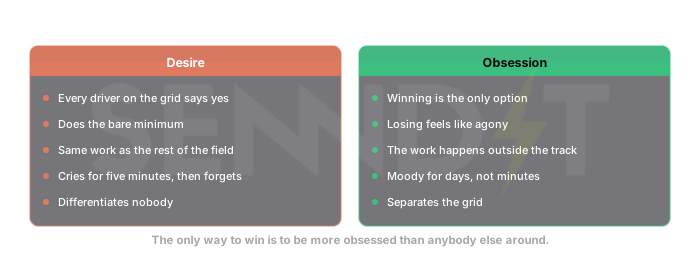
Everything I do is to win. Winning is the only option. I am obsessed about winning, and losing feels like agony to me.
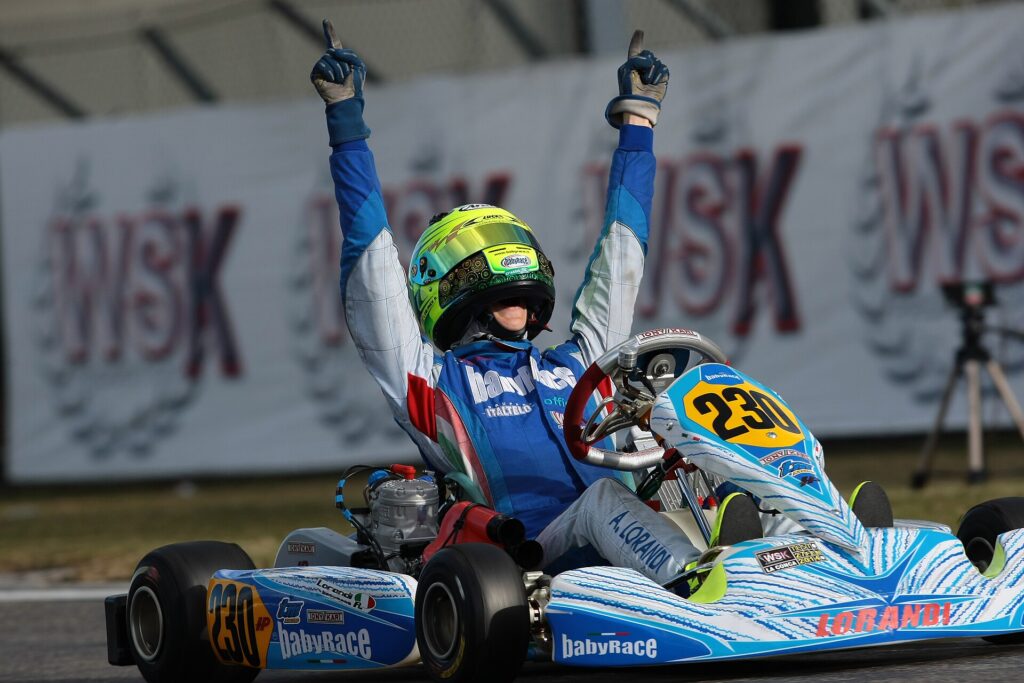
So I built this character trait, perhaps a positive one, or even a negative one, because the seek of the victory is so strong inside of me that I would get so moody and I would get so upset at myself, and perhaps at people around me, if I wouldn’t win.
I think this is the character trait that helped me a lot throughout my karting career. And I see it’s reflected in many other athletes, in their biographies or documentaries or just stories I hear. I really believe this is what shaped me into the person I am today.
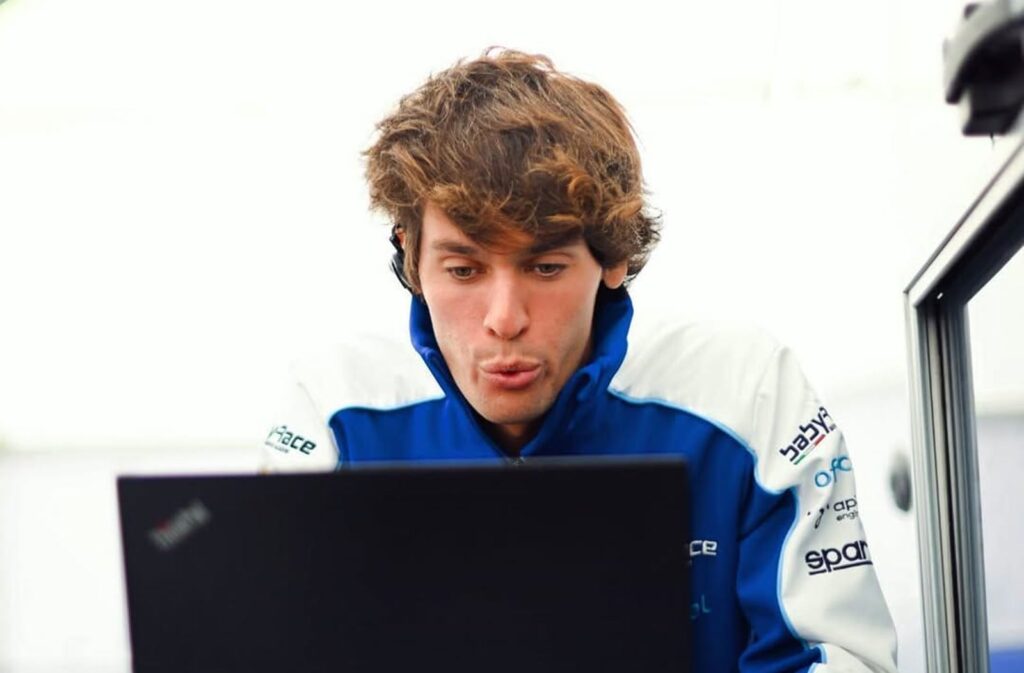
When I’m managing the drivers at Babyrace, coaching them and trying to win as much as they can, it really feels like I’m driving alongside them and I’m pushing them to the victory. This is what I wish I could have been doing every day of my life. Unfortunately it didn’t play out for me in Formula cars, but I’m here to make it work for them, and to ideally shape them into the absolute best and most successful drivers they can be.
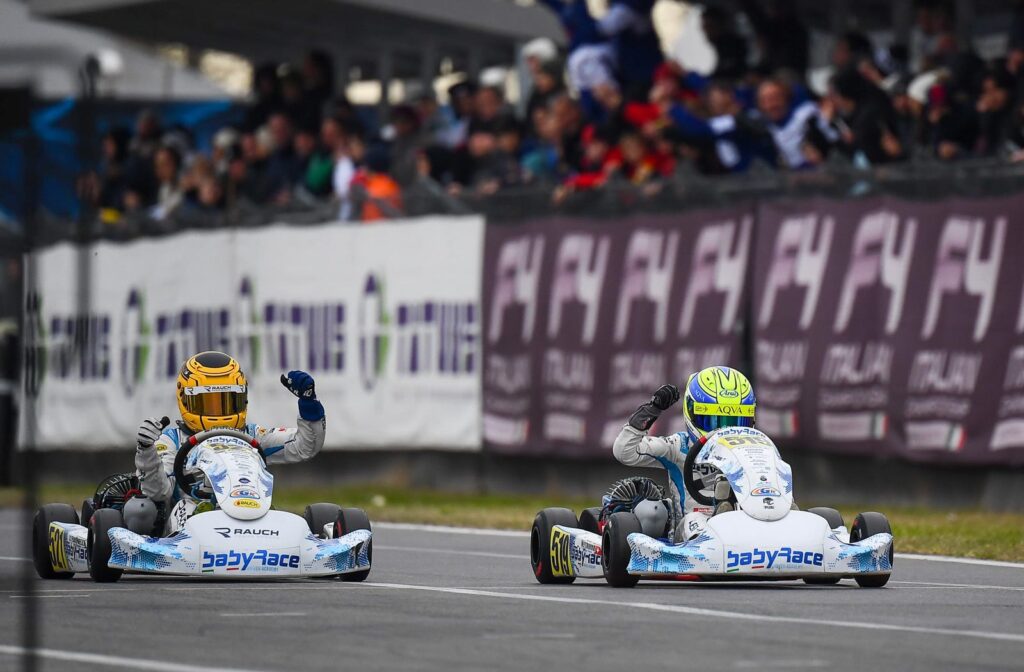
And every time I see drivers that are not putting the effort, that are just doing the bare minimum, that spells mediocrity. It just completely turns me off. I put a mask on and just smile at them, even though I try to politely first, then perhaps more aggressively later, explain to them that it’s not enough what they’re doing, and that if they don’t put more effort they will not make it.
So my whole ambition, besides perhaps winning more races myself, is to shape and turn deserving drivers into the next Max Verstappens, Ayrton Sennas, Michael Schumachers. I really want to do that. I’m not here just to collect some trophies.
I expect from them the obsession about winning. Not just the mere desire, but the obsession. Because the only way to win is to be more obsessed than anybody else around.
And they need to ideally have the same perception as I had, of having a feel of agony whenever they lose.
If you ask every driver on the grid “do you want to win?”, are we kidding? Of course everybody is going to say yes. Desire is universal, which means it differentiates nobody. The question that actually separates the grid is how many are going to work harder than the rest of the field.
I think I picked up this character trait early on in my life, in my childhood, because I was all the time competing with my brother Leonardo, who’s about two years younger than me.
You might argue and say, oh, but it must have been easy for you, you were two years older. But the reality is that we were competing every single day. Whatever we did, we would compete.
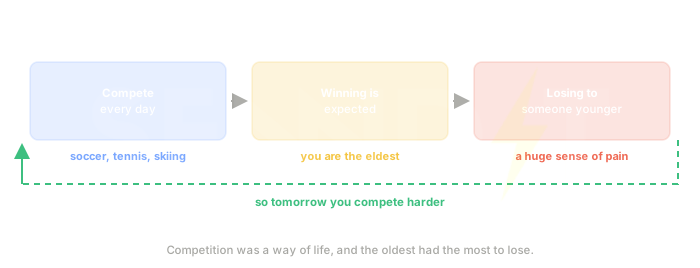
We would even at the beach compete playing any sort of game, any sort of sport. But even other sports that were unrelated to karting. I would play soccer, we would compete against each other. We would play tennis, we compete against each other. We would go skiing and would compete against each other. We would do karate and we would compete against each other. We would train in the gym and we would compete against each other.
I mean, we competed all the time. Competition was just a way of life. This is the same fire I wrote about in born to compete, but obsession is the level above it.
And so winning was my only ambition. When I won, it felt like I was supposed to be winning every time, because I was the eldest. I was two years older. And so I was, again, supposed to. For me, winning was just what was expected. And so losing became the absolute agony.
I’ve met a few people in my life who mentioned that between two siblings, the younger one would have an advantage, because he would be the youngest and would pick up the most from his older brother. While that might be true, the reality is that the one who would be turning out to be the most eager to win would be the oldest one, in my opinion.
The oldest brother always has to make sure he wins to get the approval from their family, to get the love from their parents. He’s not just competing to finish second.
Because if you lose to someone younger than you in the family, well, that is not good enough, and you will feel a huge sense of pain. And that was exactly what it felt like with me.
I just grew up with, perhaps you can call it a trauma, but this character trait was so ingrained in me that winning was the only option, and the only way to feel accepted by my parents, my dad especially.
We would listen to bedtime stories at night, and I would always back my dad to make me win. Basically my dad would come up with stories of me and my brother racing each other, and racing against Formula 1 drivers. Some nights he would win, some nights he would make me win in the stories.
And every time I lost in the story, just a silly, simple bedtime story, I would be so moody. I wouldn’t stand that. I wouldn’t tolerate that.
So I was really raised up with this huge necessity, almost, to win, to feel kind of accepted by my parents and loved by my dad especially. You can call that a trauma, you can call that crazy, you can call it unnecessary, you can call it whatever we want. But that’s what shaped me into becoming a karting world champion. A CIK-FIA World Champion, against drivers like Norris, Sargeant, having an 18 against 7 stat with Norris, and having a positive head-to-head with Russell.
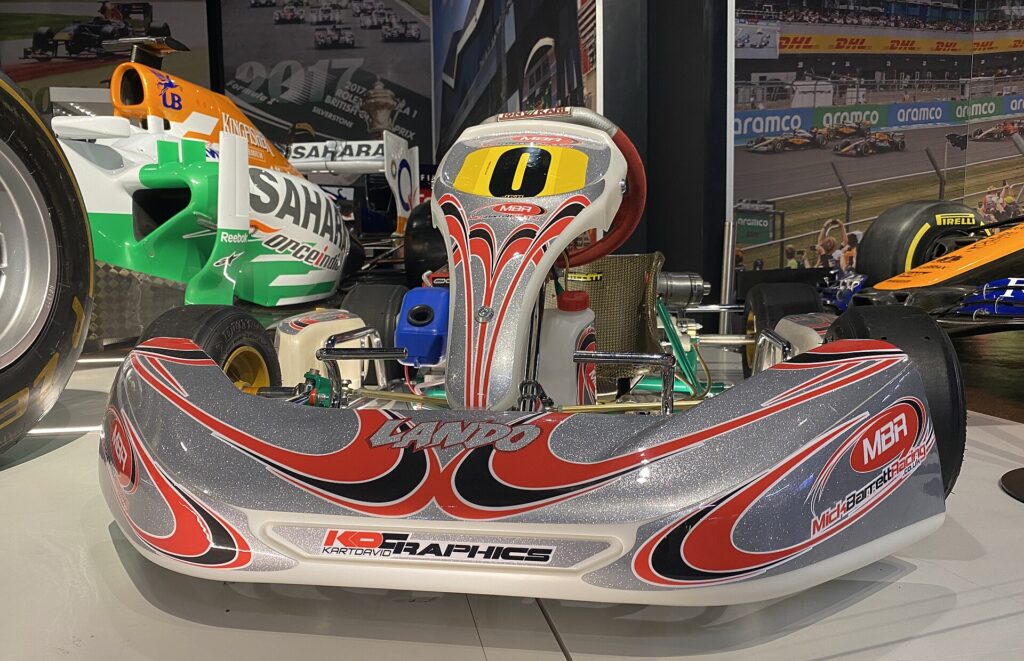
But the reality is that I don’t care about them. I care just about myself. And I feel that very few people I raced against were more eager to win than I was. I don’t think maybe any of them. And I raced against Leclerc. I raced against Verstappen. And I still believe that I wanted to win more than them.
Maybe I didn’t have the same opportunities. Maybe I didn’t get the same kind of coaching or upbringing as Max had, having such a legendary figure as his father being his coach, his mentor, his mechanic, even his engine tuner actually. I’m very grateful for everything my dad did. The point I’m just making is that I was raised with this huge necessity of winning, and again, this pure fear of losing.
They say that humans not only learn and are attracted by what they want, which in this case is winning, but they’re actually more repulsed by what they don’t want, which is losing.
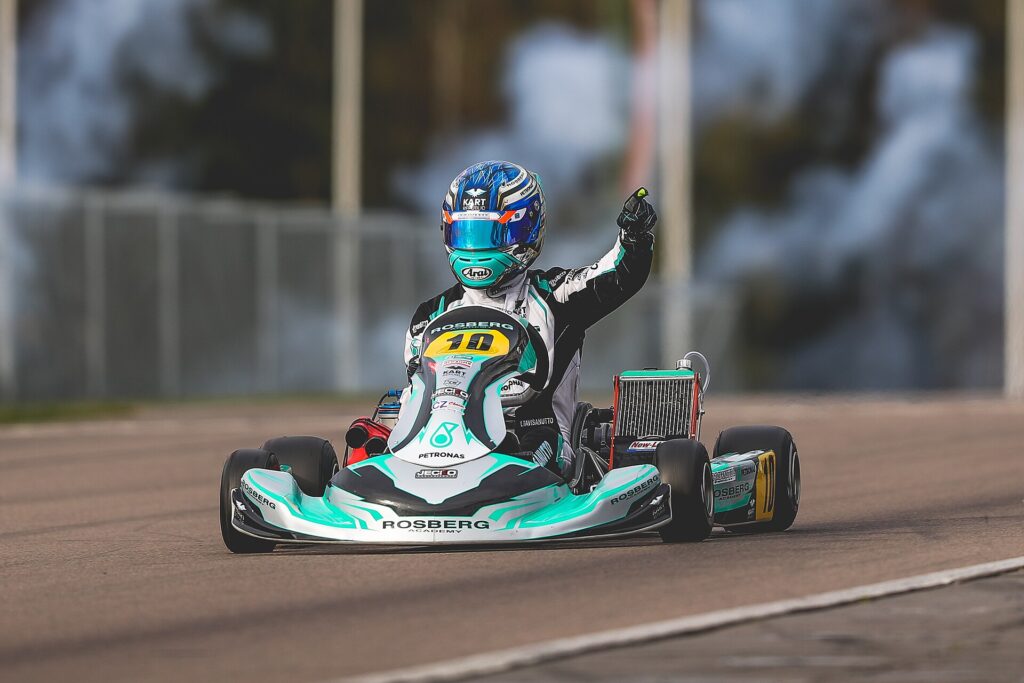
So if I would imagine seeing Lando Norris winning, or George Russell winning, when I raced them in karting, I would be just so upset that I would push myself to the limits. Not only when I was on the track, but also outside of the track, especially outside of the track. To improve myself, to work harder, to find the extra bit of performance in my driving, in my kart, in my setup, in anything I could do to just make my winning chances higher than they were the session or the day before.
I encourage all drivers to reflect on their actual winning desire. Not the answer you give out loud, everybody says yes. Ask instead: what did I do this week that the rest of the field did not do? If you cannot name it, you have desire, not obsession.
I truly remember that at some point when I was in Junior, I was growing a bit too fast. I was getting tall quite rapidly, and I could feel that the taller I would get, the slower I would go. Not only in terms of straights, in terms of drag, but also in terms of grip.
I would have a bit too much grip, and especially with the very soft tires we had in 2012, 2013 and 2014. With such soft tires I could feel that I would have too much grip and bounce and go on two wheels, compared to drivers like Norris who were so tiny compared to me. They had way better handling stability through the corners and they could just easily carry more speed, where I was like wrestling the kart with 25 to 30 centimeters more height than him.
So I remember myself, by the way, I’m not suggesting anybody to do that, but I remember myself looking in the mirror and I was like, please stop growing. Please stop getting taller. I was literally telling this to myself.
You can call this like a trauma or whatever. But I was literally hoping to not grow up, because I knew it would affect my performances. And my dad is quite tall, he’s like 182, and of course his height would kind of affect me. I was like, okay, I hope I’m not going to be too tall.
So I would control my weight. I would work really hard, but at the same time I would try to not eat too much so I could be as thin as possible. And I remember really checking my weight kind of anxiously, just because I wanted, again, to have the highest chance of winning.
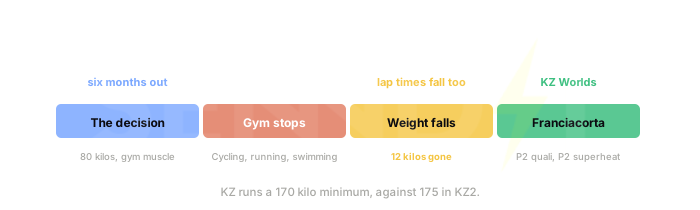
The same happened when I tried to win the World Championship last year in 2025, in KZ at Franciacorta. I was very close to winning it, setting P2 in quali, setting the fastest lap in every single heat, getting P2 in the superheat.
But I remember, about six months before I decided I would race, I literally had to make that decision of losing about 12 kilos. Because my weight was 80 kilos, and in KZ the minimum weight is 170 kilos, compared to KZ2 where it’s 175. By the way, KZ, for those who didn’t know, is the number one category of karting in the world. There’s nothing above that.
I was literally racing against paid drivers. They are doing that for a living. And I hadn’t been driving for the last six years, basically. I didn’t drive pretty much any time in those six years. And so this crazy goal was in my mind, that I wanted to win the World Championship again.
So I was like, okay, if I want to increase my chance of winning, since that’s my only goal, I got to lose weight.
And so I lost so much weight, even though I was not fat. I wasn’t 12 kilos overweight because of fat. I was super bulky because I had lots of muscles, I did a lot of workouts in the gym and I was really generally fit, but fit for the gym, not for the kart.
So I stopped the gym altogether for six months. I went to cycle, I went to run. Cycling, running, swimming, basically training for endurance like a triathlon athlete for an Ironman. And I remember that my weight kept going down and my lap times kept getting faster.
I was super upset about not winning the race in the end. But at the same time I was super proud of the way I pushed myself to my limits, both outside of the track and inside of the track. I feel this was something that I can just be proud of one day.
Six years out of the seat, against professionals who do it for a living, the decisive work was not driving, it was six months of cycling, running and swimming, and 12 kilos. When I see kids not putting in the effort, doing the same as everybody else or even less, and then expecting that they should win, and sometimes crying after the race, I’m like, dude, what are you expecting?
This is a conversation I have lots of times with the drivers. I’m like, mate, are you actually putting in as much effort as you could? Would you be fully proud of how you behaved and how much work you did through the weekend? Would you have any regret at the end of the week?
I really feel like they need to drive as if they will not have regrets. They don’t want to have regrets, because they get just a few shots at putting themselves in the spotlight, winning multiple races and championships. And to do so they need to really take every opportunity, especially in this fiercely competitive world of motorsport.
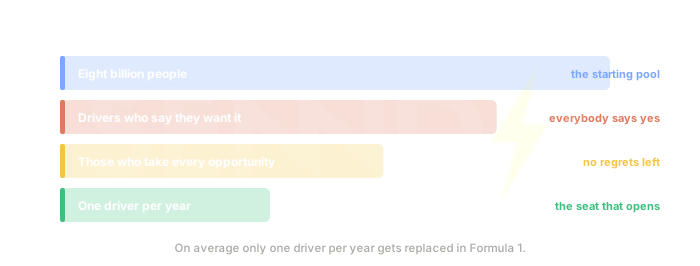
Let’s face it. There’s no other sport in the world that has such a low number of participants that can do that. Talking about Formula 1, the barriers to entry are so high. And on top of that, only one driver per year on average gets replaced in Formula 1.
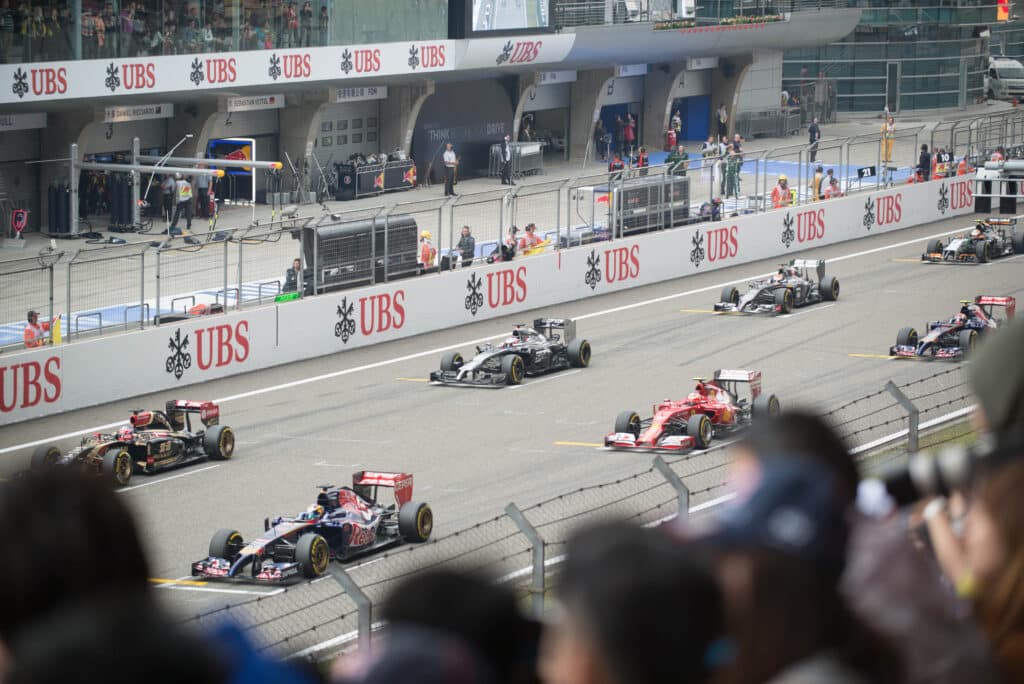
We are in a world of eight billion people. Out of eight billion people, just one human being is going to get into Formula 1 each and every year. I mean, that’s quite crazy how competitive that is.
Now, I’m not saying every driver should get into Formula 1. There are different series, and some drivers may not even want to be putting in all the effort to get to Formula 1. Some of them would just be happy doing it as a hobby, a family event that gathers all the family, just like going to a party.
But the reality is that for those ones who really want to make it, it’s fiercely competitive, and I can say something about it.
The only way to at least not have regrets, which is exactly what I don’t have. I don’t have any regrets.
Because yeah, there are so many variables in motorsport, let’s be honest. But the only thing that you can regret is not putting in the effort. Not putting all the energy that you could have into that obsession of winning.
Because again, the only way to become an F1 driver, unless you’re Lance Stroll and your dad can buy you a Formula 1 team, I mean, for all the others, especially the ones with very little budgets, you gotta take absolutely every opportunity and give absolutely everything you’ve got, inside and outside the track. So that you can increase your chances, first of all, of success. But at the same time reduce your regrets, or at least eliminate them.
Which is exactly what happened to me. I’ve got zero regrets. Many Formula 1 drivers still remember me and they all respect me. They all know that I would have been one of them if I had the same opportunities and the same kind of path they had. So that at least fills me up with joy and pride, and moves me forward, shaping and building the next future of Formula 1 drivers.
But the whole thing I wanted to point out to you is this: to become that driver that gets to Formula 1, that one driver a year out of eight billion people, unless again you’re the case of Lance Stroll, where your dad can buy your team, for all the other mortals out there, just like you and me I guess, well then you gotta take absolutely every opportunity.
So at least you can sleep well at night. And after years since your last race, you’ll be having zero regrets, and fully content and at peace with yourself, and just looking at that period as a period where you gave absolutely everything and where you pushed yourself to the limits.
I hope this resonates with you. I was obsessed about winning, and I still am. I still carry this every time I go to the racetrack, even though I’m not driving myself.
And every time I see drivers matching that pattern, even though they may not be my drivers, Babyrace or maybe other drivers, I’m like, well, that kid is going to go very far. Especially when not only are they obsessed about winning, but also when they have this agony of defeat, of losing. If you have that combination, which seems quite expected, but believe me, it’s not that common, if you have that too, well.
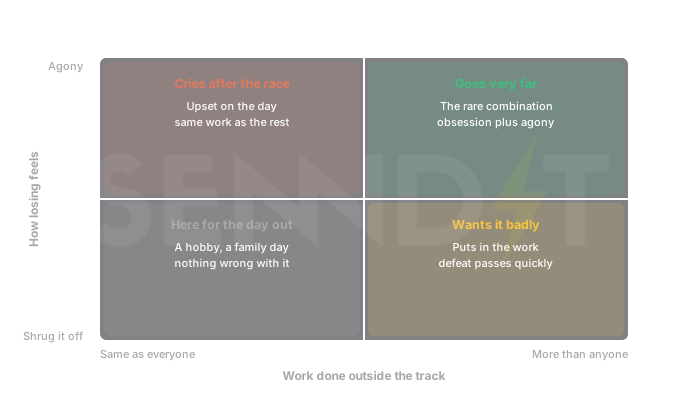
But that doesn’t mean that the kid is going to just randomly cry because he lost. It’s more about getting moody, getting so pissed off that you wouldn’t talk to people. Like that’s what I did. Sometimes I wouldn’t eat for a while.
When you’re so upset, you’re not just crying for like five minutes and then forgetting about it the next day. It’s just something that stays stuck with you.
You want some sort of revenge, you know. Somebody does something bad to you, you’re going to make it back. But anyways, all this philosophy, that’s what shaped me. And if you’ve got some traits like that, well, you’re on the right path. The next step is turning that fire into mental strength you can actually use on track.
Desire is universal, ask any driver on the grid if they want to win or reach Formula 1 and every single one says yes, so it separates nobody. Obsession is what shows up in behaviour when nobody is watching: the work done outside the track that the rest of the field is not doing. If you cannot name something you did this week that your rivals did not, you have desire, not obsession.
In my experience yes, and it is the more powerful of the two forces. Humans are attracted by what they want, but they are pushed harder by what repels them. Imagining a rival winning upset me enough to change how I worked away from the circuit, not just how I drove. The agony of defeat is the engine, not the side effect.
The common assumption is that the younger sibling has the advantage, because they learn from watching the older one, and that can be true. But the eldest carries a different weight: winning is simply expected of them, and losing to someone younger in the family feels unacceptable. That pressure to keep earning approval tends to build the hungrier competitor.
About 12 kilos, from 80 kilos, over six months, and not because I was fat. I was carrying gym muscle, so I stopped the gym completely and switched to cycling, running and swimming, training like a triathlete for an Ironman. KZ has a 170 kilo minimum weight compared to 175 in KZ2. My weight kept dropping and my lap times kept improving, and I qualified P2 with the fastest lap in every heat after six years out of the seat.