How to Become Strong in the Head (and Why It Wins Races)
Mental strength wins races. Raw speed doesn't. Here's what separates champions from the rest.

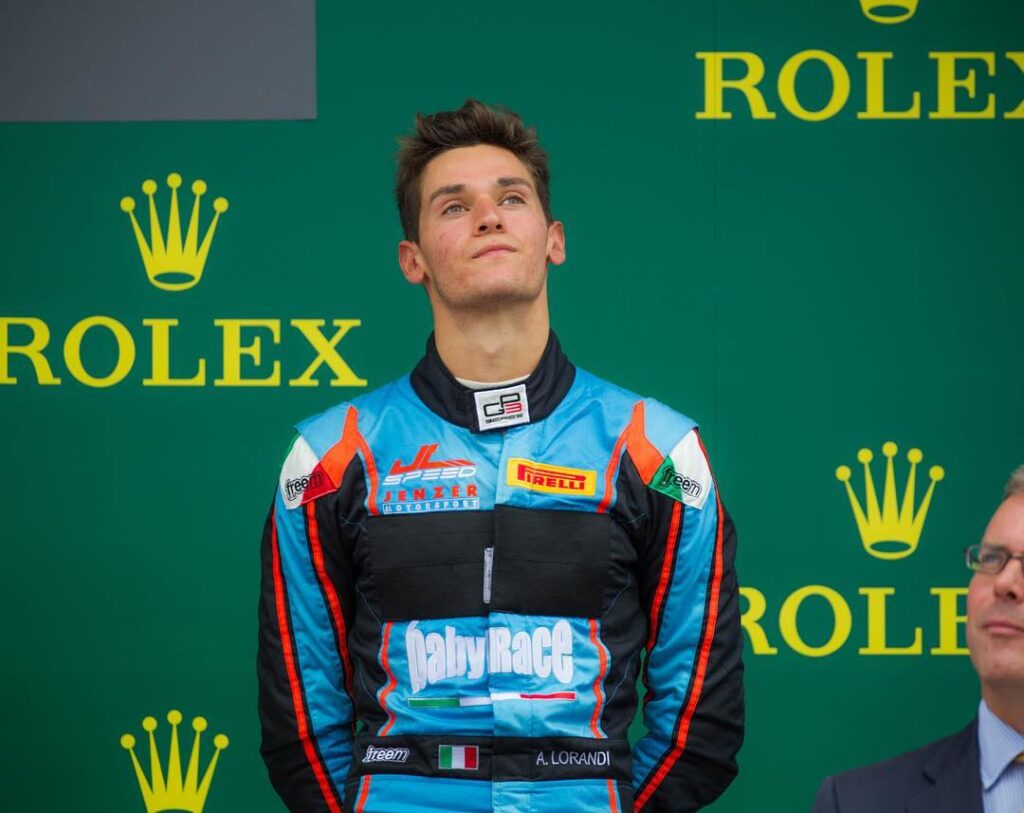
- Being fast is not enough. In 2013, the year I won the World Championship, I had weekends where I was missing a tenth, sometimes two or three.
- When the pace is the same, the one who wants it more wins. In European kart races the top 15 drivers are often running the same lap times.
- Mental strength is not something you’re born with. You build it, with what you do every day and who you surround yourself with.
- Wanting to win is not enough. Everybody on the grid says yes. The question is how many are going to work harder than the rest of the field.
- Competitiveness can be built outside the kart. Ping pong with your teammates, rental karts, sim racing online. Put yourself in a situation where you have to compete.
- Losing has to hurt. You are pushed more by what you don’t want, losing, than by what you want.
- Pressure mostly comes from a lack of confidence. And confidence comes from preparation, pushing the limits and repetition.
- Never promise yourself a result. Tell yourself you’re going to give it everything, and mean it.
- After a mistake, don’t just reset. Put a sticky note in your brain and fix it on the next lap.
- Don’t blame the traction. You create the traction. Look at yourself first, then at the kart.
- Obsession shows up outside the track. For the 2025 KZ World Championship I lost about 12 kilos in six months.
- The only thing you can regret is the effort you didn’t put in. There are so many variables in motorsport, let’s be honest. Not the effort.
- Race like there’s no replay button. Your racing career isn’t guaranteed. It might end in 5 years. It might end next season.
- Stop treating karting like a hobby. School is still important, but when you’re training, train like your career depends on it.
- Use the track time like it’s gold. Karting is expensive, every lap costs real money, so never go out there without a plan.
- Confidence is built lap by lap. At Macau I went from more than 2 seconds off in free practice to about 2 tenths off the winner’s best lap.
- Is being fast enough to win in karting?
- What decides a race when everyone has the same pace?
- What does mental strength really mean in karting?
- Are you born strong in the head, or can you build it?
- Is wanting to win enough, or do you have to be obsessed?
- Where does an obsession with winning come from?
- How do you build competitiveness if you didn’t grow up competing?
- Where does confidence come from in racing?
- Why do kart drivers crack under pressure?
- Should you tell yourself you’re going to win?
- How do you build mental strength, step by step?
- Why does fitness make you stronger in the head?
- Why did I tell myself in the mirror to stop growing?
- What did being obsessed cost me at the 2025 KZ World Championship?
- Why should you stop blaming the kart?
- How do you reset after a mistake in a race?
- How do you stay focused on race day?
- What did Macau teach me about confidence?
- Why is laziness the enemy of mental strength?
- What is the only thing you can really regret in racing?
- Why does treating karting like a hobby fail?
- Why should you race like there’s no replay button?
- What does giving it everything look like on a race weekend?
- How do you spot a driver who is obsessed about winning?
- Are you the wolf or a sheep on the grid?
- Am I strong in the head today?
- What do drivers ask most about mental strength?
Is being fast enough to win in karting?
Let me tell you something upfront.
You can be fast. You can have the best engine, the freshest tires, and even the flashiest suit.
But if you’re not strong in the head? You’ll get eaten alive out there.
Karting, and racing in general, is a battlefield.

And like any battlefield, the ones who win are the ones who can take pressure, stay focused, and bounce back after mistakes.
Not the ones who just happen to be fast on a good lap.
I’ll give you my own example. I truly believe the reason I won the World Championship in 2013 wasn’t because I was the fastest. I wasn’t. I had weekends where I was missing a tenth, sometimes two or three. That would have been enough to lose.
But I had a burning desire to win that had been building inside of me since Sarno in 2011. Everything I did was a step towards that goal. Eat clean, train, visualize, learn, adapt, repeat.
And by the way, rarely those who win races are the quickest ones on track. They don’t normally set the fastest lap either.
What decides a race when everyone has the same pace?
In karting, talent matters. Equipment matters. Track time matters.
But the single biggest factor that separates the greats from the rest?
Competitiveness.
If you don’t have that fire inside, the hunger to win and the pain of losing, you won’t last.
Because karting isn’t just about being quick over one lap. It’s about fighting, adapting, and pushing when everyone else wants to give up.
What makes the difference when the top 15 run the same lap times?
Karting is a contact sport.
In European kart races, the top 15 drivers are often running the same lap times, with similar engines, similar chassis, and similar talent. So what makes the difference?
The one who wants it more. The one who refuses to lose. That’s where competitiveness decides everything.
Do the best athletes in every sport have it?
Competitiveness is built into human history. Since the beginning of time, we’ve had to compete. For food, for safety, for survival. It’s no surprise that the same instinct drives athletes today.
When I look at the best athletes across sports, whether it’s Novak Djokovic in tennis, Muhammad Ali in boxing, or Lewis Hamilton in Formula 1, they all share one thing: an insane level of competitiveness.
When I was younger, instead of reading novels in the summer, I went on to read other kinds of books. Sebastian Vettel’s book, Mark Webber’s book, Jenson Button’s book, and many legendary sports autobiographies, such as the one of Novak Djokovic, Andre Agassi and Muhammad Ali.
What does mental strength really mean in karting?
Mental strength isn’t about shouting “Let’s go!” in your helmet before the green flag.
It’s what keeps you sharp after a crash, focused after a mistake, and committed during hard moments when your rivals are pushing you off track or playing mind games.
Racing is a lot about psychology. And the mind games are not only within yourself, but most importantly with your rivals on track.
A big part of it is confidence. Confidence is the invisible fuel, and in racing it makes all the difference. It’s what allows you to pull off a late braking move without thinking twice about it. It’s what lets you commit to entering corners on the limit, lap after lap.
Without it, you’re second guessing yourself. You’re slower, not because of your ability, but because of your self doubts. What if I screw up? What if I miss the corner?
It’s not something you’re born with, it’s something you build.
Are you born strong in the head, or can you build it?
You build it. I repeat it, it’s not something you’re born with.
You are being shaped by anything that you do in your life. Anything that you’re repeatedly doing. Anything that you’re surrounding yourself with.
Look at Max Verstappen. Everybody says he’s built different, that he doesn’t feel the pressure. But he was put in that situation of competing many, many times from a very young age. So delivering under pressure became second nature to him.
On a smaller scale, it was the same for me. I was competing pretty much on a daily basis. If I was not competing on the track, I was competing at school, doing sports, or at home with my brother, even on the PlayStation playing the F1 games. So when I went to the race, I was not trying to be competitive. It was just my nature.
Now, let me be honest with you about one thing. Fearlessness, I feel, is kind of set by the time a kid is seven, eight, nine years old. But how you deal with pressure, your confidence, your focus, your discipline? That you train. Like a muscle.
Is wanting to win enough, or do you have to be obsessed?
Everything I do is to win. Winning is the only option. I am obsessed about winning, and losing feels like agony to me.
So I built this character trait, perhaps a positive one, or even a negative one, because the seek of the victory is so strong inside of me that I would get so moody and I would get so upset at myself, and perhaps at people around me, if I wouldn’t win.
I think this is the character trait that helped me a lot throughout my karting career. And I see it’s reflected in many other athletes, in their biographies or documentaries or just stories I hear. I really believe this is what shaped me into the person I am today.
Now, ask every driver on the grid “do you want to win?” Are we kidding? Of course everybody is going to say yes. Yes, I want to win. Yes, I want to go to Formula 1. But the reality is, how many are going to work harder than the rest of the field?
Because there are only 20 drivers in Formula 1, and out of those 20 only one ends up winning the World Championship. Same in the junior and the senior categories in FIA karting. Only one driver wins. All the others lose. So you may be wanting to win, but how obsessed are you about winning?
When I’m managing the drivers at Babyrace, coaching them and trying to win as much as they can, it really feels like I’m driving alongside them and I’m pushing them to the victory. This is what I wish I could have been doing every day of my life. Unfortunately it didn’t play out for me in Formula cars, but I’m here to make it work for them, and to ideally shape them into the absolute best and most successful drivers they can be.
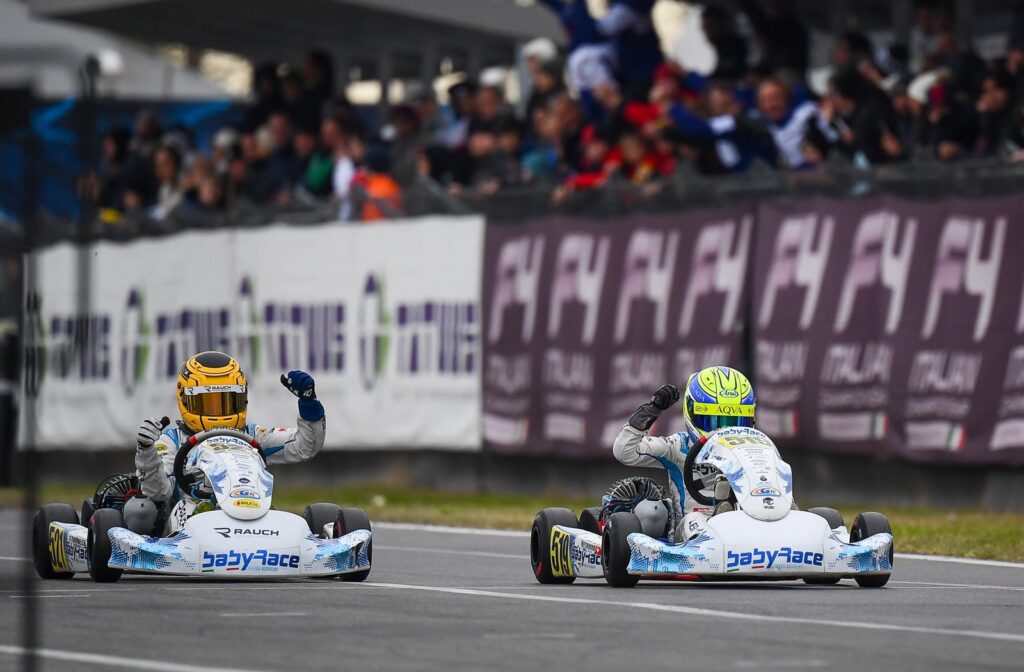
And every time I see drivers that are not putting the effort, that are just doing the bare minimum, that spells mediocrity. It just completely turns me off. I put a mask on and just smile at them, even though I try to politely first, then perhaps more aggressively later, explain to them that it’s not enough what they’re doing, and that if they don’t put more effort they will not make it.
So my whole ambition, besides perhaps winning more races myself, is to shape and turn deserving drivers into the next Max Verstappens, Ayrton Sennas, Michael Schumachers. I really want to do that. I’m not here just to collect some trophies.
I expect from them the obsession about winning. Not just the mere desire, but the obsession. Because the only way to win is to be more obsessed than anybody else around.
And they need to ideally have the same perception as I had, of having a feel of agony whenever they lose.
Why does losing push you harder than winning?
They say that humans not only learn and are attracted by what they want, which in this case is winning, but they’re actually more repulsed by what they don’t want, which is losing.
So if I would imagine seeing Lando Norris winning, or George Russell winning, when I raced them in karting, I would be just so upset that I would push myself to the limits. Not only when I was on the track, but also outside of the track, especially outside of the track.
To improve myself, to work harder, to find the extra bit of performance in my driving, in my kart, in my setup, in anything I could do to just make my winning chances higher than they were the session or the day before.
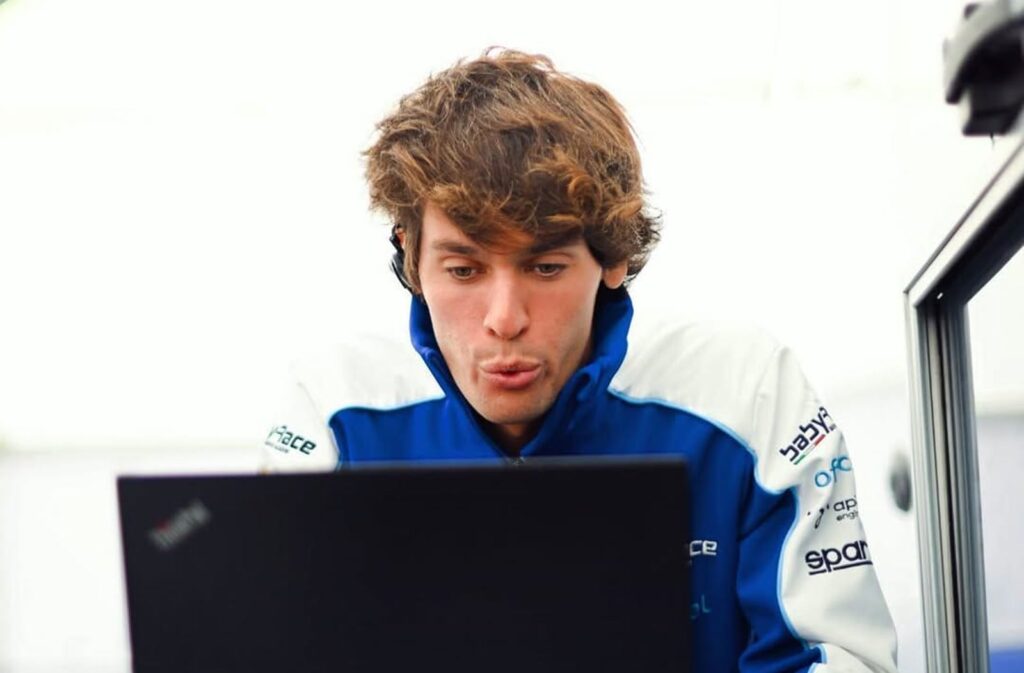
I encourage all drivers to reflect on their actual winning desire.
Where does an obsession with winning come from?
I think I picked up this character trait early on in my life, in my childhood, because I was all the time competing with my brother Leonardo, who’s about two years younger than me.
You might argue and say, oh, but it must have been easy for you, you were two years older. But the reality is that we were competing every single day. Whatever we did, we would compete.
Even at the beach we would compete, playing any sort of game. Soccer, tennis, skiing, karate, training in the gym. Whatever the sport, we would compete against each other.
I mean, we competed all the time. Competition was just a way of life. This is the same fire I talk about in how you build competitiveness, but obsession is the level above it.
Why does the oldest sibling end up hungrier?
And so winning was my only ambition. When I won, it felt like I was supposed to be winning every time, because I was the eldest. I was two years older. And so I was, again, supposed to. For me, winning was just what was expected. And so losing became the absolute agony.
I’ve met a few people in my life who mentioned that between two siblings, the younger one would have an advantage, because he would be the youngest and would pick up the most from his older brother. While that might be true, the reality is that the one who would be turning out to be the most eager to win would be the oldest one, in my opinion.
The oldest brother always has to make sure he wins to get the approval from their family, to get the love from their parents. He’s not just competing to finish second.
Because if you lose to someone younger than you in the family, well, that is not good enough, and you will feel a huge sense of pain. And that was exactly what it felt like with me.
What did my dad’s bedtime stories have to do with it?
I just grew up with, perhaps you can call it a trauma, but this character trait was so ingrained in me that winning was the only option, and the only way to feel accepted by my parents, my dad especially.
We would listen to bedtime stories at night, and I would always back my dad to make me win. Basically my dad would come up with stories of me and my brother racing each other, and racing against Formula 1 drivers. Some nights he would win, some nights he would make me win in the stories.
And every time I lost in the story, just a silly, simple bedtime story, I would be so moody. I wouldn’t stand that. I wouldn’t tolerate that.
So I was really raised up with this huge necessity, almost, to win, to feel kind of accepted by my parents and loved by my dad especially. You can call that a trauma, you can call that crazy, you can call it unnecessary, you can call it whatever you want. But that’s what shaped me into becoming a karting world champion, against drivers like Norris and Sargeant, with an 18 against 7 stat with Norris.
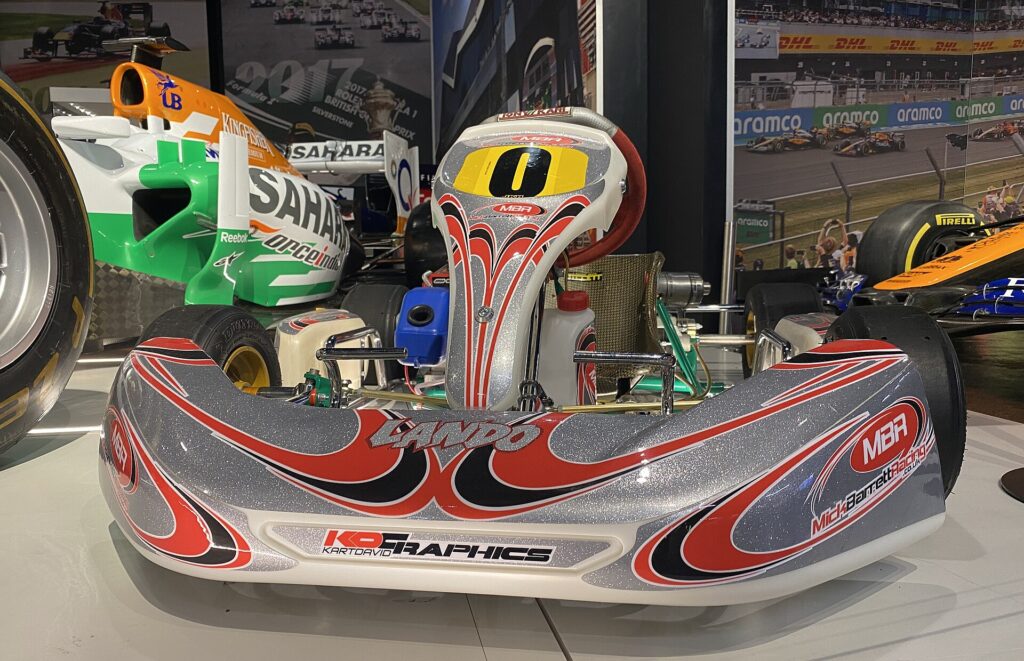
But the reality is that I don’t care about them. I care just about myself. And I feel that very few people I raced against were more eager to win than I was. I don’t think maybe any of them. And I raced against Leclerc. I raced against Verstappen. And I still believe that I wanted to win more than them.
Maybe I didn’t have the same opportunities. Maybe I didn’t get the same kind of coaching or upbringing as Max had, having such a legendary figure as his father being his coach, his mentor, his mechanic, even his engine tuner actually. I’m very grateful for everything my dad did. The point I’m just making is that I was raised with this huge necessity of winning, and again, this pure fear of losing.
What did ping pong with Charles Leclerc have to do with it?
Later in my career, I saw the same thing when training with Charles Leclerc at Formula Medicine. Even during the rest breaks we’d play ping pong, and nobody wanted to lose.
I raced him in karts before that. At the 2011 KF3 World Cup at Sarno he was P1 in qualifying out of 102 drivers. The story is with the other F1 drivers I raced in karts.
It wasn’t about the game. It was about pride. Losing felt like humiliation. Both of us just wanted to win.
That competitiveness fueled us to push harder on track.
How do you build competitiveness if you didn’t grow up competing?
Are you born competitive? Or do you become competitive?
I believe it’s nurture. You’re not born with it. You really have to shape it. Environment shapes you. I really believe that.
If you grow up with siblings or friends constantly pushing you, you learn to fight harder. By the way, having a younger brother or an older brother is always a good way to tell that a driver is probably going to be a quick driver. Because he has been competing all his life with the other brother, so he should naturally be a little bit better under pressure than other drivers.
And of course your family. If you are in a family that approves competition and pushes you to be competitive, I think that is a must. If you see competition as a negative thing in your family, then it’s going to be very hard to get your son or your daughter to become a competitive beast.
But don’t worry if you didn’t have that. You can still develop it.
Where can you find competition outside the kart?
If you want to become a winning beast and make winning your religion, you need to put yourself in a situation where you have to compete.
Whether that’s playing table tennis, ping pong with your teammates, or doing any kind of competition. Maybe it’s going rental karting sometimes. Or it’s doing sim racing online and trying to win and trying to be the best there. There are many, many things you could do.
Tennis, ping pong, padel, those kind of sports are going to be great, because they simulate your competition level. You want to be a competitive beast. And at the same time they stimulate your focus.
Even a card game or a reaction light drill can fire up your competitiveness. Take it seriously. Losing stings, but that sting becomes fuel later on.
Is winning once enough?
No. For me the only goal was to win, and I would work as hard as I can to win. And even when I would win, I would not be happy with just winning. I wanted to win and improve myself, improve the kart.
That growth mindset of never stopping, always trying and striving to be better. You always need to have that.
Does the competitive mindset come before the setup sheet?
Yes. Seeking competition and seeking winning, I think that is the foundation. Everything else follows.
The discipline work of training in the gym, the pre-race work, the data, the onboard video analysis, discussing setup with your team. All that comes second. What comes first is the competitive winning mindset that you need to develop.
Where does confidence come from in racing?
Confidence doesn’t come magically. You can’t buy it either. It’s built.
And here’s the thing most people miss: confidence doesn’t come before the action. It comes as a result of it.
To me it comes from three main aspects: preparation, pushing the limits and repetition.
Preparation. You’re never truly confident if you’re underprepared. I learned this the hard way. After winning the WSK Super Master Series with one race to go, I showed up to the final round at Castelletto di Branduzzo on the Thursday, rather than on the Wednesday as everyone did. My mum wanted to take me to the seaside for a few days, and I told myself I had already won the championship anyway.
That weekend went really bad. I was always missing 1 or 2 tenths to Norris, who ended up winning the race, and I crashed in the final fighting with some crazy guys in the mid pack. That feeling was horrible. I promised myself I wouldn’t make that mistake ever again.
Pushing the limits. Everyone can drive under the limit. And if everyone can do that, then by definition you can’t be faster than all of them. Overpushing is actually great, because you see what it feels like beyond the limit, and nothing bad happens other than losing 1 or 2 tenths on that lap.
Repetition. The only way to have full confidence when it counts is knowing rationally that you’ve already done it several times before. Successfully.
Why do kart drivers crack under pressure?
I believe pressure comes from a lack of confidence. In yourself, in the kart, maybe in the people around you, like your mechanic.
Picture this. You start P1, but in the warm-up you didn’t feel that great in the kart. The drivers behind you look very strong and very confident on the pre-grid. So by lap two you start looking in the back. You start to panic. And you crack.
Looking in the back is one of the major triggers. And a mistake triggers another mistake. You drop a wheel, you lose three tenths on the exit, and 99% of drivers will immediately look in the back. Of course he closed up! The only goal in that moment is to get back to your rhythm in the next corner. I explain when it makes sense to look back here.
One more thing. Lots of drivers, myself included, almost forget to breathe when they drive. It’s like being in apnea all the time. Visualize yourself taking a proper big breath on the straights before you go out, so it actually happens when you drive. These breathing exercises help a lot before the session too.
I go much deeper on this in why kart drivers crack under pressure, and how to fix it.
Should you tell yourself you’re going to win?
No. I never ever said to myself “I’m going to win”, or “I’m gonna finish top three”, or “I’m gonna get pole”.
I know it’s a bit controversial. You may say, if you’re strong in the head you should be telling yourself that kind of things. But in my case it worked very well to just tell myself “I’m gonna do my best”. And I literally meant it. Even when my mechanic or my dad would say “come on, go and take P1”, I would never say yes of course.
What I see with kids nowadays is that they say it, they start P1, and as soon as they lose one position they fall apart. Because there’s so many variables. And now they’re not keeping the promise they made to themselves.
Do it five times and your own inner voice stops believing you. Next time you say on the grid “I’m going to win this”, your inner voice will be like: “Sure, just like the other 5 times that you said you were going to win, right?”
So be performance driven, not results driven. Focus on your own driving and how you improve corner by corner, lap by lap. That one you can actually control. More on this in the 5 most popular karting fears.
How do you build mental strength, step by step?
If I had to break it down as I do for my drivers, these are the five pillars I teach to build mental strength:
1. Train Your Body Like It’s a Weapon
Sounds funny in a mental strength article, right? If your body is tired, your mind cracks. When your neck is giving out mid race, you start making mistakes. When your core is weak, your focus fades.
Mental strength grows when you suffer physically on your own terms, not when the race punches you in the face.
2. Review the Data. Watch the Footage. Own the Truth.
This one separates amateurs from real racers. Mental strength isn’t thinking you’re perfect. It’s being brave enough to watch your worst lap, review your braking points, and admit when you were lazy on the throttle.
You grow when you say, “That was on me,” and fix it.
3. Respect the Off Track Discipline
You want to know when I see drivers fall apart mentally? When they party the night before a race. When they’re late to the track. When they show up without reviewing the track layout.
Sleep well. Eat clean. Visualize the track. Keep your space organized. It all adds up.
4. Surround Yourself with Winners
You can’t be mentally strong if everyone around you is soft. Wolves don’t hang out with sheep. You are the average of the five people you spend the most time with.
I’ve learned the most from the drivers who made me feel slow, because they pushed me to raise my game.
5. Stop Complaining. Seriously.
Blaming the tires. Blaming the mechanic. Blaming the weather. But the best drivers look inward first. They ask: “What could I have done better?”
Why does fitness make you stronger in the head?
It’s incredible how interconnected the physical side is to the mental side. And in racing you can see it very clearly.
I would say 80 percent of the drivers are not fit enough to race the way they should. If you start feeling tired and out of breath after like lap five, you can’t maintain the peak performance. You honestly feel like the kart is driving you, instead of you driving the kart.
I’ve experienced that feeling very few times in my life. A few years ago, when I was not driving full time, I would go back in the kart after a long time and be like, holy cow, the kart is driving me. I was fit for the gym, fit for running. But I was not track specific fit.
Long cardio sessions, core strength, neck resistance, and hot sessions in full gear, even when I’m not racing.
Why did I tell myself in the mirror to stop growing?
I truly remember that at some point when I was in Junior, I was growing a bit too fast. I was getting tall quite rapidly, and I could feel that the taller I would get, the slower I would go. Not only in terms of straights, in terms of drag, but also in terms of grip.
I would have a bit too much grip, and especially with the very soft tires we had in 2012, 2013 and 2014. With such soft tires I could feel that I would have too much grip and bounce and go on two wheels, compared to drivers like Norris who were so tiny compared to me. They had way better handling stability through the corners and they could just easily carry more speed, where I was like wrestling the kart with 25 to 30 centimeters more height than him.
So I remember myself, by the way, I’m not suggesting anybody to do that, but I remember myself looking in the mirror and I was like, please stop growing. Please stop getting taller. I was literally telling this to myself.
You can call this like a trauma or whatever. But I was literally hoping to not grow up, because I knew it would affect my performances. And my dad is quite tall, he’s like 182, and of course his height would kind of affect me. I was like, okay, I hope I’m not going to be too tall.
So I would control my weight. I would work really hard, but at the same time I would try to not eat too much so I could be as thin as possible. And I remember really checking my weight kind of anxiously, just because I wanted, again, to have the highest chance of winning.
What did being obsessed cost me at the 2025 KZ World Championship?
The same happened when I tried to win the World Championship last year in 2025, in KZ at Franciacorta. I was very close to winning it, setting P2 in quali, setting the fastest lap in every single heat, getting P2 in the superheat.
But I remember, about six months before I decided I would race, I literally had to make that decision of losing about 12 kilos. Because my weight was 80 kilos, and in KZ the minimum weight is 170 kilos, compared to KZ2 where it’s 175. By the way, KZ, for those who didn’t know, is the number one category of karting in the world. There’s nothing above that.
I was literally racing against paid drivers. They are doing that for a living. And I hadn’t been driving for the last six years, basically. I didn’t drive pretty much any time in those six years. And so this crazy goal was in my mind, that I wanted to win the World Championship again.
So I was like, okay, if I want to increase my chance of winning, since that’s my only goal, I got to lose weight.
And so I lost so much weight, even though I was not fat. I wasn’t 12 kilos overweight because of fat. I was super bulky because I had lots of muscles, I did a lot of workouts in the gym and I was really generally fit, but fit for the gym, not for the kart.
So I stopped the gym altogether for six months. I went to cycle, I went to run. Cycling, running, swimming, basically training for endurance like a triathlon athlete for an Ironman. And I remember that my weight kept going down and my lap times kept getting faster.
I was super upset about not winning the race in the end. But at the same time I was super proud of the way I pushed myself to my limits, both outside of the track and inside of the track. I feel this was something that I can just be proud of one day.
This is just to show you what it means to be totally and absolutely obsessed about winning. When I see kids not putting in the effort, doing the same as everybody else or even less, and then expecting that they should win, and sometimes crying after the race, I’m like, dude, what are you expecting? How would you think that you’d win if you didn’t put the effort, outside of the track or at the track?
Why should you stop blaming the kart?
Because most of the times it’s you. I remember this scene vividly. A rainy day in 60 Mini, I was probably 11 or 12 years old, and I was about 2 seconds off. I kept telling my mechanic the kart “was sliding on exit”. No traction.
So he went smaller and smaller on the sprocket. Didn’t help, if anything the lap time got slower. Then he gave me maximum rear grip. Slower again. So he walked onto the track and stood in those corners.
After the session he told me I was putting the power down too early and too aggressively, before the kart was fully rotated, right on the rubber line where there’s no grip. That was a tough pill to swallow. A few sessions later the traction issues were gone. Changed what on the kart? Nothing.
Don’t blame the traction. YOU create the traction. So go fix yourself first before fixing the kart.
Same with data. A driver tells me he has no top speed, then we check his teammate on the same equipment and the teammate has even less. Data doesn’t lie, mate. If you go into data analysis with the “excuses hat” rather than the “detective hat”, you won’t get any benefit out of it.
And if you want somebody to watch the footage and the data with you, that is the work I do in my six month training program. Mindset is one of the modules, and there is a live call with me every week.
How do you reset after a mistake in a race?
First, be aware that nobody’s perfect and everybody makes mistakes. It happened. Think about the next corner.
But don’t just reset and forget about it. That’s a bit silly. Say you braked too early because you thought the grip would be less, so you turned in early, early apex, bad exit. You need to realize right away: OK, the grip is quite high, next lap I brake a lot later and turn later.
I have this theory about the sticky notes. It’s like you put a sticky note in your brain, and on the next lap you act on it.
And not all mistakes are equal. An overpushing mistake, when you go past the limit trying to catch the driver ahead, is completely different from an unforced error with nobody around you. You should champion overpushing mistakes over the others, because it means you’re trying. I’d prefer drivers push and make mistakes rather than drivers that are always too conservative. Here are the good and the bad mistakes.
How do you stay focused on race day?
When I was racing in Formula 2, I picked up a book about sports psychology. I can’t remember the title, but the concept of the bubble stayed with me forever. You create an imaginary bubble around yourself, and every single distraction gets blocked out.
Race weekends can be very chaotic. At WSK events you can be waiting two to three hours for the race. Back in the BabyRace days I always had teammates around me and my brother asking for tips. They were the customers of the team, so I had to be nice. But in the important moments I just had to stay by myself.
The best signal is noise cancelling headphones. Sometimes I put mine on without even turning on the music, maybe with an empty battery, just to tell everyone: don’t talk to me now. In the kart I keep my visor a little lower than normal, almost fully closed.
And remember, parents and coaches have a big influence, but I think 90 percent of the responsibility is on the driver. Nobody else can protect your focus for you. I share my routine in how to maintain focus during a race day and how racing drivers train focus and concentration.
What did Macau teach me about confidence?
Let me take you back to 2015, my first year in Formula 3. I was 16 and my first ever street race was at Pau. Walls everywhere, no grass, no gravel. A small mistake could have cost our family up to 100k euros in the worst case. The first few times through sector 2 in free practice it felt overwhelming. I wasn’t confident at all.
But Pau was nothing compared to Macau, the same year, for the first time. Much faster, much lower downforce, a straight about 2 kilometers long, and the car felt really light in the medium and high speed corners. In free practice I was more than 2 seconds off.
If you lose the car there, it’s a huge damage bill, the team is pissed at you, and the icing on the cake is a shattered confidence. After a crash like that you drive with an invisible handbrake.
So I took it step by step and pushed more and more as my confidence grew each lap. In the race my best lap was a 2:10.648. The winner, Felix Rosenqvist, did a 2:10.425. I finished P7 out of 28 at my first FIA F3 World Cup, in front of drivers like Jake Dennis, Lance Stroll and Alex Albon.
P7 was nothing exceptional. But going from more than 2 seconds off to 2 tenths, in 48 hours, with the exact same car? That gave me a good amount of confidence. Four years later I went back to Macau and finished P5, after fighting for the podium in the early stages of the race.
When confidence is up, results follow.
Why is laziness the enemy of mental strength?
Mental strength and laziness can’t exist together. Lazy drivers get overtaken. Lazy drivers make excuses. Lazy drivers burn out fast.
If you want to be strong in the head, wake up early. Watch your own race footage. Do the boring stuff that nobody else wants to do.
Some drivers have everything handed to them. No budget limits, flexibility from school, a track on their doorstep. And they still don’t want to drive that often. Millions of kids would have loved to be in that privileged position. And you just “didn’t feel like it”?
Think about two lines on a graph. If the driver ahead of you is improving at the same rate as you, waiting will never get you there. By definition, two parallel lines cannot intersect each other. You can’t stay at the same level either, it’s impossible, I promise. You either get better or you get worse.
That’s where confidence is born. Not on the podium, but in the daily grind.
What is the only thing you can really regret in racing?
This is a conversation I have lots of times with the drivers. I’m like, mate, are you actually putting in as much effort as you could? Would you be fully proud of how you behaved and how much work you did through the weekend? Would you have any regret at the end of the week?
I really feel like they need to drive as if they will not have regrets. They don’t want to have regrets, because they get just a few shots at putting themselves in the spotlight, winning multiple races and championships. And to do so they need to really take every opportunity, especially in this fiercely competitive world of motorsport.
I don’t have any regrets.
Because yeah, there are so many variables in motorsport, let’s be honest. But the only thing that you can regret is not putting in the effort. Not putting all the energy that you could have into that obsession of winning.
Because again, the only way to become an F1 driver, unless you’re Lance Stroll and your dad can buy you a Formula 1 team, I mean, for all the others, especially the ones with very little budgets, you gotta take absolutely every opportunity and give absolutely everything you’ve got, inside and outside the track. So that you can increase your chances, first of all, of success. But at the same time reduce your regrets, or at least eliminate them.
Which is exactly what happened to me. I’ve got zero regrets. Many Formula 1 drivers still remember me and they all respect me. They all know that I would have been one of them if I had the same opportunities and the same kind of path they had. So that at least fills me up with joy and pride, and moves me forward, shaping and building the next future of Formula 1 drivers.
What does a driver who is going to regret it look like?
I’ve seen it too many times: kids showing up late, skipping data sessions, playing on their phones instead of focusing on their next session.
Helmet goes on one minute before the race. Comes off, and they go play again.
And I tell them straight up:
“One day, when you’re my age, the last thing you want is to look back and say: I could’ve done more.”
Because trust me: regret doesn’t go away easily.
How hard is it to get to Formula 1?
Let’s face it. There’s no other sport in the world that has such a low number of participants that can do that. Talking about Formula 1, the barriers to entry are so high. And on top of that, only one driver per year on average gets replaced in Formula 1.
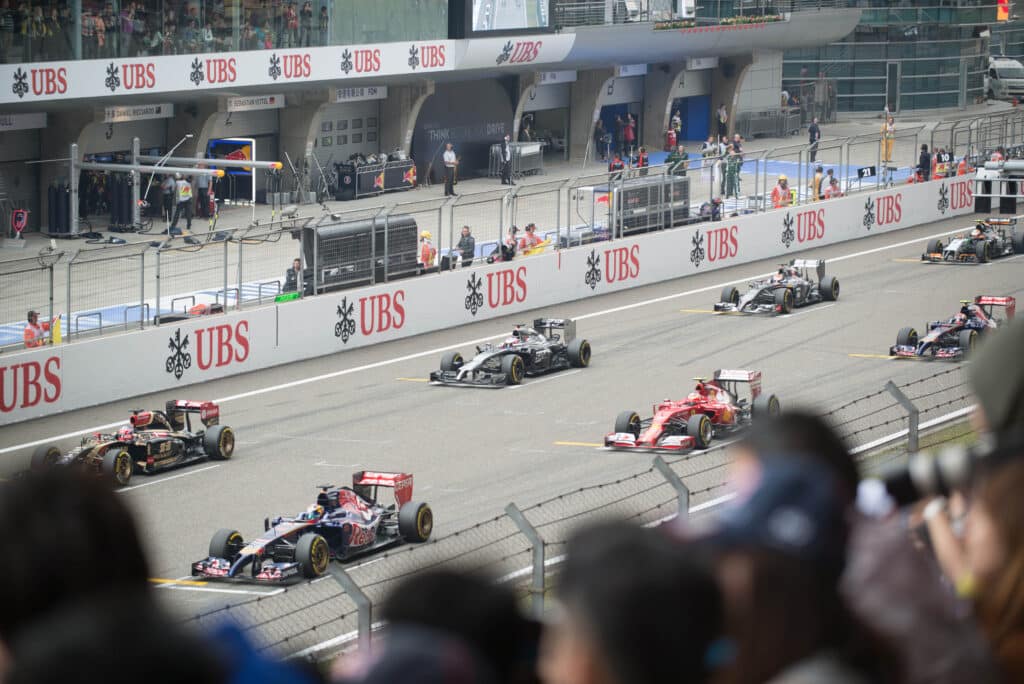
We are in a world of eight billion people. Out of eight billion people, just one human being is going to get into Formula 1 each and every year. I mean, that’s quite crazy how competitive that is.
Now, I’m not saying every driver should get into Formula 1. There are different series, and some drivers may not even want to be putting in all the effort to get to Formula 1. Some of them would just be happy doing it as a hobby, a family event that gathers all the family, just like going to a party.
But the reality is that for those ones who really want to make it, it’s fiercely competitive, and I can say something about it.
So to become that one driver a year out of eight billion people, for all the other mortals out there, just like you and me I guess, you gotta take absolutely every opportunity. So at least you can sleep well at night. And after years since your last race, you’ll be having zero regrets, and fully content and at peace with yourself, and just looking at that period as a period where you gave absolutely everything and where you pushed yourself to the limits.
Why does treating karting like a hobby fail?
The day you stop treating karting as a hobby is the day you’ll start making serious progress. I really mean it.
You can be fast. You can have talent. You can even win a few races. But if you don’t treat it like your job, like your future depends on it, you’re just wasting time.
And let me tell you something: in this sport (and in life), time is expensive.
When you treat karting as a hobby, here’s what happens. You show up, drive your sessions, then mess around with your friends. You don’t look at the data, you don’t review video, you don’t ask for feedback.
Sounds harmless, right? But that’s the difference between a driver who fades away at 14 and a driver who makes it to cars.
Is mindset enough to make it in motorsport?
Sure, that’s not the only thing required. Unfortunately motorsport is a highly resource intensive sport, so many talented and hard working drivers still end up quitting due to a lack of funding.
Realistically, it’s still gonna be family funded for a long time, until Formula 3 at least. And then, if you do a really good job in terms of results, you get sponsorship, you get the teams to kind of help you out.
But for sure this mindset and discipline will increase your odds of getting scouted and picked up by F1 junior teams, or offered great deals in single seaters or GTs rather than the full price.
If you’re not 100% committed, you don’t stand a chance. Sponsors and scouts don’t chase hobbyists. They notice the kids who behave like pros.
What do pro karting drivers do differently?
If you want to increase your chances of moving up, Formula 4, Formula 3, maybe one day F1, you’ve got to start now. That means the five pillars above, every weekend.
If you’re tired after two heats, you didn’t do the work at home.
And you can’t think, “I’ll take karting seriously when I move to cars.” Wrong. If you’re not serious now, no one will give you the chance to even touch a car.
Do you have to give up school to race karts?
Now, don’t get me wrong. If you’re 12 or 13, school is still important. You don’t need to drop everything.
The point is balance. When you’re at the track, be all in. When you’re at school, focus there.
But when you’re training (both testing on track and at home in the gym)? Train like your career depends on it.
When I was little, from like 9 till 13, 14 and even up to 15, during the winter, when we didn’t have many races, I would get out of school at lunchtime and drive the rest of the day, five sessions. Rinse and repeat, for two, three months in a row.
Do you just want to have fun, or become a professional driver?
Do you want to just have fun? Win a few races, enjoy the weekends, and then move on with your life?
That’s fine. Karting as a hobby is still great fun. I mean, not everybody has to be a professional. If you do it as a hobby and just have a good time, there’s no real need to focus as much as possible.
But if your ambition is to become a race winner, a world champion and ideally a professional paid racing driver, then your goal is to really build an unshakable focus.
So do you want to give yourself a real shot at becoming a professional? Competing in WSK, FIA events, moving up to cars?
If it’s the second option, karting stops being a hobby. Today.
I’ve seen it so many times as a coach and team manager. The ones who commit early, who train like pros, who think like pros, those are the ones who I believe will make it.
So, ask yourself right now: are you a hobbyist, or are you chasing the dream? Because once you make the decision, everything changes.
Why should you race like there’s no replay button?
If you’re 10, 11, or 12, you might think you’ll be racing forever. But here’s the truth:
You won’t.
It might end in 5 years. It might end next season.
- Life happens
- Budgets run dry
- Results don’t come
- Maybe your priorities shift
This is a rare window. And once it closes, it’s gone.
You won’t get a replay button. You won’t get a do-over. So race like this is your one shot.
Because it might be.
Now I’m not saying that to scare you. I’m saying it to wake you up.
Who gave you this chance?
If you’re racing, it means someone, your parents, believe in you.
They’re investing time, money, and energy to see you grow. That’s not something to take lightly.
And I get it. I’ve lived it.
My dad introduced me and my brother to racing. And if he didn’t? Honestly, I don’t know what I’d be doing right now. It shaped my entire life.
You may be 12 and not fully realize it yet, but you’ve been given a gift.
The question is: are you doing everything you can with it?
Is karting a right or a privilege?
If you’re karting right now, if you’ve got a suit, a mechanic, a track to race on, and parents backing you up, you’re already ahead of 99% of kids in the world.
So don’t waste it.
Think about how many kids would kill to have what you have.
This is rare. This is special. And you should treat it that way.
What if it doesn’t work out?
Look, let’s be real. Not everyone will make it.
Not everyone reading this will become a pro. Or make it to F4, F3, or higher.
But the goal isn’t always the destination. It’s knowing that, no matter what happens, you pushed your limit.
If it doesn’t work out, you move on with your life with pride, not regret.
Do I regret not making it to Formula 1?
Let me take you back to when I was 13.
I had just started dreaming about Formula One. That was the only thing I cared about. And when I didn’t win? I’d get emotional. Because to me, losing a race felt like losing a shot at F1.
Looking back, that emotion came from caring so much. Maybe too much. But that drive? It pushed me to train harder, push more, and never take shortcuts.
Lando and I had a very fierce rivalry, one that we for sure will not forget. Of course he made it to F1, I didn’t. So in that case he won the game of life, I would say.
But I feel like I have no regrets from that point of view. I feel like I all the time maximized my track time, all the time gave my absolute best. I really felt that I was more committed and more disciplined than any other driver on the track, and my results show that.
And that’s what I want for you (hoping that you’ll make it instead).
What does giving it everything look like on a race weekend?
This isn’t just about showing up. It’s about showing up with intent.
Here’s what I teach my drivers at Babyrace and Senndit when we talk about going all in without regrets.
Why does one more minute matter?
- One more minute in the data room = one less mistake next session
- One more minute watching your onboard = better lines, better decisions
- One more minute watching your rivals = more racecraft learned
Are you putting in those extra minutes? Or are you rushing off to scroll your phone?
The most disciplined drivers are doing that over and over again. And even if they’re P1, they still want to find a way to improve their lap times. Whereas the drivers who are less disciplined, they’re not going to be spending enough time with their onboard videos. They’re not going to spend enough time with their data.
How should you talk to your mechanic?
Your mechanic is your teammate. Not just the guy who fixes your engine.
Ask questions. Get feedback. Review the kart setup together.
One conversation can be worth half a second. But if you never ask? You’ll never know.
My mechanic didn’t just ask me what I needed from the kart. He taught me how to change the setup myself, and I tell that story in what my mechanic taught me to notice.
Why should you use your track time like it’s gold?
Because it is.
Karting is expensive. Every lap costs real money. So why would you go out there without a plan?
And there’s not much of it. The most fortunate drivers, the ones that can commit to a full driving program of 20 races and 60 testing days, will get a total of 143 hours of driving in a year. Meaning that the most privileged karting drivers that can sustain a full season will be practicing their sport 1 tenth of the total time that an average tennis athlete will spend on the court each year.
Visualize your goals before every session:
- “What am I focusing on this stint?”
- “Where do I want to improve?”
How do you spot a driver who is obsessed about winning?
I hope this resonates with you. I was obsessed about winning, and I still am. I still carry this every time I go to the racetrack, even though I’m not driving myself.
And every time I see drivers matching that pattern, even though they may not be my drivers, Babyrace or maybe other drivers, I’m like, well, that kid is going to go very far. Especially when not only are they obsessed about winning, but also when they have this agony of defeat, of losing. That combination seems quite expected, but believe me, it’s not that common.
But that doesn’t mean that the kid is going to just randomly cry because he lost. It’s more about getting moody, getting so pissed off that you wouldn’t talk to people. Like that’s what I did. Sometimes I wouldn’t eat for a while.
When you’re so upset, you’re not just crying for like five minutes and then forgetting about it the next day. It’s just something that stays stuck with you.
You want some sort of revenge, you know. Somebody does something bad to you, you’re going to make it back. But anyways, all this philosophy, that’s what shaped me. And if you’ve got some traits like that, well, you’re on the right path. The next step is turning that fire into mental strength you can actually use on track, with the five pillars above.
Are you the wolf or a sheep on the grid?
This is one of my favorite racing concepts. The wolf is the alpha on the track, the predator that everyone fears and respects. The sheep is the prey, afraid of every step it makes, and it can’t be fully focused on what happens on track.
When you’re on the grid with 35 other drivers, you will quickly know who the wolf is. And in a given category at a given race, I believe there can be only one or two wolves. All the rest are sheep.
But you don’t just pick it like a game. Your actions show the rest of the drivers what you’ve chosen, not your talking. If you don’t do anything different from most other drivers, you will end up a sheep, because that’s the path of least resistance. And building the reputation takes time, not just a couple of strong race weekends.
Because in karting, the wolves win. The sheep get eaten.
Am I strong in the head today?
Karting is survival. When you’re strong in the head, mistakes go down, respect goes up, and opportunities open that others won’t see.
So next time you hit the track, ask yourself, “Am I strong in the head today?”
And are you truly competitive? Do you hate losing enough to do whatever it takes to win?
If not, you’ve got work to do.
And make sure, win or lose, you walk away saying: “I gave it everything I had.”
And remember to race every day like there’s no replay button.
What do drivers ask most about mental strength?
Can you build mental strength in karting or are you born with it?
You build it. It’s shaped by what you do repeatedly and who you surround yourself with. Drivers who compete a lot from a young age, on track and off track, get used to pressure, so it becomes second nature.
Can you develop competitiveness in karting if you’re not born with it?
Yes. You’re not born with it, you shape it, and your environment and your family matter a lot. Put yourself in situations where you have to compete: ping pong with your teammates, tennis or padel, rental karts, sim racing online. The competitive mindset comes first, and the gym, the data and the setup work follow.
Why do kart drivers crack under pressure?
Mostly because of a lack of confidence, in themselves, in the kart or in the people around them. The big triggers are looking in the back and trying to make up for a mistake straight away, which leads to another mistake.
How do you get more confidence in a kart?
Through preparation, pushing the limits and repetition. Confidence doesn’t come before the action, it comes as a result of it. Knowing you’ve already done it successfully several times is what gives you full confidence when it counts.
Should a driver set a result as a goal before a race?
No. Tell yourself you’re going to give it everything. If you promise yourself a win and lose one position, you start to fall apart. Focus on your performance, corner by corner, lap by lap, not on the result.
What should you do after a mistake in a race?
Accept it, because everybody makes mistakes, and don’t look in the back. Then learn from it right away, like putting a sticky note in your brain, so you fix it on the next lap.
What is the difference between wanting to win and being obsessed with winning?
Every driver on the grid says yes when you ask if they want to win. The difference is how many are going to work harder than the rest of the field, outside the track as well as on it. And for an obsessed driver, losing feels like agony.
How much weight did you lose for the 2025 KZ World Championship?
About 12 kilos, from 80, in the six months before the race. In KZ the minimum weight is 170 kilos. I was not fat, I had gym muscle, so I stopped the gym and trained for endurance with cycling, running and swimming. My weight kept going down and my lap times kept getting faster.
What does it mean to race like there’s no replay button?
Your racing career isn’t guaranteed. It might end in 5 years, it might end next season, because budgets run dry, results don’t come or your priorities shift. So race like this is your one shot: one more minute in the data room and on your onboard, real conversations with your mechanic, and a plan for every session, so that win or lose you can say you gave it everything you had.
Should you treat karting as a hobby or as a profession?
If you just want to have fun, karting as a hobby is still great fun, and not everybody has to be a professional. But if you want a real shot at becoming a professional, it stops being a hobby today. School is still important, but at the track you’re all in, and when you’re training you train like your career depends on it, because if you’re not serious now, no one will give you the chance to even touch a car.
If you want me to look at how you drive when the pressure is on, send me your onboard for an onboard review. And if you want to work on your mindset, your preparation and your driving for good, that is what we do in the 6 months transformation.
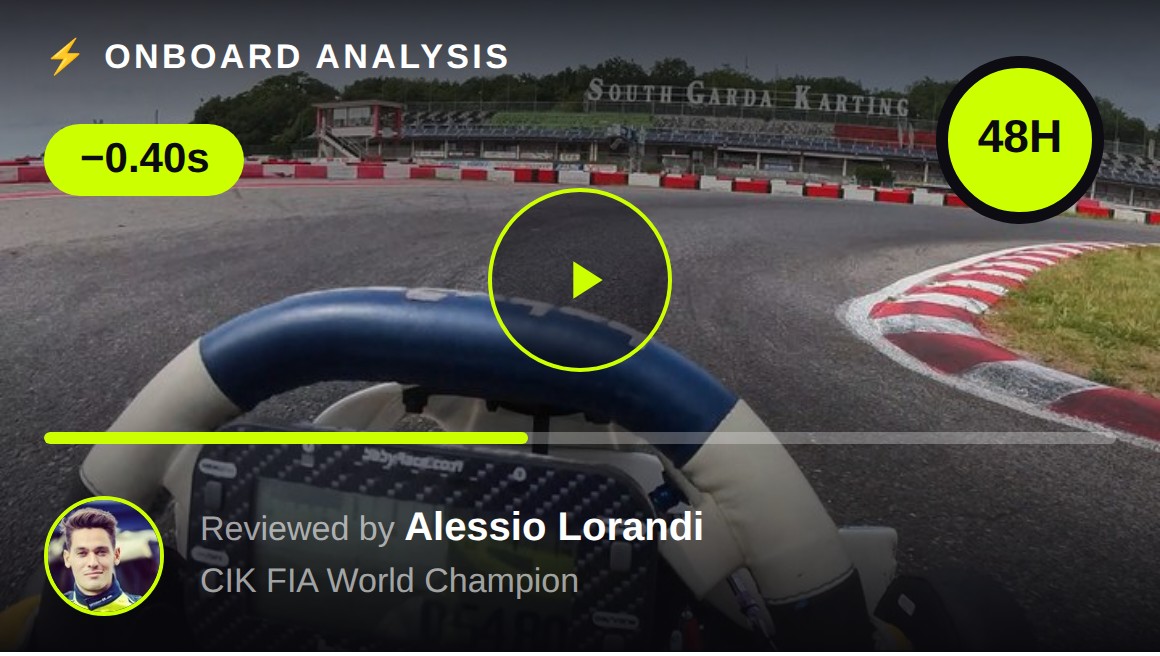
Send your onboard footage. Alessio reviews it corner-by-corner and tells you exactly what's costing you time, and how to fix it. Back within 48 hours.
Get My Onboard Reviewed → Reviewed personally by a CIK FIA World Champion, never an assistant.I promise I'll not spam you with repurposed shitty AI content but real experiences that only I, Alessio Lorandi, experienced. Written in my funny English-Italian tone of voice 😂
Alessio Lorandi is the former CIK FIA World Junior Champion, winning against Lando Norris in 2013 & F3 multiple race winner. He's helped 200+ karting drivers worldwide get faster & win WSK titles with BabyRace Driver Academy & now through Senndit, his online karting coaching platform.