The 3 Best Ways To Develop Car Control
Did you know that there are three major ways to develop car control, and I have experienced all of them on my own skin. And there’s actually …


Did you know that there are three major ways to develop car control, and I have experienced all of them on my own skin. And there’s actually a fourth, which is going to be a bonus. Stay to the end for the bonus one. There’s number one.
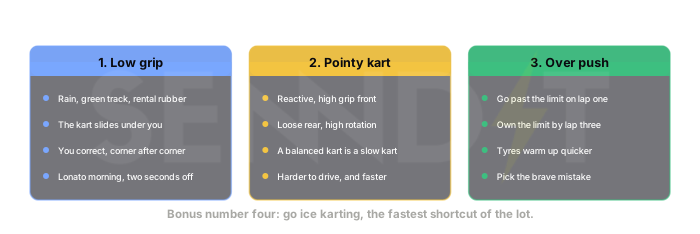
- Low grip is the teacher. Rain, rental rubber, a green track — anywhere the kart moves under you.
- Run a pointy kart. A balanced kart is a slow kart; a reactive one is fast, and it forces you to learn.
- A kart steers one to one. Every degree you put in arrives instantly — nothing like a road car.
- Over-push rather than under-push. If you are going to make a mistake, make it the brave one.
- Find the limit on lap one or two, not lap fifteen. In qualifying you do not get fifteen.
- Ice karting is the fastest shortcut there is — you cannot get round a corner without opposite lock.
- Nobody is born with car control. Senna was bad in the rain first. So was everyone else.
- 1. Drive in low grip
- Why high grip teaches you less
- 2. Drive something that oversteers
- What an understeering kart teaches you instead
- A kart steers one to one, a road car does not
- Pointy front, loose rear
- The mechanic who told me to forget about balance
- Why nobody else could drive Verstappen’s car
- Talent is a trained habit
- What I set up for my own drivers
- 3. Over-push, do not under-push
- Find the limit on lap one, not lap fifteen
- Over-pushing does not mean crashing
- The Lonato lesson: rental rubber in the morning
- Why constant corrections are the actual skill
- Bonus: go ice karting
- Why Finnish drivers have car control
- And why British drivers do too
- Senna was terrible in the rain at first
1. Drive in low grip
Number one is driving in low grip conditions. So think about it. When you drive in low grip conditions, for example, when you drive in the wet, you are constantly sliding between the front and rear axle, and you’re always basically controlling the car, whether it’s in understeer mode or in oversteer mode. Most of the time you’re going to be in oversteer.
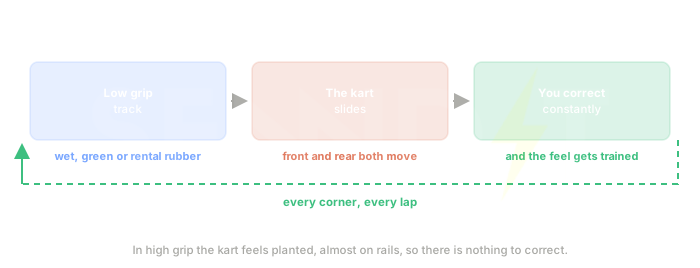
But the reality is that whenever you are driving low grip conditions, and it’s going to be hard to drive, it’s going to be slippery, that’s where you develop car control. Okay, yes,
Why high grip teaches you less
you still do develop car control when it’s high grip, but it’s less because when you’re driving in high grip conditions, the driver feels the kart planted, almost like on rails, because there’s so much grip, there’s, you know, there’s not enough movement from the car. It’s, it’s feeling unreal. Of course, when you’re pushing, you’re gonna, you’re gonna feel like over the limit, and it’s gonna be like that, and you’re gonna start to slide.
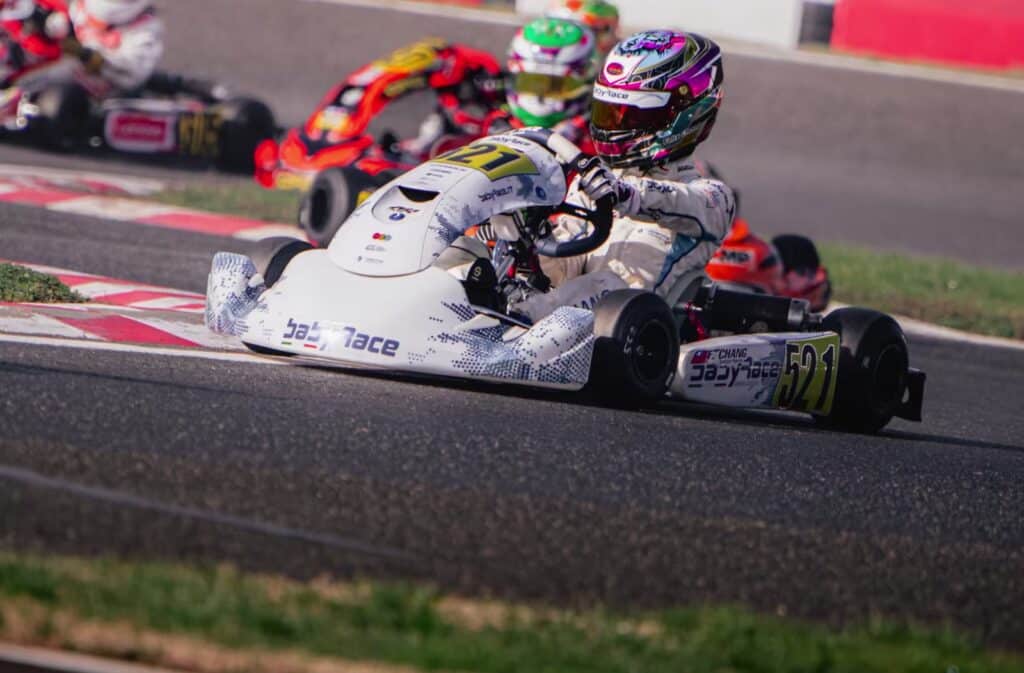
But most of the times, when there’s high grip conditions, you are developing, developing, yes, less car control compared to when you are driving slippery conditions.
2. Drive something that oversteers
The number two, which, to be honest, is the one I like the most, is driving an oversteering kart. So whether it’s a go kart, is a racing car, it’s driving a oversteer vehicle. Basically, why I’m talking about this? Basically, think about it when you’re driving.
What an understeering kart teaches you instead
Let’s talk about the opposite, which, which is driving with an understeer car. When we’re talking about driving with an understeer car, the car is basically very stable, okay? There’s a lot of rear grip, rear stability, and the front probably is not so much. And it’s like, like driving a road car. Think about it, when you’re driving a road car, okay,
A kart steers one to one, a road car does not
the steering ratio of a road car is like, 15 to one, okay, whereas steer ratio of a kart is one to one. So you put one degree of of steering angle, and it’s going to reflect in one degree of wheel being turned. Okay, that’s, that’s basically that. And if you have a 15 to one on a road car, you’re going to have, you’re going to need 15 degrees of steering angle to turn, one degree of, yeah, for the for the wheel to turn one degree, essentially, so, you know.
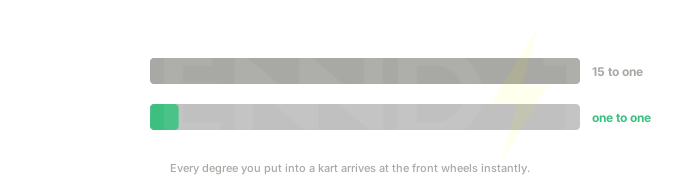
But also the Go Karts may be very aggressive on the front or very, you know, slippery or free on the front. So one of the best ways to develop car control for drivers is
Pointy front, loose rear
to drive with a very pointy car, which is either very loose in the rear or very, very point at the front, which is very high grip reactive at the front, or it could be both: high reactivity at the front and a loose rear. I love to drive high reactivity at the front and quite loose at the rear. That’s my go to.
And to be honest, I’m quite tall, so that’s pretty much my only way to to go fast. Otherwise, if I if I drive with a lot of rear grip and not enough front, I will just basically have terrible exits and not enough rotation.
The mechanic who told me to forget about balance
But you know, I have to thank my mechanic. Back in the days my historical mechanic in between 2012 2013 and 14, that’s the period that I won the most, and that’s the when I won the world championship against London Norris. But the reality is that when I was with my mechanic. I always, at the beginning was like, complaining about oversteer, like, I was like, oh, I want the car to be more balanced, etc.
But he’s like, you’re like, screw the balance. You gotta, you gotta be the car has to be reactive. You know, the car needs to be pointy. You need to put the car wherever you want. And he was true. He was so, right. And he basically, I would put my seat quite forward. It would put my front very like full caster and everything.
He would teach me to drive like that. In some cases, maybe it wasn’t ideal. Maybe the track was like quite slippery, and I had too much rotation. I would struggle with that. But the reality is that I stick to that. I adapted. I basically made it part of my driving style, same as what Verstappen – Jos, for sure,
Why nobody else could drive Verstappen’s car
taught him how to drive a very, very pointy for front on the on his kart. And that’s why, when he got to Formula One, he was the only one able to drive a very, very pointy car. And you can hear the interviews from from some of his teammates, including like Alex Albon, where he says that when if you try to be teammate of Verstappen, and you can’t basically use his own setup, because he drives with such a high precision on front in terms of like reactivity, that it becomes almost impossible to drive, you know, because reality is a, you know, a balanced car is a slow car, a very reactive car is a fast car, but it’s more difficult and very unpredictable.
That’s the reality. And when you’re going 320 or 330 kilometres an hour through, you know, a street circuit like Baku, let’s say, or like Jeddah, you have to make sure that you do not put it in the wall. So that’s why it is not easy to drive a highly reactive car, like a car with generally a lot of reaction and like rotation and a bit of oversteer which may scare most drivers, but if you are used to that, since when you’re four years old, five years old, six years old, when you’re karting and you’re like that, then you basically develop this innate feeling of car control that then people call talent.
Talent is a trained habit
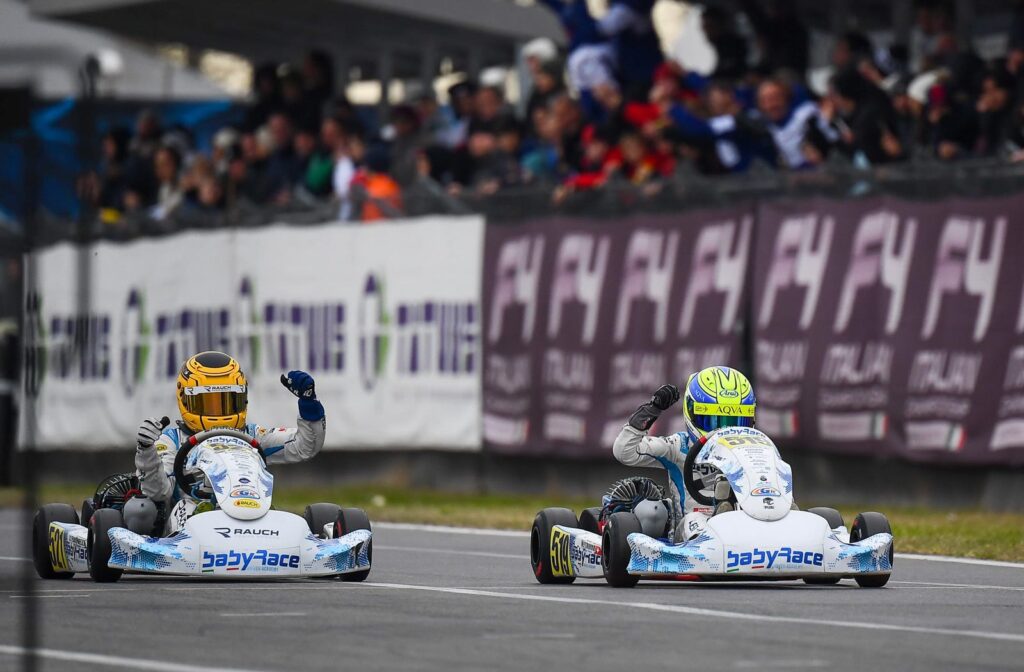
But the reality is that talent is overrated. You create the talent by, you know, the right technique, the right skill, like the right the drills. And this is one of those I, for example, my drivers at BabyRace.
What I set up for my own drivers
I always want the car to be very reactive, because and high rotation, because whenever it’s it’s gonna be required, because, you know, when the track normally gets grippy, you always want to have more rotation. When the track is green, you care more about rear grip. But if you do not get the kids used to that early on, they will never adapt.
So yes, as we said, the number one was low grip conditions. So getting used to low grip conditions. The number two, as we said, is driving with high rotation or oversteer mode. Okay, high rotation kart setup, okay, high rotation plus oversteer and number three. Well,
3. Over-push, do not under-push
number three is basically the concept of over pushing, the limits versus under pushing. So the reality is this, if you are driving, let’s say this is the limit, okay? So this is the limit. If you’re constantly driving below the limits, okay? You’re like, driving all the time below the limit is like, 90% 95% 96% 97 and you hope to get to the limit by the end of this of the session.
Well, that’s not a good strategy.
Find the limit on lap one, not lap fifteen
My preferred strategy is the opposite. It’s like, right on lap one, as soon as the tyres are quite hot, like they need to get basic grip and temperature. I mean, of course, I wouldn’t be able to push the limits on the on lap one if the tyres are nowhere near temperature. But like, what I would do, I would go beyond the limit right away, and then I will be like, Okay, now I find the limit, I go back, then I and then I will be able to get the limit perfectly by the three lap three, lap four.
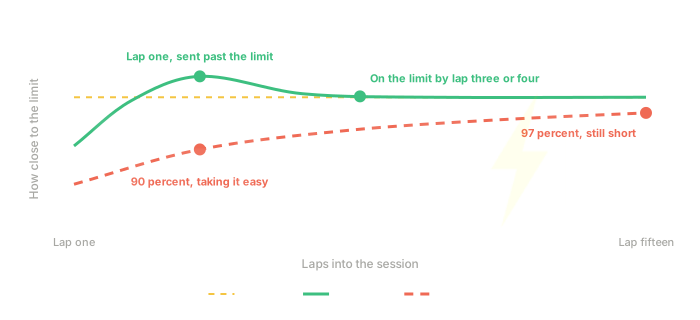
So there’s a different strategy. And the reality is that when you are driving over pushing mode, which is what I’m preaching here, so pushing the limits, braking later than ever, you know, carrying the speed into the corner, all right, that’s the thing that I’m that’s what I’m preaching. Because if you’re always in the comfort zone of, oh, I need to take it easy.
I need to push a little bit less, which unfortunately a lot of mechanics, a lot of coaches say, but I I couldn’t disagree more, because the reality is that the only way for you to develop your skills and develop your talent together with actually warming up the tyres. Because if you want to get the tyres to warm up quickly.
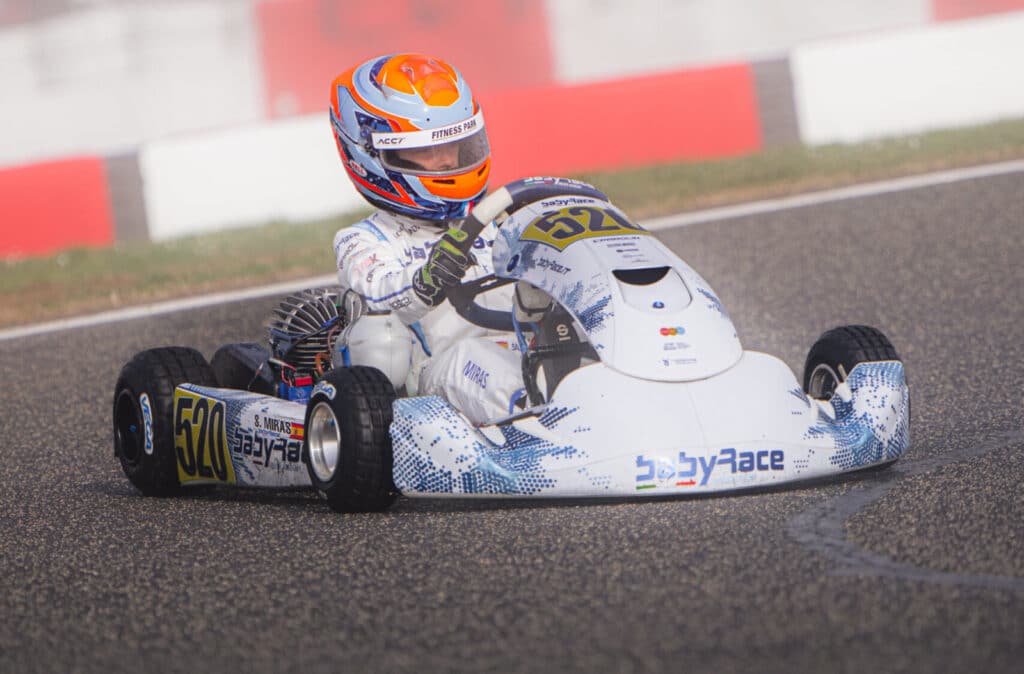
You got to push. You got to go over the limit. And what I’m saying with over pushing, it doesn’t I’m not saying to to brake
Over-pushing does not mean crashing
so late that you’re going to go into the wall. Come on, let’s be practical. What I’m saying is that if you have to choose between a mistake, let’s say within pushing too much and pushing too little. I prefer that you push too much because, let’s say you lose a tenth somewhere like a hairpin, let’s say because either you brake too early or because you brake too late.
So let’s make an imaginary hairpin. Okay, let’s say you are braking here. So let’s say you are braking here, and you make the apex very easily, but you lose a tenth from the ideal. The ideal is the optimum braking point: brake a little bit later, and take the corner a bit faster. But let’s say what I’m what I’m saying here is that I want you to do the opposite.
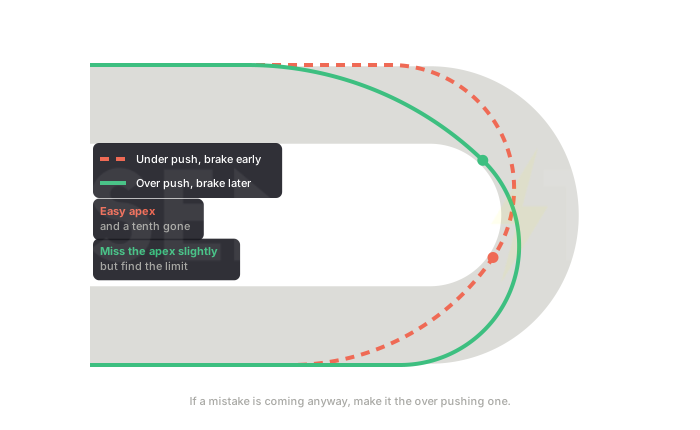
So if I have to make a mistake, because we do make mistake, guys, nobody’s perfect. If we have to make a mistake, the mistake I want is to go and over push. Okay, I want to over push and yes, I’m gonna brake a bit too late. I’m just gonna slightly miss the apex. But that’s fine, because you know what, I’m developing my skills.
I am warming up my tyres, and I will find the limit way earlier. Remember what I said here? You’re gonna find the limit way earlier than if you didn’t push the limits early on into the session. So this is really my, my my recipe. So number one, get used to driving in low grip conditions. Example, you know, drive with sometimes, like,
The Lonato lesson: rental rubber in the morning
for example, at Lonato, I’ll tell the story. I learned a lot how to handle low grip conditions and develop my car control when, for example, the day after the rental karts drive in the evening. For example, if you drive on a Monday or a Sunday or a Saturday, the rental karts drive so much in the evening at Lonato, because obviously the track needs to sell tickets to make money, etc.
But it makes sense every every karting track really does this. Rental karts, most of the time are a higher source of revenue than the actual professional owner karts. But I mean, remember that when I was driving in Lonato in the first and I still do, to be honest, in the first session of the morning, the track would be like two seconds off, but I would be so slippery, because you would still have all the terrible rubber from.
The rentals, you know, would be such a hard, terrible tyre. And there will be also some, some some grass on the track, because they were, like, doing like, bumper karts, which I guess is what most we do, most of what we do as well, but, but yeah, I would drive that first session, and it would be just super slippery, but still, it would be worth less as a session in terms of, like, lap times and testing, because, it like would be so off the pace, but it would teach me a lot, because it’s still like you’re driving those conditions where you are going to be, you know, maybe sometimes be driving, if it starts to rain all of a sudden during the racing, you’re on slicks, you may have to adapt.
So that taught me a lot. But then driving in low grip conditions like driving the rain, that also helps a lot, because it develops your car control.
Why constant corrections are the actual skill
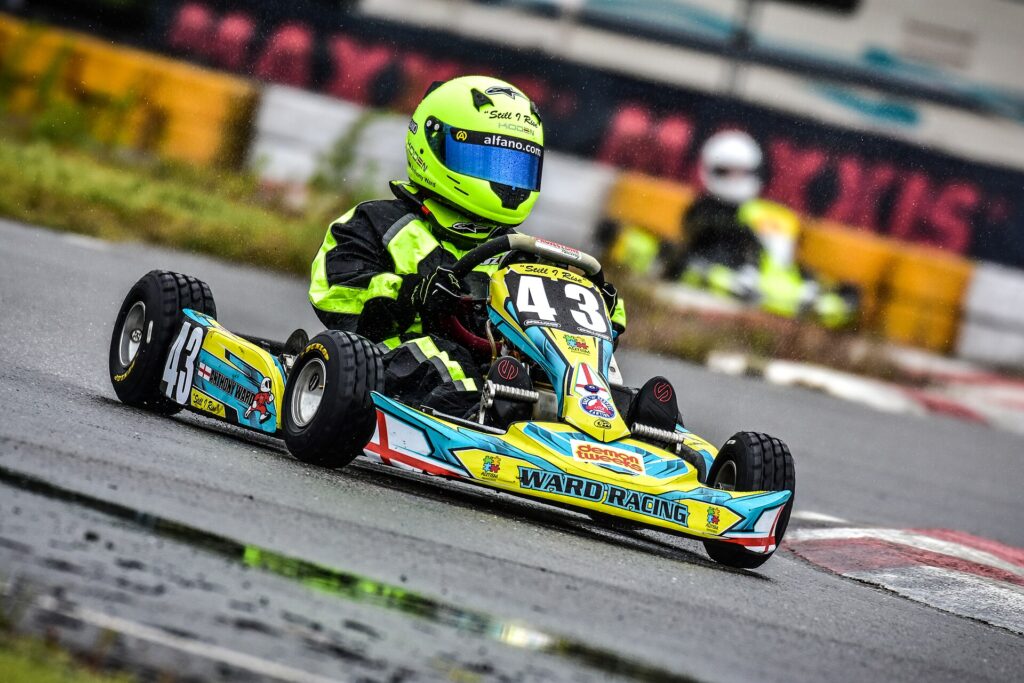
Then the second one, as I said, is having a high rotation setup, so driving and getting used to driving with the high rotation, so an oversteery setup, which means you have nice and loose rear and a lot of front, okay? That allows you to basically all the time be sliding and basically having to correct. And by doing a lot of corrections.
You develop the car control if the car is always on rails and it’s always balanced and it’s, you’re never developing that car control. Man, it’s impossible. The third, as I said, is the over pushing. Over pushing means instead of, you know, getting close and close and close the limits and taking, like, you know, you know, step by step, and like being conservative.
No, I prefer the opposite. If I have to make a mistake, it has to be an over pushing mistake. You know, on lap one, I’m going to send it, I’m going to test the limit. I’m going to test the grip of the track. Because every session, guys, the limit is going to change. You know, one one session, the limit is going to be here.
In another it is going to be somewhere else. So what I want to find down lap one, almost even if I have to go in the grass, I’ll be like, I’m just gonna brake so late that I will, for sure, miss the apex, but at least I will figure out for the next lap where the grip is. And I’m telling you by doing so by lap two or three, I already found the limit, which is something that drivers take 15 laps in a session to find.
I think that’s one of my specialty and I think drivers like Verstappen are even more specialized in that, because that’s what you need. You know, you got to find the limit right away. And if you take 10 laps to figure it out in qualifying, in F1 it’s, it’s, it’s game over. You don’t even have 10 laps in qualifying.
Bonus: go ice karting
And my bonus, number four, is related to number one, which is low grip. You should try ice karting, guys, ice karting is amazing. I have done it a few times. It’s it’s just phenomenal. You know why? Because you are testing the the your car control skills. Because basically you have to, all the time drive in in opposite steering lock.
So if you have a right hander, you got to be like that. And that’s how you got to make the corner. Gonna make the corner by making the rear slide. And basically that’s the only way to rotate, you know, because otherwise, if you try to rotate with the steering and just braking it’s just not possible. Which goes to show you that in the wets, you got to be having such a high rotation car.
You don’t want to have gripper. You got to have so much rotation from the car, and the driver needs to be adaptable and used to driving that high rotation, because at the end of the day, the longer you have to wait for the rotation, the Yeah, the more time you lose in the middle of the corners. And that’s why, in ice karting, you got to drive all the time sideways.
Because if you actually try to wait for the rotation by braking straight and using the steering like you know, gently, you will never rotate that car, and you will just lose so much time. So
Why Finnish drivers have car control
if you have the chance, and you go to the Dolomites, or anywhere like, I wish I could go to Finland. I would love to do that. I have to convince my girlfriend to do that. Maybe this winter, we’ll do it. But that’s, by the way, why so many Finnish drivers, like Mika Hakkinen, Kimi Raikkonen and Valtteri Bottas are so good and so and like naturally, quote, unquote talents in just car control.
And that’s why they say, oh, these Finnish drivers and their car control. But the reality is that they’re not born like that. They develop that because even when they go with a road car on, you know, to go the grocery store, let’s say, or to the gym, there is ice on the road most of the time. And so even with, if they’re not doing ice karting, they have to still like counter steer.
And I would do that for sure, if I would be driving on on a road, I would put the car in opposite lock all the time. Don’t do this at home. But, I mean, obviously, if it’s safe and there’s no traffic and etc, you know, but, but that’s how you develop the car control, and that’s why these Finnish drivers are so good.
And why British drivers do too
And of course, we have also a lot of drivers from the UK, which are so good in these conditions. And that’s why there’s a lot of f1 drivers from the UK, because they drive in the UK most of the time in in the wet. And that’s why, by the way, many drivers from Italy are going to train in the UK, because they know that if they go to the UK they will find rain almost like, at least in the morning, on a daily basis, and like tracks, like PFI, and it makes sense, to be honest, in Italy, you don’t get you get a bit of water, like today was like a massive storm, but it’s not that often.
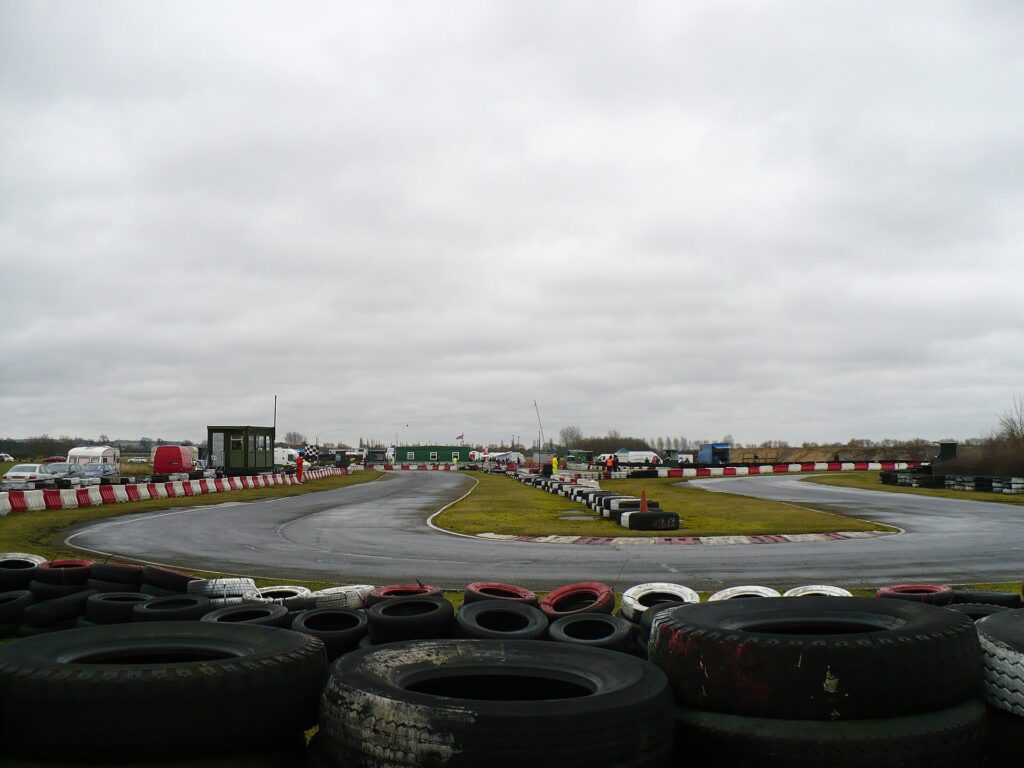
Anyways, you should try ice karting, or you should move to Finland. No, just kidding. But honestly, if you get a chance to try ice karting, it’s not something you can do every day, of course. Hours, but it’s gonna teach you a lot about car control, and you’re gonna love it. I mean, it’s, it’s been such a fun experience. I did it with the kids at BabyRace.
We did the winter camp last time we did it, and it was at Livigno. And, yeah, I was just went there, and we just kept driving for hours and hours and hours. And it was awesome. Was awesome experience, just like developing the skills and, yeah, but these are the three plus bonus things I suggest you to, yeah, work on in order to develop your car control.
It’s not something you are born with. Remember, you’re not born with it like
Senna was terrible in the rain at first
you have watched the Senna film, or the Netflix series, you know, he says himself that he was not born good in the rain – he was terrible at first, and I was terrible at first. And probably Max Verstappen was terrible at first, at the beginning. But by just driving and driving and driving and getting used to in these low grip conditions, and you know, in this and you keep pushing the limits, you keep testing, you make mistake, you spin, and then you see that a driver like Senna goes from being very bad in the wet to being a legend, and probably the greatest of all time in the rain, winning crazy, legendary races.
You know, almost winning his first race, when he was at Toleman, and he was almost about to win the race. And then they shut the race down in Monaco and to give the win to Prost. And also, then when he won in Portugal, in pouring rain conditions, and it’s just been phenomenal. And also that all the greats, like Michael Schumacher almost about to lap everybody at Spa-Francorchamps in 1998, when he crashed with Coulthard, and he was basically lapping him, and he was in P2, you got my point.
You can develop car control with these things. And I believe it’s not only going to help to develop car control, but you just going to be way better driver than if you if you didn’t do these things. But again, this is something you just do it naturally. I did not sit there thinking that I had to develop car control.
I was lucky that I had the mechanic which taught me these kind of things, and you just used common sense. He was like, Okay, we need to, we need to teach him like that. And I was, yeah, Piero gave me such a great head start, and everybody else. And I wish I can translate this to you, and hopefully you can apply this on track next time you go, and you can look for a holiday.
Look into ice karting for next winter.
Related: weight transfer in the wet, the good and bad of sliding, and why smooth is fast.
Send your onboard footage. Alessio reviews it corner-by-corner and tells you exactly what's costing you time, and how to fix it. Back within 48 hours.
Get My Onboard Reviewed → Reviewed personally by a CIK FIA World Champion, never an assistant.I promise I'll not spam you with repurposed shitty AI content but real experiences that only I, Alessio Lorandi, experienced. Written in my funny English-Italian tone of voice 😂
Alessio Lorandi is the former CIK FIA World Junior Champion, winning against Lando Norris in 2013 & F3 multiple race winner. He's helped 200+ karting drivers worldwide get faster & win WSK titles with BabyRace Driver Academy & now through Senndit, his online karting coaching platform.