
Understeer Vs Oversteer: What They Are & What’s Better?
If you’re going through a corner and the kart is not rotating as much as you want, and it’s going wide, that is understeer. If instead,…


If you’re going through a corner and the kart is not rotating as much as you want, and it’s going wide, that is understeer. If instead, in the same corner, the kart is over-rotating and pointing you towards the inside with the rear kind of sliding, that’s oversteer.
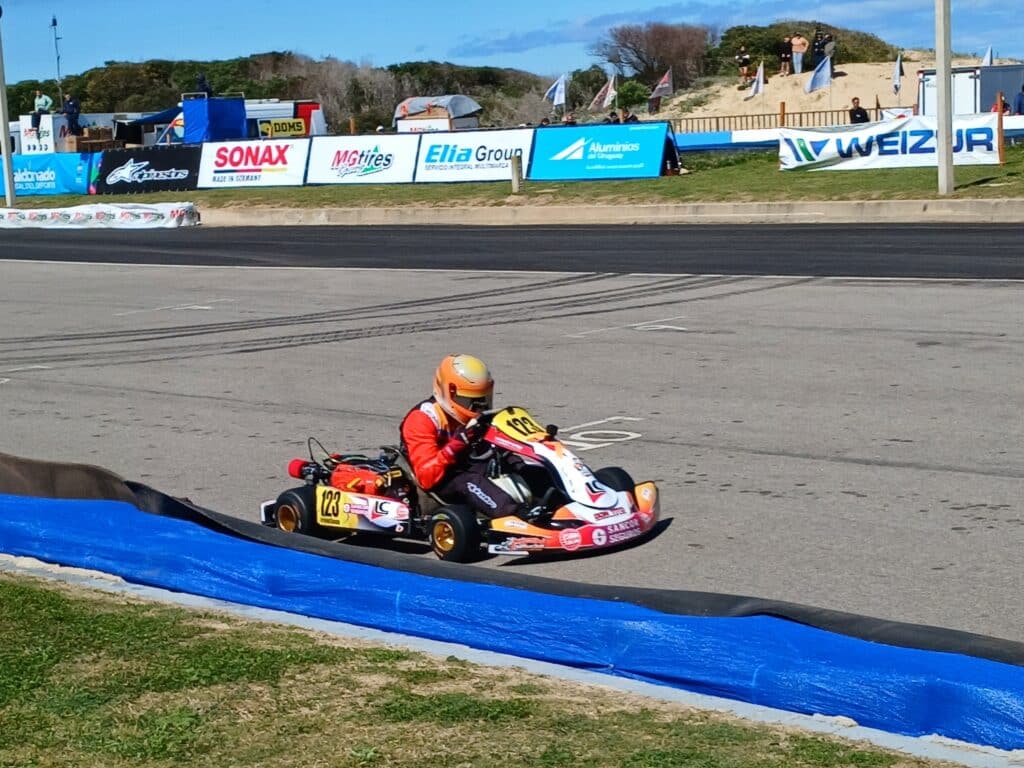
That’s basically it. We don’t have to over-complicate things. Understeer is when there is not enough rotation, oversteer is when there is too much rotation. You can call it whatever you want — “the rear is sliding”, “the front is missing”, “the rear is pushing” — but the thing you’re referring to is a balance issue, and it is either understeer or oversteer.
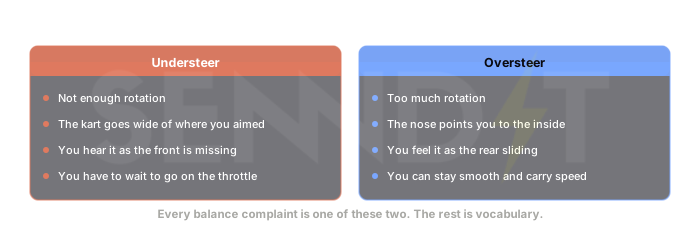
- Understeer is not enough rotation. Oversteer is too much rotation. Everything else is vocabulary.
- Diagnose the balance first, the end that’s causing it second. That’s the order every engineer works in.
- Rate entry, mid and exit from one to five, every session. It builds self-awareness and it makes your mechanic’s job possible.
- You can patch understeer with the brakes, the body and more entry speed — but you can’t fix the exit that way.
- Your driving style changes the balance as much as the setup does, especially in a kart.
- One out of five is fine. Four out of five is not. On the limit you will always have a little of one or the other.
- Given the choice, take oversteer. It’s easier to control and it carries more minimum speed.
- Control oversteer by being smoother, and by leaning in rather than out.
- Front or rear? Why balance comes first
- How to rate your balance corner by corner
- Why giving good feedback is a skill of its own
- How to fix understeer while you’re still driving
- Why your driving style changes the balance
- You will always have a bit of one or the other
- Understeer or oversteer: which is actually better?
- Why oversteer is scarier in cars than in karts
- How to control oversteer: be smoother
Front or rear? Why balance comes first
The hardest part is understanding whether the issue is coming from the front or from the rear. You may have a perfectly strong rear but a front that isn’t strong enough, so you have understeer — and if you then go and make the rear loose, yes, you will have better balance, but you will probably have not enough grip in the front and not enough grip in the rear. Overall you’re very free, as we call it in karting. You’re very loose, but you are not very grippy.
So whenever you have used tyres and the track is slippery, you may struggle — and whenever you have new tyres and the highest grip, maybe you’re going to excel.
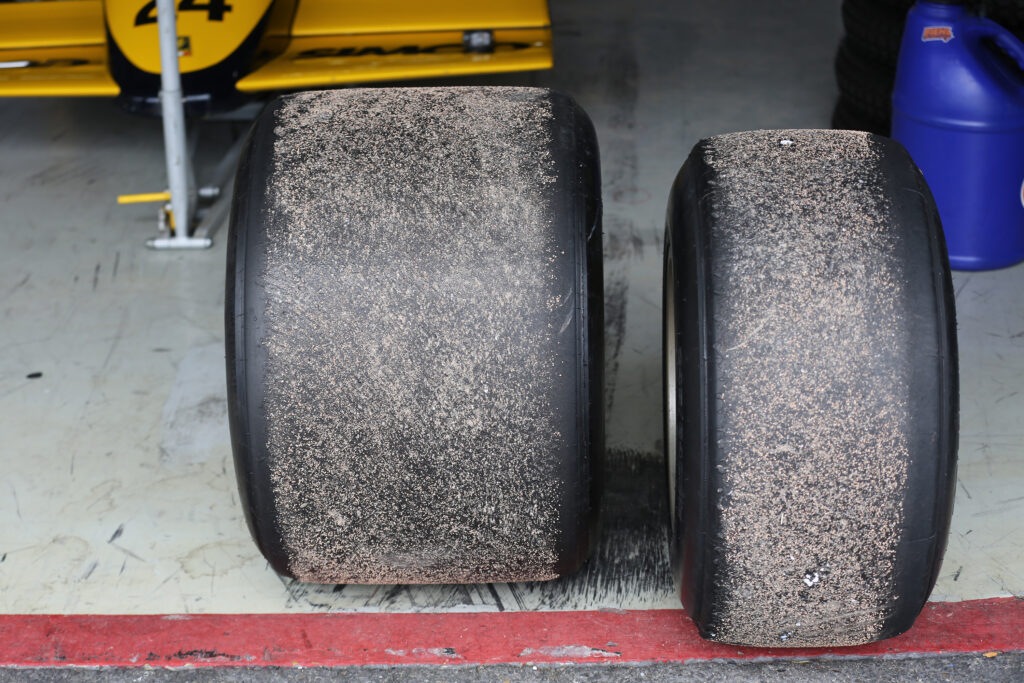
Figuring out whether it’s a front issue or a rear issue is the second priority. The number one priority is always to understand whether you have understeer or oversteer in terms of balance. Then we work on the front end or on the rear end. That is what all the engineers are looking for, also when you are in formula cars.
How to rate your balance corner by corner
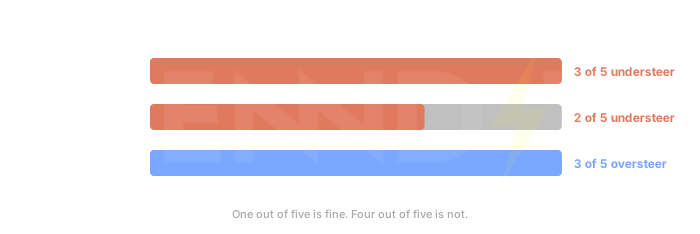
I remember when I was in Formula 3 for the first time, my engineer would ask me to fill up a paper every session: how much understeer or oversteer I had in every corner, in the entry, mid and exit phase. We had a one-to-five scale. So I could say three out of five understeer on entry, two out of five understeer in the mid-corner, and maybe three out of five oversteer on exit.
It was interesting because it forced you to be self-aware of what was happening in the car. At first I wasn’t very good at it. My teammate, Charles Leclerc, was way better at it, because he had one year more experience and he’s always been one year older than me — but I had to learn from him, and he could be a bit more specific than I was.
In karting I wasn’t doing that. Now I try to get my kids at BabyRace to do it every session, because it helps them to be more self-aware. I wish somebody had given me the structure and the task of filling up that entry / mid / exit understeer–oversteer sheet.
I always did it in a more manual way with my mechanic. Debriefing a session in karting, I would say: “I have a bit of entry understeer, the exit is okay, the mid-corner is okay.” Or: “In the mid-corner I have a bit of oversteer, the entry is okay, the exit is okay.” Quite vague.
Why giving good feedback is a skill of its own
Engineers in Formula 3, Formula 2 or Formula 1 don’t like that sort of mediocre feedback. They want highly specific feedback. If they’re going to improve the car, they need to know your feeling on the car, and they need to know what needs to be changed to go faster.
So you need to be very good at giving feedback, and if you are not right now, you have to learn how — that’s a skill of its own.
One of the ways to build it is to take a track map and list entry, mid and exit of every corner, and rate from one to five how much understeer or oversteer you have.
How to fix understeer while you’re still driving
When it comes to understeer, remember there’s going to be less rotation than you were expecting and hoping to get. That’s bad most of the time, because if you cannot get the rotation, you have to wait to go on the throttle. And if you still try to go on the throttle carrying the same speed you would with a neutral balance, it’s basically going to send you out — you’ll push wide, you’ll have to back off on the exit, or you’ll probably go in the grass.
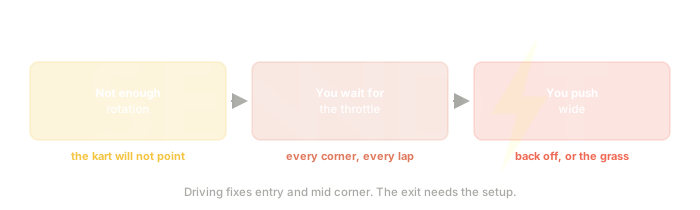
So it’s key that if you have understeer, you fix it on the setup side. You can also fix a lot of it with the driving — not everything, but the entry-to-mid-corner phase you can definitely improve. The exit specifically will be quite hard.
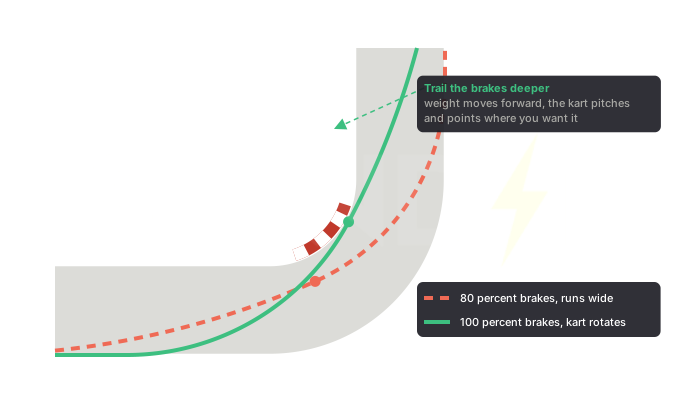
The way to reduce understeer on entry, and at least put a patch on it, is to create more rotation by using the brakes a little bit more, a little bit harder, a little bit more aggressively, and trailing them more. Whenever you trail the brakes, you shift the weight more to the front and a little bit lower, and when you do that you create more pitch and more rotation.
So if you feel like there’s not enough rotation and you’re at 80% of your braking capacity, get to 100% of your braking capacity. When you get there you will get more rotation, and that’s going to help you point the kart exactly where you want it in the mid-corner. And when you do a proper rotation on entry to mid, the exit will almost always come as a consequence — and it will most of the time be really good.
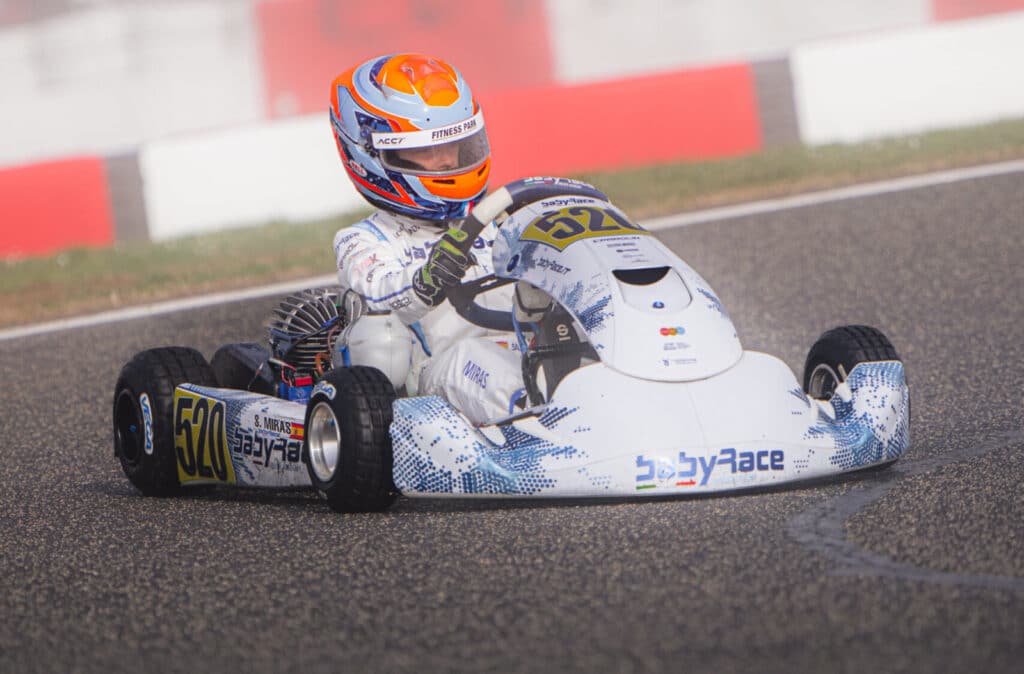
In karting you can also use the body a little bit: you can lean out if you need more rotation. I don’t necessarily recommend using your body as a strategy, but if it’s slippery in the morning, or slippery for the first couple of laps, you can’t change the setup for those two laps. You can’t make a dynamic setup. In Formula 1 they can do something with their steering wheel settings, but even there you can’t really change the setup from lap to lap or from corner to corner. So if the first two laps the track is slippery and the tyres are slippery, you can generate a bit of rotation by being a bit more aggressive.
And remember, you don’t generate rotation only with the brakes or by leaning out with the body. You also generate rotation by carrying more speed.
Why your driving style changes the balance
Think about it. Whenever you’re running in an engine — a new piston, a new engine — you’re carrying very little speed in the corners. And it feels like the kart understeers, because you’re not carrying the speed. Because you’re going at low speed and not on the limit, you are not generating the rotation. With that same setup, when you start to push, you start to generate rotation, and you start to get oversteer.
So if you are not carrying the optimal speed right now, remember that you are not yet generating all the rotation that setup can give you. Once you start to carry more speed in the corners, you will have way more rotation — maybe even enough to turn it into oversteer.
Give the same kart setup to two drivers — one aggressive, one very smooth and always driving under the limit — and the aggressive driver will report oversteer while the smooth driver will report understeer. The way you drive massively affects the balance of the kart.
In cars it’s a bit less, but you still feel the effect of the driving style. In cars there’s way more weight transfer and more dynamic ride height change — when you brake the front pitches forward and the rear lifts up, even with anti-dive and anti-squat — but it’s still felt massively in karts too.
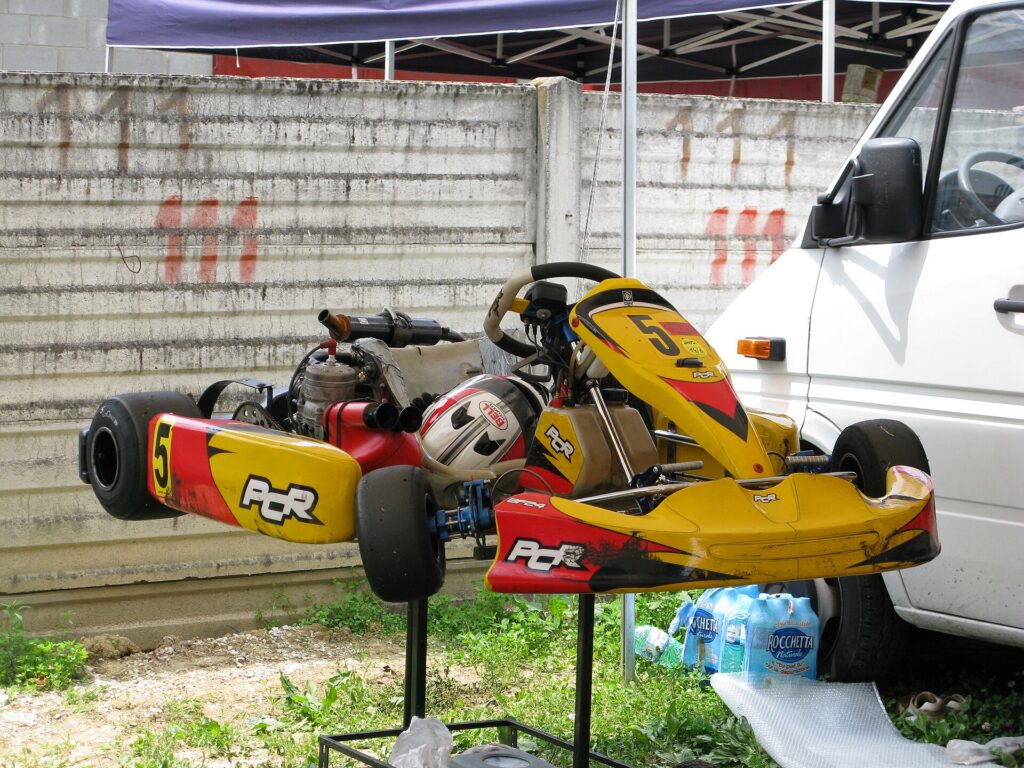
Long story short: the driver makes a massive difference in terms of balance. I’ve seen it happen to me and to every other driver I’ve worked with at BabyRace. It’s just crazy how much difference the balance makes to the driving.
So if you have understeer, remember you can’t change the setup while you’re driving. What you can do is brake a little bit harder, use a little bit of your body by leaning out, and carry a bit more speed into the corners. By doing so you’ll generate a lot of rotation — probably enough to survive that session and still get really good lap times.
Then when the session is finished and you’re back with your mechanic: “Listen, I have understeer four out of five on the entry, three out of five in the mid-corner, two out of five on the exit.” Now he knows exactly where to work. You can even give him setup suggestions, if you both know the kart well — like in my case in karting, where I’d say “now we need to change the axle to a different rear”, or “we need to give it way more caster”.
If you learn how to do those two things, you’ll not only get a better setup, you’ll also feel more and better what you’re supposed to do while driving to counterbalance whichever way the balance has gone.
You will always have a bit of one or the other
This is an important reminder. You will always have either understeer or oversteer when you’re pushing the limits, and when you’re above them. It’s okay to have one out of five oversteer or one out of five understeer. If you have four out of five, that’s not okay.
Every time you push the limits — especially when you end up making mistakes and going beyond them — you will always have some sort of balance imperfection. It’s just normal. It’s never going to be on rails.
Obviously it depends on the slip angle. Karting has a pretty wide slip angle compared to single-seaters, so it’s way easier to be on that slide momentum. You will always be sliding to be fast. Max Verstappen said the same in a podcast in Brazil: in karting you have to almost always be on the edge of sliding, because the slip angle of the tyre is completely different to a single-seater’s. In single-seaters you’re not sliding as much — you’re pretty much driving on rails. That’s a big distinction between karting and single-seaters.
Understeer or oversteer: which is actually better?
You will never have a perfectly neutral balance when you’re pushing the limits like crazy, so you will always have either a little bit of oversteer or a little bit of understeer. It’s a matter of understanding which one you prefer.
Me personally — as well as the most successful racing drivers of all time, like Schumacher, Verstappen and Senna — I’m not saying I’m one of those, but in karting I feel like I’ve accomplished a lot, not only as a driver but also as a team manager, so I feel I know a thing or two. And what I’ve seen is this: if I have to choose one over the other, I would always pick oversteer over understeer.
Oversteer you can control more easily than understeer. And honestly, you can carry more minimum speed in a corner with one out of five oversteer than with one out of five understeer. It’s always like that — not only in the dry, but in the wet a lot too.
So give me oversteer every day of my life. Don’t give me understeer, because when I have understeer I have to drive dirtier. I have to rotate the kart in a forced way, which doesn’t feel natural to me — over-pushing the entry, using my body, being quite scrubby on the steering wheel. Whereas when I have a bit of oversteer it helps me, because I can carry a lot of speed in the corners while being super smooth with the steering and with my inputs. I can be nice and stable in terms of body transfer, I can even lean in rather than lean out, and that helps me out on the rear as well.
It comes down to experience and preference. But every time you have oversteer you can control it more, and you will always end up with more minimum and exit speed than if you had understeer.
Why oversteer is scarier in cars than in karts
In karting this is easy to control. In cars it’s more difficult, because you’re driving at 320 km/h in an F3 or F2 car, close to the walls at tracks like Baku or Macau. At that speed, oversteer is a little bit unpredictable and a little bit scary. That’s why you need a lot of confidence in yourself, and that’s why you need to develop that oversteer perception and those car control skills while you’re still in karting. If you do it late, it’s not going to work — you will not be used to it.
Alex Albon famously said how hard it was to drive the same car as Max Verstappen, because it’s so pointy on the front. The car is super high-rotating and super sensitive, so one extra degree of steering angle and it becomes unpredictable and easy to crash. That’s why you need to be a legendary car-control driver to make it work — and it’s why Max has historically destroyed his teammates. He drives an aggressive style with a lot of rotation that his teammates couldn’t match, so Red Bull would develop the car Max wanted, because he’s the one bringing the championships and the wins, and the other driver had to adapt.
The reality is that it’s not just Max wanting an oversteery car. The oversteering car is the faster car, all the time. Obviously you don’t want a lot of oversteer, and it doesn’t have to be slidy or loose in a way that gives you zero grip. It should be grippy, but with high rotation. That’s the way I like to develop karts as well.
How to control oversteer: be smoother
Remember: when you have oversteer, the only way to control it is by being smoother with your inputs. That’s how you do it in karting.
You have to be more controlled on the brakes — the first hit of the input has to be very smooth. And you shouldn’t lean out at all, because if you lean out with oversteer you just make it worse. You have to lean in instead.
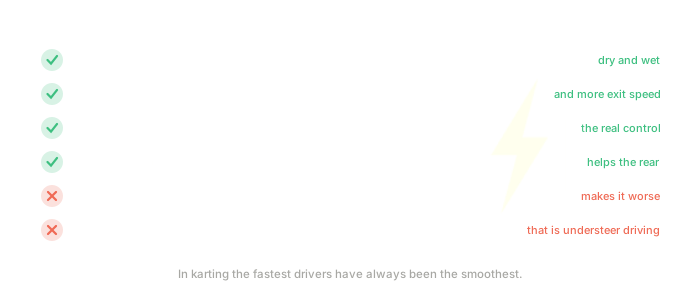
Overall, make sure you are very smooth with your inputs, and by doing so you’re going to be fast. That’s why, in karting, the fastest drivers are the smoothest. It’s historically been the case, it’s been the same for me, and I can totally relate.
I hope this master guide of understeer versus oversteer helps you out. If you want it as a one-page reference you can take to the track, grab the free understeer vs oversteer cheatsheet.
I teach all of this in my six-month training program, where 25 drivers join me every six months in live Zoom meetings, plus access to 600+ exclusive pre-recorded lessons where you’ll find a huge amount of value and a lot of lap time. Besides that, hit me up on Instagram at @alessiolorandi. I’ll see you next time. Ciao.
Send your onboard footage. Alessio reviews it corner-by-corner and tells you exactly what's costing you time, and how to fix it. Back within 48 hours.
Get My Onboard Reviewed → Reviewed personally by a CIK FIA World Champion, never an assistant.I promise I'll not spam you with repurposed shitty AI content but real experiences that only I, Alessio Lorandi, experienced. Written in my funny English-Italian tone of voice 😂
Alessio Lorandi is the former CIK FIA World Junior Champion, winning against Lando Norris in 2013 & F3 multiple race winner. He's helped 200+ karting drivers worldwide get faster & win WSK titles with BabyRace Driver Academy & now through Senndit, his online karting coaching platform.
