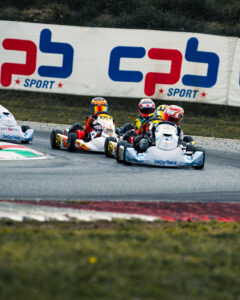
Want To Stop Crashing in Karting? Try This
Do you know what I believe to be the number one cause of karting crashes? Proximity judgment. Now, you may ask yourself, well, Alessio, what do you…

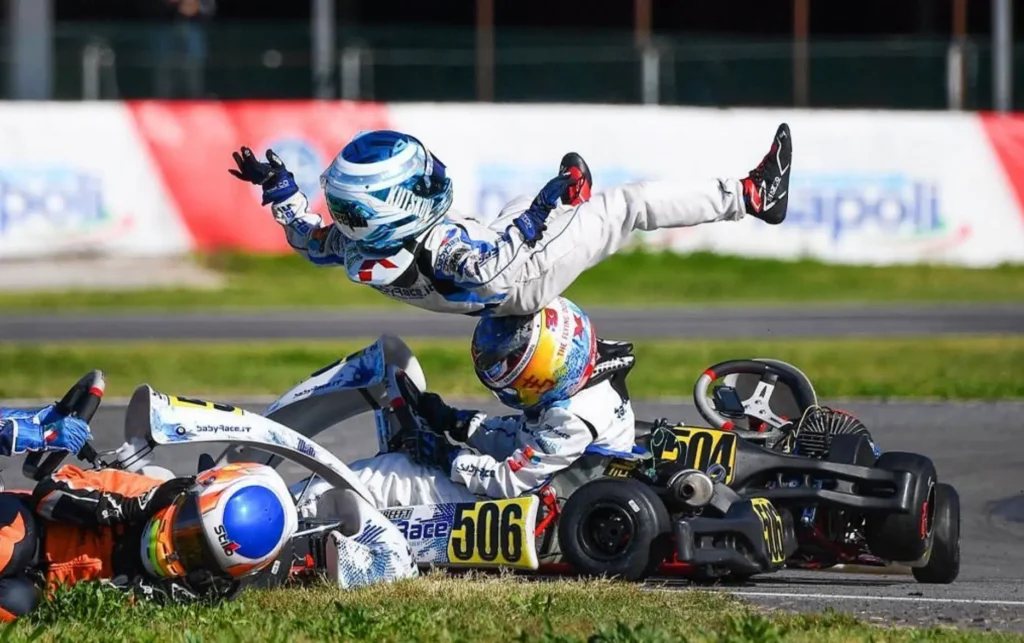
Do you know what I believe to be the number one cause of karting crashes? Proximity judgment. Now, you may ask yourself, well, Alessio, what do you even mean with proximity judgment? You know, I mean, what is even that word? Proximity essentially is whatever is around you, whatever is close to you, and judgment is basically the way you judge. So, proximity judgment in a nutshell is essentially the way you judge your surroundings, so what’s around you, and that’s very important.
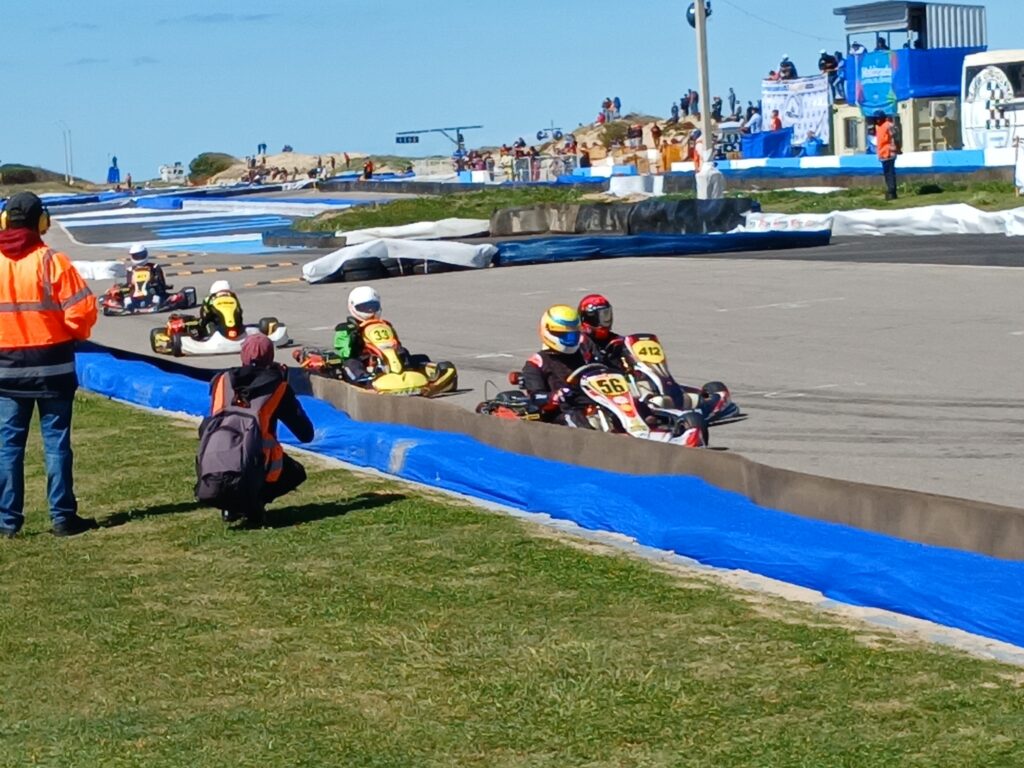
- Almost every karting crash is a judgment error — misreading distance or closing speed, yours or someone else’s.
- On lap one, everybody brakes early. Brake where you always do and you will drive over the kart in front.
- Lift your eyes. Most drivers look at the ground just ahead of them; that costs both lap time and crashes.
- You can usually see it coming — an over-ambitious move two karts ahead is a warning, so be ready to slow.
- Reaction time is trainable. Reaction lights, tennis-ball drills, table tennis, padel — all of it transfers.
- Crashes travel outward. Take the inside whenever the inside exists.
- The outside only pays in shifters, where mid-corner speed is low. Everywhere else it is a trap.
- Some crashes are simply not yours to avoid. Control what you can control and move on to the next race.
- Whose mistake is it? Usually a judgment error
- Situational awareness is the other half of it
- The over-ambitious dive bomb
- Street circuits: Pau, Macau and the cost of a wall
- Why crashing costs more than the lap time
- You can see most crashes coming
- Look further up the road
- What the helmet camera tells me about your eyes
- Reaction times are trained, not inherited
- Instinct is built by racing, not by reading
- Inside or outside? The fight-or-flight choice
- Why the outside is a trap on lap one
- I made this mistake myself for years
- The one category where the outside does work
- Some crashes are simply unavoidable
- Training peripheral vision
- Speed perception: the part you cannot really train
Whose mistake is it? Usually a judgment error
Because the reality is that you know when you go and make crashes, it’s because if you are causing a crash, by the way, it’s because well, you didn’t judge properly the distance to the driver in front of you, so again, that’s proximity judgment, or you may have not judged properly the distance the driver alongside you, so maybe you’re trying to make an overtake, but you don’t judge the distance and the speed properly, either your speed or their speed and distance between you and the other driver, and if you can’t judge that properly, you’re gonna get into a collision, so in that case, again, it’s gonna be your mistake in that case, because of your proximity judgment, but it can also be the proximity judgment mistake from other drivers.
Okay, if they are right behind you, and if, let’s say, in lap one, everybody is packed into the turn two, let’s say, and everybody’s braking early because everybody’s defending, maybe the driver behind you, he forgets that you are braking early, and so he tries to brake in the same place as he always does, but then, yeah, it basically makes an error judgment, and so he drives over you, literally over your rear bumper, then over your, and then just like destroys his race and your race again.
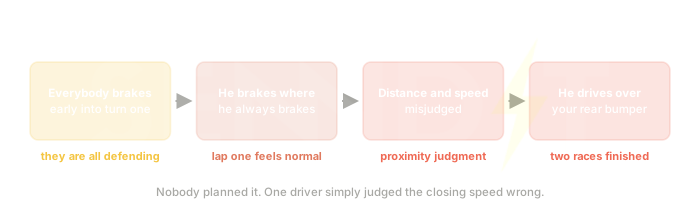
That is a proximity judgment mistake. He probably did not realise the approaching speed he was going into, and the distance between you and him, and the fact that you were going to brake early, because everybody would brake early. So, again, there’s this common thing about proximity judgment, and I see it happening a lot. So, that error and mistake in judging the distance and the speed of not only yourself, but also the other drivers around you, and that’s the most important thing.
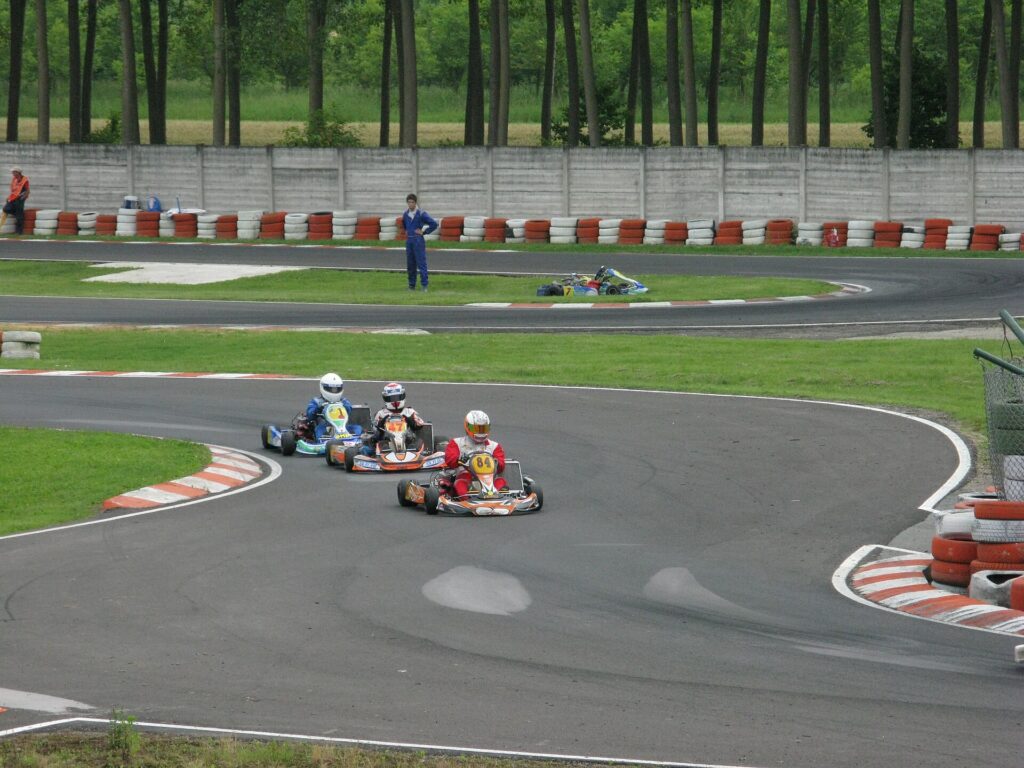
Where you’re in a group, you need to really judge properly the distance that you have from drivers around you, not only behind you, but also drivers to the left or to your right hand side, or even in front of you. It’s simply like that. If you can’t judge that properly, and you squeeze somebody off, and maybe that driver resists, you’re gonna drive over him, and you are going to crash, but simply because you didn’t judge it properly, either on purpose or by mistake.
Situational awareness is the other half of it
And proximity judgment is also tied to situational awareness. I mean, I almost use the terms interchangeably, but situational awareness is essentially when you know you are driving around and you need to be aware of the situation, and again, who’s around you, and whether it’s again lap one, if everybody is going to brake early, you need to be aware of that situation, that you know it’s always the case.
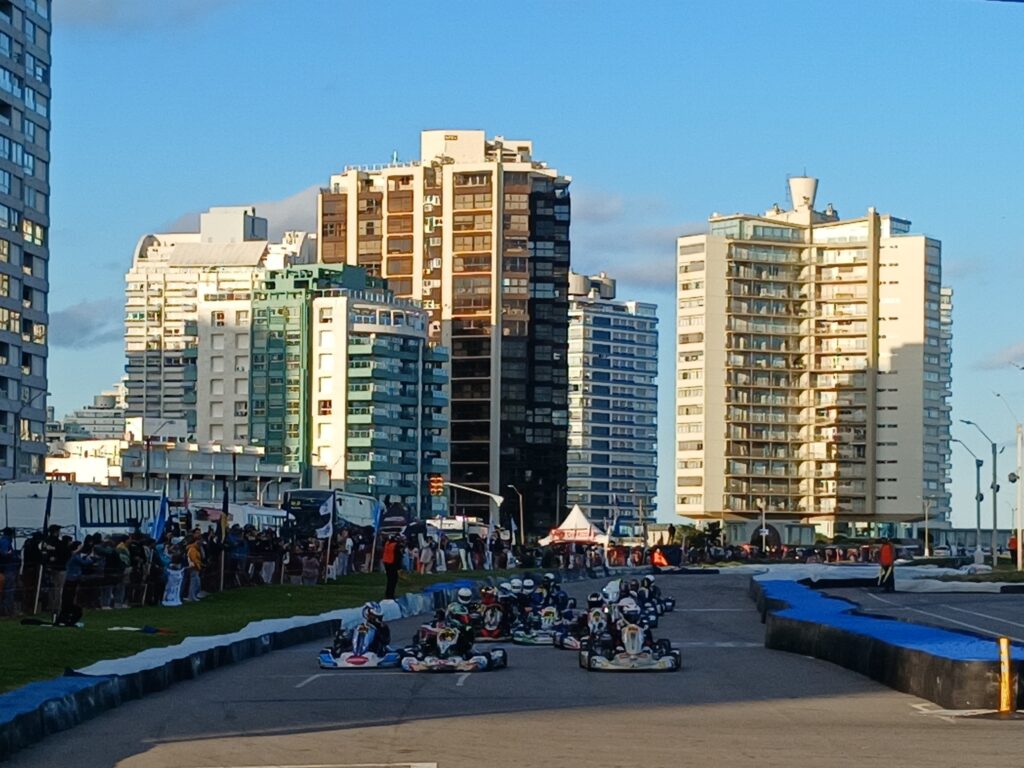
You know, in lap one, everybody’s braking early in the first corner because they’re defending, let’s say, and so if you try and brake as late as possible, forgetting that you have a pile of drivers in front of you, you’re just going to create a massive pile up of crash, and it’s going to be your fault, and you will deserve to get a penalty, all right.
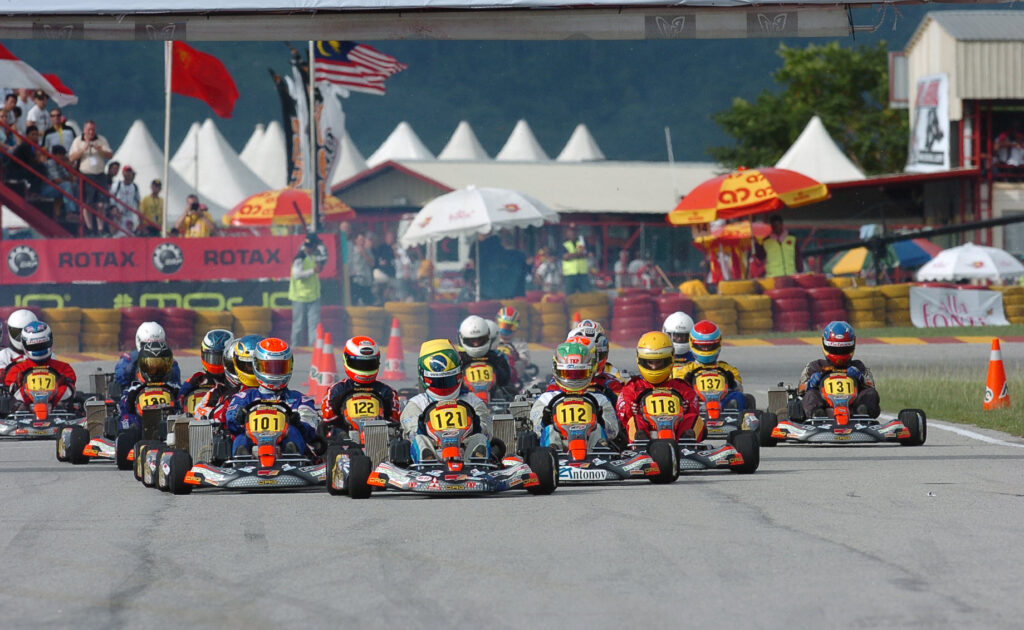
So, again, that’s situational awareness, which is tied to proximity judgment.
The over-ambitious dive bomb
I think that is the number one cause of karting crashes, and so when a driver is overly ambitious, overly confident in their abilities, and they try to send it and dive bomb into somebody, and then they crash over them because they cannot stop enough, and they just drive over the sidepod of the driver. Well, that case again, it’s it’s a proximity judgment mistake, because they believed they had the possibility to stop, but I didn’t manage to stop, and so again that is an error in the judgment.
So I think that is the number one reason why drivers crash, obviously in terms of crashing against other drivers, but also when you’re crashing by yourself.
Street circuits: Pau, Macau and the cost of a wall
Let’s say, if you are racing in single seaters and you’re in a street circuit, like I raced many street circuits. I love street circuits. I won at Pau, the Pau Grand Prix. I finished P1, Lance Stroll was P2 and George Russell was P3, and I remember that it wasn’t, it wasn’t easy, because, because you know, you’re driving through the walls and through the footpaths, and you had to judge the distance and the speed properly, because a small error of judgment, and you turned in too early, or you turn in too late, and you would be in the wall, you brake a bit too late, you’ll be in the wall, you get five kilometers more speed into the corner, you would be in the wall, you know, and it’s really like that, and you know, I never got Monaco, only Macau.
Macau was great. I wish I could have raced Monaco, but I only did five races in F2, because it was already after that I joined F2 to replace Santino Ferrucci. That was when he left the seat and I got the call, and yeah, I didn’t race in Monaco, I only raced in Macau twice, and Macau was very, very tricky because you had to go through the streets of Macau with very low downforce, and if again you try to carry a bit too much speed and you did not judge the grip level and your speed properly, you’d be in the wall, and
Why crashing costs more than the lap time
it is never good to be in the wall, because not only you lose the track time, but it’s very expensive damage, and yeah, you, it’s going to destroy your confidence, because you know, especially if you have a tight budget, like it was my case, my dad kept telling me to be careful, and so it was very, very hard to drive like that, because it’s almost like if you have a handbrake, as you know, you can’t afford 100,000 euros of damages, or even more than that, if you, if you make a proper crash.
So, yeah, anyways, that’s that’s just the proof that when you are racing, you’re not just trying to avoid crashes by, you know, crashing into other drivers, but also when you drive, especially in single seaters, you’ll notice that you want to try avoid crashes by yourself when you’re driving and just pushing for a hot lap or for the race, and, and you just like, yeah, when you’re driving street circuits, it’s going to be very, very possible to crash, and the risk is huge, and it’s not like in the Formula One game that you can just press, press reset, or on iRacing, you just press reset, and you just go for for another race, here in reality, it’s uh, it’s way more expensive, and sometimes it can even hurt, but yeah, one thing I wanted to mention about crashes is that
You can see most crashes coming
you can always spot from a driver in front, again, it’s uh, it’s situational awareness, you need to notice and be aware of what the driver is doing, so if let’s say the driver in front is far away from the driver in front, so he’s trying to make an overtake on the driver that’s like two places ahead of you, but you can tell he’s like an overly ambitious move, and you can get ready because there’s a high chance of him crashing, and so you need to make sure you read that situation and quickly be ready to slow down and avoid the crash, and that’s what happens many times, you know.
So, again, you can spot crashes, and you can avoid crashes already by looking further ahead. So that’s another very important thing.
Look further up the road
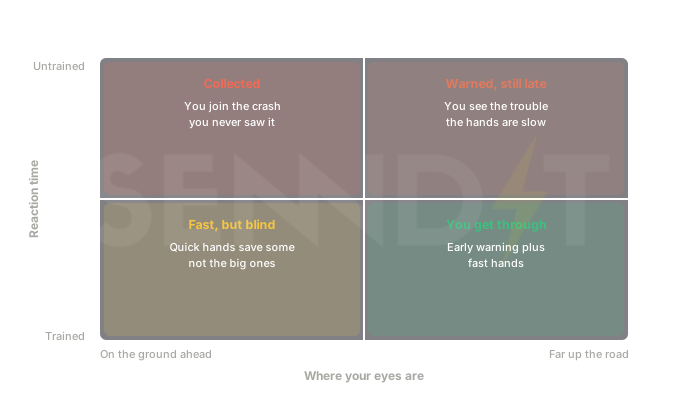
Another big reason why people end up in crashes that they haven’t created, simply crashes that have already happened in front of them, which can be like a massive pile up at lap one, turn one. Like the reason why many drivers get into crashes and involved is that they are not looking further up ahead than they should, so unfortunately most drivers are looking too much in front of them, in terms of like right what’s right in front of them.
So it’s like almost looking at the ground right in front of them. Reality is that they should lift their eyes and their head up, and they should, like, yeah, try to to expand their vision and try to really have a look at what’s really happening in front of you, further up ahead, and that’s not only very good for avoiding crashes, but also very good for lap times in general.
Like,
What the helmet camera tells me about your eyes
I watched all the time my driver’s onboard videos, and when I see that from the camera, it looks like, because I like to put the camera on the helmet, inside the visor, or basically I like to put the Insta360 GO cameras, and so basically from that camera I can spot very well whether a driver is looking nicely further up or is just looking too far down, just like not far enough, basically.
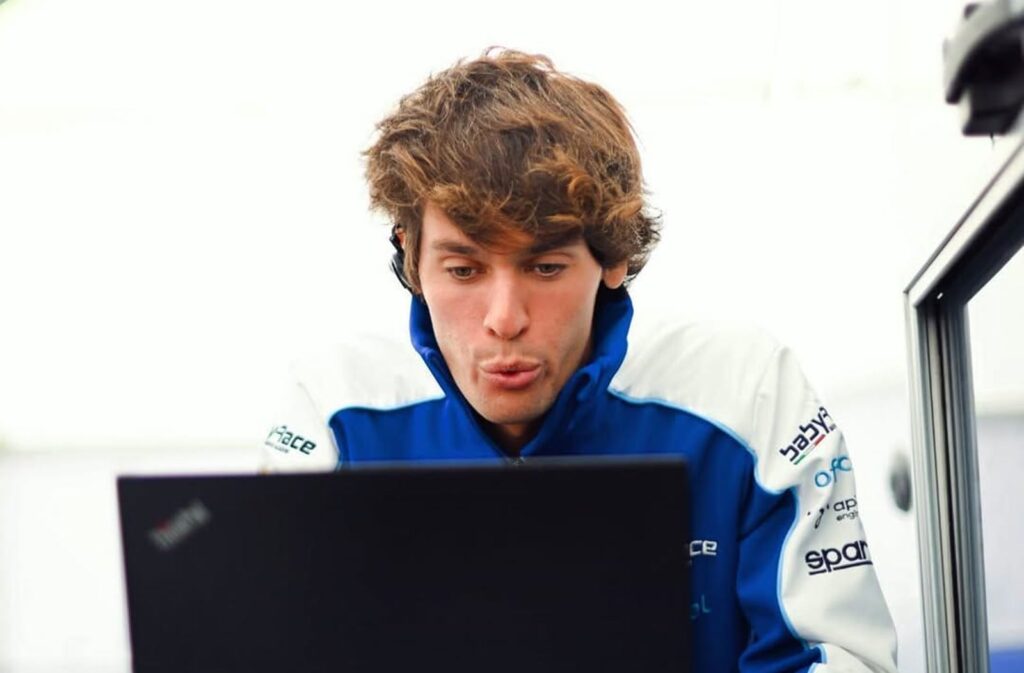
And so if I can basically tell from the way the camera gets tilted, and so when I spot the driver is not looking further up ahead, as he should, I immediately tell them, and it’s not easy, because to be honest, it’s something drivers do instinctively, but it’s a common habit, negative habit that most drivers do at the beginning, and so it’s something that the coach himself, and perhaps even the mechanic, should tell the driver to fix that, because if they want to set faster laps and avoid crashes, they will have to anyways look further up ahead, and that’s super key, because if there’s a massive crash and you’re not looking up ahead, you’re gonna get into that crash, and I’ve seen that happening so many times, and it’s not a matter of reaction times, because yes, our next point in the list is reaction times, reality is
Reaction times are trained, not inherited
not enough drivers have good enough reaction times to be racing drivers. Let me explain. I mean, even very fast drivers that I’m working with, and I’ve worked with, have not very developed reaction times, and you could be like, oh, I wasn’t born with them, you know? What can I do? You know, I’m just not born with the reaction times, or naturally fast reaction times.
But the reality is, it’s really not true that you’re born with, or you’re not, you know, it’s something you develop, it’s something you train, and for sure, if you, if you do a lot of reaction times exercises, you do a lot of training, for example, there’s a BlazePod reaction lights that you can use, or you can do drills with the tennis ball, where you can have someone have a tennis ball right in front of you, you need to catch them, but even playing sports, like, you know, playing tennis, or playing table tennis, you know, ping pong, or any other sport, even like football, all those kind of sports require you to have a very fast eye, and even playing padel; padel is a really great, good way to improve your reaction times, and all those things can really help you to avoid crashes, because once you have fast reaction times, I’m telling you, man, you can react to crashes very, very rapidly, and it’s something that it’s, it’s very, very important for drivers to have, but then I’ll be honest with you,
Instinct is built by racing, not by reading
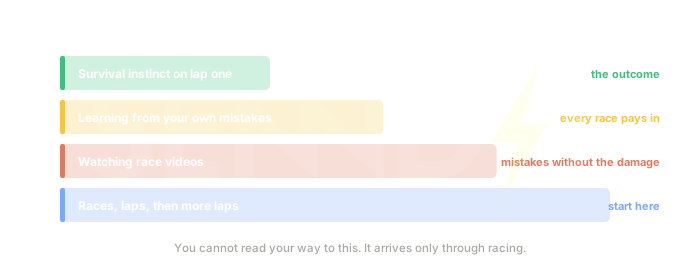
there is only so much you can prepare for, the reality is that you need to develop your instincts, you know, it’s again something that comes almost as. Naturally, by just driving, driving, racing, racing, and doing laps and laps, you know it’s gonna come. It’s gonna be like an instinct that you have, and it’s gonna help you to avoid those tricky situations and dangerous situations.
It’s gonna be your survival instinct in a way, and it’s something again you pick it up by watching race videos, by doing lots of races, and by learning from your mistakes, and again, it’s obviously easier to develop that survival instinct if you have a lot of experience behind your back, and you have built the muscle memory of going through the field by going through the races of the first lap, of course, if you’ve never done any race in your life, it’s going to be very hard to have that survival instinct built in.
It’s going to be something that you’re going to develop, you know.
Inside or outside? The fight-or-flight choice
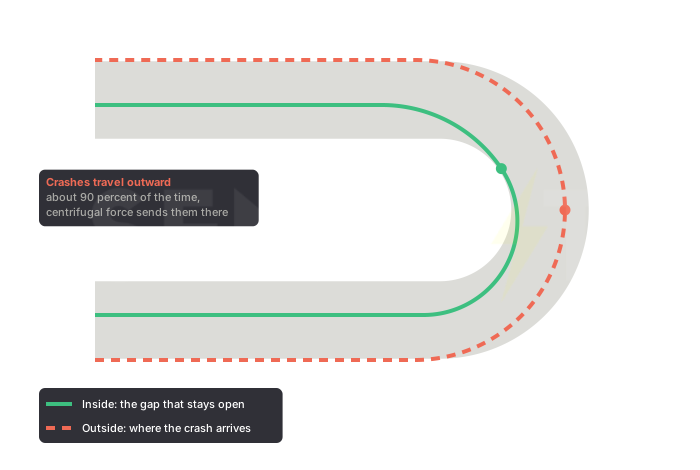
At the end of the day, it’s a fight or flight response. It’s going to be like when you are in that situation, where, example, there’s a crash right in front of you, lap one. You have either two scenarios: go to the inside or go to the outside. So, probably you will realize that most of the times at the beginning you will probably try to go for the outside, but you’ll realize that the majority of the times you go for the outside, you’re gonna crash, because the crashes always go to the outside, like 90% of the times they go to the outside, because of the centrifugal forces, just like physics, you know, it’s not me saying it, and so if you always try to go for the outside, and whenever there’s a crash, you are going to be collected by that crash, and that’s why, by the way,
Why the outside is a trap on lap one
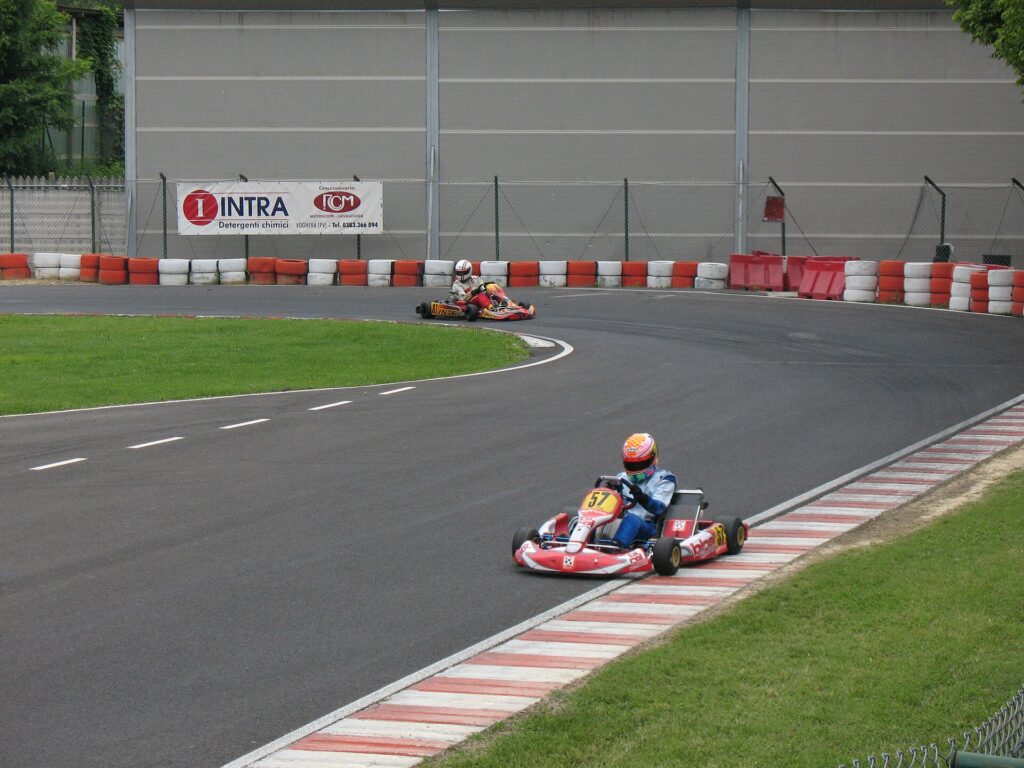
it’s so risky to go around the outside in the first lap, because if there is a crash right in front of you, and just happens to be a crash right before you, you go to the outside, well, you’re going to be toast, you’re going to be in a trap, let’s say, and you’re going to be passenger of drivers crashing into you, and you’re like, oh, they crashed into me, no, it was your fault for going to the outside, now sometimes I understand, and I’ve spoke about this another time, but realistically, you can always choose whether going on the outside or on the inside.
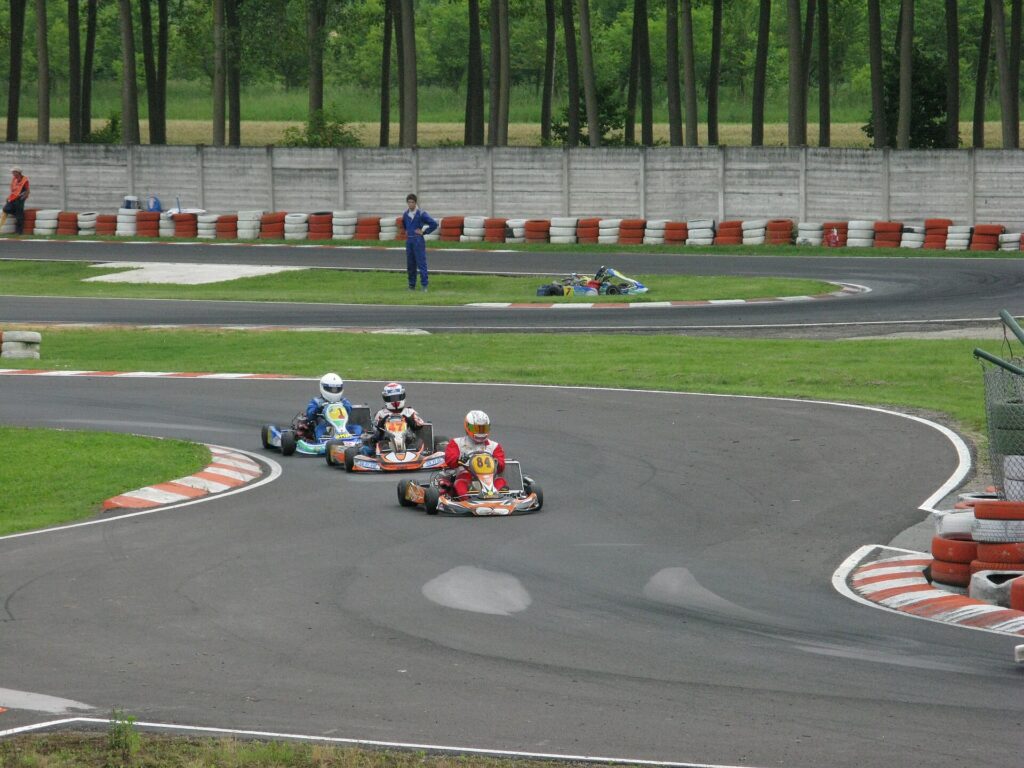
Sometimes, yes, the inside will be blocked, covered by other drivers, so you won’t have any choices, but in all the other times where the inside won’t be covered, and you still stubbornly choose to go to the outside, well, then I kind of have to say this: you kind of deserve it to be taken out, because, yeah, I mean, it’s happened to me.
I learned from that.
I made this mistake myself for years
I used to do this kind of mistake at the beginning. I was trying to go around the outside, because felt like I would gain a lot of positions if I managed to make the move, and you know, everybody going slow on the inside, I would go on the outside, I would gain two, three, four positions. But reality, reality is that
The one category where the outside does work
it only kind of works with shifters, because they stop everyone on the inside and the mid corner speed is very low, but for the other categories, where the mid corner speeds are pretty high, in terms of like hairpins, like 60 Mini, juniors or seniors, if you try to go for the outside, you’re gonna most of the time gain on the entries.
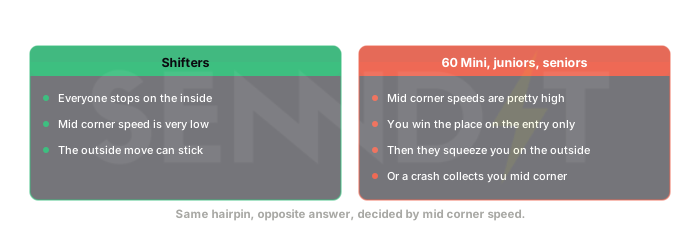
Yes, maybe you can win a position on the entry, but the likelihood of you not only getting squeezed on the outside, because again, if you stay on the outside and they squeeze you, you’ll probably lose a lot of positions, but there’s also high likelihood of getting collected in the mid corner by drivers who are crashing and just going to the outside.
So, yeah, be careful with that. But sometimes I totally feel for you, it happened to me and it happened to you, and it will happen to everybody. I mean,
Some crashes are simply unavoidable
sometimes a crash will be totally inevitable, and there’s nothing you can do. It can be inevitable because somebody crashes right in front of you, and you have literally no way to go, even if you try to stop and park your car, somebody from the back is gonna shunt into you. There’s gonna be that kind of scenario at least once in your career, and or even you do everything right, you brake early for the first lap, and everybody is like nicely going through turn one, and you are like right behind the driver in front of you without crashing into him, but then somebody right behind you forgets to brake and again takes a wrong judgment and drives over you, and your race is finished.
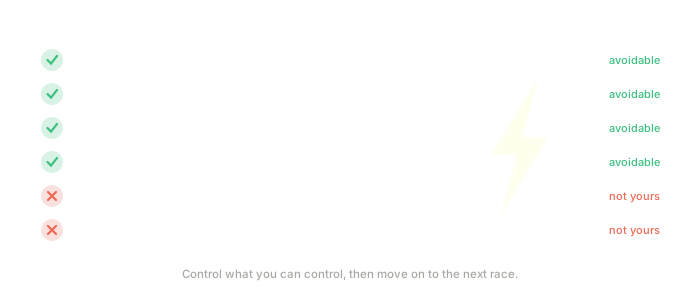
So, sometimes that happens, but there’s again nothing you can do. You can only control what you can control, and so if you can’t control those kind of things, well, you don’t even have to think about those things. Sometimes it just happens, and you just say shit happens, and move on to the next race. So, remember, the number one reason I really believe people crash is because they are not judging the situation properly.
So, again, situational awareness and proximity judgment, so it’s judging how far, in terms of distance, and also in terms of speed, the drivers around you are, where they are, and where you are in relation to them, and yeah, so again, it’s not like I have a simple fix for this. I’m just telling you what I believe is the issue, for sure.
Training peripheral vision
Having a highly developed peripheral vision will help you, and how you develop that. Well, there are some, you know, eye vision exercises you can do, you know, like juggling, you know, like there’s also playing sports, again, like tennis, etc. They are going to develop your peripheral vision skills, but again, it’s not just that,
Speed perception: the part you cannot really train
it’s also the speed perception. Again, it’s not just the distance, so in terms of vision, but also the speed perception. You need to kind of feel like whether you’re going at a higher speed than usual, because maybe you have a triple slip stream and everybody’s bumping you on the straight. You gotta be aware of that. And okay, if I have everything like that, then I need to probably brake a little bit earlier, because, yeah, they’re just, we’re having a little bit too much speed, so I can’t brake in the same place as always.
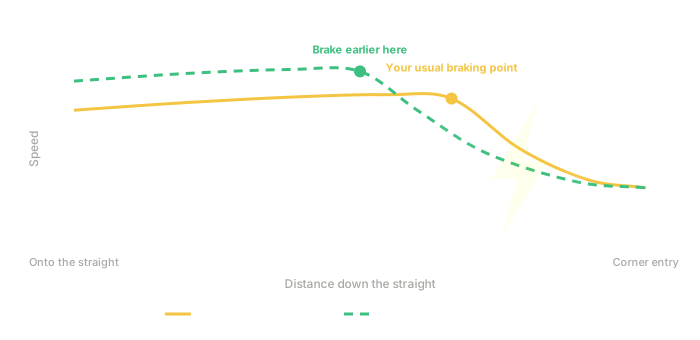
So, again, that speed judgment, it’s very important to have that too, but again, it’s nothing you are born with, it’s something you develop, and I’m pretty sure that you have already developed most of it in your career. And maybe you still have to finish the development process and develop even more, but realistically, I mean, it’s something you pick it up, it’s not something you can really train for that with peripheral vision a bit, you can train it, but in terms of speed judgment, there’s not much you can do, you just have to let your experience do the work, and yeah, I mean, honestly, I hope this was useful, make sure you keep looking up ahead and try to avoid going around the outside whenever you can avoid, because that’s definitely going to help you.
Besides that, yeah, double down on your proximity judgment, try to understand exactly the distance of the drivers around you and your speed in relation to them, so you can tell exactly at what speed you’re going against the others, and by doing so, I’m telling you, you will be able to predict a lot more crashes, and also to not create crashes, and again to avoid crashes when they’re happening in front of you, but sometimes they will be totally unavoidable, either from someone taking you out from the back, or you have no chance to avoid someone in front of you, but again, if you have highly, highly developed reaction times, you may do some crazy avoidance that may feel like you’re like an alien, but again, for sure, if you have faster reaction time, that always helps in racing.
So, I hope this was useful. I’ll see you in another one. If you want to sign up to an onboard video analysis, so you can find some lap time, feel free to check out my program, and also the six months training program. If you are interested in joining a professional six months course, where you can get from zero to hero, yeah, you can try and apply.
I mean, there’s only 25 spots. I start every six months, and I’m sure you’re gonna find a lot of lap times, and yeah, you just develop like a professional racing driver, and yeah, I will just share everything I have in my 20-plus years of experience. Otherwise, just hit me up on Instagram @alessiolorandi, and let’s get in touch. I’ll see you.
Ciao.
Related: how to develop quicker reaction times, race start strategies, and the five most common karting fears.
Send your onboard footage. Alessio reviews it corner-by-corner and tells you exactly what's costing you time, and how to fix it. Back within 48 hours.
Get My Onboard Reviewed → Reviewed personally by a CIK FIA World Champion, never an assistant.I promise I'll not spam you with repurposed shitty AI content but real experiences that only I, Alessio Lorandi, experienced. Written in my funny English-Italian tone of voice 😂
Alessio Lorandi is the former CIK FIA World Junior Champion, winning against Lando Norris in 2013 & F3 multiple race winner. He's helped 200+ karting drivers worldwide get faster & win WSK titles with BabyRace Driver Academy & now through Senndit, his online karting coaching platform.