Your son has the talent. What he's missing is the system.
Structured coaching from CIK FIA World Champion Alessio Lorandi, the same system that won 29 WSK titles with BabyRace.


The development window is short. Most drivers peak between 10 and 14.
Every season without the right coaching is one they don't get back.


Join 300+ Drivers
🛡️ Money-Back Guarantee On Every Program
As Seen In & Partner Organizations


The talent is clearly there. The results aren't following. The gap isn't ability, it's structure.
The gap seems small. It's the difference between P1 and P8. You can't find it. Neither can he. And generic YouTube advice isn't closing it.
New tyres, new chassis, more track days. The budget keeps climbing and the results stay the same. You're quietly wondering if you're throwing money at the wrong thing.
The sons of F1 legends don't win because they're luckier. They win because they have a structured coaching system. Your son deserves the same, regardless of who you know.
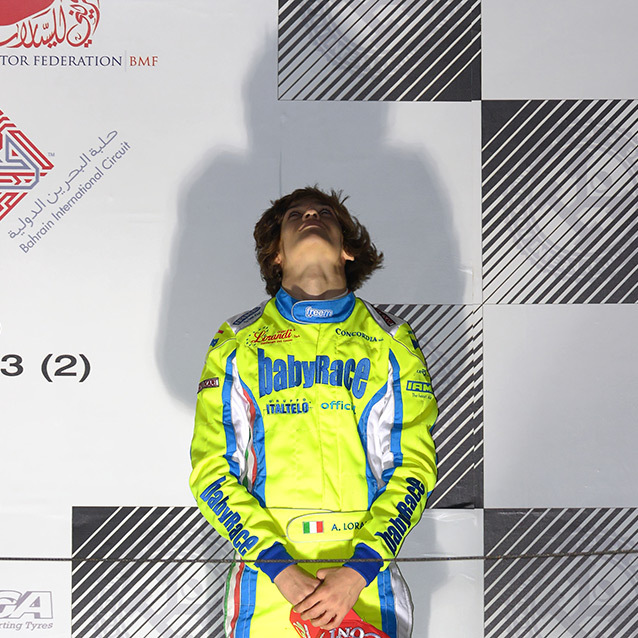
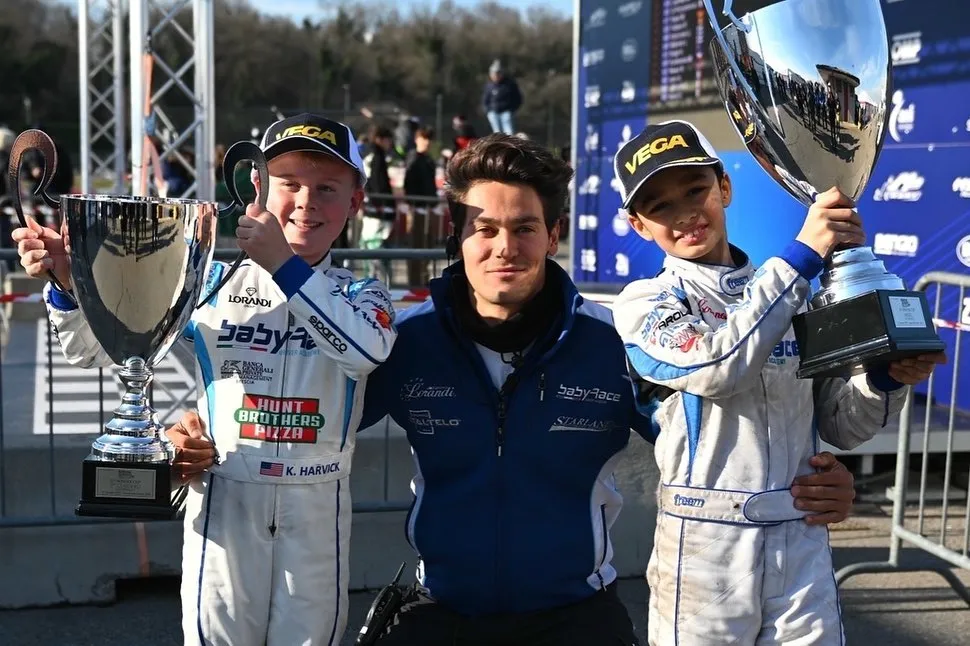
I'm Alessio Lorandi, former CIK FIA World Champion and F2 Driver. I raced against Lando Norris and George Russell. I beat Norris 18 times out of 25 races together.
For the last decade I've coached the sons of Häkkinen, Berger and Alesi, and 200+ other drivers worldwide. I built BabyRace into the most successful WSK team of the last 5 years. 29 titles. I know exactly what separates the driver in P1 from the driver in P8, and I know exactly how to close that gap.
The knowledge inside Senndit took 23 years to build. You get all of it in 6 months.
"Alessio Lorandi coaches the children of Formula 1 legends, bringing world-class technique to the next generation of racing talent."
, The Washington PostNo guesswork. No generic advice. A structured path built on 23 years of world-level racing.
Start with a €99 onboard review to find exactly where time is being lost. Or go straight into the 6-month program. Or book a 90-minute 1-1 call with Alessio. Pick the level that matches where your son is right now.
Not an assistant. Not an algorithm. Alessio personally reviews your son's onboards, hosts weekly live sessions, and tracks progress month by month. Everything is specific, structured and immediately applicable on track.
Most drivers find measurable improvement within the first 60 days. By month 6, the gap has closed. Your son becomes the driver others are trying to catch, not the other way around.
No complexity. No confusion. Just the fastest path from where your son is now to where he should be.
Every program is backed by a 100% money-back guarantee. If Alessio doesn't make your son faster, you don't pay.
One-off · No subscription · Instant access
Rolling intake, start the day you join
Real families. Real improvement. Real times on the timing sheet.
"After the onboard review my son found 0.3s in one session. Alessio spotted things we had been missing for two entire seasons. Worth every cent."
"Month 3 of the program. My son went from P12 to P4 at his last regional round. The weekly live sessions with Alessio are worth the whole subscription alone."
"The 1-1 call gave us more clarity in 90 minutes than we'd had in three years of racing. We knew exactly what to fix and in what order. Game changer."
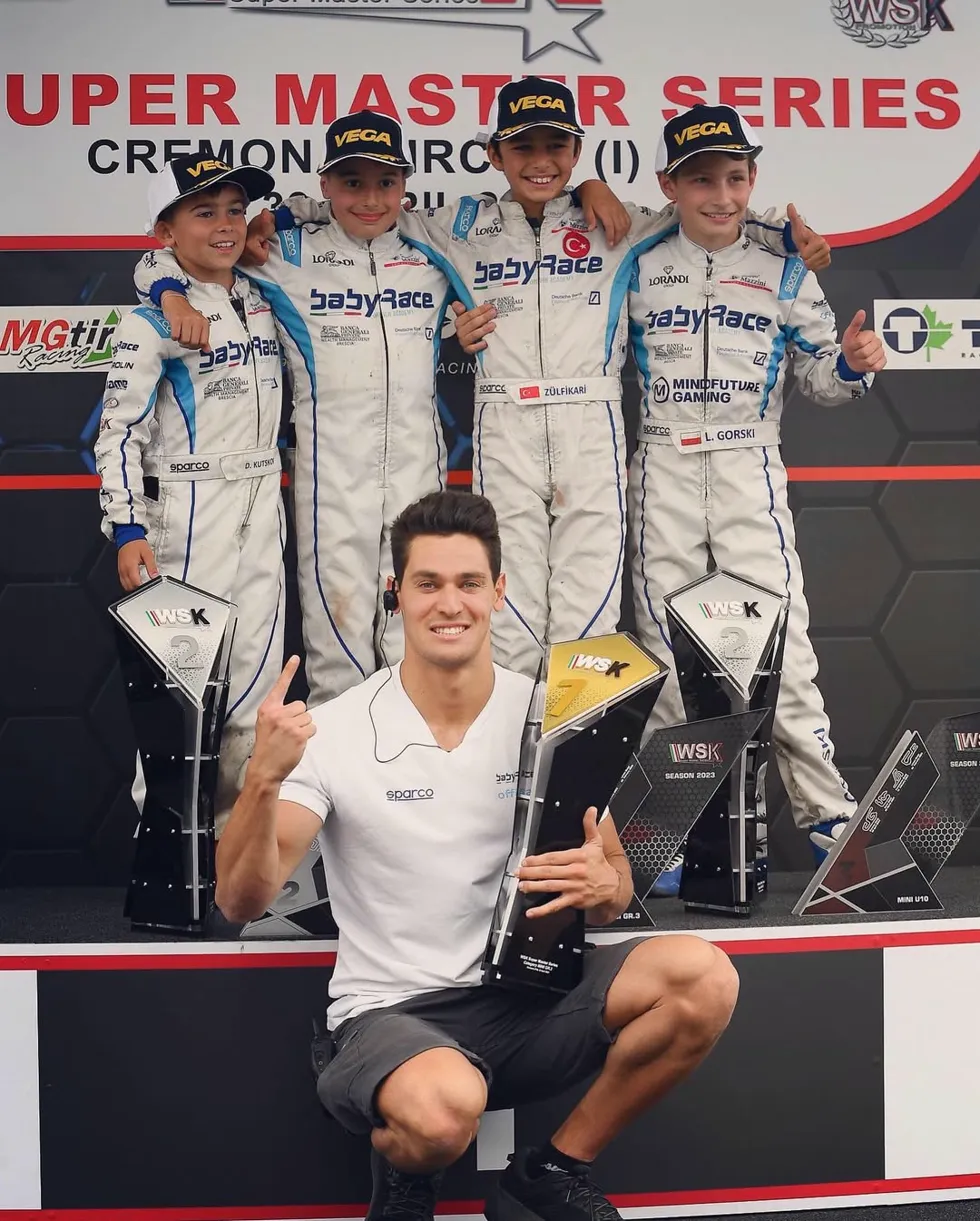
Every Senndit program is covered. If Alessio can't find at least 0.2s on the onboard review, full refund. If the 6-month program doesn't deliver measurable improvement, full refund. If you leave the 1-1 call without a clear plan, full refund. No forms. No questions. No hassle.
Because if we're not making your son faster, we don't deserve to keep your money.
Every week you wait is another race weekend without the right system. Places are limited to 25 drivers at a time.
Go From +0.5s To P1 →Or start smaller → Get a €99 Onboard Review first