The Importance of Tire Management in Kart Racing
Tire strategy separates champions from the rest. Master this one skill and watch your lap times drop.

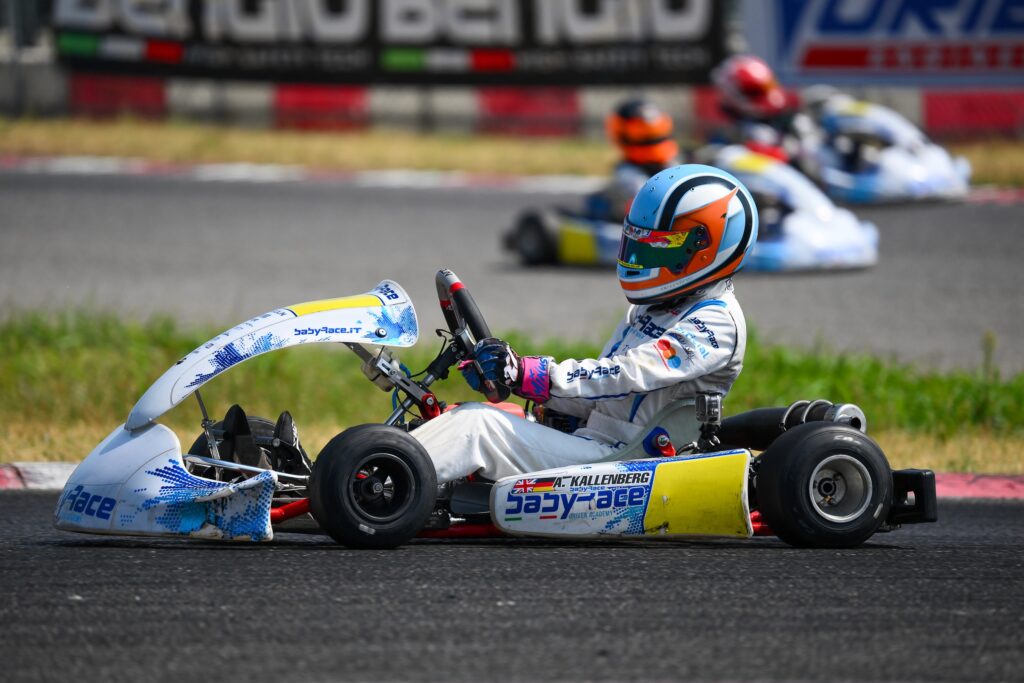
- Tire management becomes crucial in major championships like WSK and European Championships where one set must last multiple sessions
- The key is finding the balance: be aggressive under braking and on corner entry, but stay smooth with steering inputs
- High-speed corners and heavy braking zones cause the most tire wear and heat buildup
- Rear tires take the most punishment, especially the rear left on clockwise circuits
- Use magnesium rims and slightly lower tire pressures to reduce heat buildup
- Different tire compounds require different management strategies – softer compounds like Vega need more careful handling
Let’s be honest, tire management in karting isn’t anywhere near as extreme as in F1 or GT cars, but it does matter at times.
Especially when the conditions are very hot, the track is abrasive, or you’ve got to stretch one set of tires over multiple heat races.
When Tire Management Becomes Important
In most weekend races or practice days, you’re not going to notice massive tire wear.
But in events like WSK, Champions of the Future, or European Championship weekends, where you’ve got qualifying, 4-5 heats, prefinal and final…
It’s a whole different game.
If you burn your tires in qualifying, you’re going to struggle later in the weekend.
The goal is simple: be fast, but don’t overcook the tires. You’ll have to fast and smooth in order to do that.
The Balance Between Aggression and Smoothness
You want to push hard, but not so hard that you’re sliding around and destroying the tyres. Here’s the key:
- Be aggressive under braking and attacking corner entries
- But stay smooth on steering (and sometimes on throttle too)
- Especially in high-speed corners, avoid overly sliding the rear
Think about it like this: the more you slide, the hotter the tire gets. And when it overheats, it degrades quicker. Getting blisters sometimes, that cause a big loss in grip.
Where Tire Wear Happens Most
- High-speed corners: More G-force, more heat, more wear
- Heavy braking zones: Flat-spotting can happen if you’re not smooth
- Long stints: Especially in hot weather, wear builds up fast
Low-speed corners? Not a big problem. You generate less heat and load.
Which Tires Need the Most Love?
- Rear tires take most of the beating. Especially the rear left in clockwise circuits. Watch out for exaggerate oversteer, especially mid-to-exit phase of a corner.
- Front tires usually suffer when the kart understeers or when you’re overloading the front with too much input, less frequent that the rears though.
Rim Choice, Tire Pressure & Setup
Want to help manage temps and wear?
- Use magnesium rims: they reduce heat buildup
- Lower your tire pressure slightly: to slow the rate of overheating
- Balance the setup: don’t make the kart too aggressive on entry or too stiff in the rear
Driving Style Matters
- Don’t overwork the steering
- Don’t snap at the throttle
- Don’t throw the kart around in the early laps, warm up gradually
If the tires drop off mid-race, it’s usually because you were way too aggressive in the beginning, and sometimes for no real reason.
Tire Compound Differences
- MG and LeCont (WSK): Softer, more grip but wear out quicker
- Maxxis: A bit more durable but still need care
- Vega: One of the softest, manage them carefully during heats
- Komet/MG Red: Pretty hard, barely any wear over short runs
Final Tips
- Plan your race: If you know tire wear is going to be high, don’t go flat out from lap 1 (or maybe on lap 1 yes because the group is very packed, but then on lap 2 and 3 you can ease off a bit, only if the degradation is extreme)
- Adjust your driving as the tires start to fade…especially in high-speed corners
- Tire wear = heat + pressure + overdriving…manage those three
Final Thoughts
Tire management in karting isn’t rocket science, but it’s an edge.
Definitely.
If you’re smart about how you drive, plan, and set up your kart, you’ll be fresher at the end of the race, while others are sliding all over the place.
Let me know what tires you run and how you manage them.
Always happy to chat.
Just Senndit
, Alessio Lorandi
Send your onboard footage. Alessio reviews it corner-by-corner and tells you exactly what's costing you time, and how to fix it. Back within 48 hours.
Get My Onboard Reviewed → Reviewed personally by a CIK FIA World Champion, never an assistant.I promise I'll not spam you with repurposed shitty AI content but real experiences that only I, Alessio Lorandi, experienced. Written in my funny English-Italian tone of voice 😂
Alessio Lorandi is the former CIK FIA World Junior Champion, winning against Lando Norris in 2013 & F3 multiple race winner. He's helped 200+ karting drivers worldwide get faster & win WSK titles with BabyRace Driver Academy & now through Senndit, his online karting coaching platform.