Understanding Chassis Dynamics: How Your Kart Reacts to Track Conditions
Master chassis setup or get left behind. Your kart's behavior on track isn't mystery, it's physics you can control and exploit.

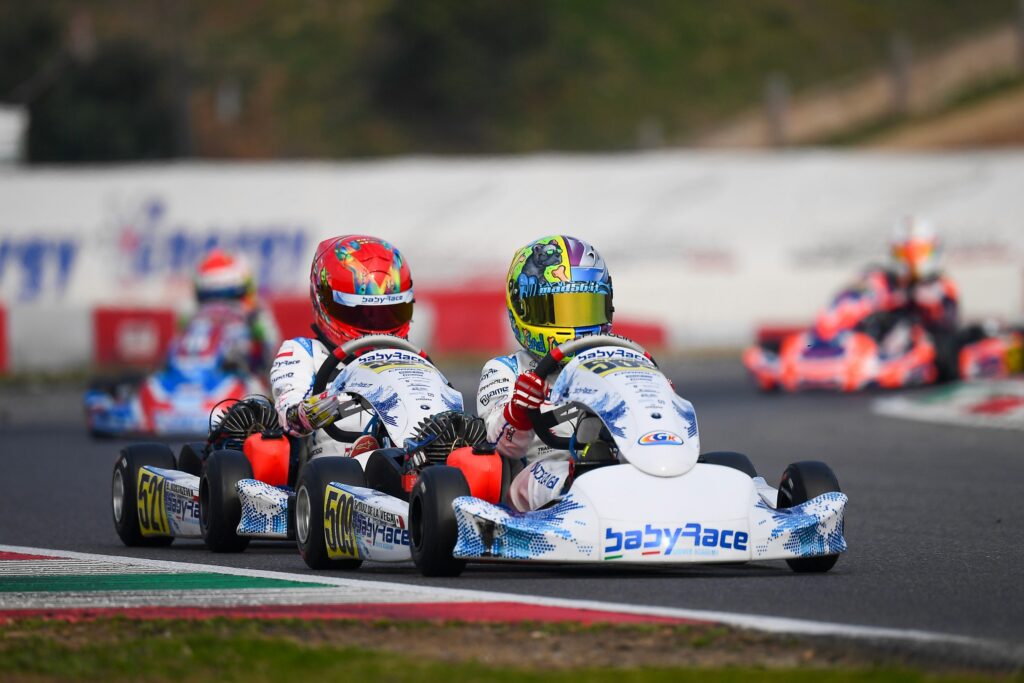
- Chassis dynamics are what separate fast drivers from average ones when engines are equal
- Cold tracks need aluminum components and higher tire pressures to generate grip
- Hot tracks require magnesium parts and lower pressures to manage heat
- Low grip conditions call for higher pressures and softer axles
- High grip situations need lower pressures and potentially stiffer axles
- Always read your tires after each session – they’re your performance report card
Let’s talk about something that can seriously change how your kart performs: chassis dynamics.
It’s not just about setup tubes and axle stiffness. It’s about feeling how the kart reacts and knowing what to do in different conditions, based on the chassis behaviour.
Why Chassis Dynamics Matter
The chassis plays a huge role in kart performance. It really does.
At high levels, when engines are basically pretty much “the same”, it’s the chassis (and the driver) that make the real difference.
Every session, the kart behaves a just little differently.
Weather, grip, tire compound, they all affect how the chassis works.
If you understand how your chassis reacts, you’ll know how to adjust it and stay ahead in the changing conditions.
Cold Track vs. Hot Track
Cold track? You’ll want to generate grip.
- Use more aluminum components
- Aim to load the tires more
- Aim for slightly higher hot tire pressures
Hot track? The goal is to mentain tyre temperature and not to get too stuck on the rubber.
- Switch to magnesium parts to lighten the load (rims and hubs)
- Try to reduce rolling resistance with lighter moving accessories
- Use lower tire pressures to avoid overheating
Low Grip vs. High Grip
Low grip:
- Use higher pressures to generate heat
- Consider a softer axle for more flex and grip
High grip:
- Use lower pressures to keep temps under control
- Maybe go stiffer on the axle to loosen up the rear on entry and exit
Smooth Track vs. Bumpy Track
- Softer axle can help soak up some of the movement
Smooth tracks:
- Stiffer axle usually gives more precise handling
But it always depends on the grip too. You’ve got to read the kart and tires.
Axles, Seat Position, and Tire Read
- If your rear is sliding too much, try a softer axle or move the seat further back.
- If your front is pushing (understeering), try more caster or less camber to get more front-end bite.
- Always look at tire wear and temp. Are you wearing more on the fronts? Add front grip. Are the rears cooked? Soften the rear setup.
Also, the seat position is really key here. Even just small 0.5cm moves can make a big difference.
We’ve got a full guide on this topic for you to check out.
The Importance of Seat Positioning in Karting
Extra Tips
- Don’t change too many things at once, just test one thing at a time.
- Read your tires after each session. That’s your report card.
- Lighter magnesium wheels can help reduce heat soak on hot days.
Final Thoughts
Chassis tuning isn’t about copying someone else’s setup. It’s about reading what your kart is telling you and making smart, simple changes.
Sometimes the kart just doesn’t feel right, and that’s OK. Keep the focus and don’t lose your shit.
Adjust, test, test again until you find what works best.
If you’ve got questions or want to run through your kart setup, just reach out.
Happy to help you go faster.
Just Senndit
, Alessio Lorandi
If you want the physics underneath all of this, the friction circle explainer on PURPL is the clearest way I know to show it.
Send your onboard footage. Alessio reviews it corner-by-corner and tells you exactly what's costing you time, and how to fix it. Back within 48 hours.
Get My Onboard Reviewed → Reviewed personally by a CIK FIA World Champion, never an assistant.I promise I'll not spam you with repurposed shitty AI content but real experiences that only I, Alessio Lorandi, experienced. Written in my funny English-Italian tone of voice 😂
Alessio Lorandi is the former CIK FIA World Junior Champion, winning against Lando Norris in 2013 & F3 multiple race winner. He's helped 200+ karting drivers worldwide get faster & win WSK titles with BabyRace Driver Academy & now through Senndit, his online karting coaching platform.