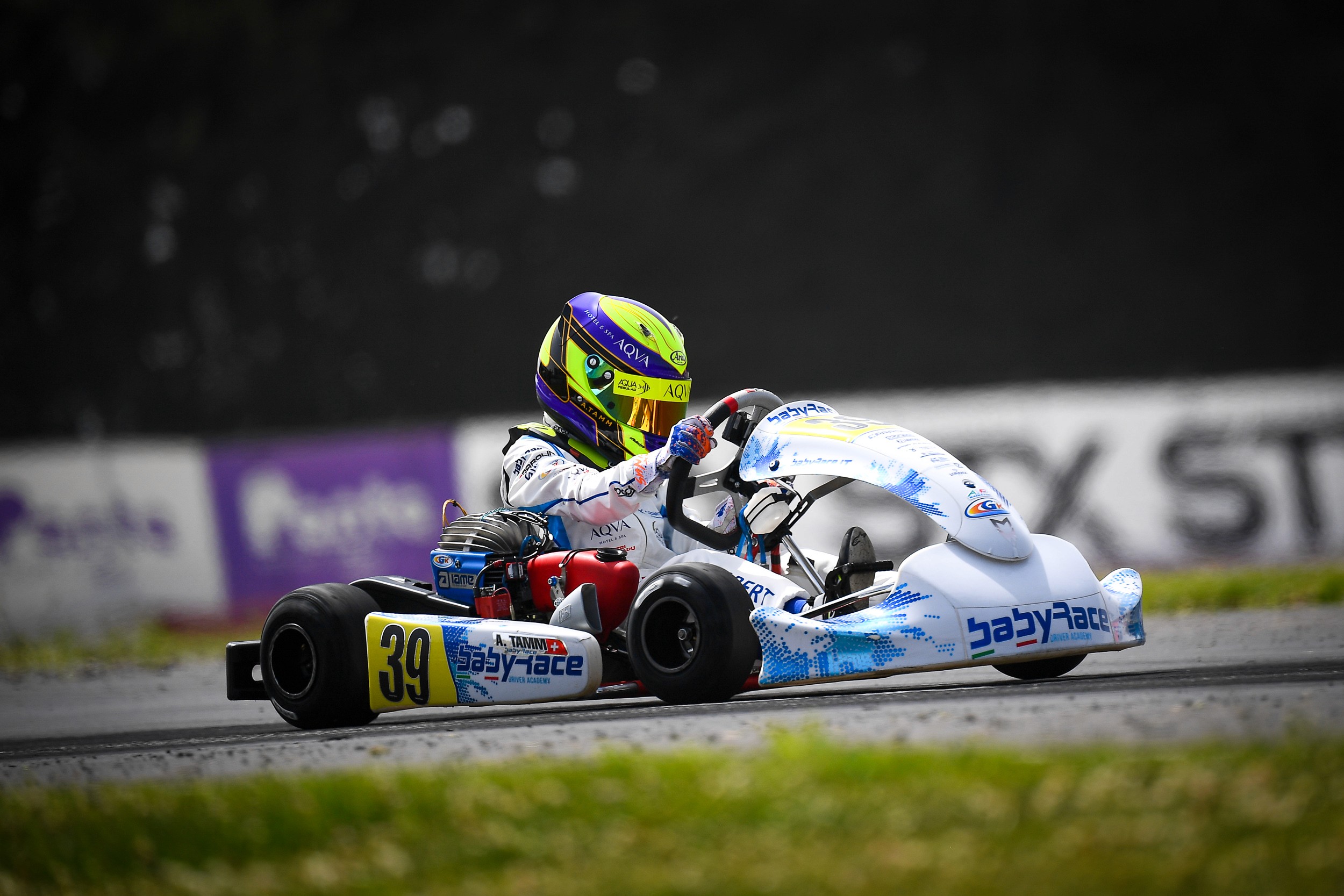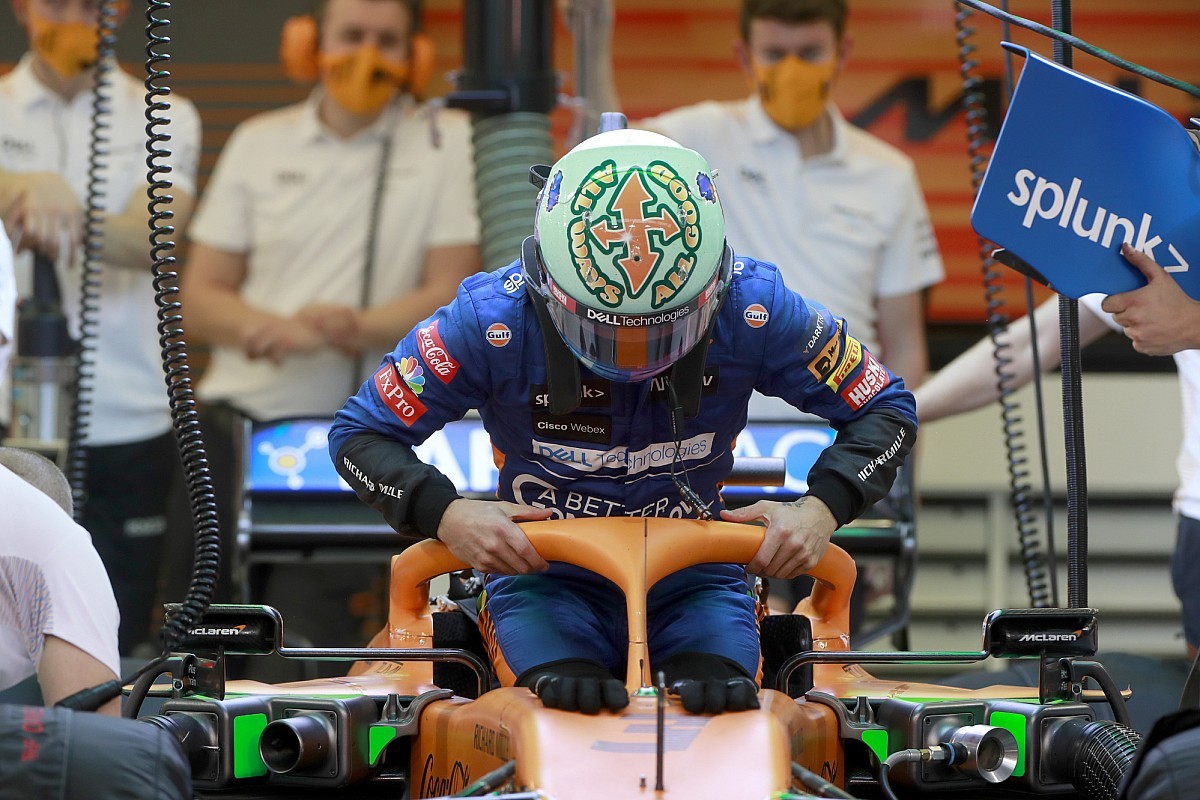

So we all know that your helmet is the piece of equipment that is going to protect the most valuable part of your body, which is your head, in case of a major accident with another driver, or maybe against the asphalt. It’s going to protect your head to stay in one piece, which is, I guess, what everybody wants here, right? So how do we choose the right one, not only in terms of safety, but also in terms of comfort and performance? In this guide, I believe I will provide you all of the answers. So let’s stick with it and get started.
What certifications should beginners look for when purchasing a karting helmet,
you need to look for a homologation number. The helmet needs to be properly homologated, and the homologation needs to be not expired. So you want to check that the expiry of the helmet is at least five years down the road. Because if you purchase an helmet that is just going to be expiring in two years, you know that you will have to purchase a new one if you want to wish to race. And of course, when you enter a competition, your helmet needs to be properly homologated, and the homologation number does not have to be expired. So make sure you check that homologation number and make sure that the homologation is not expired or it’s going to expire anytime soon. And the amulgation should be from Fia, and you should find that inside of the skull of the helmet, you should take off the foams, and you should be able to see it. It’s a shiny silver number that’s you can easily then find it. But don’t worry, most of the helmets already have a proper homologation number, and I don’t believe they’re going to try to scam you and sell you a helmet without homologation. So you can relax and just double check for extra certainty.
What’s the difference between karting and motorcycle helmets?
Well, there’s a major difference in terms of shape. The motorcycle helmets are more of a V shape if you look at them from the front, whereas karting hardness are a bit more round. To be honest. I’m not exactly sure why it’s like that. I guess there has to be a lot to do with the aerodynamics and possibly in terms of the different types of safety standards that are required for motorbikes. I believe motorbikes riders go at far higher speed than karting drivers. Karting drivers reach up to 150 under 60 kilometers an hour, in case of shift, the karts and seniors for under 50 kilometers an hour or so, but motorcycle riders get even up to 303 50 kilometers an hour for a motor GP, especially so I feel that their helmet are very safe too. But of course, the the shape is a bit different. You cannot obviously drive with the motor cycle helmets on a karting race because the karting helmet is not a mole gated. Yes, if you ask me the question, will it still protect him in case of a big crash? Of course, it will. But can you run it during a race? No, you can’t, because it’s not a mole gate. And now you can still maybe do it in some club races or local races at a low level, and they may not say anything to you, and then you may still get away with it. But again, if you aim to race at the international races, they will check and if it’s not a mole gated, I mean, well, you are doing a disservice to yourself, because again, if you crash, there’s no insurance being covered. I guess in if anything’s wrong with a helmet and helmet breaks and you have a fatal injury. So I guess, yeah, the homologation is a good insurance, I would say. And I mean, what everybody’s normally doing, and so I encourage you to do as well. So get a helmet that is specifically made for karting your first time on go kart. Yes, you can still drive a motorcycle helmet. I mean, just to see whether you like it or not, you can still use a motorcycle helmet.
I mean, don’t get me wrong, you will still
get protected. But of course, for multiple testing days and for proper racers, you need, I will repeat, you need to get a FIA homologated helmet from the likes of Schubert, Ry, Bell, Steelo, etc.
How should a helmet properly fit?
A helmet should fit in a way that makes you squeeze your cheeks a little bit. I think that is my number one thing. You should feel like the inside form squeezes your cheeks a bit, but not too much. That you actually feel like your face is exploding, but not to lose that you feel like your head is moving. So you need to feel firm inside of the helmet without moving inside. And when you’re driving it to really feel that you’re not moving. You really need to feel like your helmet stays firm and that you’re not shaking up or down, you’re not shaking left to right. You want to really make. Sure that, yeah, your head stays firm and it’s not moving up or down or left to right. So yeah, make sure that when you check it, it’s nice and firm. Your cheeks are nice and firm, and also feel that it’s not hurting you at the top or it’s not. Another thing that I notice a lot is that when drivers make a mistake buying a helmet is that they are way too loose in the helmet, and then what happens is that their head goes way too up into the helmet, and so it just doesn’t fit properly, and they actually move inside the helmet. So that’s a big mistake to do it. The helmet should feel very firm. Should not move at all, almost on the edge of squeezing you. I think that’s the sweet spot.
Is an expensive helmet always better than a cheap one.
I mean, of course, it depends whether you get a overly priced helmet simply because somebody’s trying to scam you at extremely high rates, but most of the times, as most of the things in life of high quality, you will have to pay a premium for a high quality helmet such as Schubert Eri Bell, compared to other brands that are less protective and less performing and less quality overall. So yes, by buying, for example, a Schubert, you will pay the most then you would do with other helmets. It’s going to be about, like, 1.6 1.8 about 2000 euros or something depends, I guess, from where you buy it, and discounts that you get. But you will definitely spend the most. But again, you have a carbon helmet that is very, very protective. You have probably the best aerodynamic shape, and also you have something which is very light, and the fact that makes it light is is good for the performance. The light the helmet, the better performance. So I would definitely encourage you to to consider getting a Schubert. I’m not here to promote them, but I’m just saying that that is the absolute number one helmet, I believe, together with obviously, Belle and ri, those are my top three choices. I’ve been using ri all my life, but then recently, as well, swap to Schubert. And to be honest, I’m having a really good time, and I feel the helmet is is comfortable, it’s high performing. It’s light and it’s very protective. So I hope I will never have to test its safety measures in case of a big crash, maybe one day it will happen, I hope not, but if it will, I’m pretty sure and confident that it’s going to protect me very well.
Are use the helmet safe?
Well, I think that they are. Of course, it depends whether they are being used by a lot of time and where they had big big hits. Because the problem is that if they’ve had big hits and big incidents in the past, you may have to instead choose on getting a new one. Because again, if you have big crashes, maybe something inside of the skull, you know, the carbon fibers, they will probably break a bit. So I would not recommend to use a helmet and buy a used helmet if at many, many big impacts. So in that case, I would, I would advise you to just buy a new one. And normally, I think it’s something very personal, like you would prefer to get a new helmet, because you can then custom design it. I think for racing drivers, it’s a bit like their Christmas gift, isn’t it? So you can get your helmet, choose your colors, choose your design, choose your style. You know, I think that’s one of the greatest art that’s Express driver’s personality, and I feel that it’s it’s a pity to buy used helmet. To be honest. I think it’s way better to to design your own. And I feel that you should be the case for for most kids, and it’s a bit sad to buy used helmets. I understand that for many people strapped on cash, it will be a much better decision overall. But again, I would not sell your own helmet. I would keep it as a museum, keep it on your in your room, and even if, after you stop racing, if you ever do which I hope you continue. But again, whenever you will get a new helmet, I will advise not sell that one. I would just advise to keep it and use it as a
Yeah, creative piece of art to leave it
in your house.
How important is helmet weight for karting?
Helmet way is extremely important for karting drivers, because you want to keep the weight as little as possible for two major reasons, first, to reduce the muscle strains of your neck so the lighter the weight of the helmet, the less effort your muscles and your head and your neck will have to do. Therefore you will be. Able to stay more relaxed as well as less tired throughout the whole race, especially for long races. And the second major aspect to keep in mind regarding karting helmets is the fact that the weight of your helmet affects quite a bit the sensor of gravity. Now it may sound a little but a difference in 100 200 300 or even 500 grams in helmet will make a big difference in the center of gravity of your kart. So if you are too much weight at the top, not only that is not so good for your muscles around your neck and head, as we already mentioned. But it’s also not so good for the chassis dynamics of your kart, and it will actually be less performing, especially during high grip situations where you actually want to reduce as possible the sense of gravity, as in the case of Formula One, where they want to get the car to be sitting as close as possible to the ground. So if you ask me, I would just spend a premium to get the absolute lightest weight helmet you can get on the market. I can see that right now as of 2026 the lightest weight version is from Schubert, the SK one. That is 1090 grams, excluding paint, of course. So that’s very, very light, just above a kilo. If you then go with the bell, KC seven helmet, between 52 to 56 sizes, you’re gonna actually weigh 1185 grams, which is about 100 more than a Schubert. SK one. And then if you want to go for the array, SK six, you will find yourself at about 1.5 kilos. So about one point 55 one point 56 so that’s about 500 grams more the weight of the Schubert carbon fiber helmet. SK one. So again, you can see 500 grams. Yes, not only they make a big difference in terms of weight overall for the kart, especially if you’re almost on the edge of being overweight, but also it makes a pretty big difference when it comes to sensor of gravity and overall neck muscles relaxation and soreness. So for sure, you’re gonna be less fatigued during the race, and yes, it’s just going to be better overall, and that’s why I chose the Schubert to save up weight, to reduce sensor gravity and to overall, have a better driving experience and faster lap times, which, at the end, is the only thing that I care about. Right?
Does helmet ventilation matter in karting?
Yes, it does. It matters a lot. Ventilation is a big factor, maybe not as important as Formula cars or GT cars. I know that for experience, you need to have a helmet that is properly ventilated. That means you need to have a trade off between too much ventilation and not enough. Because, of course, you want to have some air coming and flowing through your helmet so that your head stays nice and cool. But at the same time, you don’t want to have too much ventilation, because I noticed that when you have too much ventilation, you may occasionally pick up some dust and dirt in in your helmet, and actually inside of your eyes, which is not very nice to have to be honest. But equally, you may pick up a bit of extra fog, a bit of humidity and moisture. So that’s, again, not ideal. Equally, if you have too little ventilation, you may get too hot and your head may overheat. And you know, you don’t want to have your head overheat, otherwise you will have less performance overall. You want to have your head nice and cool. You want to have your eyes also not too dry, okay, but also not too dehydrated. So you want to have the right amount of air flowing through your eyes. I think that is the priority. So I noticed that, for example, some helmets recently are providing different kind of ventilation systems. You can always change them. Air eye as good one, belt as another, good one. I really like the one of Schubert again. Not gonna lie, I feel that their clips system is providing a double choice of ventilation, whether you want to have more or less. I like to go with much more ventilation when it’s foggy and wet, because I can see a bit more, so that I get less humidity and less fog actually, inside my helmet, especially if I’m breathing a little bit more, because maybe it’s been a long time I haven’t been driving and I have a bit of a higher breath. So in that case, I just feel that, yeah, it’s a bit better to have a little bit more ventilation in that case. But again, to be honest, I don’t feel this is going to be the priority when choosing a helmet. For sure, ventilation is important, but you’re not going to place all of that focus on on the ventilation. I feel that is an important factor, but it’s not going to be the number one priority. I think weight as well as shape and aerodynamic performance is going to be the most important.
Is the aerodynamic shape important for karting helmets?
Yes, the aerodynamic shape is super important, because I believe that the helmets that have been tested mostly in the wind tunnels and that have the proper shape, they have less drag, and less drag means better lap times. Now I know that karting drivers do not reach 300 kilometers an hour, such as f1 drivers or Moto GP riders, but I still feel that the drag coefficient from a karting helmet is still pretty high, and we want to just reduce that as much as possible. Of course, that is just a nice plus to have. You know, this port is already so extremely competitive that every small detail makes a difference. And for sure, selecting a helmet that can provide you half a 10th maybe at the end of the lap, which, again, it’s very, very hard to measure. But if you have 1% less drag in a longer, long straight with a long lock track, that could be zuera Sarno or Francia corta, for example, you may gain, yes, what? 0.05 at the end of the lap, or less. It’s very, very hard to tell for sure, I don’t think it’s, it’s, it’s really possible to actually tell how much you’re going to gain or lose due to a helmet. But for sure, if you know that in the wind tunnel, a specific helmet actually has less drug than another one, I’m sure that is going to give you better confidence and just peace of mind, knowing that, okay, you have the best helmet possible on the grid, and that, yeah, you’re not leaving lap time on the table in the straights just because of your helmet. Again, the helmet that I feel that has the best aerodynamics is the Schubert. I think it was designed specifically for that, and it’s very, very, very similar to the one in Formula One used by Max Verstappen. So I think that they brought the same kind of innovations here to a karting and I feel that, yeah, the product is just so good and their dynamics are so good that I feel that they have the best I have not made an actual test in the wind tunnel. I actually would like to to kind of test the different kind of drags, but I feel confidently that that has the best drag ratio compared to other helmets like ri Bel, stylo, etc.
What mistakes do beginners make when trying a new helmet?
I think the biggest mistake is that they forget that, first of all, they need a balaclava. Most of the times they are not wearing a balaclava when wearing a helmet on and so does 234, millimeters that come from wearing a balaclava are not taking into consideration. Sometimes, maybe a helmet is already quite tight, but if they’re not wearing a balaclava, for sure, it’s going to be even tighter when they’re going to wear a balaclava later. So I think that’s one of the common mistakes. Make sure that you use a balaclava when testing a new helmet, so that you can know exactly how it fits when you have a balaclava on. Another thing is that driver all the time try to get a helmet that is a little bit more comfortable, and so they’re going to find an oversized helmet better than a more Squeezy helmet on the cheeks. But again, tighter helmets are better because they’re going to keep your head nice and firm instead of moving at 100 kilometers an hour or more when you go through the bumps and curbs. So you want to select the firm ones, not the ones that are going to shake your head. So that’s one of the common mistakes that drivers make. They do not considerate that when they drive they are going to have a lot of speed, a lot of wind resistant and they’re going to have a lot of bumps, so that’s going to generate a lot of wobbles. And the G forces, of course, are high, and therefore the less movement there is in your helmet, the better.
How often should karting helmets be replaced?
Well, good question. I think in terms of wear and tear, there’s not enough wear and tear to justify an helmet being replaced every two to three years. I think you could use it longer, up until the end of the homologation date. But the reality is that not many, many drivers care about that. They just want to change it much more occasionally, just because they prefer to get an updated style and updated color, or, you know, change the design, etc. So I feel that they care more about that, rather than anything else. So most of the times, helmets get replaced, not for the
wear and tear or because they break, because, again, they’re so protective they’re not going to break. It’s just because they want to change style, etc. So it’s like, yeah, a piece of equipment that they just want to change, like formula wonders. They change helmet every race. Pretty much, they get a new helmet with different designs, different styles, simply because, I mean, anyway, you probably don’t have to face that expensive themselves. So they feel like, okay, let’s change style, etc. If you ask me, in terms of wear and tear, exactly how often it should be replaced, I think every three to four years if you have big crashes less. But again, you can use a helmet up to five years and use the whole modulations.
Michael, if you were buying your first helmet today, what would you look for?
Well, as I said already in this guide, my priority is performance, performance, and that comes with weight, the least the better. And also aerodynamic efficiency, the best, aerodynamic efficiency, the better. And of course, comfort is important the earring. So the sound is very, very important too. If you have bad earring and you can feel too much the sound, or you can feel too little, that’s not good. You want to feel the right amount of of sound. And again, I tested different ones, and you can really quite notice the difference between from helmet to helmet, like from the air i to the Schubert, from the Schubert to the bell, you could really tell a bit of difference. Of course, the comfort for sure, you need to get adapted and get used to one or the other. But again, my priority would be the weight and the aerodynamic performance. That’s the thing I look for the most. And again, actually, the one who costs the most sometimes is the one who’s who’s the best overall. And I believe the Schubert, yes, costing more than all the other helmets. I think it’s the best option right now. And I don’t think like I’m going to switch anytime soon, unless they improve the other versions from the other brand.