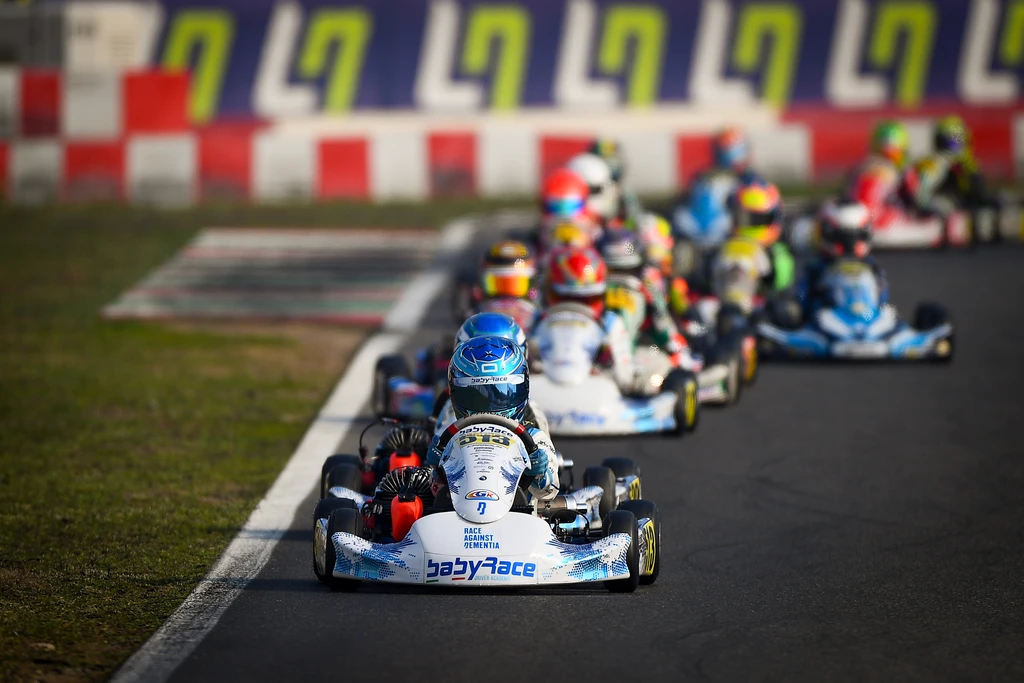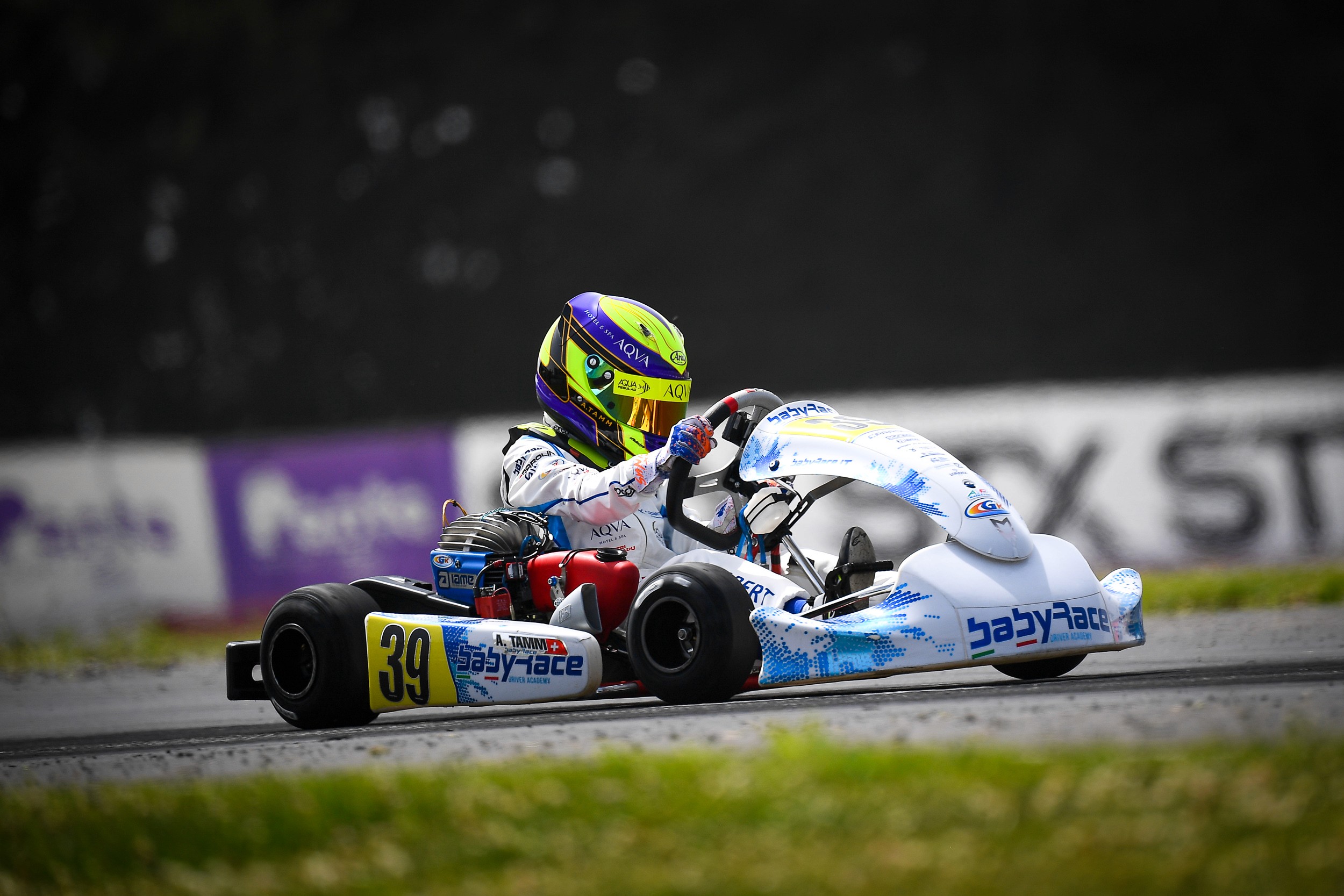

So as promised, here we are at Franciacorta, My onboard video before driving the KZ world championship last year, 2025 it was a really great experience.
But anyways, let’s not talk about that. In this video, I want to show you exactly what I mean by breaking, by feeling, by sensing the speed, by sensing the grip and also just using some memory, like visual memory, rather than just relying on breaking points, which, to be honest, are very good when they are there. I love reference points, don’t get me wrong. But when you don’t have reference points, when you don’t get any reference points, it’s just simply impossible to to use them, right? You can’t invent them. Yeah, there’s some coaches that are going there and gonna place a cone right? They’re gonna place a cone and on the curb, like, if, if we go back to the last corner, for example, they would, you would have a coach, and they would place they would place it. They would place a cone right here, for example, something like here, so that it would signal you where you should break. The problem is that you won’t have that cone in the race. So while it temporarily may be a good, a good, a good technique, it then won’t be, yeah, good for the race. So I don’t think it’s doing you any good. Actually, is going to do more harm than good to to put these kind of reference points that again, may give you a very quick fix, yeah, may make you quick right away in one session or in one day. But then when you go to the race and the cone is not there, you’re going to feel like, lost. What the hell do I do now? Because if you go, for example, here, okay, this is the last corner. Basically, it’s a very heavy breaking zone. It goes uphill a little bit for those ones who know French accorta. And you can see we have a little bit of a reference point here. We have a we have a cone. But again, the cone is not going to be staying there for the race. I promise you, there’s going to be the red line here, there. Let me have a look. There’s like a red line here. Yeah, it was not there. So there’s always, like a cone or something for the red line. But again, they tend to move it. Thing is even early. I don’t know. You can’t really see it anyways. So this is just to say that we don’t have any clear reference points to break in this corner. So the only way you break is just by filling as most karting drivers do, in, like the pro pro karting drivers do, and again, if there was, if we were in Formula car, it would be much easier, in a way, that you would have all your reference points. So you would have, like, as I said, 50 meters board. You would have 100 meters board, you would have 150 meters board, you know, 200 meters board. Okay, so it would be like that, 50 100. And this normally, like, standing a little bit further out is like that, okay, okay, but I’m just giving you an example. So it’s gonna be like that. So it’s gonna be much easier, much easier, in that case, to to get your breaking point right, compared to karting, in a way, but obviously the difficulty of of cars, when driving GTS or Formula cars is that you ride with way more speed than in karting. You know, in speed in karting you you get 250 or sometimes under 60, if you’re driving like tracks like Sarno or or zuira in a shifter karts. So it’s like 161 50, Max in KZ. And in all case you get 141 30 between juniors mini you get 105 or something. Now they have limited it down to like 100 so it’s it’s less speed for the new regulations of 2026, so you get this the max speed you get in a kart, where, in in a big in a Formula Two car, when I raced in Monza, I still remember this. It’s like, you’re or in Spa, you arrive at like, three under, I think maybe a little bit more. I can’t remember the exact number. Even in Sochi with DRS open, you arrive with like, 300 300 maybe five or something. And of course, you know there’s a big difference between 301 150 or 100 so it’s like literally twice, so in 1/10 of a second, right?
The distance that you travel at 150 is half the distance you travel at 300 right?
Now, I don’t know exactly how to calculate with for you, I think it’s quite simple. I mean, it should be like speed multiplied by time, yeah, pretty much should be like that. But you have to basically change speed in from kilometers an hour to meters per second, which you do dividing it by 3.6 so I think you have to do like, yeah, 300 i divided by 3.6 and then the results you get, you basically multiply it by 0.1 and that’s gonna come up with, it’s gonna come up with, with the amount of distance that you travel in that amount of time, basically. So roughly speaking, yeah, it’s gonna be, well, no, yeah, if. If I made the calculation, it’s gonna be actually. Let me check.
8.3 so you see, in 1/10 of a second, you’re gonna travel 8.3 meters, all right?
And if you do this same calculation, and if you do it for 150 so you just have to divide it by two, it’s gonna be 4.1 so, yeah, divided by two, it’s gonna be 4.1 so, yeah, if I go back to this, we’re gonna travel 4.1 meters at 150 at the KZ, whereas here you’re gonna travel 8.2 in a way, so you can, in a blink of an eye, you’re gonna travel more than 8.2 because the blink of An eye. Thing is, is like two tenths blink of a human eye, like, yeah, two tenths or something. So imagine a blink of an eye. You’re gonna make 16 meters in a in a Formula car, whereas in a go kart, in a kz, you’re gonna make 4.1 times two tenths, which means you’re gonna make eight meters or something. So again, it’s still quite a bit, but it’s way manageable. Then, of course, when you’re driving cars, or in cars, you’ve gotta have these reference points. Otherwise it’s gonna be super, super unpredictable for the driver and super hard to be consistent. You know what I mean? It’s gonna be like one time you break here, one time you break there, but it’s it’s very, very, very hard to drive by feeling, to do brake by feeling and by speed in cars, believe me, it’s, it’s, it’s hard. You can do that in the medium speed corners, yes, but in the in the very fast corners with, like, not very slow corners with the heavy braking zone, but where you arrive with a really high top speed, like I said, monsoon canes or, I guess, s Patricia, you arrive through sector one lakh, or you go down to LA source, or the bust of chicane into the last sector. You arrive at 300 you have to downshift, and you have to get the perfect breaking point. You can’t break and come off the brakes, because if you do that, it means to break too early, right? You have to break super late on the edge and stump like, hold the brakes and downshift all the way till the apex trail break into the corner. But anyways, so yeah, this is a clear example to you what it means to to break away feeling okay here at French accorta. We don’t, we don’t have any reference point. And to be honest, I kind of enjoy it like that. You can see, and we go into the first corner, well, second corner, and we can see, again, you don’t have, well, this lap, I pick up a little bit of traffic. Let’s look the lobby for so this lab, you can see. Now here’s what I I would like to tell you some drivers may say, Oh, you have reference points here to the left. I don’t know which kind of reference point you would say, but, but I don’t find any real reference points. What it? What it? What I think, though, is that I can, I can sense the breaking point by my memory, by visual memory went away. So what I did on like a heart like, 1000s of lap in this track, and what I can tell now is that once I turn for that corner, I know and like, it’s muscle memory, basically, I know that as soon as I straighten up the car, that’s pretty much the moment I will hit the brakes, of course, depending on the grip level the tires, are you ever, etc. And then as soon as I’m here, I’m not looking anymore at the breaking reference, like I’m breaking and I’m already pointing myself at the apex. That’s that’s where I’m looking with, with my eyes, and that’s what I’m pointing my car to go towards right. So in this moment, I’m not looking anymore to left. I’m just looking here. But if I go back to this, I know that I want to give like 510, centimeters of gap from the white line here, because I know it just helps me set up a bit more straight for the for the braking. But if you can say, well, this is probably the only breaking reference I have in the whole track, and to be honest, I’m not really looking at it, you know? I know that when I watch my cameras, I can see that I’m breaking there, but I’m not consciously thinking about it and looking at that when I’m driving. You know what I mean? So that’s what I that’s one of the things I’ve noticed. And, yeah, I wanted to, I wanted to be fully honest with you, but I’m not, like, really, as I said, I’m not watching towards this. I’m saying like, I just want to break and open up the line. And to be honest, I happen to be pretty much clipping this, not only breaking in that place, but I’m also, by chance, gonna clip this. And of course, I know that if I’m placing my left wheels here, I probably maybe. Be too much open, and I’m gonna maybe miss the apex. And I know if that I’m a bit too tight, like if I’m here with my left wheel instead of here, I know that I’m gonna be too tight, so I probably won’t carry enough cornering speeding into the into the apex. So I know that it happens to work for me in this track that okay, and it’s maybe a bit of coincidence, maybe it’s I don’t know, but I happen to find myself breaking actually right there.
What does it mean to break by feeling?
I will play the video with the full audio, and I’m actually going to be clipping this white line, and that’s when I basically point myself. This is the probably in the only little reference I have on the track. But again, it’s just gonna come to me with my muscle memory, with my with my subconscious, with my automatic self. Basically, I’m not really thinking about it. It’s just happening. You know, that’s when you feel like that’s when you’re fast, by the way, when you’re driving in a flow, when everything is happening to you and not really forcing that. So that’s, yeah, let’s just play it full speed as promised. Well, not full speed, full audio.
So have you heard that? I’m actually breaking right there at that exactly here I’m breaking. And you can see I’m breaking. I’m already with my hand on the on the gear level to get some quick down shifts and stop quite when I stay with the engine, engine brake. And, yeah. So this isn’t a clear example of just automatic, automatically using some reference points, without me consciously thinking about this.
What are my targets into the corner?
So possibly I am actually kind of looking at this, but I’m not looking at this now, of course, remember I would be looking at this like now. So here’s my sequence, if I’m going to this corner now, it’s a topic for another, for another video, but, but right now I’m like, okay, my first target is here. I know visually that my first target is this little area. That’s my that’s where I want to place my car. I don’t want to place it here. I don’t want to place it there. I want to place you right there. And I want to be like, exactly 10 centimeters on the white line. Why not on the wireline? Because it helps me to get better, a little bit better angle for the for the braking, even though I end up making a little bit less more distance. So that is my first goal. My second goal is the white line that we just said, again, that comes subconsciously. And then my third goal, my target, you know, with my vision, is the apex, that’s it, I don’t know. And then, of course, on the exit, I want to double apex, and I’ll show you in a minute. But these are my targets. So first target, as I said, 10 centimeters from the white line. Second target there, that’s where I want to place my kart perfectly. Here’s my third target. And then, of course, so perfectly on the white line of the apex. And there’s the fourth, basically, which is pretty much, yeah, double apex. And then, of course, on the exit. I’m just already thinking of my next target, which is, which is the next apex, etc. But then let’s go and proceed. I wanted to show you again here, please tell me if you think there is any reference point in this corner, if I can use any reference point to break, because I don’t know about you, but I don’t know about you, but to me, there is none. And so the only way for me to break there is by feeling, by sensing the speed, by just being courageous, with being brave. And just like, the only goal I have is to open up the entry as much as possible, and placing my inside like my outside tire here on the white line. Just like try to use it up, try to use up as much as much space on the entry as possible, to maximize the corner, to make the corner a little bit wider, you know, to get this sort of of line, instead of, like, for example, being here and getting that sort of line, which would give me less mean and exit speed. So that’s my only goal going there. I don’t have any other goal, you know, my goal is just to break as late as possible. And you see I end up using up the whole white line in a nice way, and almost actually, yeah, just dipping the wheel onto the grass. But thankfully I don’t. But yeah, you can see now there starts to be a little bit of references here, even though it’s not a clear references. But you can see the starting video change, but here’s too late. I’ve already braked. I’m already on the brakes. So this is too late. You can’t consider this a reference point. And if you continue and go and let the whole video go, and it’s like, let the whole rest of the lab go here, you okay, you’re almost flat. Then we go into the first part of this corners. Like, I don’t have any reference here. I can go back, but there’s no. Visual reference. Do you see anything? No, just again. It’s just some, maybe some visual references, some visual memory being like, okay, just as soon as I turn off the curb, I start to break. But it’s nothing really that it’s nothing really that I plan for it. It’s, as I said, it comes so passionately. I don’t have any reference points. Same as here, look, I don’t have any reference points here. Either you can see I’m just going with the flow, and I’m just pushing, of course, sensing the grip level. Here’s a fast, flat out corner. And then, of course, we go here again. I don’t have any reference point. My only target is I want to place myself here again. That’s my number one target. I want to place myself on the white line exactly as I’m doing. Then my second target is basically here, the apex right. And then my third target is to stay around the apex, basically almost like in a second double Apex corner. And the fourth target is to, well, yeah, just drive out in the middle of the of the track on the exit to prepare for the next corner. But as you can see, there’s no major there’s no major reference point here either, right? We just discussed this. So it’s like that, and that’s it. I’m in the middle of the track exactly as a plant.
What should karting drivers really do with braking points?
So yeah, here’s a clear explanation with some practical examples of what it means for me to drive breaking on the limit. Sorry, breaking by feeling on the limit and sensing the speed without really consciously thinking, oh, I need to break at that reference point, or I need to break at that other reference point. So, yeah, just be aware of everyone who tells you that you should go break by reference well, what is your breaking point? Or push your breaking point like it’s one thing is to say you have to break three meters later, according to data. Another thing is try, like, find another reference point three meters later. It’s just nonsense, in my opinion, yeah, just yeah, just be careful to to that kind of advice. I believe that karting drivers should always break by feeling, by sensing the speed, of course, unless you have some unbelievably clear and obvious reference points, like you do in Lonato, for example, you have a couple of corners like the braking for the mechanics and the breaking for the chicane, which are very clear. And of course, it’s just obvious, but you know, as in dying kz, most of the rest of the corners will be just you breaking by filling and just filling the grip, filling the speed, and then just pushing, trying to break as late as possible, and being latest on the breaks and everybody else, that’s it. Nothing else.