
If someone has never been on track before, what is literally the first thing they should do?
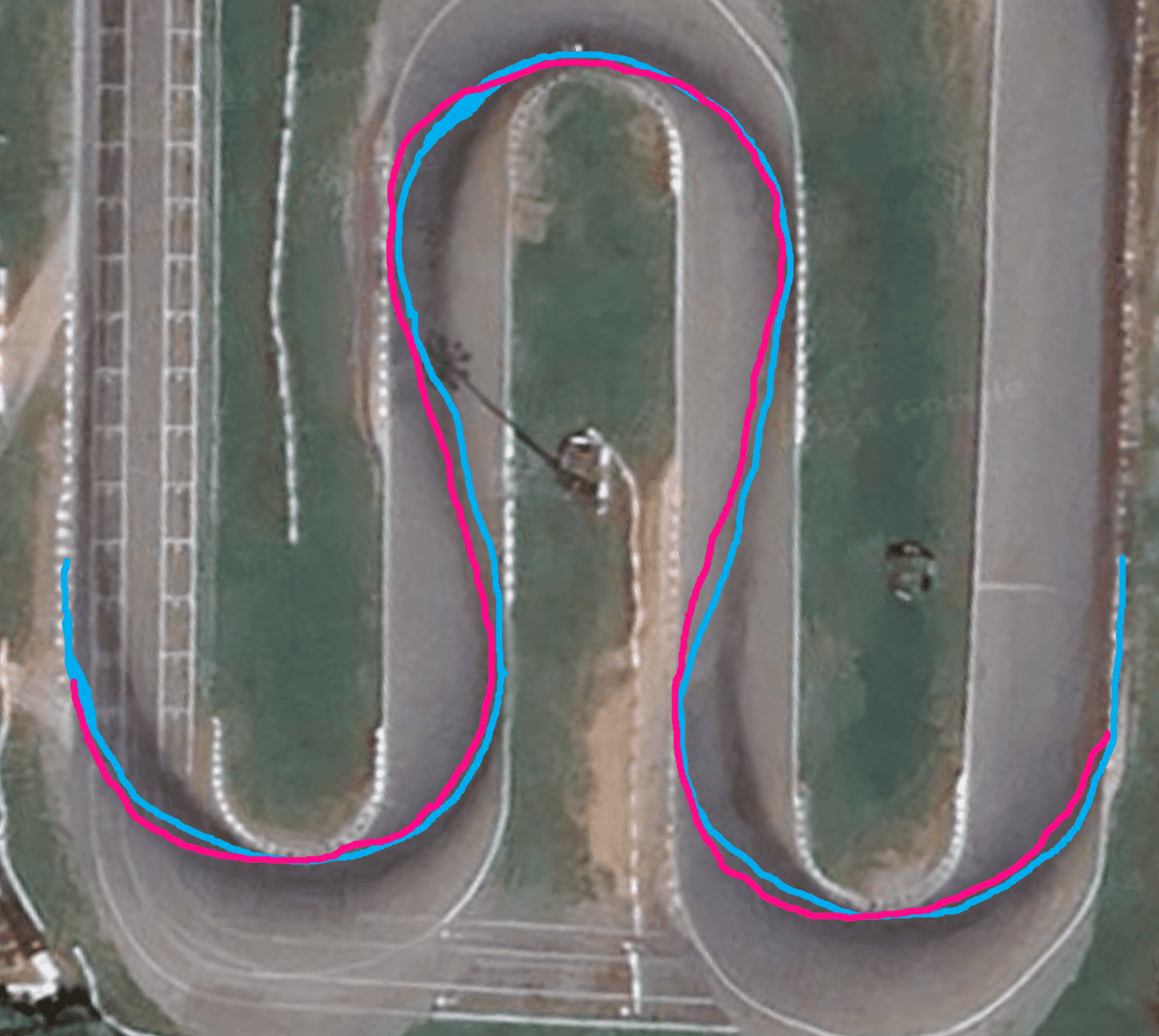
The very first thing they need to do, of course, is to study the track. That is the first priority, understanding track and knowing the layout. So whether corners are to the left or to the right, you need to know the layout in a way. So studying the track layout before going is a very important thing, and most karting facilities should do a quick briefing describing the track layout and the, you know, the pit exit, the pit entry, so that it’s safe for the drivers and so that they have an idea. The best thing would be to watch even some onboard videos, so that the drivers familiarize even quicker. Then the other thing I would suggest is to obviously know very, very well them, the inputs.
So the controls, in a way, brakes on the left foot, throttle on the right foot, steering with your hands. So of course, that seems very basic, but it’s the very first things they should do. And once they familiarize with the track and have an idea of the controls, then they can start to to drive and drive faster and faster.
What mistakes do most beginners make when they first try karting?
Probably the biggest mistakes drivers make is not opening up the lines, so making the corners too tight, which results in lower minimum speeds. Then other mistake is obviously not breaking late and hard, so breaking early and soft. Another calm mistake is going on a throttle too late and obviously losing a lot of speed on the exit of the corners. And another common mistake is drifting. It may sound fast, it may feel fast, but it’s not fast, so you should avoid drifting at all costs if you wish to be fast.
These are pretty much
the the major mistakes the drivers do, and another major mistake is being too overly aggressive with the steering wheel, forgetting that actually the steering wheel of a go kart is very sensitive, unlike a racing car or a road car, so you should not be turning the steering that aggressive. You should be smooth. Smooth is fast.
Should a beginner start with rental karts or immediately buy a racing kart?
I feel that starting with rental karts is always a good decision, even though they can also start with
with a proper racing kart. That’s fine as well.
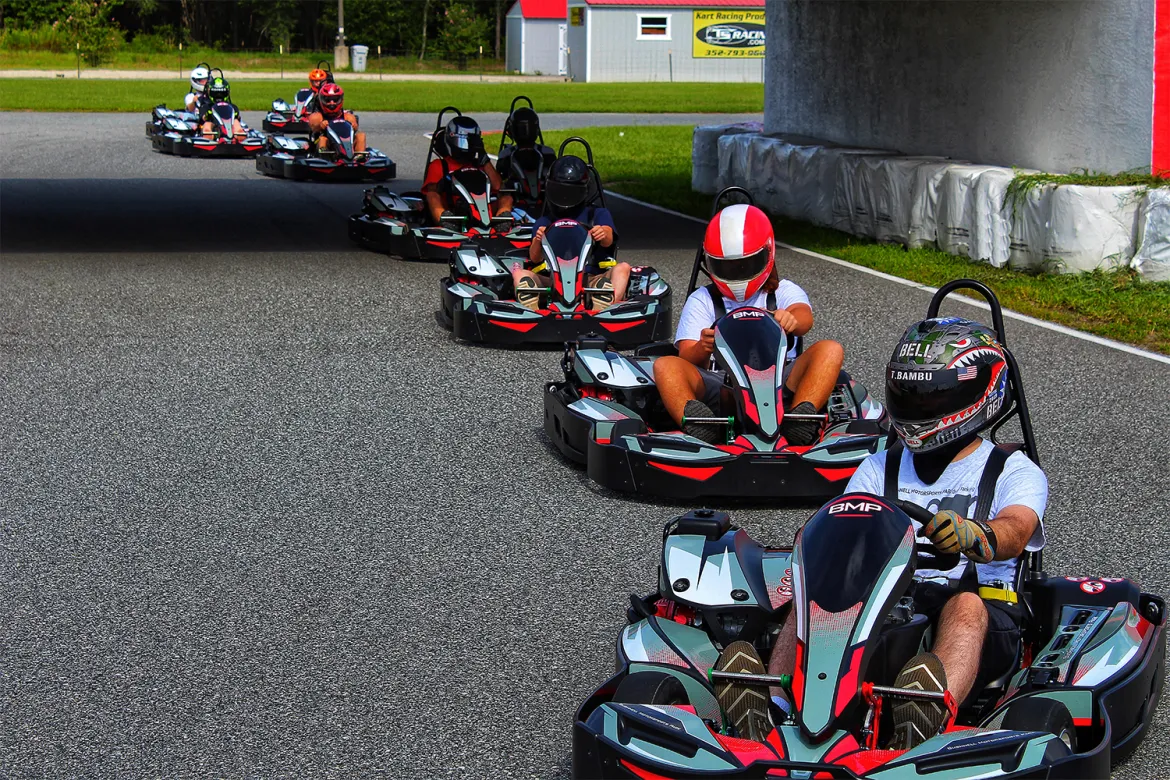
The thing about rental karts is that they are cheaper and they are safer in a way that you can try and test the limits. And even if you crash, basically you have no damages. You don’t get hurt at all, because obviously you have side and front rear protections that prevents you to to have any damage during a collision. So that is obviously a nice thing. And of course, the speed is very low, so it allows you to to test the limits without, you know, getting frayed or again, for safety reason, it may be a lot easier. So I think that’s from that standpoint, it’s a good decision to go with rental karts first, and then once you get good at them, enjoy them. Want to level up. You should definitely make the switch into proper racing karts.
What equipments do you actually need on day one vs later on day one?
If you go to rental kart facility, you don’t have to have any equipment. They’re going to provide everything for you. So there’s nothing for you to worry about. So. Conversely, if you go with your own kart, so with the proper racing kart, owned karting. In that case, you will need to have your helmet, your rib protector, your gloves, your race boots, your race suit, your neck protector, if you use it, even though I don’t believe there’s such a big safety in that, but anyways, lots of drivers still use it. So yeah, drivers have these major safety equipment, and you should do two if you want to go with your own racing kart. But as I said, with rental karts, you don’t need anything. They will all provide it for you.
What does the first proper training day look like?
Our first proper training day looks like
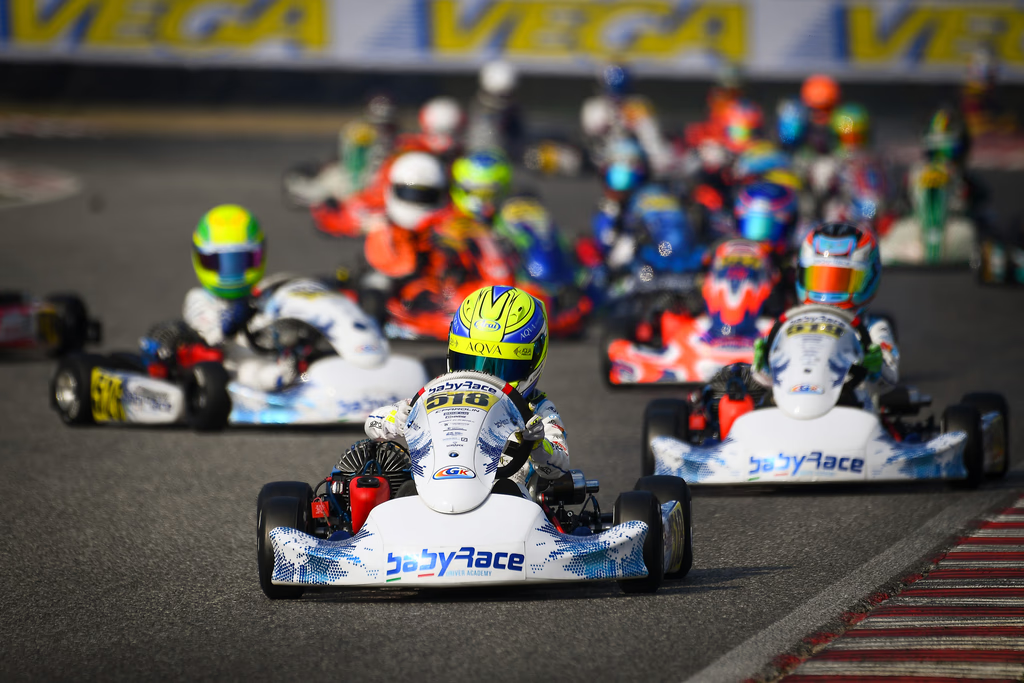
doing laps and laps and laps and laps as in any sport, as in any discipline, you need to spend as much time practicing that specific sport to build me a link around your nerve nervous system. So you really want to build the master memory, which is going to make you drive subconsciously in a way. So that is the first thing you need to do, lots lap, lots and laps. Ideally get coached by somebody that can explain you the right techniques. So you are building the good habits and not the bad habits. And so, yeah, that’s definitely one of the things you’re going to take care in your first proper training day. And that will include also, you know, getting used with overtakes, getting used with racing lines, you know, getting used with with the sense of speed, with reference points, the braking efficiency, the throttle application, the steering inputs, etc. For sure, you will deal with spins. You will deal with off track excursions. You will have to take it step by steps. Most kids start too fast and they get scared. You have to take it step by step, and I feel that is going to give you much more confidence down the road, if you take it step by step.
How do you know when you’re ready for your first race?
Well, I guess you will learn that you’re ready when you start to drive flawlessly, without accidents, without spins, without major mistakes, and when you feel like in control. That’s, I guess, when you’re ready to
to race. And,
yeah, when you’re ready, be ready to race,
you have to
start looking for racing
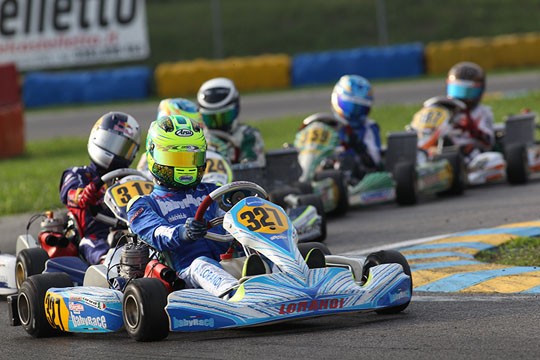
leagues nearby, either for rental karts races or for professional, own karting racing. And it’s gonna come with the feeling. You will feel like the platforms are getting there, the consistency is there. And you cannot wait to be perfect. Of course, the race. Otherwise, only the max verstappens and Michael shoemakers of of the world would would race. So you cannot expect to be perfect, but still, you want to be very well prepared so that you can have more confidence when you drive.
What surprised you most when you started racing?
I feel that the speed
was the most exciting
and surprising thing, of course, you always start with the low power karts, so the speed is not that high, but also the race craft, the side by side contacts, the decision making, all those things are very interesting Things That excited me a lot, and it also surprised me, because you really need to have some in incredible reaction times and decision making skills. So I really feel that that was one of the things. But also, yeah, the consistency and the hard work that you need to actually place and focus, you know, in before the session, before the race, during the race, it’s incredible how much you have to be focused. And I feel that’s one of the things that it surprised me the most.
What would you do differently if you started again today?
So for.
Drivers starting today, in 2026
I would recommend to spend
a lot of time getting fast first, and understanding as much as you can how to get faster by reading telemetry analysis. Of course, that’s not really provided if you do a rental kart thing, but you can still do it in some ways, but in general, like doing onboard analysis with with the video. Onboard camera could be a GoPro. Could be Insta 360 you know, watching your onboard videos, reviewing your data, watching off of off track footage, all these things we’re going to give you more confidence into improving your lap times, and once your pace and lap times are faster, you will definitely have a higher chance of winning. And also, another thing, I would definitely train harder physically, even though I did a lot back in the days, but I think that would be one of the things that I would double down even more if I would start again. And of course, one of the things I would have done is get some proper coaching, because you can really shortcut your learning curve by getting coached by a pro rather than trying to do it all yourself. So I think that is definitely one of the things you should do, either remote coaching, online or, you know, in person coaching, but it’s difficult to get a proper in person coach, like because, you know, you don’t have to get just a coach. You need to get a very good coach. So in that case, if you can’t find better to rely on a remote, online coach.
What is the simplest roadmap from zero to first race weekend?
You so, you know, the major thing you have to keep in mind is that you will need to pick up the speed to increase your performance in lap times, pick up the pace, basically. And so the first thing I would do is just, yeah, do laps. Laps, laps, laps. Get coached. Do laps. Watch all like, take some online courses on driving lines, on braking efficiency, on driving techniques. You know, you need to really understand the theory behind how how to go fast, and then apply it in practice on the racetrack. Once you put the theory combined with practice, you know, and do lots of laps and laps and laps, and then study the track map, you know, the layout getting coached by pro drivers. Once you do that, and you know, you’re able to get also really good equipment, then, of course, it’s, it’s going to be much, much easier to to to take with confidence your first race weekend. Of course, I don’t expect you to win. I don’t expect you to be perfect. Nobody won probably their first race weekend, very, very, very, very hard depends, of course, on on the level of competition you took. But don’t expect to win right away. Expect to just, you know, do your best, but from then onwards, is going to be
you know, more and more
fulfilling for sure, and the you’re gonna get faster and faster you’re gonna get better and better results. So yeah, the first race is always the most traumatic in a way, but try to enjoy it, try to pick up the pace for the next races, and try to learn all the time how to get faster for the next races.
So I hope this was
very useful beginner guide on how to get started with karting the step by step. I feel that you can definitely increase your chances of success by applying these tips as I did, but I wish I knew these things, because I didn’t really apply all of those. Of course, after 20 plus years of experience in this in this karting world, I now have amassed so much insights that I wish I had already before. So yeah, the shortest way to cut the learning curve is to get a coach and to, yeah, to receive professional tips and suggestions, and that’s what you’re doing here. And you can do it even more by taking out all on courses, by signing up to our six months membership and our online, remote video analysis. But again, the major thing you need to do is just go out there, practice, practice, practice, as it’s in any
sport. So hope that was
helpful enough. I’ll see you in the track. Bye.