What It Takes to Become a Race Car Driver: Steps, Ages, Cost
The path after karting, from Formula 4 to F1, told by someone who went karting to Formula 2 himself. The steps, the ages, what a season costs and w…

- The steps: karting, then Formula 4, Formula Regional, Formula 3, Formula 2, and if everything is aligned properly, F1.
- The age: kids move to single seaters at 14, maybe 15. I was racing in Formula 3 at 16.
- The cost: some F3 teams ask for like 1 million € per season, and the top ones like 2 million.
- What decides it: results, yes. But also the funding, the team you can afford, how many days you test and who is managing you.
- F1 is one goal of many: GT3 and endurance can make you a professional driver too, and the seats cost much less.
- What are the steps to become a race car driver?
- What age do you move from karting to cars?
- What changes when you go from a kart to a single seater?
- How much does it cost to become an F1 driver?
- What actually decides who gets into F1?
- Do you need an F1 junior academy?
- What is a super licence and how many points do you need?
- Do you have to win in karting to make it?
- How do you get into racing without rich parents?
- Can you be a professional race car driver without F1?
- Frequently asked questions
I went from karting to Formula 2. I didn’t make it to F1.
So I can tell you how the path looks from the inside, and where it stopped for me. I won the world championship in karting in 2013, I moved to single seaters at the end of 2014, and I raced in Formula 3, GP3 and Formula 2. I was beating in karting some of the drivers who are in F1 today. They made it. I didn’t. And I have no regrets, but I want you to know why that happens before you spend the money.
What are the steps to become a race car driver?
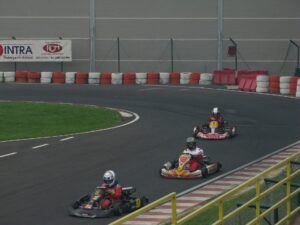
It starts in karting. I mean, almost everybody starts there, and I wrote a separate guide on the karting ladder from 6 to 16, so I will not repeat the categories here.
Then you transition into single seaters. The next step would be Formula 4, and then Formula Regional, and then Formula 3, and then Formula 2. And if everything is aligned properly, you won races, you won championships, you have the funding, then you can get to F1.
| Step | What I can tell you about it |
|---|---|
| Karting | Mini 60 from 8 to 12, Juniors from 12 to 14, then Seniors or shifters |
| Formula 4 | The first car. The common sense these days is to move at 16 or even earlier |
| Formula Regional | The step between F4 and F3 |
| Formula 3 | I was there at 16. Some teams ask for like 1 million € per season |
| Formula 2 | The last step before F1. A season is like 2.5 million |
| Formula 1 | Not a prize for winning the steps below. I explain why further down |
Each step along the way gets more expensive. So your step ups have to be justified by good results and race wins, unless you’ve got access to unlimited resources.
If you have not started yet, read how to start karting step by step first. Everything below is about what comes after.
What age do you move from karting to cars?
Nowadays kids move to single seaters at 14, maybe 15, if they do move up. Many don’t. Some keep karting as a hobby, some do it professionally, and that’s totally fine.
The path I describe in my book is one year in Seniors, then a year in shifters at 15 or 16, and then Formula 4. But the common sense these days is to go to F4 even earlier and skip that last year in shifters.
For me it went like this. I moved up to single seaters at the end of 2014. And at 16 years old, in 2015, I did my first Formula 3 street circuit race at Pau, with Van Amersfoort Racing, as teammate of Charles Leclerc.
Is earlier better? I don’t think so. I think skipping shifters is a pity. Max Verstappen did two full seasons in shifters, and Charles did about one and a half, before they went to cars. In a shifter you learn the gears, the front brakes and the standing starts while a mistake is still cheap. I explain all of that in the karting ladder guide.
And listen, you shouldn’t go in single seaters just because everybody’s doing it. You need to really have the sponsors or the financial backing from your family.
What changes when you go from a kart to a single seater?
A lot. To be honest the biggest jump I ever felt was inside karting, from 60 Mini to Juniors. But karting to formula is still a pretty large step.
In a single seater you need to learn the aerodynamics. You need to learn to trail brake very deep into the corner. You sit very low and you see almost nothing. And in F3 and F2 you don’t have power steering as in F1, so the steering feels pretty heavy in the high speed corners.
But the thing that changes the most is what a mistake costs.
In karting you can push over the limit and nothing happens. You end up in the grass, worst case in the wall. Maximum cost? Maybe 1,000 € for a crash.
At Pau, in my first Formula 3 street race, I knew a small mistake could cost our family even up to €100k in the worst cases. It was just you, the car, the others and the walls. And when you drive a Formula 3 or Formula 2 car at 280 km/h and more, for someone with a very tight budget a €100 to €150k crash bill can be the difference between racing the next season and having to stop forever. It’s not like sponsors will cover those extra costs.
So you drive with an invisible handbrake. That was me in some races, short of sponsors and careful not to crash. And a driver with a handbrake is not a fast driver.
That same year at Macau I finished P7 out of 28 in my first FIA F3 World Cup. In free practice I was more than 2 seconds off. In the race my fastest lap was about 2 tenths from the winner’s. Same car. I just did it more times.
How much does it cost to become an F1 driver?
I can only give you the numbers I know, and they are rough. I say them the way I say them on my podcast.
Karting first. If you race internationally in Juniors, the minimum budget per season is like a hundred thousand euros, and that doesn’t get you in a top team. The full breakdown is in how much karting costs per year.
Then the cars. Some F3 teams ask for like 1 million € per season, and the top ones like 2 million. A Formula 2 season is like 2.5 million. Right now I can’t even afford a testing day in a Formula 2 car, which is about 100, 150,000 euro or something like that.
Who pays for all of this? The family. I mean, yes, you can find sponsorships. But realistically there always needs to be financial support from the family until Formula 3, at least. If you do a really good job with the results, then the sponsors come and the teams help you out.
My dad was selling some of his real estate to fund my career. And it’s not like we had so many houses to sell. We only had a few apartments, and once they were sold, I was done.
So here is my honest advice to a parent. If you want your kid to do this professionally and you have less than two million dollars available, don’t aim at Formula 1. Aim at something much more tangible. I come back to that at the end.
What actually decides who gets into F1?
You would like me to say talent. And talent matters, of course. But F1 is not really just a sport. It’s more of a business.
I raced Lando Norris for two seasons in karting and I was in front more often than he was. You can read the whole rivalry race by race. He made it to F1. I didn’t. So what happened after karting?
Your financial strategy defines the team you drive for in F4, F3 and F2. You can be in a top team, or in a team that costs half the price of a top team. In single seaters the difference from team to team is big, because of the engineers and the equipment. In F3 I would go from winning a race to barely fighting for the top 10 the next weekend.
It also defines how much you test. Some drivers do a hundred days of testing leading up to their first formula car race. I had five days, ten maximum.
And then there is the management. Who is taking the decisions on the team, on the category, on the timing? Choosing the team is the job of the father or the manager. It is not the job of the driver.
The way I see it you need three things all at the maximum, the coaching, the track time and the equipment. If one of the three is missing, it doesn’t work, even if your talent is 10 out of 10.
And at the end of the day, if you want to get to F1 you need to win in the junior formula series. Which was not the case for me.
Do you need an F1 junior academy?
Today it helps a lot. Kids are getting backed by F1 academies at 11, or even 10 years old.
Back when I was in karting it wasn’t like that. Formula Scout named me as the driver to watch, and I got no calls from Ferrari, Mercedes or Red Bull. Junior academy programs for karting drivers were basically not there yet.
Later, when I was already in formula cars, I was approached by academies where you had to pay to get in. I didn’t understand the point.
And this is the part that people don’t like to hear. We’ve seen drivers getting to Formula 1 without having won much in Formula 2 or Formula 3, because they were backed by an academy. And drivers who won championships in F3 and F2 sometimes don’t get the seat. It’s a bit sad. It’s a bit unfair. But what can you do?
So if your kid is winning international races in karting, that is when the scouts notice. Use those years.
What is a super licence and how many points do you need?
You can’t race in F1 without the FIA super licence. The basic rule is that a driver needs to be at least 18 years old, and needs at least 40 points collected over the previous three seasons. The points come from the final championship positions in the series on the FIA list. The full text is in Appendix L of the International Sporting Code, on the FIA regulations page.
Why should a karting parent care about this already? Because it tells you which championship to pick later.
I mean, look at some of the drivers in F1 now. A few of them didn’t win that much in karting. But the moment they moved into single seaters they took the right decisions on the team, on the category, on the financial backing and on the super licence points. That is what I was talking about with the management.
Do you have to win in karting to make it?
Karting is the springboard. But it’s not the most defining period.
I’ve seen way too many drivers dominating in 60 Mini and then amounting to nothing, never even reaching single seaters. And I’ve seen drivers who were not that successful in karting and are in Formula 1 today. If you want the other side of it, here are the F1 drivers who started their careers in karting.
What counts more is the consistency in the last categories before single seaters. Nobody is going to check what your kid did in Mini.
But don’t take this the wrong way. Results are super important, even if you have unlimited budget. The kid needs to know he has to earn the next step.
I’m seeing parents who put the kid in a Formula 4 car when he is still in 60 Mini, at 10 or 11 years old. I think it’s insane. What does the kid understand from that? That dad is going to put him in F4 even if he doesn’t win. At that age he should think about winning races in Mini.
How do you get into racing without rich parents?
It’s hard. I’m not going to lie to you. It’s hard to make it work in racing unless you have large pockets.
The way through is the sponsors. And how do you get sponsors today? You become a brand. You shoot videos, you create content, you build a following outside the track. So when you go and talk to a company and you pitch your budget, they are much more likely to say yes. Sponsorship is pure oxygen for a racing career.
So start your sponsorship strategy and your financial strategy right away. Social media, building a brand, networking. Don’t wait until Formula 4 to think about it.
And in karting, spend the money where it makes the driver faster. If I had 100,000 euros for a season, I would put about 60 percent of it in testing days with a proper coach, and I would handpick four or five races where the top teams and the academies are watching. If you’re exceptionally fast, the teams give you a better deal, because every team needs one really good driver.
If the budget is tight from day one, I wrote about the cheapest way to start kart racing.
Can you be a professional race car driver without F1?
Yes.
There’s not just F1, by the way. There are a lot of series that can turn you into a professional driver. IndyCar is one goal. And then GT3, or the prototypes and endurance like WEC and IMSA, where you can get seats at a much lower rate than driving Formula 3 and Formula 2.
Don’t make the same mistake that me and my father did. We tried to give it everything to make it to F1, and we spent all our budget all the way to F2. Then we had literally no budget left to even try and compete in GTs. I did half a season in GT. But to become a pro and not pay anymore to race, normally you have to do at least one season where you pay full price. Then, if you’re good enough, a manufacturer picks you up as an official driver.
So plan the money for that season before you spend it all on the dream.
And whatever the goal is, the driving has to be there. That part you build in karting.
- The karting part of the path: the karting ladder from 6 to 16.
- The money in karting: how much karting costs per year.
- All my free guides: the guides hub and the beginner guides.
- If you want me to look at your driving: onboard reviews.
- If you want to work with me for six months: the 6 months transformation.
Frequently asked questions
How do you become a race car driver?
You start in karting, then you move to single seaters. The steps are Formula 4, Formula Regional, Formula 3 and Formula 2, and then F1 if the results and the funding are there. Each step gets more expensive, so the results have to justify the step up.
What age do drivers move from karting to Formula 4?
Nowadays kids move to single seaters at 14, maybe 15. The older path was a year in shifters at 15 or 16 and then Formula 4. I moved to single seaters at the end of 2014 and I was racing in Formula 3 at 16.
How much does a Formula 3 season cost?
From what I know, some F3 teams ask for like 1 million € per season and the top ones like 2 million. A Formula 2 season is like 2.5 million. These are my rough numbers, they are not a price list.
Do you need to win in karting to get to F1?
Karting is the springboard, but it’s not the most defining period. Some drivers in F1 today didn’t win that much in karting. What you can’t skip is winning in the junior formula series, and having the funding and the right team around you.
Can you be a professional driver without reaching F1?
Yes. There’s not just F1. In GT3 and in endurance like WEC and IMSA the seats cost much less than Formula 3 and Formula 2, and they can make you a professional driver. Normally you pay full price for at least one season before a manufacturer picks you up.
Send your onboard footage. Alessio reviews it corner-by-corner and tells you exactly what's costing you time, and how to fix it. Back within 48 hours.
Get My Onboard Reviewed → Reviewed personally by a CIK FIA World Champion, never an assistant.I promise I'll not spam you with repurposed shitty AI content but real experiences that only I, Alessio Lorandi, experienced. Written in my funny English-Italian tone of voice 😂
Alessio Lorandi is the former CIK FIA World Junior Champion, winning against Lando Norris in 2013 & F3 multiple race winner. He's helped 200+ karting drivers worldwide get faster & win WSK titles with BabyRace Driver Academy & now through Senndit, his online karting coaching platform.