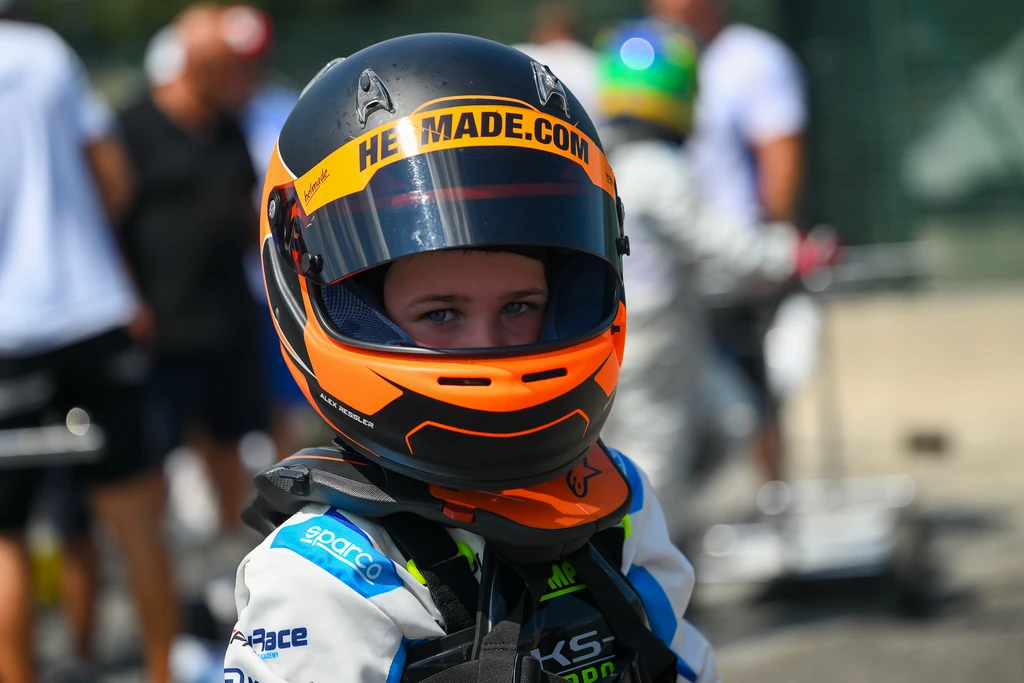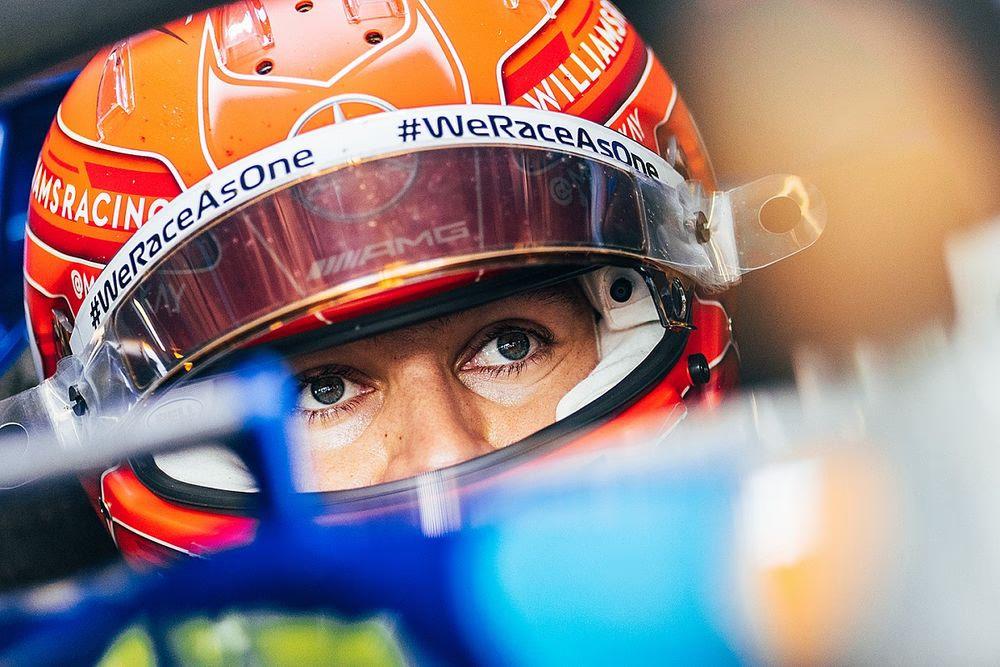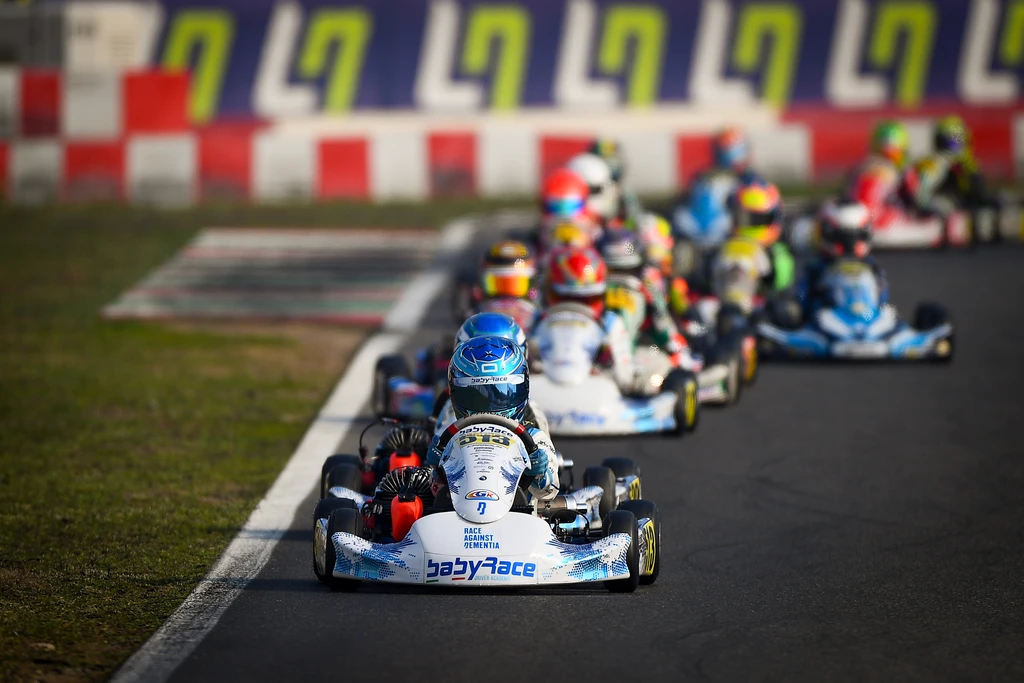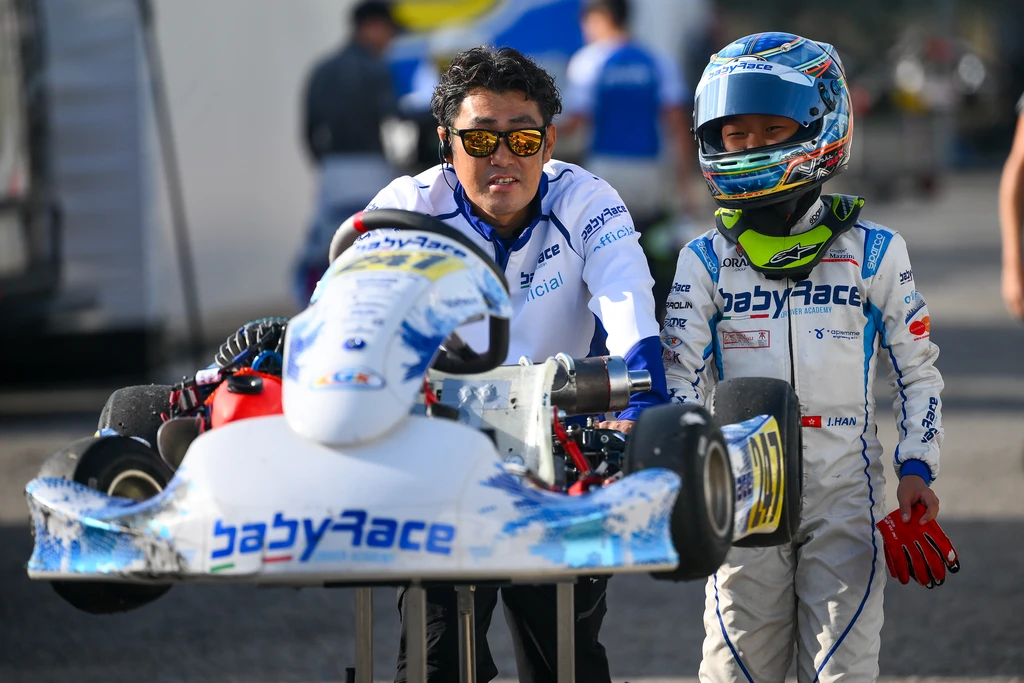

Well, let’s be honest. I mean, racing can be incredibly stressful, right, especially before an important race or during intense fights on the track, and many drivers really try to push their nerves away. But actually, one of the best ways to deal with your nerves and deal with pressure is to actually control your breathing by doing some breathing exercises using your diaphragm, as I’ll explain in this guide. In fact, it’s actually been scientifically proven that controlling your breathing, so doing some breathing exercises can actually reduce your cortisol level, which is basically the stress hormone, and therefore, if you reduce your cortisol level, you will feel less stress. You will be more relaxed. And when you need to drive at peak performance, controlling stress and making sure your cortisol level is as low as possible is definitely a important thing, and it’s a competitive advantage compared to all those drivers that are not able to deal with stress, you’ll be able to be more focused, take quicker decisions, and your reaction times are also going to be super sharp. So in this guide, I’m going to answer to some of the most frequently asked questions about the topic, especially, how to deal with pressure and nerves before racing. I mean, I’ve experienced that state many times in my career, and now, after 20 plus years involved between karting and Formula cars, I can tell that if you have a proper strategy, I’m telling you, you’re gonna have a big difference in performance compared to all the competitors who are not taking care of that. And I generally feel that, yes, you know, some drivers are going to react in a worse way under stress, other drivers are going to react just naturally in a better way, because maybe, like as a character trait, there are more relaxed. But I believe that at the end of the day, when the moment comes to perform, for example, you are starting p1 at this at the final you need to really control your stress levels. And I feel like even icemans like himyrikonen or Max verstappens are still going to feel that kind of pressure a little bit. But for sure, they have been mastered that stressful state, and they were able to get much better results in their careers compared to other drivers that were not able to and at the end of the day, let’s be honest, when you are sitting on the grid, the work from your mechanics or your engineers has been done and it’s only down on you. I mean, it’s only you that have to perform. So being able to deal with stress and really not cracking under pressure is a fundamental skill that you’ll have to develop, and in this guide, I believe I can really help you in a way to achieve this outcome through some breathing exercises.
So why do drivers actually feel stressed before the race?
Well, I feel that the stress comes from the tension that builds up because you want to do well, you know, because you don’t want to let anybody down, because, you know, you want to prove everybody wrong that maybe have been doubt, doubting you in the past, and maybe you want to bounce back from a previous race that wasn’t ideal. You know, there can be many, many factors that are going to create stress on you. Perhaps you need to perform very well because you need to attract sponsors for the upcoming season, or maybe you need to try to, you know, get some Formula One scouts interested in you and try to sign you up so again, to support you into your next career stage. So there can be many different reasons why drivers can get stressed. To be honest, I was able to deal with stress pretty well in karting because I knew I didn’t have anything to lose. I was always driving as if it was a testing day. To be honest, I was not putting too much pressure on myself. Even when I was fighting for the world championship a couple of times, I was still able to perform really well under pressure, whereas when I got up to Formula cars, it was a bit difficult because I knew that it was very, very hard to continue unless I was able to win and pick up sponsorships, etc. So in that case, it was quite hard because I knew I was like, you know, if I do not perform, even though my car most of the times was not ideal. I mean, I’m not trying to take excuses, but it was actually the reality. I in the Formula cars years I did. I was never in the best team. But anyways, besides that, I just feel like, yeah, I was short of sponsors, and I actually was trying to be very careful to not crush the car. And so in that case, yeah, I mean, that actually kind of acted a bit as a handbrake for me, and I noticed that. But thankfully in karting, I mean, the stakes were very low. I mean, I knew that I wouldn’t have changed much if I won or not. And I was very, very confident back then. So, I mean, that case, I was able to to not even create pressure on myself in the first place. And to be honest, my my dad was not I. Too stressful. I mean, you did sometimes, but one of the best ways I was able to cope with stress was just to simply tell myself, listen, Alessio, just go for it. I mean, it’s not gonna change your career. It’s not gonna change your life. And besides that, I would tell people around me when they were like, Come on, go in. Go get p1 and stuff like that, I would just reply to them with like, you know, I’m just gonna give my best, and then we’ll see what happens. But anyways, I feel like lots of drivers have different reason to be stressed, and I can’t address all of those for you right now, in this in this guide, but I feel that, yeah, I mean, at the end of the day, whatever you are feeling stressed about, the goal is that we are able to control it.
So how does breathing actually affect focus and reaction times?
You may ask. I mean, it’s been scientifically proven that breathing exercises, as well as visualization and, you know, meditation, they really help to reduce your cortisol levels and therefore the stress hormones, they help lower your heart rate, which again, reduces your level of anxiety. They kind of make you a little bit less alert. But to be honest, it’s, it’s a good thing, because you don’t want to be too alert. You know, there’s a certain threshold you want to be, right in the mid it’s called the activation sweet spot. You know, you don’t want to be too sleepy so that you’re not activated at all. But you also don’t want to be too psyched, you know, I don’t want to be like over activated, because if you drive like that, you’re probably going to be crashing in the first corner, because you’re going to be just like driving in a desperate way.
So what breathing exercises can help racing drivers call their nerves?
One of the best exercises I suggest you to do, which I do most of the times, is to simply do it a so called Box breathing exercise. So it goes like that. You know you are going to breathe in for a set amount of time. I do it, for example, for five seconds. But you can also do for 10 seconds. If you want to do it more extreme, but for a more beginner friendly exercise, you can start by doing it five seconds. So five seconds breathing in, then holding five seconds with your lungs extended, and then five seconds breathing out, and then five seconds staying without air in your lungs. And then do it again. So the whole cycle includes 20 seconds of five seconds breathing in five seconds, staying with with the oxygen inside, and then five seconds breathing out, and five seconds staying and holding and then starting the cycle again. So in a minute, you’re going to be doing three breathing cycles. And believe me, compared to the average breathing rate of about like 10 to 12 breaths, in an hour, you are going to be doing a lot less, which, again, it’s going to reduce your art rate, it’s going to reduce your cortisol level, and scientifically, going to give you an event. Now, if you want to geek out on it, I mean, there’s tons of different breathing exercises you could be doing. I mean, you can search them on Google or on YouTube, but I guess I don’t want to give you too much information, like that box breathing exercise, I think is pretty good. And on top of that, you can do another one, which is very, very simple, instead of doing the box breathing. So instead of doing 555, and five, you can just do 10 seconds breathing in, and then 10 seconds breathing out, without the pause after the breathe in, or the pause after the breathe out. So yeah, it’s going to be a bit more simple, but still going to be a 22nd cycle and just three cycles per minute, which, again, it’s going to make it very, very good for your cortisol levels and your heart rate and your heart rate variability.
Can breathing slow down and overactive mind before a race.
Yes, you bet it. I mean, it’s pretty much the reason why we’re doing it right. So we really want to try to block out any kind of stressful thoughts, stressful scenario, of course. I mean, kids are going to feel stress, depending on whether you know, the circumstances are not very friendly to them. For example, if they’re not in a very friendly environment, if perhaps they have obstructive parents that maybe are not helping them, you know, succeed in a way that they can make them feel safe, make them feel at peace. But of course, at the same time the parents, I understand that it’s not an easy job from them, you know, because they’ll feel like, Oh, I gotta do something if my kid is distracted, so I kind of have to get him to be back to focus. But at some point, yes, it kind of crosses the line, and then they start to become, I mean, too protective and be too stressful to the kid. So it’s a very thin line. It’s a very, very thin line where, yeah, if you are not
being careful, you’re actually going to end up dumping massive amount of stress and pressure on the kid, which, yes, you may feel like that’s going to perform well, that’s going to help him. But in reality. No, it’s not, especially for younger kids. I mean, I think for younger kids like maybe the coach, maybe the mechanic, could put a bit of pressure, but the parents, I mean, the parents should always be loving figures, and if they notice, I mean, the kids notice that the parents are not going to love them, are not going to love them anymore. If they’re not performing well, then they’re going to have fear of, you know, doing wrong, fear of doing of doing bad. And that’s going to automatically kind of make them panic, and make them afraid of of doing mistakes, which, of course, is a complete handbrake for performances.
How do professional athletes use breathing techniques to achieve peak performance.
I’ve read many sports biographies as well as sports performance books, and I’ve came to realize that there’s a pattern. I mean, most of them are visualizing doing some meditation, but also doing breathing exercises, which is what we’re talking about here. They may all have slightly different technique. They may all have a slightly different breathing exercise, but at the end of the day, the only thing that matter is that they pretty much all do it. And why do they do it? Well, they do it again for the same reason, you know, because they have been preparing for that race, physically, mentally, and they know that, you know, that single race may define the whole season, you know, maybe a world championship, or like the Olympics. And if they are not in the perfect peak state of mind, they are going to, you know, waste all the effort they have spent all those years so being able to center yourself and being able to really get you in the optimal performance window, it’s going to be massively important to any athlete. It’s not just for racing driver and so, yeah, they really, they really do that kind of thing, you know, in the locker rooms, whether for, you know, like soccer players or for like tennis players. They they try to do some visualization exercises, some breathing, some mindfulness, even under the shower. That I’ve heard they do those kind of things and before going to bed. I mean, I used to do a lot before going to bed to try to relax myself, because, you know, it’s very important to have a very good night of sleep. And if you’re not able to sleep because you’re stressed, because you are trying to, you know, anticipate upcoming race the next day, and you’re a bit like worried and anxiety, of course, you’re going to not perform very well, and you’re not going to have a great night of sleep, and then automatically, you’re going to have a bad result the next day. So yeah, there’s many different instances during a, for example, race week that you will you will benefit from doing breathing exercises. I feel that anytime you’re able to lower down the stress level is going to be a great advantage to your overall performance at the end, even when I’m in the car, for example, you can see that also from my pass races, from the you know, TV footage, you could see that I would close my eyes, have the visor almost fully closed, and just like, You know, breathe in and, just like, try to do a lot of breathing exercises. And try to also visualize the perfect lap in my head, and visualize the start, if it was the race, I would try to visualize myself, you know, taking the right decisions, and try to, you know, deal with different scenarios based on different outcomes. So I just felt like that would give me less stress. That would give me more preparation, preparation, and more confidence overall. But again, that comes down to practice, and that comes down to personal preferences. But again, also when I was in the in the kart, I would like before stepping into the truck, you know, I was already in the kart. But like, you know, when you’re waiting for the green flag, you know, five minutes before. You know, you may have to get into the car, like, five minutes before, and you have to sit in your in your seat, and you instead of, like, thinking about Minecraft games or about, like, what you’re gonna eat at dinner, you know, it’s great to just try to channel your attention to your breathing, for example. And if you’re channeling your attention to breathing, I automatically your brain is not going to make you think at other negative things, for example, like worries, or am I going to crash, or am I going to get a bad result, or are my parents going to be mad at me? Or am I going to lose the sponsors, so stuff like that. So if you’re able to distract your mind by just focusing yourself on your breathe, then you’re going to reduce your cortisol level, reduce your heart rate, and you’re going to find yourself in the sweet spot when the moment comes to drive, and I feel like you’re going to have the best performance of all. But again, I think it’s a trainable skill. It’s going to come automatic after you do it for a while. It’s going to come almost subconsciously. But to get started, you know, as in any habit, you need to make sure you stick to this at the beginning. You have to kind of force yourself doing that, and then you’ll see that the benefits are going to outweigh the inertia and procrastination. So you’ll see that you’re going to, yeah, just naturally do it, because you’ll feel like you’re going to have great benefits out of it, which is going. Just be a natural thing to keep doing it again and again.
Can breathing techniques improve decision making as well?
I think so, you know, especially if you couple breathing exercises together with visualization. You know, if you’re able to couple the two and try to, you know, breathe in and try to, meanwhile, visualize you doing the perfect lap. Visualize the you know, the decision you may take at the start, whether you go on the inside, whether you go on the outside, whether you overtake, whether you attack. Of course, there’s millions of different possibilities of outcomes, but you know that there are going to be four or five more probable outcomes that are going to come out of every situation, whether you’re going to get to the inside or outside, etc. So I feel Yes, definitely, if you are doing visualization exercises coupled with breathing exercises, you’re going to be doing better decision making at the end of the day. A stressed mind does not take great decisions under stressed whereas a relaxed mind is more confident and takes better decision at the end of the day. Again, it’s really a chemical thing. You know, you can definitely feel your your cortisol reducing, and of course, we would have to measure it in that moment, but you need to just be aware of that once you are visualizing well, but most importantly, when you’re doing a breathing exercise and slowing down your breath, you are actually reducing your cortisol level, which is a massive, massive benefit compared to all those other drivers. And then, you know, when you hear the quote on saying, Oh, he cracked under pressure. Well, you know why cracks under pressure? Well, most of the time is because he’s cortisol levels are so high that is kind of like brain fog, and is just like going to be panicking. But again, the goal is that you’re not panicking. And why you panic while you panic because you are stressed. So if you’re able to reduce that stress upfront before getting into the kart, because, I mean, it’s it would be foolish to say, oh, Alessio, you should be doing the
breathing exercise while driving. You know, while going through turn one, you should try to breathe and try to do the box breathing like, I mean, that’s kind of a bullshit, right? You cannot expect to say this or to expect to doing that. So I feel that, of course, the only thing you can do is before getting in the kart. Yes, I feel like also being able to strategically breathe down the straights. I mean, it’s something you do unconsciously. And even after 20 years of driving, I still struggle to I still feel like I go in apnea. Most of the times. I feel like I’m just driving almost without breathing. But now I think I am much better that as I as I was when I was a little So, for example, now when I’m going down the straights, I put my head down, and when I put my head down, I kind of automatically take a big, deep breath. And of course, I cannot tell exactly when I breathe, but like, but I feel like that’s when I breathe. I mean, definitely not when I’m on the brakes or when I’m going through a flat out high G corner. So yeah, I feel that again, being able to breathe strategically, also during the the specific race, you know, it’s going to keep yourself in a better mindset and less panicking.
Can breathing actually affect physical tension in the body?
Yes, I mean especially the lack of breathing. I mean, you will probably not believe me, but trust me, when you’re driving, you are most of the times going in apnea, which is, again, quite crazy, think about it, but you really need a lot of air. I mean, you need a lot of oxygen going through your body, especially because you’re gonna be driving at, you know, especially faster karts, or like GT or formula karts, where you’re going to be having 161 under 70, you know, beats per minute in terms of heart rate. And when you’re going at such high heart rate, because of the adrenaline, because of the physical effort, and because of the mental effort required, you need to breathe in oxygen. Otherwise you’re going to go into hypoxia, which is a state of low oxygen and high CO two, which, of course, is not a good state to be in. You’re going to lose lucidity, you’re going to become more brain fog, and you’re going to, again, take bad decisions. And of course, it’s going to affect tension. You know, the less you breathe, the more physical tension you’ll build up. So I just really feel that, yeah, I mean, it’s hard to track, but yes, physical tension is definitely going to be reduced if you’re able to properly breathe and relax your self before getting in the kart, or even, well, during the five minutes before the green flag, you know when you’re sitting in the kart ready to go, that’s the moment you really need to try to relax yourself.
How long should young drivers practice breathing exercises during a race day?
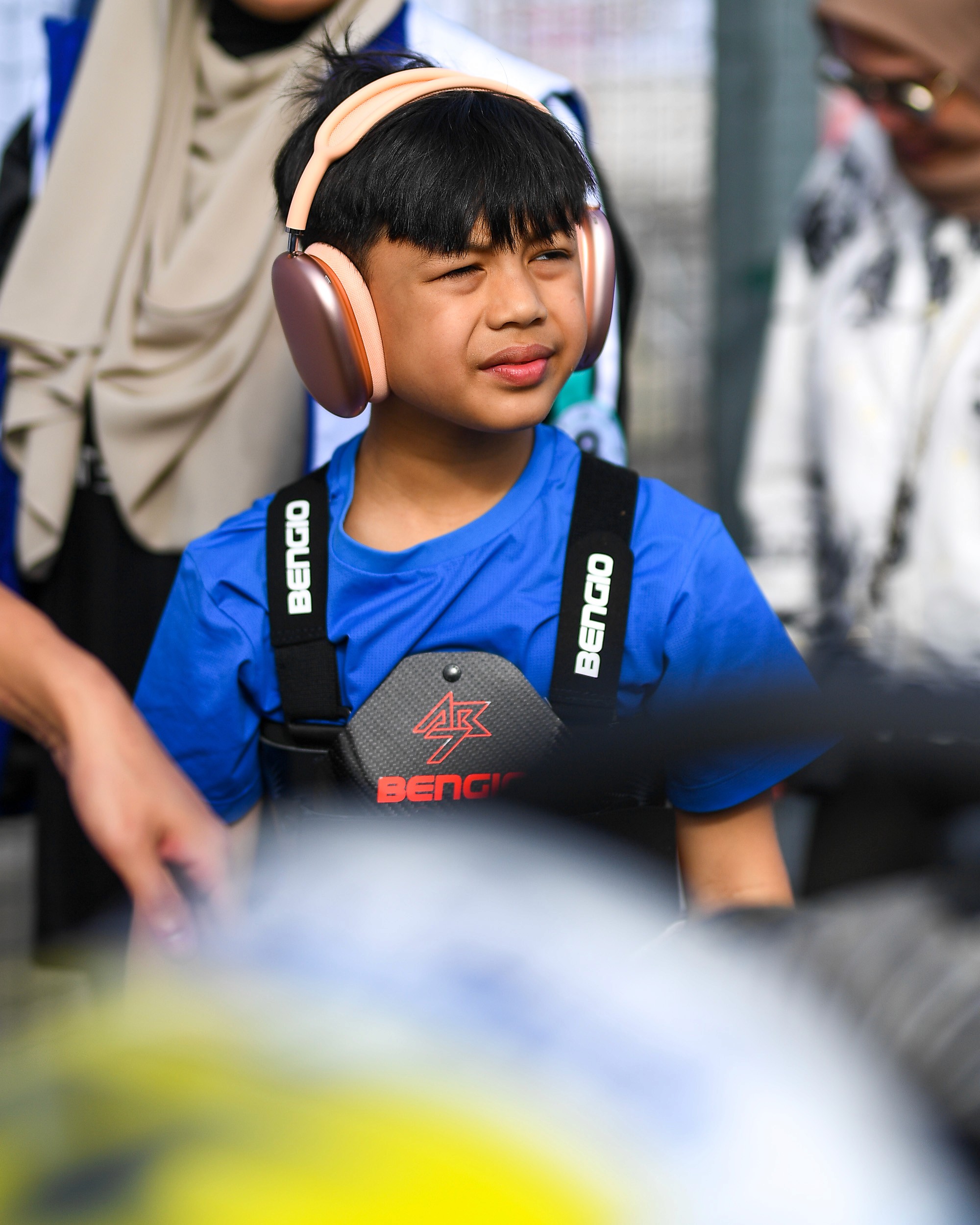
I mean, it’s difficult to say a specific number of time to allocate, but I would say like five to 10 minutes before each race would be a very good amount of time. To start, of course, if you feel the benefit, then you can do it even more. One thing that I really like to do, and I would recommend you to get, is, you know, you could go through Amazon or a decathlon and buy a inclined chair. You know, those kind of chairs that almost like make you almost like, sleep on them. You know, like, almost like gets you horizontal. Well, when I raced, I always wanted to have this with me, because I could get myself to the back of the truck and just, just like, put the headphones on and just like, close my eyes, listen to something, or just use the feature from the noise canceling headphones to just simply cancel the noise. And I would just visualize. I would just close my eyes and visualize, visualize, or do some breathing exercises, or both. And by doing that, you know, breathing exercise, I would relax myself. And I mean, again, I cannot exactly say how long I did it if I did every day. For sure, I didn’t do it every day. I wish I did. Probably I could have done even better. But I would say, if you’re able to spend at least one or two minutes when you’re right in the kart, you know, just before getting started, waiting for the green light, if you’re able to do it as a habit, one or two minutes, you know, closing your eyes and doing that, it’s going to help you massively. But you should not start doing it from a race. You should start doing it from a free practice. You need to really build that habit of doing the breathing exercise. And I’m telling you, that’s going to massively, massively impact your performance. You’re going to feel less stress. And then when the race comes, when you will feel like, Oh, now I need to reduce my stress. It’s going to be much easier to do because you’ve been doing a lot in the past, you have basically trained for this. So I hope this guide was helpful at the end of the day, remember that everything we do can really impact our performances in either a positive way or a negative way. And I feel that breathing exercise right before getting in the kart, or right when you’re in the kart, like waiting for the green flag can really drastically improve your performances. You know, it’s one of those kind of actions that follows the operator principle, like the 8020 if you know it, you can Google it. So basically that 20% of an action can affect 80% of the results. So for example, like spending, like, just like 200% you know, in this case, like two minutes in the kart doing some breathing exercises can, has, can have, actually, a massive impact on your performances, you know, and affect that 80% of that Pareto Principle relationship. So I feel like, Yeah, you don’t need to spend an hour a day doing some breathing exercises, not even half an hour, I think, just like one or two minutes right before getting the kart. Or if you feel like you can do it in the in the truck, you know, in the back of the truck, just like, take a inclined chair, put some headphones on and do the breath box breathing exercise. You know, breathing in five seconds, holding on to feet five seconds, then breathing out five seconds, and then holding on to that, and again, the whole cycle resumes. I hope that was useful. If you need more practical advices on how to, you know, improve your race routine, or, just like, get faster overall, you can sign up to some private coaching lessons. Or if you want to go and try to improve everything in a, you know, remote way, you can just sign up the six month training program, and if you, instead, want to get your onboard videos analyzed, feel free to sign up to that package.
I hope that was useful.
I’ll see you in next one.