Soft vs Hard Kart Tires: Which Is Actually Faster?
Compound, not tread, is what separates a fast tire from a slow one. Why softs dominate in winter, why old tires are slower unused, and why driver h…

- Tread is broadly the same across brands, the compound is what separates a fast tire from a slow one
- Soft tires work at lower temperatures, so they switch on faster and dominate in cold conditions
- Hard tires need heat: on a cold track they never switch on and you slide for laps
- Old tires are slower even unused, because every warehouse day is another heat cycle
- In hot conditions soft tires give one great lap then drop off; hard tires stay consistent
- Tall drivers load the tire more, which is a real advantage on hard tires and in winter
- Why tire compounds differ at all
- It is not the tread, it is the compound
- Why old tires are slower even unused
- Why soft tires are faster, and when they are not
- Winter vs summer
- Why height changes which tire suits you
- How the driving actually differs
- Every tire has its own DNA
- The additives problem
- Setting the kart up for each
- Frequently asked questions
Why do some kart tires have so much more grip than others, especially in winter?
How come some karting tires have way more grip than other tires, especially in the winter time where there are very low track temperatures? What’s the reason behind that? Aren’t all tires supposed to have the same amount of grip?
The reason is very simple. The main difference between tires is their compound, softness or hardness. Not all tires are created equal.
Why tire compounds differ at all
Why do differences even exist? Because in the tire market, customers, racing drivers, may look for ultimate performance in some cases, or they may be looking for endurance and longevity, with multiple sessions at consistent lap times, instead of one crazy fast session on new tires and then a massive drop afterwards.
For the amateur hobby driver who just wants to have fun and not spend too much money, they want to purchase tires once and forget about it. They want to do two, three, four days of driving without changing tires.
Not only is it expensive, it costs 200 to 250 euros per set, but it’s also not the easiest thing, and it’s pretty annoying having to remove them from the rims and mount them back on.
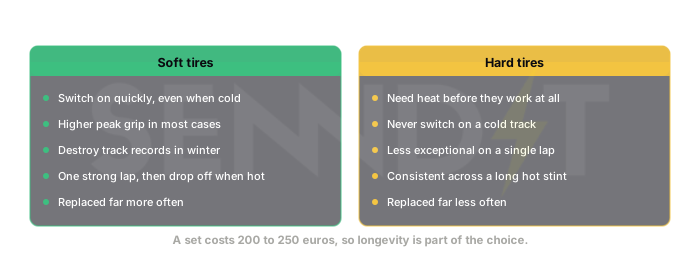
You are going to be spending a lot of money on tires over the course of your career. That’s the reason lots of people prefer driving with hard tires, the performance is more consistent and they have to be replaced far less often.
It is not the tread, it is the compound
At the end of the day, it’s not really about the tread. The tread is basically very similar from tire to tire, from Komet to MG to Vega to Levanto or to LeCont. The measurements and the sizes are also very similar.
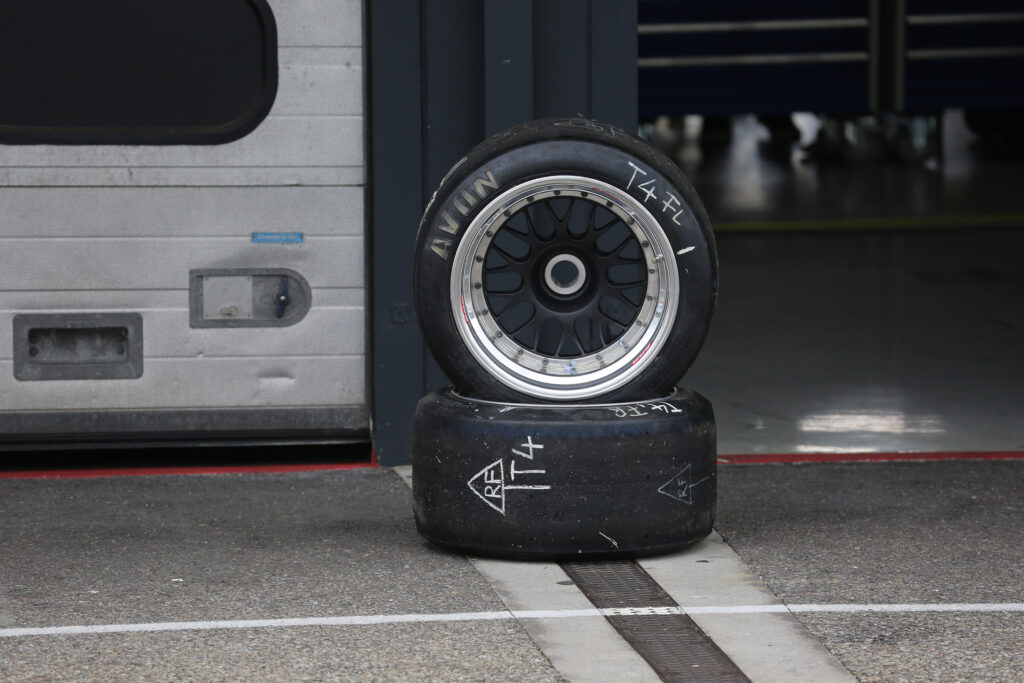
What makes the difference is the compound. Some tires are softer, some are harder.
And in most cases there’s the unlucky scenario where tires from the same brand are actually quite different from each other. That’s when it’s the most annoying, you may have some tires that are fresher, and because they’re fresher they are softer than tires which are older.
Even in world championships or CIK-FIA European Championships there have been issues like this, and I’ve experienced them. In the wet is when you get the biggest differences, you can have two sets of tires so far apart that one is two seconds slower than the other, which completely destroys your chances of winning. When it happens there is nothing you can do.
Why old tires are slower even unused
Whenever tires are produced they get stored in warehouses. MG are produced in Brazil, so they’re stored in warehouses in Brazil.
But how do tires get harder, and why do they get slower when they sit for a long time?
Older tires are slower because they accumulate more heat cycles. Even if you leave tires in a warehouse and they’re not exposed to the sun, they’re still subjected to a cycle from cold to hot, cold to hot, every day.
Even if the temperature inside the warehouse only changes by 10 degrees, that’s enough to complete some sort of heat cycle. A proper heat cycle is when the tires get very hot, all the way up to 80 degrees on track, and then cool down.
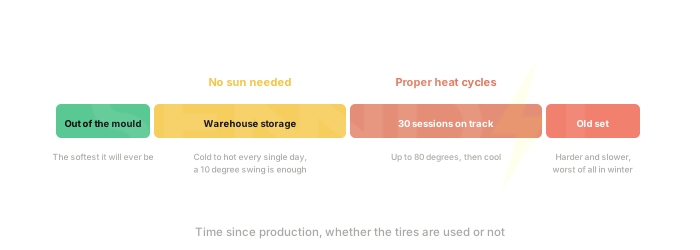
With each heat cycle the tire gets a little bit harder, a little bit harder, a little bit harder.
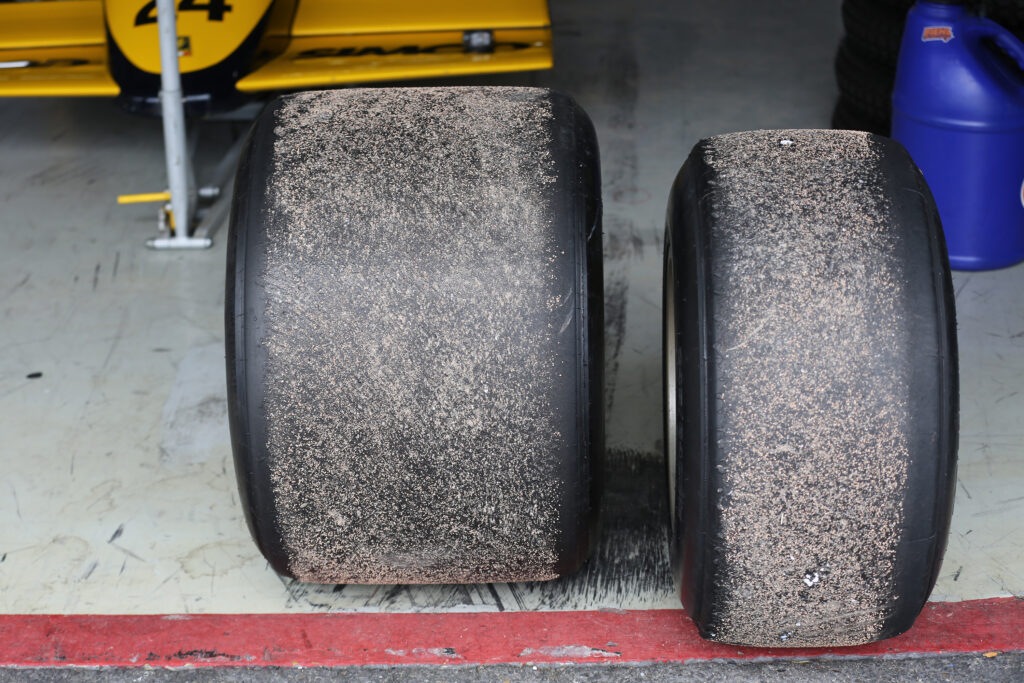
That’s why brand new tires are way softer than the same set that has done 30 sessions. It maybe doesn’t hurt too much in summer with really high track temperatures, but in winter, where the track temperature is very low and you want a soft tire, the new tires make a big difference over older ones.
Why soft tires are faster, and when they are not
But here’s where it gets interesting. Why are softer tires faster than harder tires? The reality is that they’re not always faster.
In Formula 1 they almost always qualify on the softer compound. But in some rare cases they end up qualifying on the medium instead. Why? Because in that specific track the tires are too soft for that tarmac or those conditions. At the end of the day the tire compound is a setup component.
The reason you want to run softer tires is that they switch on really quickly in terms of temperature. They don’t need a very high temperature, they work really well and have a really high friction coefficient at lower temperatures. And they also have a higher peak grip in most cases.
Winter vs summer
If you’re in winter and there’s five degrees of track temperature, the tires are going to struggle to heat up. It’s very hard to get temperature compared to when the track is 60 degrees in summer, which has happened many times this year.
At five degrees you know the softer tires will be faster, because they don’t need a high working temperature to create grip. Friction coefficient is what grip is all about, and on a soft tire that coefficient is less dependent on high temperature, the working window is shifted towards lower tire temperatures.
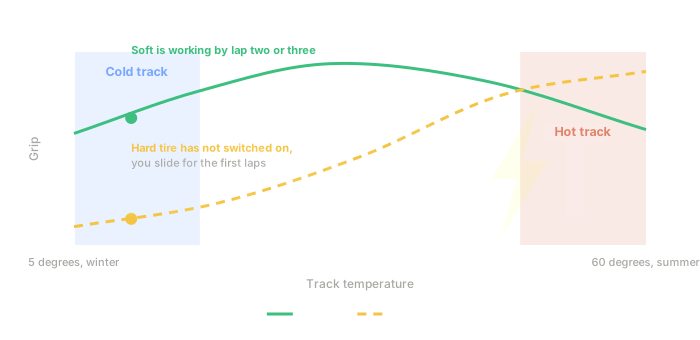
Hard tires take so long to switch on that you’re sliding for the first laps until you find some grip. Soft tires are working by lap two or three. Even if a soft tire’s range is 50 degrees and it runs at 90 in summer, at 50 degrees it will massively outperform a hard tire, because at 50 the hard tire isn’t anywhere near its operating window.
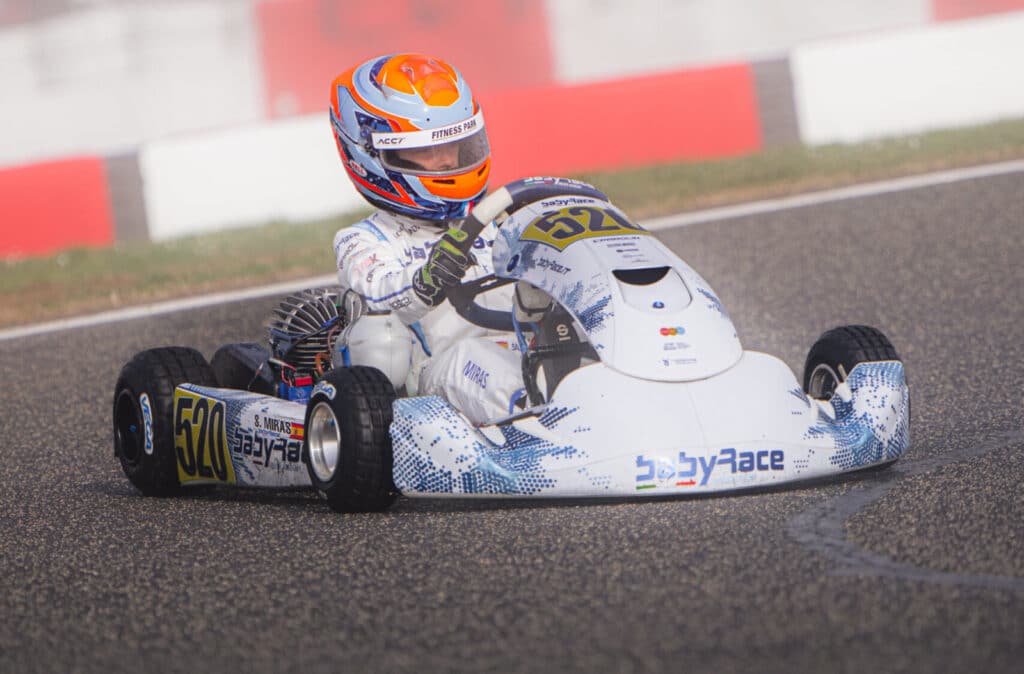
But it’s misleading to say softer is always faster. In summer at 60 degrees track temperature, a very soft tire is actually counterproductive. You get a strong peak lap on lap one, then you drop off quite a lot and start to slide and lose more and more performance through the session, especially in a long stint like a race.
I’ve seen that happen between Vega and MG tires in 60 Mini, and when I drive myself. Vega and LeCont are on the softer side compared to MG or Komet.
Those softer tires are very, very good in the winter. You can destroy track records and the grip level is insane. It’s not the kind of grip that puts you on two wheels, it’s good grip that lets you brake super late, carry mid speed and get on the gas early.
In summer there’s almost no difference between soft and hard over a stint. On a single peak lap the soft still wins, because even on a 60 degree day one push lap keeps the tire relatively low in temperature. But then it drops off as it overheats, while the harder tire is less exceptional on that one lap and far more consistent across the session.
In 90% of cases or more, soft tires are going to be faster across cold, mild and warm. The one real caveat is that they’re trickier to manage over a long hot stint, where you have to control wheelspin and slides.
The soft tire likes the cold. The hard tire loves the warm.
Put a hard tire on a very cold track and you’ll struggle with grip like crazy. You’ll be driving on ice, wondering what on earth is going on with your kart, and it’s just because the tire is too hard. This is the compound half of track evolution: which tires are on the entry changes how much the track rubbers in.
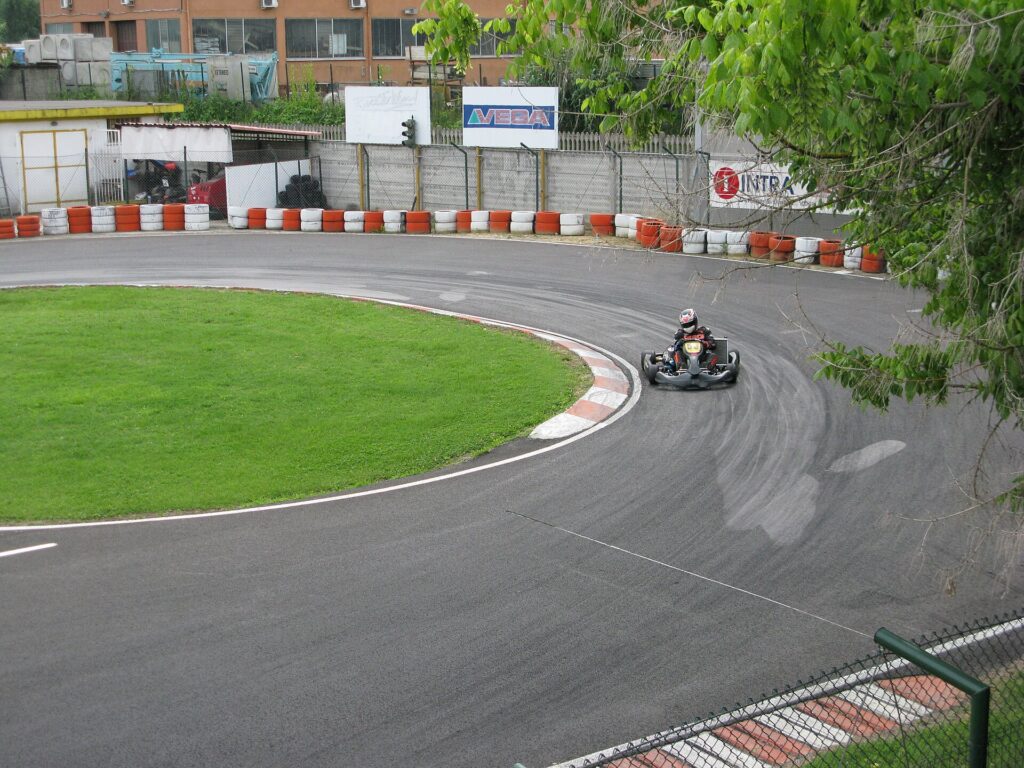
Why height changes which tire suits you
The driver really makes a difference in the first few laps on hard tires when it’s slippery. Taller drivers especially.
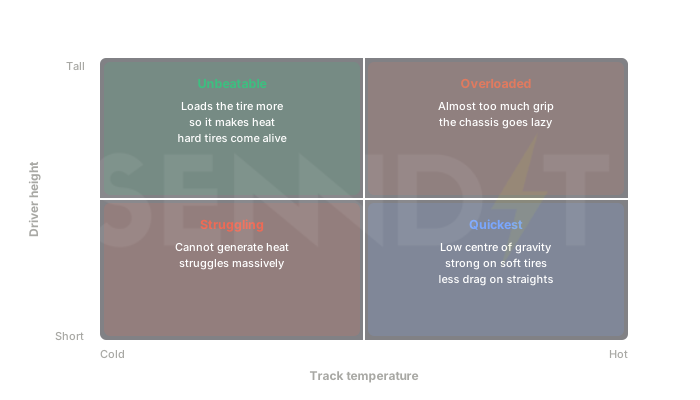
That’s a bit like Disney World for tall drivers. Normally they’re penalised with softer tires, because it’s almost like having too much grip, everything gets too stiff, the chassis gets a bit lazy and doesn’t behave properly.
But when it’s slippery and the hard tires aren’t generating grip, a tall driver generates way more, because you load the tires more. You effectively have a stiffer kart thanks to your weight and height, and with a higher centre of gravity you load the tires more, which generates temperature, which generates grip.
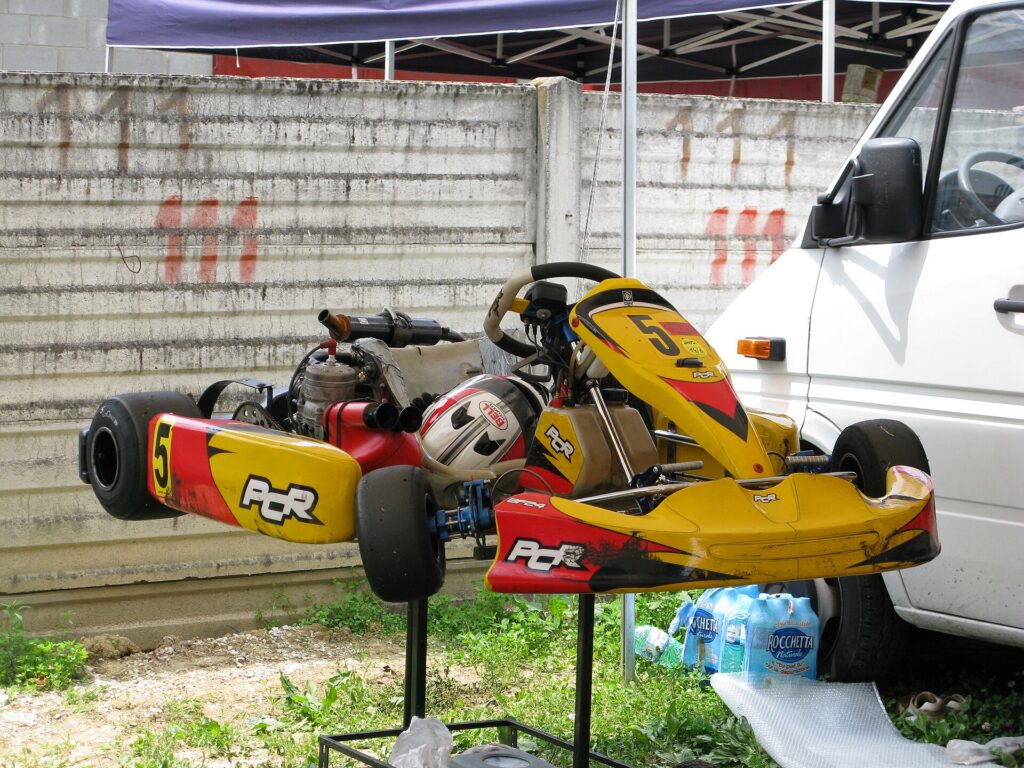
If instead you’re a short driver with a lower centre of gravity, you’ll be really strong on soft tires, especially in summer where all the tall drivers struggle. But in winter you’ll struggle massively.
I saw this racing full time in 2012 and 2013 against Lando Norris. He was 25 centimetres shorter than me, and he would be so fast in the summer, I could match him but struggling like crazy, sometimes he’d be a tenth quicker and I couldn’t do anything, because he’s so short and had an advantage in drag on the straights too.
But when we went into the winter months I would be unbeatable in pretty much every session, because I could generate more grip, which meant higher tire temperatures and faster lap times, especially at the beginning of a session. I got so many victories in the winter.
How the driving actually differs
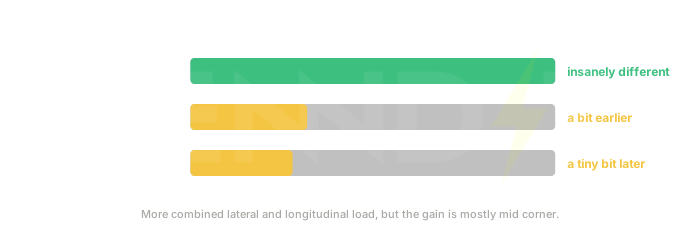
The driving is quite different too. With softer tires you can combine everything a bit more, more braking, more G-force under braking, more combined lateral and longitudinal load.
You can carry way more speed in the mid corners. Yes, you can brake a tiny bit later than on hard tires, and get on the gas a bit earlier. But it’s mostly the minimum speed you carry into the corners that is insanely different.
Every tire has its own DNA
Every tire needs to be learned. LeCont compared to Vega, they’re both very soft, but the LeCont white is impressively stable even though it’s a soft tire. It’s so enjoyable to drive because it makes it easy to stay consistent, and you don’t drop the time.
So it’s not just about softness. It’s also about the engineering and the chemistry behind a compound. I think LeCont did a really good job there.
Other compounds are not as good. Dunlop, which I used last year in KZ, was not a good compound, the tire was blistering, and there were differences in radius, so it would pull to one side on the straights. It was a pain to drive.
So there are soft compounds which are really enjoyable and well made, and others which are not. It’s not just whether they’re hard or soft, there’s a whole DNA to a tire.
The additives problem
Because softer tires are so much faster, unfortunately a lot of drivers and teams take the shortcut of softening tires with additives. That’s totally unethical, but there are teams who do it, and sometimes they get caught in WSK races. Whenever that happens it’s a total reputation killer.
The reason they try is that they realise how much of an impact it makes. If you have a tire that reads 45 in terms of softness from 1 to 100, and you get it to 40 or 35, that’s three or four tenths or more in lap time.
There’s nothing you can do in the setup to reproduce that.
So it has opened up a wide industry of additives and products, and I know it’s been done a lot in the UK as well. It’s something I wish didn’t exist.
When they run parc fermé for tires, they prevent this, which is the right decision, because it’s very hard to detect the additives themselves, so it’s better to prevent it.
Sometimes there are series where the tire lottery is a bit of a gamble and you get a bad set and your weekend is screwed. That’s down to the regulators and organisers to keep consistency, measured with a durometer, so that any tires found to be too hard get replaced.
Setting the kart up for each
The driver needs to adapt, and so does the setup.
Whenever you have soft tires you may have to reduce tire pressures quite a bit, and change the front geometry, perhaps add more camber.
Whereas with very hard tires you may have to raise the centre of gravity, stiffen up the rear a bit, increase the caster massively at the front. You’re adding grip and increasing load on the tires. Sometimes you increase ride height to generate load.
In the cold months with very hard tires you’ll run pretty high tire pressures. Forget all of that when you drive soft tires in the hotter months, run high pressures on softs in summer and you’ll do the outlap and then you’re done.
Frequently asked questions
Are soft kart tires always faster than hard ones?
In roughly 90% of conditions, yes. The exception is a long stint on a hot track, where a soft compound gives one strong lap then overheats and drops away, while a harder compound stays consistent. On a single qualifying lap the soft is still quicker almost everywhere.
Why are soft tires so much better in winter?
Because their working window sits at lower temperatures. On a five degree track a hard tire never switches on and you slide for laps, while a soft compound is generating grip by lap two or three. Even a soft tire running well below its ideal range will beat a hard tire that is nowhere near its own.
Do unused kart tires get slower over time?
Yes. Every day in a warehouse takes the tire through a cold-to-hot cycle, and each cycle hardens the compound slightly, even a 10 degree swing counts, and even with no sun exposure. A set produced two years ago will be harder and slower than one made last month, which matters most in cold conditions.
Does driver height affect which tire suits you?
It does. A taller, heavier driver loads the tire more and raises the centre of gravity, generating more temperature and grip, a real advantage on hard tires and in winter. A shorter driver with a lower centre of gravity is stronger on soft tires in summer, when tall drivers can find the kart overloaded and lazy.
Send your onboard footage. Alessio reviews it corner-by-corner and tells you exactly what's costing you time, and how to fix it. Back within 48 hours.
Get My Onboard Reviewed → Reviewed personally by a CIK FIA World Champion, never an assistant.I promise I'll not spam you with repurposed shitty AI content but real experiences that only I, Alessio Lorandi, experienced. Written in my funny English-Italian tone of voice 😂
Alessio Lorandi is the former CIK FIA World Junior Champion, winning against Lando Norris in 2013 & F3 multiple race winner. He's helped 200+ karting drivers worldwide get faster & win WSK titles with BabyRace Driver Academy & now through Senndit, his online karting coaching platform.