
Go-Karting Basics: What Every Beginner Needs to Know
What a racing kart feels like, how fast you improve, the licence, the two flags, safety and the maintenance you do yourself, before your first season.

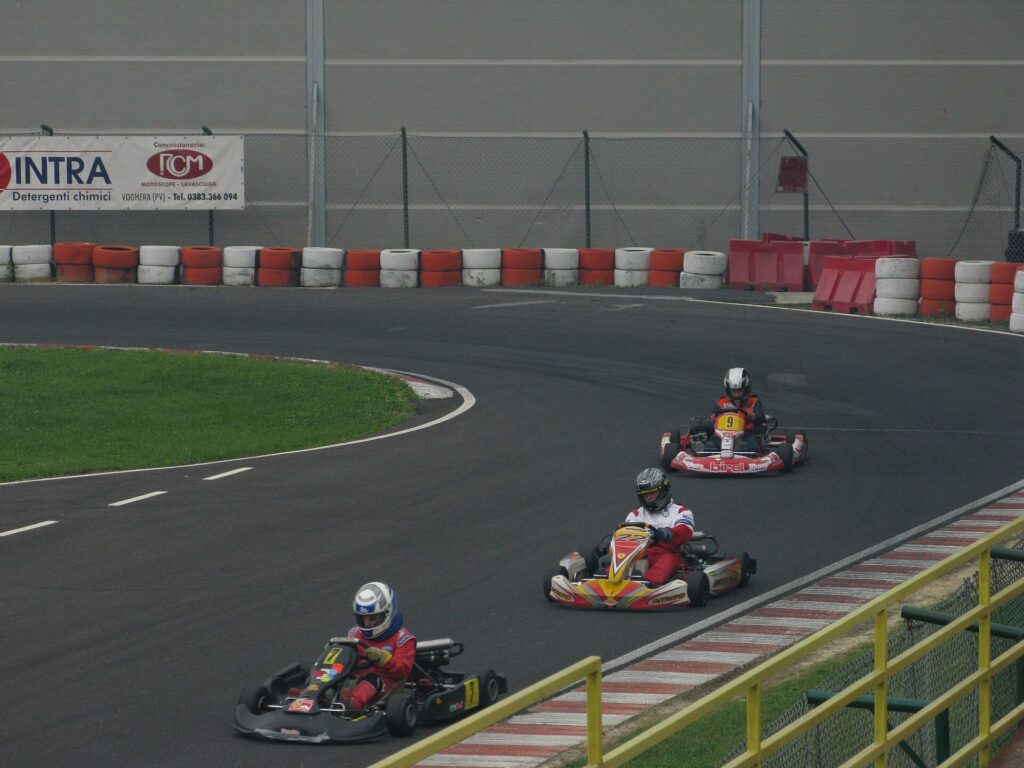
- A racing kart is a proper machine. About 145 kilos including the driver, 130 to 150 km/h, up to 2.5 g in the corners, no seat belts, and you sit on the ground.
- It is a physical sport. Your heart sits at about 178 to 180 beats for a 15 to 20 minute session.
- The first few days feel strange. Then the curve gets steep: maybe three seconds the first day, two the second, then one, then half.
- Count laps, not months. You don’t get better by the passing of time. 10,000 to 20,000 laps puts you ahead of 90 percent of drivers of your age.
- You need a licence only to race. A form and a medical check, no driving exam. Both expire after one year.
- Yellow flag, slow down. Red flag, stop right away. Respect the flags, the marshals and the rules.
- Lube the chain every single session. Chain, radiator water and air box are yours. Bearings, piston and brakes are for a mechanic.
- What does a racing kart actually feel like?
- How physical is karting?
- How will your first days on track go?
- How many laps should your first season have?
- Do you need a licence to drive a kart?
- What age can you start, and is it ever too late?
- How dangerous is karting, really?
- Which flags and rules do you need before you go out?
- What does the kart need from you between sessions?
- When should you move up a category?
- Frequently asked questions
What nobody tells you before the first season
I already wrote the roadmap from zero to your first race: controls, equipment, the first training day. It is here: how to start karting step by step. So I will not repeat it.
This one is about the other things. What the kart feels like. How your body reacts. How fast you should expect to improve. The licence, the flags, the chain. The basics that are not about driving technique but that you need to know before the first season.
What does a racing kart actually feel like?
One of the things people misunderstand the most is that they think karting is just a hobby. It is a proper sport, with people putting their lives and passion into it.
The karts are very light. About 145 kilos including the driver. They get up to 130, 140, 150 kilometers per hour. They have no seat belts, no airbags, and you are literally sitting on the ground. In the corners you get up to 2.5 g laterally, which is a feeling you don’t get to experience very often.
To give you an idea. On a 1,200 meter track like Lonato we do a 46, 47 lap time with junior and senior karts, and they reach 135, 140 km/h. A rental kart on the same track would be at least 20 seconds slower, with about 75 km/h of top speed. So if you come from rentals, expect a different world. I explain the two in rental vs owner karting.
And because you sit so low, the speed perception is really high. I believe the hardest skill at the start is exactly that, the speed sensation. We are not designed to drive at those speeds on a four-wheel machine that light. If you want the full picture of what is hard and what is not, read is karting hard to learn.
How physical is karting?
Very. You are going to have heartbeats at about 178, 180 for 15 to 20 minute sessions. That is a proper workout.
Why so high? Because the adrenaline is high, and because you work with the full body. Legs, core stability, neck, chest, forearms. So you need stamina to not get tired too soon.
If you start as an adult, you need to get fit for the kart, not for the gym. You want to be light on the kart. So a lot of cardio and endurance, body weight exercises. You don’t want to be bulky and heavy.
And by the way, driving itself is the best training. There is nothing quite like it. It trains the neck, the forearms, the rib cage, the core stability. But you still need to supplement it with specific exercises.
How will your first days on track go?
Strange. I mean it. The first few days of driving are quite weird, mostly for the sense of speed.
For adults it is a bit easier, because they have probably driven a road car. Kids have never driven anything. The kids who have already done some sports with speed, like mountain biking or skiing, have an easier time. For all the others, it is quite weird at the beginning.
Then the curve gets super steep. The first day you may improve like three seconds. The second day two seconds. Then one second, then half a second. And then less and less and less.
That’s normal. It is impossible to improve one second every day. Finding the first few seconds is easy. Finding the last few tenths, when you are fighting for pole position, is hard. But that is good news, because if you are fighting for those last few tenths you are already ahead of most of the other drivers.
So at the beginning you may be like “whoa, why am I slow”. Don’t worry. You will find lap time step by step.
How many laps should your first season have?
As many as you can. Listen, you are not going to get better by simply the passing of time. The more laps you do, the more you improve.
Say for instance you do 150 laps in a testing day. How many days does it take to do 15,000 laps? 100 days. In a year of 365 days, that means almost one time every three days on the track. That is a lot, I know. But for an adult beginner, 10,000 to 15,000 laps will get you to good lap times.
There isn’t a fixed number. But once you have 10,000, 20,000 laps, for sure you are ahead of 90 percent of drivers of your age.
And it is not only quantity. What slows progress the most is the lack of quality practice. No coaching. Not watching your onboard videos. Not reading your data after a session. Driving casually, without a specific plan. That is going to hurt you in the long term.
So before the season starts, sit down and program your testing days up front. You have a goal, so you need a specific plan to get there. I go deeper on the numbers in how long does it take to get good at karting.

And if you do not know yet what to look for in your onboard, send it to me. I go through it corner by corner in an onboard review and I tell you where the time is.
Do you need a licence to drive a kart?
Only if you want to race. For rental karting you do not need a licence. You show up, sign up at the track and drive.
For races with your own kart, at club level or at international level, you need one. And it is very simple. There is no theory exam and no driving exam like for a road car. You go to your national karting federation (in Italy it is ACI), you fill a form, and you do a medical check: eyesight, heart, your physical abilities.
Have these ready:
- Your ID.
- A medical certificate from the last 12 months.
- The form, filled.
- A few euros for the application.
The licence is valid for one year. The medical check too. And if the medical expires, in most countries your licence is automatically not valid anymore. So keep an eye on that date.
For kids the procedure is the same. The minimum age changes from country to country. In Italy the very young ones go through a basic course of a few hours, with the controls and the basic safety procedures like the flags.
I know how it works in Italy and in most of Europe. I can’t say it for every country, so check with your own federation. More in do you need a license for karting.
What age can you start, and is it ever too late?
For kids, it is not set in stone and it depends from country to country and from track to track. Rental facilities normally allow kids from about seven. On a racing kart you can start to learn properly at five, six years old. The age for the licence and for the first proper races changes from country to country, so ask your federation.
But age is not the real sign. The real sign is when the kid is fearless and actually looks for speed. And it has to come from the kid.
The biggest mistake I see is taking a kid too soon, when he is still afraid of speed. Even a minor crash can become a traumatic experience. So baby steps. When I started, my dad was holding the kart from a leash, because I wanted to go flat out and I didn’t know how to turn yet. More in the ideal age to start karting.
And adults? Is it too late after 30? Absolutely not. You have things a kid doesn’t have: you already drive a road car, so you don’t start from zero, and normally you are more disciplined and more coachable. In many countries there are categories for drivers above 30, so you race against people of your age. The full answer is in can adults start karting late.
How dangerous is karting, really?
Yes, karting is dangerous, as every motorsport. But if you do it properly, with the right safety equipment, it is so much safer than you expect.
What protects you is first of all the helmet. A strong homologated helmet with a homologated visor. Then the rib protector. The common injuries are at the ribs, after a big impact. And I haven’t seen them often.
Sitting two centimeters from the ground instead of two meters makes the speed feel higher, but it actually makes it safer. And with no seat belt you can get out of the kart quickly if it flips.
I flipped a couple of times myself. One time, in Germany, I broke my collarbone. Three weeks later I was back in the kart. In all these 20 plus years on track I have seen broken bones and big crashes, but I have never seen a fatal crash myself. It doesn’t mean it can’t happen. No sport has a level of danger of zero.
Where is the risk the highest? At the starts, when all the drivers are bunched up, and in aggressive overtakes. When you drive alone it is very unlikely that something happens. So for a beginner who is testing, the risk is lower than what most parents imagine. For parents I wrote is karting safe for kids.
Which flags and rules do you need before you go out?
Two flags you must know from day one.
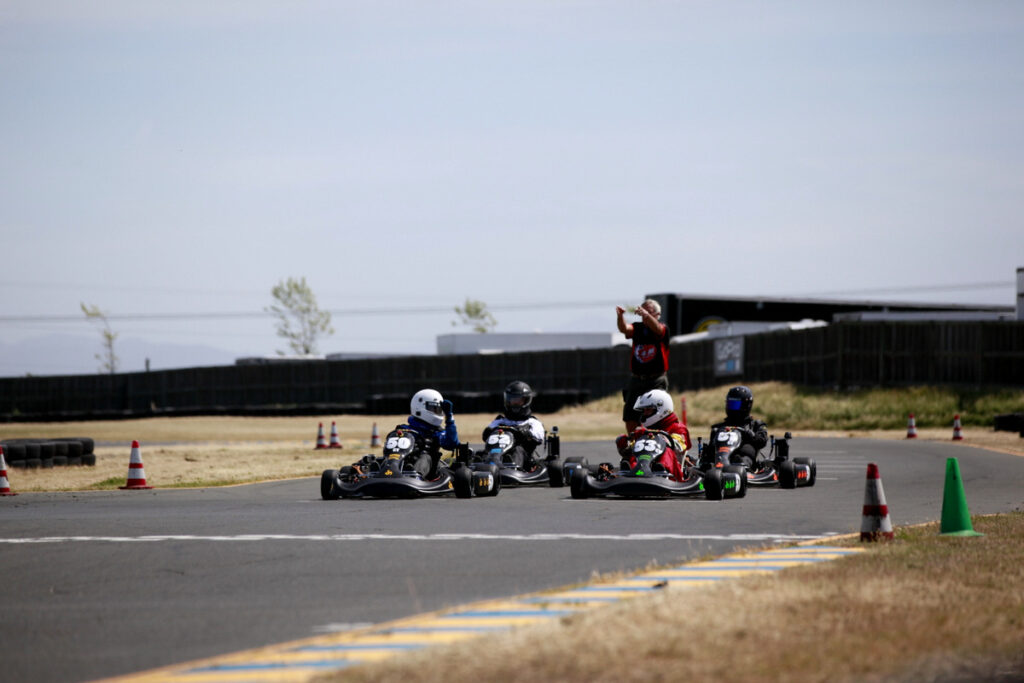
Yellow flag waved: there is danger in front of you, maybe a crash, maybe somebody stuck in the middle of the track. You slow down.
Red flag: you stop right away, because there has been a serious crash.
In a race there is also the slow procedure, which is pretty much the safety car of the formula cars. You slow down, you go in a single line, and you don’t overtake. This lets the doctors or the ambulance get inside the track.
It rarely happens. But when it does, you need to be ready. Respect the flags, respect the marshals, respect the rules. The complete list is in go kart flags and meanings.
And one more thing for the young ones. This is not a PlayStation. If you drive erratically you create a dangerous situation for yourself and for the other kids. I am not saying to drive with an invisible handbrake. I am saying that your actions have consequences.
What does the kart need from you between sessions?
Let me be honest. I am not a pro when it comes to mechanicing. I have never been a mechanic in my life and I can’t do 90 percent of the maintenance work. So this is the list for people like me.
| You do it | When |
|---|---|
| Spray chain lube on the chain | Every single session |
| Check the tyre pressures | Every session |
| Check the water level in the radiator | From session to session |
| Check the brake fluid | Every once in a while |
| Clean the air box, the fuel tank and the fuel filters | Every once in a while |
| Replace the spark plug | When you feel the engine cutting off |
What do you leave to a professional? The bearings of the rear axle and of the front hubs. The piston. The brakes: pads, o-rings, the pump. If you do those yourself you may create more harm than good.
Why do I insist on the small things? Because without water you seize the engine. Because dirt from the air box goes through the carburetor into the engine and you seize it too. And a chain without lube overheats, loses power and then breaks.
One warning sign to remember. If the brake pedal gets long, you are probably running out of fluid, or the fluid needs to be replaced. Don’t ignore it. That is how you find yourself with no brakes.
If you are not racing at international level, I do not suggest more than an hour of maintenance per week. The rest is in kart maintenance basics for beginners.
When should you move up a category?
Not in a hurry. What I always say to my drivers: you change category when you are fast in the one you are in, you are getting results, and you start to plateau.
If you move up too early, you drive a bigger and faster kart with skills that are not up to that challenge, and you lose confidence. The body also has to grow. You cannot put a tiny kid on a very heavy kart.
But don’t stay too long either. And if you are in Mini and you are getting too heavy for that kart, you need to move up even if your development is not complete, because otherwise you give up performance.
Which class to start in is another story: best beginner kart classes explained. And for the budget side, the cheapest way to start kart racing.
- All the beginner guides in one place: the beginner hub.
- Send me your onboard and I review it personally: onboard reviews.
- If you want a plan for the whole season: the 6 months program.
One last thing for the parents. Your expectations should meet the amount of time and effort you put in. You cannot expect the kid to be the fastest on the grid if he is the one who practices the least. So before the first season, decide how many days you can really do, and judge the results against that.
Frequently asked questions
Do I need a licence for rental karting?
No. For rental karting you show up, sign up at the track and drive. A licence is required only if you want to do races with your own kart, at club, national or international level.
How fast does a racing kart go?
Racing karts get up to 130, 140, 150 km/h. On a 1,200 meter track like Lonato, junior and senior karts reach 135 to 140 km/h, where a rental kart reaches about 75 km/h.
Is karting a good workout?
Yes. Your heart sits at about 178 to 180 beats for 15 to 20 minute sessions, and you work with legs, core, neck, chest and forearms.
How quickly will I improve as a beginner?
The first few days feel strange. Then you may improve about three seconds the first day, two the second, then one, then half a second, and less and less after that.
What maintenance can a beginner do on a kart?
Spray chain lube every session, check the tyre pressures and the water in the radiator, clean the air box and the fuel filters, and replace the spark plug when the engine cuts off. Leave bearings, piston and brakes to a mechanic.
Send your onboard footage. Alessio reviews it corner-by-corner and tells you exactly what's costing you time, and how to fix it. Back within 48 hours.
Get My Onboard Reviewed → Reviewed personally by a CIK FIA World Champion, never an assistant.I promise I'll not spam you with repurposed shitty AI content but real experiences that only I, Alessio Lorandi, experienced. Written in my funny English-Italian tone of voice 😂
Alessio Lorandi is the former CIK FIA World Junior Champion, winning against Lando Norris in 2013 & F3 multiple race winner. He's helped 200+ karting drivers worldwide get faster & win WSK titles with BabyRace Driver Academy & now through Senndit, his online karting coaching platform.