When To Use Kerbs In Karting (And When To Avoid Them)
Use entry and exit kerbs 90% of the time. The other 10% costs you real lap time - here is how to tell a kerb that gains from one that is too dirty …

- Use entry and exit kerbs about 90% of the time, they open up the arc and raise speed everywhere
- The other 10% matters: a kerb that is too dirty or too steep will cost you more than it gains
- Apex kerbs are almost never usable in a kart, you bounce off and lose time
- A steep kerb bottoms the chassis, scrubs speed and adds drag down the following straight
- A dirty kerb puts dirt on your tires and costs you the corners after it, not just that one
- Kerb usage compounds: more entry kerb means more apex speed, which forces more exit kerb
Should you always use the kerbs, or are there times you should stay off them?
Kerbs, kerbs, kerbs. Drivers believe that kerbs should be used at all times, especially the entry kerbs and the exit kerbs.
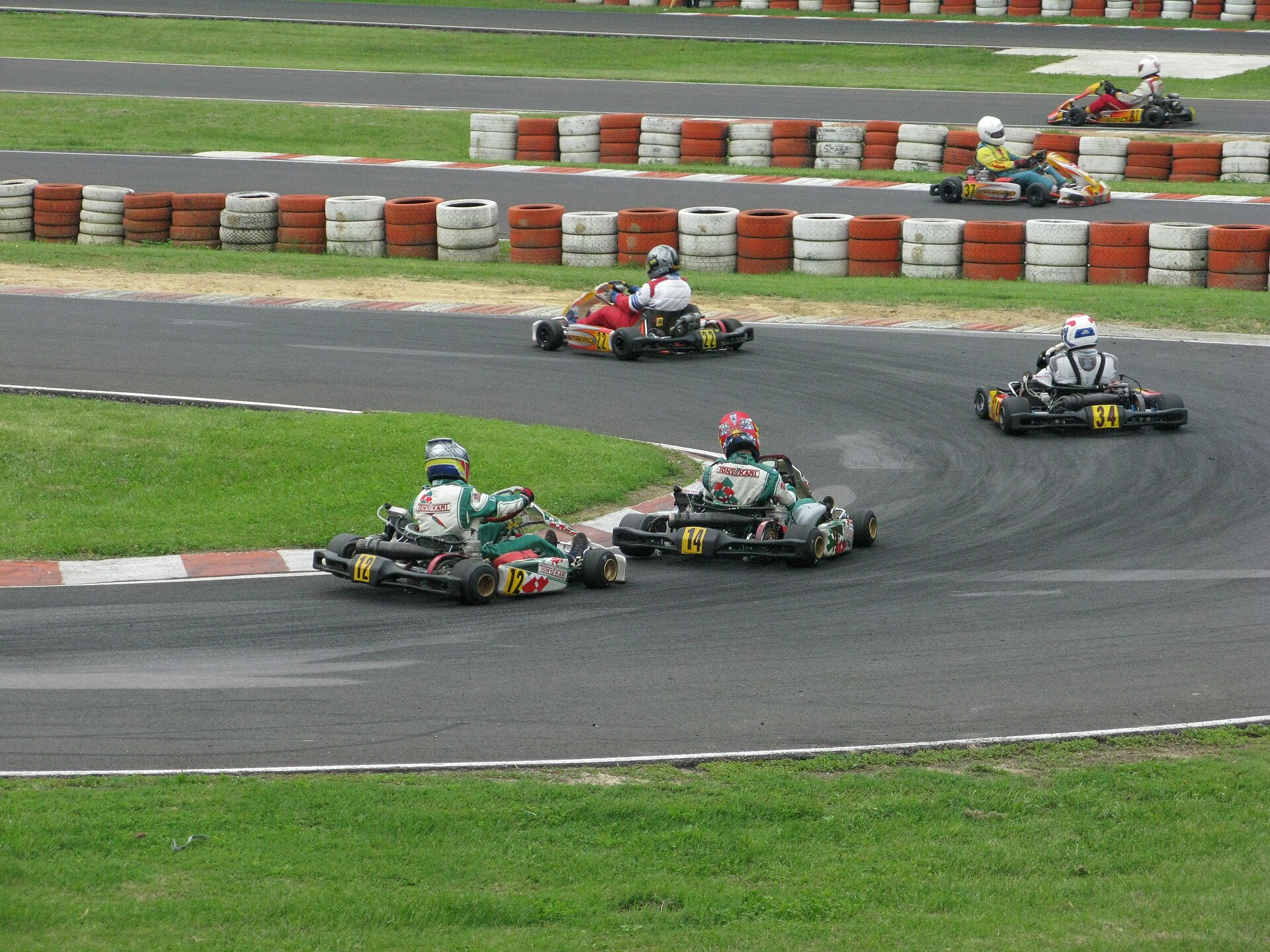
And while I believe that 90% of the time, yes, you should be using those kerbs, the reality is that 10% of the time you should really stay away from them.
Why we use kerbs at all
So what’s the whole reason we need to use kerbs in the first place?
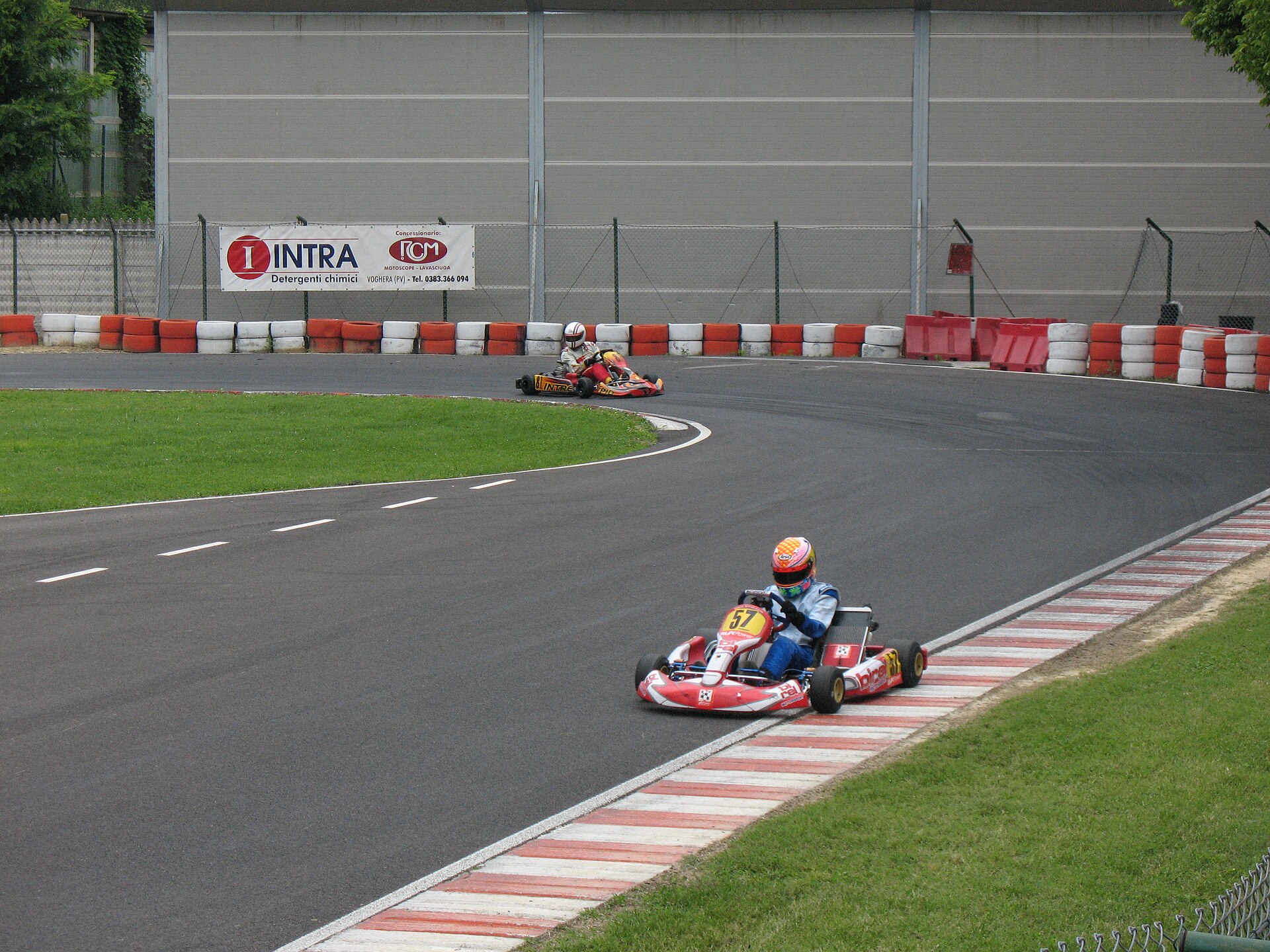
When we talk about entry kerbs and exit kerbs, the reason we want to use them is because we want to open up the arc of a corner as much as possible.
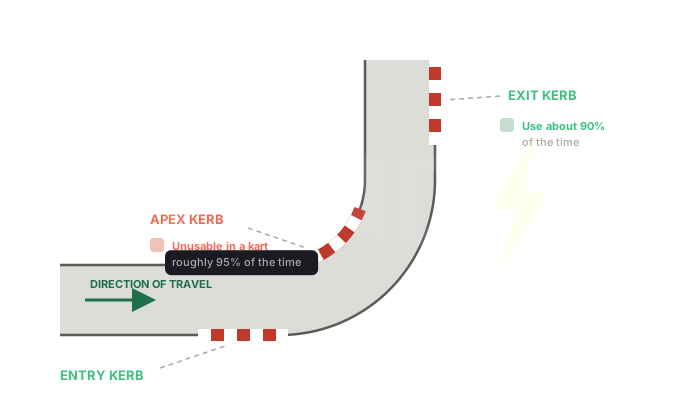
We want to make the entry as wide open as possible and the exit as wide open as possible, so you can keep higher speed, have higher RPM all the way through, and therefore have a faster entry, faster mid speed and faster exit.
If you want all three of those things and to set fast lap times, you use kerbs 90% of the time.
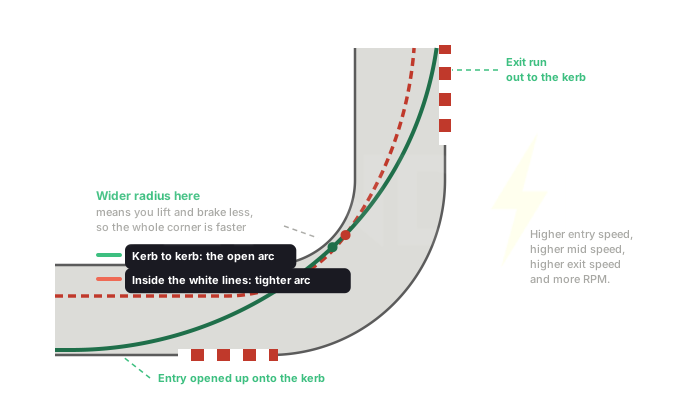
That’s the whole theory behind it. We open up the entry, we open up the exit, we make the arc wide open, and therefore we have an advantage over the drivers who instead have a tighter arc and stay narrower on entry and narrower on exit. It is the same principle as entry track usage, just applied to the last metre of tarmac available.
Why apex kerbs almost never work in a kart
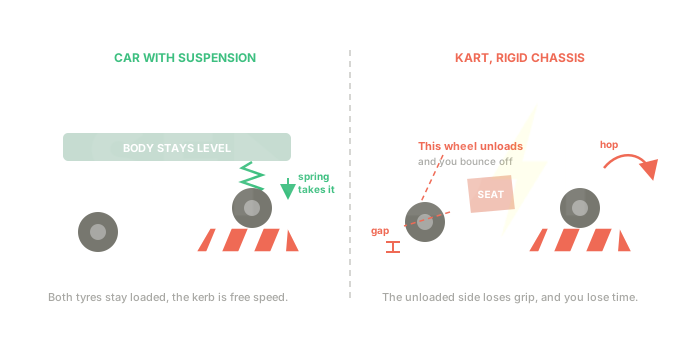
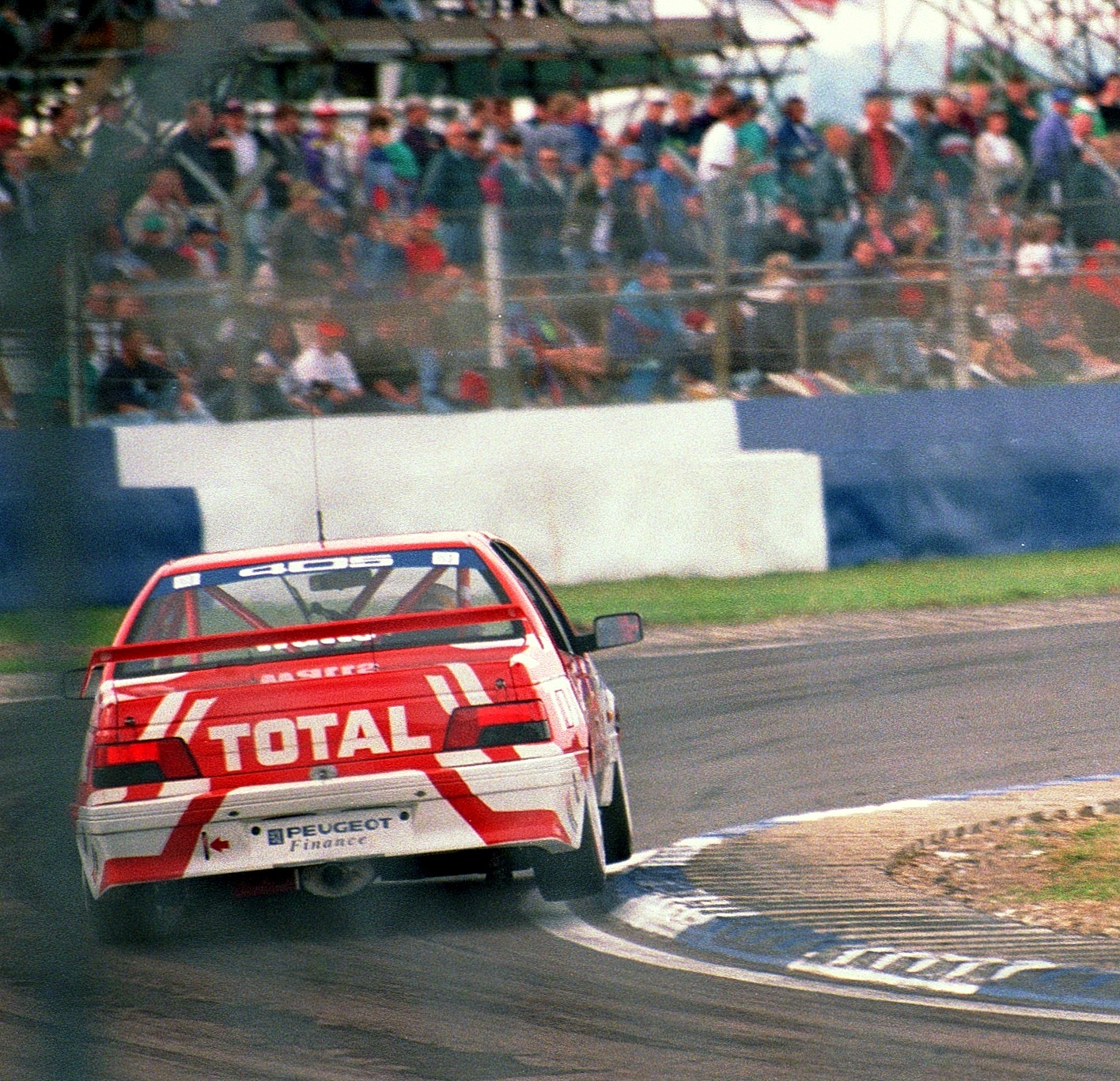
When it comes to apex kerbs, it’s very rare that you’ll end up using those, unless you’re in formula cars, where you actually can, because they’re very flat and you have suspension, so it’s much smoother to drive over them.
But when it comes to karts, you’ll notice that most of the time the apex kerbs are unusable. If you try using them you’ll probably bounce off and lose loads of time.
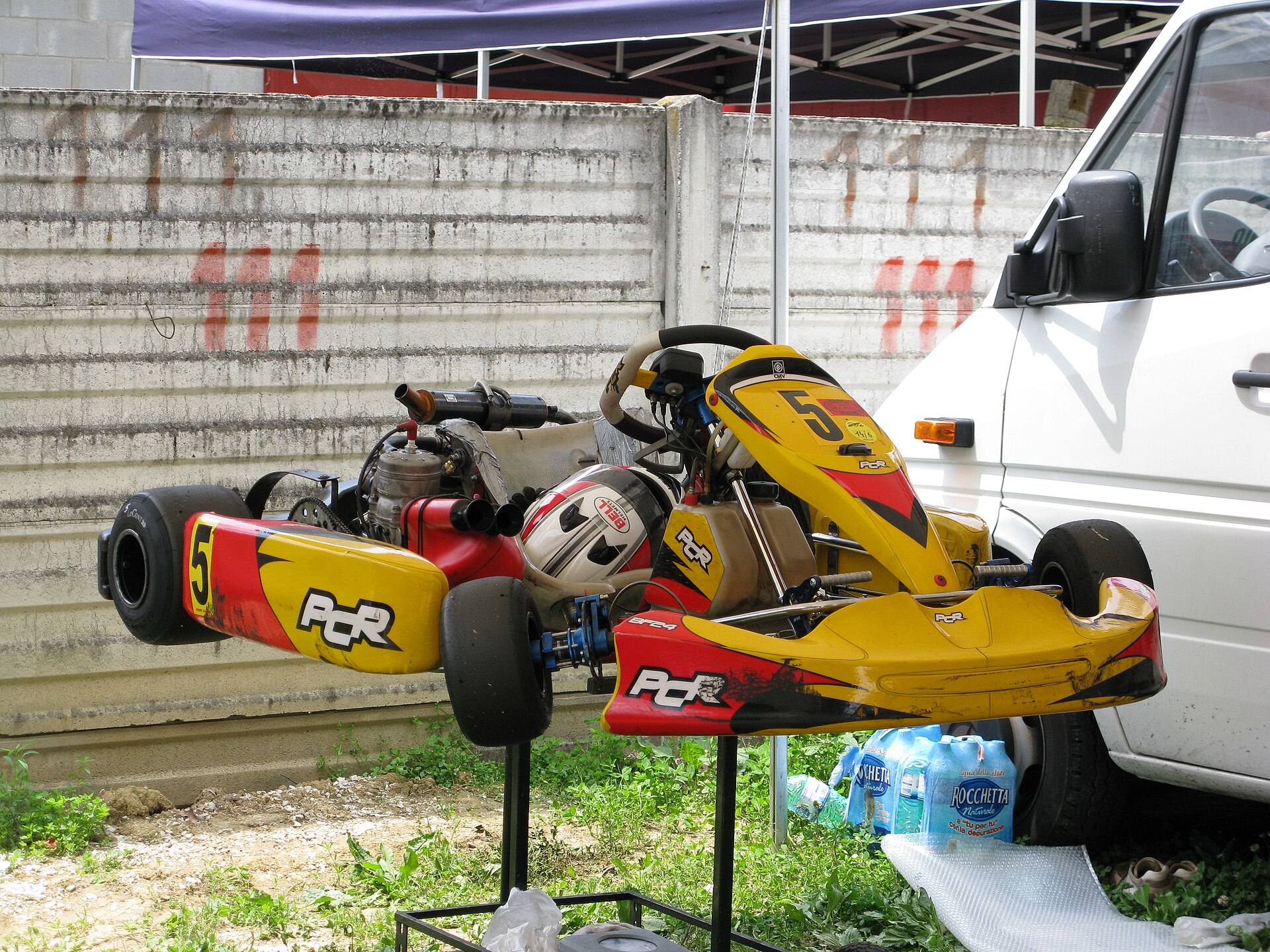
So in terms of apex kerbs, 95% of the time you won’t be able to use them, unless you have some particularly flat kerbs at certain tracks that allow it, and that will let you carry more speed.
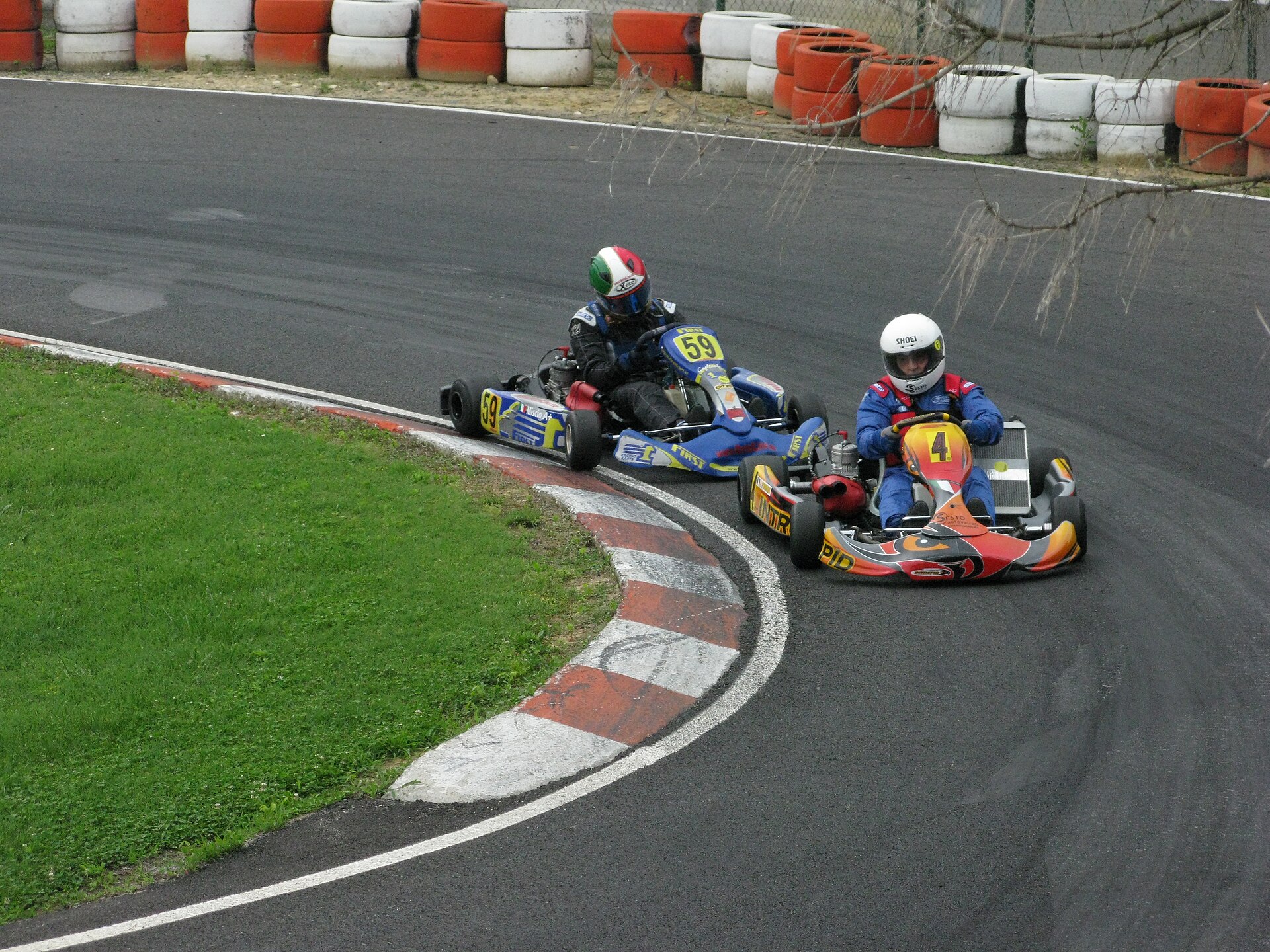
Here in Italy there are probably just a couple of apex kerbs you can actually run, one at La Conca and one at Castelletto di Branduzzo. Besides those, I don’t really see any other apex kerbs you can use without losing time. The exception is a chicane, where you sometimes have to drive over the kerb simply to cut distance.
The two reasons to avoid a kerb
So what’s the whole point behind not using kerbs in some cases?
If theory says use the kerbs on entry and exit, then I guess we would always have to use them, right? But the reality is that the theory isn’t always the right solution on a real track.
There are really only two reasons you wouldn’t use a kerb:
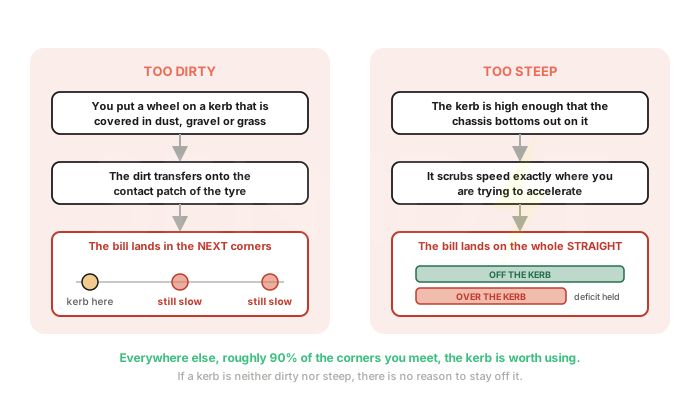
Too dirty, it puts dirt on your tires, which costs you in the corners that follow, not just that one.
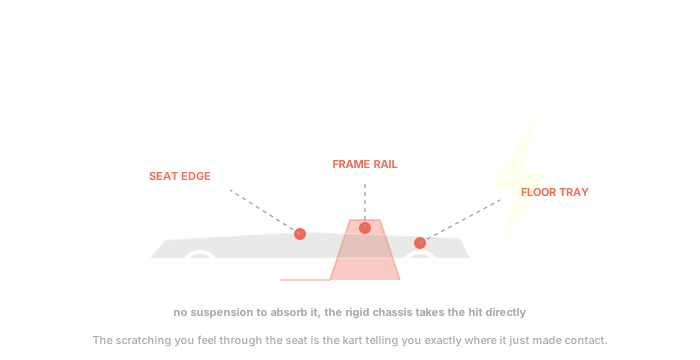
Too steep, you bottom the chassis over it, scrub speed and pick up extra drag down the straight after it. Sometimes a kerb looks flat and isn’t, and you only find out because the kart bottoms.
When the theory stops being right
In terms of grip level, you may not always have to drive the optimal geometrical line. Sometimes you have to find the grip and hunt the grip in different places.
Where there’s banking, where there’s elevation change, or maybe in places where other categories are driving through, the shifter karts, for example, because of where they lay the grip on the track.
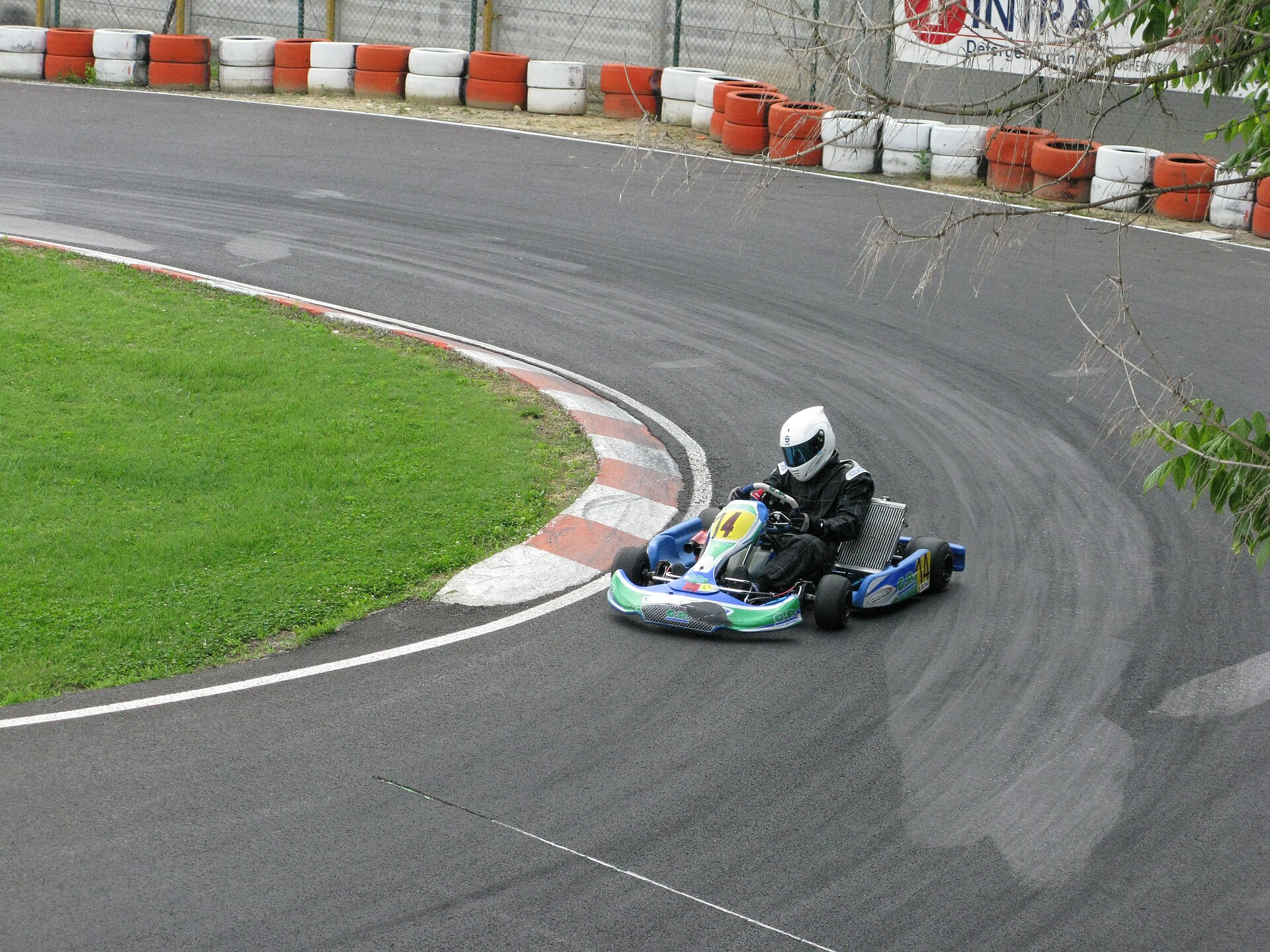
So sometimes you have to change your lines a little compared to the optimal geometric line. And the same applies to kerb usage.
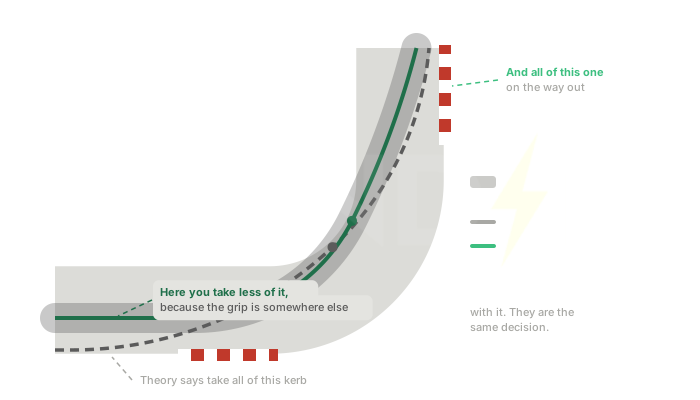
How to spot which is which
For those kerbs that are too steep, where you can feel the kart scratching on the surface, the seat scratching, the tubes scratching, those are the kerbs you want to stay away from. They’re going to slow you down.
And if you can see that every time on the exit you’re losing, even though you may carry more minimum speed at the apex, and you feel like the others are pulling away from you big time, then make sure you try the next lap staying away from that kerb.
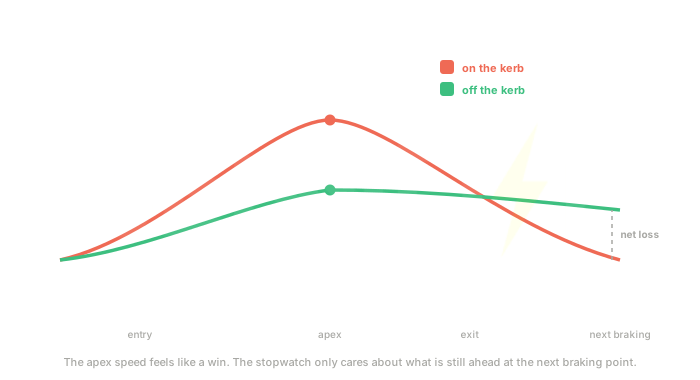
Maybe there’s nothing wrong with the kerb and you’re losing the exit for other reasons. So it’s hard to identify whether it’s the kerbs or something else slowing you down. But in a few occasions you’ll have to pay attention to that.
Why kerb usage compounds
As I said, 90% of the time you will have to use kerbs. Because think about it.
You carry so much speed on the entry of the corner by using more kerb, unless it’s super dirty or super steep, and you carry more speed because you open up the corner and make the arc wider. Then in the mid corner you have a lot more speed, and because of that you end up using even more track on the exit.
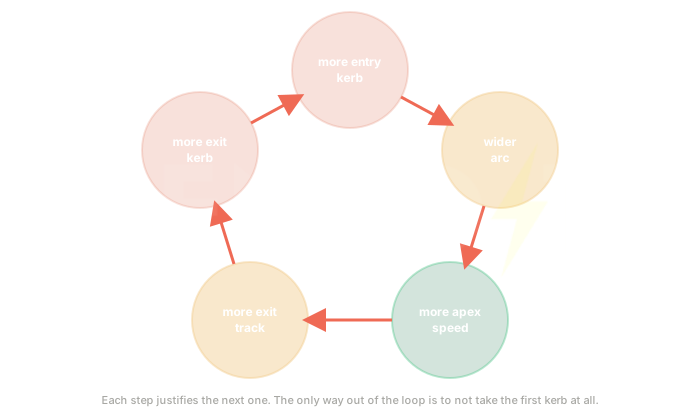
It’s kind of like a vicious cycle. The more kerbs you use, the more kerbs you need to use. The more entry kerb you use, the more speed you carry at the apex, and the more exit kerb you have to use.
Track walks and watching other drivers
That’s really the reason you have to do track walks, not only the first time you go to a track, but again and again. You always have to relearn the circuit. You can always find hidden secrets about it.
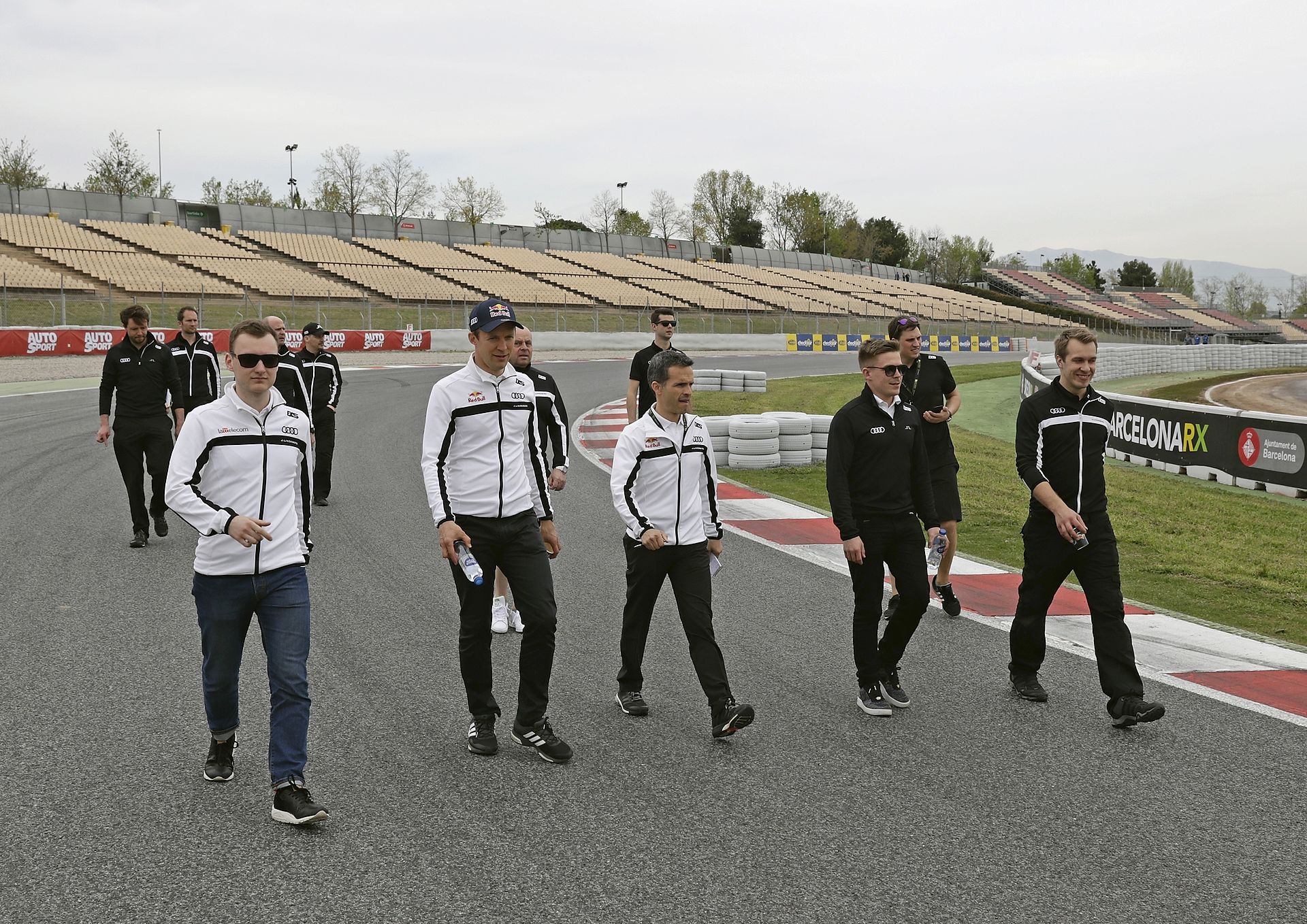
By doing so you get way better at figuring out all the nuances: the grip level, the elevation changes, the banking, as well as the kerbs.
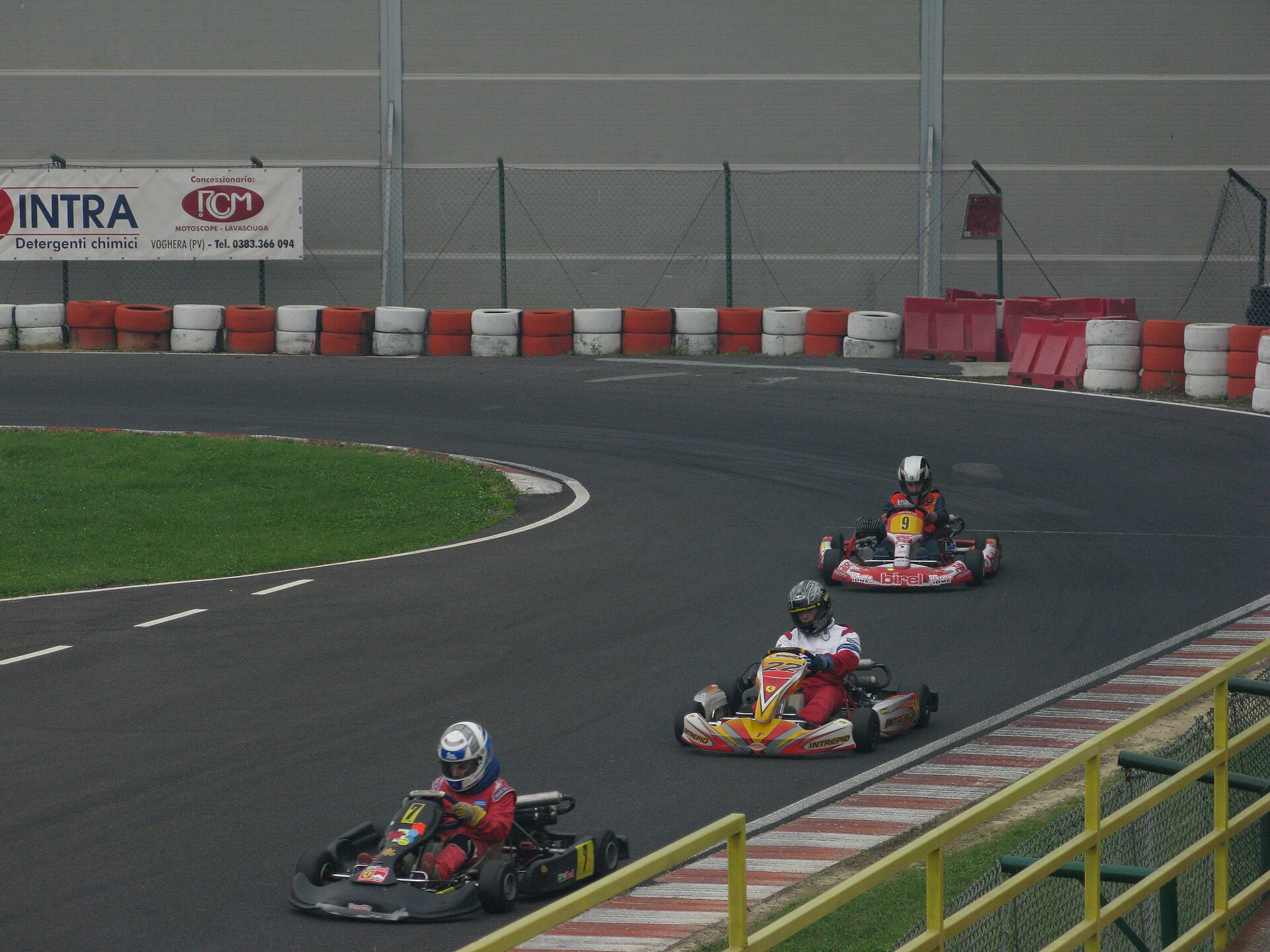
Because the kerbs are a crucial part of a track. You wouldn’t be as fast as you are if there were no kerbs. But some kerbs are going to make you faster using them, and some are going to make you slower.
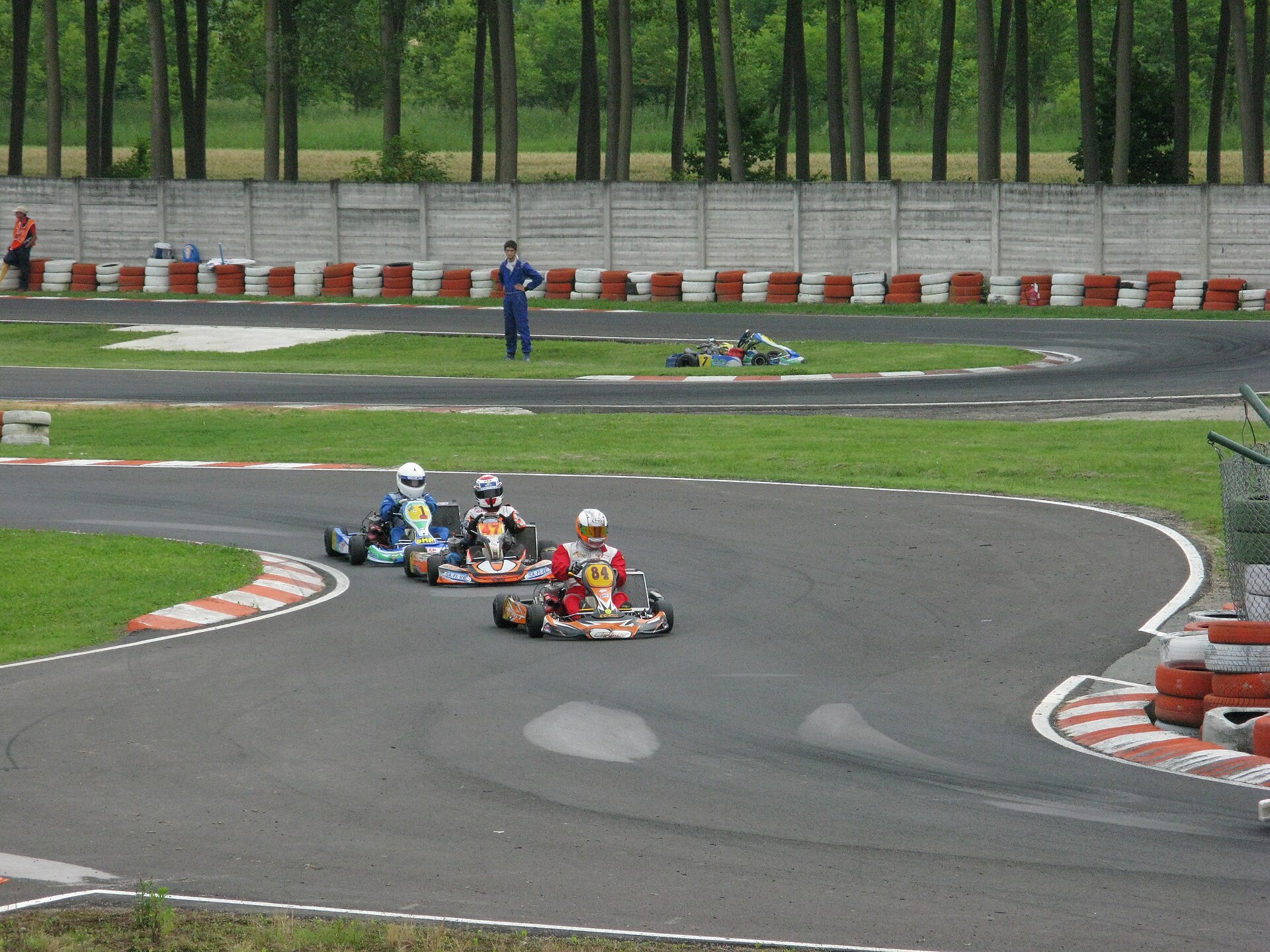
The goal is to use all the kerbs that are going to make you faster, and avoid all the kerbs that are going to make you slower. It’s as simple as that.
It’s part of the driver’s skill and discipline to do the track walk and figure out which kerbs to use and which to stay away from. Because if you end up using the kerbs you’re not supposed to, and avoiding the ones you’re supposed to use, that would be quite upsetting, and your lap times are going to suffer.
Go for a track walk, watch onboard videos from other drivers, and try to spot their lines. If someone is slightly quicker than you it may be their equipment, but sometimes it is their line. Especially at a new track, look at what they’re doing differently: are they using a kerb you weren’t, or avoiding one you were?
If you figure out the optimal kerb usage, you’ll be a lot further ahead in your driving, your lap times and your race results. It also pays to know the circuits themselves, I went through the best karting tracks in Italy separately.
Frequently asked questions
Should you always use the kerbs in karting?
About 90% of the time, yes, entry and exit kerbs open up the arc of the corner, which raises entry speed, mid speed and exit speed together. The exceptions are kerbs that are too dirty or too steep, where the cost outweighs the wider line.
Why can’t karts use apex kerbs?
Karts have no suspension, so a raised apex kerb bounces the chassis instead of absorbing it, and you lose more time than the shorter line gains. Formula cars can use them because the kerbs are flatter and the suspension soaks them up. A handful of unusually flat apex kerbs exist, La Conca and Castelletto di Branduzzo in Italy, but they are the exception.
How do you know if a kerb is costing you time?
Two signals. Physically, you can feel the kart bottoming, the seat and the frame tubes scratching over the surface. On the stopwatch, you carry good minimum speed at the apex but drivers around you pull away on the exit and down the following straight. Try the next lap off the kerb and compare.
Why does a dirty kerb matter beyond that corner?
Because it transfers dirt onto your tires. That contaminates the contact patch for the corners after it, so a single dirty kerb can cost you time in a whole sequence rather than just where you touched it.
Want me to review your onboard video personally? Send me your footage and I’ll deliver a full corner-by-corner analysis within 48 hours.
Want the full system? The 6-Month Training Program covers everything, racecraft, technique, mindset, fitness, and more. 550+ lessons, weekly live coaching, 100% money-back guarantee.
Send your onboard footage. Alessio reviews it corner-by-corner and tells you exactly what's costing you time, and how to fix it. Back within 48 hours.
Get My Onboard Reviewed → Reviewed personally by a CIK FIA World Champion, never an assistant.I promise I'll not spam you with repurposed shitty AI content but real experiences that only I, Alessio Lorandi, experienced. Written in my funny English-Italian tone of voice 😂
Alessio Lorandi is the former CIK FIA World Junior Champion, winning against Lando Norris in 2013 & F3 multiple race winner. He's helped 200+ karting drivers worldwide get faster & win WSK titles with BabyRace Driver Academy & now through Senndit, his online karting coaching platform.