When To Gamble On Slicks (Wet To Dry Karting Strategy)
Every driver went on wets with three minutes to go. One of ours started P19 on slicks and won by 11 seconds. Here is how to read a drying track and…

- Check the tires of the category that ran before you, unconsumed wets mean the track is still genuinely wet
- Read how fast the track is changing, not just how wet it is right now
- Assess your driver honestly: if they are a second off in the rain, copying the grid guarantees a bad result
- On the grid you can always lower tire pressure, but you can never raise it, so err high
- Hot track temperature, wind and sun dry a circuit dramatically faster than a cold, still winter day
- Talk to local people, every track has its own DNA for how quickly it dries up
- What made the conditions so tricky?
- How do you read a track that is drying up?
- Who could actually switch to slicks?
- Why tire pressure mattered as much as the tires
- What I told the driver before the start
- P19 to P1: how the race played out
- When should you gamble on slicks?
- How much do weather and track temperature matter?
- What tire pressures should you run?
- The parent problem nobody talks about
- The driver who said no
- Track evolution and the DNA of each circuit
- Frequently asked questions
Is it ever worth gambling on slicks when everybody else has gone on wets?
This is just a friendly reminder of how in racing, sometimes you have to really take some risks and go against the current, against what is basically herd mentality.
At ACI Round 4 we did exactly that, and it took one of our drivers from P19 to P1. Here is how the call got made.
What made the conditions so tricky?
So it was a very hectic Sunday at ACI Round 4. We were coming from two wins in a row and we were trying to go for our third win. We had just won the pre-final with one driver.
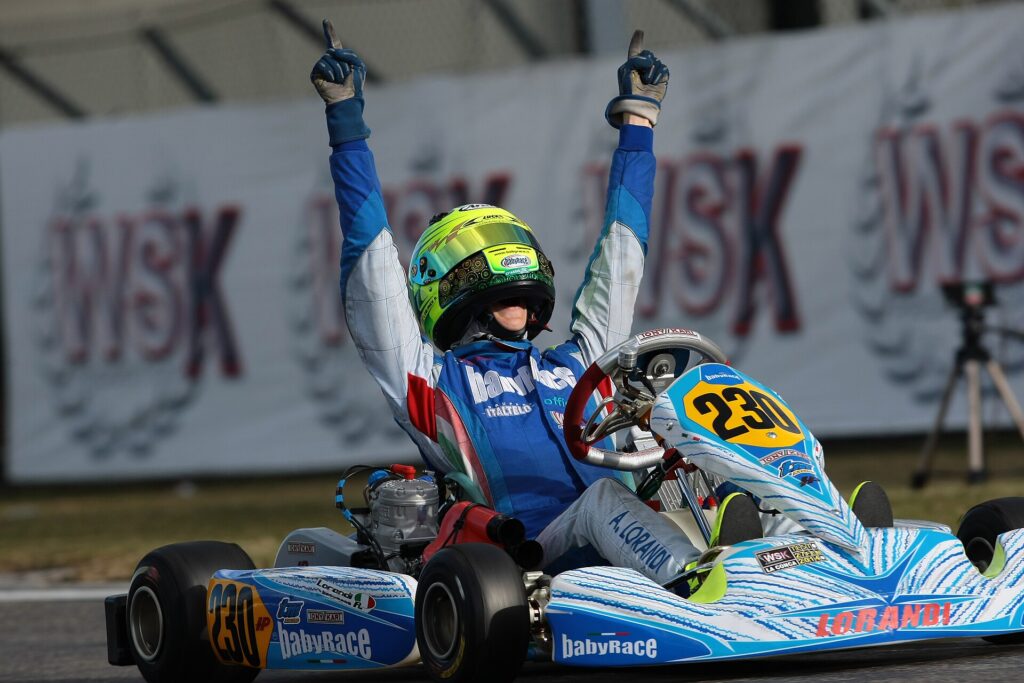
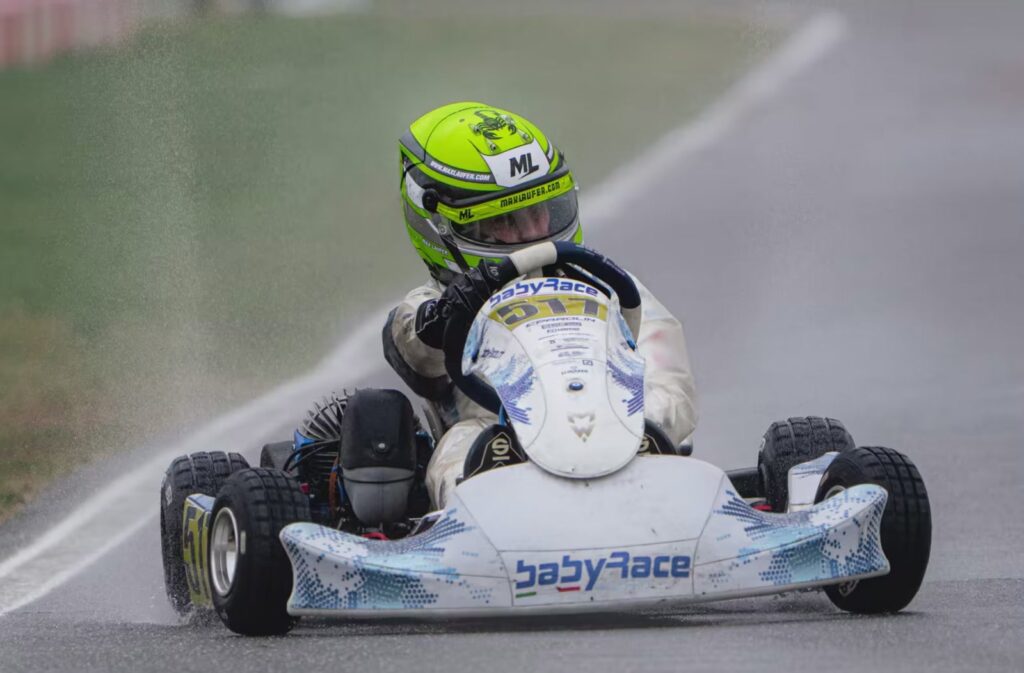
Then we were at the final, and it was very tricky conditions, because it had been raining the whole day. But in a funny way, where it would rain, then it would kind of like stop and dry up, and then it would rain again, then it would stop and dry up.
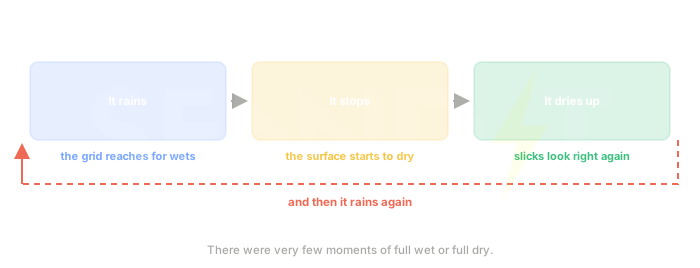
It was very unpredictable.
There were very few moments where it was full dry or full wet. It would always switch between full wet and full dry. That is a very different problem from driving in the rain, where at least the conditions hold still long enough to commit to them.
We were preparing for the final and we were there with two chassis each driver, in the paddock going into the pre-grid area. We were having to wait before taking the decision, and it was very tricky.
How do you read a track that is drying up?
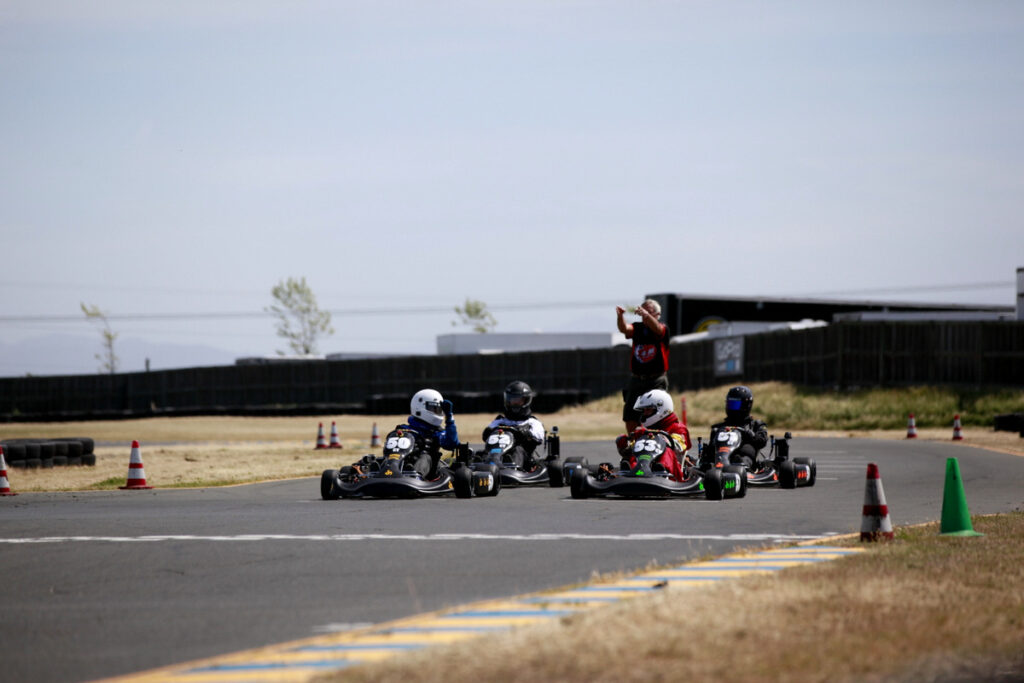
Because at first, we all wanted to go on slicks, all drivers, because it would feel like it just stopped raining and it would dry up.
But the previous category, 60 Mini Under 10, had just finished off in wets. I went to check the tires and I noticed that the tires were not consumed.
So I was like, the track still must be pretty wet.
And the other team managers probably had the same thought, because before going onto the grid, with three minutes remaining, every single driver went on wets. Only one driver went on slicks, and he started at the back.
And then in that moment, three minutes before the grid, I just went on the track once again. I literally put my hand on the track. I ran, even though I couldn’t really do that, because I was kind of blocked and forced to come back away from the track.
But I literally went inside the track to inspect the tarmac. I put my hand on the tarmac. It was wet.
But I noticed that there were starting to be some small areas where the track was drying up. And I could see, almost in front of my eyes, that that gray area was expanding more and more at a very rapid pace.
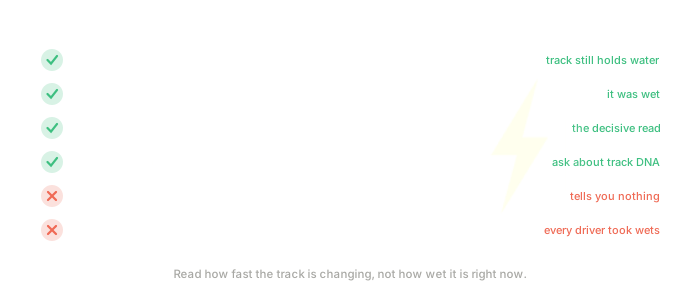
I was quite shocked, and I was like: you know what, we need to gamble.
Wet tires on a genuinely drying track get destroyed. If the class before you comes in with wets that are not consumed, the surface still holds real water, no matter what the sky is doing. It is the cheapest and most reliable read you can get before the grid.
Who could actually switch to slicks?
And thankfully we had a lot of drivers in the final, about 10 drivers. And we were like, okay, let’s take a gamble.
I wanted to gamble with most drivers, to be honest, because I really was a bit skeptical at first, even of my own decision. But I was like, you know what, many drivers are not even that good in the wet, so why not gamble with them?
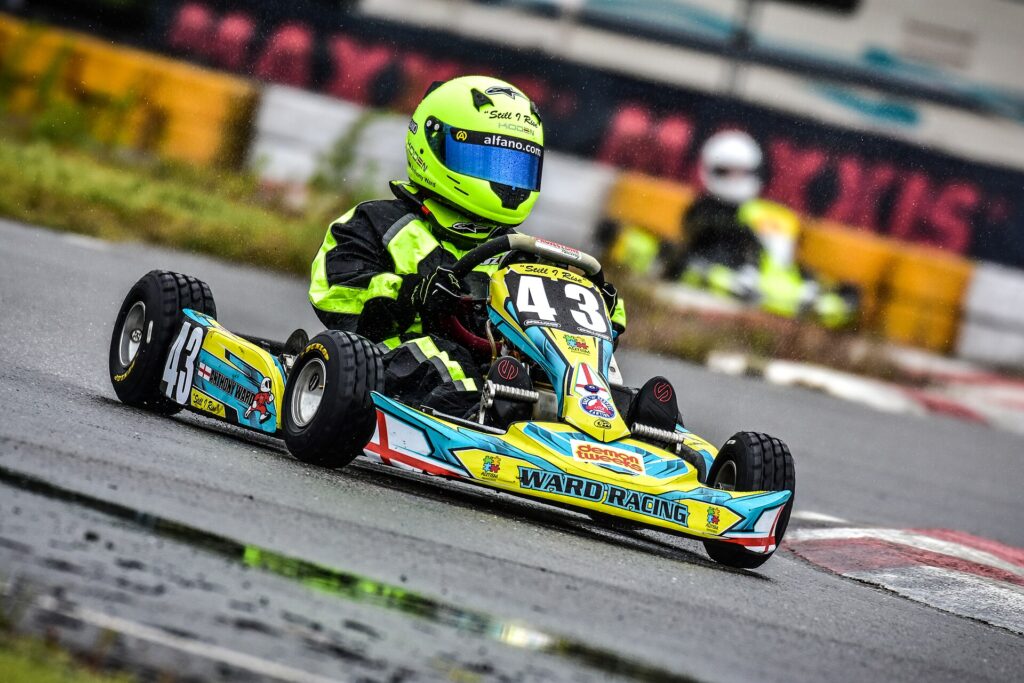
Worst case scenario, it is going to be a bad decision. Best case scenario, we would have won the race.
So I opened up the radio and I was like, let’s go slicks. But then the mechanics told me we are already inside the grid, we can’t go back.
So there was just one driver left, and I was like, okay, go on slicks.
And that driver had the luck to not get into the gate of the pre-grid with three minutes left. The mechanic, who wasn’t that experienced and didn’t have the speed, somehow found the speed. Within two and a half minutes he managed to change the tires and put the right spacers and everything to get onto the slicks.
Why tire pressure mattered as much as the tires
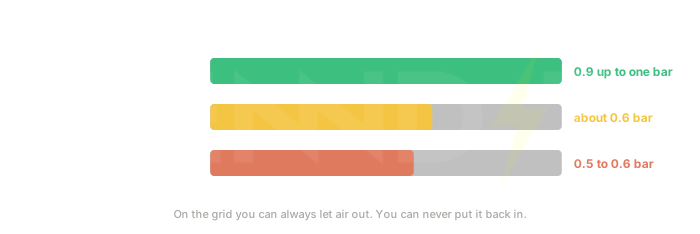
And I was like, go up on the tire pressure. So he left the high tire pressures, and so it went 0.9 bars instead of like 0.6.
But that was, I would say, a good decision, because as it turned out, after the formation lap everybody realised this is going to be dry very soon.
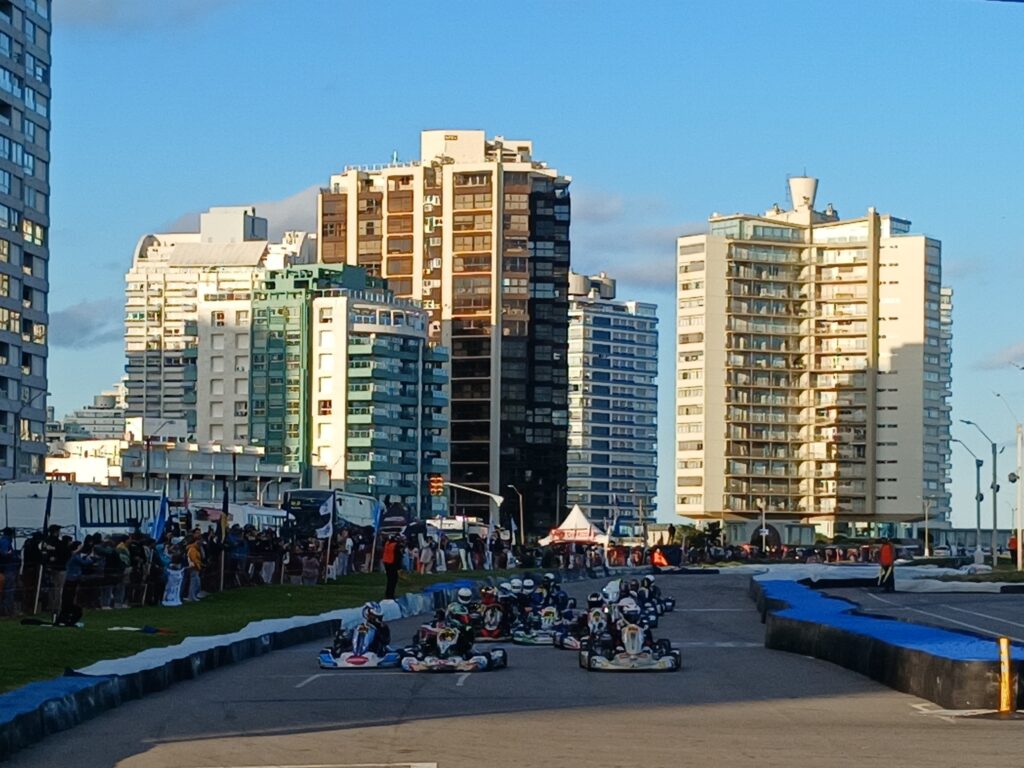
And so it was a nine lap race. I was expecting it to take way more time to dry up, to be honest. Maybe I was like, okay, maybe at the end of the race it is going to dry up. But luckily it dried up super fast, and there was just one formation lap.
What I told the driver before the start
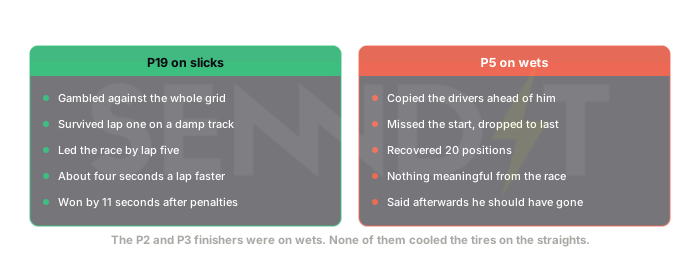
And this driver started P19. I mean, we had drivers in the top 10, top fives. But you know, the thing is that you can’t really gamble too much with the drivers starting at the front, so everybody just copied each other and they all did what the drivers at the front did.
But again, sometimes you have to go against the current and you have to take something different. And in that case it really worked out.
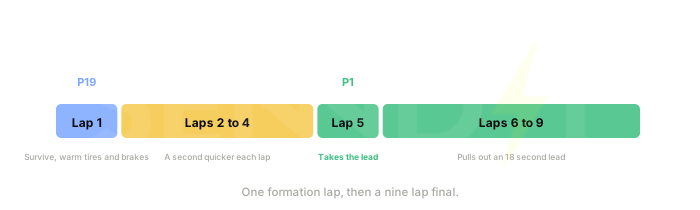
The driver in P19, he survived on lap one. That’s exactly what I asked him. So the only thing I told him before the start, I was like:
Mate, if it works out you’re gonna win. You just need to survive the first lap. Warm up the tires as much as you can, warm up the brakes, make sure you stay on the racing track for the first lap, when it’s going to be damp and you still have kind of like cold tires.
And he listened to me. I told him to change his helmet, because he couldn’t change his visor last minute, so I told him to use the other helmet. We literally put the helmet on like one minute before the flag and he was out.
P19 to P1: how the race played out
And he survived that one. He kept his position, he gained a few in the following couple of laps, and then the race was on.
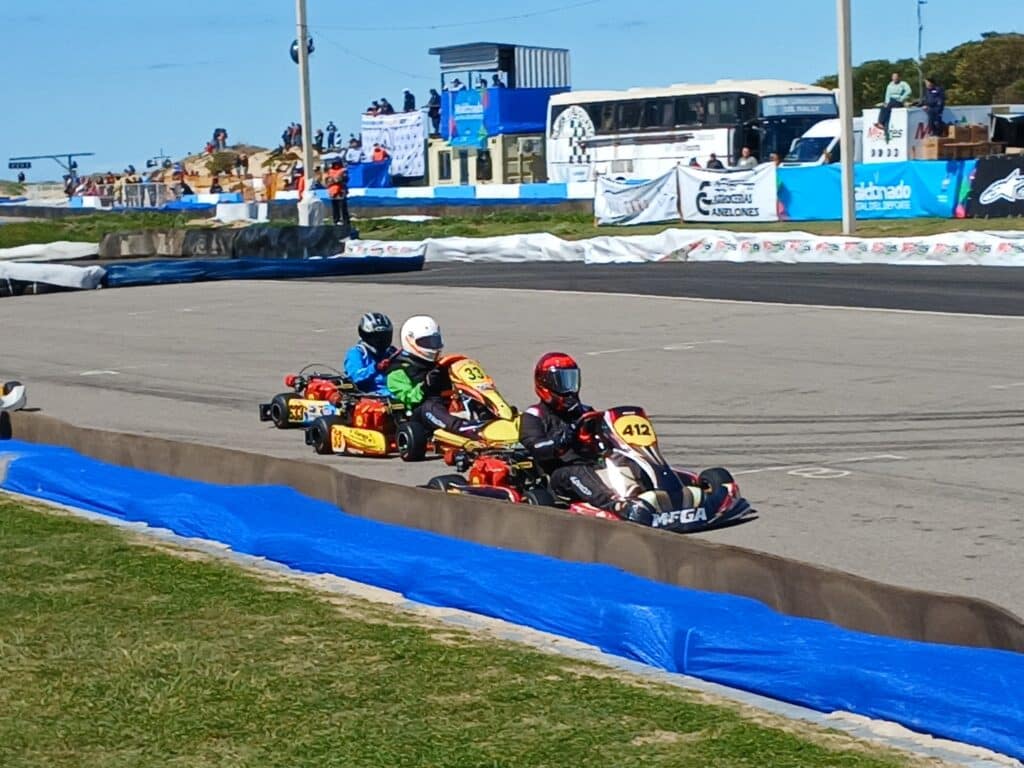
Everybody else started to plateau, whereas he started to improve one second every lap. And he ended up going from P19 to P1 in like lap five. And then from lap five to lap nine, he pulled away to an 18 second lead, which was enough to win.
And you know, he even managed to get a bumping penalty of five seconds, because I think he bumped somebody who was defending. And then he also in the end got a three seconds penalty, because the guy who he bumped kind of appealed against him. So he got a total of eight seconds penalty.
But he still managed to win with 11 seconds, because he had that like 19 seconds gap that he built up in four laps. He was like about four seconds faster a lap than the drivers behind him.
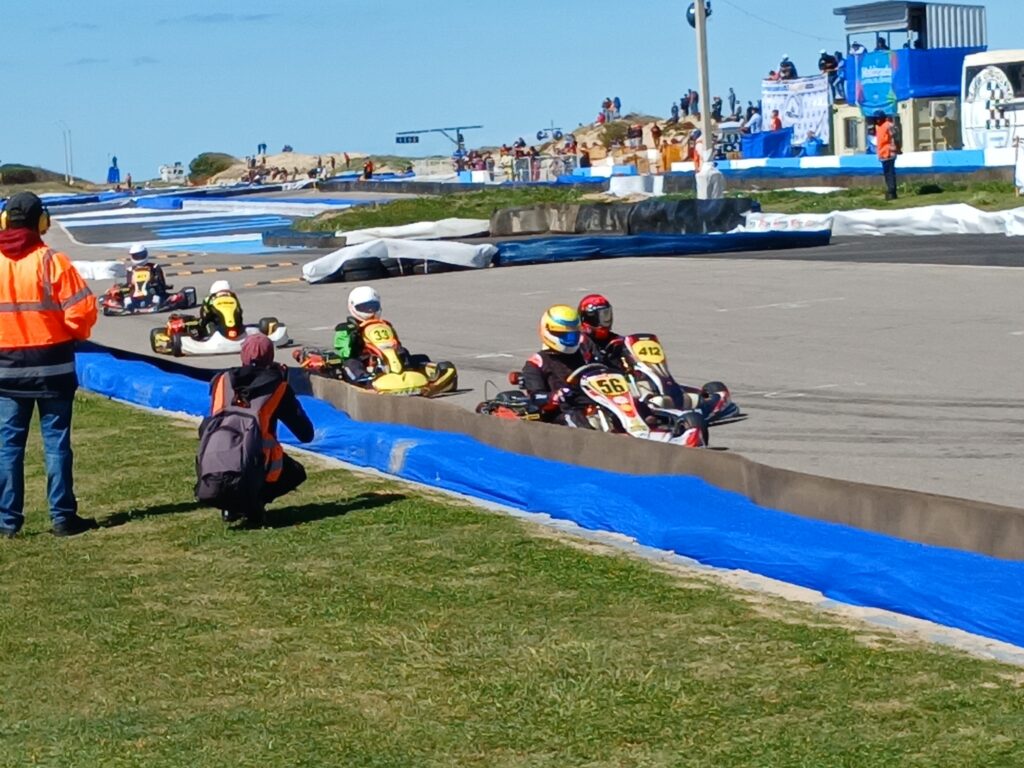
So that really showed how sometimes you have got to really take gambles.
And I really wished we could have taken that gamble with more drivers. But still, I’m happy, because we managed to take a gamble at least with that one driver, whereas other teams and other drivers didn’t feel like taking that gamble.
I felt like, you know, it felt quite easy in hindsight. Everybody thought I was a wizard because I took that decision, of course, as a team manager.
When should you gamble on slicks?
Obviously in retrospect I was like, this is quite eye-opening for the future. Because the decision making should be: whenever you get this kind of situation, you should always try to assess the driver level in the wet.
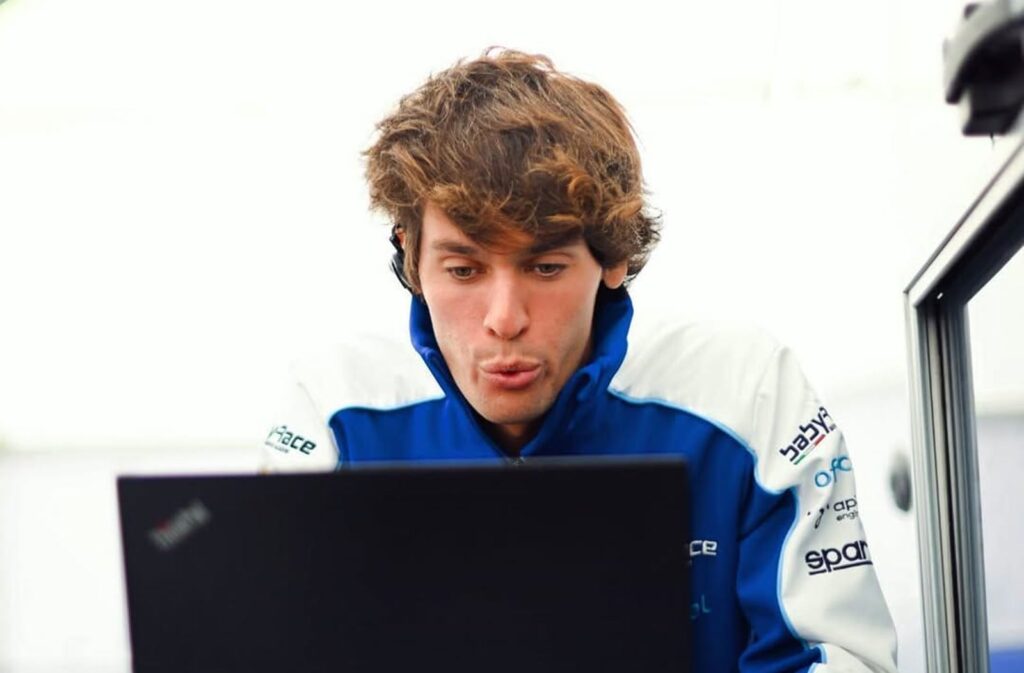
For example, if you’re going from wet to dry, from rain tires to slicks, you have to always think about, okay, what’s the worst case scenario? Okay, worst case scenario on slicks, we have to retire, we take no points, that’s it.
But if you are, for example, a driver that’s not experienced yet, or doesn’t know the track very well in the wet, or if you’re a coach or a mechanic or a manager and you’re trying to decide last minute, you always have to think, okay, how is this driver going to do anyway in the wet against the drivers who are at the front?
If he’s normally like one second off in the rain, then he has almost no chance given equal opportunities, right? So in that case it just makes full sense to really go and gamble in doing whatever is different from the others.
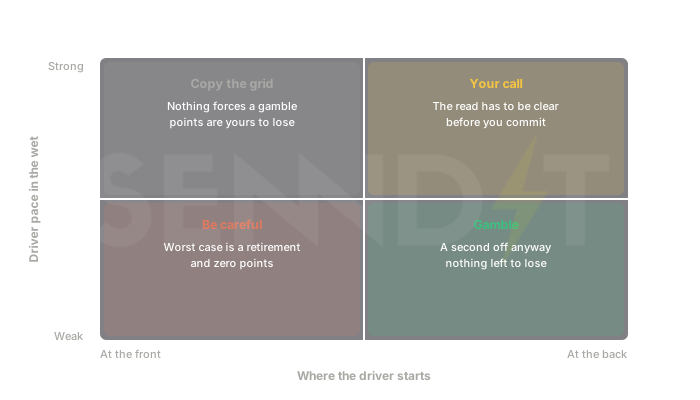
So I always believed this, and now it was actually really eye-opening. And I feel very confident for the future that anytime I have drivers that are struggling in the wet normally, I’m going to be like, you know what, with these guys I’m just definitely going to go on and do the opposite decision. Even if that means destroying completely their races, if it starts to rain even more and you go on slicks you’re completely screwed.
But I feel that is the right thing to do for the future.
But again, sometimes you really have to risk. But also it’s not just about risking randomly. You also have to kind of take educated guesses and educated risks, and really try to come up with some creative ideas behind it.
If somebody starts P25 and they do the same strategy as everybody else, the best scenario is maybe a P10 or P11, but the worst case is a P35 or a DNF. If you get the gamble right, your best case is a P1. Start at the back and you have nothing to lose. Fight for a championship at the front and you have to be more careful.
How much do weather and track temperature matter?
Of course it depends a lot on each scenario. Especially if you’re doing this gamble in the summer, where the track temperature is already quite hot and there’s a little bit of wind and the sun comes out, that combination of those three things is going to massively increase your chance of getting the track to dry up.
And obviously if we’re comparing against a cold winter day with barely any sun and barely any wind, in that case it’s going to be very hard for making this strategy work.
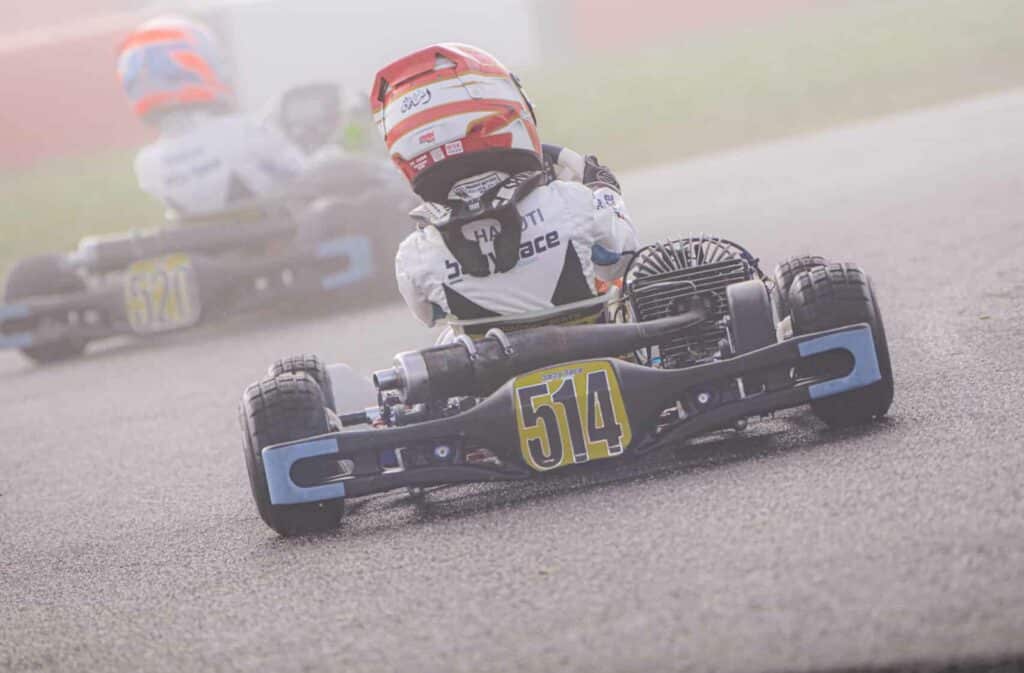
But again, this doesn’t have to work all the time.
What tire pressures should you run?
And in that case, you have to always try to be strategic with what tire pressure you want to run, and the sprocket. Because at the end of the day, it doesn’t really matter too much the setup. It’s mostly about sprocket and tire management.
You can’t always tune the tire pressures last minute on the grid. You can always go lower. You can’t really go higher, unfortunately.
I mean, if you’re too low and it starts to rain hard, then you’re kind of screwed. You always want to have more air in your tires if it’s like damp and you’re on the slicks. You want to be quite high on the tire pressures, like you can even go up about one bar.
Instead, if you are on wets and it’s drying up rapidly, you should go very, very low, even like 0.5 or 0.6 bars. Because wet tires don’t really like to drive in slicks conditions, so they need to be low to kind of compensate that. But of course the tires are going to be kind of destroyed.
What drivers should be doing to adapt their driving style, if they drive on wets on a dry circuit, is they have got to cool down the tires on the straights. And they need to remember that.
Unfortunately I told the drivers that were on wets to cool the tires down on the straights, but no drivers really did that, and I was very upset. And yeah, as a consequence, none of those drivers on wet tires managed to get onto the podium, which by the way, the P2 and P3 were on wets. So I was upset from that side too.
Tire pressure is a one-way door once you are lined up. Slicks in damp conditions want high pressure, up to around one bar. Wets on a drying track want very low, 0.5 to 0.6 bar. Set them in the direction you can still correct.
But sometimes you need to really forget about what everybody else is doing around you, use your experience, and sometimes you have to be a little bit brave, I would say. And you don’t have to really worry too much about the consequence.
The parent problem nobody talks about
But one thing that influences this decision definitely massively is what would the parents say. What would the dad say, what would the mom say of the driver, which unfortunately is something I always really hate having to deal with. It comes back to the driver-parents relationship more than most people expect.
There are some parents that are very painful to work with, and those kind of parents are the ones that, if anything goes wrong, they are the first ones to kind of attack you. So you can’t really try anything crazy with those guys, because they’re always going to be ready to pinpoint that and destroy your day in a way, and just literally be a pain.
But sometimes you find, fortunately, some open-minded parents, or even sometimes drivers’ coaches, that are willing to take some risks. And they will trust you with whatever you do, and that’s the best.
Because I wanted to do the same gamble with a bunch of other drivers, but I knew that those parents were going to be very hard to be dealing with if the strategy wouldn’t have worked. And so I just didn’t bother. I was like, you know what, I don’t want to ruin my day, they’re just going to do whatever the others are going to do. Because I don’t want to deal with the mom after the session.
But to be honest, that goes to show you how sometimes parents can be really detrimental for their kids’ success. Whereas the drivers’ parents that are the most laid back and the most supportive and the most trustworthy towards the team and loyal, then those are the ones you can try something sometimes crazy with, that will work spectacularly well, like it did in this case.
So if you’re a parent listening to this, as long as you have joined a professional team, you have got to let them do their job and just have faith in what they do.
The driver who said no
And as well as the driver. I was on the grid and our driver who was further up the grid in that moment, the one who won the pre-final, started P5.
And I was like, mate, do you want to go and take the gamble, or do you want to do what the others in front are doing?
And he was like, no, I prefer to not risk.
I was like, you sure mate? I think it’s gonna be dry.
He’s like, no, I feel like I don’t want to risk.
And then after the race he was like, I should have done it.
Like, mate, I asked you. You wanted to do what the others did, and that’s what happened.
Then he was a bit unfortunate, because he pressed the wrong button on the start and he couldn’t start, so he had to start from last. And he managed to come back and recover 20 positions, but I mean, he still didn’t manage to do anything meaningful about his race.
But yeah, sometimes you have got to take those bets. And I was like to him, you know mate, but you’re not that good in the wet. That’s exactly what I said. And he’s like, no but I feel… yeah. So I was like, ah never mind, you know, do whatever you want. And then I just left.
Track evolution and the DNA of each circuit
But yeah, this is a friendly reminder that sometimes you need to really be open to taking bets, taking some risks, and be willing to take the risk. Sometimes, most of the times, it’s not gonna work. A few times it will work though, and it’s going to go spectacularly well.
And I was very pleased. This time we brought the team the third win in a row at Babyrace, ACI Round 4, the 11th win of the season with six different drivers. And I was super happy to step on the podium and celebrate that one, because I didn’t expect it was coming.
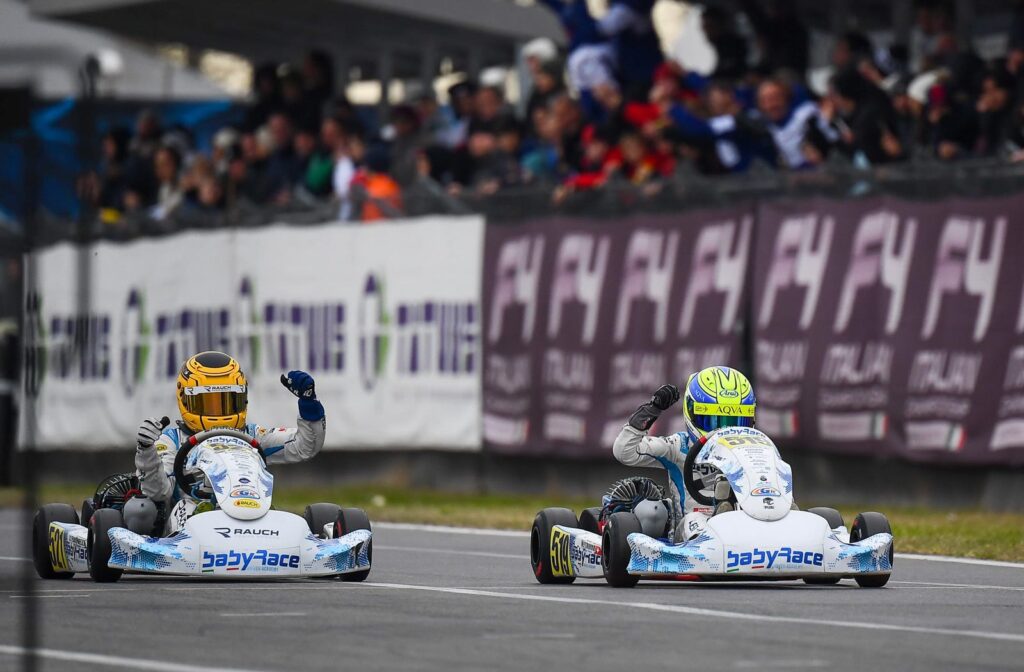
And yeah, it was kind of a chilled race, because with 18 seconds gap it was quite fun.
But anyways, remember, you have got to sometimes take some risks. Almost like in Vegas, in a casino. It’s not always what everybody else does that works. Sometimes you have to go and take the new road, that is sometimes going to be the thing that makes a difference to your race, or sometimes to your championship, or sometimes to your career.
So always be open-minded, always look for the conditions that are changing rapidly. And yeah, remember that track evolution is a real thing, and try always to learn about the DNA of each track, so that you can tell exactly how quickly each track is going to dry up or grip up.
And yeah, to be honest, I didn’t really know that track. But luckily I was able to talk to some local people and they told me, oh, this is going to dry up very quickly.
So again, it all comes down to information. The more information you get, and the more high quality information you get, the better it is. And that helped me out massively, and I hope it will help you too.
Frequently asked questions
How do you know when a wet kart track is about to dry out?
Look at the rate of change, not the current state. Small gray patches that spread visibly within a couple of minutes mean the track is drying fast. Also check the tires of the category that ran before you: if their wets are not consumed, the surface still holds real water. Track temperature, wind and sun all accelerate it.
Should a beginner gamble on slicks in changeable conditions?
Only if the grid slot makes the downside cheap. A driver starting near the back who is not strong in the wet has almost nothing to lose, so the gamble is rational. A driver fighting for a championship near the front should be far more careful, because the worst case is a retirement and zero points.
What tire pressure should you run on slicks in damp karting conditions?
High, around 0.9 to one bar, rather than a typical 0.6. On the grid you can always release pressure but you cannot add it, so setting off high keeps the option open. If you go out too low and it rains hard again, there is no way back.
How should you drive wet tires on a drying kart track?
Cool the tires on the straights, and run very low pressures, around 0.5 to 0.6 bar. Wet tires overheat quickly on a dry surface and will degrade heavily regardless, but cooling them on the straights is what keeps them alive long enough to finish the race competitively.
Send your onboard footage. Alessio reviews it corner-by-corner and tells you exactly what's costing you time, and how to fix it. Back within 48 hours.
Get My Onboard Reviewed → Reviewed personally by a CIK FIA World Champion, never an assistant.I promise I'll not spam you with repurposed shitty AI content but real experiences that only I, Alessio Lorandi, experienced. Written in my funny English-Italian tone of voice 😂
Alessio Lorandi is the former CIK FIA World Junior Champion, winning against Lando Norris in 2013 & F3 multiple race winner. He's helped 200+ karting drivers worldwide get faster & win WSK titles with BabyRace Driver Academy & now through Senndit, his online karting coaching platform.