How A Drone Helps You Learn A Track Faster
A drone shows you the racing line from above - track usage, apexes and grip patches an onboard camera cannot see. Here is how to use one and what t…

- A drone shows you the racing line from above, something no onboard camera can do
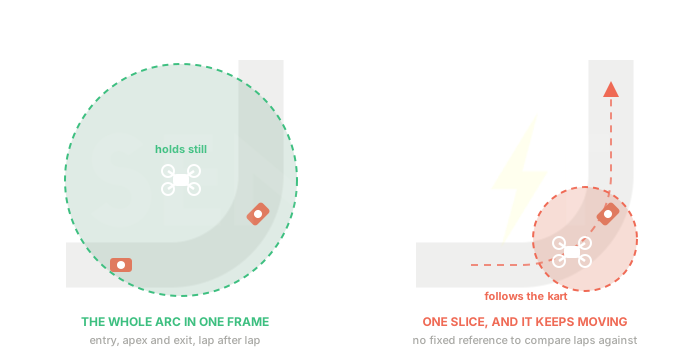
- Park it stationary above a corner and cover the whole arc, rather than chasing the kart around
- From the top you can see grip patches and different tarmac surfaces that are invisible from the seat
- Focus on entries first: the exit is only ever a consequence of the entry
- A 249 gram drone like the DJI Mini needs no licence, and costs around 350 euros
- Buy the controller with the integrated screen, it is worth far more than the extra 50 euros
- Why use a drone to learn a track?
- How is it different from onboard video?
- Seeing grip patches and tarmac from above
- Rules, licences and safety
- What to actually look for in the footage
- Telling a driving problem from a chassis problem
- Which drone, and how to not run out of battery
- Frequently asked questions
Can a drone really teach you a track faster than onboard footage?
If you’re trying to learn a new track, one of the coolest hacks you can use is to get yourself a drone, hand it off to your mechanic or to your coach or to your parents, and get them to shoot videos of yourself driving around the track.
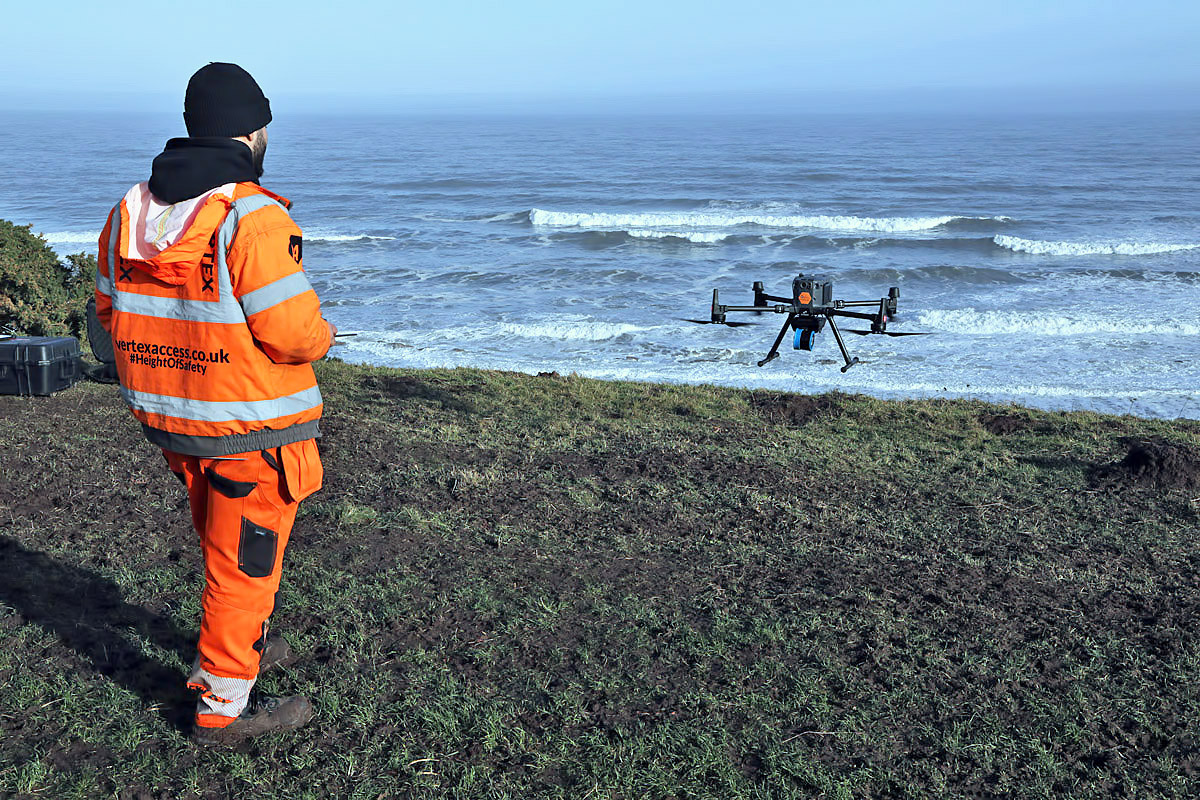
By being stationary in each corner, you can literally learn from the outside what kind of lines you’re doing.
Why use a drone to learn a track?
That is a bit different from the onboard videos. Of course you can learn so much from the onboard videos, from your Insta360 or from your GoPro. But the reality is that with the drone you can really understand a lot about the track as well.
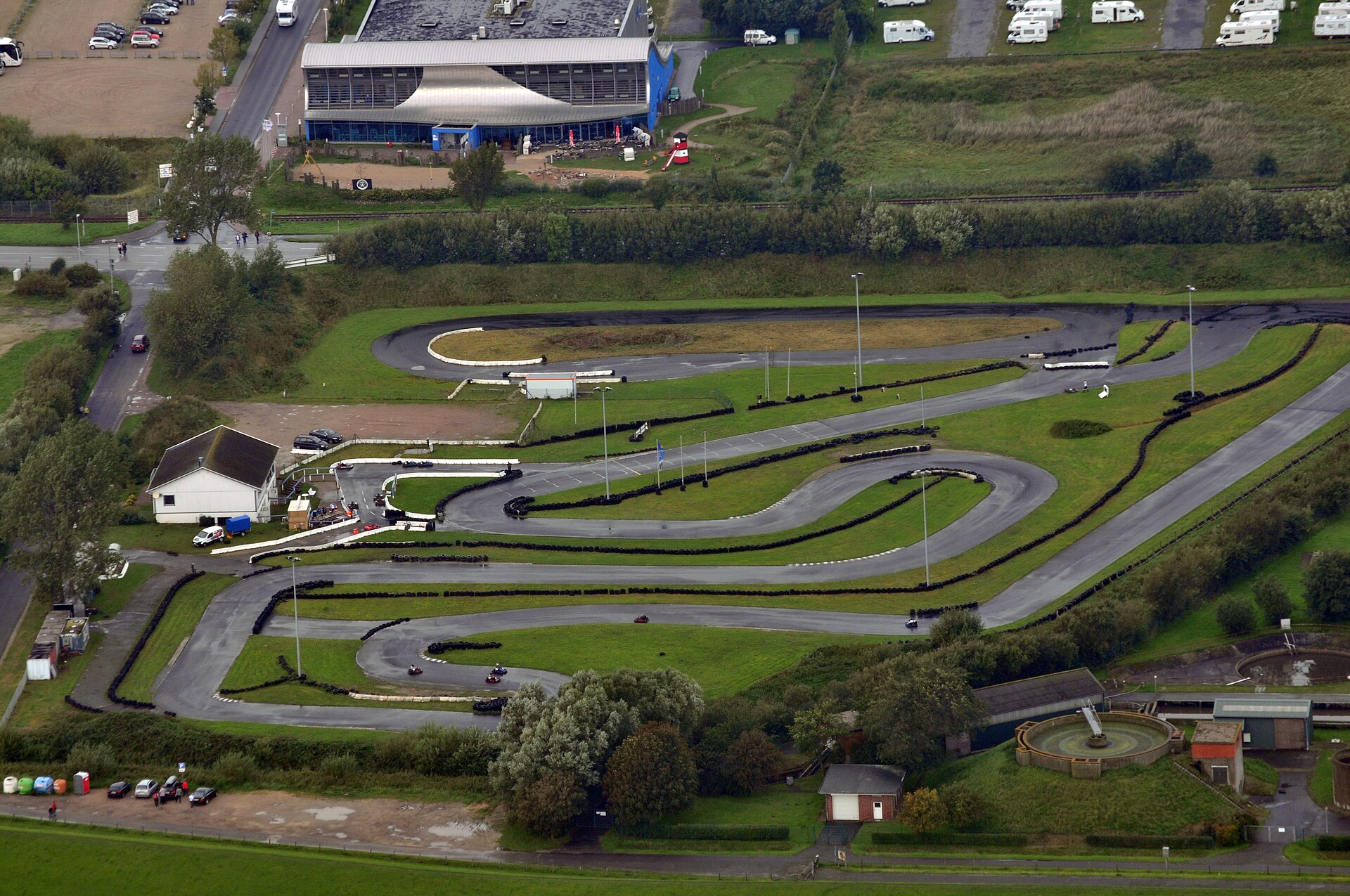
Think about it. When you shoot a video from the top, you can literally see the track layout, the corner layout, whether the corner opens up, where the corner gets suddenly very narrow. You can learn all sorts of things.
How is it different from onboard video?
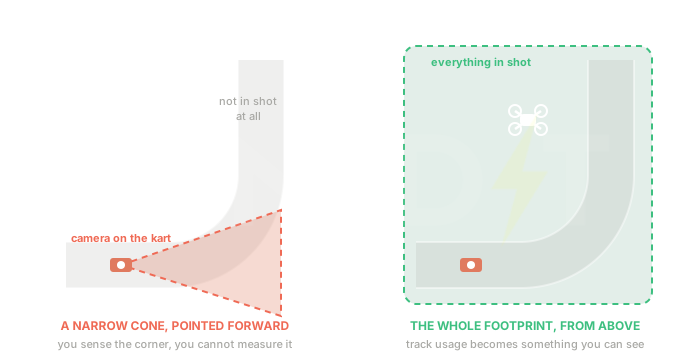
It’s been very useful in understanding whether drivers have been early apexing, or whether the drivers are not using enough track on the entry and keeping half a metre from the white line.
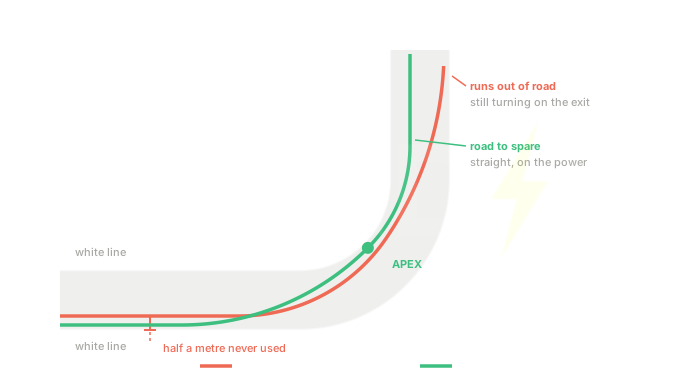
To be honest, on the onboard videos you can’t really tell that much. When you go through an onboard video it’s not that clear how much track you’re using.
You can still sort of sense it, of course, from a GoPro or an Insta360, but it’s not exactly the same as when using a drone. So it’s much more clear.
This does not replace video analysis, it adds the one angle video analysis has always been missing.
Seeing grip patches and tarmac from above
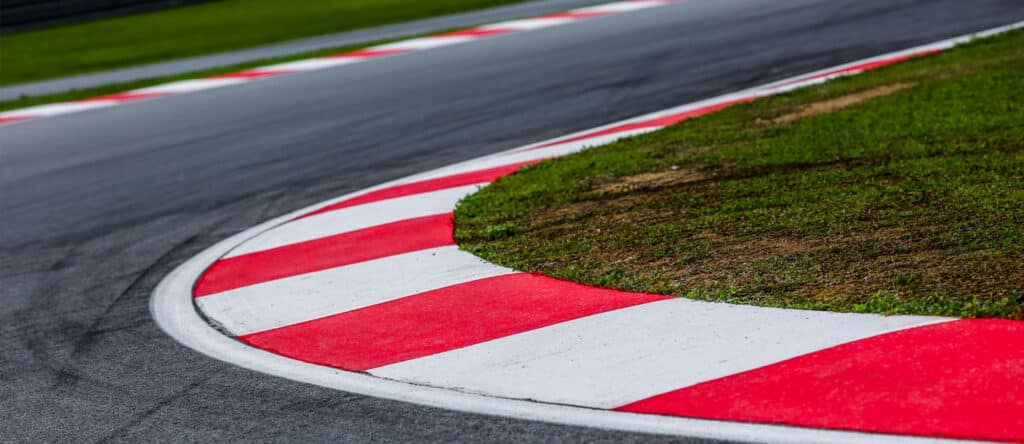
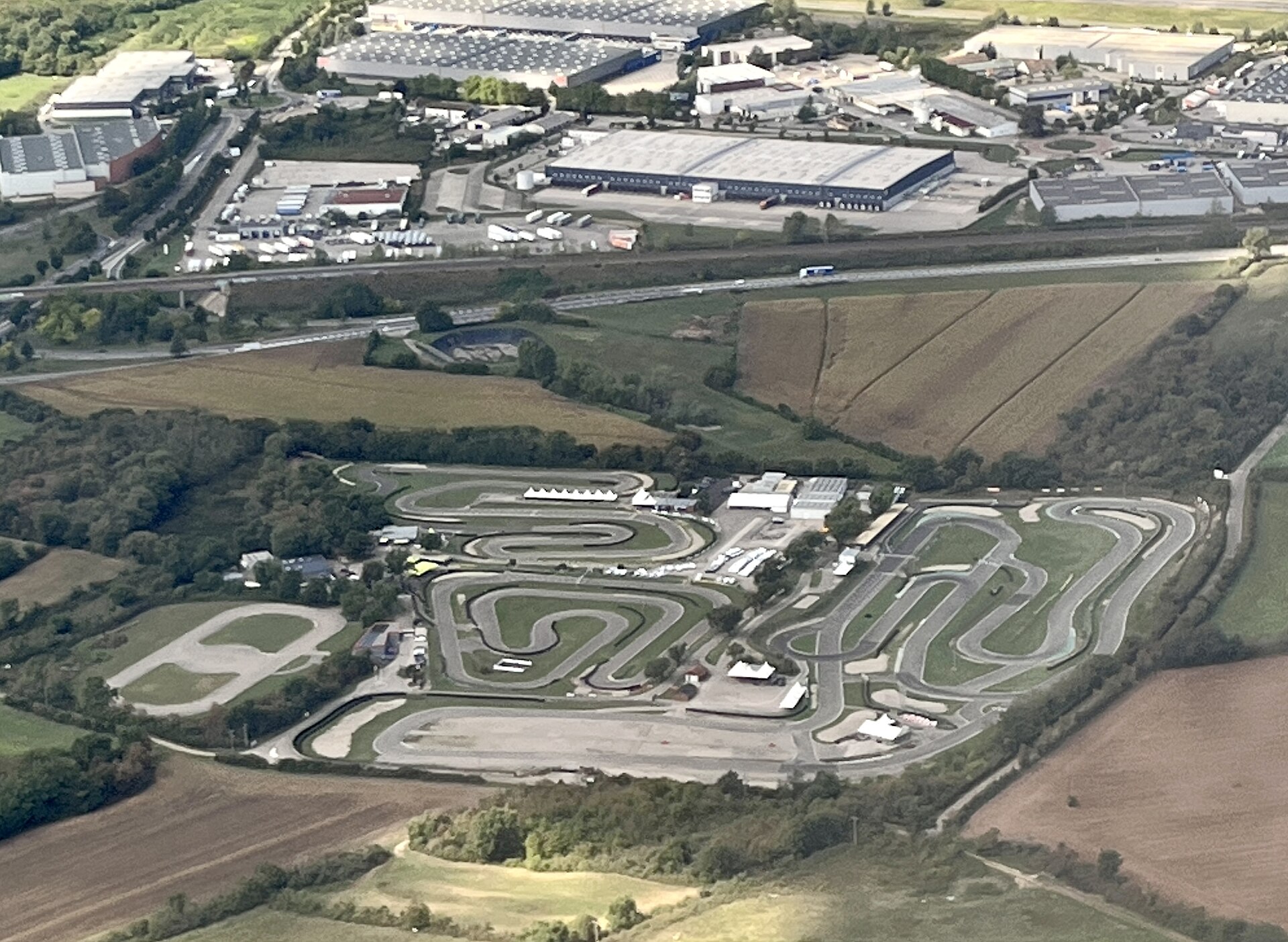
You can also see the different grip patches from the top. You can see where it’s more black than in other places. You can also see the different track tarmac, sometimes you will see different layers of tarmac.
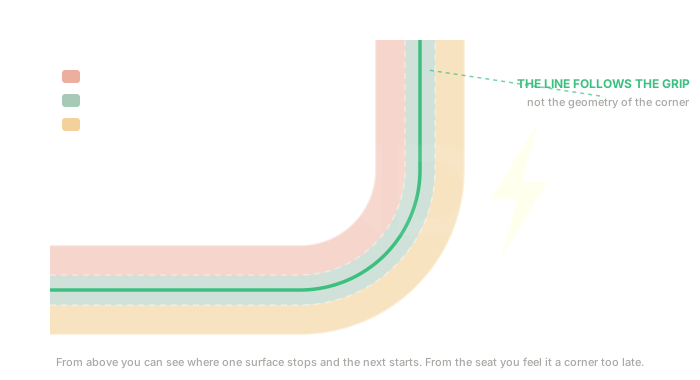
We just came back from a race at ACI Round 4, and it was quite incredible how different the track was from one metre to the other. There were so many different types of tarmac, and that made it quite tricky, because the grip level would be different all throughout.
Visually you would see three or four different tarmacs, and it would be quite tricky to drive and also to set up the kart.
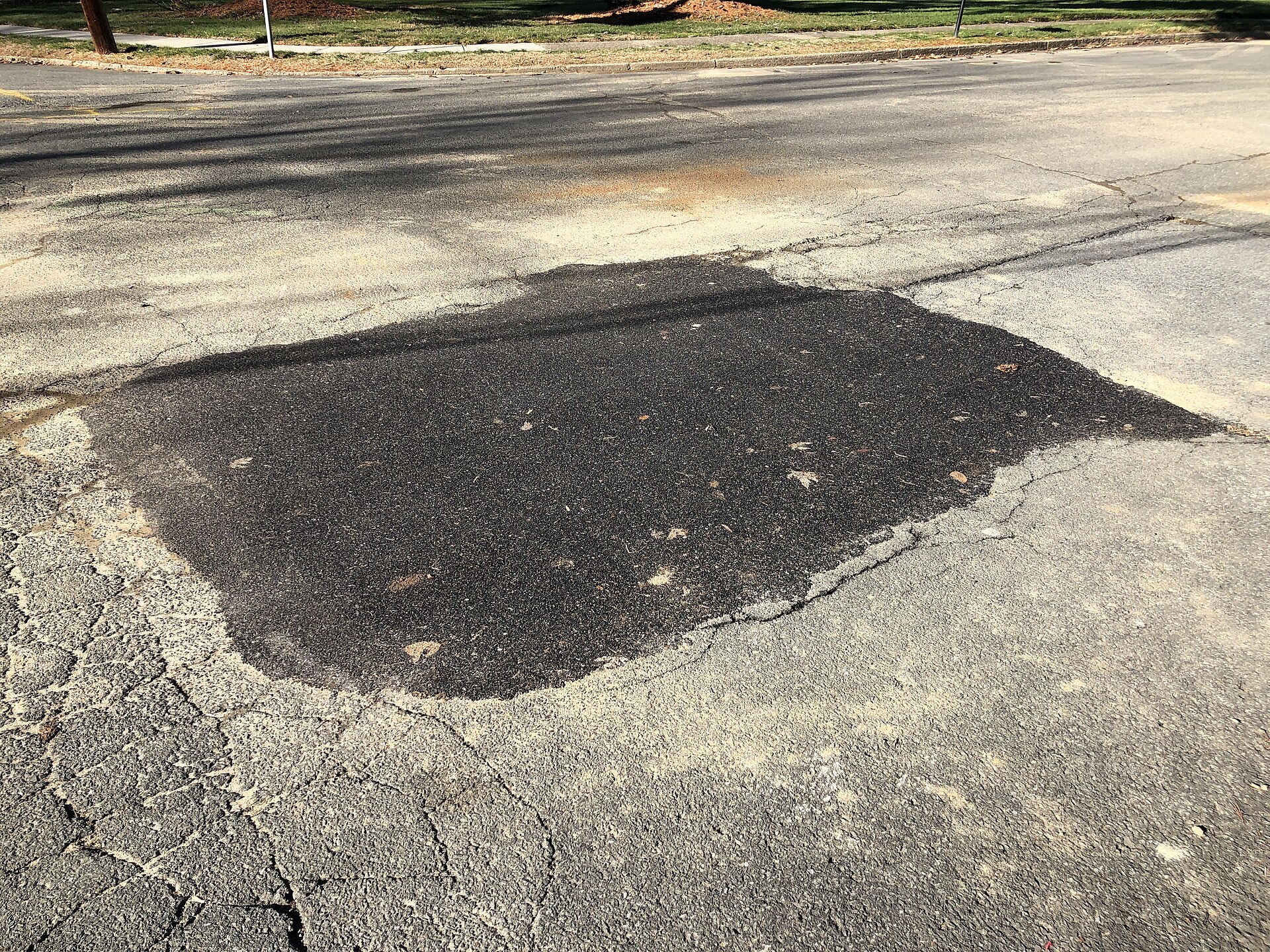
And also in the wet, when it started to rain, it was going to be really hard to judge exactly where to place the tires so that there was still good grip available, despite going onto different surfaces of tarmac. There was some resin here and there, because of course the track was not that professional in terms of construction, so you could see that they had to put patches to fix the track.
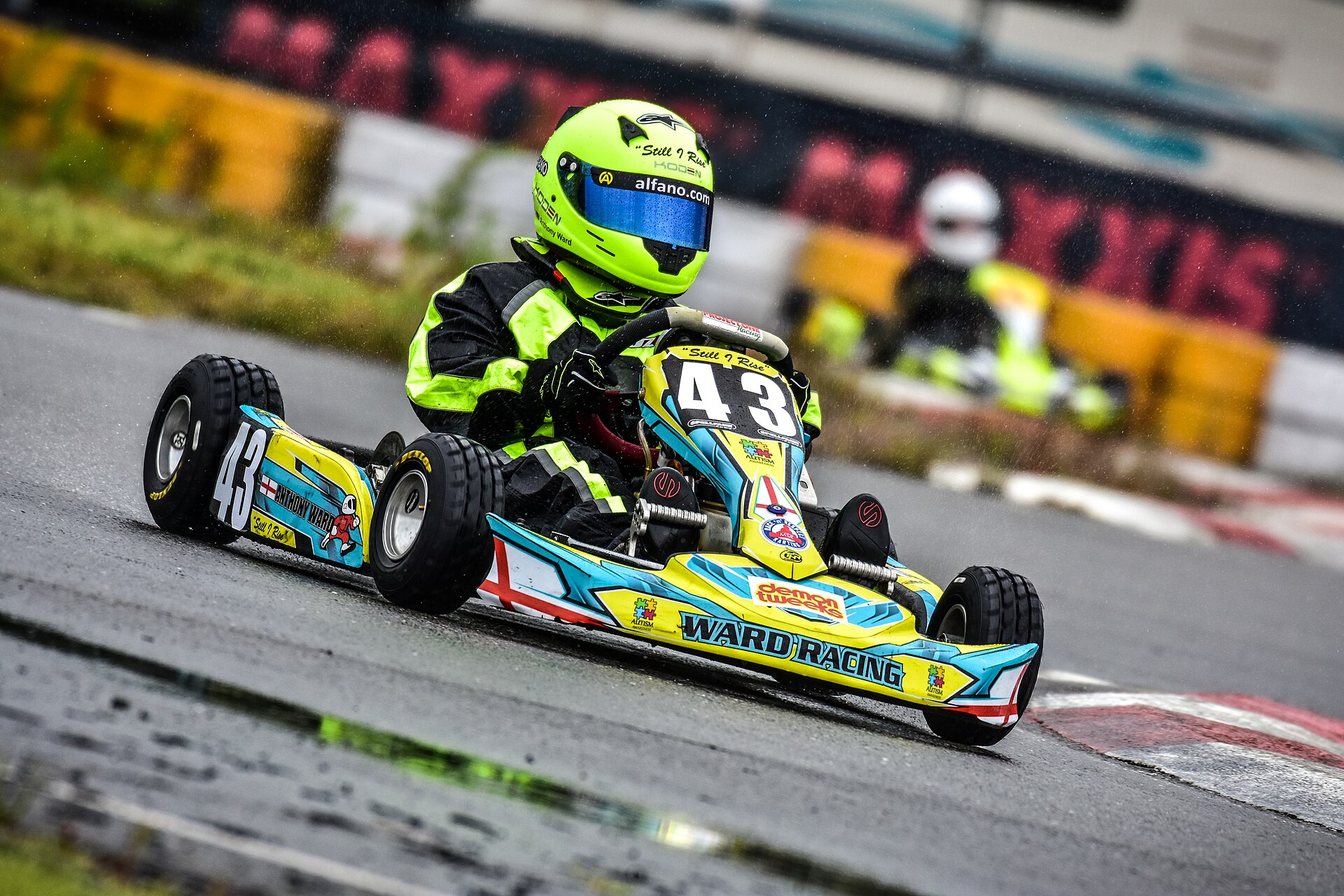
All of that made it quite tricky for the drivers, and it was a bit random.
Once we shot some drone videos we started to have a clear idea. We could see the grip patches and all the different tarmac patches, and we were like: okay, you have to avoid that one, you have to use this one. We got a clear understanding of where the drivers had to place themselves, not only in the dry, but also in the wet, and what to expect if they ran onto a different surface patch.
Rules, licences and safety
I’ve been using the drone for a long time. Of course there are some tracks where they really don’t want you to use it, even though, if you get a 249 gram drone, you don’t technically even need a licence for that.
Of course you have to pay attention not to get too close to the track, and occasionally you’ll have to use it outside of the track, just off the edges, so that they can’t tell you anything about it.
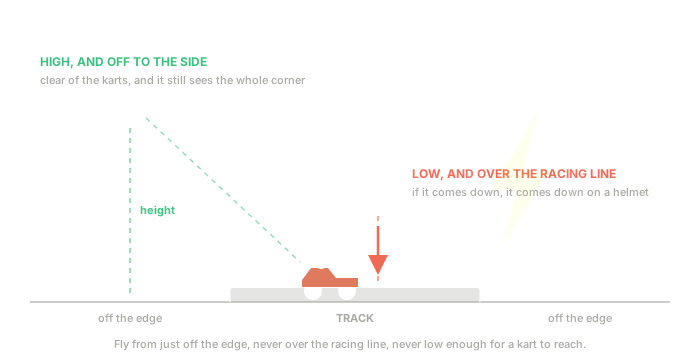
For safety, you don’t want any drivers to drive over your drone, or it to fall onto their heads. That’s important. You have to make sure you’re paying attention to that.
I heard that in some countries, like in Australia, it’s banned, I heard that from a driver. But here in Europe it’s not really banned, you can use it.
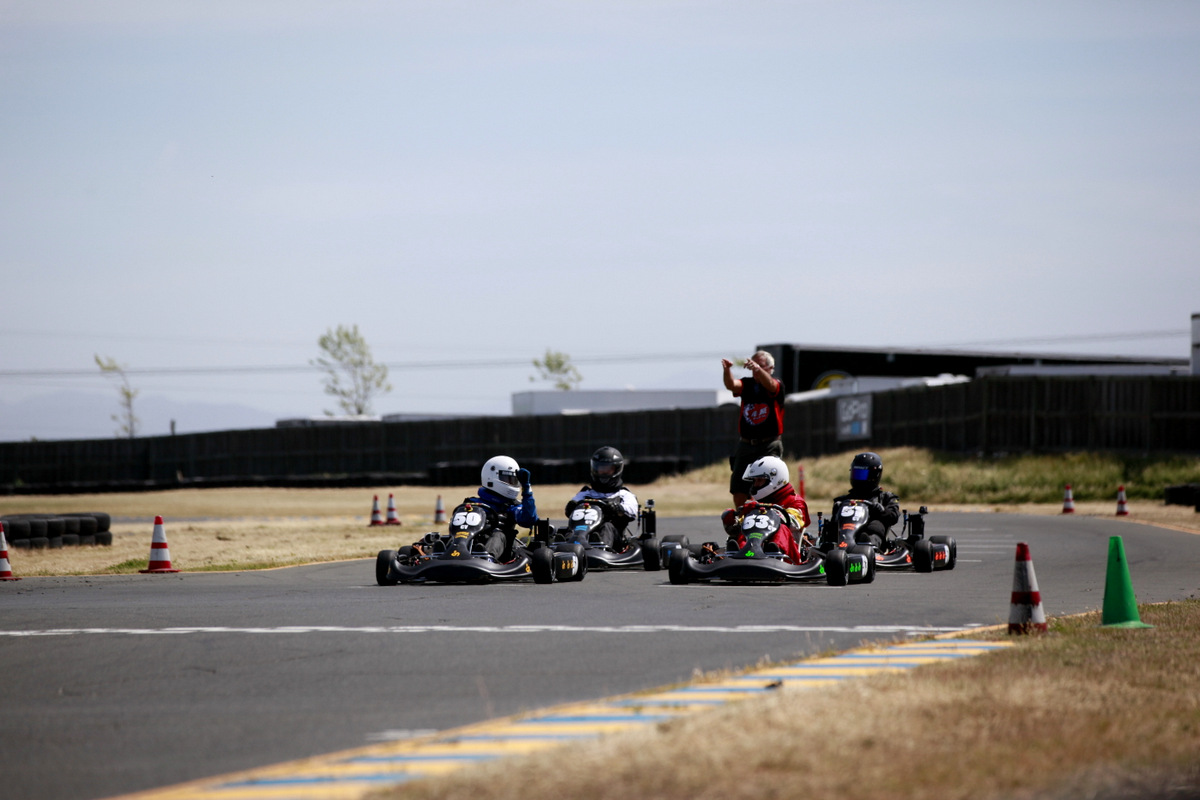
Of course, when the race comes, the race organisers most of the time do not allow you to use it. But you can still use it on the testing days. They’re normally quite loose on that, and you can do whatever you want, you still have to be safe, still not too low, and not create any situations of danger.
Never fly low over a live track. Keep the drone off the edges rather than over the racing line, respect whatever the circuit tells you, and accept that on race days the answer is usually no. Testing days are where this tool earns its money anyway.
What to actually look for in the footage
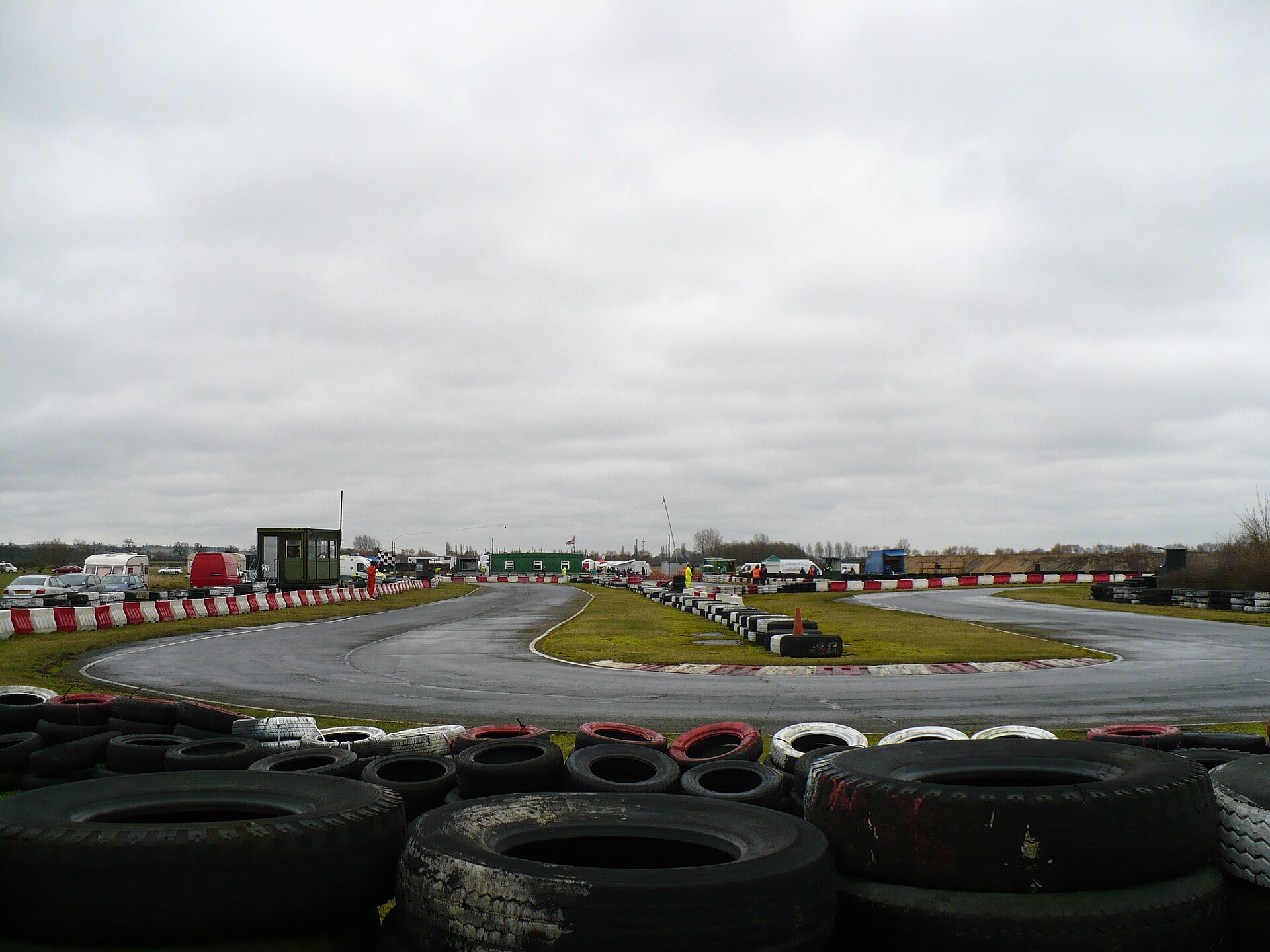
Going back to the initial usefulness idea, I just see so much from the drone. I can really see the whole arc, and how drivers are either opening up the lines or keeping them too narrow.
I like to really focus a lot on the entries, because remember, the entries are always the most important part of the corner. The exits are just a consequence of the entries.
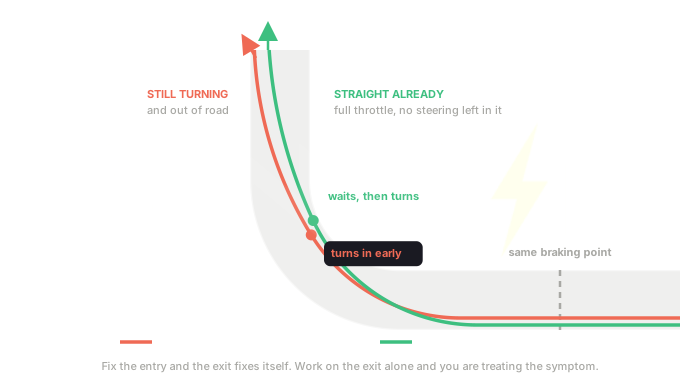
If you are not using the track on the entry and you’re turning too early, well, most of the time you’re going to end up too wide on the exit, and you’ll have too much steering angle, and your exits are going to be slow.
So I always want to focus on the entries as much as possible. And then of course I focus on the apexes. I try to find the apex points, and whether the driver even managed to hit them. Sometimes it’s a double apex corner, and so I want to see that they apex both. If the phrase does not mean much to you yet, start with early vs late apex.
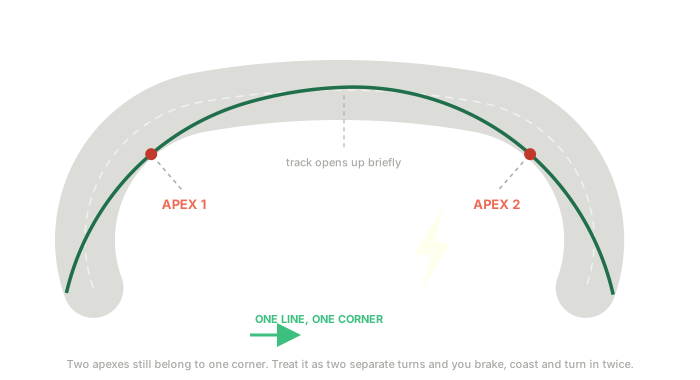
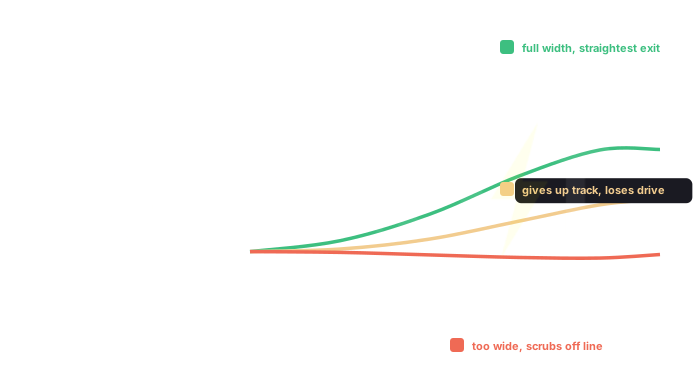
Then I also want to see where the drivers place themselves on the exit. Are they using all the track available? Are they giving up some track? Or are they using too much track and scrubbing speed for some reason?
Telling a driving problem from a chassis problem
I can really sense that. And I can see also the speed that they carry.
I can understand if they’re carrying not enough speed, or if they’re carrying way too much speed. Then I can see: okay, this guy just carried too much speed because he didn’t stop on the brakes on the entry. And that’s why he is sliding in the mid corner by the apex. Not because the chassis is sliding, but because he didn’t stop the kart and he tried to carry way too much speed.
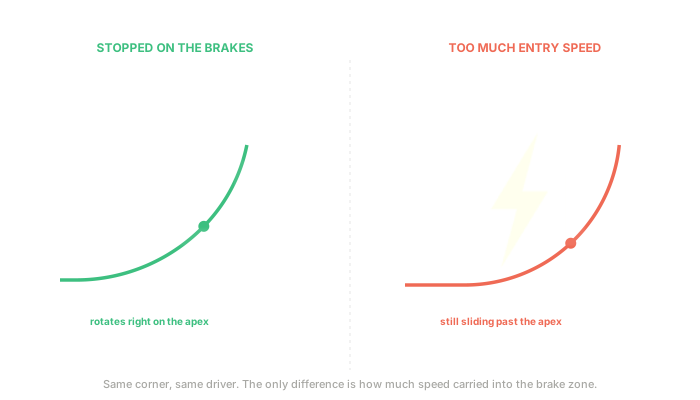
So it’s very, very important to understand that. And I feel like with enough experience you will build up a second sense, where you can actually figure out whether it’s a driving issue or a chassis issue.
Most of the time it’s just a racing line driving issue.
Which drone, and how to not run out of battery
I got myself a DJI Mini 3 and it’s working really well. It’s super easy to use, almost like playing a video game.
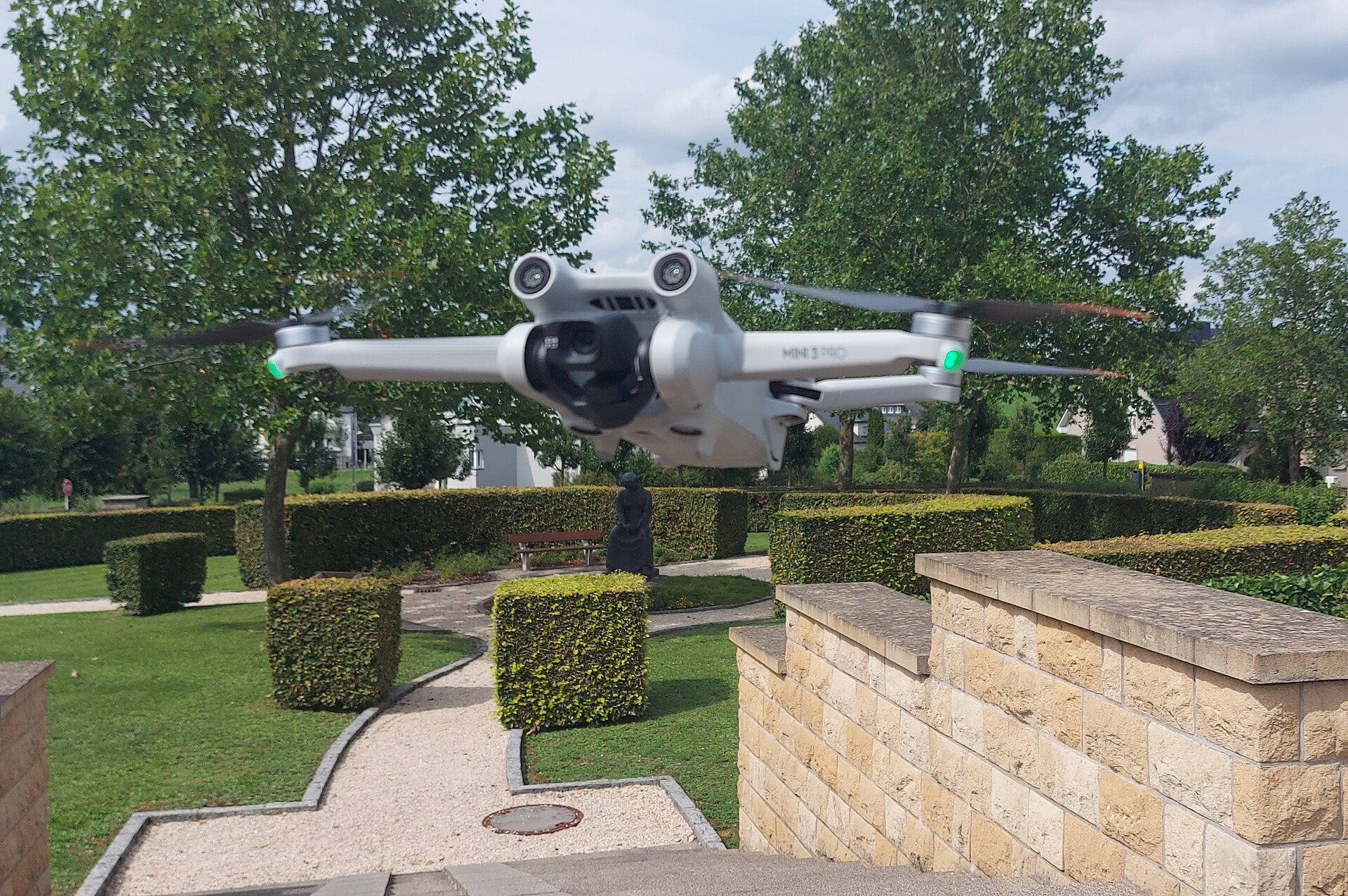
You can get one on Amazon, a DJI Mini is about 350 euros. It’s not much, and you can start to play with it.
I suggest you get the integrated panel and not go with an iPhone. I’ve been using the integrated one. It’s a little bit more pricey, maybe 50 extra euros, but it adds way more control to the remote.
And make sure the drone is always charged up, because the battery goes super fast, and you don’t want to risk getting stopped on the ground right away because the battery is too low.
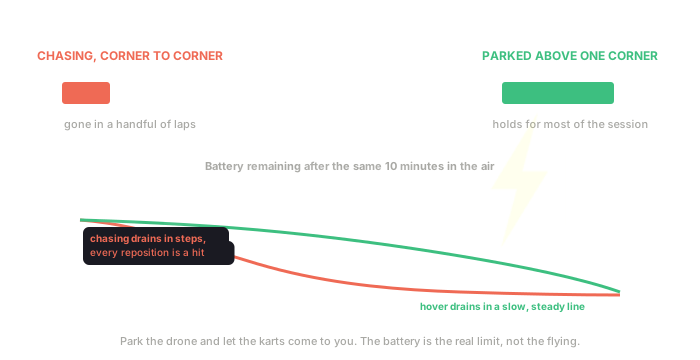
I noticed that when you use it a lot and you go from corner to corner, the battery will go down really fast. Whereas when you are stationary on a corner for a while and you just shoot the video, you’re going to save the battery way more. Park it high, cover the whole arc of the corner, and let the karts come to you.
Normally I like to place myself and just cover the whole corner. I don’t want to cover just a single part of it. I like to put the drone nice and high and try to cover the whole arc of the corner, so that it gets everything.
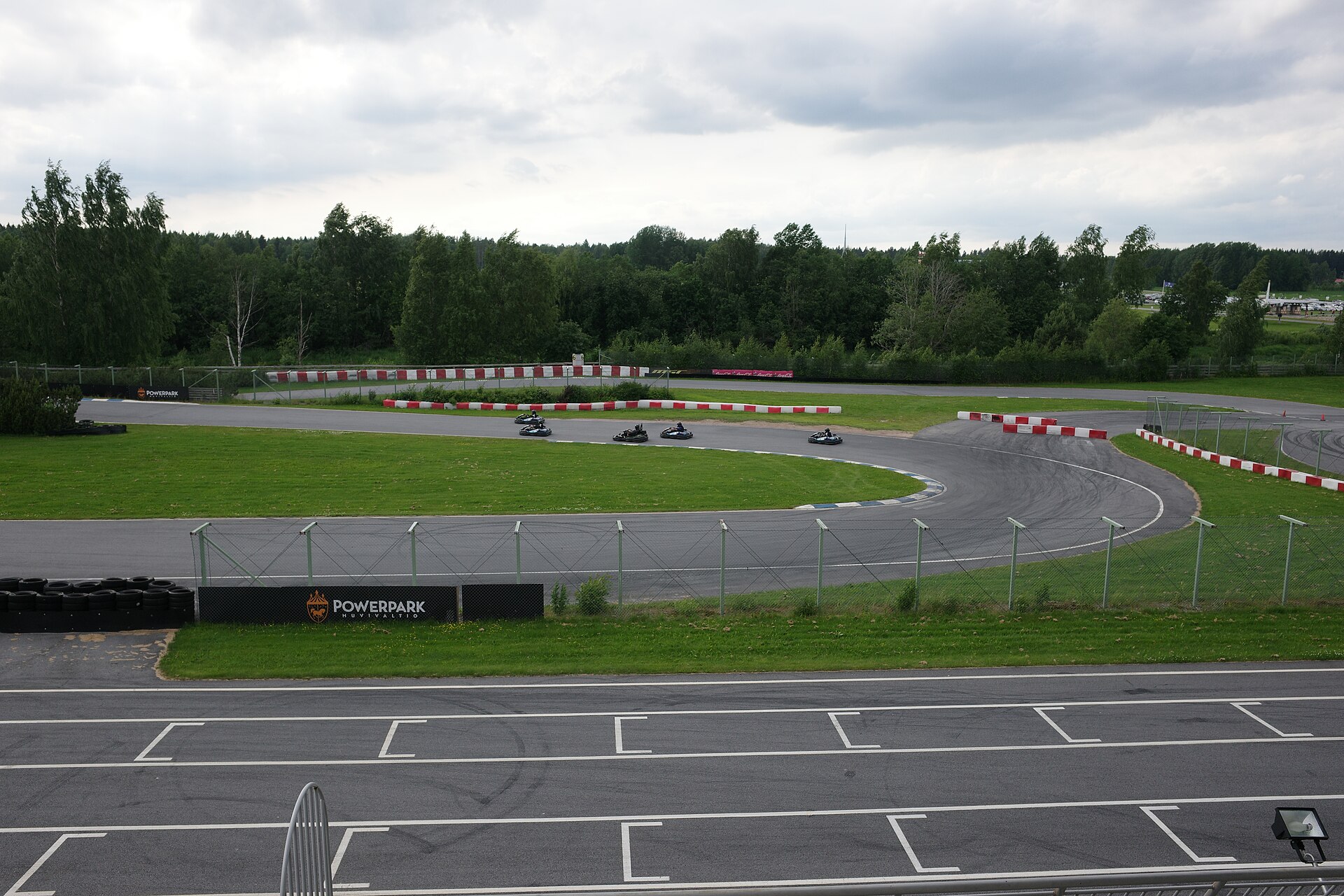
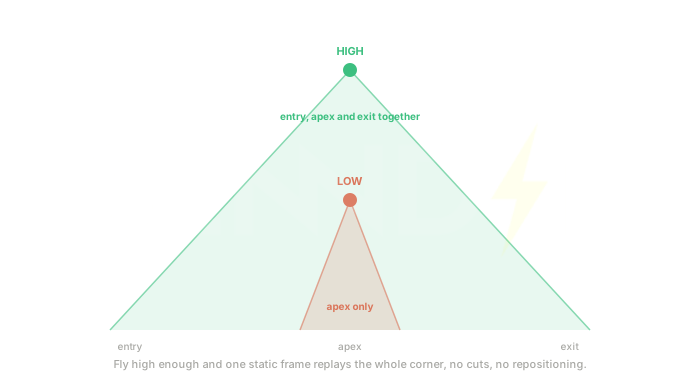
And then I like to review the drone footage with the driver, and see where they are making the right apexes, or whether they’re using the track properly, or whether they’re making mistakes by not using the track or missing the apexes.
So whether you have a drone or not, I hope you’re going to give it a try. But make sure you’re always safe and you’re respecting the rules of the track, so that no one gets injured.
Frequently asked questions
Do you need a licence to fly a drone at a kart track?
Not for a sub-250 gram drone like the DJI Mini, which is why that weight class exists. Track permission is the separate question: most circuits are relaxed about testing days but will refuse on race days, and a few countries restrict it more heavily. Always ask the circuit first.
Is a drone better than onboard video for learning a track?
It is better for different things. Onboard shows you inputs, references and what the driver saw. A drone shows you the actual line, how much track you used on entry, whether you hit the apex, where you placed the kart on exit, which is very hard to judge accurately from an onboard camera.
What should you look for in karting drone footage?
Entries first, because the exit is only a consequence of the entry. Check whether the driver uses the full width on the way in, whether they turn too early, whether they hit the apex, or both apexes in a double apex corner, and how much track they use on exit.
Can drone footage tell you if it is a driving or a chassis problem?
Often, yes. If a kart is sliding at the apex, the drone shows whether the driver carried too much entry speed and failed to stop the kart on the brakes, or whether the line was correct and the kart genuinely broke away. That distinction is very difficult to make from the seat alone.
Want me to review your onboard video personally? Send me your footage and I’ll deliver a full corner-by-corner analysis within 48 hours.
Want the full system? The 6-Month Training Program covers everything, racecraft, technique, mindset, fitness, and more. 550+ lessons, weekly live coaching, 100% money-back guarantee.
Send your onboard footage. Alessio reviews it corner-by-corner and tells you exactly what's costing you time, and how to fix it. Back within 48 hours.
Get My Onboard Reviewed → Reviewed personally by a CIK FIA World Champion, never an assistant.I promise I'll not spam you with repurposed shitty AI content but real experiences that only I, Alessio Lorandi, experienced. Written in my funny English-Italian tone of voice 😂
Alessio Lorandi is the former CIK FIA World Junior Champion, winning against Lando Norris in 2013 & F3 multiple race winner. He's helped 200+ karting drivers worldwide get faster & win WSK titles with BabyRace Driver Academy & now through Senndit, his online karting coaching platform.