How Elevation Changes & Banking Affect Grip
Uphill plus positive banking is the maximum grip case. Downhill into negative banking is the worst. Here is how elevation and banking combine, and …

- Elevation and banking both change grip, and their real power is in how they combine
- Uphill plus positive banking is the maximum grip case, brake later, carry more combined G
- Downhill plus negative banking is the worst case, less stopping power, less rotation, less traction
- On any banking, hunt for the lower side of the track, because that is where load is highest
- Elevation and banking also amplify whatever setup balance you already have, understeer included
- You cannot set the kart up for one weird corner, you adapt your driving instead
- Elevation vs inclination: two different things
- Why the low side always has more grip
- Combining elevation and banking
- The worst case: downhill into negative banking
- Why track walks are so underrated
- A real example: Franciacorta
- Elevation amplifies your setup balance
- You cannot fix one corner with setup
- Frequently asked questions
Why does the same setup feel planted in one corner and hopeless in the next?
In an ideal world all track surfaces are flat, with no sort of inclination changes. But in the real world, when we go to racetracks, we always tend to see some elevation changes throughout the circuit, and also some inclination changes.
Elevation vs inclination: two different things
When we talk about elevation changes, we basically talk about whether the track is going uphill or whether it’s going downhill. We can call it a compression when it goes up, and a crest or depression when it goes down.
In terms of inclination, we refer to banking, either positive banking or negative banking.
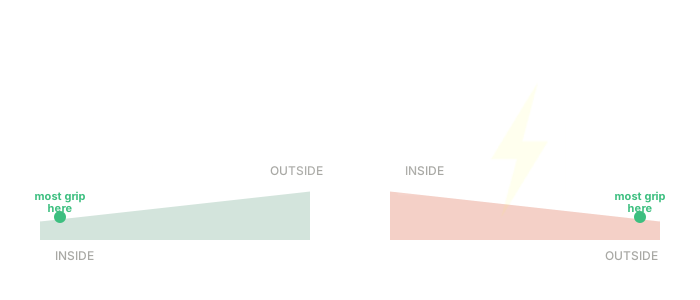
Positive banking is when the inclination is positive, so the inside part of the track is lower than the outside part, and that creates a sort of tilting effect.
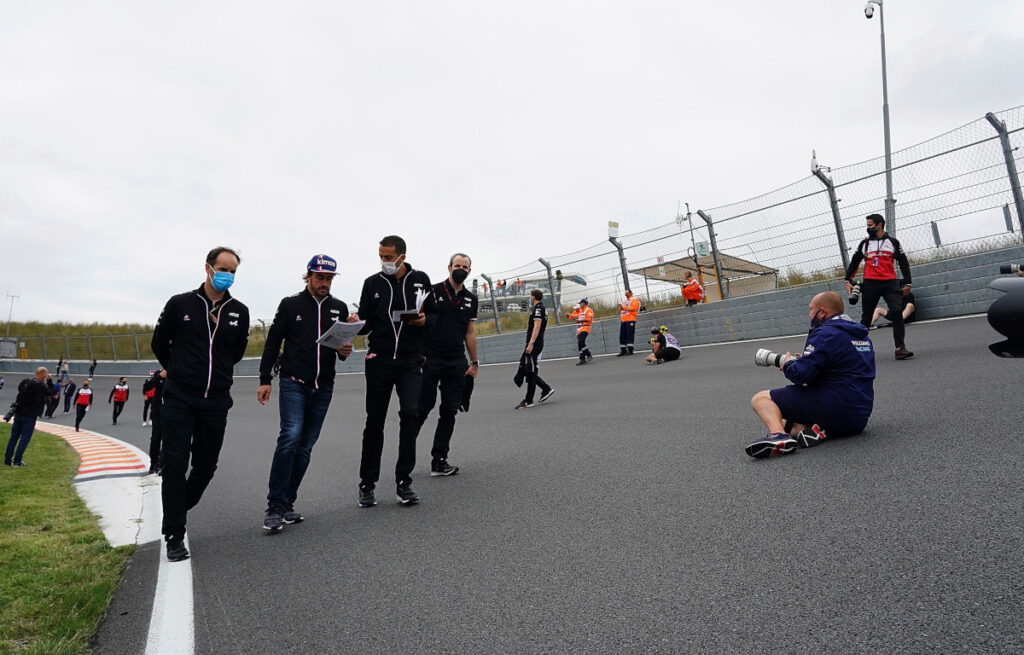
Negative banking is the opposite: the inside part is higher than the outside part, so we get a tilt out. That’s the case at turn four at Zandvoort, where you can see all the drivers going really wide in an attempt to get to the lowest part of the track.
If you want the full breakdown of the inclination side on its own, I went through positive vs negative banking in detail separately. Here I want to focus on elevation, and on what happens when the two stack.
Why the low side always has more grip
Why are the drivers going full low at turn four at Zandvoort in Formula 1?
Because that is one of the very few and rare corners defined as negative banking, which means the actual lowest part of the track is on the outside. So the drivers need to hunt for that lower side, because the lower side brings extra grip compared to the higher side.
Why does it provide extra grip? Because it’s physics. It’s all about the angle it creates on the gravitational force being applied. And basically, the more force gets applied on the tires, the more grip is provided.
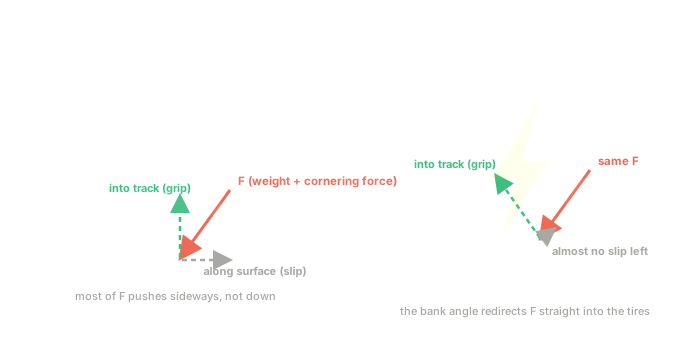
Every time there is an inclination, you want to be on the low side. Negative banking, go low. Positive banking, go low. Because by doing so you actually increase the effective weight of the kart, and more load on the tires generates grip.
You’ll probably have noticed that when you go onto banked areas, you feel like the kart gets heavier. That’s simply because of the angle and the load being applied on the tires. You pick up more grip.
That’s the reason why it’s just key to catch the banking, it plainly and simply creates more load, and therefore more grip on the tires and on your chassis.
With negative banking the apex is the high point, so the classic line puts you on the least grip in the corner. It can work to deliberately miss that apex a little and sit lower, further into the middle of the track, because that provides better grip and better rotation.
Combining elevation and banking
The good thing is that sometimes you get a combination, not only the inclination, but also the elevation.
Sometimes you will have this occasion where you get a big grip enhancement thanks to both the positive banking and the elevation change. You will have tracks with corners where the track goes slightly uphill, or quite a lot uphill, and on top of that you have positive banking. That creates so much grip for that corner.
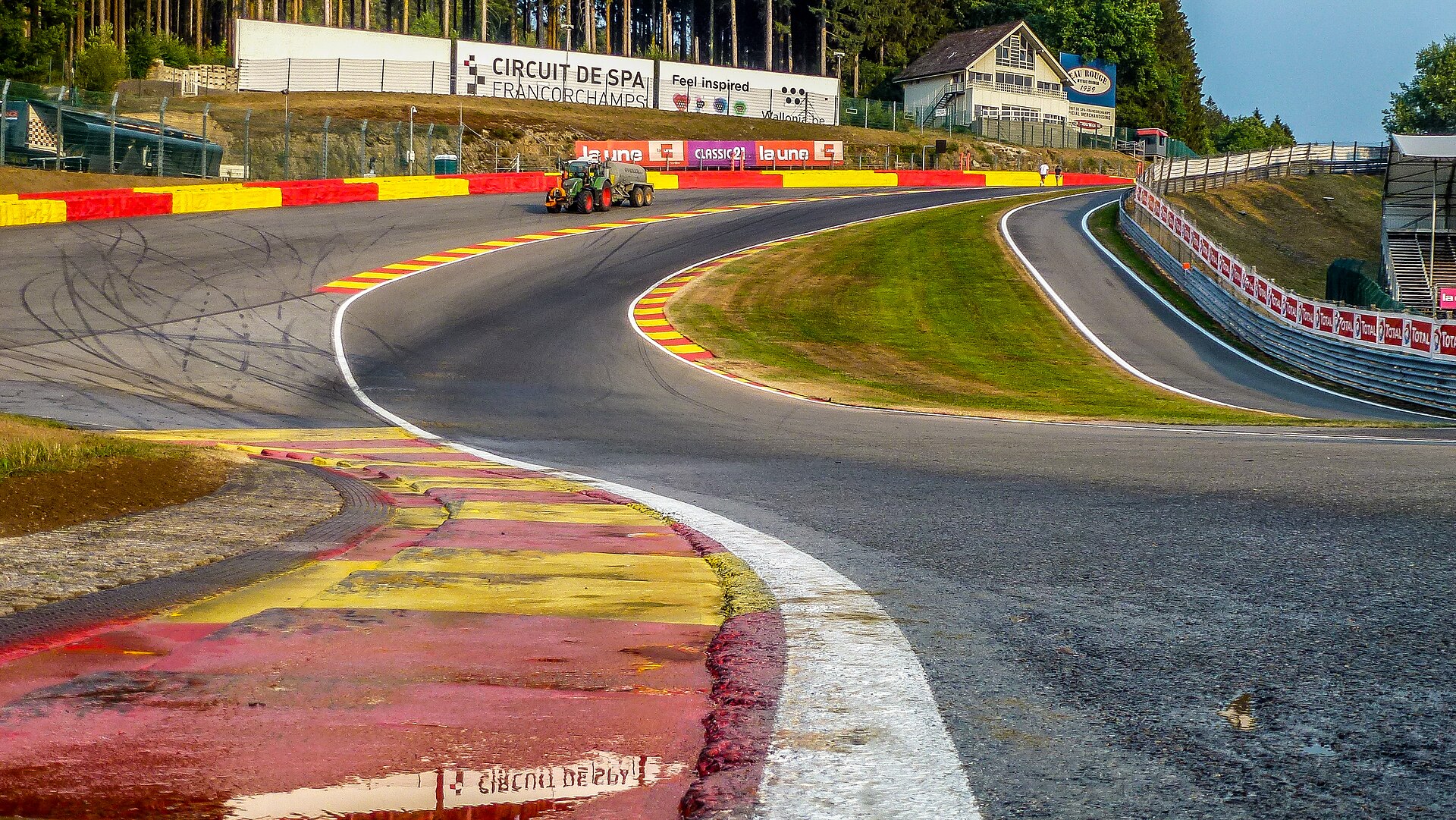
Every time you have an uphill section, you have more grip. You can do more combined longitudinal and lateral acceleration.
You arrive uphill on a banked corner, and you can carry more speed, brake later, release the brakes earlier and carry way more combined G force. And that in turn carries more speed.
The worst case: downhill into negative banking
In the opposite scenario, where you are going downhill and you have negative banking, that creates less grip.
If you go downhill and you have a negatively banked corner, then it’s going to be super slippery. There’s going to be very little grip, very little stopping power, very little rotation and very little traction. Everything is going to be more complicated.
Whereas when you go in the opposite direction, uphill with positive banking, you are going to get so much more combined G for anything you have to do.
Uphill + positive banking, maximum grip. Brake later, carry more combined G.
Uphill or positive banking alone, good grip, some extra load to use.
Flat, the baseline your setup is built around.
Downhill + negative banking, minimum grip. Less stopping power, less rotation, less traction. Limit the damage rather than attack it.
It’s really like that. Racing is more an art than a science, and that’s why the geometric line is not going to work all the time. It plays down to the elevation changes and whether the track is flat or not.
Why track walks are so underrated
You need to be quick and disciplined to realise that whenever you go to a new track, you have to spot that right away. Before even jumping on the kart, you should already know the tricks and the secrets of the track.
Everybody can notice them, but not everybody will notice them, because they are too lazy sometimes, or not disciplined. They say: I don’t need the track walk, I’ve already seen an onboard video.
Track walks are so underrated, and they should be done way more often than drivers actually do. If drivers did more track walks, I’m sure everybody would set faster lap times and become better drivers.
When you walk the track you notice many nuances that you wouldn’t notice otherwise. In F1 they take five, six, seven kilometre long track walks. It may be painful or boring, but you literally learn so much about the track, all the ins and outs.
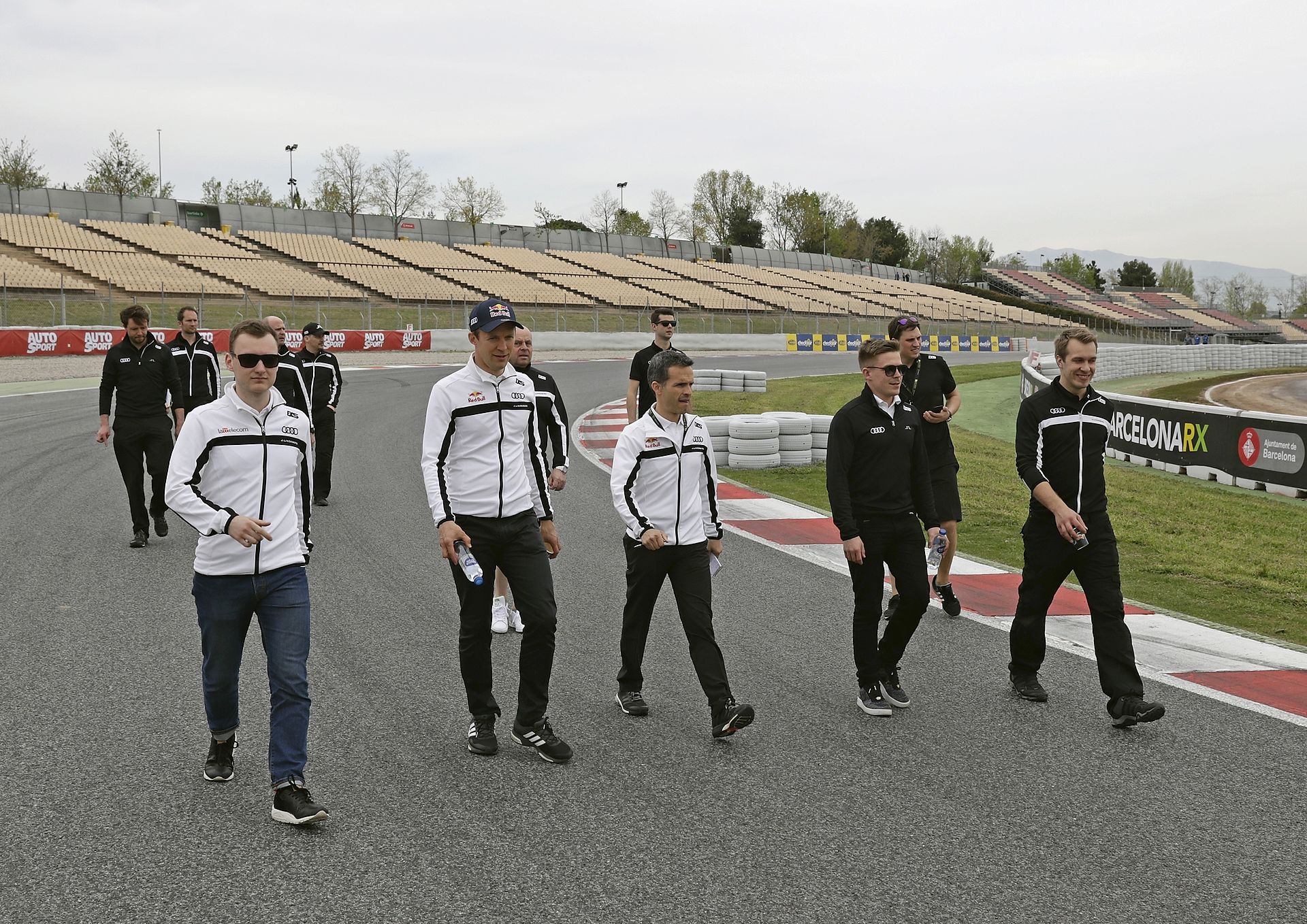
It’s like you have an unfair advantage when you get on track with your helmet on. You spot things other people wouldn’t, and that gives you a massive head start. That may make the difference between getting P5 and getting P1.
It is the same discipline behind grip hunting, you are gathering information before the grip ever has to be found at speed.
A real example: Franciacorta
We have that kind of track in Franciacorta, where in turn five there’s a very steep downhill braking zone. You have to make sure you stop the kart on the brakes where the kart doesn’t want to stop, because it goes downhill.
So it’s a bit complicated. You need to hold on to that and brake hard, because the kart just doesn’t want to stop, and if you don’t brake hard enough it’s just going to go straight.
And then on the exit it actually turns into an uphill section. So it’s going to be tricky if you get the entry wrong, because then the exit is going to be hard, and you won’t get a good launch onto the mini straight that follows.
Then in the last corner there’s a long straight preceding it and a heavy braking zone, but this time the braking zone goes uphill. That allows you to brake super, super late, because there’s just so much grip. It lets you brake later and later.
Elevation amplifies your setup balance
What I typically believe is that when you pick up more grip from a banking section or an elevation increase, you kind of augment the current setup balance you have.
For example, if you have a tiny bit of understeer throughout the track, and then you go to a heavily banked corner with a lot of elevation going up, in that case you will have quite a bit more understeer. The balance gets amplified.
So you have to make sure you get the kart to rotate properly. If instead you are going up and you have a lot of rotation, then again you will pick up a lot of rotation.
Overall you will have more grip, but the balance will also be amplified, hopefully in a good way. If you want the balance side of this on its own, understeer vs oversteer goes deeper.
Having to wait for the steering wheel to turn and the kart to rotate for a long time is never a good thing, and it’s always going to lose you time against a kart and a driver who can rotate quickly. So I always prefer to have the kart a little bit loose on the rear and quite aggressive and reactive at the front. That’s my general racing philosophy, though you may need something different at times.
You cannot fix one corner with setup
There’s not much you can do in terms of setup when you have some corners with elevation going up and others with elevation going down. You can’t make a variable setup that changes from corner to corner.
You as a driver instead have to make adjustments to your driving, so that you’re on the right side of the line and you anticipate the grip level.
With negative banking you want the lower part of the track, but don’t go too wide. If you’re the only one out there and nobody else has run that line, there’s no rubber on it, and you’ll effectively be driving a wet line. In theory it’s the right place; in practice you still have to stay on the rubber.
If you have a setup that’s balanced all the way through the track, and then you arrive at a downhill corner with negative banking, you need to be aware that it’s not the setup making the kart feel weird, it’s the track layout.
So anticipate it and limit the damage in that specific corner. And be aware that everybody is going to have the same issue as you. Nobody can set the kart up for one corner alone with very weird grip levels.
If you arrive at that corner and feel like you’re sliding, like you’re on ice, whereas in the other corners you’re planted on rails, you just have to deal with that, knowing you can’t change your setup for that corner.
Elevation changes and banking make a huge difference to the kart behaviour, but also to the grip level on track. You have to make sure you use that strategically, to your advantage.
Frequently asked questions
What is the difference between elevation change and banking?
Elevation change is whether the track goes uphill or downhill along its length, a compression going up, a crest or depression going down. Banking is the sideways inclination of the surface across the track. They are independent, and a corner can have either, both, or neither.
Why does uphill braking let you brake later?
Going uphill increases the load on the tires, which increases grip, and gravity is also working against the kart rather than with it. You get more stopping power and more available combined grip, so the braking point moves later. Downhill does the reverse, the kart does not want to stop.
Should you always take the lowest part of a banked corner?
The low side carries the most load and therefore the most grip, so it is usually right. The exception is rubber: if nobody else is running that line there will be no rubber on it, and you end up effectively driving a wet line. Stay on the rubber even when the physics points wider.
Can you set the kart up for elevation and banking?
Not for individual corners. A setup applies to the whole lap, so if a circuit has uphill, downhill and banked corners you cannot tune for each one. You adapt your driving, anticipate where grip rises and falls, and accept that every other driver faces the same corner with the same limitation.
Send your onboard footage. Alessio reviews it corner-by-corner and tells you exactly what's costing you time, and how to fix it. Back within 48 hours.
Get My Onboard Reviewed → Reviewed personally by a CIK FIA World Champion, never an assistant.I promise I'll not spam you with repurposed shitty AI content but real experiences that only I, Alessio Lorandi, experienced. Written in my funny English-Italian tone of voice 😂
Alessio Lorandi is the former CIK FIA World Junior Champion, winning against Lando Norris in 2013 & F3 multiple race winner. He's helped 200+ karting drivers worldwide get faster & win WSK titles with BabyRace Driver Academy & now through Senndit, his online karting coaching platform.