Racing Drivers Need To Be Grip Hunters (Here’s How)
The fastest line is rarely the theoretical one. Grip moves between corners, sessions and classes - here is how to hunt it, and why it is the number…

- Grip hunting is the number one skill a racing driver can develop, everything else follows it
- The fastest line is usually not the geometric theoretical line, because grip is not spread evenly
- Grip moves between sessions, not just between tracks, the category running before you changes where the rubber sits
- Shifters lay rubber in the mid corner with V-shaped lines; juniors lay it on entry and exit
- Think of every corner as scored out of ten for grip, and maximise the time you spend on the tens
- Track walks let you predict grip in advance from elevation and banking cues
- What is grip hunting?
- Why the theoretical line is often wrong
- Grip moves between sessions, not just tracks
- Adapting when everyone bolts on new tires
- Body size, load and low grip conditions
- Using track walks to predict grip
- The trap of knowing a track too well
- Score every corner out of ten
- Frequently asked questions
What is the single most valuable skill a racing driver can build?
What I believe is the number one skill that a racing driver needs to possess is the grip hunting skill.
Yes, you heard me well. Racing drivers need to be grip hunters.
What is grip hunting?
What do I mean by that? I mean that drivers need to really look for the areas on the track where there’s the most amount of grip.
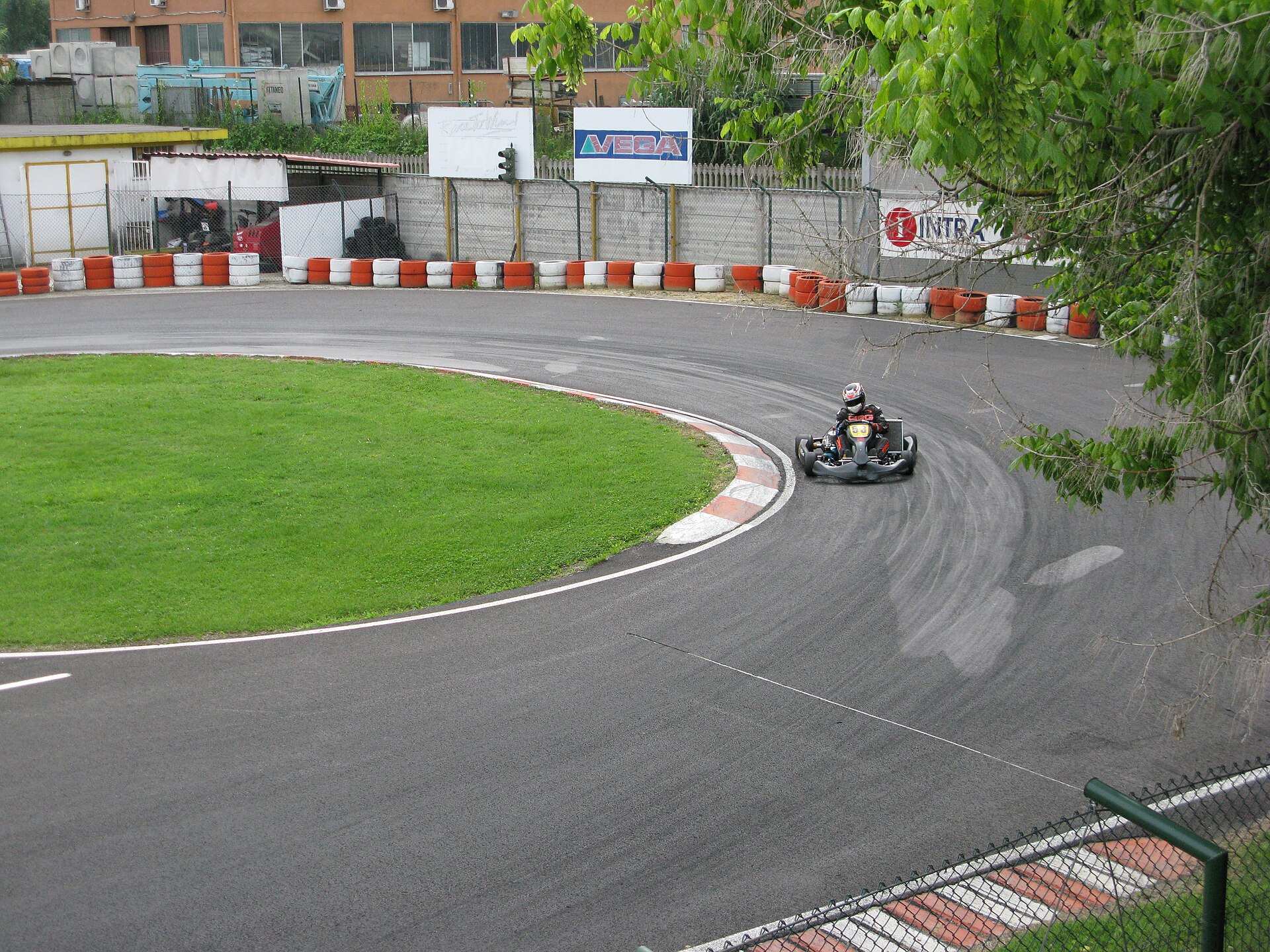
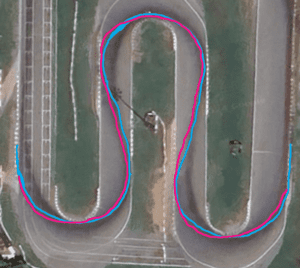
They need to look for that racing line where there’s the highest amount of grip, which most of the time is not the geometrical, theoretical line.
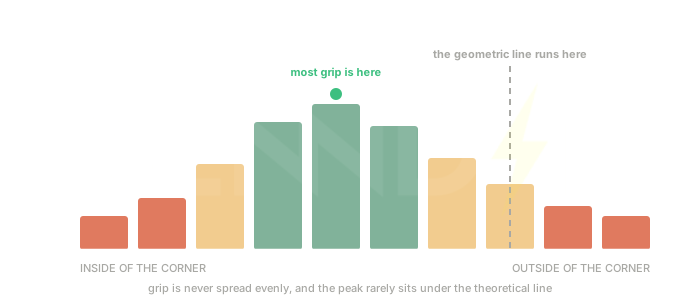
Why the theoretical line is often wrong
Most of the time we think, oh, we just have to do what’s right in theory and just apply that line everywhere, every corner, every track. And that would be easy, right?
But the reality is that many, many times the corners require a different kind of driving that is not the theory.
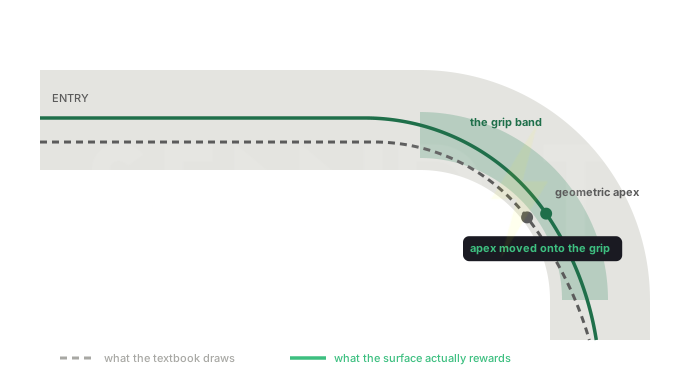
For example, in a corner where there’s a lot of positive banking, you will have to completely change your line. You may have to turn in earlier to catch the grip way earlier, even though that may look like an early apex in theory.
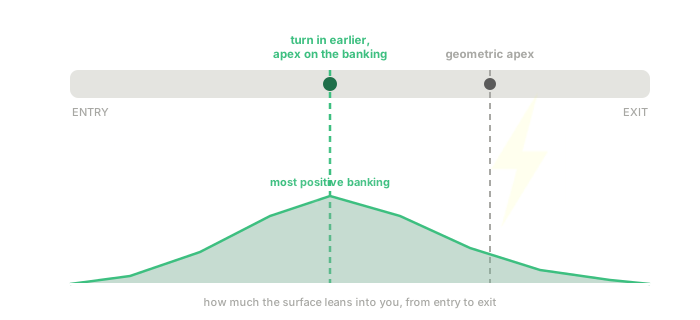
In that case what you care about most is the grip level, not the theory. So you have to look for the grip. You have to find the grip. You have to hunt the grip.
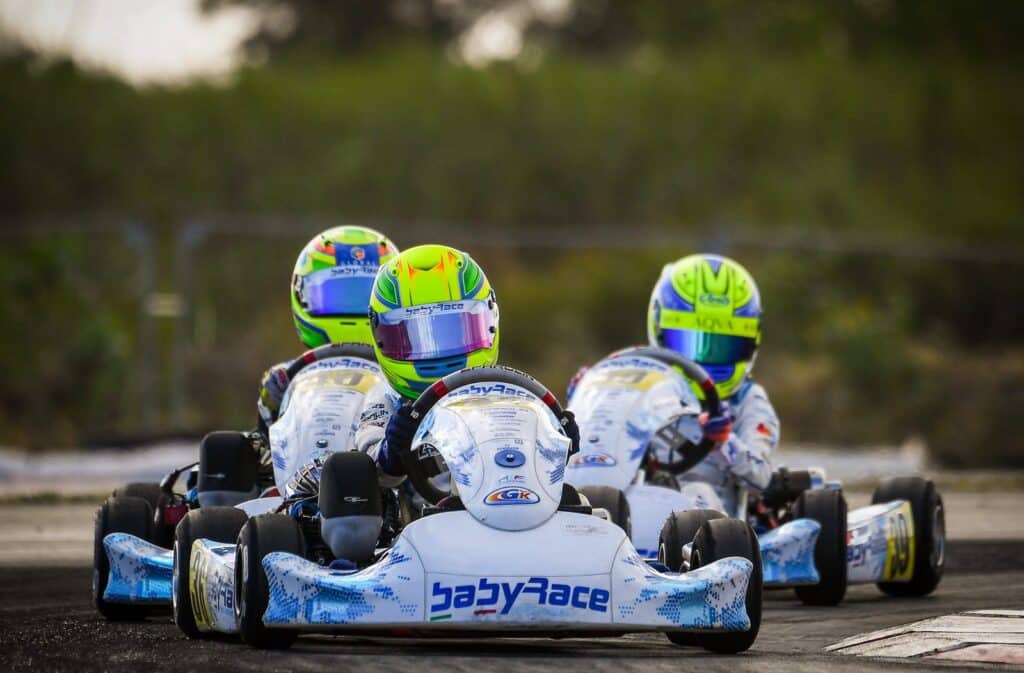
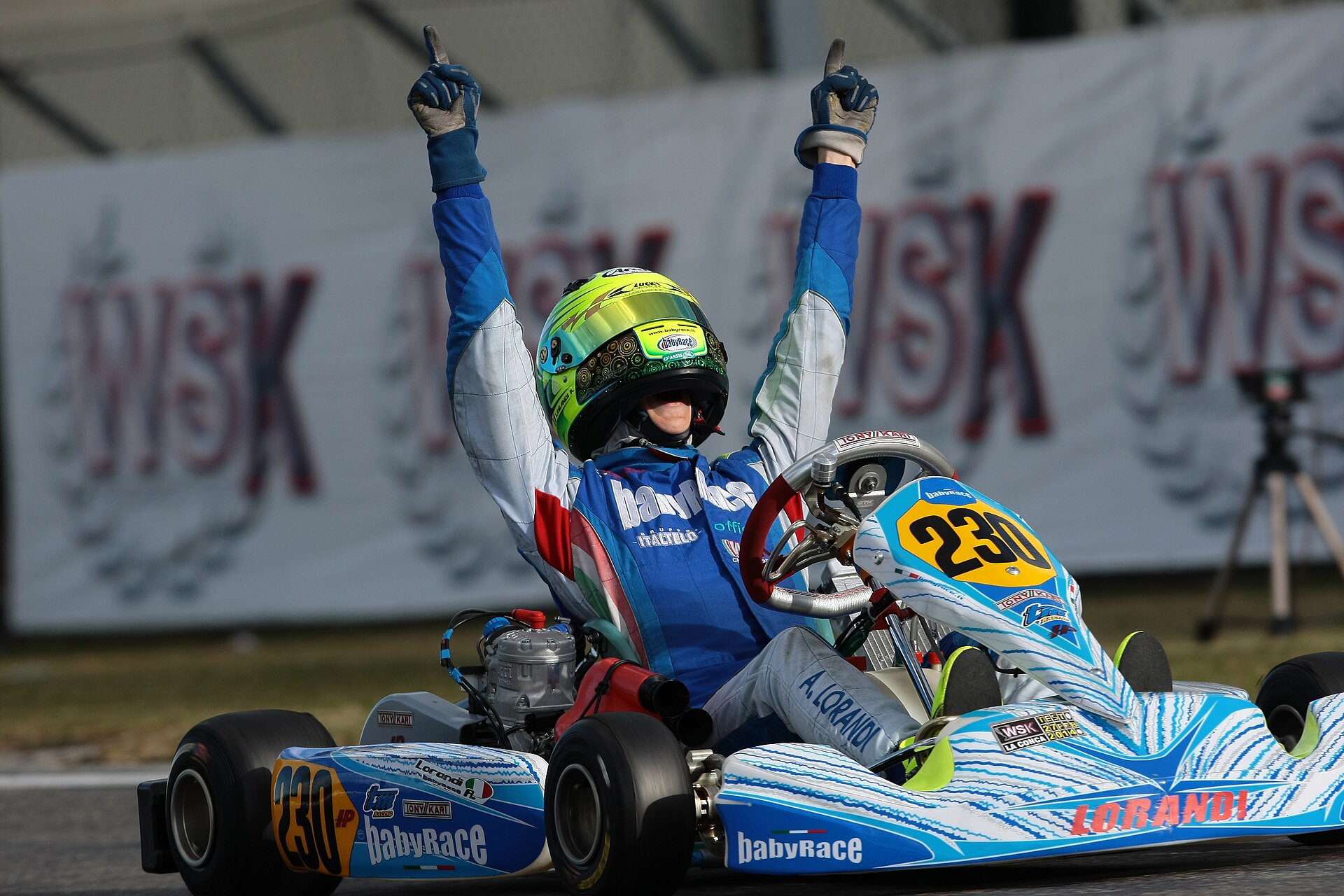
That’s what I really tell my drivers at Babyrace, that they are grip hunters. They really need to hunt for grip every time they go out on track. If you want the physics behind why banking changes where the grip sits, I covered positive vs negative banking separately.
Grip moves between sessions, not just tracks
Sometimes the grip level also moves within the same track, between different sessions. Why?
Because sometimes you have different categories on track that you may not have had before.
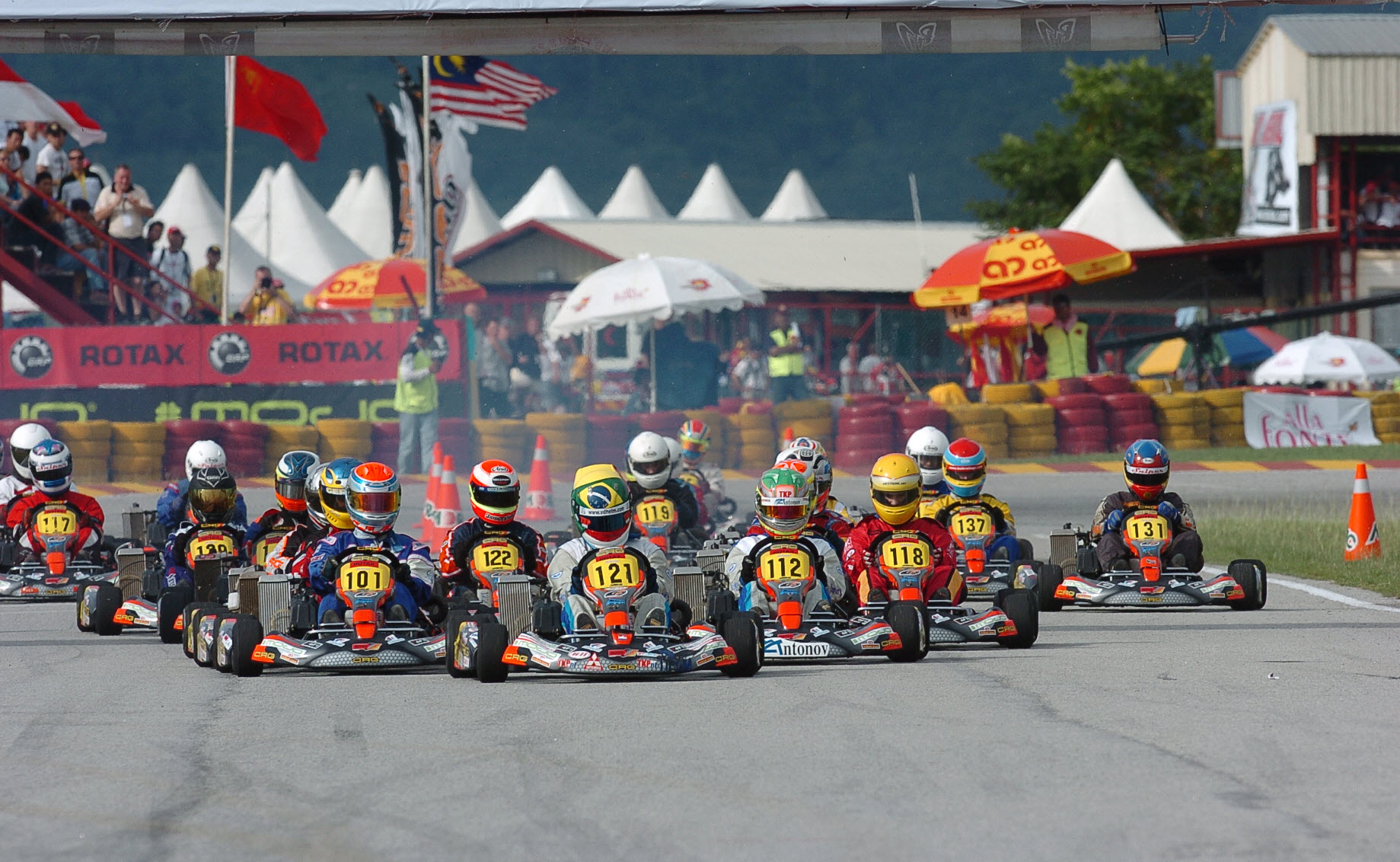
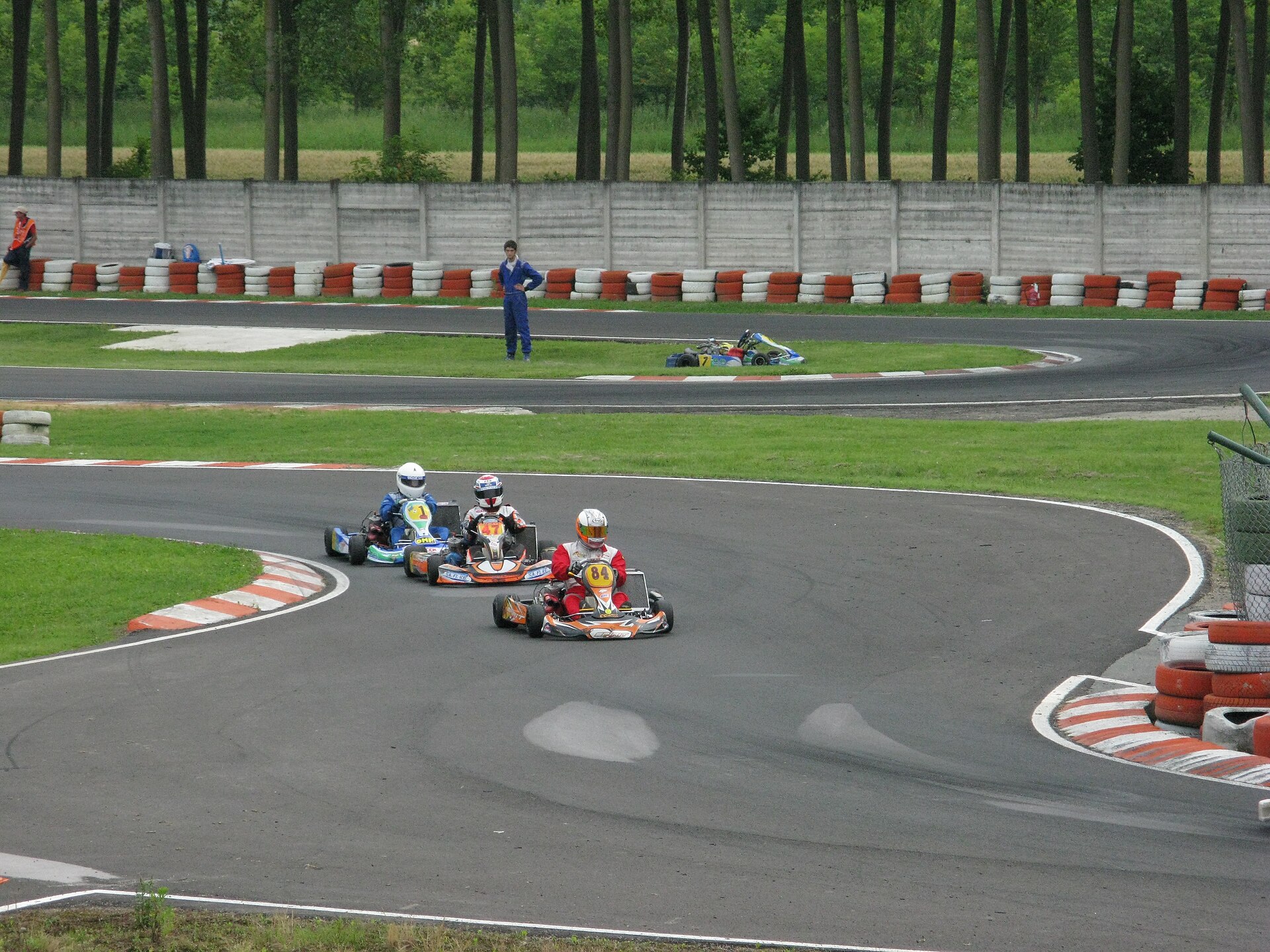
For example, you may drive all weekend behind a juniors class. So right after the juniors class you are, let’s say, a 60 Mini category. But then all of a sudden on a Sunday you drive right after the shifters.
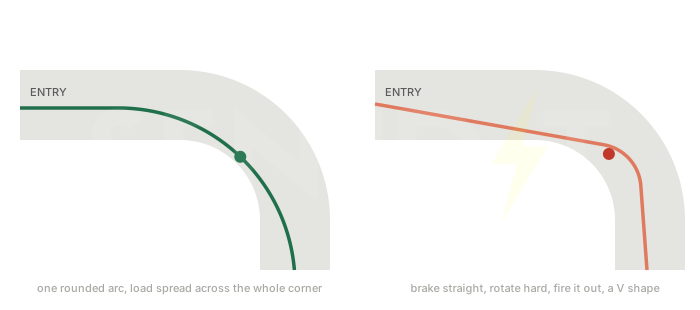
And the shifters are going to drive in different parts of the track compared to the juniors. Because the shifters will drive mostly V-shaped lines, where they want to use all the brakes on the entry and use all the traction on the exit.
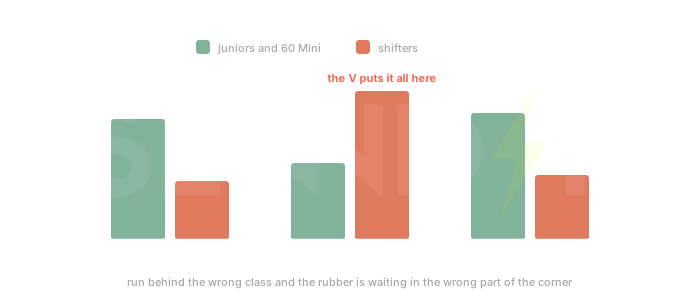
Shifters lay huge grip in the mid corner but leave less on the entries and exits, because of that V-shaped line. Juniors drive a line much closer to a 60 Mini. So run behind shifters and you may find not much grip on entry, not much on exit, and way too much in the middle, the same track, on the same day.
So again, in that case you have to be very strategic. You have to adapt really quickly to the changing conditions and hunt for grip. It’s not just from track to track, it may also be from session to session.
Adapting when everyone bolts on new tires
And also when everybody goes onto new tires and the track gets really quick, you need to be very quick at adapting yourself and picking up the new grip level, and carrying the right amount of speed.
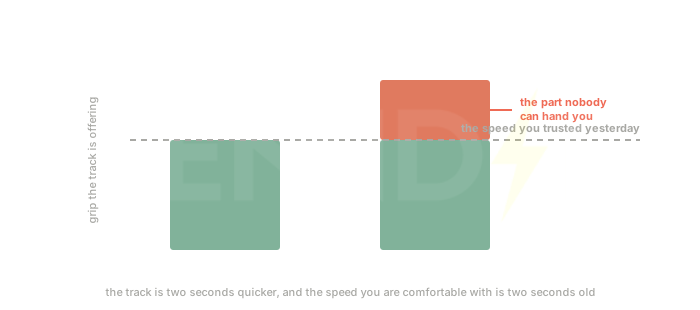
You can’t carry the same speed that you carried when the track was two seconds slower. It just makes no sense.
And it’s not your data guy, your coach, your mechanic, your dad, your mum, nobody can tell you that.
Max Verstappen doesn’t have to be told by his race engineer that he needs to carry two kilometres an hour more in the mid corner when the new tires are on and it’s Q3. He just feels that. He has to hunt for grip.
Once you find the grip, you can carry more speed into the corner, so you can brake later, you can release the brakes and carry more speed through the corner, and you can get on the throttle earlier.
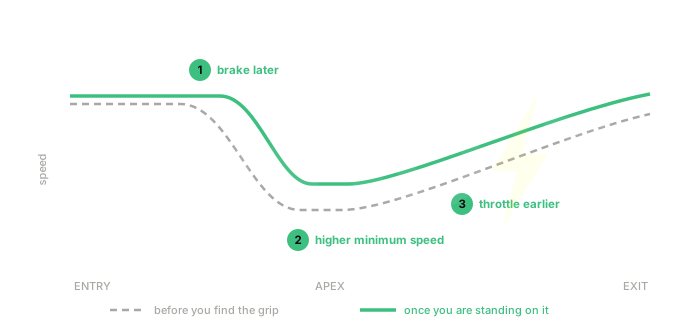
This is the driver-side half of track evolution: the track changes, and you are the one who has to notice.
Body size, load and low grip conditions
Sometimes the grip is not enough, and it may be easier for drivers that are taller, because they already load the kart so much and so they are better in lower grip conditions.
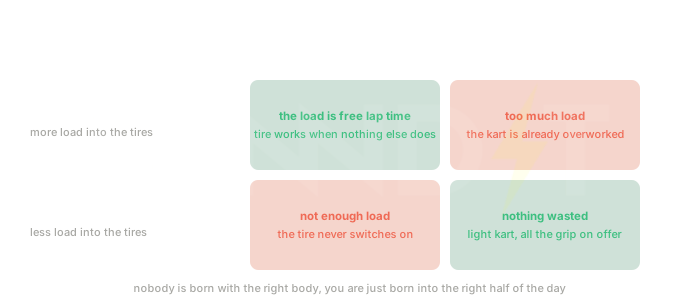
That was the case for me in my last year of junior. I was a bit tall compared to Lando Norris, who raced against me that year, and it was really hard to keep up with him in terms of speed, because he would be like 25 centimetres shorter than me.
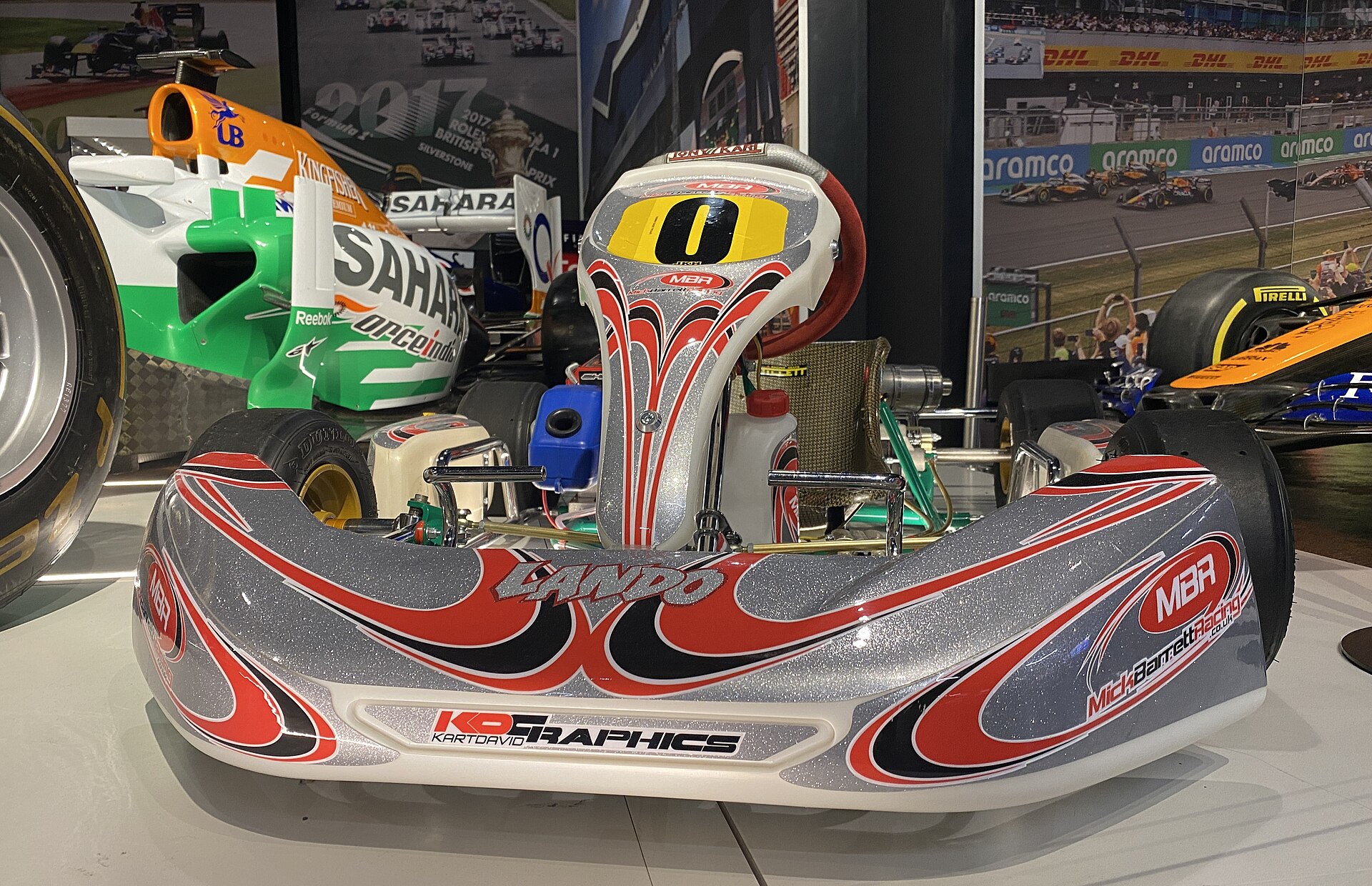
So whenever it was grippy he would be quicker than me, a bit like a tenth or so. I would still be able to win lots of races despite that.
But then when it was winter time, and I was taller than him, I would have such an easy time compared to him, because I’d generate so much more grip and load on the tires, which he couldn’t.
So I was able to beat Lando Norris 18 times against seven in our 25 races, excluding the DNFs. Not to brag, just to prove that in some cases the grip level changes, and you have to do your best based on your body size as well as your setup.
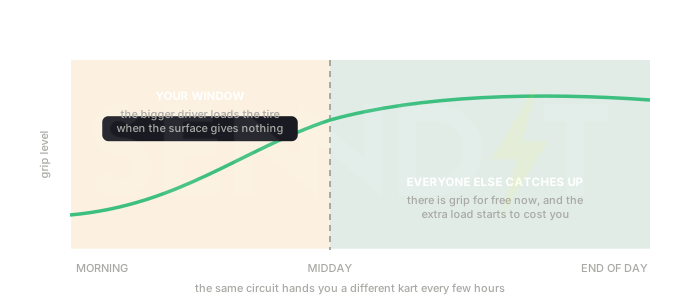
If in the morning the grip level is low, somebody who is better in those conditions is going to excel more. And then if the grip level is really high at midday, you will struggle a little bit if you have too much grip on your kart.
Using track walks to predict grip
The whole point is that any time the track conditions change, any time the grip levels change, you have to adapt as soon as possible.
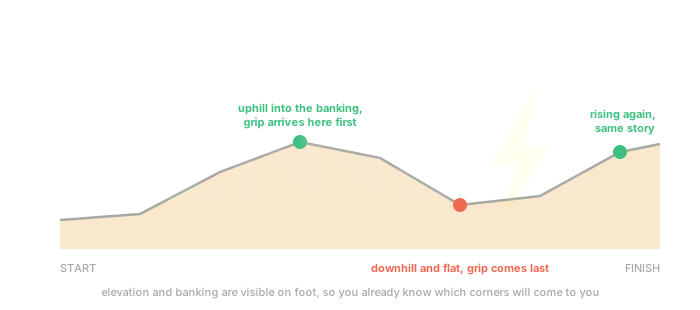
Track walks are really useful, because they can let you know in advance where the grip level is probably going to pick up, based on cues like elevation changes or banking areas.
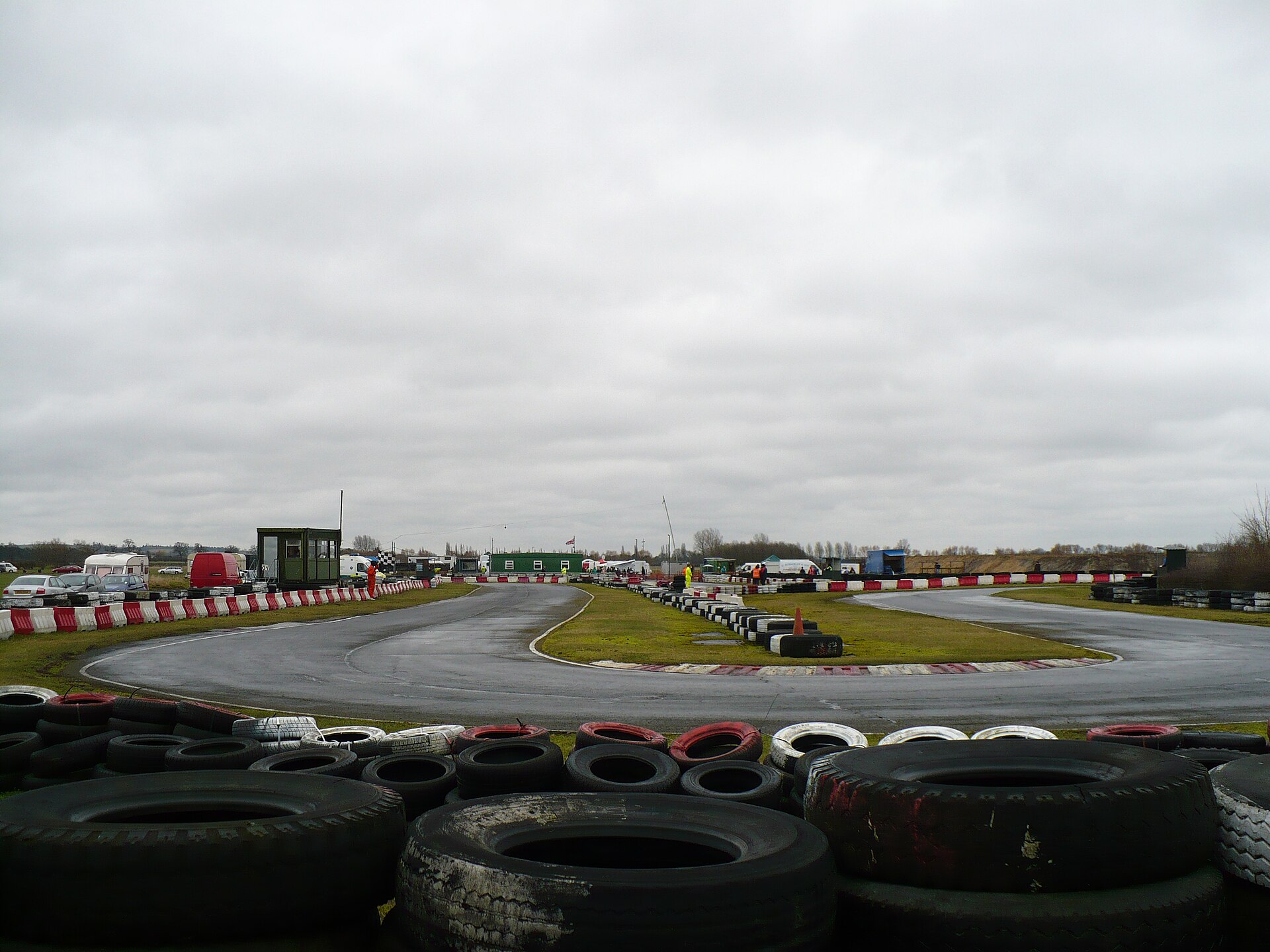
Walk the track and you can guess: this area is probably going to be more grippy than others, because there’s a lot of positive banking and there’s also a nice elevation change going uphill. So there’s going to be a lot of grip on new tires here. With experience you pick up all these cues before you ever leave the paddock.
There’s no point trying to brake as late as possible if you’re not on the grip, if you’re not on the right line.
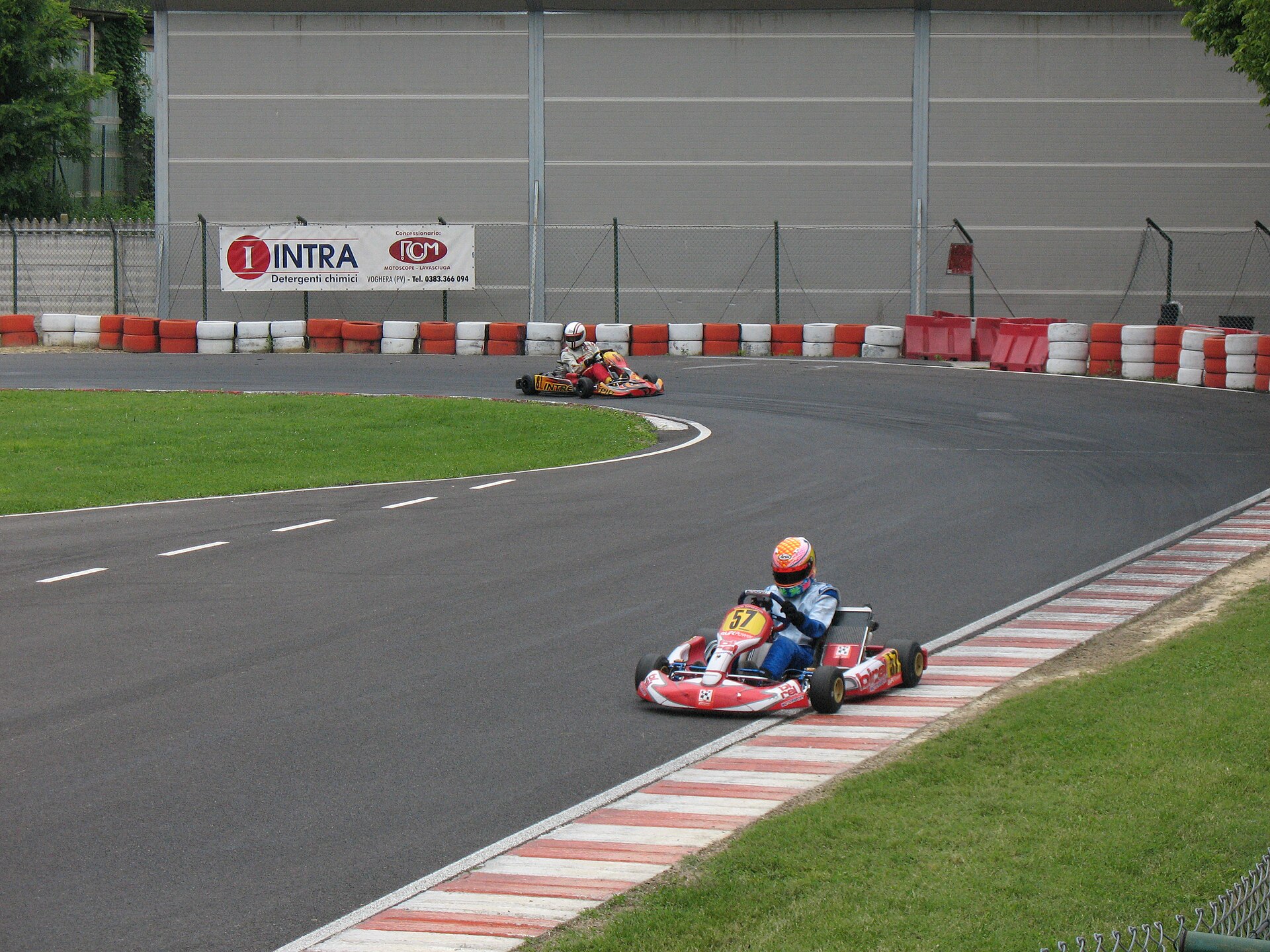
And again, most of the time the right line is not the theoretical geometric line. Sometimes you may have to use a bit less track on the entry, which is counterintuitive, but it may be because there’s way more grip there, because there’s more banking, or because the categories before you drove tighter lines on entry since they have a gearbox.
The trap of knowing a track too well
Remember that the track conditions are going to change a lot during the day and during the weekend. You may not have to drive in the exact same way as you used to drive at that specific track, even if it’s your local track.
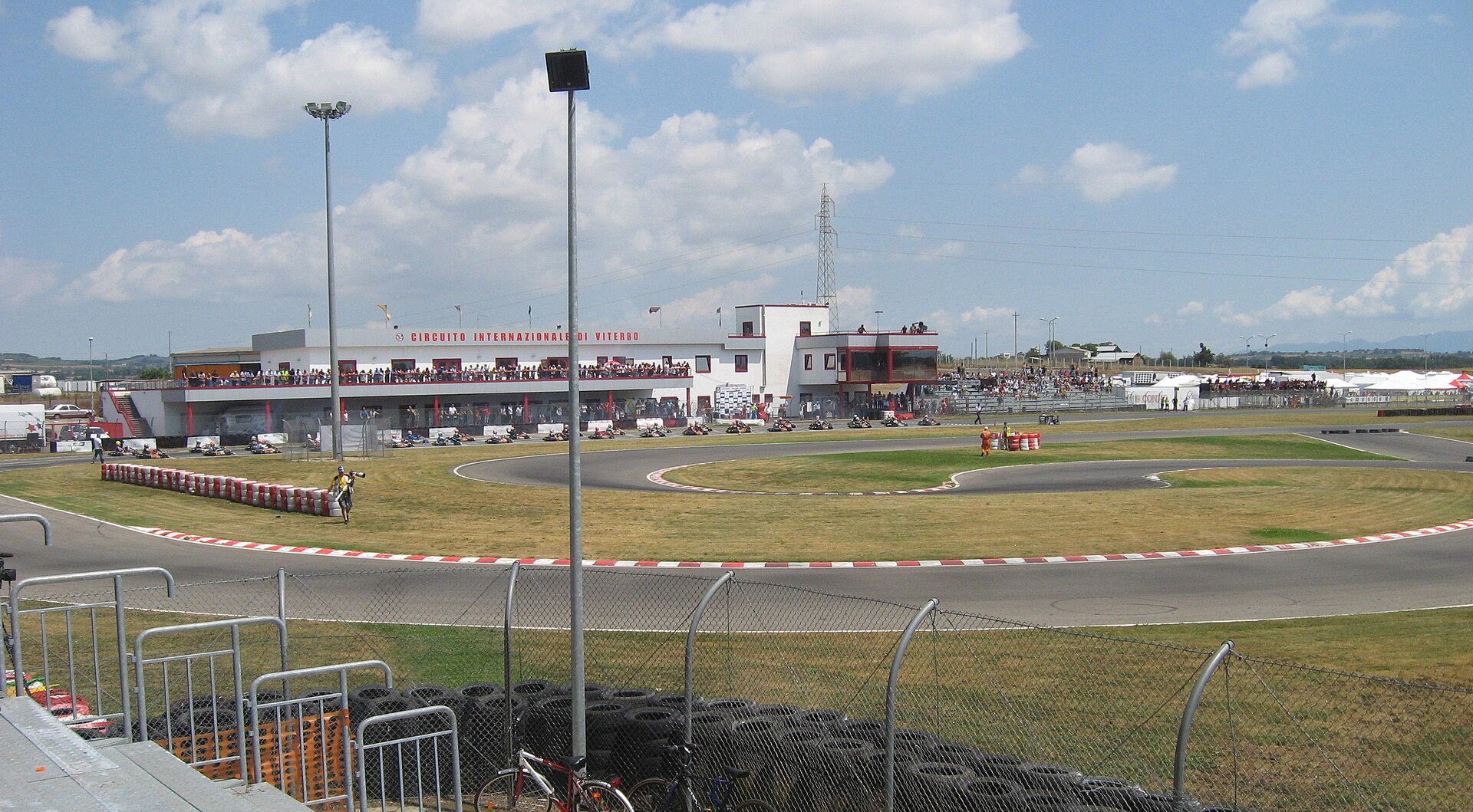
It may actually be more difficult sometimes for locals, because they think: I’ve been driving this way the whole time, why should I change it now?
Well, because maybe there’s a completely different rubber compound this weekend. There’s way softer rubber, and maybe you have to carry way more speed in some areas because the track is a second faster than normal. You have to find the exact places where the track has gotten grippier, so you know exactly where to find lap time.
Score every corner out of ten
You almost have to think about it in a gamified way.
Everywhere across the track, in that specific corner, you will have 10 out of 10 grip, or 9 out of 10, or 8 out of 10.
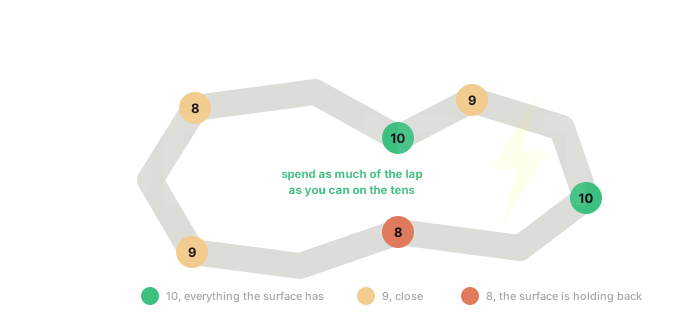
The goal is to optimise the time you spend on the 10 out of 10 grip. You don’t want to be on the 9 or the 8. You’ve got to be on the 10 out of 10, where there’s the highest amount of grip.
And the more you can spend time on the highest grip level on the track, in all the corners, the faster you’ll be, inevitably.
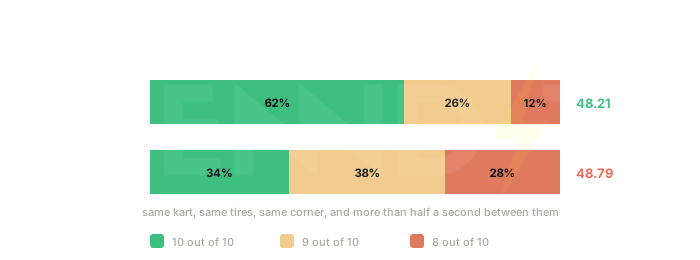
The drivers that are the best are the ones who can adapt the fastest, and in the best way possible. So I think it’s not really about talent, it’s more about developing that skill.
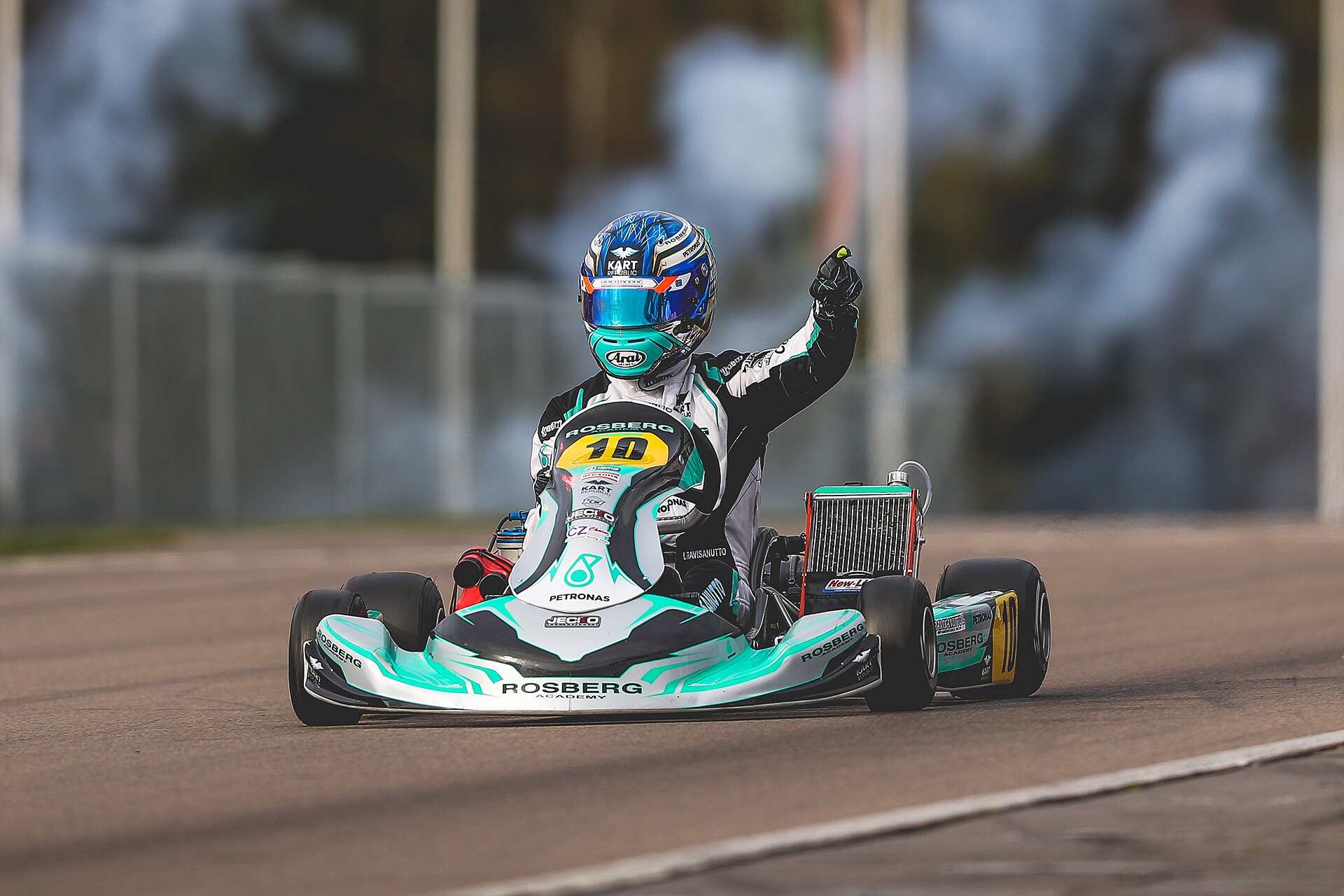
Go out there and really feel the grip. Once you feel the grip, then you can carry the speed. It’s a connection between the grip hunting and the speed sensing skills.
Frequently asked questions
What does grip hunting mean in karting?
Grip hunting is actively searching for the parts of the track that offer the most grip, rather than driving a fixed theoretical line. Grip is not spread evenly across a corner, banking, elevation, rubber build-up and the class that ran before you all move it, so the fastest line is the one that spends the most time on the grippiest tarmac.
Why is the geometric racing line not always fastest?
Because the geometric line assumes even grip. In a positively banked corner you may need to turn in earlier to catch the load sooner, and where a previous class has rubbered a different part of the corner you may need to use less track on entry. The theory describes the shortest path, not the grippiest one.
How does the class running before you change the grip?
Different categories lay rubber in different places. Shifters use V-shaped lines, heavy braking on entry, hard traction on exit, which deposits rubber mostly in the mid corner. Juniors run a line much closer to a 60 Mini. Follow shifters and you can find the mid corner grippy while the entry and exit have gone away.
Are track walks worth doing in karting?
Yes, and they are underrated. Walking the circuit lets you spot banking and elevation cues that predict where grip will build up once new tires go on, so you arrive with a plan instead of discovering it on the outlap.
Want me to review your onboard video personally? Send me your footage and I’ll deliver a full corner-by-corner analysis within 48 hours.
Want the full system? The 6-Month Training Program covers everything, racecraft, technique, mindset, fitness, and more. 550+ lessons, weekly live coaching, 100% money-back guarantee.
Send your onboard footage. Alessio reviews it corner-by-corner and tells you exactly what's costing you time, and how to fix it. Back within 48 hours.
Get My Onboard Reviewed → Reviewed personally by a CIK FIA World Champion, never an assistant.I promise I'll not spam you with repurposed shitty AI content but real experiences that only I, Alessio Lorandi, experienced. Written in my funny English-Italian tone of voice 😂
Alessio Lorandi is the former CIK FIA World Junior Champion, winning against Lando Norris in 2013 & F3 multiple race winner. He's helped 200+ karting drivers worldwide get faster & win WSK titles with BabyRace Driver Academy & now through Senndit, his online karting coaching platform.